Wyoming
Cluster 3: Frontier and Resource-Adequate States
Wyoming receives the second-highest per-capita allocation in the program at $554 per rural resident annually. It has the fewest rural residents to spend it on. The state confronts the question that per-capita funding adequacy cannot answer: how do you build a healthcare workforce in places where almost nobody lives? The perpetuity fund concept Wyoming proposed represents the most intellectually serious sustainability strategy any state has developed. Whether CMS permits it determines whether Wyoming’s contribution to the national RHTP conversation is innovation or deferral.
State Context#
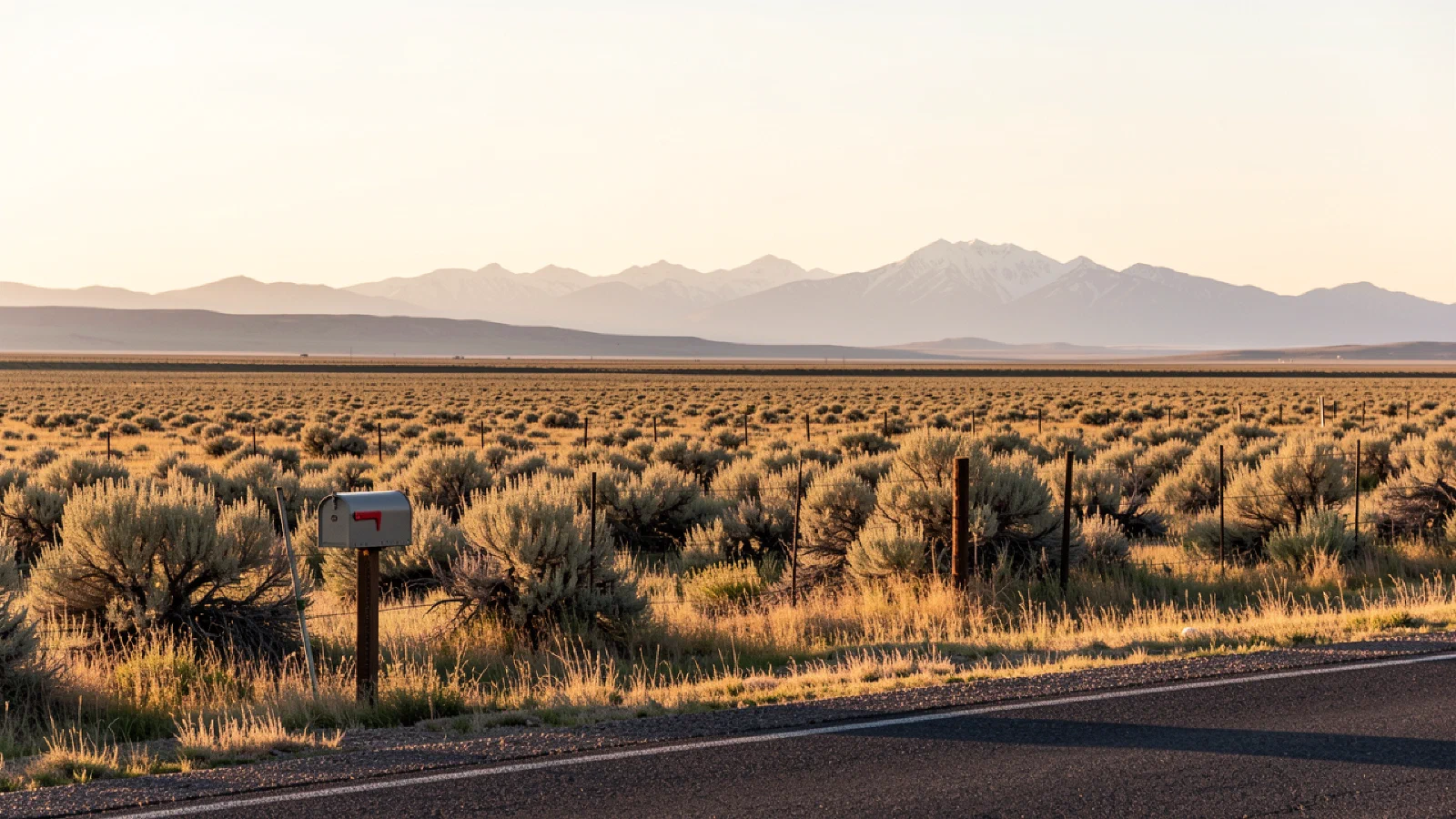
Wyoming is the least populous state in the nation and among the most geographically isolated. Its 370,000 rural residents are scattered across 97,813 square miles in what the state’s own RHTP application describes as “a large archipelago spread out over a vast sea of sagebrush, split up by ranges of forested mountains.” Only two cities exceed 50,000 people. Only three more exceed 20,000. Everything else is small towns separated by distances that make healthcare access a function of geography before it becomes a function of policy.
The state leads the nation in frontier population share. 57% of Wyoming residents live in Frontier and Remote Area (FAR) Level 1 territory, and 12.9% live in FAR Level 4, the most extreme isolation classification, where reaching a town of 2,500 requires an hour or more of driving. Several counties have five or fewer family practice physicians. Some have none. The entire state is designated a Health Professional Shortage Area for mental health services, with only 41% of need currently met.
Wyoming has not expanded Medicaid. This is a Republican state with a Republican governor, a Republican supermajority legislature now dominated by the Freedom Caucus, and a congressional delegation that championed OBBBA. The non-expansion status shapes both what RHTP can build and what it cannot: without expansion, the uninsured population remains structurally larger than in expansion states, limiting the Medicaid billing pathways available for sustainability. But it also means Wyoming’s Medicaid exposure to OBBBA cuts is minimal, a dynamic that inverts the fiscal crisis facing expansion states like Kentucky.
Governor Mark Gordon (R) is in his second term and term-limited. His administration developed and submitted the RHTP application, and his framing has been consistently pragmatic. Gordon described the funding as “prodigious” but “ephemeral” and emphasized that “investments we make must stand the test of time and not further burden our grandchildren.” The Wyoming Department of Health serves as lead agency with strong institutional alignment, meaning institutional capacity to direct implementation is not the constraint. The constraint is what the institution directs implementation toward in a state where the workforce to carry transformation does not exist in the volumes the plan requires.
The Wind River Reservation, home to the Eastern Shoshone and Northern Arapaho Tribes, adds a sovereign dimension that most frontier and resource-adequate states share. Wind River’s IHS facilities serve tribal populations whose healthcare is a federal trust obligation, not a state program. The RHTP application includes the Wind River Service Unit and both tribal nations as subawardees, but the relationship between state-administered federal funding and tribal sovereignty requires navigation that RHTP’s structure does not simplify.
RHTP Application and Award#
Wyoming received a $205 million FY2026 RHTP award, the second-highest per-capita allocation in the program at $554 per rural resident annually, with a five-year total of approximately $1.02 billion. The award exceeded state expectations. Wyoming requested up to $800 million in its application and received funding that, if sustained at Year 1 levels, would exceed that request. Montana, Wyoming’s closest geographic peer with similar frontier character, received $206.5 million for a larger rural population (710,000), producing a per-capita allocation of $291, roughly half of Wyoming’s figure despite comparable implementation challenges.
The application was developed through 11 local town hall meetings and a survey of more than 1,300 Wyomingites, a community engagement process that, relative to population, represents significantly higher participation than most states achieved. The resulting plan organized around four major initiatives: improving access to basic medical care, building a durable health workforce, improving population health, and leveraging technology to bring care closer to home.
The application’s most distinctive element is not clinical. It is fiscal. Wyoming proposed creating a Rural Health Transformation Perpetuity Fund that would deposit 80% of Year 1 funds ($164 million) and 69.5% of subsequent annual awards into an investment fund managed by the state treasurer’s office. The fund would invest in equities and distribute 4% annually, generating approximately $28.5 million per year in perpetuity after federal funding ends in 2030. This money would fund ongoing hospital incentive payments, workforce scholarships, and EMS subsidies.
No other state proposed anything comparable. Kentucky mentioned a rural health endowment backed by charitable donations. Several states described “catalyst funds” investing in health technology. Wyoming proposed converting time-limited federal investment into a permanent revenue stream through market returns. The concept drew immediate attention. KFF Health News reported that CMS had told some states in November that grant money cannot fund “an endowment, capital fund, or other vehicle resembling an investment fund with the purpose of generating income.” Wyoming officials responded that the perpetuity fund generates no profit: all program income directly funds rural health programs.
Key subawardees include Banner Health Wyoming Medical Center, Cheyenne Regional Medical Center, the state’s Critical Access Hospitals, Wyoming Hospital Association, Wyoming Medical Society, Wyoming Primary Care Association, University of Wyoming, Casper College, the Wind River Service Unit (IHS), and the Eastern Shoshone and Northern Arapaho Tribes.
The time-limited funds (20% of Year 1, 30.5% of subsequent years) are allocated across specific initiatives: 36.4% for integrated primary care and FQHC expansion (behavioral health, OB/GYN, dental, and preventive services integration), 8.2% for a statewide tele-specialist platform, and 8.2% for workforce education startup costs through in-state institutions.
The Medicaid Math#
Wyoming’s fiscal position is the inverse of every other exemplar in this series. Its projected $0.2 billion in Medicaid cuts over ten years represents 4% of baseline spending. The 0.2:1 RHTP-to-Medicaid-cut ratio is the most favorable in the entire program. For every dollar Wyoming might lose in Medicaid revenue, it receives five dollars in RHTP investment. Alaska, Wyoming’s frontier peer with similar geographic challenges, faces a 1.2:1 ratio reflecting its larger Medicaid footprint, while Montana’s 2.8:1 ratio demonstrates how even among frontier and resource-adequate states, non-expansion status produces dramatically different fiscal dynamics.
The favorable ratio reflects non-expansion status. Wyoming never built the Medicaid revenue infrastructure that OBBBA now threatens to withdraw in expansion states. Its hospitals do not depend on expansion enrollees for financial viability the way Kentucky’s or North Carolina’s do. The primary Medicaid cut mechanism is all-states provisions affecting provider reimbursement, not work-requirement enrollment losses or expansion rollback.
This does not mean Wyoming’s healthcare financing is sound. It means the OBBBA-specific crisis is less acute. The underlying financing challenge is structural: a small population spread across vast territory cannot generate the patient volume necessary to sustain conventional fee-for-service healthcare economics. Critical Access Hospitals survive on cost-based Medicare reimbursement. FQHCs survive on federal grants and enhanced reimbursement. Without these subsidies, most of Wyoming’s rural healthcare infrastructure would not exist. RHTP does not change that structural dependency. It adds another layer of federal subsidy to a system that already depends on federal subsidy for existence.
Implementation Assessment#
The Perpetuity Fund: Innovation or Deferral?#
The perpetuity fund is the most analytically significant RHTP implementation concept any state has proposed. It deserves serious evaluation rather than reflexive praise or dismissal.
The case for the perpetuity fund is genuine. Wyoming’s healthcare sustainability problem is structural and permanent. Federal programs come and go. RHTP expires in 2030. Whatever Wyoming builds with transformation dollars collapses when the dollars stop unless the state creates a replacement revenue stream. The perpetuity fund attempts to convert a five-year windfall into a permanent asset. At $28.5 million annually, it would not replace the $205 million annual RHTP award, but it would sustain hospital incentive payments, workforce scholarships, and EMS subsidies indefinitely. Governor Gordon’s language captures the logic: the funding is ephemeral, but the healthcare needs it addresses are not.
The case against the perpetuity fund is also genuine. Depositing 80% of Year 1 funds into an investment account means only $41 million is available for immediate healthcare investment in a state that just received $205 million to transform rural health. Wyoming’s Critical Access Hospitals need financial stabilization now. Its maternity deserts need providers now. Its EMS system faces structural gaps that $28.5 million per year starting in 2031 does not address in 2026. The perpetuity fund trades short-term transformation capacity for long-term sustainability, and the trade occurs in a state where the short-term needs are acute.
The CMS approval question remains unresolved. WDH Director Stefan Johansson told legislators that CMS called in December specifically to ask about the fund and that he believes the agency has informally approved it. But CMS spokesperson Catherine Howden did not directly confirm approval when asked by KFF Health News, and the agency’s November guidance to other states explicitly cautioned against investment fund structures. Whether the perpetuity fund survives the federal budget review process will determine whether Wyoming’s RHTP story is about sustainability innovation or deferred implementation.
Architecture Trajectory#
Wyoming’s frontier conditions make alternative architecture not just theoretically attractive but practically necessary. The conventional healthcare model assumes patient volume sufficient to sustain fixed facilities with permanent staff. Wyoming’s population density makes that model mathematically unsustainable across most of the state. The question is whether RHTP investment builds toward delivery systems designed for frontier reality or attempts to subsidize a model that cannot work without perpetual subsidy.
The perpetuity fund itself represents an architecture decision. By converting transformation funding into permanent endowment income, Wyoming acknowledges that frontier healthcare requires ongoing subsidy and proposes a mechanism to generate that subsidy from investment returns rather than recurring federal appropriations. This aligns with state sovereign investment concepts: states creating capital pools that generate revenue independent of federal program volatility. No other state proposed anything comparable. If CMS approves and the fund performs as projected, Wyoming demonstrates that time-limited federal investment can create permanent state-level infrastructure.
The statewide tele-specialist platform points toward inverse hub principles. Rather than expecting patients to travel hours to reach specialists, the platform brings specialist expertise to patients through virtual consultation. This aligns with inverse hub frameworks where expertise travels to patients rather than patients traveling to expertise. For Wyoming’s FAR Level 4 communities, where the nearest town of 2,500 requires an hour or more of driving, telehealth is not convenience enhancement. It is the only delivery model that can work for specialist access.
Wind River Reservation adds tribal sovereignty as architecture asset. Tribal nations can implement alternative workforce and delivery models that state regulatory constraints prevent elsewhere. Wind River’s IHS facilities and both tribal nations as named subawardees create potential for tribal demonstration that other frontier states share. Whether Wyoming RHTP coordination with Wind River produces operational integration or merely parallel funding tracks determines whether tribal sovereignty serves as regulatory laboratory for alternative approaches.
However, Wyoming’s regulatory environment limits non-tribal alternative architecture. The state maintains restricted NP practice authority, requiring collaboration agreements with physicians. In a state where some counties have no physicians, collaboration requirements effectively prevent NPs from practicing independently in the communities that most need them. Dental therapists are not authorized. The alternative workforce models face regulatory barriers that RHTP cannot change and state politics have not addressed. The perpetuity fund’s long-term sustainability vision coexists with regulatory constraints that prevent the workforce flexibility frontier communities need.
Legislative Dynamics#
Wyoming’s RHTP implementation requires legislative appropriation before any federal dollars can be spent. House Bill 122, the Wyoming Rural Health Transformation Act, passed the House Appropriations Committee unanimously (7-0) in February 2026 and advanced to the House floor. The bill creates the perpetuity fund, establishes the expenditure account for time-limited initiatives, and defines governance and accountability structures.
The legislative process revealed tensions. The Joint Appropriations Committee stripped a 20-page section on out-of-state telehealth licensure from the bill, narrowing scope to avoid floor complications during the short budget session. The Wyoming Freedom Caucus, which controls the House, has committed to aggressive budget cutting and scrutinized the Department of Health as the state’s largest agency. The RHTP bill’s survival reflects pragmatic alignment: the funding is federal (not state), the perpetuity concept appeals to fiscal conservatives, and rural healthcare is a constituency issue in a state where every constituency is rural.
The proposed BearCare catastrophic insurance plan, a state-operated public health benefit for individuals and small businesses covering major medical emergencies, was deliberately excluded from HB 122 to avoid policy complications. The concept drew criticism from legislators who saw it as government competition with private insurance. WDH explicitly stated it will not stand up BearCare without separate legislative authorization.
Workforce: The Constraint Money Cannot Solve#
48% of the RHTP application budget ($96 million) targets workforce pipeline development. This allocation reflects honest assessment of Wyoming’s rate-limiting constraint. The plan includes individual education support awards, educational capacity grants for University of Wyoming and Casper College, and five-year service commitments for graduates receiving RHTP-funded training.
The workforce approach addresses the financial barriers to healthcare education. It does not address the structural barriers to healthcare practice in frontier communities. Series 9C documents the calculus that defeats conventional workforce recruitment in frontier settings: professional isolation, where no backup coverage exists and continuing education requires long-distance travel. Spouse employment, where a recruited physician’s partner has no job opportunities. School access, where children may require distance learning because the nearest school is 40 miles away. Community amenities that do not exist in towns of 200 people.
RHTP investment can improve the financial equation through loan repayment and salary supplements. It cannot solve the full calculus. A nurse practitioner willing to accept a position in a frontier community must also accept that the nearest colleague in her specialty practices 90 miles away, that her children will attend a school with twelve students across six grades, and that a medical emergency in her own family requires the same hour-long ambulance response her patients experience. Per-capita funding adequacy and workforce recruitment are different problems, and the defining tension for frontier states is that the first is solved while the second is not.
Wind River and Tribal Integration#
The inclusion of the Wind River Service Unit and both tribal nations as named subawardees represents a structural commitment that many state RHTP applications lack. Whether that commitment translates into meaningful tribal health investment depends on implementation details the application does not fully specify.
Wind River faces compounded health disparities: IHS per-capita spending runs 40-60% below federal spending for other populations, provider vacancy rates exceed 25% at IHS facilities, and the reservation’s geographic isolation adds frontier-level access barriers to systemic underfunding. State-administered RHTP funding flowing to tribal healthcare creates a governance relationship that inverts the federal trust responsibility. Tribal nations have treaty-based rights to federal healthcare provision that flow directly from the federal government, not through state intermediaries.
Risk Assessment#
Wyoming’s Low risk tier designation reflects the favorable Medicaid math (0.2:1 ratio), strong institutional alignment, and absence of the compound disadvantage patterns that define non-expansion high-burden states and parts of the expansion states with high Medicaid burden category. The primary risks are structural rather than fiscal.
CMS perpetuity fund approval is the highest-consequence single risk. If CMS rejects the fund structure or requires modifications that reduce the investment percentage, Wyoming’s entire sustainability architecture requires redesign. The state built its implementation plan around the perpetuity concept. Losing it is not a marginal adjustment.
Workforce recruitment failure is the chronic risk. The five-year service commitment for RHTP-funded graduates addresses retention for a defined period. Whether those graduates remain in frontier communities after their service obligation ends depends on whether the practice environment changes meaningfully during those five years. Historical evidence from National Health Service Corps placements in frontier areas suggests significant post-obligation departure rates.
Freedom Caucus fiscal pressure creates ongoing political risk. The current legislature approved HB 122, but the perpetuity fund’s multi-decade investment horizon spans many future legislatures. A future session could redirect fund distributions, change investment parameters, or challenge the fund’s structure entirely. The CMS clawback provision (funds used outside approved parameters can be reclaimed) provides some protection, but political dynamics in Wyoming’s legislature are volatile.
The population-base-too-small-to-sustain-billing problem is the shared risk for frontier states that defines post-RHTP sustainability across Wyoming, Montana, Alaska, and North Dakota. Even with the perpetuity fund generating $28.5 million annually, Wyoming’s healthcare infrastructure requires ongoing subsidy because its population base cannot generate sufficient fee-for-service volume to sustain conventional operations. The perpetuity fund is a more sophisticated subsidy mechanism than annual federal grants, but it is still a subsidy. It does not resolve the structural economics.
Honest Assessment#
What Wyoming does well. The perpetuity fund concept is the most intellectually serious sustainability strategy in the program. If CMS approves and the legislature sustains it, Wyoming would be the only state with a permanent post-RHTP revenue stream for rural health investment. Governor Gordon’s “prodigious but ephemeral” framing demonstrates honest assessment of RHTP’s limitations. The community engagement process (11 town halls, 1,300 survey responses) represents higher per-capita participation than most states achieved. Wind River inclusion as named subawardee creates tribal integration commitment that most applications lack. Strong institutional alignment enables execution without interagency coordination friction. The favorable Medicaid math (0.2:1 ratio) means transformation investment is not fighting against simultaneous coverage erosion.
Where the plan meets reality. Wyoming’s maternity deserts, EMS gaps, and behavioral health workforce shortage (41% of mental health needs met) exist today. The perpetuity fund trades short-term transformation capacity for long-term sustainability by depositing 80% of Year 1 funds into investment rather than immediate healthcare. The state’s suicide rate, nearly double the national average, requires clinical capacity the perpetuity fund’s 4% annual distribution cannot build until the fund matures. Restricted NP practice authority prevents workforce flexibility that frontier communities need. The population-base-too-small-to-sustain-billing problem means frontier healthcare requires perpetual subsidy regardless of what form that subsidy takes.
What would change the assessment. CMS formal approval of the perpetuity fund structure would validate Wyoming’s sustainability innovation. Scope of practice reform enabling NPs to practice independently in frontier communities would unlock workforce flexibility. Workforce recruitment producing retention rates exceeding historical NHSC frontier placements would demonstrate that financial investment can overcome the full calculus of professional isolation. Wind River coordination producing operational tribal health integration rather than parallel funding tracks would demonstrate that state-administered federal investment can serve tribal sovereignty.
Wyoming’s RHTP story is not about overcoming compound disadvantage or surviving fiscal crisis. It is about whether a state with adequate resources and favorable conditions can build something that lasts in communities where nothing has ever lasted without continuous external subsidy. The perpetuity fund is the most honest attempt to answer that question. Whether it succeeds depends on federal approval, legislative discipline, market returns, and whether the workforce recruited during the RHTP period stays after the service commitments end.
How this article connects to others in Blue Gray Matters.
Sources cited in this article.
- Centers for Medicare and Medicaid Services. "CMS Announces $50 Billion in Awards to Strengthen Rural Health in All 50 States." *CMS Newsroom*, 29 Dec. 2025.
- Health Management Associates. "CMS Announces Rural Health Transformation Program Awardees." *HMAIS*, 10 Jan. 2026.
- KFF Health News. "Wyoming Wants to Make Its Five-Year Federal Rural Health Funding Last 'Forever.'" *KFF Health News*, 18 Feb. 2026.
- Wyoming Department of Health. "Rural Health Transformation in Wyoming: An Application Submitted to the Centers for Medicare and Medicaid Services." *WDH*, 5 Nov. 2025.
- Wyoming Legislature. "House Bill 122: Wyoming Rural Health Transformation, Sustainability, Accountability, and Fiscal Protection Act." *26LSO-0400*, 2026 Budget Session.
- Wyoming Medical Society. "Rural Health Transformation Program Updates." *WMS*, Jan. 2026.
- Wyoming News. "Rural Health and Capital Construction Bills Clear House Committees." *Wyoming Tribune Eagle*, 13 Feb. 2026.
- Zahn, Noah. "Lawmakers Work One Last Bill Ahead of Session to Bring $205M to State's Rural Health." *Wyoming Tribune Eagle*, 19 Jan. 2026.