South Dakota
Cluster 3: Frontier and Resource-Adequate States
South Dakota enters the Rural Health Transformation Program with a combination of conditions that most states cannot replicate. A 0.9:1 RHTP-to-Medicaid-cut ratio places it near parity between transformation investment and projected coverage losses. Medicaid expansion since November 2023, implemented via ballot initiative despite gubernatorial opposition. The fourth-lowest population density in the continental United States, but a hospital infrastructure that has avoided the closures plaguing peer states. $514 per rural resident annually provides meaningful per-capita investment without the extreme ratios that characterize the smallest rural populations. And a provider landscape dominated by three integrated health systems capable of deploying resources at scale.
These conditions permit something most states cannot attempt: genuine transformation rather than managed decline. Whether South Dakota uses that permission is a different question.
State Context#
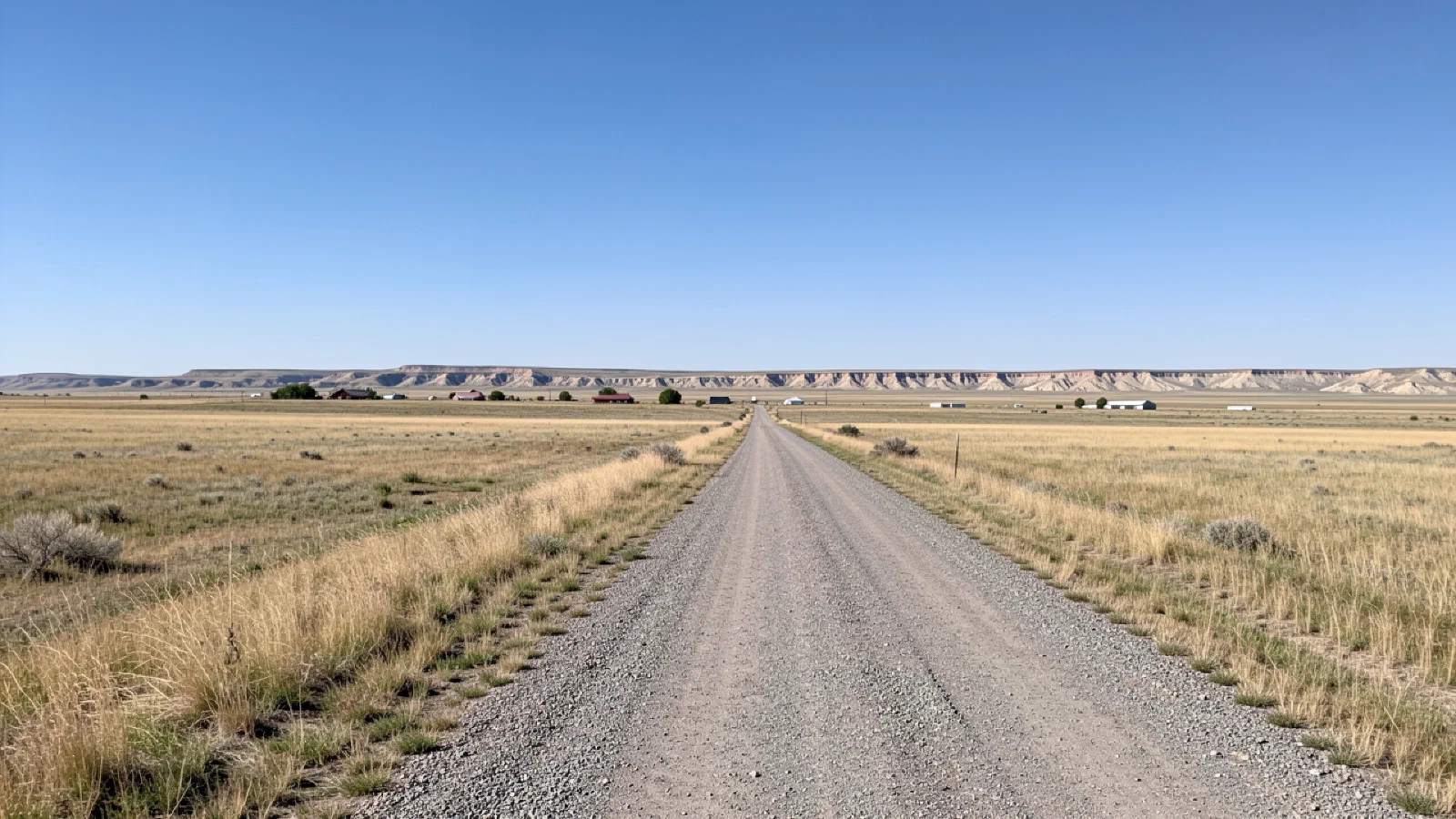
South Dakota’s 924,000 residents spread across 77,000 square miles, producing a population density of 12.2 people per square mile. Roughly 460,000 live in areas classified as rural under census definitions, approximately 50% of the state’s population. Only Minnehaha County (Sioux Falls) and Pennington County (Rapid City) are classified as urban under HRSA criteria. The remaining 64 counties are rural, with 39 meeting the frontier designation of six or fewer residents per square mile.
The health system reflects concentrated institutional capacity. Three integrated health systems dominate: Sanford Health, Avera Health, and Monument Health operate the vast majority of the state’s hospital and clinic infrastructure. This concentration produces efficiency and coordination capacity that fragmented provider landscapes cannot match. The 39 Critical Access Hospitals benefit from these system affiliations, accessing shared services, telehealth infrastructure, and transfer relationships that standalone CAHs in other states struggle to maintain.
Hospital financial stability distinguishes South Dakota from regional peers. An analysis of CAHs from 2020 to 2025 shows most facilities in low or medium-low financial risk categories. No hospitals were classified as high risk in 2023 through 2025. The most recent hospital closure occurred in 2010. This stability reflects both system integration and state policy: South Dakota maintains regulatory flexibility that allows facilities to adapt service configurations without the Certificate of Need barriers that constrain other states.
South Dakota expanded Medicaid in November 2023 following a ballot initiative that passed with 56% support despite opposition from Governor Kristi Noem. Governor Larry Rhoden, who assumed office after Noem’s departure, has maintained the expansion and championed the RHTP application as a centerpiece of his rural health agenda. The expansion reduced the state’s uninsured rate to 6.5% overall and provides the billing revenue foundation that enables RHTP initiatives to generate sustainable reimbursement rather than one-time grant expenditure.
The state encompasses nine federally recognized American Indian tribes with reservations spanning 15,000 square miles. Several counties on reservations rank among the poorest in the United States, with poverty rates exceeding 20% sustained over 30 years. The Great Plains Tribal Leaders Health Board represents tribal health interests, but the structural separation between tribal and state health systems creates coordination challenges that RHTP must navigate.
RHTP Application and Award#
South Dakota received an FY2026 award of $189,477,607, with an estimated five-year total of approximately $950 million. At $514 per rural resident annually, the allocation provides substantial per-capita investment capacity that places South Dakota in the top tier of the program nationally.
The South Dakota Department of Health serves as lead agency. DOH operates as a standalone public health department rather than an integrated health and human services agency, which produces modest institutional separation when initiatives require Medicaid policy coordination with the Department of Social Services. This separation is manageable because the governor’s office has prioritized RHTP implementation as a cross-agency initiative, providing executive coordination that compensates for structural separation.
South Dakota’s application organizes transformation around four strategic themes that reflect genuine analysis of the state’s rural health challenges rather than grant-writing compliance.
Connect Technology and Data for a Healthier South Dakota. The largest allocation targets health information technology infrastructure, EHR modernization, and the creation of a statewide Health Data Atlas. The initiative provides tiered grants: Tier 1 for foundation building at small practices and tribal clinics transitioning from paper-based systems, Tier 2 for advanced integration at mid-size facilities, and Tier 3 designating regional innovation hubs that support smaller facilities through training and technical assistance. The South Dakota Health Link (the state’s health information exchange) receives accelerated expansion funding.
Advance the Rural Workforce. Recruitment incentives include tiered sign-on bonuses, relocation assistance, and rural service stipends tied to five-year commitments. Retention supports provide current workforce with education funding tied to rural service. The initiative explicitly connects to community health worker expansion, recognizing that traditional recruitment pipelines cannot fill all gaps. The Rural Health Forward training and resource hub will provide continuing education access that addresses the professional isolation rural providers experience.
Keep Healthcare Access Local and Strong. A Medicaid Primary Accountable Care Transformation initiative implements alternative payment models that provide capitated payments incentivizing quality over volume. Rural Health Access and Quality Grants support facility transitions, service line expansions, and regional partnerships. Chronic disease management strengthening includes caregiver support programs and remote patient monitoring.
Transform Systems for Sustainability. Certified Community Behavioral Health Clinic implementation addresses the state’s complete absence of CCBHCs as of September 2025. South Dakota was one of only four states with zero CCBHCs, and the application targets establishing at least one per behavioral health region by 2027. EMS enhancement through regional hub development will improve response times and enable treat-in-place protocols that reduce unnecessary emergency department utilization.
The subawardee structure concentrates capacity in established organizations. Sanford Health, Avera Health, and Monument Health provide the hospital system infrastructure. The South Dakota Association of Healthcare Organizations serves as intermediary for CAH coordination. The Great Plains Tribal Leaders Health Board represents tribal health system engagement. The Community HealthCare Association of the Dakotas provides FQHC coordination. Horizon Health and the state university systems (University of South Dakota, South Dakota State University) provide workforce development capacity.
The Medicaid Math#
South Dakota’s 0.9:1 RHTP-to-Medicaid-cut ratio is among the most favorable in the program. The projected ten-year Medicaid cut of approximately $800 million represents 9% of baseline Medicaid spending. At near-parity, South Dakota approaches genuine investment balance: for approximately every dollar of projected Medicaid loss, RHTP provides roughly a dollar of transformation investment.
The primary cut mechanism is work requirements combined with state-directed payment caps. Work requirements effective January 2027 will create enrollment churn primarily among the expansion adult population (100% to 138% FPL). South Dakota’s low unemployment rate (1.8% in 2024) may mitigate work requirement disenrollment because most working-age adults already meet employment criteria. The larger fiscal pressure may come from state-directed payment cap provisions in OBBBA that constrain supplemental payments to hospitals.
Near-parity does not eliminate risk. South Dakota’s hospital system depends on Medicaid revenue flows that will face pressure after 2028 regardless of work requirement compliance rates. The state’s relatively small Medicaid program means that even moderate percentage cuts produce absolute dollar reductions that affect rural facilities. The favorable ratio provides planning time and resources that states with ratios above 5:1 lack, but it does not guarantee sustainability without intentional design.
The tribal population faces compound exposure through both state Medicaid cuts and federal IHS underfunding. RHTP funds flow through the state rather than directly to tribal systems, creating coordination requirements that add implementation complexity.
Implementation Assessment#
Transformation Approach Plausibility#
South Dakota’s chosen approaches match its conditions with reasonable precision. The technology and data initiative is plausible because the concentrated health system structure means that interoperability investments reach a large fraction of the provider landscape through a manageable number of organizations. When Sanford, Avera, and Monument adopt shared standards, most CAHs follow through their affiliation relationships. Compare this to states where dozens of independent systems must be individually connected.
CCBHC implementation addresses a genuine gap. Zero CCBHCs in a state with elevated suicide rates, rising overdose deaths, and documented behavioral health workforce shortages represents infrastructure absence, not infrastructure inadequacy. The CCBHC model’s same-day access requirements and 24/7 crisis response standards address specific access gaps that South Dakota residents experience. Whether the state can certify organizations at sufficient pace and build the workforce to staff them is the implementation question.
The workforce strategy combines standard mechanisms with honest acknowledgment of structural constraints. Sign-on bonuses and relocation assistance are necessary but insufficient in a state where the fundamental challenge is attracting people to communities that have been depopulating for generations. The Rural Health Forward training hub addresses retention by reducing professional isolation, but retention programs cannot succeed if recruitment does not first bring providers to rural communities.
The Medicaid Primary Accountable Care initiative tests whether alternative payment models can work in a state with favorable starting conditions. South Dakota’s expansion status provides the billing infrastructure that makes value-based contracts viable. Its concentrated health system structure means that the major players already have population health management capacity. If this model does not work in South Dakota’s conditions, it will not work in more challenging environments.
Architecture Trajectory#
South Dakota’s near-parity math creates the rarest condition in the RHTP program: transformation resources that are not immediately overwhelmed by coverage erosion. This permits architecture investment that states facing 20:1 or 40:1 ratios cannot contemplate. The question is whether South Dakota uses this permission to build alternative architecture or invests in conventional systems that the convergence documented in Series 12 will erode regardless of RHTP quality.
Nine tribal nations create the second-largest tribal demonstration opportunity (14G) in the continental United States after Oklahoma. The Oglala Lakota, Rosebud, Standing Rock, Cheyenne River, Crow Creek, Lower Brule, Flandreau, Sisseton-Wahpeton, and Yankton Sioux nations possess sovereignty that enables healthcare delivery models state regulation prohibits. Tribal health systems can implement expanded workforce scope, alternative facility configurations, and technology deployments without waiting for state authorization. The critical question is whether RHTP resources flow to tribal systems as sovereign partners building their own architecture or as conventional subawardees receiving pass-through funding with state compliance requirements. The application includes Great Plains Tribal Leaders Health Board but does not specify governance structures that would give tribal systems genuine authority over funds intended for their populations. If RHTP strengthens state-regulated systems while providing tribal consultation rather than tribal control, the program will have reinforced rather than addressed the disparities concentrated in reservations that include the nation’s poorest counties.
Frontier geography makes inverse hub (14A) and service center (14D) models directly applicable for non-tribal communities. Thirty-nine counties meeting frontier designation cannot sustain permanent physician recruitment regardless of incentive level. The application’s workforce strategy, emphasizing recruitment bonuses and relocation assistance, repeats approaches that have failed across frontier states for decades. The alternative: virtual-first delivery through inverse hub architecture, with minimal-footprint service centers replacing facilities designed for volume frontier populations cannot generate. South Dakota’s hospital stability provides unusual opportunity to pilot transitions before crisis forces them. A CAH operating at negative margins but not yet at closure risk could convert to an enhanced service center model, demonstrating the transition pathway other states will need when their facilities reach crisis.
The per-capita allocation of $514 annually provides financial capacity to build alternative infrastructure if directed that way. The technology initiative’s tiered grants could create platforms supporting AI-assisted triage and continuous monitoring rather than conventional EHR modernization. The workforce initiative could prioritize community health workers and community paramedics as primary delivery mechanisms rather than supplements to physicians who cannot be recruited. The near-parity math means these investments need not be defensive; they can be genuinely transformative.
The honest architecture assessment is that South Dakota has permission other states lack but has not yet indicated whether it will use that permission for alternative architecture or conventional improvement. The application’s approaches are strategically coherent within the conventional transformation framework. Whether the state recognizes that near-parity creates opportunity for architectural innovation, rather than merely comfortable margins for conventional investment, will determine whether South Dakota demonstrates what frontier states can accomplish or settles for well-funded incrementalism.
Intermediary Landscape#
South Dakota’s intermediary landscape is adequate but thin. The South Dakota Association of Healthcare Organizations provides CAH coordination. The Community HealthCare Association of the Dakotas provides FQHC coordination. The Montana Office of Rural Health (through the shared Montana State University relationship) provides technical assistance capacity. But the state lacks the dense network of AHECs, public health districts, and quality improvement organizations that support implementation in more institutionally developed states.
The concentrated health system structure compensates partially. Sanford, Avera, and Monument function as de facto intermediaries for their affiliated facilities, providing the coordination, training, and technical assistance that standalone intermediaries would otherwise supply. This creates efficiency but also concentration risk: if one system’s implementation capacity falters, a significant fraction of the state’s transformation effort is affected.
Tribal intermediary capacity requires specific attention. The Great Plains Tribal Leaders Health Board provides representation but not the implementation infrastructure that successful tribal health transformation requires. Whether RHTP can strengthen tribal health capacity or whether funds flow primarily to non-tribal systems with tribal consultation but limited tribal control is an equity question the application does not fully resolve.
Provider Readiness#
South Dakota’s providers enter RHTP with stronger financial positions than most peer states. CAH operating margins that exceed national medians, robust days cash on hand, and manageable debt service ratios provide foundation for transformation rather than rescue. Providers can invest in new models because they are not consumed by financial survival.
Workforce remains the binding constraint. Every county in South Dakota except Minnehaha qualifies as a Health Professional Shortage Area for primary care, mental health, or both. The state faces particular shortages in nurse anesthetists, specialty physicians, and behavioral health professionals. EMS workforce shortages affect the rural and frontier areas where volunteer services have historically provided emergency response.
The hospital system affiliations strengthen individual facility capacity but create dependency relationships that may constrain innovation. Affiliated CAHs implement what their systems deploy. Independent innovation at the facility level is limited when strategic direction flows from Sioux Falls or Rapid City rather than from the communities where care is delivered.
Sustainability Design#
South Dakota’s sustainability design reflects genuine strategic thinking. The application explicitly connects transformation initiatives to Medicaid billing pathways, recognizing that grant-funded activities must transition to reimbursable services. CCBHC prospective payment methodology provides sustainable behavioral health funding. CHW Medicaid billing expansion enables community health worker programs to generate revenue. Remote patient monitoring billing codes create sustainable chronic disease management funding.
The Center of Excellence concept warrants scrutiny. South Dakota proposes designating Regional Innovation Hubs (Tier 3 facilities) that mentor and support smaller facilities. The concept is sound: concentrate technical expertise in capable organizations that can diffuse it. The implementation risk is that hub designation becomes a mechanism for resource concentration in facilities that would succeed regardless, while spoke facilities receive assistance they cannot absorb.
The application’s stated outcomes are measurable and tracked through data systems that the technology investments create. EHR adoption percentages, preventive screening rates, clinical decision support effectiveness, and behavioral health access metrics provide accountability mechanisms that many state applications lack.
Risk Assessment#
Primary Risk: Tribal Health Coordination. The most significant failure mode in South Dakota’s implementation is not within the state health system but at the interface between state and tribal systems. Nine tribes, fifteen thousand square miles of reservation territory, the poorest counties in the nation, and health disparities that exceed any other population in the state. If RHTP improves care for non-tribal rural South Dakotans while leaving tribal health infrastructure unchanged, the program will have succeeded on its own terms while failing the population with the greatest need.
Secondary Risk: Complacency. South Dakota’s favorable conditions create temptation to pursue incremental improvement rather than genuine transformation. When hospital finances are stable, workforce shortages feel manageable rather than existential, and the Medicaid math is near-parity, the urgency that drives bold choices in struggling states may not materialize. The risk is that five years from now, South Dakota will have spent $950 million and produced measurable but modest improvement rather than the transformation its conditions permit.
Political Continuity: Governor Rhoden faces no 2026 election challenge that threatens implementation continuity. The administration that designed the application will manage its implementation through at least Year 2. This stability supports sustained execution but may reduce adaptive pressure if early implementation reveals problems.
State Classification Context: South Dakota’s classification among frontier and resource-adequate states places it among peers with adequate resources and manageable institutional coordination. Shared failure modes within this category include workforce recruitment into genuinely remote communities that no per-capita allocation can resolve, and sustainability fiction where grant-funded activities are labeled sustainable without demonstrated billing pathways. South Dakota’s application addresses the second risk explicitly; whether it addresses the first adequately remains to be seen.
Honest Assessment#
South Dakota will produce measurable improvement from RHTP investment. That prediction carries high confidence. The harder question is whether South Dakota will produce transformation commensurate with its conditions.
Where the plan can succeed. The application demonstrates strategic coherence that reflects genuine analysis rather than grant-writing compliance. Chosen approaches match conditions. The concentrated health system structure provides implementation capacity. The sustainability design connects transformation activities to billing pathways. The Medicaid math provides planning time and investment resources. The political environment supports sustained execution.
Where the plan faces reality. Tribal health coordination remains underspecified. The application includes Great Plains Tribal Leaders Health Board as a partner, but the implementation design does not address the structural barriers between state and tribal health systems. Workforce recruitment into frontier communities remains structurally difficult regardless of incentive levels. The 0.9:1 ratio creates breathing room but not immunity from Medicaid fiscal pressure after 2028.
What would change the assessment. Three developments would elevate South Dakota from incremental improvement to genuine transformation. First, explicit tribal health partnership structures that direct meaningful resources under tribal governance rather than state oversight with tribal consultation. Second, workforce deployment strategies that accept community-based models (CHWs, community paramedicine, mobile integrated health) as primary care delivery mechanisms in frontier areas rather than supplementing physician-centric models that cannot be staffed. Third, recognition that near-parity math permits architectural innovation, using the breathing room to pilot inverse hub delivery and service center transitions that demonstrate what frontier transformation looks like when not overwhelmed by coverage erosion.
South Dakota has the conditions to demonstrate what frontier and resource-adequate states can accomplish with adequate resources and manageable constraints. Whether it uses those conditions for demonstration or settles for modest gains with comfortable margins is the distinction this profile tracks.
How this article connects to others in Blue Gray Matters.
Sources cited in this article.
- Centers for Medicare and Medicaid Services. "CMS Announces $50 Billion in Awards to Strengthen Rural Health in All 50 States." *CMS Newsroom*, 29 Dec. 2025, www.cms.gov/newsroom/press-releases/cms-announces-50-billion-awards-strengthen-rural-health-all-50-states.
- Euhus, Rhiannon, et al. "Allocating CBO's Estimates of Federal Medicaid Spending Reductions Across the States." *KFF*, 23 July 2025, www.kff.org/medicaid/issue-brief/allocating-cbos-estimates-of-federal-medicaid-spending-reductions-across-the-states-enacted-reconciliation-package/.
- KOTA Television. "South Dakota Secures $189.4 Million to Modernize Rural Healthcare Systems." 30 Dec. 2025, www.kotatv.com/2025/12/30/south-dakota-secures-1894-million-modernize-rural-healthcare-systems/.
- South Dakota Association of Healthcare Organizations. "Rural Initiatives: Rural Health Transformation Program." SDAHO, Oct. 2025, sdaho.org/2025/10/03/rural-initiatives-rural-health-transformation-program/.
- South Dakota Department of Health. "Rural Health Transformation Project Narrative." SD DOH, Nov. 2025, doh.sd.gov/media/lyfbrd2k/sd_rhtproject-narrative-final.pdf.
- South Dakota Department of Health. "Rural Health Transformation Project Overview." SD DOH, 2026, doh.sd.gov/healthcare-professionals/rural-health/rural-health-transformation-project/.
- South Dakota Searchlight. "Federal Government Awards $189 Million to South Dakota from New Rural Health Fund." 16 Jan. 2026, southdakotasearchlight.com/briefs/federal-government-awards-189-million-south-dakota-new-rural-health-fund/.
- State Health and Value Strategies. "Tracking State Preparation for the Rural Health Transformation Program." SHVS, 2025, shvs.org/tracking-state-preparation-for-the-rural-health-transformation-program/.