Rhode Island
Cluster 1: Low-Constraint Expansion States
Rhode Island receives $6,248 per rural resident annually, a per-capita allocation 95 times what Texas receives. The state’s “rural” designation covers 18 towns totaling 196,000 people in the nation’s smallest state, communities that are 40 minutes from Providence rather than hours from any hospital. The formula that created the Rural Health Transformation Program produces its most extreme test case here: whether a program designed for frontier hospitals and agricultural communities can meaningfully transform healthcare in exurban New England towns with limited local capacity but reasonable proximity to urban providers.
State Context#
Rhode Island’s rural population is the smallest of any state in the program. The Rhode Island State Office of Rural Health defines rural to include 18 towns with fewer than 25,000 people and lower population density, a definition accepted by HRSA for state health planning. These towns span four counties: Burrillville, North Smithfield, Foster, Glocester, Scituate, and Smithfield in Providence County; East Greenwich and West Greenwich in Kent County; Charlestown, Exeter, Hopkinton, New Shoreham (Block Island), Richmond, and Westerly in Washington County; and Jamestown, Little Compton, Portsmouth, and Tiverton in Newport County. The total rural population is 195,809, representing 17.9% of the state’s population, with an average density of 314 persons per square mile.
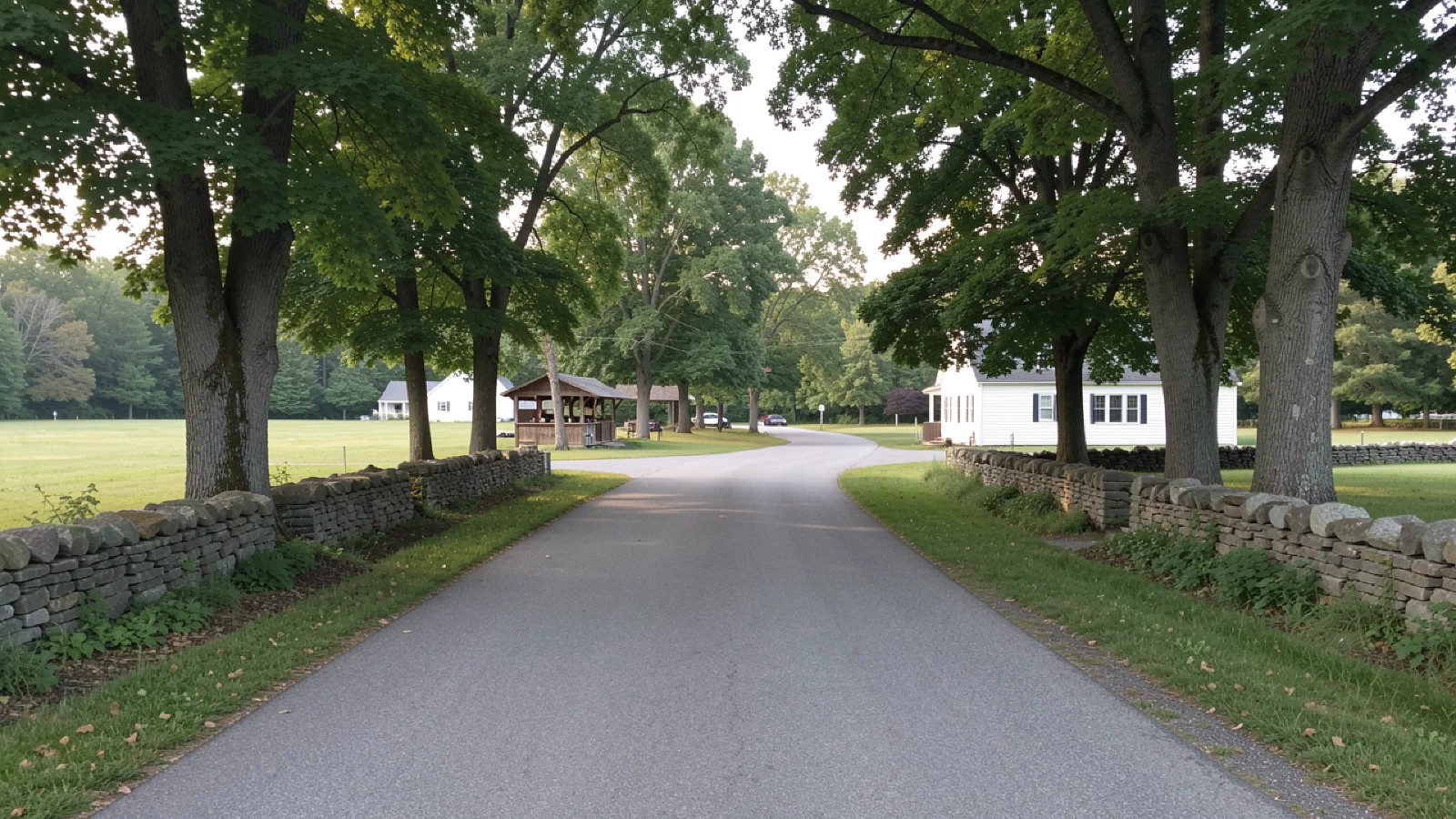
This is not rural in any sense that Series 1 describes. There are no frontier counties. No communities hours from the nearest hospital. No agricultural labor forces without insurance. Rhode Island’s rural designation captures small New England towns with limited local healthcare infrastructure that are nonetheless within 30 to 60 minutes of Providence’s hospital systems. The exception is New Shoreham on Block Island, a 10-square-mile island accessible only by ferry or air, where roughly 1,000 year-round residents depend on the Block Island Medical Center for primary care and must be transported by helicopter or ferry for anything beyond basic services.
Rhode Island expanded Medicaid in 2014 and operates under the Rhode Island Comprehensive Health Insurance Reform Demonstration (Global Consumer Choice Compact), commonly known as the Global Waiver. This Section 1115 waiver, first approved in 2009 and renewed multiple times, gives the state broad flexibility to restructure Medicaid delivery, including managed care integration and cost containment mechanisms that most states lack. The Global Waiver architecture is relevant to RHTP because it positions EOHHS as an entity with genuine Medicaid reform authority rather than merely administrative function.
The healthcare system faces pressures despite relative proximity to urban resources. Rhode Island recently passed legislation to increase Medicaid reimbursement rates to match Medicare, a recognition that low rates were driving physician departures to Massachusetts and Connecticut where reimbursement is substantially higher. Approximately 326,000 Rhode Islanders are on Medicaid, roughly 30% of the population. The state’s healthcare system has been described as approaching crisis by analysts who point to hospital financial stress, physician outmigration, and an aging population concentrated in communities where primary care capacity has not kept pace with demand.
Seasonal housing complicates the rural health landscape. Nearly 10% of rural housing units statewide are seasonal, over three times the non-rural proportion. On Block Island and in Westerly, seasonal homes approach 25% of housing stock. This pattern inflates housing costs for year-round residents, drives up property values beyond what healthcare workers can afford, and creates summer population surges that strain healthcare infrastructure built for permanent residents.
Governor Dan McKee (D) is running for reelection in November 2026 and faces a competitive Democratic primary against former CVS executive Helena Foulkes and potentially House Speaker Joe Shekarchi. McKee’s approval ratings have been persistently weak, with polls ranging from 19% to 44% depending on methodology. The political dynamic matters for RHTP because McKee championed the application and announced the $156 million award as a signature achievement. A new governor taking office in January 2027 inherits Year 1 implementation mid-stream.
RHTP Application and Award#
Rhode Island received a $156.2 million FY2026 award with a projected five-year total of approximately $781 million. At $6,248 per rural resident annually, the per-capita allocation is the most extreme outlier in the entire program, more than 95 times what Texas receives ($66), 15 times what North Carolina receives ($414), and nearly 15 times the national average. This ratio is not a function of application quality or state need. It is a direct consequence of the 50% equal distribution formula that gives every state a $100 million baseline regardless of rural population size. Connecticut and Delaware face similar per-capita dynamics, though at lower absolute levels, illustrating how formula mechanics produce systematically different implementation environments for small-population states.
The Executive Office of Health and Human Services (EOHHS) holds the cooperative agreement as the executive umbrella office, with the Department of Health (RIDOH) serving as operational co-implementer. EOHHS’s authority under the Global Waiver gives it genuine integration leverage across Medicaid and public health. Institutional alignment is strong, comparable to Vermont’s AHS structure and Delaware’s DHSS model.
The application was developed through coordination between EOHHS and RIDOH’s Office of Primary Care and Rural Health, with engagement from hospitals, primary care providers, behavioral health agencies, municipal leaders, and the Narragansett Indian Tribe. Community input came through a statewide rural health survey and listening sessions held across northern and southern Rhode Island and on Block Island.
The application organized around five strategic goals, each with multiple initiatives:
Goal 1: Make Rural America Healthy Again. Coordinated, community-based population health strategies addressing chronic disease, behavioral health, substance use, maternal and child health, and oral health. Estimated allocation of approximately $80 million.
Goal 2: Sustainable Access. Expanded local access points for urgent, primary, behavioral, and specialty care beyond traditional clinical settings, including schools, libraries, community centers, and homes. Strategies include a rural EMS health access and integration initiative with community paramedics, hospital-at-home services to deliver acute care in patients’ residences, and behavioral health crisis stabilization facilities in communities hit hardest by the opioid epidemic. Estimated allocation of approximately $47 million.
Goal 3: Workforce. Recruitment, training, and retention initiatives addressing the provider supply constraints that drive Rhode Islanders to Massachusetts and Connecticut for care. Estimated allocation of approximately $251 million, the largest single goal.
Goal 4: Innovative Care. Value-based payment models that reward quality and outcomes rather than volume, including preparation for CMS’s Aligned Networks pledge. Estimated allocation of approximately $180 million.
Goal 5: Technology Innovation. Health IT modernization grants equipping rural providers with telehealth capacity, AI-enabled care coordination tools, and data connectivity infrastructure. Estimated allocation of approximately $140 million.
The sustainability strategy is notably explicit. The application describes pursuing Medicaid State Plan amendments to cover hospital-at-home as an acute care modality, establishing prospective per-episode or bundled payment methodologies, and building value-based incentives into permanent payment structures. This attention to post-RHTP sustainability distinguishes the application from states that treat the program as temporary funding without an exit strategy.
The Medicaid Math#
Rhode Island’s projected $4.2 billion in Medicaid cuts over ten years represents approximately 16% of baseline spending, among the highest proportional impacts of any expansion state. The 5.4:1 RHTP-to-Medicaid-cut ratio means the state loses $5.40 in Medicaid revenue for every dollar of RHTP investment.
The primary cut mechanism is work requirements, and Rhode Island’s exposure is exceptional. Approximately 56% of Rhode Island’s Medicaid enrollees are ACA expansion adults, the highest proportion in the nation. This means work requirements, income verification mandates, and six-month redetermination cycles will affect a larger share of the Medicaid population than in any other state. The Pew Charitable Trusts identified Rhode Island as facing among the greatest administrative demands under the new rules precisely because of this expansion population concentration.
An estimated 46,000 Rhode Islanders are projected to lose Medicaid coverage, with an additional 40,000 potentially losing healthcare insurance through combined Medicaid and marketplace effects. For a state of 1.1 million people, losing coverage for nearly 8% of the population represents a systemic shock that will ripple through every rural town’s healthcare economics.
The Global Waiver provides Rhode Island with flexibility tools that most states lack for managing Medicaid transitions. EOHHS can restructure managed care arrangements, adjust reimbursement methodologies, and implement coverage continuity mechanisms under waiver authority without requiring legislative action. Whether this flexibility is sufficient to mitigate the scale of coverage loss is the central fiscal question for RHTP sustainability.
Implementation Assessment#
The Per-Capita Paradox#
Rhode Island’s $6,248 per rural resident creates an implementation dynamic that no other state faces. The funding level enables interventions at an intensity that states like Texas ($66 per rural resident) and North Carolina ($82 per rural resident) cannot contemplate. Rhode Island can fund hospital-at-home programs, build crisis stabilization facilities, hire community paramedics, and modernize health IT infrastructure simultaneously without the triage decisions that define implementation in underfunded states.
But the per-capita number is misleading for two reasons. First, the absolute award of $156 million is among the smallest in the program, limiting the total scope of what Rhode Island can build. High per-capita numbers reflect small denominators, not large numerators. Second, the cost of building healthcare infrastructure in southern New England is correspondingly high. Provider salaries, construction costs, and technology procurement in Rhode Island track northeastern market rates, not national averages. A crisis stabilization facility in Washington County costs more to build and staff than the same facility in rural Mississippi.
The honest question is whether $156 million annually transforms healthcare delivery for 196,000 people across 18 towns. The answer depends on whether Rhode Island treats RHTP as a systems change investment or a service delivery supplement.
The Definition Question#
Rhode Island’s RHTP application implicitly tests whether the program’s statutory framework, designed for communities that lack nearby healthcare infrastructure entirely, can meaningfully apply to small New England towns with limited local capacity but reasonable proximity to urban providers. A resident of Foster or Glocester is 40 minutes from Rhode Island Hospital in Providence. A resident of Hopkinton is 30 minutes from Westerly Hospital. Even Block Island, the state’s most isolated community, is a one-hour ferry ride from the mainland.
This proximity does not eliminate healthcare access challenges. Transportation barriers are real. Aging residents who cannot drive face genuine isolation. Behavioral health and substance use services may not exist in the local community even if they exist within driving distance. The application’s emphasis on community-based access points, mobile outreach, and hospital-at-home services addresses legitimate gaps.
But the question for the program nationally is whether $6,248 per rural resident in Rhode Island produces proportionally more health improvement than $66 per rural resident in Texas, where entire counties lack a single physician and the nearest hospital may be 80 miles away. The formula created this allocation. The formula is not something Rhode Island chose. The state’s obligation is to use the funding it received as effectively as possible, not to defend the formula that produced it.
Architecture Trajectory#
Rhode Island’s extreme per-capita allocation creates a unique question: can a state with 196,000 rural residents and nearly unlimited per-capita resources create a proof-of-concept for alternative architecture that larger states can study? The funding level enables experimentation that resource-scarce states cannot attempt. The question is whether Rhode Island uses that advantage.
The hospital-at-home initiative aligns with service center principles, though applied to acute rather than primary care. Delivering hospital-level services in patients’ residences eliminates the facility overhead that makes rural hospitals financially unsustainable. If Rhode Island demonstrates that hospital-at-home reduces costs while maintaining quality, the model could inform transformation strategies in states where building or maintaining hospital infrastructure is financially impossible.
The community paramedic and EMS integration initiative builds toward local workforce models where community members provide care that physician-dependent systems cannot sustain. Community paramedics providing primary care response, chronic disease management, and home-based services create an alternative to physician-dependent delivery that frontier states need but lack resources to pilot. Rhode Island’s funding level enables robust demonstration.
Block Island represents the purest alternative architecture test case. A community of 1,000 year-round residents, accessible only by ferry or air, with one medical center and no specialist capacity, faces constraints that parallel frontier communities. The inverse hub model, where expertise travels virtually to patients who remain in place, is not optional for Block Island. It is the only model that can work. Whether Rhode Island RHTP investment builds comprehensive virtual care infrastructure for Block Island that other isolated communities could adapt is an architecture trajectory question the application does not explicitly answer.
However, Rhode Island’s regulatory environment and urban proximity may limit demonstration value for states facing different constraints. The state has full NP practice authority, eliminating scope barriers that constrain workforce alternatives in other states. The proximity to Providence means Rhode Island’s “rural” communities can always access urban providers when local alternatives fail, a safety net that frontier communities lack. Demonstration effects from Rhode Island may not transfer to settings where the urban backstop does not exist.
Gubernatorial Transition Risk#
Governor McKee faces a competitive Democratic primary in September 2026 against Helena Foulkes, who lost to him by less than three points in 2022 and has already raised over $1.5 million. House Speaker Joe Shekarchi may also enter the race. McKee’s approval ratings, ranging from 19% to 44%, suggest genuine vulnerability.
EOHHS has institutional continuity that transcends gubernatorial transitions, and the Global Waiver architecture provides structural permanence. But a new governor could redirect RHTP emphasis, replace EOHHS leadership, or simply deprioritize a program inherited from a predecessor. The risk is lower than in states where the governor’s office itself serves as lead agency, but it is not negligible during a Year 1 implementation period that coincides with campaign season.
Risk Assessment#
Risk Tier: Low. Rhode Island’s risk profile reflects favorable structural conditions across every dimension the framework measures, with gubernatorial transition as the primary uncertainty.
Formula-driven overallocation is not a risk to Rhode Island but creates a national program credibility question that may invite legislative scrutiny during reauthorization discussions.
Medicaid coverage loss at 16% of baseline is the most severe proportional cut among states with similar institutional advantages, and the 56% expansion-adult share means work requirement disruption will be concentrated rather than distributed.
Gubernatorial transition during Year 1 implementation creates leadership uncertainty that the EOHHS institutional structure partially mitigates.
Definitional mismatch between program intent and Rhode Island’s rural reality creates political vulnerability if program critics use the state’s per-capita allocation to argue for formula redesign.
Honest Assessment#
What the state does well. Rhode Island enters RHTP with institutional advantages that few states match. EOHHS operates with Global Waiver authority that enables Medicaid restructuring without legislative action. The integrated lead agency structure eliminates interagency coordination failures. The application demonstrates genuine strategic thinking about sustainability through Medicaid State Plan amendments, hospital-at-home coverage pathways, and value-based payment transition. The per-capita funding level enables intervention intensity that underfunded states cannot contemplate. Block Island provides a genuine isolated-community test case for virtual-first delivery. Full NP practice authority removes workforce flexibility constraints that limit other states.
Where the plan meets reality. The 56% expansion-adult share creates the highest work requirement exposure in the nation. The 5.4:1 ratio means Medicaid losses will dwarf RHTP investment. Rhode Island’s “rural” reality, 18 towns within an hour of Providence, does not match the frontier conditions RHTP was designed to address. The gubernatorial transition during Year 1 implementation creates leadership uncertainty that institutional continuity can mitigate but not eliminate. The absolute award of $156 million, while generous per-capita, limits total scope compared to larger states. New England cost structures consume funding faster than national averages suggest.
What would change the assessment. Hospital-at-home demonstration producing measurable cost and quality outcomes that inform national policy. Block Island virtual care infrastructure creating a replicable model for isolated communities. Community paramedic expansion demonstrating primary care capacity without physician dependence. Successful Medicaid State Plan amendment for hospital-at-home establishing a post-RHTP coverage pathway. EOHHS leadership continuity through gubernatorial transition maintaining implementation momentum regardless of election outcome.
The best-resourced small-state implementation in the program, testing whether concentrated investment in a defined geography produces measurable systems change. Rhode Island’s value to the national program may ultimately be as a proof of concept for what adequate investment produces, not as a model that other states can follow at the funding levels they receive.
How this article connects to others in Blue Gray Matters.
Sources cited in this article.
- Centers for Medicare and Medicaid Services. "CMS Announces $50 Billion in Awards to Strengthen Rural Health in All 50 States." *CMS Newsroom*, 29 Dec. 2025, cms.gov/newsroom/press-releases/cms-announces-50-billion-awards-strengthen-rural-health-all-50-states.
- Governor Dan McKee. "Governor McKee Announces $156 Million Federal Award to Transform Rural Health Care in Rhode Island." *Rhode Island Governor's Office*, 29 Dec. 2025, governor.ri.gov/press-releases/governor-mckee-announces-156-million-federal-award-transform-rural-health-care-rhode.
- Governor Dan McKee. "Governor McKee Leads Effort to Transform Rural Health Care with Federal Funding Application." *Rhode Island Governor's Office*, 5 Nov. 2025, governor.ri.gov/press-releases/governor-mckee-leads-effort-transform-rural-health-care-federal-funding-application.
- Kaiser Family Foundation. "First-Year Rural Health Fund Awards Range From Less Than $100 Per Rural Resident in Ten States to More Than $500 in Eight." KFF, 7 Jan. 2026, kff.org/state-health-policy-data/first-year-rural-health-fund-awards.
- Pew Charitable Trusts. "New Federal Medicaid Policies Compound State Budget Pressures." Pew, 13 Jan. 2026, pew.org/en/research-and-analysis/articles/2026/01/13/new-federal-medicaid-policies-compound-state-budget-pressures.
- Rhode Island Department of Health. "Rural Health Transformation Program." RIDOH, 2026, health.ri.gov/healthcare/rural-health-transformation-program.
- Rhode Island Department of Health. "Rural Health Transformation Program Community Listening Session." RIDOH, Sept. 2025.
- Rhode Island Executive Office of Health and Human Services. "Rhode Island Rural Health Transformation Program Application Project Narrative." CMS-RHT-26-001, 3 Nov. 2025, eohhs.ri.gov.
- Rhode Island Executive Office of Health and Human Services. "Rhode Island Health Care System Planning Advisory Council Presentation." EOHHS, 21 Nov. 2025.
- Rural Health Information Hub. "Rural Health for Rhode Island Overview." RHIhub, 2025, ruralhealthinfo.org/states/rhode-island.
- University of Pennsylvania Leonard Davis Institute. "Analysis of Rural Health Transformation Program Allocation Methodology." Penn LDI, 4 Dec. 2025.