Ohio
Cluster 2: High Medicaid Exposure States
Governor John Kasich expanded Medicaid in 2013 over fierce legislative opposition, invoking Matthew 25 and the duty to serve “the least of these.” The expansion brought coverage to more than 700,000 Ohioans and stabilized rural hospitals that had been hemorrhaging losses from uncompensated care. It was, for a decade, proof that a Republican governor could defy his party’s orthodoxy on healthcare and produce outcomes that vindicated the decision.
That foundation is being dismantled. Federal policy changes will remove approximately $32 for every $1 in RHTP transformation investment, the steepest exposure ratio among expansion states with high Medicaid burden. Ohio’s 11 identified at-risk hospitals and 72% of rural facilities operating at zero or negative margins face coverage erosion that RHTP’s $72 per rural resident cannot offset. The state’s 32 Appalachian counties contain some of America’s worst health outcomes, yet Ohio ranks 46th nationally in per-capita RHTP allocation, a formula-driven disconnect between documented need and actual investment. The legacy of Kasich’s defiance meets arithmetic that does not care about intentions.
State Context#
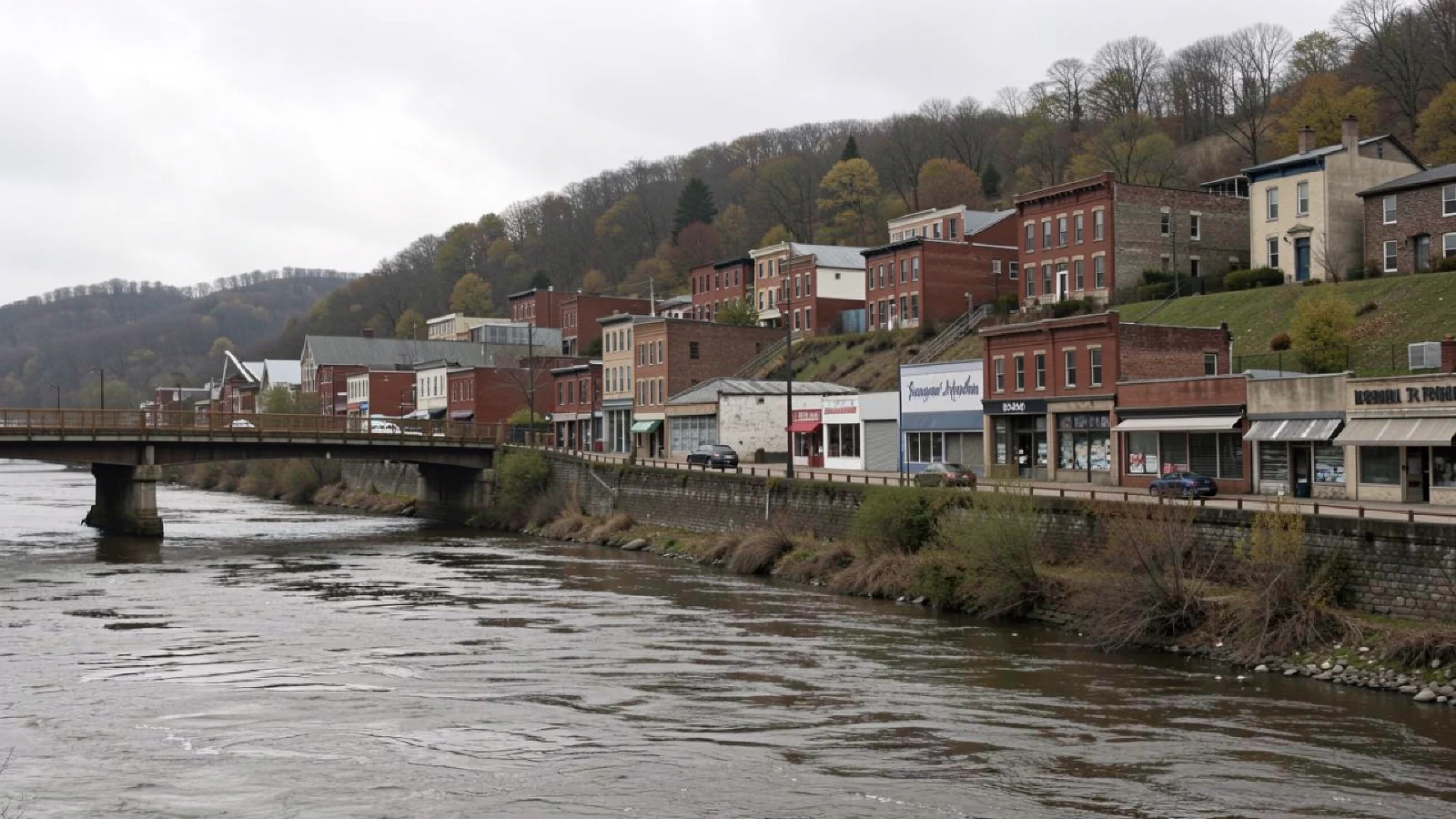
Ohio stretches from Lake Erie’s industrial corridor through central agricultural plains to the Appalachian foothills that define its southeastern character. Approximately 2.8 million residents live in rural and Appalachian areas, concentrated in counties where healthcare infrastructure has contracted for decades and where the opioid crisis produced some of America’s highest overdose mortality rates.
The Ohio Department of Health serves as RHTP lead agency, placing transformation administration within public health rather than the Ohio Department of Medicaid that will simultaneously manage work requirement verifications. This organizational separation creates operational tension: ODH builds rural health capacity while ODM reduces the covered population generating that capacity’s revenue. The agencies must execute contradictory missions during the same implementation period.
Governor Mike DeWine completes his term in 2026 without reelection pressure. Senator Jon Husted, who championed RHTP’s inclusion in reconciliation legislation as Lieutenant Governor, transitioned to the U.S. Senate and continues advocating for rural health funding. Political leadership remains stable, but state legislative provisions would eliminate Medicaid expansion if federal matching rates decline, creating uncertainty for expansion enrollees already facing work requirements.
Ohio expanded Medicaid through Kasich’s executive action using Controlling Board authority in 2013, circumventing legislative opposition. The expansion now covers approximately 715,000 Ohioans, with total Medicaid/CHIP enrollment reaching 2.8 million. The decision that defied his party became coverage that federal policy now targets.
RHTP Application and Award#
Ohio received $202,030,262 in FY2026 funding, ranking 25th among states in absolute dollars, slightly above the $200 million national average. The five-year projection of $1.01 billion suggests sustained investment capacity. But per-capita analysis reveals the allocation’s inadequacy: Health Policy Institute of Ohio calculated Ohio’s $72 per rural resident places the state 46th nationally in per-capita allocation.
The disconnect is stark. States with smaller rural populations but more competitive applications received proportionally greater resources. Alaska receives $990 per rural resident. Wyoming receives $844. Ohio’s 32 Appalachian counties, 11 at-risk hospitals, and 2.8 million rural residents receive funding disproportionately modest relative to documented need.
Application priorities emphasize Rural Health Innovation Hubs conceptualized as clinically integrated networks connecting hospitals, community health centers, behavioral health providers, pharmacies, and EMS agencies. The model assumes network coordination can overcome individual facility vulnerabilities, but the premise depends on anchor institutions remaining viable through Medicaid contraction. Named partners including Adena Health System, OhioHealth, and Bon Secours Mercy Health provide institutional capacity, yet several operate facilities appearing on at-risk lists.
School-based health center expansion targets rural K-12 and college campuses, building on Ohio’s OhioSEE vision care program providing mobile ophthalmology services to students. The workforce pipeline initiative partners with Ohio State University, Northeast Ohio Medical University, and Ohio University Heritage College of Osteopathic Medicine to recruit and retain Ohio-trained clinicians in rural practice. Academic partners include the Appalachian Institute to Advance Health Equity Science, positioning southeastern Ohio’s health disparities as research focus alongside service delivery.
The Medicaid Math#
Ohio’s 32.3:1 RHTP-to-Medicaid-cut ratio is the steepest among expansion states with high Medicaid burden and among the most unfavorable in the program. The state faces $32.6 billion in projected ten-year Medicaid cuts, representing 13% of baseline federal contribution. Manatt Health estimates Ohio hospitals will lose $22.4 billion in Medicaid spending between 2025 and 2034, with rural facilities bearing disproportionate impact given higher Medicaid patient concentrations.
The ratio means this: For every dollar Ohio receives in RHTP transformation funding, federal policy simultaneously removes more than $32 from the Medicaid revenue sustaining rural providers. Indiana’s 18.8:1 ratio is severe. Kentucky’s 19.2:1 ratio is severe. Ohio’s 32.3:1 ratio operates in a different category of mathematical impossibility.
KFF projects rural Ohio communities specifically will lose $6.45 billion over the decade through combined coverage reductions. The Urban Institute analysis estimated over 200,000 individuals could lose coverage under work requirements and enhanced eligibility verification. Ohio’s 80.3% procedural disenrollment rate during Medicaid unwinding, compared to 72.3% nationally, suggests administrative systems may struggle with increased verification burdens.
The work requirement plus state directed payment (WR+SDP) cut mechanism compounds rural exposure through dual pathways. Work requirements will disproportionately affect rural populations where employment opportunities remain limited. SDP restrictions constrain managed care supplemental payments many rural hospitals depend upon. The provider tax reduction from 6% to 3.5% beginning 2028 further limits state capacity to maintain payment rates during federal contraction.
Ohio’s expansion population composition adds implementation complexity. According to the Ohio Department of Medicaid, approximately 43% of expansion enrollees already work, 18% meet medical frailty or disability criteria, and 22% require additional documentation review to verify eligibility. This verification burden will strain administrative systems already processing standard renewals while adding work reporting requirements.
Appalachian Context#
Ohio’s 32 Appalachian counties designated by the Appalachian Regional Commission represent the state’s most profound health disparities. Eight counties qualify as economically distressed, ranking in the bottom 10% of all U.S. counties on poverty, income, and unemployment indicators. HPIO analysis documents rural Appalachian Ohio experiencing the highest rates of chronic disease mortality, substance use disorder, and premature death in the state.
Life expectancy in Appalachian Ohio runs approximately 10 years shorter than elsewhere in the state according to the Foundation for Appalachian Ohio. Heart disease mortality in rural Appalachian counties exceeds national rates by 34%. The poisoning mortality rate (including drug overdoses) runs 40% higher in rural Appalachian counties than in the region’s metropolitan areas.
The primary care provider shortage reaches crisis levels. Nationally, urban areas average one primary care provider per 1,500 residents. Rural areas average one per 3,000. Ohio’s Appalachian counties average one primary care provider per 3,500 residents, exceeding even typical rural deficits.
Dr. Cory Cronin of Ohio University captured the cascading effects: “If we lose these hospitals that are anchors to their community, the entire community shifts. There are less job opportunities, there’s less money in the economy.” Rural hospitals often serve as primary employers in counties with limited economic alternatives, making closures devastating beyond healthcare access alone.
Kentucky shares Ohio’s Appalachian burden across the state line. The mountain chain connecting southeastern Ohio to eastern Kentucky creates regional coherence that state boundaries fragment. Pike County, Kentucky and Adams County, Ohio face identical challenges from opposite sides of an administrative line that has no healthcare meaning. Both states administer RHTP separately with no coordination requirement, despite serving populations that experience the same Appalachian health crisis.
Hospital Vulnerability Assessment#
The Cecil G. Sheps Center identified 11 Ohio rural hospitals at elevated closure or service reduction risk based on Medicaid dependence or consecutive financial losses. Nine qualified due to high Medicaid patient percentages. Twin City Medical Center and Harrison Community Hospital qualified based on three consecutive years of negative operating margins.
High Medicaid Dependence (9 hospitals): Southern Ohio Medical Center (Scioto County), Wayne Hospital Company (Darke County), East Liverpool City Hospital (Columbiana County), Coshocton Regional Medical Center (Coshocton County), Bucyrus Community Hospital (Crawford County), Holzer Medical Center (Jackson County), Galion Community Hospital (Crawford/Morrow/Richland Counties), Adams County Regional Medical Center (Adams County), and Fayette County Memorial Hospital (Fayette County).
Consecutive Financial Losses (2 hospitals): Twin City Medical Center in Dennison (Tuscarawas County) and Harrison Community Hospital in Cadiz (Harrison County).
Ohio Hospital Association data reveals the broader context: approximately 60 hospitals carry rural or critical access designations, with 88% operating at 2% margins or less in 2024 and 72% at zero or negative margins. John Palmer of OHA noted: “Medicaid is what keeps many of these facilities afloat.”
Community Memorial Hospital in Hicksville (Defiance County) closed in 2024 due to financial difficulties, demonstrating vulnerabilities already materializing before federal cuts take effect. The closure was not an anomaly. It was preview.
Hospital responses to at-risk designations varied. Avita Health System stated Bucyrus and Galion Hospitals are “not financially at risk of closing.” Wayne HealthCare acknowledged the bill “could have devastating consequences, particularly for mothers, infants, and low-income families” while asserting the facility was not at immediate closure risk. Adena Health System, overseeing Fayette County Memorial Hospital, declined comment. Most facilities remained silent, reflecting the delicate position of acknowledging vulnerability while maintaining community confidence.
Maternity Care Crisis#
Ohio has 13 counties classified as complete maternity care deserts lacking any hospital obstetric services, birth centers, or obstetric providers. An additional 24 counties lack any OB-GYN practitioners, forcing pregnant women to travel 30 to 45 minutes or more for prenatal care. The 13 desert counties are predominantly Appalachian: Belmont, Carroll, Champaign, Fayette, Hardin, Jackson, Meigs, Monroe, Morrow, Noble, Perry, Putnam, and Vinton.
The desert classification understates access barriers. Women in these counties must travel for every prenatal visit, every ultrasound, every complication. Labor that begins at home requires transport across distances where minutes matter. Jackson County illustrates the pattern: Holzer Medical Center provides the only hospital services, appears on at-risk facility lists, and serves a maternity care desert where alternatives do not exist.
Implementation Assessment#
Ohio’s RHTP implementation faces the fundamental expansion state challenge magnified by the steepest ratio in its category: transformation investment cannot proceed successfully when the providers expected to transform lose viability through simultaneous coverage contraction.
The Rural Health Innovation Hub model assumes network coordination can overcome individual facility vulnerabilities. The premise is plausible in stable conditions. When anchor institutions face the financial pressure 11 at-risk designations and 72% negative margins describe, network coordination becomes reorganizing deck chairs while the ship takes on water.
The workforce pipeline represents Ohio’s most sustainable long-term strategy. Ohio University’s Heritage College of Osteopathic Medicine operates community health programs providing services while training students in rural practice realities. But workforce development produces results over seven to ten year cycles while hospitals face immediate revenue contraction. Alex Jacquez of Groundwork Collaborative characterized RHTP relative to Medicaid cuts: “Calling it a Band-Aid on a bullet wound is an insult to Band-Aids.”
The ODH lead agency structure separates transformation from Medicaid administration, requiring interagency coordination at precisely the moment both agencies face expanded workloads. ODH implements Innovation Hubs while ODM processes work requirement verifications that reduce the patient population those Hubs serve.
EMS treat-in-place expansion scales a pilot program enabling emergency services to provide appropriate care without hospital transport. This initiative addresses both rural access and urban ED crowding but requires training investment and protocol development during a period when system capacity is consumed by coverage transition.
Architecture Trajectory#
Ohio’s RHTP approach intersects with alternative architecture analysis primarily through absence. The state reinforces conventional delivery models rather than building toward alternatives the evidence supports.
The Service Center model addresses exactly the facility viability crisis Ohio faces. Twelve OB closures creating maternity deserts, 11 hospitals at risk, 72% operating at negative margins: these patterns describe infrastructure at the wrong scale for populations that cannot sustain it. A 2,000-square-foot service center with telehealth capacity, visiting specialist space, and local workforce employment costs $400,000 to $700,000 annually rather than the $8 to $15 million a Critical Access Hospital requires.
Ohio’s Innovation Hub model moves in the opposite direction. Rather than right-sizing infrastructure, it coordinates existing facilities that may not survive to be coordinated. The question is not whether network coordination helps viable facilities, but whether it helps facilities that are not viable.
Social care infrastructure directly addresses Appalachian health determinants. Housing instability, food insecurity, transportation barriers, and legal problems drive the health outcomes southeastern Ohio experiences. But Ohio’s application emphasizes clinical integration rather than health-social services integration. Community Information Exchanges connecting health and social providers do not appear in the implementation structure. The social determinants producing Appalachian outcomes remain unaddressed by clinical transformation.
Ohio has full NP practice authority, an enabling condition essential for alternative architecture. Nurse practitioners can practice independently without physician supervision. This regulatory environment supports alternative workforce models that restricted-practice states cannot deploy. But full practice authority alone does not create providers in counties with one primary care clinician per 3,500 residents.
CHW billing pathways remain underdeveloped in Ohio relative to states like Minnesota that have established sustainable community workforce employment. The local workforce model depends on compensation structures Ohio has not built.
The honest assessment of architecture trajectory: Ohio is attempting to coordinate conventional infrastructure rather than building alternatives. Innovation Hubs connect existing facilities. Workforce pipelines produce conventional clinicians. The 32.3:1 ratio suggests conventional infrastructure will not survive regardless of coordination quality. Ohio needed alternative architecture more than most states and invested in conventional coordination.
Risk Assessment#
Ohio’s primary risk is that the ratio makes transformation mathematically impossible regardless of implementation quality.
The 32.3:1 exposure ratio exceeds peer state exposure. Indiana faces 18.8:1. Kentucky faces 19.2:1. Michigan faces 17.4:1. Ohio operates in a different category where even excellent implementation cannot overcome the fiscal gap.
The Appalachian concentration multiplies vulnerability. Eight economically distressed counties, 32 ARC-designated counties, and the state’s worst health outcomes concentrate in southeastern Ohio. These counties needed the most investment and received formula-driven allocation that does not differentiate substate need.
The per-capita allocation disconnect compounds ratio exposure. At $72 per rural resident and 46th national ranking, Ohio received resources disproportionate to documented need. The formula rewarded factors other than health disparity concentration.
The trigger provision creates additional uncertainty. State legislative provisions would eliminate Medicaid expansion if federal matching rates decline below specified thresholds. Expansion enrollees face work requirements, enhanced verification, and the possibility that the expansion itself could be repealed.
Political continuity is stable through 2026. Governor DeWine supports RHTP. Senator Husted champions rural health funding. The administration that designed the application will manage initial execution. This stability cannot overcome the ratio.
Honest Assessment#
Ohio illustrates what happens when a state creates coverage foundation through political courage and federal policy subsequently destroys that foundation through political arithmetic.
What Ohio does well. The application targets documented challenges with appropriate interventions. Innovation Hubs address coordination gaps. Workforce pipelines invest in long-term capacity. Academic partnerships leverage institutional strength. EMS treat-in-place innovation addresses access through alternative delivery. The ODH lead agency has public health expertise relevant to population health transformation. Application scoring confirmed CMS found the approach compelling.
Where the plan faces reality. The 32.3:1 ratio ensures federal cuts overwhelm transformation investment regardless of implementation quality. Innovation Hubs assume anchor institutions remain viable, but 11 at-risk facilities and 72% negative margins suggest otherwise. Workforce pipelines produce clinicians over years while hospitals face immediate revenue loss. The Appalachian counties with worst outcomes received per-capita allocation ranking 46th nationally. The formula disconnected documented need from actual investment.
The Kasich expansion decision looks different in retrospect. In 2013, defying legislative opposition to expand Medicaid appeared courageous. In 2026, that expansion created the coverage population federal policy now targets. States that refused expansion face less severe Medicaid cuts because they have less Medicaid to cut. The reward for serving “the least of these” is steeper exposure when federal policy changes.
What would change the assessment. Three developments would elevate Ohio from mathematical impossibility to transformation opportunity.
First, federal policy change reducing the 32.3:1 ratio. Ohio cannot transform its way out of $32 billion in cuts with $1 billion in investment. The ratio must change.
Second, reallocation formula recognizing substate need concentration. Ohio’s Appalachian counties require investment proportional to disparity concentration. Formula modification directing resources to highest-need subregions rather than averaging across state populations would align investment with documented crisis.
Third, interstate Appalachian coordination enabling regional approaches. Ohio’s southeastern counties share a health crisis with Kentucky’s eastern counties. State-administered transformation cannot fully address regional challenges. Coordination mechanisms enabling joint approaches across state lines would multiply what individual state allocations can accomplish.
Ohio will implement its RHTP initiatives. The state has institutional capacity, academic partnerships, and political stability. The honest question is whether implementation matters when the ratio makes positive outcomes mathematically impossible. Kasich’s defiance created coverage. Federal policy is destroying it. RHTP cannot rebuild what federal policy simultaneously dismantles.
How this article connects to others in Blue Gray Matters.
Sources cited in this article.
- Becker's Hospital Review. "756 Hospitals at Risk of Closure, State by State." *Becker's Hospital Review*, Dec. 2025, www.beckershospitalreview.com/finance/756-hospitals-at-risk-of-closure-state-by-state/.
- Blue & Co., LLC. "Ohio Rural Health Transformation Program." *Blue & Co.*, 20 Jan. 2026, www.blueandco.com/ohio-rural-health-transformation-program/.
- Bryan Times. "Ohio Awarded $202 Million to Expand and Strengthen Rural Health Care Access." *The Bryan Times*, 6 Jan. 2026, www.bryantimes.com/ohio-awarded-202-million-to-expand-and-strengthen-rural-health-care-access/.
- Center for Healthcare Quality and Payment Reform. "Rural Hospitals at Risk of Closing." *CHQPR*, Dec. 2025, www.chqpr.org/downloads/Rural_Hospitals_at_Risk_of_Closing.pdf.
- Centers for Medicare and Medicaid Services. "CMS Announces $50 Billion in Awards to Strengthen Rural Health in All 50 States." *CMS Newsroom*, 29 Dec. 2025, www.cms.gov/newsroom/press-releases/cms-announces-50-billion-awards-strengthen-rural-health-all-50-states.
- Community Solutions. "Behavioral Health Disparities in Appalachia and Rural Ohio." *Community Solutions*, 2025, www.communitysolutions.com/resources/behavioral-health-disparities-in-appalachia-and-rural-ohio.
- Foundation for Appalachian Ohio. "Life Expectancy and Health Outcomes in Appalachian Ohio." *FAO*, 2024.
- Groundwork Ohio. "Ohio Receives Federal Funding Through the Rural Health Transformation Program." *Groundwork Ohio*, 13 Jan. 2026, www.groundworkohio.org/post/ohio-receives-federal-funding-through-the-rural-health-transformation-program.
- Health Policy Institute of Ohio. "Health in Rural and Appalachian Ohio: Data Snapshot." *HPIO*, Aug. 2024, www.healthpolicyohio.org/files/publications/datasnapshotruralhealth.pdf.
- Health Policy Institute of Ohio. "Medicaid Work Requirements in Ohio." *HPIO*, Sept. 2025, www.healthpolicyohio.org/files/publications/workrequirementsexplainer09.26.20252.pdf.
- Health Policy Institute of Ohio. "Rural Health Transformation Program Funding in Ohio." *HPIO*, Jan. 2026, www.healthpolicyohio.org/our-work/publications/rural-health-transformation-program-funding-in-ohio.
- Healthinsurance.org. "Medicaid Eligibility and Enrollment in Ohio." *Healthinsurance.org*, Feb. 2026, www.healthinsurance.org/medicaid/ohio/.
- Ideastream Public Media. "Ohio Opens $200 Million in Grants to Stabilize Rural Health Care." *Ideastream*, 29 Jan. 2026, www.ideastream.org/health/2026-01-29/ohio-opens-200-million-in-grants-to-stabilize-rural-health-care.
- Kaiser Family Foundation. "How Might Federal Medicaid Cuts in the Enacted Reconciliation Package Affect Rural Areas?" *KFF*, 24 July 2025, www.kff.org/medicaid/issue-brief/how-might-federal-medicaid-cuts-affect-rural-areas/.
- Manatt Health. "Ohio Hospital Medicaid Spending Projections 2025-2034." *Manatt Health*, 2025.
- Ohio Capital Journal. "11 Rural Ohio Hospitals Listed At-Risk Under Trump's Spending Bill, According to Democratic Senators." *Ohio Capital Journal*, 9 July 2025, ohiocapitaljournal.com/2025/07/09/11-rural-ohio-hospitals-listed-at-risk-under-trumps-spending-bill-according-to-democratic-senators/.
- Ohio Capital Journal. "'What Happens Is People Don't Get Care.' Ohio Has 24 Counties Without an OB-GYN, According to KFF." *Ohio Capital Journal*, 26 Nov. 2025, ohiocapitaljournal.com/2025/11/26/what-happens-is-people-dont-get-care-ohio-has-24-counties-without-an-ob-gyn-according-to-kff/.
- Ohio Hospital Association. "Rural Health Fund Allocation Ad Hoc Committee." *Ohio Hospital Association*, Jan. 2026, www.ohiohospitals.org/about/rural.
- Ohio State Medical Association. "Ohio Submits Rural Health Transformation Application: OSMA's Role & What's Next." *OSMA*, Dec. 2025, osma.org/aws/OSMA/pt/sd/news_article/607409/.
- Policy Matters Ohio. "Impacts of Federal Budget Cuts in Ohio." *Policy Matters Ohio*, 13 Nov. 2025, policymattersohio.org/research/fallout-from-obbba-will-last-years/.
- Shumaker, Loop and Kendrick, LLP. "Client Alert: Ohio Receives $202 Million for Rural Health Transformation." *Shumaker*, 8 Jan. 2026, www.shumaker.com/insight/client-alert-ohio-receives-202-million-for-rural-health-transformation-what-health-care-providers-should-know/.
- Spectrum News 1. "11 Rural Hospitals in Ohio Listed 'At-Risk' Due to Medicaid Cuts." *Spectrum News 1*, 17 July 2025, spectrumnews1.com/oh/columbus/news/2025/07/17/obbb-rural-hospital-medicaid.
- Statehouse News Bureau. "Medicaid Cuts Could Have Big Consequences for Rural Hospitals." *The Statehouse News Bureau*, 21 July 2025, www.statenews.org/section/the-ohio-newsroom/2025-07-21/medicaid-cuts-could-have-big-consequences-for-rural-hospitals.
- The Post Athens. "Maternity Deserts Spread Across Ohio, Deprive Rural Residents Healthcare." *The Post*, 17 Sept. 2025, www.thepostathens.com/article/2025/09/news-maternity-desert-southeast-ohio.
- The Post Athens. "Medicaid Cuts Pose Potential Threats to Rural Ohio Hospitals." *The Post*, 8 Sept. 2025, www.thepostathens.com/article/2025/09/medicaid-cuts-threats-rural-ohio-hospitals.
- Tribune Chronicle. "Ohio Gets $200M for Rural Health Initiative." *Tribune Chronicle*, 4 Jan. 2026, www.tribtoday.com/news/local-news/2026/01/ohio-gets-200m-for-rural-health-initiative/.
- Urban Institute. "Ohio 1115 Waiver Coverage Loss Projections." *Urban Institute*, 2025.
- WOUB Public Media. "Ohio Was Awarded $202 Million for Rural Health. It's Not Enough to Offset Federal Medicaid Cuts." *WOUB*, 2 Feb. 2026, woub.org/2026/02/02/ohio-awarded-202-million-rural-health-not-enough-offset-federal-medicaid-cuts/.