North Dakota
Cluster 1: Low-Constraint Expansion States
North Dakota possesses the most favorable RHTP-to-Medicaid-cut ratio in the entire program. At 1.3:1, the state receives nearly equal transformation investment relative to projected Medicaid losses. Vermont at 1.6:1 is close. Every other state faces ratios ranging from Maine’s 2.9:1 to Mississippi’s 400+:1. This mathematical reality, combined with expansion state status and low implementation constraints, plus a newly inaugurated governor who convened a special legislative session within weeks of taking office, creates implementation conditions that approach optimal.
The $199 million FY2026 award translates to $398 per rural resident annually, among the highest per-capita allocations nationally. North Dakota’s small population, approximately 500,000 rural residents across a state where 75 percent of counties face primary care shortages, means RHTP funding can achieve concentration that larger states cannot match. The question is not whether resources suffice but whether implementation infrastructure can deploy them effectively.
State Context#
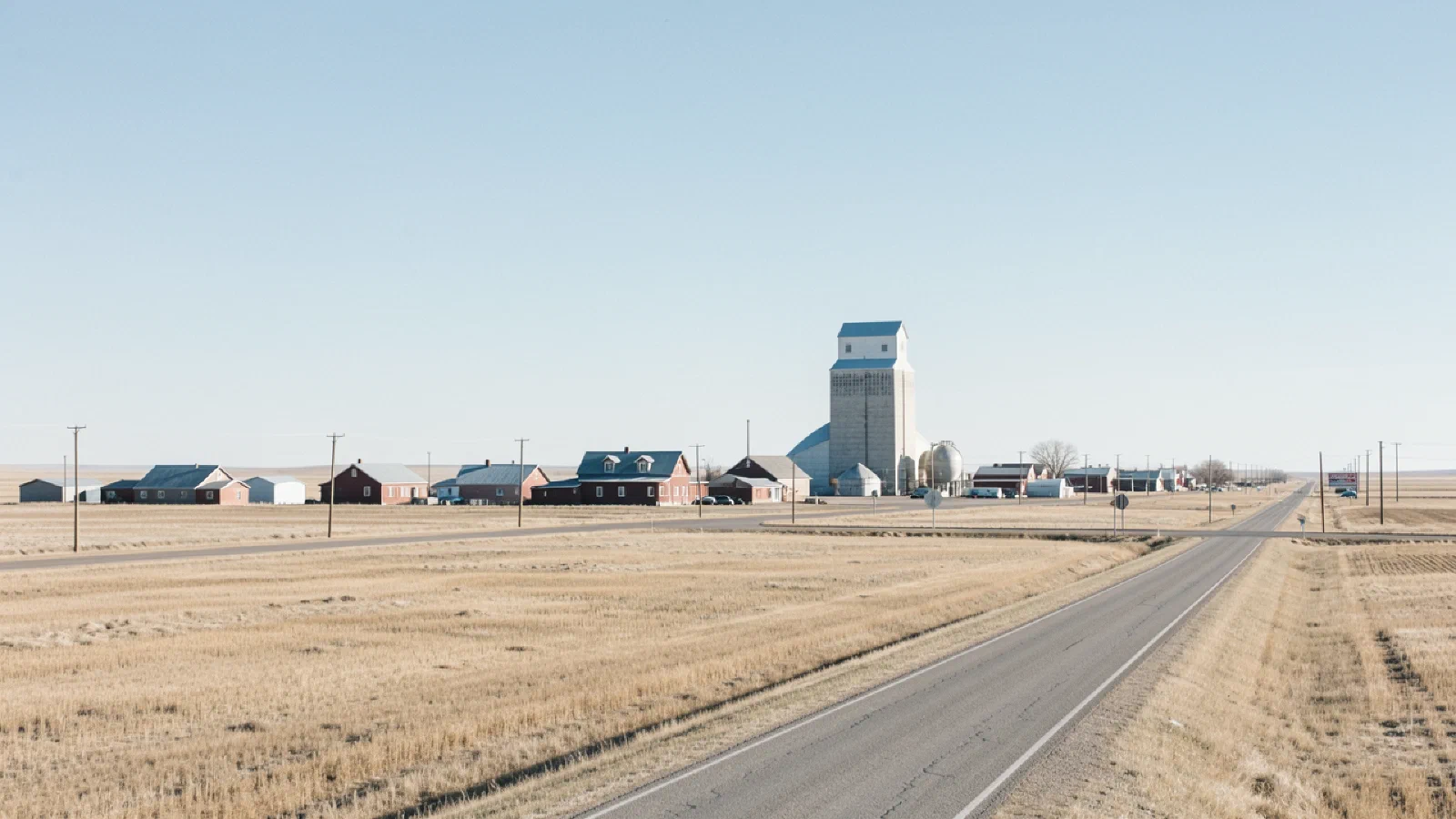
North Dakota’s 780,000 total residents distribute across a landscape that defines frontier healthcare challenges. The state spans 70,000 square miles with population density of 11 people per square mile. Outside Fargo, Bismarck, and Grand Forks, distances between communities routinely exceed 50 miles. Seventeen counties have no practicing dentist. Nearly half lack adequate dental care of any kind. Emergency medical services face staffing and finance crises that threaten coverage in the most remote areas.
The healthcare infrastructure reflects this geography. North Dakota operates 36 Critical Access Hospitals, with ten named to the Chartis Center for Rural Health’s Top 100 list for 2026. This recognition indicates above-average performance among a cohort facing universal challenges. However, Jacobson Memorial Hospital in Elgin faces closure risk without state assistance, demonstrating that even strong systems contain facilities in crisis.
North Dakota expanded Medicaid in 2017 through ballot initiative, making it an expansion state despite Republican governance. The expansion covers approximately 30,000 residents, a small absolute number that contributes to the favorable Medicaid math. Projected ten-year cuts of $1.3 billion represent 11 percent of baseline spending, the lowest percentage impact among all states.
Governor Kelly Armstrong took office in January 2025, succeeding Doug Burgum who departed to join the Trump administration. Armstrong convened a special legislative session January 21-23, 2026, solely to appropriate RHTP funding. The session passed HB 1623 appropriating $397.9 million for the program’s first two years, demonstrating legislative alignment that most states have not achieved.
RHTP Application and Award#
North Dakota received a FY2026 award of $199 million with five-year projected total near $1 billion. The application organizes around four pillars designed for frontier conditions.
Growing the Health Care Workforce receives $49.6 million. The initiative targets recruitment and retention of physicians, nurses, behavioral health professionals, dentists, and EMS personnel. Armstrong’s State of the State address characterized the challenge bluntly: the state must “get doctors who want to stay” rather than cycling through temporary placements that undermine care continuity.
The application explicitly avoids creating ongoing state-funded positions: “new state employees cannot be funded with this program.” This constraint reflects both RHTP statutory requirements and Armstrong’s stated preference for infrastructure investment over recurring personnel obligations.
Keeping North Dakotans Healthy receives approximately equivalent allocation for prevention and chronic disease management. Programs include Eat Well ND for nutrition education and ND Moves Together promoting physical activity. The application references partnerships with faith leaders, tribal communities, and schools to deliver culturally appropriate wellness programming.
Bringing High-Quality Health Care Closer to Home receives the largest allocation at $116 million. This initiative funds telehealth infrastructure, mobile health clinics, and technology that brings specialty care to communities without resident specialists. Armstrong highlighted mobile health clinics as particularly promising: reducing 100-mile drives in blizzards for appointments manageable through telehealth or mobile units.
Connecting Technology and Data for a Stronger North Dakota receives $33.4 million. The initiative supports health information technology, data infrastructure, and interoperability improvements that enable coordinated care across distances.
The Bank of North Dakota, the nation’s only state-owned bank, will provide up to $40 million in stop-gap loans to grant applicants awaiting federal reimbursement. This provision addresses cash flow challenges that delay implementation in states lacking similar financial infrastructure.
The Medicaid Math#
North Dakota’s 1.3:1 ratio is the program’s most favorable. The projected $1.3 billion in ten-year Medicaid cuts, representing 11 percent of baseline spending, nearly equals the approximately $1 billion in projected RHTP investment. No other state approaches this parity.
The primary cut mechanisms combine work requirements with provider tax provisions in roughly equal measure. North Dakota’s small expansion population limits work requirement impact relative to states with larger expansion enrollment. The combined effect produces Medicaid pressure that RHTP investment can substantially address.
This mathematical position transforms what RHTP can accomplish. Where Oregon at 22.2:1 cannot offset projected losses, North Dakota can approach genuine investment parity. The transformation strategy need not assume that Medicaid cuts will overwhelm transformation gains. Instead, North Dakota can design for sustainability from program inception rather than managing decline.
House Minority Leader Zac Ista acknowledged this dynamic while noting the broader context: “Families will lose insurance coverage, patients will wait longer and pay more for care, and rural hospitals will risk closure. That’s a one-step-forward-two-steps-back approach to solving the problem.” The criticism identifies real tension in federal policy while missing North Dakota’s unique position within that policy framework.
Implementation Assessment#
Transformation Approach Plausibility#
North Dakota’s four-pillar approach distributes resources across complementary initiatives rather than concentrating on a single strategy. The $116 million telehealth and mobile clinic investment is the centerpiece: bringing care to patients rather than requiring patients to reach care. For a state where winter travel can be dangerous and distances routinely exceed specialist availability, this investment addresses the primary access barrier.
The workforce pillar confronts the reality that 75 percent of counties face primary care shortages. Recruitment funding can attract providers, but retention in communities of 500 to 2,000 people depends on factors that financial incentives alone cannot control. The explicit exclusion of ongoing personnel positions means RHTP builds infrastructure that recruited providers use rather than directly sustaining their employment.
Senator John Hoeven’s characterization of implementation as a “horse race” for additional funding reflects the competitive dynamic CMS has created. States demonstrating effective deployment may receive larger subsequent allocations. North Dakota’s rapid appropriation and grant release positions it favorably for Year 2 awards expected in October 2026.
Infrastructure Readiness#
The Bank of North Dakota stop-gap loan provision addresses a genuine implementation barrier. Federal grant reimbursement timelines create cash flow challenges for organizations lacking reserves. The $40 million loan capacity enables smaller providers to participate without front-loading expenses they cannot carry.
HHS expects first subaward grant opportunities in February 2026, with applications processed for release in the first quarter. This timeline maintains momentum from the special session while allowing sufficient preparation for quality applications.
Architecture Trajectory#
North Dakota’s mathematical advantage creates implementation latitude that no other state possesses, yet the RHTP plan deploys that advantage through conventional transformation approaches. The four-pillar structure, telehealth expansion, workforce recruitment, prevention programming, and data infrastructure, represents competent execution of the standard template. The question the favorable math raises is whether competent conventional transformation is sufficient, or whether near-parity creates an obligation to test something different.
North Dakota’s frontier geography is the natural proving ground for inverse hub delivery. The state’s 70,000 square miles, 11 people per square mile density, and 50-plus-mile distances between communities describe precisely the conditions where virtual-first care models outperform facility-dependent ones, with expertise traveling to patients through digital infrastructure rather than patients traveling to facilities. The “Bringing High-Quality Health Care Closer to Home” pillar invests $116 million in telehealth and mobile clinics, building digital and mobile infrastructure that constitutes the physical foundation for inverse hub architecture. But the plan treats telehealth as a supplement to facility-based delivery rather than as the primary care modality with facility-based services reserved for clinical encounters that require physical presence. The difference matters: supplemental telehealth adds connectivity costs to an existing facility model. Inverse hub architecture replaces the facility model with a lower-cost, higher-reach alternative that better matches frontier population density.
The workforce pillar’s recruitment orientation connects to a structural vulnerability the plan does not address. Western North Dakota’s Bakken oil formation communities experience boom-bust population cycles that make permanent physician recruitment particularly unreliable. When oil prices rise, population surges and healthcare demand spikes. When prices fall, workers leave and patient panels collapse. Recruitment bonuses attracting providers during booms produce vacancies during busts. A nomadic professional model is designed for exactly this volatility: professionals serving multiple communities on rotation, maintaining continuity through virtual presence between physical visits, with compensation structures and housing infrastructure built for mobility rather than permanence. North Dakota’s frontier distances align with an 85 percent virtual, 15 percent in-person hybrid that works for frontier contexts, yet the plan’s workforce pillar assumes the permanent relocation model that decades of evidence show fails in precisely these conditions.
Cross-border health systems create interstate coordination needs that the plan largely ignores. North Dakota communities along the Minnesota border access Sanford Health and Essentia Health facilities that operate across state lines. Western communities share health infrastructure with Montana. The Turtle Mountain Band of Chippewa and other tribal nations operate health systems governed by federal rather than state authority. These interstate intersections require coordinated infrastructure, shared data systems, and aligned regulatory frameworks. North Dakota participates in the Nurse Licensure Compact and the Interstate Medical Licensure Compact, providing the regulatory foundation for cross-border practice. But the RHTP plan treats North Dakota as a self-contained implementation unit rather than a node in regional health infrastructure that extends into Minnesota, Montana, and South Dakota.
The Bank of North Dakota represents the state’s most distinctive asset for alternative architecture. As the nation’s only state-owned bank, it provides sovereign capital formation capacity that no other state can replicate through RHTP alone. The $40 million stop-gap loan program uses this capacity for cash flow management. The question is whether North Dakota recognizes the Bank as infrastructure for patient capital investment with 15-to-25-year horizons, financing community-owned health cooperatives, broadband deployment, and service center construction at rates and timelines that commercial capital markets will not offer. The mathematical advantage combined with sovereign banking capacity creates conditions for piloting alternative architecture that other states could study and adapt. The plan does not pursue this opportunity.
Risk Assessment#
North Dakota’s risk profile is the most favorable in the RHTP program, but favorable conditions do not guarantee successful implementation.
The mathematical advantage is genuine. No other state approaches North Dakota’s ratio. This position creates implementation latitude that constrained states cannot access.
Political alignment is demonstrated, not assumed. The special session proved legislative commitment. Armstrong’s explicit sustainability requirements shape implementation toward lasting infrastructure rather than temporary programming.
The primary risk is capacity, not resources. North Dakota HHS must process grant applications, monitor compliance, and coordinate across initiatives while simultaneously implementing other federal and state programs. The agency’s administrative capacity relative to program scope determines whether favorable conditions translate to favorable outcomes.
Distance and density create implementation challenges that funding cannot fully resolve. Mobile health clinics and telehealth extend reach, but some healthcare requires physical presence. The 17 counties without dentists cannot be served entirely through technology.
Honest Assessment#
North Dakota will demonstrate what RHTP can accomplish when conditions align. The favorable ratio, political alignment, administrative integration, and rapid implementation create a natural experiment in transformation under optimal circumstances.
What North Dakota does well. The special session demonstrated commitment that moves beyond rhetoric to appropriation. The four-pillar approach balances immediate access expansion with workforce development, prevention, and technology infrastructure. The Bank of North Dakota loan provision addresses cash flow barriers that delay implementation elsewhere. The explicit rejection of ongoing personnel obligations focuses investment on sustainable infrastructure.
Where the plan faces reality. Prevention investments cannot produce chronic disease improvements within RHTP’s five-year window. The 75 percent of counties facing primary care shortages require more providers than workforce funding can quickly generate. Jacobson Memorial Hospital’s closure risk demonstrates that even favorable statewide conditions contain individual facility crises. The plan’s conventional transformation approach does not exploit North Dakota’s unique combination of near-parity math, frontier geography, and sovereign banking capacity to pilot alternative models that less-favorably-positioned states could learn from.
What would change the assessment. Two developments would confirm North Dakota’s trajectory. First, Year 2 CMS allocation maintaining or exceeding Year 1 per-capita levels, validating the implementation approach. Second, measurable increases in primary care coverage in currently underserved counties, demonstrating that telehealth and mobile units genuinely substitute for resident providers rather than merely supplementing existing capacity. A third would transform it: using the Bank of North Dakota to capitalize health cooperative formation or service center construction as proof-of-concept investments, converting mathematical advantage into architectural innovation that justifies the program’s most favorable position.
North Dakota entered RHTP with the program’s best mathematical position. The special session converted that position into appropriated funding faster than any other state. What remains is execution: translating favorable conditions into healthcare access improvements that outlast the funding window.
How this article connects to others in Blue Gray Matters.
Sources cited in this article.
- Armstrong, Kelly. "2026 State of the State Address." *Office of the Governor*, 21 Jan. 2026, www.governor.nd.gov/sites/www/files/documents/2026%20State%20of%20the%20State%20transcript.pdf.
- Cramer, Kevin. "North Dakota Awarded Nearly $200 Million for Rural Health Transformation Plan." *U.S. Senate*, 29 Dec. 2025, www.cramer.senate.gov/news/press-releases/north-dakota-awarded-nearly-200-million-for-rural-health-transformation-plan.
- North Dakota Department of Health and Human Services. "Rural Health Transformation." *HHS.nd.gov*, 2026, www.hhs.nd.gov/rural-health-transformation.
- North Dakota Hospital Association. "Ten North Dakota Critical Access Hospitals Named to Chartis Top 100 List for 2026." *NDHA*, 2026, ndha.org/ten-north-dakota-critical-access-hospitals-named-to-chartis-top-100-list-for-2026.
- North Dakota Monitor. "Gov. Armstrong Urges Lawmakers to Stay Focused on Rural Health Care as North Dakota Session Opens." *North Dakota Monitor*, 21 Jan. 2026, northdakotamonitor.com/2026/01/21/gov-armstrong-urges-lawmakers-to-stay-focused-on-rural-health-care-as-north-dakota-session-opens.
- North Dakota Monitor. "North Dakota Rural Health Plan Approved, 'Now We've Got to Implement It.'" *North Dakota Monitor*, 23 Jan. 2026, northdakotamonitor.com/2026/01/23/north-dakota-rural-health-plan-approved-now-weve-got-to-implement-it.
- Office of the Governor. "ND Awarded $199M for Rural Health Transformation Program to Strengthen Care in Rural Communities." *Governor.nd.gov*, 29 Dec. 2025, www.governor.nd.gov/news/nd-awarded-199m-rural-health-transformation-program-strengthen-care-rural-communities.