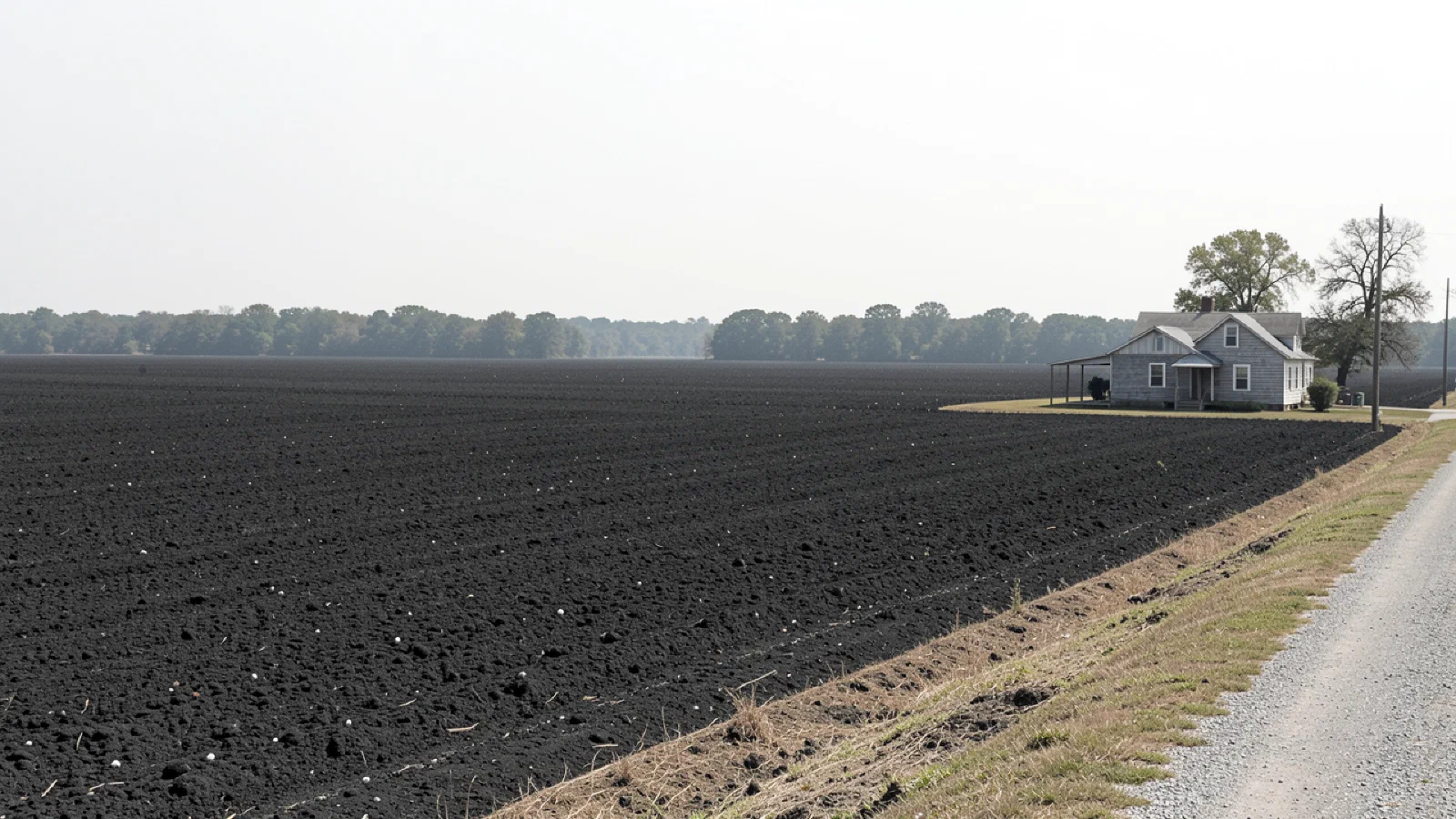
Mississippi
Cluster 4: Non-Expansion High-Burden States
Mississippi is the anchor state for compound disadvantage. Every structural barrier the Rural Health Transformation Program was designed to address exists here at maximum intensity, and the one policy tool that could most meaningfully alter the trajectory of rural health in the state has been refused for more than a decade. The Commonwealth Fund’s 2025 State Health System Performance Scorecard ranks Mississippi dead last nationally across 50 measures of access, affordability, prevention, treatment, outcomes, and equity. The state leads the nation in fetal mortality, infant mortality, and pre-term birth. It leads in deaths from heart disease, cancer, stroke, and Alzheimer’s. It has the highest poverty rate, the lowest life expectancy, and a public health investment of $15.97 per resident annually against a national average nearly two and a half times that figure. Mississippi does not illustrate non-expansion high-burden conditions. It defines the category’s floor.
State Context#
The RHTP places $205.9 million annually into this landscape for five years. That investment arrives simultaneously with projected Medicaid losses of $5.4 billion over the next decade, the scheduled phasedown of the state-directed payment program that serves as a financial lifeline for rural hospitals, the permanent closure of Medicaid expansion as a realistic policy option after the One Big Beautiful Bill Act restructured federal funding, and a hospital system where more than half of rural facilities face closure risk. Five simultaneous failure mode exposures converge: Procurement Paralysis, Geographic Equity Collapse, Sustainability Fiction, Subawardee Capacity Failure, and Medicaid Math Cliff. These do not add. They compound.
RHTP Application and Award#
Mississippi received $205.9 million for FY2026, ranking sixth nationally. The five-year total is projected at $1.03 billion. Governor Tate Reeves announced the state’s application on November 4, 2025, one day before the CMS deadline, describing the process as a “60-day sprint” from the September 15 guidelines release. The application was not released publicly. Mississippi was one of four states that declined to share application documents, and the Governor’s office denied a Mississippi Today public records request, claiming the documents were “confidential under Federal law” until awards were made.
The application organizes around six initiatives:
Statewide Health Assessment. A third-party organization will conduct a comprehensive assessment of rural health needs for the current decade. The Governor did not identify how the third party would be selected.
Coordinated Regional Integrated Systems Initiative. The structural centerpiece, designed to transform rural healthcare delivery through data-driven regional networks connecting hospitals, clinics, and health centers.
Workforce Expansion Initiative. Recruitment, retention, and training programs including retention awards, residency expansion, preceptor development, early-career outreach, and “Earn While You Learn” programs targeting clinicians, allied health professionals, and support staff. Mississippi faces a projected shortage of 3,709 physicians by 2030, ranking 49th nationally in total physician supply, with mental health provider shortages affecting more than 2.1 million underserved residents.
Health Technology Advancement and Modernization Initiative. A digital backbone for rural health systems including health information technology modernization, cybersecurity upgrades, and consumer-facing tools.
Telehealth Adoption and Provider Support Initiative. Virtual care expansion, provider training on telehealth adoption, connectivity and diagnostic tool investments, and exploration of innovative payment models for remote care delivery.
Building Rural Infrastructure for Delivery, Growth and Efficiency (BRIDGE) Initiative. Capital investments, psychiatric emergency services, care gap closure, and pilot programs for early intervention, Autism Spectrum Disorder care management, and value-based care. This initiative addresses physical and operational capacity rather than service delivery models.
The Office of the Governor serves as lead agency with coordination oversight, working with the Mississippi Department of Health (which houses the State Office of Rural Health) and the Mississippi Division of Medicaid (a division of the Governor’s office). A third-party organization will assist with fund deployment, milestone tracking, and outcome assessment. No subawardees have yet been formally awarded. Agreements will be established during implementation and may include rural hospitals, FQHCs, primary care clinics, community health centers, technology vendors, universities, and professional associations. Alabama, Mississippi’s non-expansion peer with comparable constraints, received $214.3 million for a similar rural population (1.52 million vs. Mississippi’s 1.6 million), producing nearly identical per-capita allocations ($141 vs. $129) that will not be sufficient for either state to overcome structural deficits without coverage expansion.
The application was developed with input from the Division of Medicaid, the Department of Health, the Department of Education, legislators, health professionals, and health plan representatives. Mississippi also engaged consultants to assist with application preparation. Governor Reeves stated his intent to capture disproportionate second-round funding through complementary SNAP waivers restricting processed food and sugary beverage purchases while permitting hot prepared chicken, framing the waivers as health outcome improvements that would strengthen Mississippi’s competitive position: “Our goal of the other $25 billion is to get our fair share and the fair share of two or three other states.”
The application explicitly does not include direct financial assistance to hospitals, which CMS indicated it would not approve. Reeves acknowledged this constraint: “Every facility in our state is going to have to continue to think through what exactly their business model looks like.”
The Medicaid Math#
Mississippi’s Medicaid Math tells the story of a non-expansion state whose existing safety net is being dismantled from above while $1 billion in transformation funding tries to build something durable on the wreckage.
RHTP five-year total: $1.03 billion. Ten-year Medicaid cut estimate: $3.2 billion (6% of baseline). The resulting 3.1:1 ratio appears moderate against expansion states and high-complexity transition states with more extreme ratios. The ratio obscures three realities that make Mississippi’s position worse than the number suggests. Louisiana, Mississippi’s expansion-state neighbor sharing the Delta, faces an 8.7:1 ratio that appears worse numerically but reflects a state that expanded coverage, reduced its uninsured rate from 22.7% to 8.3%, and built the Medicaid billing infrastructure that post-RHTP sustainability requires.
First, Mississippi never had the expansion revenue to lose. The 3.1:1 ratio is low because the denominator is small. Non-expansion states face smaller absolute Medicaid cuts precisely because they refused the larger federal investment. Mississippi left an estimated $1 billion per year in federal Medicaid expansion funding on the table for more than a decade. The 200,000 Mississippians who would have gained coverage, including 74,000 in the coverage gap who earn too little for marketplace subsidies and too much for Mississippi’s current Medicaid eligibility (which covers parents only up to 24% of the federal poverty level, roughly $488 per month for a family of three), remain uninsured. The ratio understates the structural deficit because it measures only what is being taken away, not what was never received.
Second, the cut mechanisms hit hospitals at their most vulnerable pressure point. The Mississippi Hospital Access Program (MHAP), the state-directed payment arrangement that supplements Medicaid reimbursements to hospitals, expanded from $533 million annually during SFY 2016-2022 to over $1.5 billion annually for SFY 2024-2026 after CMS approved enhanced rates at approximately 80% of the average commercial rate. The Mississippi Hospital Association president has described MHAP as “a lifeline” for rural hospitals. Under the One Big Beautiful Bill Act, the reimbursement ceiling for state-directed payments begins stepping down in Federal Fiscal Year 2028 until it reaches 110% of the Medicare rate, which is substantially lower than the current average commercial rate benchmark. Mississippi Medicaid Director Cindy Bradshaw has estimated the MHAP phasedown will cost hospitals $160 million per year beginning in 2029. The Mississippi Hospital Association estimates the total state-directed payment losses at at least $500 million over the decade.
The phasedown could arrive even earlier. MHAP requires rebasing and CMS approval in State Fiscal Year 2027. The recalculated rate could trigger significant reductions before the statutory phasedown begins. Hospitals will experience what the MHA’s vice president for policy called a “deceiving situation” where RHTP cash and current MHAP levels create apparent financial stability in 2027 and 2028 before the state-directed payment reduction and RHTP sunset converge to produce a fiscal cliff.
Third, the cuts compound on a population already losing coverage. An estimated 161,000 Mississippians are projected to lose health coverage as a combined result of the new law’s administrative requirements, work requirement mandates, and the expiration of enhanced ACA marketplace subsidies. Approximately 46,000 current Medicaid enrollees could lose coverage through new eligibility verification and administrative requirements. When people lose coverage, they do not stop needing care. They present later, sicker, to emergency departments at hospitals operating on negative margins that are legally required by EMTALA to treat them regardless of ability to pay. The uncompensated care burden rises precisely as the revenue base declines.
The coverage gap is not an abstraction. Lakeisha Preston of New Hebron works at a federal Medicaid call center helping residents of other states enroll in coverage she cannot access herself. A single mother with high blood pressure and high cholesterol, she carries insurance with a $2,500 deductible that makes the coverage functionally unusable: “I might as well not have it.” Dr. Roderick Givens, a radiation oncologist practicing in the Delta, describes the clinical reality the gap produces: patients with full-time jobs presenting with advanced disease because they have not seen a physician in years and cannot afford to. The coverage gap does not merely leave people uninsured. It produces the disease burden and late-stage presentations that drive Mississippi’s worst-in-nation mortality statistics.
Medicaid expansion is no longer a realistic option. In February 2026, Senate Medicaid Committee Chair Kevin Blackwell declared expansion dead: “There is no expansion. The Big Beautiful Bill changed funding.” This ended a two-year legislative arc that brought Mississippi closer to expansion than at any point in history. The House passed expansion with a veto-proof 98-20 majority in 2024. The Senate and House could not agree on work requirement language, and Governor Reeves signaled he would veto. In 2025, vehicle legislation was prepared but lawmakers deferred to await the new federal environment. The OBBBA’s restructuring of Medicaid financing made expansion economically untenable for holdout states. Mississippi will enter, execute, and exit the RHTP as a non-expansion state. Every sustainability plan must be designed without the Medicaid billing pathway that expansion provides.
Implementation Assessment#
Transformation Approach Plausibility#
The six initiatives are organizationally conventional and substantively vague. The statewide health assessment is a reasonable first step, but it consumes planning time in a five-year program where every month matters. Mississippi’s rural health needs are extensively documented through Commonwealth Fund scorecards, Chartis vulnerability analyses, CHQPR closure risk reports, March of Dimes maternity desert mapping, and decades of academic research. What Mississippi lacks is not information about the problem. It is the political will and financial architecture to address what the information reveals.
The Coordinated Regional Integrated Systems Initiative is the most important structural component, but the application provides minimal detail about regional boundaries, governance structures, coordination mechanisms, or accountability frameworks. The workforce expansion initiative addresses a genuine crisis (3,709 projected physician shortfall, 2.1 million residents in mental health professional shortage areas) but does not explain how “Earn While You Learn” programs will recruit professionals to communities where housing stock is deteriorating, school systems are underfunded, and the nearest tertiary care center may be hours away.
The BRIDGE initiative’s inclusion of Autism Spectrum Disorder-focused care management and value-based care pilots suggests the application was designed to demonstrate breadth rather than strategic focus. A state where 25 rural hospitals face immediate closure risk and 51.2% of counties lack any obstetric provider should not be distributing transformation resources across specialized pilot programs that serve small populations when foundational access infrastructure is collapsing.
The application’s refusal to release its full text or application summary prevents external assessment of specificity, budget allocation, performance metrics, or implementation timelines beyond what was shared at the November press conference. This opacity is not standard. Most states released full or partial application materials. Mississippi’s decision to withhold them raises legitimate questions about whether the initiatives contain operational detail or remain at the conceptual level presented publicly.
Architecture Trajectory#
Mississippi’s compound disadvantage creates conditions where alternative architecture is not optional enhancement but survival necessity. The conventional healthcare model has failed here more completely than anywhere else in the country. Continuing to subsidize that model with transformation funding produces the same outcomes the model has always produced: worst-in-nation mortality, collapsing hospital infrastructure, and coverage gaps that generate the disease burden transformation is supposed to address.
The question is whether RHTP investment builds toward something different or merely delays the conventional model’s final collapse. The six initiatives provide little indication of architecture thinking. The Coordinated Regional Integrated Systems Initiative could theoretically evolve toward distributed campus governance where regional systems cross-subsidize essential access points that cannot survive independently. But the application lacks detail on regional governance structures, cross-subsidization mechanisms, or accountability frameworks that would indicate movement in that direction.
The telehealth initiative could build toward inverse hub principles where expertise travels to patients through virtual infrastructure rather than requiring patients to travel hours for specialist access. For Delta communities where residents travel 75 miles for primary care, telehealth is not convenience. It is the only delivery model that can work. Whether Mississippi’s telehealth investment creates comprehensive virtual care infrastructure or merely adds technology to a failing conventional model depends on implementation details the application does not specify.
The workforce crisis demands alternative workforce architecture. Mississippi cannot recruit 3,709 physicians by 2030 through conventional means. The state ranks 49th in physician supply with structural conditions (poverty, housing, schools, isolation) that defeat conventional recruitment incentives. Alternative workforce models where community health workers, community paramedics, and expanded-scope practitioners provide services that physician-dependent models cannot deliver in underserved communities offer a different path. Mississippi does not authorize dental therapists. Its NP practice authority is reduced, requiring collaborative agreements. The regulatory environment prevents the workforce flexibility alternative architecture requires.
The Delta’s agricultural communities create conditions where community-owned governance could provide accountability that extractive models lack. Cooperative and commons governance structures where communities control healthcare resources rather than depending on external systems that close facilities when they become unprofitable could offer alternative accountability. Delta Health Alliance in Stoneville provides a potential organizational anchor, but lacks the scale for statewide transformation. The application does not engage community ownership concepts.
Non-expansion eliminates the Medicaid billing pathway alternative architecture requires for sustainability. Every alternative model depends on covered lives generating revenue that sustains operations after grant funding ends. Mississippi’s 74,000 coverage gap residents and 200,000 uninsured cannot be billed through Medicaid. Programs serving these populations have no post-RHTP revenue pathway regardless of how innovative their delivery architecture becomes. Alternative architecture in Mississippi must either serve only the covered population (abandoning those most in need) or accept that programs serving the uninsured are time-limited by definition.
Intermediary Landscape#
Mississippi’s intermediary landscape is among the thinnest in the country. The state has no AHEC network (Area Health Education Center) comparable to the systems that anchor workforce development in North Carolina, Vermont, or most other states. The Mississippi Hospital Association serves as the primary hospital intermediary but represents a membership where 49% of rural hospitals are vulnerable to closure, the second-highest rate nationally after Arkansas. The Mississippi Primary Care Association coordinates FQHCs across the state, but individual centers operate under severe financial and staffing constraints.
The University of Mississippi Medical Center (UMMC) is the state’s sole academic medical center and its largest employer, serving as the de facto referral hub for complex care across the entire state. UMMC’s role in RHTP will be essential, but it is already stretched thin as both care provider and workforce pipeline. Delta Health Alliance, based in Stoneville, provides regional health improvement programming in the Delta but lacks the organizational scale to serve as a major RHTP subawardee for statewide initiatives.
The listed health system partners (Forrest Health, Singing River, Baptist Memorial, Delta Health System, South Sunflower County Hospital) are individual hospital systems, not intermediary organizations. Their inclusion as potential subawardees reflects the reality that in Mississippi, hospitals are the intermediary infrastructure. There is no separate layer of regional health improvement organizations, multi-stakeholder collaboratives, or established care transformation networks operating between the state agencies and individual facilities.
This means RHTP subaward administration falls either directly to hospitals already in financial distress or to state agencies managing the program. Neither option supports the rapid, high-capacity program execution that RHTP’s five-year timeline demands.
Provider Readiness#
Mississippi’s rural hospital system is in active deterioration.
Chartis 2025 identifies 49% of the state’s rural hospitals as vulnerable to closure, second only to Arkansas. The Center for Healthcare Quality and Payment Reform (December 2025) reports 34 of 74 rural hospitals at risk, with 25 at immediate closure risk within the next several years. That figure increased from 27 total and 20 immediate in the previous quarterly report. Eleven Mississippi communities have lost inpatient care since 2010. Seven counties have no hospital at all.
Greenwood Leflore Hospital embodies the compound crisis. The 35-bed facility serves approximately 300,000 patients across the central Mississippi Delta. Before the pandemic, it was losing $7 million to $9 million annually. It closed its labor and delivery unit in fall 2022 due to staffing shortages, then closed its intensive care unit and pulmonology clinic. In 2025, the Division of Medicaid demanded recoupment of $5.5 million in overpayments calculated on outdated data that predated the service closures. The hospital filed suit. In December 2025, Interim CEO Gary Marchand testified that the hospital would not survive the payment schedule. The parties reached a tentative agreement requiring a property bond by January 31, 2026. As of February, that bond remained unresolved, negotiations had stalled, and the hospital had asked its municipal owners about the possibility of Chapter 9 bankruptcy. A state that selected Greenwood Leflore’s parent system as a listed RHTP partner is contemplating its bankruptcy within three months of the award announcement.
Maternity care has functionally collapsed in rural Mississippi. More than 51% of counties are maternity care deserts with no obstetric provider access. Some 68% of rural hospitals have no labor and delivery unit. The state has the highest fetal mortality, highest infant mortality, and highest pre-term birth rates in the country. At Delta Health Center in Mound Bayou, the oldest FQHC in the nation, a single OB-GYN serves the surrounding region. Patients routinely travel 60 or more miles for prenatal care and delivery.
The racial dimension of provider collapse cannot be separated from the geographic. The Southern Rural Black Women’s Initiative documented through approximately 160 interviews with Human Rights Watch that women in the Delta had never heard of the HPV vaccine, could not access affordable screening, faced transportation barriers that made routine preventive care functionally unavailable, and reported discrimination within the medical encounters they did manage to reach. Black women in Mississippi are 1.5 times more likely to die from cervical cancer than white women. The Commonwealth Fund’s racial equity analysis found that Black Mississippians scored at the 5th percentile nationally on health system performance, the worst outcome for Black residents in any state where the calculation was possible. White Mississippians scored at the 37th percentile, also last nationally. The system fails everyone. It fails Black residents catastrophically.
Provider readiness in Mississippi is not a question of whether facilities can execute transformation programs. It is a question of whether the facilities will exist in recognizable form by the time RHTP subaward agreements are executed.
Sustainability Design#
Mississippi’s RHTP application identifies measurable outcomes, transparency, and accountability as guiding principles. It does not articulate a sustainability mechanism.
In expansion states, RHTP sustainability planning can reasonably assume that programs generating Medicaid-billable services will have a revenue pathway after the grant period. Mississippi has no such pathway for the coverage gap population. The 200,000 uninsured adults who fall between Mississippi’s minimal Medicaid eligibility and marketplace affordability thresholds cannot be billed through Medicaid, cannot afford commercial insurance, and generate uncompensated care costs when they seek treatment. Programs serving this population have no post-RHTP revenue source. Every initiative directed at the coverage gap population is, by definition, time-limited.
The MHAP phasedown creates a second sustainability wall. Hospitals that currently depend on state-directed payments to offset Medicaid reimbursement shortfalls will lose $160 million per year starting in 2029, the final year of RHTP. Programs built during RHTP’s first three years using hospitals as implementation platforms will lose those platforms’ financial stability in RHTP’s fourth and fifth years. The timing is not coincidental. It is the structural consequence of building transformation on a hospital system whose primary financial support is being withdrawn on the same timeline.
Governor Reeves has framed non-expansion as insulation: “Many of the work requirements and other things that the federal government is talking about doing will have very little or no impact on those states that actually have chosen not to expand under Obamacare.” This is true in the narrow sense that provisions targeting expansion populations do not apply where no expansion population exists. It is misleading as a comprehensive assessment. The state-directed payment phasedown, provider tax cap changes, and administrative eligibility tightening affect Mississippi regardless of expansion status. Non-expansion does not insulate. It removes the largest available mitigation tool.
Risk Assessment#
Procurement Paralysis (Primary). Mississippi’s centralized executive structure creates procurement bottlenecks: the Governor’s office directly oversees RHTP coordination, the Division of Medicaid operates as a gubernatorial division rather than an independent agency, and procurement decisions flow through executive approval chains operating at policy speed rather than grant management speed. The 60-day application sprint and the subsequent refusal to release application documents publicly suggest a centralized decision-making model that prioritizes executive control over stakeholder transparency. This model creates bottleneck risk for subaward execution, particularly given that no subawardees have been formally designated and agreements will be negotiated during implementation.
Geographic Equity Collapse (Primary). Mississippi’s 1.6 million rural residents spread across 82 counties at $129 per resident creates a per-county allocation insufficient for meaningful infrastructure investment. The Delta counties that represent the state’s most acute health crisis zones (highest poverty, highest disease burden, fewest providers, longest travel distances) compete for resources with the Piney Woods, the Hill Country, the Gulf Coast, and every other rural region. In parts of the Delta, residents travel an average of 75 miles to reach primary care. Some maternity patients travel more than 60 miles for prenatal appointments. Geographic equity across all regions produces investment too thin to transform any region. Concentrating investment in the Delta or other high-burden areas creates political equity problems in a Governor-led program. Mayor Kendrick Cox of Greenwood has articulated the local reality: “There’s a lot of people in our community that aren’t financially able to transport themselves or their relatives to other towns or states.”
Sustainability Fiction (Primary). Non-expansion eliminates the Medicaid billing pathway that provides post-RHTP revenue for coverage gap populations. MHAP phasedown removes hospital financial stability during the RHTP period. No alternative sustainability mechanism has been articulated. Programs built during RHTP will face simultaneous grant expiration and hospital revenue reduction in 2030.
Subawardee Capacity Failure (Secondary). The state’s thin intermediary landscape means subawards flow to organizations already operating under financial and staffing constraints. Hospitals facing closure cannot simultaneously absorb subaward administrative burdens and maintain clinical operations. The absence of a robust AHEC network, multi-stakeholder collaborative infrastructure, or established care transformation intermediaries means there is no organizational layer between state agencies and individual providers to distribute implementation complexity.
Medicaid Math Cliff (Secondary). Agricultural worker concentrations in Delta counties create enrollment instability risk under new work requirement and eligibility verification provisions. These are the same communities where hospital infrastructure is most fragile and provider supply most constrained. Coverage churn in these counties does not merely reduce Medicaid revenue. It undermines the population health data and utilization patterns on which any value-based or outcome-oriented program depends.
Compound interaction. The five modes do not operate independently. Procurement paralysis delays subaward execution, which delays program implementation to hospitals already losing financial stability from MHAP phasedown. Geographic equity constraints force thin distribution across all regions, which means no region receives sufficient investment to build sustainability pathways that do not exist because non-expansion blocks Medicaid billing. Subawardee capacity failure slows Year 1 execution, which triggers Year 2 re-scoring penalties, which reduces the allocation that was already too thin for geographic equity, which further constrains what already-fragile intermediaries can absorb. The cascade is self-reinforcing. It cannot be interrupted from outside the state after it begins.
Honest Assessment#
What Mississippi does well. The RHTP application identifies real priorities: workforce expansion, telehealth infrastructure, regional coordination, and infrastructure investment address genuine needs. Governor Reeves secured the sixth-largest national allocation, reflecting Mississippi’s demonstrable need and the formula’s burden-based design. The involvement of UMMC, the Department of Health, and the Division of Medicaid provides institutional anchors with statewide reach. The “Earn While You Learn” workforce model addresses a documented recruitment barrier. Mississippi’s need is so severe and so well-documented that even a moderately effective program would touch populations and communities that have received minimal federal health investment in decades.
Where the plan meets reality. Mississippi is attempting transformation without the structural precondition that most transformation models require. Non-expansion leaves 200,000 residents without coverage. No AHEC network. No multi-stakeholder collaborative infrastructure. Half the rural hospital system at closure risk. The state’s most prominent Delta hospital considering bankruptcy weeks after RHTP awards. An application process described as a “60-day sprint” that produced documents the Governor refuses to release publicly. No subawardees designated. MHAP phasedown beginning within the program period. And a political leadership that has characterized the absence of Medicaid expansion as strategic advantage rather than structural limitation.
The $1.03 billion over five years is meaningful. For context, Mississippi’s entire annual state public health budget operates at roughly $15.97 per resident. RHTP’s $129 per rural resident represents an investment an order of magnitude larger than what the state allocates to public health. The question is whether that investment can produce durable change in the absence of the coverage expansion, provider financial stability, and intermediary infrastructure that durable change requires.
What would change the assessment. Three developments would materially alter Mississippi’s trajectory. First, Medicaid expansion would cover 200,000 residents, stabilize hospital finances through increased reimbursement volume, create Medicaid billing sustainability pathways for RHTP-funded programs, and generate an estimated $690 million in net state fiscal benefit over two years through enhanced FMAP. The OBBBA has made expansion economically challenging, but not impossible. Legislative will remains. The House passed it 98-20. If federal funding conditions shift, expansion could proceed rapidly. Second, preservation or replacement of MHAP at current funding levels would prevent the $160 million annual revenue cliff that threatens hospital viability during RHTP’s final years. Third, transparent release of the RHTP application and creation of a legislative oversight mechanism would introduce external accountability into a Governor-led program that currently operates with minimal public visibility.
None of these developments is on a current trajectory to occur. The Governor opposes expansion. The OBBBA mandates MHAP phasedown. The application remains confidential. Mississippi will execute RHTP under compound disadvantage conditions that represent the upper bound of adverse implementation environments in the program. Honest assessment requires stating directly: the gap between Mississippi’s health transformation needs and the structural conditions available to meet them is the widest in the country. RHTP will produce improvements at the margin. Transformation at scale requires conditions this state does not have and its current leadership has declined to create.
How this article connects to others in Blue Gray Matters.
Sources cited in this article.
- Blackwell, Kevin. Quoted in "The Rise and Fall of Efforts to Expand Medicaid." *The Mississippi Independent*, 10 Feb. 2026, msindy.org/p/how-efforts-to-expand-medicaid-lived.
- Center for Healthcare Quality and Payment Reform. "Rural Hospitals at Risk of Closing." *CHQPR*, Dec. 2025, chqpr.org/downloads/Rural_Hospitals_at_Risk_of_Closing.pdf.
- Center for Mississippi Health Policy. "Mississippi Medicaid and Potential Federal Reforms: Issue Brief 2025." *CMHP*, 3 Apr. 2025, mshealthpolicy.com/2025/04/03/mississippi-medicaid-and-potential-federal-reforms-issue-brief-2025/.
- Chartis Center for Rural Health. "2025 Rural Health State of the State." *Chartis*, Feb. 2025, www.chartis.com/insights/2025-rural-health-state-state.
- Commonwealth Fund. "2025 Scorecard on State Health System Performance." *Commonwealth Fund*, June 2025, www.commonwealthfund.org/publications/scorecard/2025/jun/2025-scorecard-state-health-system-performance.
- Dilworth, Gwen. "Greenwood Leflore Hospital Reaches Deal with State Medicaid Officials." *Mississippi Today*, 18 Dec. 2025, mississippitoday.org/2025/12/18/greenwood-leflore-medicaid-debt/.
- Dilworth, Gwen. "Local, State Officials Vet Plans to Secure Greenwood Leflore Hospital's Financial Future." *Mississippi Today*, 6 Feb. 2026, mississippitoday.org/2026/02/06/greenwood-leflore-hospital-future/.
- Dilworth, Gwen. "Mississippi Awarded Over $200 Million in Initial Federal Funding for Rural Health." *Mississippi Today*, 30 Dec. 2025, mississippitoday.org/2025/12/30/mississippi-fed-fund-rural-health/.
- Dilworth, Gwen. "Reeves Unveils Mississippi's Proposal for Rural Health Transformation Program One Day Before Deadline." *Mississippi Today*, 4 Nov. 2025, mississippitoday.org/2025/11/04/reeves-unveils-mississippis-proposal-for-rural-health-transformation-program-one-day-before-deadline/.
- Governor Tate Reeves. "Governor Reeves Announces Mississippi Awarded Nearly $206 Million To Strengthen Healthcare In Rural Communities." *Office of the Governor*, 29 Dec. 2025, governorreeves.ms.gov/governor-reeves-announces-mississippi-awarded-nearly-206-million-to-strengthen-healthcare-in-rural-communities/.
- Kaiser Family Foundation. "A Closer Look at Medicaid Expansion Efforts in Mississippi." *KFF*, 12 Mar. 2024, www.kff.org/affordable-care-act/a-closer-look-at-medicaid-expansion-efforts-in-mississippi/.
- Mississippi Hospital Association. "Transforming Rural Health in Mississippi." *MHA*, Sept. 2025, www.mhanet.org/common/Uploaded%20files/Advocacy/Transforming%20Rural%20Health%20in%20Mississippi%20MHA%20Report%209.12.25.pdf.
- Mississippi Public Broadcasting. "Mississippi's Health System Ranks Last in Latest Commonwealth Fund Report." *MPB*, 18 Apr. 2024, www.mpbonline.org/blogs/news/mississippis-health-system-ranks-last-in-latest-commonwealth-fund-report/.
- Mississippi Today. "Hospitals See Danger in Medicaid Spending Cuts." *Mississippi Today*, 10 July 2025, mississippitoday.org/2025/07/10/big-tax-law-shrinks-medicaid-spending/.
- Roberson, Richard. Quoted in "Budget Cuts to Medicaid, ACA Leave Mississippi Hospitals at Risk." *The Dispatch*, 22 Oct. 2025, cdispatch.com/news/budget-cuts-to-medicaid-aca-leave-mississippi-hospitals-at-risk/.
- Southern Poverty Law Center. "Impact of Trump's One Big Ugly Budget Bill on Mississippi." *SPLC*, 21 Nov. 2025, www.splcenter.org/resources/guides/impact-budget-mississippi-faq/.