Minnesota
Cluster 2: High Medicaid Exposure States
Minnesota built what other states did not attempt. The Basic Health Program operating as MinnesotaCare covers approximately 98,000 residents with household incomes between 138% and 200% of the federal poverty level, one of only three such programs nationally alongside New York and Oregon. In 2023, 91% of MinnesotaCare’s $676.5 million costs were financed through federal pass-through funding that substitutes for ACA premium subsidies. The program demonstrates what state-level coverage commitment can achieve when federal resources align with state ambition.
That innovation now creates distinctive vulnerability. Federal cuts to premium subsidies will decrease pass-through funding for MinnesotaCare, constraining the program’s ability to maintain current coverage levels. Work requirements will affect at least 243,000 Minnesotans on Medical Assistance, more than any other single cut mechanism in the state. Minnesota faces a 19.8:1 Medicaid-to-RHTP ratio, meaning federal policy removes approximately $20 for every $1 the state gains in transformation investment. The state that built America’s most comprehensive coverage architecture now faces cuts through mechanisms other states do not have because other states did not build what Minnesota built. Excellence creates exposure. Innovation becomes liability.
State Context#
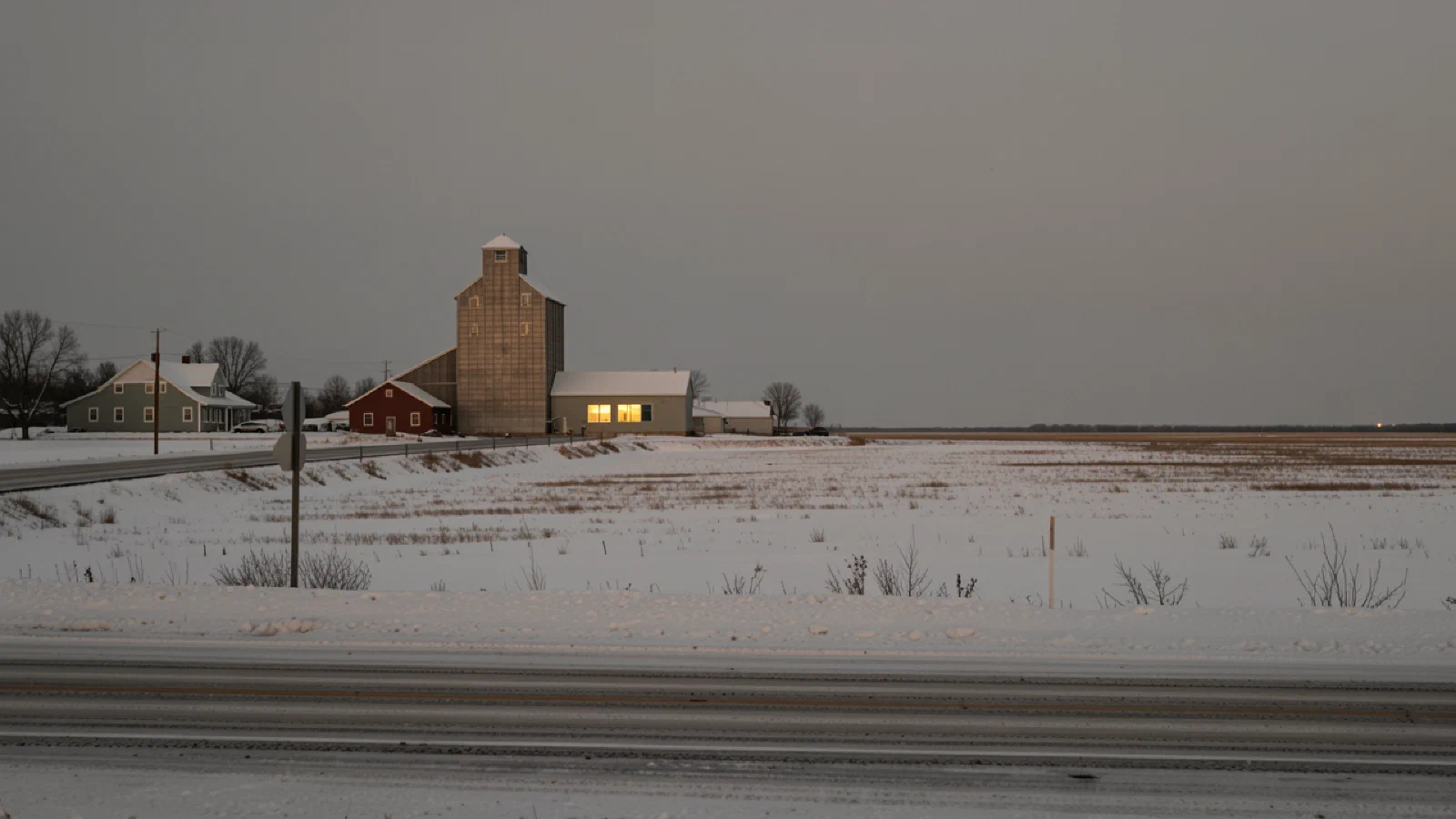
Minnesota spans from the northern pine forests bordering Canada to the prairies of the Driftless Region, with approximately 1.69 million residents (29.7% of state population) living in rural areas using RUCA codes 4-10. The state encompasses 79,631 square miles requiring healthcare infrastructure across vast distances with harsh winter conditions that complicate transportation and emergency response.
Minnesota is home to 11 sovereign Tribal Nations, including seven Anishinaabe reservations and four Dakota communities, with ten located in rural areas. Tribal health programs maintain government-to-government relationships with federal authorities and operate health systems that state regulation does not govern. The concentration of tribal health infrastructure in rural Minnesota creates both implementation complexity and demonstration opportunity.
Medicaid enrollment approaches 1.4 million Minnesotans across Medical Assistance and MinnesotaCare programs. The combined coverage architecture represents decades of bipartisan investment in accessible healthcare. Governor Arne Carlson, a Republican, signed MinnesotaCare into law in 1992. Successive administrations of both parties maintained and expanded the program. The coverage foundation that federal cuts now threaten reflects Minnesota consensus rather than partisan achievement.
Provider distribution reveals urban concentration despite rural need. 80% of Minnesota providers work in urban areas compared to 74% of population living there. Rural Minnesota has 2.5 primary care physicians per 100,000 population compared to 32.7 in urban areas. For internal medicine, the ratios are 0.8 rural versus 31.3 urban per 100,000. Federal shortage designations cover 69 of 87 Minnesota counties for primary care physician HPSAs and 57 of 87 counties for dental HPSAs.
RHTP Application and Award#
Minnesota received $193.1 million for FY2026 and approximately $970 million over five years. At $151 per rural resident annually, this ranks third highest nationally among per-capita allocations, reflecting Minnesota’s moderate rural population relative to total award size. The state requested $1 billion and received approximately 97% of that request.
The Minnesota Department of Health (MDH) serves as lead agency, with the Office of Rural Health and Primary Care (ORHPC) managing implementation. MDH submitted its application on November 4, 2025, following more than 40 stakeholder meetings and nearly 350 public responses to its request for input. The application quality reflects this engagement depth.
Five-Initiative Framework:
Initiative 1: Community-Based Preventive Care and Chronic Disease Management ($239 million over five years). Targets cardiometabolic disease through community-based screenings, remote patient monitoring, chronic disease self-management programs, and connections to upstream drivers of health.
Initiative 2: Recruit and Retain Talent in Rural Communities ($107.6 million over five years). Builds workforce pipeline through Scrubs Camps for high school students, HOSA chapter expansion, apprenticeship programs, expanded rural clinical rotations, APP residency development, rural physician residency planning, and a Family Medicine Obstetrics Fellowship pilot. Creates a Technical Assistance Center for Excellence in Rural Clinical Training at University of Minnesota Medical School.
Initiative 3: Sustain Access to Services to Keep Care Closer to Home ($113.8 million over five years). Integrates frontline workers including community health workers, community paramedics, doulas, and peer support specialists into care delivery. Develops community telehealth access points in schools and pharmacies. Deploys mobile care units for physical and oral health services.
Initiative 4: Create Regional Care Models to Improve Whole Person Health ($228.8 million over five years). Establishes provider-to-provider telehealth connections, pilots EMS treatment-in-place reimbursement, develops Children’s Mental Health Initiative, creates mental health urgent care centers, implements ECHO networks for mental health and maternal health, expands Medications for Opioid Use Disorder (MOUD) access, provides rural obstetrics bridge grants, and supports high-fidelity obstetrics simulation training.
Initiative 5: Invest in Technology, Infrastructure, and Collaboration for Financial Viability ($307.1 million over five years). Supports data management software acquisition, AI applications for clinical efficiency, care coordination platforms, cybersecurity investments, revenue cycle management tools, and statewide integrated rural health data network development.
Key subawardees include Minnesota Hospital Association, Stratis Health (quality improvement organization), Minnesota Association of Community Health Centers, University of Minnesota, and regional health systems. The application names 22 Certified Community Behavioral Health Clinics with 178 active sites as behavioral health partners.
The Medicaid Math#
Minnesota’s $19.1 billion in projected Medicaid cuts over ten years represents 15% of baseline Medicaid spending. The 19.8:1 ratio means the state loses approximately $20 in Medicaid funding for every $1 it gains in RHTP investment.
Work requirements dominate Minnesota’s cut mechanism. Unlike Pennsylvania, California, and New York where provider tax restrictions drive Medicaid reductions, Minnesota’s cuts flow primarily through work requirements. The Minnesota Medical Association reports at least 243,000 Minnesotans on Medical Assistance will face work requirements. The Minnesota Department of Human Services estimates that 467,600 Minnesotans aged 18-64 without certified disabilities could face work reporting requirements.
DHS preliminary analysis projects federal law changes will result in coverage loss for 140,000 to 253,000 Minnesotans. The range reflects uncertainty about reporting compliance, exemption processing, and administrative capacity to manage verification.
The MinnesotaCare pathway creates a secondary coverage erosion mechanism beyond direct Medicaid cuts. As federal premium subsidy cuts reduce pass-through funding, MinnesotaCare faces constraints independent of state budget choices. The Minnesota Legislature in June 2025 eliminated MinnesotaCare coverage for approximately 15,000 undocumented adults starting in 2026, reversing the 2023 MinnesotaCare Immigrant Inclusion Act. Budget pressure from federal cuts drove state-level coverage reduction.
MNsure enrollees face parallel premium subsidy erosion. Starting in 2026, 62% of MNsure enrollees (89,000 Minnesotans) will see decreased federal premium subsidies. Roughly 19,500 will lose all financial assistance. Minnesota households purchasing insurance through MNsure can expect average premium increases of $177 per month ($2,124 annually).
Administrative burden compounds coverage loss. The state faces estimated $165 million in annual state, county, and Tribal administrative costs to implement work reporting requirements. DHS notes that Minnesota’s county-administered eligibility system is already stretched thin. Biannual eligibility reviews plus monthly work-activity verification will add substantial workload for county workers and managed care organizations.
Comparison with Wisconsin illuminates regional mechanism variation. Wisconsin never expanded Medicaid, placing it among non-expansion high-burden states rather than expansion states like Minnesota. Minnesota expanded and built MinnesotaCare on top of expansion. Wisconsin faces smaller absolute cuts but from a smaller coverage base. Minnesota faces larger absolute cuts that threaten a larger coverage achievement. The state that covered more people loses more coverage. The mathematics punish coverage success.
Provider Landscape#
According to the Center for Healthcare Quality and Payment Reform (December 2025), Minnesota has 18 rural hospitals at risk of closing (19% of rural hospitals) and 7 at immediate risk of closing within 2-3 years (7%). This represents moderate vulnerability compared to states like Mississippi (54% at risk) or Oklahoma (44% at risk), but the absolute number of at-risk facilities still threatens rural communities.
Minnesota operates 76 Critical Access Hospitals and one Rural Emergency Hospital, with 95 total hospitals considered rural for RHTP purposes. The state has 108 Rural Health Clinics and 241 primary care clinics in rural areas representing 40% of all primary care clinics statewide.
41 Minnesota hospitals, including 34 rural hospitals, are considered financially distressed with four or more years of negative operating margins in the past eight years. Five rural hospitals have closed since 2005. Sequestration alone costs Minnesota rural hospitals approximately $23 million annually in Medicare reimbursement reductions.
Service reductions document deterioration before federal cuts take effect. Between 2013 and 2023, rural Minnesota lost 80 mental health beds and 18 counties saw labor and delivery services reduced or eliminated. Since 2023, five hospitals have implemented reductions in mental health or chemical dependency treatment services. Minnesota lost obstetric services at 19 rural facilities during the Chartis review period, among the highest state-level declines nationally alongside Iowa (22) and Kansas (17).
Pharmacy access creates additional vulnerability. More than 86,000 Minnesotans outside Metropolitan Statistical Areas live more than 15 miles from the nearest pharmacy, and 336,000 live in at-risk communities with access to only one pharmacy. Medication access requires infrastructure that coverage alone cannot guarantee.
Political Context and Administrative Capacity#
2026 presents leadership discontinuity during RHTP Year 1. Governor Tim Walz initially announced his third-term candidacy in September 2025 but withdrew in January 2026 amid ongoing fraud investigations in state-funded social services programs. Senator Amy Klobuchar announced her gubernatorial campaign on January 29, 2026, and won the DFL caucus straw poll in February 2026 with approximately 72% of the vote.
The governor’s race will proceed through August 2026 primary and November 2026 general election, with a new administration taking office in January 2027 during RHTP’s second program year. While Minnesota remains likely Democratic per Cook Political Report ratings, leadership transition during implementation startup creates coordination challenges regardless of partisan continuity.
MDH plans to hire 26 FTE staff for RHTP implementation, including a Program Director, 4-person compliance team, 5-person evaluation and learning team, and 16-person program implementation team. The interagency workgroup includes representation from the Governor’s Office, Minnesota Management and Budget, Department of Human Services, and MDH Office of Rural Health and Primary Care.
County administration creates implementation complexity that states with centralized systems avoid. Minnesota’s county-administered Medicaid eligibility system means 87 county offices must develop work reporting verification infrastructure while simultaneously engaging with RHTP transformation activities. The capacity serving one function is unavailable for the other.
Federal conflict compounds uncertainty. In February 2026, Attorney General Keith Ellison filed suit against the Trump administration over $42 million in CDC public health grant cuts targeting Minnesota alongside California, Colorado, and Illinois. The targeted funding includes the Public Health Infrastructure Block Grant that funds 57 MDH staff handling rural health outreach, disease tracking, and emergency preparedness. Staff reductions from federal grant cuts would affect RHTP implementation capacity.
Implementation Assessment#
Minnesota’s application demonstrates several genuine advantages that distinguish it from other expansion states facing high Medicaid burden.
The five-initiative framework creates logical organization with clear accountability pathways. Each initiative includes specific activities, outcome measures, and implementation timelines. The requirement that participating providers select multiple activities from each initiative creates engagement depth rather than superficial participation.
The workforce pipeline design addresses shortage dynamics at multiple points from high school career exposure through residency completion, with specific retention commitments (five years for apprenticeship graduates, residents, and fellows). The Family Medicine Obstetrics Fellowship pilot directly addresses rural maternity care sustainability that 19 facility closures document as crisis.
The treatment-in-place EMS pilot represents innovative thinking about rural emergency care economics. Current reimbursement structures that pay only for emergency department transport create perverse incentives that RHTP investment can test alternatives to address.
The frontline worker integration across Initiative 3 recognizes that community health workers, community paramedics, doulas, and peer support specialists extend healthcare capacity beyond clinical professionals. This aligns with alternative architecture emphasis on local workforce development.
The evaluation infrastructure includes interagency coordination, external evaluation contractor, and county-level outcome tracking. Minnesota explicitly plans to develop baseline data during Year 1 rather than claiming false precision about current conditions.
Architecture Trajectory#
Minnesota’s application intersects with alternative architecture at several points, with genuine innovation alongside conventional approaches.
Frontline worker integration represents the clearest architecture alignment. Initiative 3’s incorporation of community health workers, community paramedics, doulas, and peer support specialists into care delivery matches the local workforce model’s emphasis on building healthcare capacity through community members who do not require extraction for distant training. Minnesota has existing CHW infrastructure and Medicaid billing pathways that many states lack. The question is whether integration means team membership or independent practice scope. CHWs working as physician extenders within clinical settings differ from CHWs providing autonomous community-based services with clinical backup. The application language suggests the former.
AI applications for clinical efficiency appear in Initiative 5 but remain underspecified relative to a vision of AI as infrastructure providing companion systems, professional services, and coordination platforms. Clinical efficiency applications (documentation, scheduling, analytics) differ from AI filling service gaps where no alternative exists. Minnesota’s framing suggests AI as productivity tool rather than AI extending professional capacity to underserved populations. The application does not contemplate AI companions for isolated elders or AI coordination of social services.
Eleven Tribal Nations in Minnesota create demonstration opportunity for tribal sovereignty as healthcare laboratory. Tribes can implement alternative architecture elements that state regulation prohibits. Minnesota’s application mentions Tribal engagement but does not position tribal health programs as innovation laboratories whose success creates evidence for broader adoption. The opportunity exists but remains unframed as architecture strategy.
ECHO networks for mental health and maternal health represent hub-and-spoke coordination that extends specialty expertise to rural settings without requiring specialist presence. This conventional telehealth model improves access within existing delivery paradigms rather than transforming delivery itself.
The honest architecture assessment: Minnesota is building thoughtfully improved conventional infrastructure. Frontline worker integration, ECHO networks, and treatment-in-place pilots represent meaningful innovation within existing healthcare delivery models. The application does not pursue alternative architecture that would require regulatory transformation (expanded scope of practice, new facility categories, AI service authorization) or challenge provider-centric delivery models. Given Minnesota’s institutional strengths, this choice may be strategically appropriate. Excellence within conventional frameworks may achieve more than incomplete alternative architecture experiments. But it means RHTP investment reinforces existing models rather than demonstrating alternatives.
Risk Assessment#
Minnesota’s primary risks flow from work requirement timing and MinnesotaCare vulnerability rather than implementation capacity.
Work requirement timing creates acute Year 1 pressure. States must implement work reporting requirements by January 1, 2027, with HHS interim final rule due June 2026. Minnesota’s county-administered system must develop verification infrastructure across 87 counties while simultaneously launching RHTP activities. Administrative capacity cannot serve both functions simultaneously at current staffing levels. The $165 million annual administrative cost estimate does not include opportunity costs from transformation activities that county workers cannot pursue while processing work verifications.
MinnesotaCare dependency creates coverage erosion pathway other states do not face. The program’s 91% federal funding dependence means premium subsidy cuts flow directly to coverage capacity. State budgets cannot easily replace federal pass-through funding that reaches $600+ million annually. Minnesota’s coverage innovation becomes Minnesota’s coverage vulnerability.
The 19.8:1 ratio means RHTP investment operates against coverage loss backdrop. Building workforce capacity serves diminishing purpose when work requirements reduce the insured population that workforce would serve. Telehealth expansion creates access points for populations losing coverage to use them. The transformation timeline assumes stable coverage during the building period. OBBBA removes that assumption.
Election uncertainty during Year 1 affects continuity regardless of partisan outcome. MDH staff can maintain operational consistency, but policy direction, budget priorities, and stakeholder relationships may shift with new leadership during the period when RHTP requires the most intensive coordination. The Walz withdrawal and subsequent campaign dynamics add unpredictability that routine gubernatorial transitions would not create.
Political stability exists in one dimension: Minnesota remains likely Democratic, meaning the administration implementing RHTP will probably support the program conceptually. But personnel changes, priority adjustments, and relationship rebuilding still require time and attention that implementation cannot spare.
Honest Assessment#
Minnesota demonstrates what competent state government can produce. The application reflects genuine stakeholder engagement, logical program design, and realistic assessment of constraints.
What Minnesota does well. The five-initiative framework creates accountability structures that many applications lack. Workforce pipeline investments connect high school exposure to residency completion with specific retention commitments. The treatment-in-place EMS pilot addresses a genuine perverse incentive in rural emergency care economics. Frontline worker integration recognizes that healthcare capacity extends beyond clinical professionals. The evaluation design acknowledges uncertainty rather than claiming false precision. Bipartisan stakeholder support (documented through legislative letters) suggests implementation can proceed through leadership transitions with reduced political vulnerability.
Where the plan meets reality. The 19.8:1 ratio ensures federal cuts overwhelm transformation investment. Work requirements affecting 243,000+ Minnesotans will remove coverage faster than RHTP can build alternative access pathways. MinnesotaCare’s federal funding dependency creates constraints state budgets cannot resolve. The $165 million annual administrative burden for work requirement verification competes with transformation implementation for the same county-level capacity. The 19 facilities that lost obstetric services before RHTP began suggest transformation arrives after deterioration, not before it.
The state that built MinnesotaCare now watches federal policy constrain the program. The coverage innovation that distinguished Minnesota becomes the coverage vulnerability that RHTP cannot address. Minnesota’s excellence created exposure points that less ambitious states avoided by never building what Minnesota built.
What would change the assessment. Three developments would elevate Minnesota from constrained transformation to genuine improvement.
First, work requirement exemption maximization through aggressive state interpretation of medical frailty, caregiver, and geographic exemption categories. Federal rules provide flexibility that state implementation can expand or constrict. Minnesota could minimize coverage losses through exemption administration without changing federal law.
Second, state budget commitment to maintain MinnesotaCare coverage levels regardless of federal pass-through reductions. This would require substantial general fund allocation but would preserve the coverage foundation that makes transformation meaningful.
Third, tribal demonstration strategy positioning Minnesota’s 11 Tribal Nations as innovation laboratories whose success creates evidence for broader regulatory change. Tribes can implement scope of practice expansions, alternative facility models, and AI service delivery that state-regulated providers cannot attempt. Minnesota could support tribal innovation as proof-of-concept for later state adoption.
Minnesota will implement RHTP professionally. The application reflects genuine capacity, the framework creates logical accountability, and MDH has demonstrated competence through prior programming. The five-year transformation will produce well-designed initiatives reaching a shrinking population, professional implementation that cannot prevent coverage loss, and sustainability planning for services that lose their billing base as work requirements take effect.
This is not implementation failure. It is implementation success against structural impossibility the state did not create and cannot resolve.
How this article connects to others in Blue Gray Matters.
Sources cited in this article.
- Becker's Hospital Review. "759 Hospitals at Risk of Closure, State by State." *Becker's Hospital Review*, 5 Sept. 2025, www.beckershospitalreview.com/finance/760-hospitals-at-risk-of-closure-state-by-state/.
- Bravura Group. "OBBBA and the Future of Medicaid: What the Federal Changes Could Mean for Minnesota." *Bravura Group*, 24 Oct. 2025, www.bravlaw.com/post/obbba-and-the-future-of-medicaid-what-the-federal-changes-could-mean-for-minnesota.
- Center for American Progress. "The Implementation Timeline of the One Big Beautiful Bill Act." *Center for American Progress*, 12 Nov. 2025, www.americanprogress.org/article/the-implementation-timeline-of-the-one-big-beautiful-bill-act/.
- Center for Healthcare Quality and Payment Reform. "Rural Hospitals at Risk of Closing." *CHQPR*, Dec. 2025, www.chqpr.org/downloads/Rural_Hospitals_at_Risk_of_Closing.pdf.
- Center for Rural Policy and Development. "The State of Rural 2025." *Center for Rural Policy and Development*, Jan. 2025, www.ruralmn.org/the-state-of-rural-2025/.
- Chartis. "Rural Hospital Closures and Care-Access Crisis: 2025 State of the State." *Chartis*, 10 Feb. 2025, www.chartis.com/insights/2025-rural-health-state-state.
- Healthinsurance.org. "Affordable Care Act's Basic Health Program." *Healthinsurance.org*, 20 Oct. 2025, www.healthinsurance.org/obamacare/affordable-care-acts-basic-health-program/.
- Healthinsurance.org. "Medicaid Eligibility and Enrollment in Minnesota." *Healthinsurance.org*, Nov. 2025, www.healthinsurance.org/medicaid/minnesota/.
- KFF. "A Closer Look at the Work Requirement Provisions in the 2025 Federal Budget Reconciliation Law." *KFF*, 30 July 2025, www.kff.org/medicaid/a-closer-look-at-the-work-requirement-provisions-in-the-2025-federal-budget-reconciliation-law/.
- Minnesota Department of Health. "Minnesota Awarded $193 Million for First Year of Rural Health Transformation Program." *MDH News Release*, 30 Dec. 2025, www.health.state.mn.us/news/pressrel/2025/rural123025.html.
- Minnesota Department of Health. "Minnesota Rural Health Transformation Program Project Narrative." *MDH*, Nov. 2025, www.health.mn.gov/facilities/ruralhealth/ruraltrans/docs/rhtpnarrative.pdf.
- Minnesota Department of Health. "Rural Health Care in Minnesota: Data Highlights, November 2025." *MDH*, Nov. 2025, www.health.state.mn.us/facilities/ruralhealth/docs/summaries/rhcmn.pdf.
- Minnesota Department of Health. "Rural Health Transformation Program." *MDH*, Jan. 2026, www.health.mn.gov/facilities/ruralhealth/ruraltrans/index.html.
- Minnesota Department of Human Services. "Historic Cuts to Health Care Will Impact Every Minnesotan." *DHS Fact Sheet*, 2025, mn.gov/dhs/assets/historic-cuts-to-health-care-will-impact-every-minnesotan_tcm1053-699475.pdf.
- Minnesota Department of Human Services. "Summary of Medicaid Provisions in the 2025 Federal Reconciliation Bill." *DHS*, 2025, mn.gov/dhs/assets/summary-of-medicaid-provisions-in-the-2025-federal-reconciliation-bill_tcm1053-685438.pdf.
- Minnesota Hospital Association. "Rural Hospitals." *MHA Priority Issues*, 2025, www.mnhospitals.org/policy-advocacy/priority-issues/rural-hospitals.
- Minnesota Medical Association. "MDH Applies for Federal Rural Health Transformation Program." *MMA News*, Nov. 2025, www.mnmed.org/news-and-publications/news/mdh-applies-federal-rural-health-transformation-program.
- Minnesota Medical Association. "Medicaid (Medical Assistance)." *MMA OBBBA Guide*, 2025, www.mnmed.org/OBBBA/medicaid.
- Minnesota Medical Association. "The ACA Individual Market and MinnesotaCare." *MMA OBBBA Guide*, 2025, www.mnmed.org/OBBBA/aca-individual-market-and-minnesotacare.
- Minnesota Office of the Attorney General. "Attorney General Ellison Files Lawsuit over Trump Administration's Unlawful Directive to Cut More Than $42 Million in Federal Public Health Grants for Minnesota." *AG Office*, 11 Feb. 2026, www.ag.state.mn.us/Office/Communications/2026/02/11_PublicHealthGrants.asp.
- MinnPost. "Minnesota Medicaid Explained: Health Costs and What Could Change." *MinnPost*, 8 May 2025, www.minnpost.com/health/2025/05/minnesota-medicaid-explained-health-costs-and-what-could-change/.
- MNsure. "What's Changing with Health Insurance." *MNsure*, 2025, www.mnsure.org/help/changes/index.jsp.
- Rural Health Information Hub. "Rural Health for Minnesota Overview." *RHIhub*, 2025, www.ruralhealthinfo.org/states/minnesota.
- Sahan Journal. "Ten Things Minnesotans Need to Know About Medicaid Cuts." *Sahan Journal*, 1 Aug. 2025, sahanjournal.com/health/medicaid-cuts-minnesota-health-coverage-minnesotacare/.
- Stratis Health. "Minnesota Critical Access Hospital Reporting and Improvement Assistance." *Stratis Health*, 2025, stratishealth.org/minnesota-mbqip-reporting-and-improvement-assistance/.