Maryland
Cluster 3: Frontier and Resource-Adequate States
Maryland enters the Rural Health Transformation Program having already built what many consider the essential enabling condition for alternative architecture: payment model reform that frees rural providers from fee-for-service volume dependence. For over 40 years, the Health Services Cost Review Commission has regulated hospital rates across all payers. That model is now in flux, transitioning to federal control precisely as RHTP implementation begins. Maryland’s implementation environment is shaped by payment model uncertainty rather than rural health conditions alone.
State Context#
Maryland’s rural health profile is unlike any other state’s because Maryland’s hospital payment system is unlike any other state’s. For over 40 years, the Health Services Cost Review Commission (HSCRC) has regulated hospital rates across all payers, ensuring that Medicare, Medicaid, commercial insurers, and self-pay patients pay identical prices for identical services at the same hospital. This all-payer model has produced results: the Total Cost of Care (TCOC) Model reduced Medicare fee-for-service spending by 2.1% and hospital admissions by 16.2% while reducing disparities across several quality measures.
That model is now in flux. CMS announced in March 2025 its intention to end TCOC as of December 31, 2025, transitioning Maryland to the AHEAD Model with federal Medicare rate-setting authority phasing in by 2028 and full CMS authority by 2031. The renegotiated terms create a potential funding cliff after 2027 when the federal government’s additional $3 billion annual contribution may substantially decrease. Rural hospitals operating on thin margins face particular vulnerability if commercial insurance rates spike and federal support contracts.
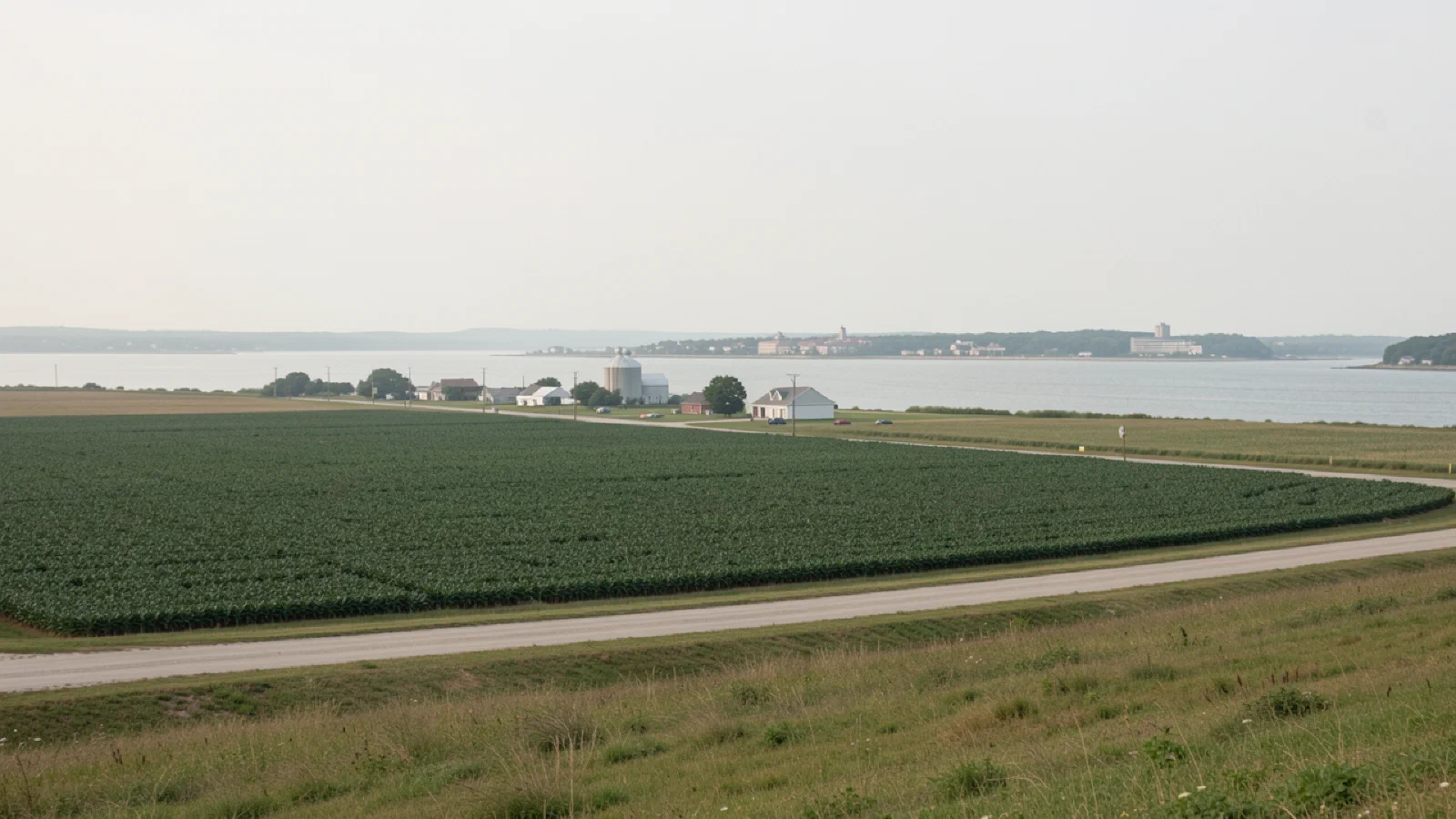
The rural population itself is modest by national standards. Approximately 450,000 Marylanders live in rural areas, roughly one-third of state population concentrated primarily on the Eastern Shore and in western Maryland. The Eastern Shore counties face distinctive challenges: agricultural economy, geographic isolation across the Chesapeake Bay, and health workforce shortages that mirror rural conditions elsewhere while existing within a two-hour drive of Baltimore and Washington.
TidalHealth, the largest tertiary referral hospital on the rural Eastern Shore, has expressed frustration with TCOC’s inequity for rural hospitals. The system’s cost containment framework struggles to account for population contraction in rural areas while growth occurs in suburban Baltimore and Washington corridors. RHTP implementation arrives against this backdrop of payment model transition, with rural providers uncertain whether the financing framework underlying their operations will continue.
The Maryland Department of Health serves as lead agency with moderate institutional separation between MDH and other agencies, reflecting the fragmented governance across MDH, HSCRC, the Maryland Insurance Administration, and other agencies now assembled in Governor Moore’s regulatory working group. RHTP implementation must coordinate with AHEAD transition planning, Medicaid work requirement preparation, and the multiple state agencies whose portfolios intersect rural health.
RHTP Application and Award#
Maryland received a $168.2 million FY2026 RHTP award, translating to $374 per rural resident annually and a five-year total of approximately $840 million. The state’s five-year request of $1 billion was reduced by approximately 16%, requiring adjustment of planned initiatives.
The application organized around three bold goals with distinctive framing that reflects Maryland’s institutional capacity:
Goal 1: Transform the Rural Health Workforce. Immediate Impact Funds will expand apprenticeships and upskilling opportunities for community health workers. Transformation Funds will build pipeline programs in rural communities and expand training, recruitment, and retention for providers. This reflects documented workforce shortages particularly acute on the Eastern Shore.
Goal 2: Promote Sustainable Access and Innovative Care for Rural Marylanders. Immediate Impact Funds will expand primary care, specialty care, and school-based health center capacity while optimizing health information technology including AI modeling for patient risk predictive alerts and telehealth expansion. Transformation Funds will deploy technology-enabled chronic disease management including remote patient monitoring, expand mobile health, and support innovative care model adoption.
Goal 3: Empower Rural Marylanders to Eat for Health. This initiative distinguishes Maryland’s application from most states. Immediate Impact Funds will invest in infrastructure improving access to nutritious, locally grown foods in rural hunger hotspots. Transformation Funds will link rural Maryland farmers to large-scale local buyers through aggregation that stimulates market access and establish purchasing strategies prioritizing local sourcing.
Known subawardees include the Maryland State Departments of Agriculture, Emergency Management, Labor, and Housing and Community Development, as well as the Rural Maryland Council, CRISP (the statewide health information exchange), Local Health Departments, Local Emergency Medical Services, and the Maryland Area Health Education Center. Additional subawardees will be determined through competitive Transformation Fund processes.
Implementation governance includes a Rural Health Transformation Advisory Committee with first meeting scheduled for February 26, 2026. Meetings will be quarterly, virtual, open to the public with dedicated time for public input, and meeting notes published online.
The Medicaid Math#
Maryland faces projected $13.8 billion in Medicaid cuts over ten years under OBBBA provisions, representing 12% of baseline spending. Against that figure, the $840 million five-year RHTP investment produces a 16.4:1 ratio: for every dollar Maryland invests in rural health transformation, it loses more than sixteen dollars in Medicaid coverage.
The cut mechanism is mixed between work requirements and state-directed payment impacts. Maryland’s sophisticated Medicaid program operates within the TCOC framework, meaning payment model changes affect Medicaid provider rates alongside Medicare and commercial payers. The AHEAD transition’s uncertainty about future Medicare rates has implications for Medicaid rates that use Medicare as benchmark.
What distinguishes Maryland’s fiscal context is the compounding effect of AHEAD transition on RHTP implementation. Rural hospitals face three simultaneous uncertainties: RHTP funding levels and requirements, AHEAD’s federal rate-setting transition, and Medicaid coverage losses from work requirements. The regulatory working group Governor Moore established in September 2025 is tasked with addressing cost-shifting, Medicare Advantage stabilization, and multi-agency coordination, but its final report is not due until June 2026, well into RHTP’s first implementation year.
Connecticut faces a comparable 14.0:1 ratio among large rural population states and shares AHEAD model alignment, but Connecticut is building toward AHEAD while Maryland transitions away from the model AHEAD replaces. This distinction matters analytically: Connecticut’s transformation builds on payment reform infrastructure it is acquiring, while Maryland’s transformation must preserve payment reform infrastructure it already possesses but may lose. New Jersey, as an adjacent state with similar suburban-rural character, operates under conventional fee-for-service conditions without Maryland’s payment model distinction, illustrating what implementation looks like in frontier and resource-adequate states absent Maryland’s unique institutional context. Delaware shares the Eastern Shore geography but not the payment model framework, meaning its rural providers face the volume dependence that TCOC spared Maryland’s hospitals from for four decades.
Implementation Assessment#
The AHEAD Complication#
Maryland’s implementation environment cannot be understood without confronting the AHEAD transition’s implications for rural hospitals. The TCOC model’s hospital global budgets provided financial stability that fee-for-service systems cannot match, particularly during COVID-19 when volume-based payment systems struggled while Maryland hospitals maintained stable revenue. AHEAD threatens to unwind that stability.
Steve Leonard, president of TidalHealth, described rural hospital frustration with TCOC’s resource allocation: the commission needs to invest in areas where population growth is happening and reduce costs in areas where there is contraction while supporting unique rural tertiary centers and narrowing the funding gap between high-cost and low-cost hospitals. That tension between rural contraction and suburban growth persists into AHEAD planning.
Commercial insurance rates could spike after 2028 as federal Medicare rate authority reduces HSCRC’s all-payer leverage. Rural hospitals already operating on thin margins would face additional strain. RHTP’s $168 million annual investment provides some cushion, but the amount is small relative to the potential financing disruption AHEAD represents.
Transformation Approach Plausibility#
Maryland’s three-goal structure reflects genuine strategic thinking adapted to state conditions. The food and nutrition initiative is analytically distinctive. Most states treat food access as a social determinant context rather than a transformation target. Maryland’s explicit connection of rural agricultural economy to rural health outcomes through farm-to-institution purchasing strategies and hunger hotspot infrastructure acknowledges that Eastern Shore health cannot be separated from Eastern Shore economic conditions.
The Eastern Shore agricultural economy provides the foundation for Goal 3’s farm-to-institution approach. The region produces substantial vegetable, grain, and poultry output with existing agricultural infrastructure that could support local food aggregation. Whether the farm-to-institution purchasing creates permanent market relationships between Eastern Shore producers and institutional buyers (schools, hospitals, government facilities) or requires ongoing subsidy to maintain determines whether this represents infrastructure or programming. The aggregation strategy attempts to solve a coordination problem: individual farms lack the scale to serve institutional purchasing requirements, and individual institutions lack the procurement capacity to source from multiple small farms. If RHTP builds the aggregation infrastructure that outlasts funding, Maryland creates a durable connection between agricultural economy and health outcomes. If aggregation requires continuous grant support, the initiative produces demonstration programming rather than sustained local food access.
The workforce initiatives target documented shortages with approaches that have evidence support. The Rural-MD Scholars program at the University of Maryland School of Medicine already provides pipeline development. RHTP funding can scale existing programs rather than creating new infrastructure from scratch.
The technology and innovation initiatives build on Maryland’s institutional sophistication. CRISP provides health information exchange infrastructure that most states lack. The AI modeling for patient risk prediction and remote patient monitoring deployment extend existing capacity rather than requiring foundational investment.
Provider Readiness#
Rural Maryland’s provider landscape is thin but anchored by capable institutions. TidalHealth on the Eastern Shore provides tertiary referral capacity within the rural region, operating approximately 600 beds across facilities in Salisbury and Crisfield. The TidalHealth system has demonstrated capacity for complex care that would otherwise require travel to Baltimore or the Washington suburbs, making it the natural anchor for RHTP implementation in the state’s largest rural region. In western Maryland, institutions in Allegany and Garrett counties provide similar regional capacity, though at smaller scale. The FQHC network spans rural areas with established primary care infrastructure, while school-based health centers provide pediatric and adolescent access points that complement clinical facilities.
The question is whether providers can absorb RHTP implementation demands while simultaneously adapting to AHEAD transition and Medicaid work requirement enrollment changes. TidalHealth leadership has expressed concern about TCOC’s treatment of rural hospitals for years. Managing RHTP transformation while negotiating AHEAD terms while preparing for Medicaid enrollment shifts creates coordination burden that tests even sophisticated institutions. The June 2026 regulatory working group deadline means providers must begin RHTP implementation without clarity on the payment model environment that will determine their financial sustainability.
Architecture Trajectory#
Maryland’s significance to alternative architecture analysis extends beyond implementation assessment. The state already operates under the payment model conditions essential for alternative architecture. Fee-for-service payment locks rural providers into volume dependence that makes transformation structurally impossible because any efficiency improvement that reduces admissions, shortens stays, or shifts care to lower-cost settings reduces the revenue providers need to survive. Maryland solved this forty years ago. The all-payer system with hospital global budgets is the closest any state comes to the payment reform described as necessary precondition for transformation. During COVID-19, Maryland hospitals maintained stable revenue while volume-based systems nationally faced financial crisis from elective procedure cancellations. This is not background context. This is the proof case that payment model reform actually works in practice. Maryland’s rural hospitals already operate under the financing conditions that alternative architecture requires. No other state can say this.
The deeper question is whether AHEAD preserves or dismantles the payment infrastructure that makes Maryland’s rural hospitals uniquely positioned for transformation. If AHEAD’s federal rate-setting authority maintains global budgets and all-payer equity, Maryland’s rural hospitals retain the financial stability to absorb transformation because revenue does not depend on volume. If AHEAD introduces rate variability, volume sensitivity, or payer-specific pricing, it destroys the enabling condition Maryland already has. The irony is that CMS is simultaneously investing $168 million through RHTP to transform Maryland’s rural health while renegotiating the payment model that made Maryland’s rural hospitals more transformation-ready than any other state’s. The left hand builds while the right hand potentially dismantles. The analysis of federal coordination gaps becomes visible in Maryland’s specific circumstances: RHTP investment and AHEAD transition operate as parallel federal processes without evident coordination about whether one undermines the other.
Goal 3’s food system initiative connects directly to social care infrastructure concepts. Most RHTP applications treat food access as a screening checkbox, identifying food-insecure patients and referring them to existing resources without building new infrastructure. Maryland’s approach treats food system development as health infrastructure, linking agricultural economy to health outcomes through farm-to-institution purchasing, hunger hotspot investment, and local food aggregation. This is social care infrastructure in operation: building community economic infrastructure that serves health outcomes rather than treating social determinants as someone else’s problem to address. The evaluation question is whether the initiative creates architecture or programming. Architecture means farm-to-institution purchasing creates permanent market relationships, aggregation infrastructure operates self-sufficiently, and hunger hotspot investment produces sustained food access. Programming means grant-funded services that dissolve when funding ends. The difference determines whether Goal 3 builds social care infrastructure that outlasts RHTP or conventional food access intervention with five-year duration.
If Maryland demonstrates that hospitals operating under global budgets can absorb RHTP transformation more effectively than hospitals operating under fee-for-service, that constitutes evidence for the alternative architecture case nationally. Maryland’s RHTP outcomes become a natural experiment in whether payment model reform is the prerequisite that alternative architecture proponents claim it is. The profile should name this: Maryland is not just implementing RHTP within its own conditions. It is generating evidence about whether the enabling condition most frequently identified as essential actually enables transformation. If Maryland’s rural hospitals outperform peers in RHTP outcomes while retaining TCOC/AHEAD payment stability, the payment model argument strengthens. If they do not, whether because AHEAD disrupts the model, because RHTP metrics fail to capture payment model advantages, or because the sample is too small for comparison, the evidence remains ambiguous. Either way, Maryland’s trajectory has implications beyond Maryland’s outcomes.
Oregon’s CCO infrastructure provides the most instructive architecture comparison. Both states possess governance infrastructure for alternative approaches, but the infrastructure operates in different dimensions. Oregon’s CCOs provide regional governance authority over service distribution and population health management. Maryland’s TCOC/AHEAD framework provides payment model infrastructure that removes volume dependence. These are distinct components of alternative architecture, and the two states demonstrate different aspects of what enabling conditions look like in practice. Maryland answers whether payment reform works. Oregon answers whether regional governance works. Neither alone demonstrates that alternative architecture as a complete system works, but both provide evidence about essential components.
Risk Assessment#
Maryland falls within the frontier and resource-adequate state grouping with favorable per-capita funding but implementation complexity that elevates risk beyond simple rural health conditions.
Primary risk factors for Maryland include:
AHEAD transition uncertainty. The payment model framework underlying rural hospital financing may change substantially by 2028, creating planning uncertainty that affects RHTP investment decisions. Providers cannot commit to transformation initiatives without understanding future revenue environment.
Multi-agency coordination requirements. The regulatory working group’s scope spans MDH, HSCRC, the Maryland Insurance Administration, the Maryland Health Care Commission, and the Maryland Health Benefit Exchange. RHTP implementation adds another coordination layer across subawardees from Agriculture, Emergency Management, Labor, and Housing.
Eastern Shore geographic isolation. The Chesapeake Bay creates genuine access barriers that technology and telehealth can partially but not fully address. Workforce recruitment to Eastern Shore communities faces competition from Baltimore-Washington proximity.
Compound advantage partially describes Maryland’s pattern. The state has institutional sophistication, existing infrastructure through CRISP, demonstrated payment model innovation capacity, and experienced leadership. But the AHEAD transition creates countervailing uncertainty that complicates transformation planning.
Honest Assessment#
What the state does well. Maryland’s all-payer hospital system provides unique institutional framework for transformation. RHTP Goal 3’s food and nutrition initiative reflects genuine strategic innovation connecting health to agricultural economy. CRISP provides health information exchange infrastructure most states lack. The subawardee structure appropriately spans agencies required for comprehensive implementation. Provider readiness at institutions like TidalHealth and the FQHC network provides implementation capacity.
Where the plan meets reality. The 16.4:1 RHTP-to-Medicaid-cut ratio limits transformation capacity. AHEAD transition uncertainty affects provider planning in ways RHTP cannot resolve. Multi-agency coordination requirements create implementation complexity. The June 2026 working group report deadline means final regulatory guidance arrives six months into RHTP implementation.
What would change the assessment. AHEAD transition terms that preserve rural hospital financial stability rather than creating 2028 funding cliff. Work requirement implementation that minimizes inappropriate coverage losses. Regulatory working group recommendations that clarify multi-agency coordination before rather than during RHTP scale-up. AHEAD terms that explicitly preserve global budget structure for rural hospitals. CMS recognition that Maryland’s RHTP outcomes should be evaluated against payment model context rather than raw national benchmarks.
Maryland’s honest assessment is that the state has the institutional capacity to succeed at RHTP implementation but faces federal policy transitions that create uncertainty beyond state control. The payment model framework that made Maryland’s rural hospitals more stable than national peers may not survive AHEAD negotiation. RHTP investment provides important support, but the larger financing questions will be answered in CMS negotiations rather than state implementation choices.
How this article connects to others in Blue Gray Matters.
Sources cited in this article.
- Centers for Medicare and Medicaid Services. "CMS Announces $50 Billion in Awards to Strengthen Rural Health in All 50 States." *CMS Newsroom*, 29 Dec. 2025.
- Centers for Medicare and Medicaid Services. "Maryland Total Cost of Care Model First Progress Report." *CMS Innovation Center*, 2024.
- fundsforNGOs. "$168 Million Federal Grant to Strengthen Rural Health Care Programs in Maryland." *fundsforNGOs News*, 2 Jan. 2026.
- Health Services Cost Review Commission. "Total Cost of Care Model Background and Summary." *HSCRC*, 2018.
- Leonard, Steve. Testimony to HSCRC on AHEAD Model. *HCI Innovation Group*, 2025.
- Maryland Association of Counties. "2026 Issue Preview: Hospital Rate Setting and the AHEAD Model." *Conduit Street*, 31 Dec. 2025.
- Maryland Department of Health. "Maryland Proposal for CMS' Rural Health Transformation Program." *MDH*, Nov. 2025.
- Maryland Department of Health. "Rural Health Transformation Program Presentation to Legislature." *MDH*, Feb. 2026.
- Moore, Wes. "Governor Moore Announces Creation of Regulatory Working Group on AHEAD Model Implementation." *Office of the Governor*, 23 Sept. 2025.