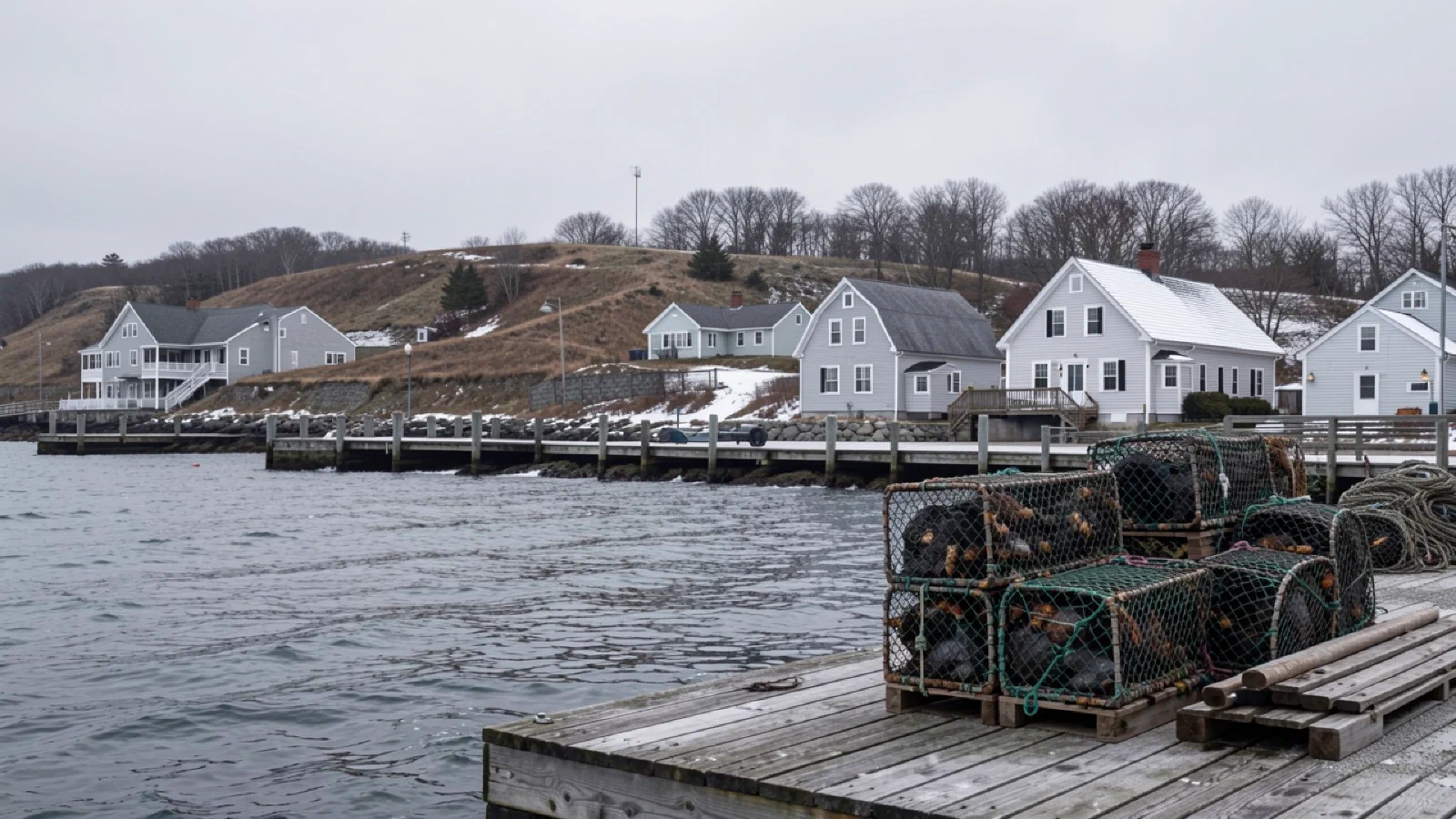
Maine
Cluster 1: Low-Constraint Expansion States
Maine presents an implementation paradox that the Rural Health Transformation Program’s designers did not anticipate. The state possesses nearly every favorable condition: Medicaid expansion since 2019, integrated departmental authority, strong intermediary infrastructure, bipartisan congressional support for the application, and per-capita funding that places it comfortably in the program’s upper tier. Yet Maine enters RHTP facing hospital financial distress more acute than most non-expansion states, maternity care collapse that has shuttered eleven birthing units in a decade, and a guaranteed gubernatorial transition in November 2026 that introduces implementation uncertainty at precisely the moment when institutional memory matters most.
The distinction matters. Vermont’s profile described compound advantage. Maine’s profile describes advantage complicated by structural fragility. The conditions for successful transformation exist. The margin for implementation error does not.
State Context#
Maine’s 1.4 million residents make it the thirteenth-smallest state by population, but roughly 620,000 live in areas classified as rural, producing one of the highest rural population shares nationally. The median age of 45.1 makes Maine the oldest state in America, a demographic reality that shapes both healthcare demand and workforce availability. An aging population requires more healthcare services while simultaneously losing working-age adults who would provide them.
The hospital landscape reflects consolidation pressures that have reshaped rural healthcare nationally. MaineHealth operates eight hospitals including Maine Medical Center in Portland, the state’s largest. Northern Light Health operates ten hospitals across central and eastern Maine. Together these two systems control roughly 70 percent of hospital beds statewide. Sixteen facilities hold Critical Access Hospital designation, and virtually all face financial pressure that predates RHTP.
A 2025 financial analysis conducted for the Maine Hospital Association found 76 percent of Maine’s hospitals at medium-to-high risk of severe financial problems. Northern Light Health lost $156 million in 2024 before reducing that deficit to $15 million through cost cuts including closing Inland Hospital. Central Maine Healthcare finished 2024 with a $20 million loss before a $5 million surplus in 2025. The Center for Healthcare Quality and Payment Reform projects 14 of Maine’s 24 rural hospitals face closure risk. These are not theoretical concerns. Maternity unit closures have already eliminated obstetric services from eleven hospitals, forcing pregnant women in rural counties to travel distances that can exceed 60 miles for delivery.
Maine expanded Medicaid in 2019 following a 2017 ballot initiative, extending coverage to approximately 100,000 previously uninsured residents. The expansion reduced the uninsured rate dramatically but also increased hospital dependence on Medicaid revenue. Central Maine Healthcare reports 70 percent of revenue from Medicare and Medicaid combined. Northern Light Health reports 66 percent. When federal policy reduces Medicaid payment or enrollment, these hospitals absorb the shock directly.
Governor Janet Mills has championed healthcare investment and vocally opposed OBBBA’s Medicaid provisions, warning they will have “devastating consequences” for hospitals and rural communities. However, Mills is term-limited and cannot seek reelection in November 2026. The gubernatorial race features crowded primary fields in both parties. Democratic candidates include Secretary of State Shenna Bellows, former Senate President Troy Jackson, former House Speaker Hannah Pingree, and Angus King III. Republican candidates include healthcare entrepreneur Jonathan Bush, state Senator Jim Libby, and others. This transition guarantees that RHTP implementation will span two administrations with potentially different priorities, leadership teams, and departmental structures.
RHTP Application and Award#
Maine received a FY2026 award of $190 million, with a projected five-year total approaching $950 million. The $306 per rural resident annually places Maine in the upper allocation tier without the extreme ratios characterizing the smallest rural populations.
The Department of Health and Human Services serves as lead agency. Commissioner Sara Gagné-Holmes has overseen the application process and will manage initial implementation. DHHS functions as an integrated health and human services department, consolidating Medicaid administration, public health, behavioral health, and social services under single executive authority. Institutional barriers between the lead agency and implementation authority are minimal. DHHS possesses the policy levers, contracting capacity, and programmatic authority required for RHTP execution.
Maine’s application prioritizes five transformation areas with estimated allocations reflecting application narratives rather than finalized budgets.
Workforce development receives the largest emphasis at approximately $55 million. Initiatives include nursing pipeline expansion, community health worker certification, and workforce housing assistance addressing the reality that healthcare workers cannot afford to live in the communities they serve. The University of Maine System, Washington County Community College, and Maine Area Health Education Centers serve as primary workforce development partners.
Technology adoption allocations approach $45 million. The application emphasizes telehealth infrastructure expansion, AI-assisted clinical tools for smaller practices, and remote patient monitoring capabilities. The Roux Institute, a technology-focused research entity affiliated with Northeastern University, appears as a technology partner.
Prevention and wellness initiatives receive approximately $35 million. The application frames this component around chronic disease management, diabetes prevention, and population health improvement targeting Maine’s aging population.
Access expansion allocations approach $30 million. Mobile health units, primary care capacity in underserved areas, and behavioral health integration comprise the primary initiatives.
Infrastructure sustainability receives approximately $25 million. This category addresses hospital capital needs, facility upgrades, and operational support for financially distressed facilities.
The subawardee structure concentrates resources in established intermediaries. Maine Hospital Association and Maine Primary Care Association provide trade association infrastructure. MaineHealth and Northern Light Health provide system capacity. Consumers for Affordable Health Care and Maine Council on Aging provide advocacy and consumer perspective. The subawardee list is broad without being diffuse, relying on organizations with demonstrated capacity rather than creating new implementation entities.
The application reflects genuine stakeholder engagement. Governor Mills emphasized that “numerous partners contributed their ideas and insights,” and the support from Maine’s bipartisan congressional delegation, including Senator Susan Collins who helped architect RHTP nationally, suggests broad political legitimacy for the implementation plan.
The Medicaid Math#
Maine’s RHTP-to-Medicaid-cut ratio of 2.9:1 is favorable but not protective. The projected ten-year Medicaid cut of approximately $2.7 billion represents 8 percent of baseline Medicaid spending. For comparison, Vermont’s ratio of 1.6:1 provides meaningfully more investment capacity relative to projected losses.
State officials estimate work requirements will cause more than 31,000 Mainers to lose Medicaid coverage beginning January 2027. This is not a marginal reduction. The newly uninsured population will still require healthcare. They will receive it in emergency departments rather than primary care settings, from hospitals already operating at negative margins, without the payment that covered their services previously.
Maine’s hospitals could lose more than $66 million annually from Medicaid cuts according to Third Way analysis. Central Maine Healthcare estimates work requirements alone will cost the system $11 million annually. Northern Light Health projects similar exposure. For hospitals already operating without reserves, these reductions exceed what cost-cutting or revenue diversification can offset.
The primary cut mechanism is work requirements, which affect non-elderly expansion adults disproportionately. The $35 monthly cost-sharing requirement for expansion adults at 100-138 percent FPL, effective October 2028, will create additional enrollment attrition. Provider tax phase-down provisions create longer-term fiscal uncertainty.
Maine cannot outrun the Medicaid math through RHTP investment alone. The transformation program provides meaningful resources for system redesign. Those resources cannot compensate for enrollment losses that expand the uninsured population while simultaneously reducing hospital revenue.
Implementation Assessment#
Transformation Approach Plausibility#
Maine’s workforce focus addresses a genuine constraint. The state’s workforce challenges are not imaginary. An aging provider population, difficulty recruiting into rural areas, and housing costs that prevent workers from living where they practice create real barriers to service delivery. Workforce housing assistance acknowledges a constraint that most applications ignore. Training pipelines matter, but professionals trained for rural practice cannot work there if they cannot afford housing.
Technology investments make sense for a state with significant telehealth infrastructure already deployed. MaineHealth and Northern Light Health operate telehealth programs that expanded substantially during COVID. Additional investment extends reach rather than building capacity from zero. The Roux Institute partnership signals technology ambition that may exceed what smaller rural practices can absorb.
Prevention and wellness initiatives face timeline challenges. Chronic disease prevention produces outcomes over years, not RHTP quarters. The approach is sound in principle, but the program’s five-year window will capture limited measurable benefit from lifestyle interventions targeting an elderly population with established disease burdens.
Access expansion through mobile health units and primary care capacity additions addresses immediate gaps. Whether this approach achieves sustainability beyond RHTP depends on payment model development that the application addresses only aspirationally.
Intermediary Landscape#
Maine’s intermediary infrastructure is strong relative to most states. Maine Primary Care Association operates as a sophisticated state primary care association with technical assistance capacity. Maine Hospital Association provides trade association coordination across diverse facility types. The designated subawardees possess organizational capacity to absorb RHTP resources and deploy them effectively.
The concentration in MaineHealth and Northern Light Health creates dependency on two large systems whose financial distress predates RHTP. Both systems are implementing cost reductions that include facility closures and service eliminations. Their capacity to absorb transformation responsibilities depends on stabilizing core operations first. RHTP cannot transform a system whose component parts are contracting for survival.
Provider Readiness#
Maine’s Critical Access Hospitals face the survival-transformation tension that defines rural hospitals nationally: facilities too financially stressed to invest in transformation but too essential to close. Penobscot Valley Hospital operates with zero reserves on a $50 million budget after emerging from bankruptcy. Down East Community Hospital in Washington County faces financial distress that may not permit sustained operation regardless of RHTP investment. The fourteen rural hospitals that the Center for Healthcare Quality and Payment Reform identifies as closure risks cannot simultaneously maintain current services and invest in transformation infrastructure.
The eleven birthing unit closures create a specific implementation challenge. Maternity care collapse is not reversible through RHTP investment. Obstetric services require specialized workforce, equipment, and volume that closed units cannot regenerate. RHTP might stabilize remaining capacity. It will not restore capacity that has already departed.
Sustainability Design#
The application addresses sustainability through language about payment model innovation and long-term planning without specifying mechanisms. Maine has not joined CMMI’s AHEAD model. The application does not identify specific CMS program alignment pathways. The sustainability gap is consequential because Maine’s hospital financial distress demands payment reform beyond what RHTP can accomplish through direct investment.
Sustainability planning appears as a Year 3-4 priority rather than Year 1 design requirement. For hospitals operating without reserves, deferred sustainability planning means the transformation investments may produce temporary improvement followed by resumption of baseline financial distress.
Architecture Trajectory#
Maine’s combination of the nation’s oldest median age, acute hospital financial distress, and eleven shuttered birthing units describes conditions where conventional facility stabilization cannot succeed and alternative architecture becomes operationally necessary rather than theoretically interesting. The question is whether the RHTP plan recognizes this or continues investing in infrastructure whose economic foundations are collapsing.
The aging population makes AI-assisted aging-in-place more urgent in Maine than in any other state. A median age of 45.1, with rural areas skewing older still, means the population requiring chronic disease monitoring, daily check-ins, medication management, and social engagement is larger proportionally than anywhere else in the country. The application’s $45 million technology investment includes remote patient monitoring and AI-assisted clinical tools, building digital infrastructure that could support AI companion deployment. But the plan frames technology as extending provider reach rather than providing continuous presence independent of provider availability. Remote patient monitoring that requires a clinician to review data still depends on clinician supply that Maine cannot generate. AI companions that autonomously detect deterioration, initiate engagement, and escalate to clinical attention when patterns warrant address the structural absence that monitoring tools feeding empty clinician queues cannot.
The fourteen hospitals facing closure risk connect directly to the service center model, an alternative approach that replaces large hospital facilities with smaller, sustainable local access points. When hospitals close in Maine, as Inland Hospital did, communities lose all local healthcare access. The conventional response is consolidation: patients travel farther to surviving facilities. The alternative is replacing 20,000-square-foot hospitals that cannot sustain themselves with 2,000-square-foot service centers that can. A service center in Machias or Calais, staffed by community health workers with telehealth physician access and visiting specialist rotations, operates at $400,000-700,000 annually rather than the $8-15 million that CAHs require. Maine’s $25 million infrastructure sustainability allocation attempts to shore up facilities whose economics will not improve regardless of investment. Redirecting even a portion toward service center pilots in communities where hospital closure is imminent would test whether the model works in Northern New England geography, where winter conditions, sparse populations, and long distances create conditions distinct from the Great Plains or Intermountain West contexts where service centers are most commonly proposed.
Maine has the regulatory conditions to support alternative architecture. Full nurse practitioner practice authority means NPs can serve as primary care providers in service center configurations without physician supervision requirements. The state’s CHW workforce development through RHTP builds the human infrastructure that service centers require for daily operations. The Roux Institute technology partnership could develop AI companion applications specifically adapted for Maine’s elderly population. These enabling conditions exist independently of RHTP plan design, but the plan does not connect them into an integrated alternative. Instead, it funds workforce through one channel, technology through another, and facility stabilization through a third, treating each as a separate initiative rather than components of a system designed for the post-hospital reality that fourteen closure-risk facilities suggest is approaching.
The convergence of multiple stressors is not abstract for Maine. It is the simultaneous operation of Medicaid cuts reducing hospital revenue, workforce shortages preventing staffing, aging demographics increasing demand, and facility economics that cannot sustain current configurations. Maine’s RHTP plan addresses each pressure through separate initiatives. What it does not do is design for the possibility that multiple hospitals will close despite RHTP investment and that communities need infrastructure designed for that reality rather than infrastructure designed to prevent it.
Risk Assessment#
Maine’s risk profile combines favorable structural factors with concentrated transitional risks.
Membership among large rural population expansion states provides genuine advantage. Expansion status, integrated authority, strong intermediaries, and favorable per-capita allocation create conditions where transformation can succeed. Maine is not fighting structural constraints that prevent transformation in non-expansion states with fragmented authority and resource scarcity.
Gubernatorial transition creates concentrated risk. The November 2026 election guarantees leadership change during Year 1 implementation. New commissioners, new policy priorities, and new political relationships will replace the institutional memory that developed the application. Vermont’s political stability advantage derives partly from a popular incumbent seeking reelection. Maine lacks that continuity.
Hospital financial distress creates parallel pressure. RHTP implementation occurs against backdrop of facility closures, service reductions, and organizational contraction. Transformation initiatives require provider capacity that stressed hospitals may not possess.
The compound pattern differs from Vermont. Vermont faces complacency risk from favorable conditions. Maine faces execution risk from conditions that appear favorable but contain embedded fragility. The failure mode is not assuming success. The failure mode is assuming that favorable baseline conditions eliminate implementation complexity.
Honest Assessment#
Maine will produce measurable improvement from RHTP investment. The application reflects genuine strategic thinking. The lead agency has authority. The intermediaries have capacity. The political support is bipartisan and substantive.
What Maine does well. The application addresses workforce challenges directly, including housing barriers that most states ignore. The intermediary structure concentrates resources in capable organizations. The stakeholder engagement produced an application with broad legitimacy. Commissioner Gagné-Holmes has managed the process professionally.
Where the plan faces reality. The gubernatorial transition guarantees that Year 1 implementation will span two administrations with different leadership teams. Hospital financial distress exceeds what RHTP can resolve. Maternity care collapse is not reversible. The Medicaid math produces coverage losses that investment cannot offset. Sustainability planning is deferred rather than embedded. The plan invests in stabilizing facilities whose economic foundations are eroding rather than building alternative infrastructure designed for the post-closure reality that fourteen at-risk hospitals suggest is coming.
What would change the assessment. Three developments would elevate Maine’s trajectory. First, explicit hospital reconfiguration decisions in Year 1 that use RHTP funding to manage transition rather than postpone it. Second, transition planning that maintains implementation continuity across the November 2026 election regardless of which party wins the governorship. Third, payment model development that creates sustainable revenue for transformed services before the RHTP window closes. A fourth would change the architecture: piloting service centers in communities where hospital closure is imminent, testing whether 2,000-square-foot facilities with AI-assisted monitoring and telehealth access can replace what 20,000-square-foot hospitals can no longer sustain.
Maine has the conditions for transformation success. Whether the state navigates the transition risks those conditions contain determines whether RHTP produces lasting change or temporary improvement that fades when federal funding ends.
How this article connects to others in Blue Gray Matters.
Sources cited in this article.
- Becker's Hospital Review. "Maine Hospitals Facing 'Precarious' Financial Times: Report." *Becker's*, 10 Apr. 2025, www.beckershospitalreview.com/finance/maine-hospitals-facing-precarious-financial-times-report.
- Center for Healthcare Quality and Payment Reform. "Rural Hospitals at Risk of Closing." *CHQPR*, 2025, chqpr.org/downloads/Rural_Hospitals_at_Risk_of_Closing.pdf.
- Centers for Medicare and Medicaid Services. "CMS Announces $50 Billion in Awards to Strengthen Rural Health in All 50 States." *CMS Newsroom*, 29 Dec. 2025, www.cms.gov/newsroom/press-releases/cms-announces-50-billion-awards-strengthen-rural-health-all-50-states.
- Chartis Center for Rural Health. "2025 State of the State: Rural Hospital Closures and Care-Access Crisis." *Chartis*, Feb. 2025, www.chartis.com/insights/2025-rural-health-state-state.
- Families USA. "Rural Hospital Medicaid Analysis." *Families USA*, June 2025, familiesusa.org/wp-content/uploads/2025/06/Rural-Hospital-Medicaid-Analysis.pdf.
- Maine Morning Star. "Who Will Replace Janet Mills at the Helm? Here's the Latest on Maine's Race for Governor." *Maine Morning Star*, 8 Jan. 2026, mainemorningstar.com/2026/01/07/who-will-replace-janet-mills-at-the-helm-heres-the-latest-on-maines-race-for-governor.
- Office of Governor Janet T. Mills. "Governor Mills Statement on Rural Health Transformation Program Award." *Maine.gov*, 29 Dec. 2025, www.maine.gov/governor/mills/news/governor-mills-statement-rural-health-transformation-program-award-2025-12-29.
- *Portland Press Herald*. "Maine's Hospitals Chase Financial Stability as Medicaid Cuts Loom." *Press Herald*, 4 Feb. 2026, www.pressherald.com/2026/02/04/maines-hospitals-chase-financial-stability-as-medicaid-cuts-loom.
- *Portland Press Herald*. "Maine's Rural Hospitals Brace for Impacts After Senate Approves Trump Medicaid Cuts." *Press Herald*, 2 July 2025, www.pressherald.com/2025/07/02/maines-rural-hospitals-brace-for-impacts-after-senate-approves-trump-medicaid-cuts.
- PYA Healthcare Consulting. "Financial Analysis of Maine's Hospitals 2025." Report prepared for Maine Hospital Association, Apr. 2025.