Louisiana
Cluster 5: High-Complexity Transition States
Louisiana expanded Medicaid in 2016 and watched its uninsured rate plummet from 16% to 8.3%. The expansion was a policy success that created the state’s current vulnerability. With 1.6 million Louisianans enrolled in Medicaid, including 37% of the rural population, the program is not supplemental coverage but the dominant payer across rural healthcare delivery. The federal cuts now target that dominance directly.
Louisiana’s 25.9:1 RHTP-to-Medicaid-cut ratio is among the most severe in the program. For every dollar the state receives in transformation investment, it loses $25.90 in Medicaid revenue. This is not a ratio that transformation can offset. It is a ratio that reveals the fundamental mismatch between what RHTP provides and what coverage erosion takes away.
State Context#
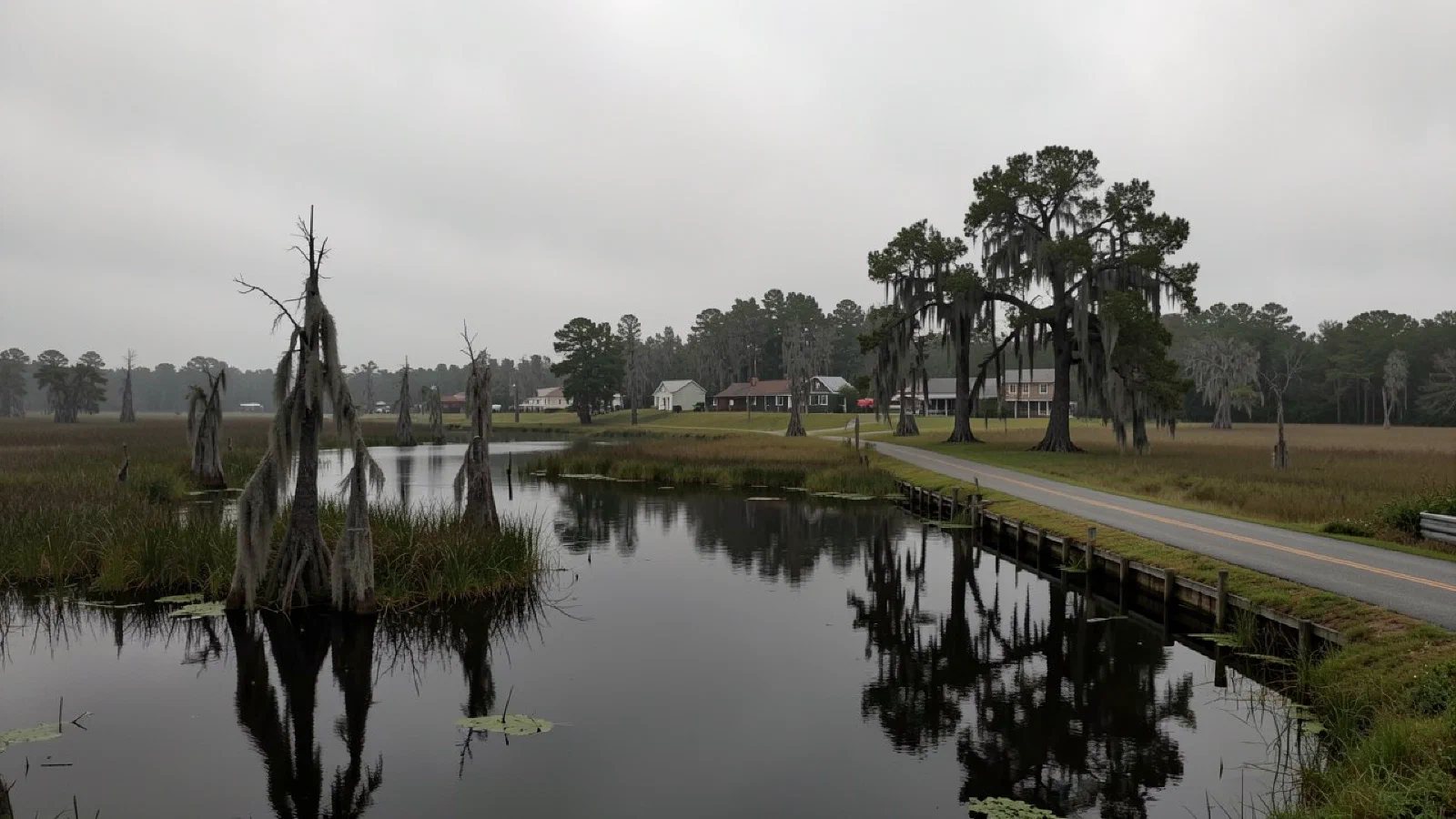
Louisiana has approximately 1.35 million rural residents spread across 41 parishes that the state classifies as rural, with concentrations in two distinct geographic corridors. The northern parishes running from Caddo through Ouachita to East Carroll trace the western edge of the Mississippi Delta, where persistent poverty, population loss, and agricultural decline have hollowed out the economic base for decades. The Acadiana parishes in south-central Louisiana carry a Cajun cultural identity, an oil and gas economy in structural decline, and a healthcare infrastructure that developed around industry employment patterns now disappearing. Between these corridors lies the Piney Woods region, where timber communities face many of the same access challenges with even less political visibility.
The healthcare infrastructure is deteriorating under compound pressure. Forty-nine rural hospitals operate across 41 parishes, and according to Sheps Center and Senate analysis data, 33 meet financial risk criteria for closure or service cuts. That represents more than half of the state’s rural hospital inventory. The at-risk facilities concentrate in central and northern Louisiana, where population density is lowest and Medicaid dependence is highest. In Acadiana, six hospitals face closure risk, including facilities in New Iberia, Mamou, Bogalusa, and Bastrop that anchor communities where the next nearest hospital may be 50 miles away.
Louisiana expanded Medicaid in 2016 under Governor John Bel Edwards, and the results were dramatic. The uninsured rate dropped from approximately 16% to 8.3% by 2023. Roughly 1.6 million Louisianans, 34% of the state’s population, are enrolled in Medicaid, with an additional 300,000 uninsured. In rural parishes, 37% of residents are covered by Medicaid and 22% by Medicare, meaning nearly 60% of the rural population depends on government insurance programs. Arkansas expanded through a premium assistance model that produced different coverage dynamics. Georgia’s Pathways program enrolled fewer than 11,000 people despite $110 million in administrative costs. Louisiana’s straightforward expansion achieved what those alternatives did not: mass coverage that transformed the uninsured rate.
This expansion success created the vulnerability that OBBBA now exploits. Louisiana ranks second nationally in Medicaid dollars received relative to population. Work requirements beginning December 2026, six-month redeterminations, and provider tax phase-downs will hit a state where Medicaid is the dominant payer, not a supplemental one.
Governor Jeff Landry (R) took office in January 2024, replacing the term-limited Edwards. Landry has embraced the Trump administration’s health policy agenda, including the SNAP food restriction waiver that prohibits purchase of specific sugar-laden items using SNAP benefits. LDH Secretary Bruce D. Greenstein has positioned the department as an enthusiastic partner in the MAHA agenda. Landry does not face reelection until 2027, providing political stability for RHTP implementation that Arkansas (with Sanders through 2027) shares but Kansas (with Kelly departing January 2027) does not.
RHTP Application and Award#
Louisiana received a $208.4 million FY2026 RHTP award with a five-year total of approximately $1.04 billion. At $154 per rural resident annually, the per-capita allocation places Louisiana in the middle tier nationally, below Kansas’s $256 but above Alabama’s $97 and Tennessee’s $86. West Virginia receives $229 with a much more favorable 5.4:1 Medicaid Math ratio. Louisiana’s per-capita funding is adequate; its fiscal environment is catastrophic.
The Louisiana Department of Health (LDH) serves as lead agency. LDH is a comprehensive health department with direct authority over Medicaid administration, public health, behavioral health, and environmental health services. Unlike Alabama’s ADECA or Tennessee’s DOH-TennCare split, LDH controls both RHTP implementation and the Medicaid payment streams that rural providers depend on. The institutional separation between the lead agency and implementation authority is minimal, the best positioning of any high-complexity transition state.
LDH appointed Julie Foster Hagan as Executive Director for the Rural Health Transformation Program, creating a dedicated leadership position rather than layering RHTP onto existing administrative structures. Prior to the formal application, LDH convened a Rural Health Transformation Task Force of more than 60 health professionals and stakeholders and issued a Request for Information seeking input from hospitals, providers, academic institutions, and rural residents.
The application is organized around several distinctive strategic elements:
CMS-Aligned Network. Louisiana pledged to be the first state to participate as a CMS-Aligned Network, building a health technology ecosystem that promotes data interoperability and patient access. This positions the state as a willing early adopter of CMS’s health IT infrastructure vision.
Rural Tech Catalyst Fund (RTCF-LA). A dedicated investment fund for scalable digital solutions including telehealth, AI-driven diagnostics, and mobile health platforms, designed to attract technology vendors to rural markets where commercial investment has historically been absent.
Statewide Shared EHR. LDH proposes connecting rural health units and small provider practices through a shared electronic health record system, addressing the fragmentation that leaves rural providers operating in information silos.
Workforce Pipeline. The application includes a rural clinician credit bank providing sign-on and retention bonuses tied to five-year service commitments, a state income tax credit for clinicians relocating to Health Professional Shortage Areas, and expanded partnerships with LSU Health Sciences Center and Louisiana Community and Technical Colleges.
Community Paramedicine and Tele-EMS. Regional pilot programs targeting Frontier and Remote (FAR) parishes where long hospital travel times and limited emergency infrastructure create the most acute access gaps. Treat-in-place protocols would allow paramedics to deliver urgent care without requiring hospital transport.
Key subawardees include the Louisiana Hospital Association, Louisiana Primary Care Association, Louisiana Rural Health Association, LSU Health Sciences Center, Louisiana CHW Institute, and Jeff Reynolds of the Rural Hospital Coalition.
The Medicaid Math#
Louisiana’s projected $27.0 billion in Medicaid cuts over ten years represents approximately 20% of baseline spending. The 25.9:1 RHTP-to-Medicaid-cut ratio is among the most severe in the program, worse than Kentucky’s 20.9:1 and dramatically worse than Arkansas’s 7.9:1 or West Virginia’s 5.4:1. Only California’s raw dollar exposure is larger, but California has a diversified payer environment. Louisiana’s rural healthcare delivery depends on Medicaid in ways that make the ratio existentially threatening.
The primary cut mechanism is mixed: work requirements, provider tax phase-downs, and state-directed payment cap impacts arrive simultaneously. Work requirements hitting in December 2026 will apply to Medicaid expansion enrollees, with exemptions for pregnant women, those under 19 or over 64, tribal members, and the medically frail. Louisiana expanded Medicaid through executive action, not voter initiative, meaning the legislature could modify expansion parameters without a ballot measure.
The provider tax phase-down is particularly consequential. Louisiana’s hospital and nursing home provider taxes generate significant state match revenue that leverages additional federal dollars. As these taxes phase down under OBBBA, the state faces compounding fiscal pressure: reduced Medicaid revenue from federal cuts, reduced state match capacity from provider tax limitations, and potential loss of the supplemental payments that keep rural hospitals’ margins above zero.
Jeff Reynolds, executive director of the Rural Hospital Coalition, offers a pragmatic timeline: “For the next four or five years, it’s hard for me to say anything materially changed that would cause a rural hospital to shut down. Once we get four or five years out, it’s up for debate.” That timeline aligns precisely with the RHTP funding window.
Implementation Assessment#
Louisiana’s application reflects genuine strategic sophistication. The CMS-Aligned Network pledge, the RTCF-LA technology fund, and the shared EHR initiative demonstrate a state thinking about infrastructure rather than discrete programs. The community paramedicine pilots targeting FAR parishes show awareness of where access gaps are most acute. The dedicated executive director appointment signals institutional seriousness.
The technology bet is the application’s distinguishing feature and its primary risk. Becoming the first CMS-Aligned Network positions Louisiana for favorable treatment in health IT standards development. But the commitment depends on CMS sustaining its health technology ecosystem vision through leadership transitions and political shifts. If CMS deprioritizes the Aligned Network framework, Louisiana will have built infrastructure optimized for a federal architecture that no longer exists.
The intermediary landscape is stronger than in most high-complexity transition states. The Louisiana Hospital Association, Louisiana Primary Care Association, and Rural Health Association bring institutional capacity and existing relationships with rural providers. The CHW Institute provides a platform for community health worker deployment that Georgia, Arkansas, and Kansas must build from scratch. Jeff Reynolds’s Rural Hospital Coalition bridges the policy and operational worlds. These are organizations with demonstrated capacity, not aspirational partnerships listed for grant compliance.
Sustainability design faces the 25.9:1 problem. The application’s path-to-sustainability language emphasizes Medicaid billability for new services, which is sound strategy in a state where Medicaid covers 37% of rural residents. But if Medicaid cuts reduce reimbursement rates, eliminate coverage for the expansion population through work requirement attrition, or cap state-directed payments, the billing pathways that sustainability depends on become less viable precisely when RHTP funding expires.
Architecture Trajectory Assessment#
Louisiana’s application demonstrates stronger alignment with alternative architecture frameworks than most high-complexity transition states, though implementation pathways require development.
The community paramedicine and Tele-EMS pilots directly implement service center and alternative delivery concepts, bringing care to patients rather than requiring transport to facilities. Treat-in-place protocols enable care delivery outside traditional facility walls, and the FAR parish targeting addresses the geographic contexts where conventional hospital access is structurally impossible. If Louisiana scales these pilots from demonstration to statewide deployment within years two and three rather than year five, it builds alternative delivery infrastructure that persists regardless of hospital closure patterns.
The Rural Tech Catalyst Fund could capitalize AI-enabled infrastructure models if investments flow toward care coordination platforms rather than conventional EHR connectivity. The “AI-driven diagnostics” language suggests clinical decision support, but the application does not describe the care coordination, navigation, and service integration platforms that would transform how rural residents access care.
CHW Institute infrastructure positions Louisiana to develop local workforce pathways, building careers for community members without requiring relocation for credentialing, more quickly than peer states. The Institute provides training infrastructure, credentialing capacity, and advocacy relationships that can support CHW career ladder development and Medicaid billing pathway establishment. Whether RHTP investment builds toward sustainable CHW employment models or grant-funded positions that disappear in Year 6 depends on implementation choices.
The CMS-Aligned Network strategy could enable inverse hub architecture, positioning distributed virtual expertise reaching patients through local access points, by creating the interoperability and data sharing infrastructure that virtual-first specialty delivery requires. Louisiana’s technology bet is compatible with alternative architecture but does not explicitly commit to it.
Regulatory environment for alternative architecture is mixed. Louisiana has full NP practice authority, enabling independent practice without physician supervision, which creates workforce deployment flexibility that Georgia and Arkansas lack. Community paramedicine scope expansion would require regulatory action beyond current EMS practice acts.
The architecture trajectory gap is that Louisiana’s application describes technology and workforce components of alternative architecture without committing to the care delivery transformation those components would support. The CMS-Aligned Network, RTCF-LA, and community paramedicine investments could build toward alternative architecture models, or they could remain conventional infrastructure overlaid on traditional delivery models.
Risk Assessment#
Louisiana is a High-risk state among high-complexity transition states with several compounding vulnerabilities.
Medicaid dependency concentration. No high-complexity transition state has a higher proportion of its rural population dependent on Medicaid. The 25.9:1 ratio means RHTP investment is not building on a stable foundation but rather racing against an accelerating erosion of that foundation.
Provider tax phase-down exposure. Louisiana’s supplemental payment architecture, built on provider taxes that leverage federal matching dollars, faces structural threat from OBBBA provisions. The state has not publicly articulated a strategy for replacing these revenue streams.
Technology infrastructure dependency. The CMS-Aligned Network commitment ties Louisiana’s implementation architecture to federal technology standards still under development. If CMS shifts direction, the state’s technology investments may need significant recalibration.
Political alignment paradox. Governor Landry’s alignment with the Trump administration positions LDH as a cooperative implementation partner, which may yield favorable federal treatment. But that same alignment means the state government is unlikely to publicly challenge or prepare for the Medicaid cuts that threaten RHTP sustainability. The state cannot simultaneously celebrate RHTP funding from an administration whose Medicaid policies may close the hospitals that funding is meant to transform.
Compound advantage: institutional capacity. LDH is a capable agency with a dedicated RHTP executive director, an established Task Force, and strong intermediary partnerships. The institutional barriers between lead agency and implementation are manageable, and the state’s experience administering Medicaid expansion gives it operational sophistication that non-expansion high-complexity peers lack.
Honest Assessment#
What Louisiana does well. The application is among the more thoughtful in the program. The CMS-Aligned Network strategy, the technology investment fund, the community paramedicine pilots, and the workforce pipeline all reflect a state that understands what rural transformation requires at a systems level rather than a programmatic one. The intermediary landscape is capable. The lead agency controls both RHTP and Medicaid, eliminating the institutional separation that hobbles Tennessee and Alabama. The dedicated executive director structure signals institutional seriousness. The CHW Institute provides workforce infrastructure Georgia and Kansas lack. Full NP practice authority enables workforce deployment flexibility. Community paramedicine pilots address the most acute access gaps with models that could scale statewide.
Where the plan meets reality. Louisiana receives $154 per rural resident annually while losing $25.90 in Medicaid revenue for every RHTP dollar gained. The 33 rural hospitals at financial risk are at risk because of Medicaid payment inadequacy and payer mix concentration. RHTP can fund technology, train workers, and pilot community paramedicine. It cannot replace the revenue that Medicaid cuts will remove from hospital operating budgets. No public strategy exists for the provider tax phase-down. Sustainability depends on Medicaid billing pathways that OBBBA threatens. MCO commitment to sustaining RHTP innovations is tentative. The political alignment that yields favorable federal treatment today prevents honest preparation for the coverage erosion that same federal policy produces.
What would change the assessment. Four developments would shift the trajectory. First, an explicit post-RHTP fiscal strategy that accounts for Medicaid revenue loss and provider tax phase-down. Second, MCO contractual commitments to sustain specific RHTP-funded services beyond the grant period. Third, acceleration of the community paramedicine model from pilot to statewide deployment within years two and three rather than year five. Fourth, public acknowledgment from state leadership that RHTP and Medicaid cuts create contradictory pressures requiring simultaneous management rather than celebration of one and silence about the other.
The four-to-five-year window Jeff Reynolds identifies is exactly the RHTP funding period. Louisiana has that window to build infrastructure, train workforce, and establish billing pathways that survive beyond 2030. If the Medicaid fiscal cliff arrives as projected and RHTP expires simultaneously, the state will face the worst-case convergence: new infrastructure built with disappeared funding, workforce trained for facilities that can no longer operate, and technology systems deployed in communities that have lost the providers meant to use them.
How this article connects to others in Blue Gray Matters.
Sources cited in this article.
- Centers for Medicare and Medicaid Services. "CMS Announces $50 Billion in Awards to Strengthen Rural Health in All 50 States." CMS Newsroom, 29 Dec. 2025, cms.gov/newsroom/press-releases/cms-announces-50-billion-awards-strengthen-rural-health-all-50-states.
- KADN News 15. "6 Rural Hospitals in Acadiana Face Possible Closure as Funding Cuts Loom." KADN News 15 Investigates, 2 July 2025, kadn.com/news/investigates/6-rural-hospitals-in-acadiana-face-possible-closure-as-funding-cuts-loom.
- KPLC TV. "Will Deep Cuts to Medicaid Force Rural Hospital Closures in Louisiana?" KPLC, 21 July 2025, kplctv.com/2025/07/21/will-deep-cuts-medicaid-force-rural-hospital-closures-louisiana.
- Louisiana Department of Health. "LDH Announces Rural Health Transformation Funding." LDH News, 29 Dec. 2025, ldh.la.gov/news/RHTP-funding-announcement.
- Louisiana Department of Health. "Rural Health Transformation Program." LDH, 2025, ldh.la.gov/page/rural-health-transformation-program.
- Louisiana Department of Health. "Rural Health Transformation and Sustainability Program Application Narrative." LDH, Nov. 2025, ldh.la.gov/assets/docs/Secretary/RHTP/RHTP-Application.pdf.
- Louisiana Department of Health. "RHTP Webinar Presentation." LDH, 4 Dec. 2025, ldh.la.gov/assets/docs/Secretary/RHTP/RHTS-Webinar_12.4.2025.pdf.
- Louisiana Department of Health. "LDH Releases Request for Information for Public Engagement on Rural Health Transformation Program." LDH News, 12 Sept. 2025, ldh.la.gov/news/RHT-RFI.
- Louisiana Illuminator. "Medicaid Cuts Could Be Devastating for the Delta and the Rest of Rural America." Louisiana Illuminator, 3 July 2025, lailluminator.com/2025/07/03/medicaid-cuts-could-be-devastating-for-the-delta-and-the-rest-of-rural-america.
- Markey, Edward J., et al. "Markey, Leader Schumer, Wyden, Merkley Release Data Detailing Hundreds of Rural Hospitals Across U.S. at Risk." U.S. Senate, 12 June 2025, markey.senate.gov/news/press-releases/markey-leader-schumer-wyden-merkley-release-data.
- NOLA.com. "Medicaid Cuts Could Shut Rural Hospitals in Louisiana." The Times-Picayune, 28 June 2025, nola.com/news/healthcare_hospitals/louisiana-rural-hospitals-medicaid-cuts.
- Pointe Coupee Post South. "Thirty-Two Rural Parish Hospitals Face Financial Vulnerability." Post South, 8 July 2025, postsouth.com/story/news/local/2025/07/08/news-local-big-beautiful-bill-president-donald-trump-medicaid-budget-cuts.
- WAFB. "Louisiana Receives $208 Million for Rural Health Transformation." WAFB, 29 Dec. 2025, wafb.com/2025/12/29/louisiana-receives-208-million-rural-health-transformation.
- WRKF. "Louisiana's Rural Hospitals Face Uncertain Future Due to Medicaid Cuts." WRKF, 28 July 2025, wrkf.org/health/2025-07-28/louisianas-rural-hospitals-face-uncertain-future-due-to-medicaid-cuts.