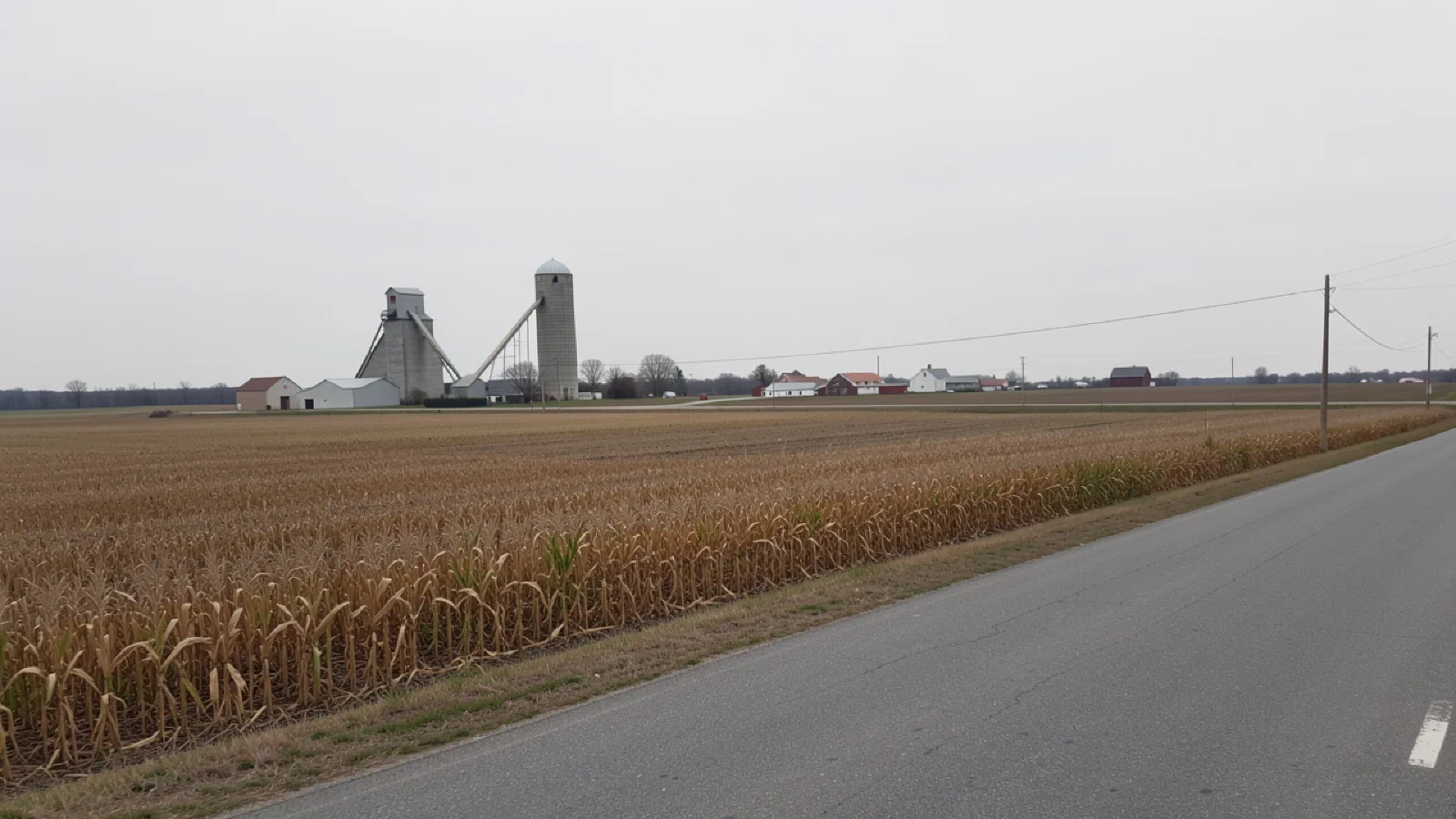
Iowa
Cluster 1: Low-Constraint Expansion States
Iowa became the first state in the nation to award RHTP funding when Governor Kim Reynolds announced $78.6 million in competitive grants on January 30, 2026. While other states remained in planning phases, Iowa had already selected provider recruitment awardees, approved equipment procurement, and begun distributing resources to rural healthcare organizations. This execution velocity reflects both administrative capacity and a transformation vision that predated federal funding.
The Healthy Hometowns initiative builds on Reynolds’ 2025 rural health legislation, which codified hub-and-spoke care models before RHTP existed. Iowa’s application did not create new infrastructure but accelerated existing plans. The $209 million FY2026 award, the second-highest absolute allocation nationally, flows into implementation pathways already designed and tested through state policy development.
Iowa also carries the largest Critical Access Hospital network in the nation. The state’s 82 CAHs represent infrastructure that transformation investment must sustain while simultaneously modernizing. This density creates both opportunity and constraint: more facilities mean more potential transformation partners, but also more facilities requiring stabilization before they can participate in innovation.
State Context#
Iowa’s 3.2 million residents distribute more rurally than any low-constraint expansion peer. 47.5 percent of the state population lives in rural census tracts, compared to roughly 17 percent nationally. Among residents aged 65 and older, 50.1 percent live in rural areas. This demographic concentration means Iowa’s rural health challenges affect a larger share of state residents than in states where rural populations represent small minorities.
The healthcare infrastructure reflects this rural distribution. Iowa’s 82 Critical Access Hospitals constitute the largest CAH network of any state. These facilities provide primary care, emergency services, and in some communities the only local acute care for populations scattered across 56,000 square miles. The network’s density creates coordination opportunities that states with fewer, more dispersed facilities cannot replicate.
Federally Qualified Health Centers and Rural Health Clinics supplement hospital infrastructure. The Iowa Primary Care Association coordinates safety net providers across the state. University of Iowa Health Care provides tertiary referral capacity from Iowa City, while regional systems including UnityPoint and MercyOne operate networks spanning multiple communities.
Iowa expanded Medicaid through a modified approach beginning in 2014, with full expansion implemented by 2016. The Iowa Health and Wellness Plan covers approximately 200,000 residents, creating substantial Medicaid exposure relative to state population. Projected ten-year cuts of $9.5 billion represent 17 percent of baseline spending. The 9.1:1 RHTP-to-Medicaid-cut ratio places Iowa in the middle tier among low-constraint expansion states, more favorable than Oregon’s 22.2:1 but less favorable than North Dakota’s 1.3:1.
Governor Kim Reynolds is not facing reelection in 2026, providing administrative continuity through RHTP’s initial implementation. Reynolds has made rural health a policy priority, signing legislation in May 2025 that directed Iowa HHS to develop hub-and-spoke care models and pursue federal funding for residency expansion. The Healthy Hometowns initiative represents continuation of that legislative framework rather than new policy development.
RHTP Application and Award#
Iowa received a FY2026 award of $209 million, the second-highest absolute allocation nationally after Texas. At $218 per rural resident annually, the per-capita allocation falls in the middle range. However, Iowa’s large rural population means the substantial absolute amount does not translate to per-capita abundance.
The Iowa Department of Health and Human Services serves as lead agency with low authority gap. Director Larry Johnson oversees implementation, with cross-divisional coordination spanning Medicaid, Public Health, Compliance, the State Office of Rural Health, Data Strategy, Health Economics, and Communications. This integrated structure enables coherent strategy across program components.
The Healthy Hometowns initiative organizes around several interconnected components that the January 30, 2026 awards began implementing.
Hometown Connections focuses on building partnerships to restructure care delivery, particularly through hub-and-spoke models connecting regional centers with satellite facilities. Iowa HHS released a technical assistance RFP for Health Hub implementation, seeking vendors to support rural organizations in planning, partnership building, and evaluation across maternal and child health, mental and behavioral health, cardiovascular health, and chronic disease prevention.
Provider Recruitment and Retention received $12.6 million in the first award round. Competitive grants provide recruitment bonuses, relocation assistance, and other incentives for physicians, advanced practice providers, and registered nurses committing to full-time, in-person practice in rural Iowa communities. Targeted specialties include family medicine, internal medicine, pediatrics, emergency medicine, obstetrics and gynecology, psychiatry, general surgery, and cardiology.
Medical Equipment Procurement received $66 million in the first award round. Grants support rural organizations procuring and installing essential equipment including MRI systems, CT scanners, PET/CT systems, digital X-ray, mammography units, da Vinci 5 robotic surgical systems, Mako robotic-arm assisted surgical systems, Ion robotic bronchoscopy, linear accelerators for radiation therapy, and endoscopy systems. The equipment list reflects intention to bring advanced diagnostic and treatment capacity to rural facilities rather than concentrating technology in urban centers.
Cancer Prevention and Outcomes addresses Iowa’s rising cancer rates through screening access expansion, cancer-specific hubs, equipment upgrades, and prevention methods including radon testing and mitigation, mammography, and colonoscopy.
Telehealth and Technology investments bring prenatal, postpartum, post-surgery discharge, chronic disease management, and other care types to accessible rural sites.
The application includes Certificate of Need reform commitment, with Iowa pledging legislative action to remove outpatient behavioral health care from CON requirements by December 31, 2026. This policy alignment reflects CMS scoring preferences for states demonstrating regulatory flexibility.
The Medicaid Math#
Iowa’s 9.1:1 ratio places it in the moderate range among low-constraint expansion states. The projected $9.5 billion in ten-year Medicaid cuts represents 17 percent of baseline spending, a substantial share that RHTP investment cannot fully offset.
Work requirements and provider tax provisions constitute the primary cut mechanisms. Iowa’s Medicaid managed care structure, with coverage administered through managed care organizations, affects how cuts translate to provider revenue. MCO rate negotiations will determine how federal payment reductions flow through to hospitals, physicians, and other providers.
The mathematical reality positions Iowa between extremes. The ratio is less favorable than Vermont’s 1.6:1 or North Dakota’s 1.3:1, meaning Iowa cannot approach investment parity with projected losses. But the ratio is more favorable than Oregon’s 22.2:1 or high Medicaid exposure states facing ratios exceeding 30:1. Iowa must design for partial offset rather than full compensation or mere symbolic gesture.
Senator Chuck Grassley welcomed the award as “fantastic news” while noting the opportunity to “revitalize rural care across the state.” Representative Mariannette Miller-Meeks framed the investment as delivering on the promise that “access to high-quality health care should never depend on your zip code.” These characterizations acknowledge the investment’s significance without claiming it resolves the underlying Medicaid arithmetic.
Implementation Assessment#
Transformation Approach Plausibility#
Iowa’s equipment procurement strategy is the most aggressive capital investment approach among low-constraint expansion states. The $66 million first-round equipment awards place da Vinci robotic surgical systems, linear accelerators, and advanced imaging in rural facilities. This approach treats transformation as technology deployment rather than care model redesign.
The strategy’s logic is defensible: rural facilities lose patients when lacking equipment available at urban competitors. Installing advanced technology enables rural hospitals to retain cases that would otherwise require patient transfer. However, equipment without corresponding workforce produces expensive underutilization. Robotic surgical systems require trained surgeons. Linear accelerators require radiation oncologists. The $12.6 million provider recruitment allocation must generate the professionals who operate the $66 million equipment investment.
The hub-and-spoke model codified in Reynolds’ 2025 legislation provides organizational framework for equipment deployment. Regional hubs provide specialty services that spoke facilities cannot sustain independently. Spokes refer complex cases to hubs while retaining routine care locally. This structure requires coordination infrastructure that the technical assistance RFP aims to provide.
The first-to-award execution creates competitive advantage and implementation risk simultaneously. Iowa’s speed positions it favorably for Year 2 CMS allocations based on demonstrated deployment. But rapid award distribution may produce grants to organizations lacking capacity for successful implementation. Quality control requires balancing speed against readiness assessment.
CAH Network Implications#
Iowa’s 82 Critical Access Hospitals represent both the program’s largest CAH network and its most complex coordination challenge. The survival-transformation tension affecting CAHs means facilities in financial distress prioritize survival over innovation, while transformation investment in unstable facilities risks flowing to organizations that close regardless.
The equipment procurement approach addresses this tension by placing capital assets in facilities rather than providing operating support. Equipment remains even if ownership changes. A linear accelerator installed in a CAH that later closes or converts can continue serving the community under new organizational arrangements. This asset-focused strategy differs from workforce investment that departs when organizations fail.
However, not all 82 CAHs will receive equipment awards. The competitive RFP process selects organizations demonstrating capacity for successful implementation. This selection inevitably concentrates investment in stronger facilities, potentially widening gaps between high-performing and struggling CAHs.
Political and Administrative Stability#
Governor Reynolds’ absence from the 2026 ballot provides implementation continuity. Iowa HHS Director Larry Johnson’s characterization of the application as reflecting “years of thoughtful planning and collaboration” indicates institutional commitment transcending individual leadership.
The multiagency coordination structure, drawing on Medicaid, Public Health, the State Office of Rural Health, and other divisions, creates implementation capacity that single-agency approaches cannot match. The weekly partner meetings and hospital roundtables that informed application development continue through implementation, maintaining stakeholder engagement.
Architecture Trajectory#
Iowa possesses enabling conditions for alternative architecture that the RHTP plan does not use. The state granted nurse practitioners full practice authority in 1994, one of the original five states to do so, eliminating the scope of practice barriers that constrain transformation in states like Texas and Georgia. Iowa law defines NPs as primary care providers with independent prescriptive authority, creating the regulatory foundation for delivery models that do not depend on physician recruitment to communities where physicians will not stay.
More distinctive is Iowa’s cooperative infrastructure. The Iowa Association of Electric Cooperatives represents 36 distribution cooperatives and 8 generation and transmission cooperatives serving 650,000 Iowans across all 99 counties. The Iowa Institute for Cooperatives has coordinated agricultural, credit, and service cooperatives since 1951. Rural Wisconsin Health Cooperative and HealthPartners in Minnesota demonstrate that cooperative governance applies to healthcare, and Iowa’s institutional familiarity with the cooperative model runs deeper than either neighbor’s. Iowans already understand member ownership, elected boards, patronage dividends, and federated service structures. Translating that organizational literacy from electricity and grain marketing to healthcare is a smaller conceptual leap in Iowa than in states where cooperative enterprise is unfamiliar. The RHTP plan does not attempt this translation. Healthy Hometowns routes funding through conventional provider channels and state agency structures rather than building cooperative healthcare governance that could outlast federal funding cycles.
The equipment procurement strategy reinforces conventional facility dependence rather than building toward alternative architecture. Da Vinci robotic surgical systems and linear accelerators anchor care delivery to physical facilities requiring specialized professionals, the opposite of the inverse hub model that brings expertise to patients virtually while minimizing physical infrastructure. Iowa’s hub-and-spoke framework could theoretically evolve toward distributed delivery, but $66 million in capital equipment locks the spokes into facility-based care models that the convergence of demographic and fiscal pressures will challenge. Provider recruitment targeting physicians, surgeons, and specialists creates temporary staffing through relocation incentives rather than sustainable community careers through local workforce pathways. When recruitment bonuses expire, professionals leave. When cooperative members own their health enterprise, governance stays.
Iowa’s aging agricultural population makes this trajectory question urgent. With 50.1 percent of residents over 65 living in rural areas, the state faces the aging-in-place challenge that AI companion and monitoring infrastructure was designed to address. The plan’s technology investments focus on diagnostic and surgical equipment rather than the digital infrastructure, broadband capacity, and continuous monitoring platforms that would support rural elders between episodic facility visits. Being first to award means Iowa is first to set the implementation template. The template it is setting optimizes conventional transformation rather than piloting the alternative architecture its enabling conditions uniquely support.
Risk Assessment#
Iowa’s risk profile combines execution velocity with infrastructure complexity.
Low-constraint expansion status provides genuine advantage. Expansion status, integrated authority, and low authority gap create favorable implementation conditions.
First-to-award status creates both opportunity and exposure. Iowa’s demonstration of rapid deployment positions it for continued CMS favor. But implementation quality determines whether speed produces results or merely accelerates expenditure.
The 82-CAH network is asset and challenge. More CAHs mean more potential transformation partners and more facilities requiring coordination. Equipment deployment across this network creates technology access that smaller CAH networks cannot replicate.
The equipment-forward strategy requires corresponding workforce. Robotic surgical systems without surgeons, linear accelerators without radiation oncologists, produce expensive underutilization. Provider recruitment allocation must generate professionals who operate procured equipment.
Honest Assessment#
Iowa demonstrates what aggressive implementation looks like. First to award, first to test whether speed produces results or merely creates audit exposure.
What Iowa does well. The hub-and-spoke framework predates RHTP, meaning implementation builds on tested organizational models rather than creating new structures under time pressure. Equipment procurement places capital assets in rural facilities, creating technology access that survives organizational transitions. Provider recruitment targets specific specialties rather than generic workforce expansion. The Certificate of Need reform commitment demonstrates policy alignment that CMS scoring rewards.
Where the plan meets reality. Equipment procurement without corresponding workforce produces underutilization. The 82-CAH network creates coordination complexity that smaller states avoid. The 9.1:1 ratio means RHTP investment cannot offset projected Medicaid losses. First-to-award execution prioritizes speed over extended readiness assessment.
What would change the assessment. Three developments would confirm Iowa’s trajectory. First, equipment utilization data demonstrating that procured technology operates at capacity rather than sitting idle. Second, provider recruitment producing professionals who remain beyond initial commitment periods. Third, hub-and-spoke coordination reducing fragmentation across the 82-CAH network rather than creating parallel systems. A fourth development would shift the trajectory entirely: leveraging Iowa’s cooperative tradition to build community-governed health enterprises that own transformation infrastructure rather than leasing it from federal grant cycles.
Iowa chose to test transformation implementation while other states continued planning. The results will inform whether execution velocity produces outcomes or merely spending.
How this article connects to others in Blue Gray Matters.
Sources cited in this article.
- Grassley, Chuck. "Grassley Welcomes Historic Investment in Iowa Rural Health Care from Republicans' Working Families Tax Cuts Law." *U.S. Senate*, 29 Dec. 2025, www.grassley.senate.gov/news/news-releases/grassley-welcomes-historic-investment-in-iowa-rural-health-care.
- Iowa Association of Electric Cooperatives. "About Co-ops." *IAEC*, 2026, www.iowarec.org/iowa-co-ops/about-co-ops.
- Iowa Capital Dispatch. "$209M in Federal Funds Awarded for Rural Health Transformation in Iowa." *Iowa Capital Dispatch*, 29 Dec. 2025, iowacapitaldispatch.com/briefs/209m-in-federal-funds-awarded-for-rural-health-transformation-in-iowa.
- Iowa Capital Dispatch. "Iowa Seeks Federal Funding to Support Rural Health Care, Gov. Kim Reynolds Announces." *Iowa Capital Dispatch*, 5 Nov. 2025, iowacapitaldispatch.com/2025/11/05/iowa-seeks-federal-funding-to-support-rural-health-care-gov-kim-reynolds-announces.
- Iowa Department of Health and Human Services. "Healthy Hometowns: Iowa's Rural Health Transformation Plan." *HHS.Iowa.Gov*, 2026, hhs.iowa.gov/initiatives/healthy-hometowns-iowas-rural-health-transformation-plan.
- Iowa Department of Health and Human Services. "Iowa Rural Health Transformation Program Project Narrative." *HHS.Iowa.Gov*, Nov. 2025, hhs.iowa.gov/media/17491/download.
- Office of the Governor. "Iowa Awarded $209 Million for First Year of Federal Rural Health Transformation Program." *Governor.Iowa.Gov*, 29 Dec. 2025, governor.iowa.gov/press-release/2025-12-29/iowa-awarded-209-million-first-year-federal-rural-health-transformation-program.
- Office of the Governor. "Iowa First in the Nation to Award Rural Health Transformation Program Funding." *Governor.Iowa.Gov*, 30 Jan. 2026, governor.iowa.gov/press-release/2026-01-30/iowa-first-nation-award-rural-health-transformation-program-funding.