Delaware
Cluster 1: Low-Constraint Expansion States
Delaware has approximately 400,000 rural residents across two counties, no medical school, and a primary care physician-to-patient ratio in Sussex County that exceeds 2,000:1. The state now receives $739 per rural resident annually to build the healthcare infrastructure that a century of proximity to Philadelphia, Baltimore, and Washington never required it to develop on its own.
State Context#
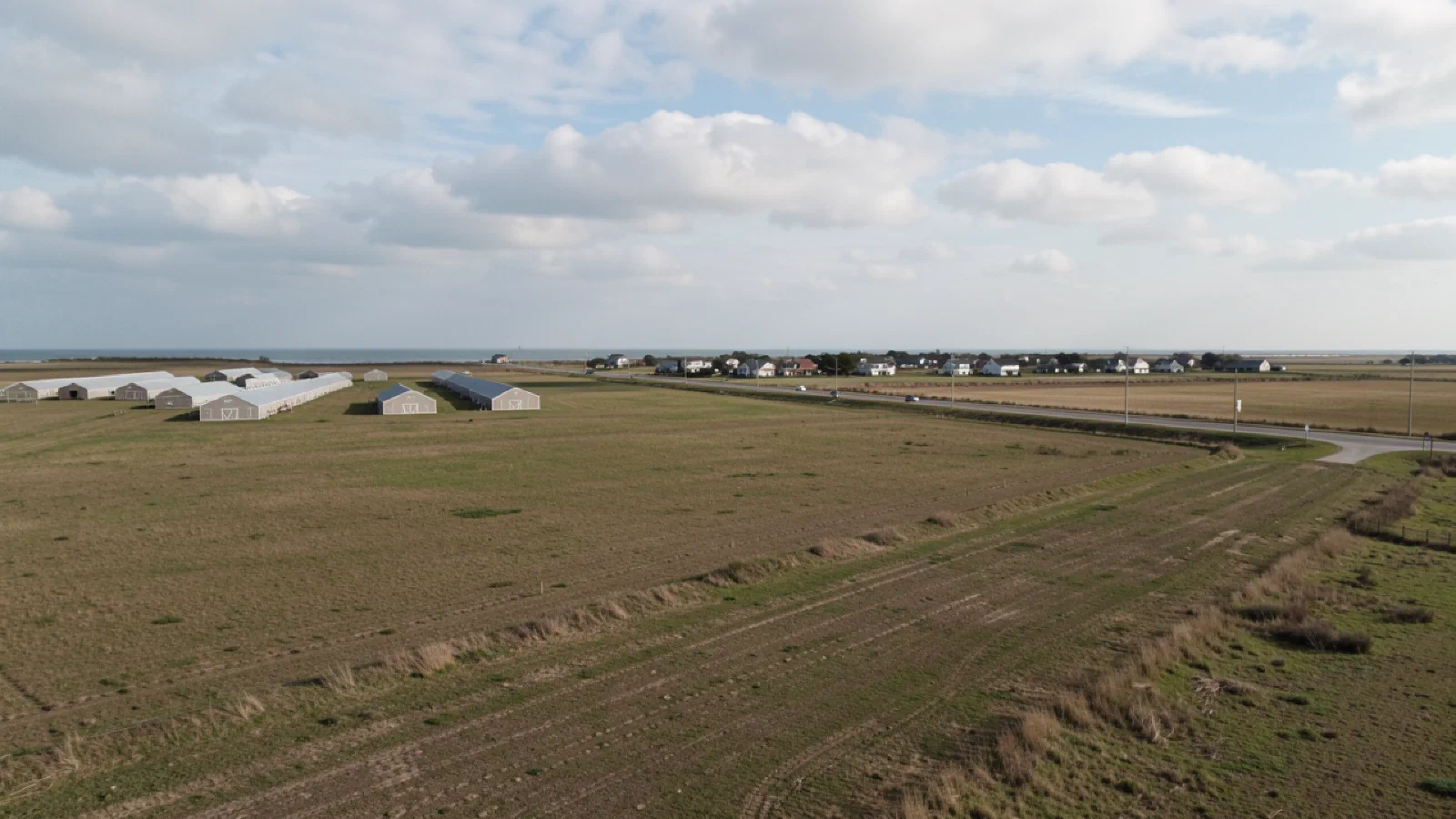
Delaware has approximately 400,000 rural residents concentrated in Kent and Sussex Counties, the state’s two southern counties that together account for nearly 40% of its population. New Castle County in the north contains Wilmington and the I-95 corridor, where healthcare infrastructure benefits from proximity to Philadelphia’s academic medical centers. The divide is stark. Northern Delaware residents have access to ChristianaCare, Nemours Children’s Health, and the broader Philadelphia provider network. Rural residents in western Sussex County drive 50 miles to see a specialist or wait six months for a primary care appointment.
Sussex County has experienced the largest population increase in the state, growing 29% from 2010 to 2022. Roughly 31% of its population is 65 or older. The growth is driven by retirees and seasonal residents moving to the coast, a demographic pattern that inflates demand for healthcare services while doing little to attract the physicians needed to provide them. Kent County, home to Dover and the state capital, functions as an administrative center with a smaller but similarly underserved rural population.
Both Kent and Sussex Counties are designated entirely as Medically Underserved Areas and Health Professional Shortage Areas for primary care, dental care, and mental health. Only 130 active primary care physicians serve Sussex County’s 271,000 residents, a ratio exceeding 2,000:1 that far surpasses HRSA’s shortage threshold. Kent County’s ratio of 1,700:1 is marginally better but still nearly twice the 960:1 ratio in urban New Castle County. Delaware ranks last nationally in meeting primary care needs according to HRSA designation scoring. The state needs 75 additional practitioners in shortage areas just to reach federal adequacy thresholds.
Delaware is one of only three states without a four-year medical school. This absence shapes every workforce discussion. There is no in-state training pipeline producing physicians who form practice relationships with rural communities during clinical rotations. The Rollins School of Nursing at Beebe Healthcare and Delaware Technical Community College produce nursing graduates, but physicians trained in Philadelphia, Baltimore, and Washington have limited incentive to relocate to Sussex County when those metropolitan markets offer higher compensation and established professional networks.
Delaware expanded Medicaid under the ACA and maintains one of the lower uninsured rates in the country. Coverage is not the central problem in the way it is for non-expansion high-burden states. The problems are access, workforce, and the geographic concentration of providers in the northern third of the state. Governor Matt Meyer (D) took office in January 2025 and does not face election in 2026. He has made rural health transformation a signature initiative, announcing the RHTP application from Beebe Healthcare in Lewes and personally championing the medical school proposal. DHSS Secretary Christen Linke Young, confirmed in October 2025, previously served as Deputy Director of the White House Domestic Policy Council and Deputy Assistant to the President for Health under Biden. Her federal health policy experience represents an unusual depth of technical competence at the state agency level for RHTP implementation.
RHTP Application and Award#
Delaware received a $157.4 million FY2026 award with a projected five-year total of approximately $787 million. At $739 per rural resident annually, the per-capita allocation is among the highest in the program, a function of formula mechanics that reward smaller rural populations with disproportionate per-capita funding rather than reflecting exceptional need relative to other states.
The Department of Health and Social Services (DHSS) and the Division of Public Health (DPH) serve as co-leads. The co-lead designation reflects internal departmental structure rather than cross-agency coordination. DPH is a subdivision of DHSS, meaning the authority gap is minimal. DHSS houses Medicaid, social services, public health, and behavioral health functions under a single secretary, giving it integrated operational authority comparable to Vermont’s AHS model.
The application organized around 15 projects, programs, and initiatives spanning five federal priority areas. The breadth is notable for a small state. Rather than concentrating on three or four strategic bets, Delaware spread its proposal across a range of interventions. Four initial RFPs were released in February 2026, with additional solicitations on a rolling basis.
Delaware Medical School. The centerpiece initiative allocates an estimated $42.5 million in Year 1 toward establishing the state’s first four-year medical school through a partner institution. The RFP targets 40 enrolled students by fall 2028 with a dean selected by December 2026. The medical school concept is more than a workforce investment. It is the proposal’s organizing narrative, the anchor around which Governor Meyer has built the public case for RHTP as a generational opportunity.
Rural Hope Centers. Two new integrated service hubs in Kent and Sussex Counties modeled on New Castle County’s Hope Center, which combines healthcare, employment services, and housing support. The model addresses the social determinants infrastructure that rural Delaware lacks.
Mobile Health Units and Community Health Hubs. A network of mobile health pods deployed to schools, churches, libraries, and community centers in Kent and Sussex Counties, targeting the transportation barriers that prevent rural residents from accessing care at fixed locations.
Food Is Medicine Infrastructure. Community health workers, dieticians, and culinary medicine teachers deployed in rural counties with continuous glucose monitoring pilot programs and nutrition counseling integration.
School-Based Health Centers. Expansion into rural Kent and Sussex Counties, where currently 73% of the state’s 40 existing school-based health centers are concentrated in New Castle County.
Telehealth and Remote Monitoring. A catalyst fund supporting technology companies developing remote monitoring tools and wearable health devices for rural populations, plus a statewide prior authorization and health data exchange platform.
Value-Based Care Readiness. Funding for rural providers and FQHCs to adopt health IT solutions, prepare for CMS’s Aligned Networks pledge, and transition toward value-based payment models. Eligible investments include AI scribes to reduce documentation burden.
Workforce Data Center and Pipeline Programs. Medical school tuition awards tied to five-year rural practice commitments, non-physician healthcare worker training, and a data collection mechanism to track workforce trends, shortages, and disparities.
Subawardees include Beebe Healthcare, Bayhealth Medical Center, ChristianaCare, Thomas Jefferson University, Delaware Public Libraries, and school districts. Specific allocation breakdowns await CMS cooperative agreement finalization.
The Medicaid Math#
Delaware’s projected $3.8 billion in Medicaid cuts over ten years represents approximately 14% of baseline spending, placing it in the upper range of proportional impact among expansion states. The 4.9:1 RHTP-to-Medicaid-cut ratio means the state loses $4.90 in Medicaid revenue for every dollar it receives in RHTP investment. This is worse than Vermont’s 1.6:1 but substantially better than the double-digit ratios facing most high Medicaid exposure and high-complexity transition states. Rhode Island faces a similar dynamic at higher per-capita funding but with a rural population one-half Delaware’s size, making per-capita comparisons between Cluster 1 peers illustrative of how formula mechanics interact with state demographics.
The primary cut mechanism is mixed: work requirements, provider tax constraints, and state-directed payment limitations arrive through multiple channels. Delaware’s hospital provider tax legislation, enacted in 2024, authorized up to $100 million annually through a 3.58% tax on hospital net patient revenues. The status of implementing this tax remains uncertain as DHSS and CMS negotiate terms. If the provider tax moves forward, it provides a revenue mechanism that partially offsets federal cuts. If it stalls, the fiscal arithmetic for rural hospitals deteriorates.
The Delaware Healthcare Association projects more than 50,000 Delawareans will lose Medicaid coverage and over 30,000 will become uninsured under H.R. 1 provisions. Work requirements effective January 2027 will affect expansion adults, and Rhode Island’s 56% expansion-adult share is the national high, but Delaware’s is also substantial. The six-month redetermination cycle will create enrollment churn even among eligible populations.
For rural providers already operating on thin margins, coverage losses translate directly to increased uncompensated care. Beebe Healthcare President David Tam described the cascade: patients lose insurance, stop seeing primary care physicians, stop filling prescriptions, and eventually present at emergency departments with advanced disease. RHTP investment in mobile units and telehealth cannot prevent that outcome if the patients those services reach have lost the coverage that pays for treatment.
Implementation Assessment#
The Medical School Bet#
Delaware’s decision to anchor its RHTP narrative around medical school establishment is ambitious and carries the longest time horizon of any initiative in the proposal. Medical schools take years to accredit, years to graduate their first class, and years more before graduates complete residency and enter practice. A student enrolled in fall 2028 will not practice independently until approximately 2035 at the earliest, five years after RHTP funding ends.
This timeline problem does not make the investment wrong. It makes it insufficient as a near-term workforce strategy. Delaware needs physicians now. The 130 primary care doctors serving Sussex County’s 271,000 residents cannot absorb additional demand from population growth, aging demographics, and the chronic disease burden that characterizes rural coastal communities. The medical school addresses the pipeline problem that created current shortages, but it does not solve the shortages themselves within the RHTP program period.
The application recognizes this through complementary workforce initiatives: tuition awards tied to rural practice commitments, non-physician training programs, and the Healthcare Workforce Data Center. Whether these shorter-horizon investments are funded at sufficient scale relative to the medical school’s $100 million five-year cost remains unclear from available documents.
Breadth Versus Depth#
Fifteen initiatives across a $157 million annual budget averages roughly $10.5 million per initiative. Some initiatives clearly receive more than the average and others less, but the portfolio structure raises a question that the application does not fully answer: whether Delaware achieves more by spreading investment across 15 programs or by concentrating on the four or five with the highest probability of measurable impact.
Vermont’s application builds explicitly on existing infrastructure. Delaware’s 15-initiative approach creates new programs across multiple domains simultaneously. For a state that has never operated a medical school, never built a mobile health network in its rural counties, and never established Hope Centers outside New Castle County, the implementation complexity is substantial. Each initiative requires procurement, vendor selection, workforce hiring, and program standup, all managed by a DHSS leadership team that, however capable, has been in place for less than six months.
Execution Advantage#
What Delaware has that most states lack is scale that enables coordination. Three counties. Two rural counties. A population small enough that the governor personally knows the hospital CEOs. A DHSS secretary with federal health policy experience at the highest level. A political environment where RHTP is not competing for gubernatorial attention against multiple crises.
Christen Linke Young’s appointment is the application’s most underappreciated asset. A DHSS secretary who served as Deputy Director of the White House Domestic Policy Council understands CMS cooperative agreement mechanics, federal grant compliance requirements, and health policy implementation at a level that most state health officials do not. If RHTP implementation succeeds anywhere through bureaucratic competence and federal relationship management, Delaware has positioned itself for that outcome.
Architecture Trajectory#
Delaware’s proximity to major metropolitan health systems creates a fundamental architecture question: does RHTP build standalone rural capacity or formalize dependency on the Philadelphia, Baltimore, and Washington systems that already surround it? The application’s structure suggests both possibilities without choosing decisively between them.
The Hope Centers and mobile health infrastructure point toward community-based delivery consistent with the service center model. Service centers are minimal-footprint, technology-enabled access points that bring care to communities rather than requiring communities to support full facility infrastructure. A mobile health pod deployed to a Sussex County church, staffed by community health workers and connected via telehealth to specialists elsewhere, represents this approach. Delaware’s regulatory environment supports this trajectory. The state has full nurse practitioner practice authority, eliminating the scope barriers that constrain mid-level providers in neighboring Pennsylvania and Maryland.
However, the subawardee structure reveals conventional assumptions. Beebe Healthcare, Bayhealth, and ChristianaCare receive primary implementation roles. Thomas Jefferson University partners on medical school development. The major initiatives, from the medical school to the telehealth catalyst fund to value-based care readiness, strengthen traditional provider capacity rather than building alternative infrastructure that could function if those providers fail. The application does not engage community ownership models, cooperative structures, or governance arrangements that would shift control from institutional providers to communities themselves.
The two-county geography that defines Delaware’s rural challenge is also its alternative architecture opportunity. With 400,000 rural residents concentrated in a footprint smaller than many single metropolitan counties, Delaware could deploy comprehensive service center networks, AI companion systems for isolated elderly, and community health worker infrastructure at costs other states cannot match. The question is whether RHTP investment treats this geographic concentration as an implementation advantage for conventional transformation or as laboratory conditions for demonstrating alternatives. The current plan defaults to the former. The funding level would support the latter.
Risk Assessment#
Risk Tier: Low. Delaware’s risk profile benefits from favorable funding ratios, political stability, integrated lead agency authority, and a small enough geographic scope that implementation failures would reflect choice rather than structural constraint.
Medical school timeline mismatch is the highest-probability concern. The initiative that defines the application’s public narrative will not produce practicing physicians during the RHTP program period, creating a political expectation management challenge even if the investment is sound on a 15-year horizon.
Initiative proliferation risks spreading implementation capacity too thin across 15 programs during Year 1, particularly given DHSS leadership transition in late 2025.
Medicaid cut proportionality at 14% of baseline is higher than the national average for expansion states, and provider tax implementation uncertainty adds fiscal risk that the application does not directly address.
Coverage loss in rural counties will increase uncompensated care at Beebe Healthcare and Bayhealth, the two hospital systems anchoring rural infrastructure, potentially undermining the financial viability that RHTP investments assume.
Honest Assessment#
What the state does well. Delaware enters RHTP with institutional advantages most states lack. The funding, at $739 per rural resident, exceeds most peer states and provides genuine implementation resources. The lead agency structure consolidates Medicaid, public health, social services, and behavioral health under DHSS, eliminating the interagency coordination failures that plague larger states. Secretary Linke Young’s federal policy experience creates CMS relationship capacity at the highest level. Governor Meyer’s personal commitment provides executive air cover that shields implementation from competing political priorities. The two-county rural footprint means 15 initiatives can reach the entire target population rather than fragmenting across dozens of counties.
Where the plan meets reality. The 15-initiative breadth creates implementation complexity that even Delaware’s institutional advantages may not overcome. Each initiative requires procurement, staffing, vendor management, and performance measurement. The medical school centerpiece will not produce physicians until years after RHTP ends. The subawardee structure relies on hospital systems whose financial viability depends on Medicaid coverage that work requirements will erode. The application builds conventional provider capacity rather than infrastructure that could survive if those providers fail. Rhode Island’s even higher per-capita funding and Delaware’s share a similar low-constraint expansion profile, but Delaware’s 4.9:1 RHTP-to-cut ratio is worse, meaning the margin for error is smaller than the per-capita headline suggests.
What would change the assessment. Concentration of Year 1 resources on four or five initiatives with measurable 24-month outcomes rather than spreading across 15 programs. Explicit engagement with community ownership or cooperative models that build infrastructure not dependent on hospital system survival. Medical school timeline transparency that acknowledges workforce impact will not materialize within RHTP program period. Provider tax implementation certainty that resolves the fiscal uncertainty hanging over rural hospital revenue projections.
How this article connects to others in Blue Gray Matters.
Sources cited in this article.
- Bay to Bay News. "State Begins Rural Health Care Overhaul with Request for Proposals." *Bay to Bay News*, 10 Feb. 2026.
- Bayhealth Medical Center. "2025 Bayhealth Community Health Needs Assessment." Bayhealth, 2025.
- Centers for Medicare and Medicaid Services. "CMS Announces $50 Billion in Awards to Strengthen Rural Health in All 50 States." *CMS Newsroom*, 29 Dec. 2025, cms.gov/newsroom/press-releases/cms-announces-50-billion-awards-strengthen-rural-health-all-50-states.
- Delaware Health and Social Services. "Rural Health Transformation Program." Division of Public Health, 2026, dhss.delaware.gov/dph/rural-health-transformation-program.
- Delaware Health and Social Services. "Delaware RHTP Application: Rural Health Needs and Target Population." CMS-RHT-26-001, Nov. 2025.
- Kaiser Family Foundation. "First-Year Rural Health Fund Awards Range From Less Than $100 Per Rural Resident in Ten States to More Than $500 in Eight." KFF, 7 Jan. 2026, kff.org/state-health-policy-data/first-year-rural-health-fund-awards.
- Macdonald, Mark A., et al. "Unraveling Healthcare Shortages in Delaware and Charting a Course for Equity and Resilience." *Delaware Journal of Public Health*, vol. 9, no. 5, 2024, pp. 16-25.
- Office of Governor Matt Meyer. "Governor Meyer Announces Generational Plan to Overhaul Rural Healthcare in Delaware." *Delaware State News*, 12 Nov. 2025, news.delaware.gov.
- Office of Governor Matt Meyer. "State of Delaware Opens Initial RFPs to Transform Rural Health Care." *Delaware State News*, 9 Feb. 2026, news.delaware.gov.
- Spotlight Delaware. "Delaware Requests Partners for Medical School, Federal Rural Health Programs." *Spotlight Delaware*, 9 Feb. 2026.
- WHYY. "Delaware Works to Shore Up Rural Hospitals Threatened by Medicaid Cuts." *WHYY*, 2 Dec. 2025, whyy.org/articles/delaware-rural-health-care-medicaid-cuts.