Alaska
Cluster 3: Frontier and Resource-Adequate States
Alaska enters the Rural Health Transformation Program with conditions that no other state shares. Not extreme rural but genuinely frontier. Not geographically challenging but physically inaccessible. Not underserved but operating healthcare systems designed for realities that continental policy frameworks cannot comprehend. And with $990 per rural resident annually, the third-highest per-capita allocation in the program, Alaska has resources that many states would consider transformative.
These resources cannot transform what geography makes permanent. They can, however, strengthen systems that work precisely because they developed from Alaska rather than being imported to it.
State Context#
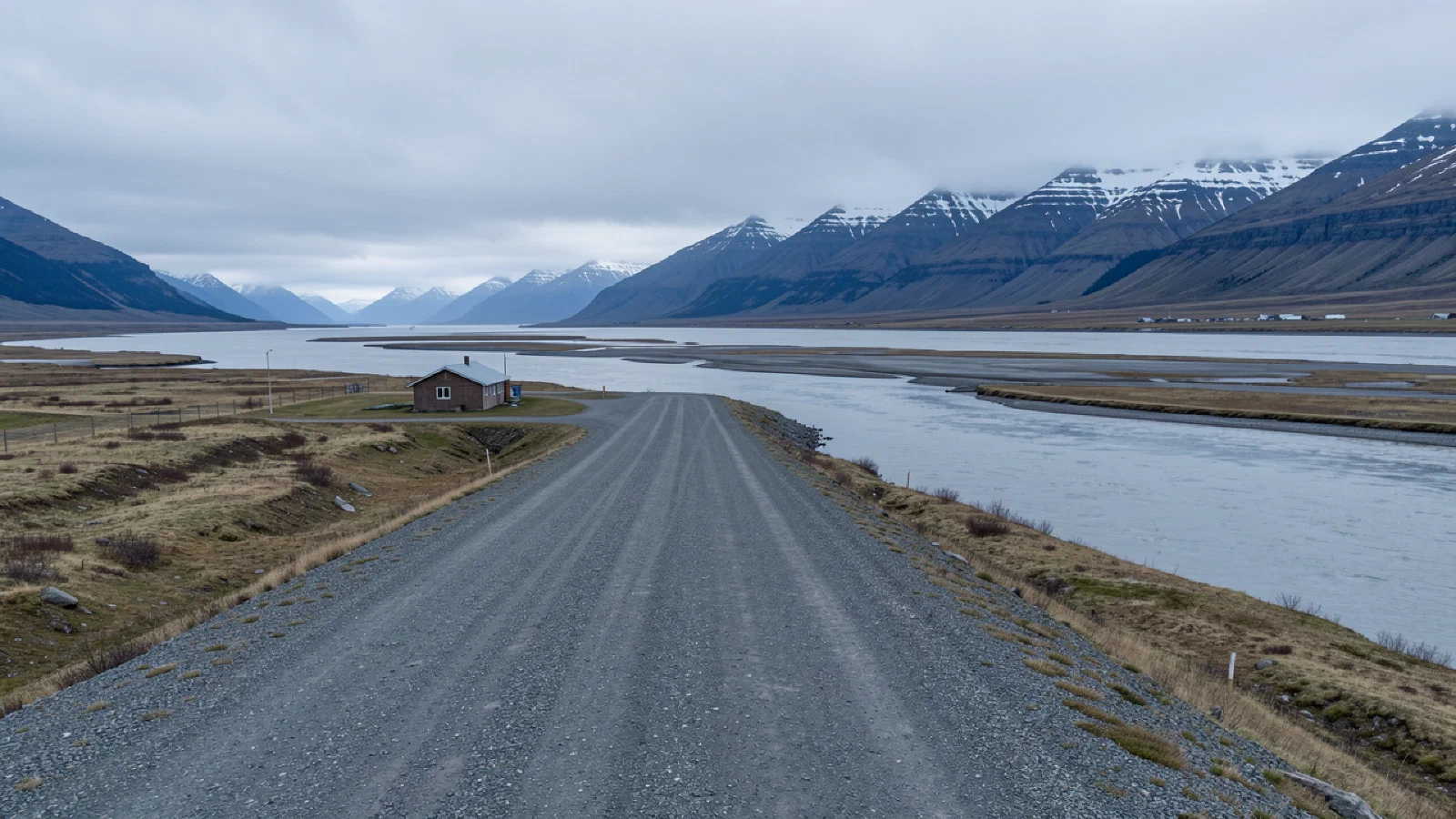
Alaska is the largest state by land area and among the smallest by population. Approximately 733,000 people occupy 665,384 square miles, producing a population density of 1.3 people per square mile. For comparison, Wyoming, the next least dense state, has 5.8. The numbers do not capture what density means operationally. Most Alaska communities lack road access. Travel requires small aircraft, boats, snowmachines, or, during breakup and freeze-up seasons when ice is neither solid enough to travel nor thin enough to navigate, no travel at all.
The healthcare delivery system reflects these conditions. Six regional hospitals serve hub communities. More than 170 village health clinics provide primary and emergency care across remote communities. The Community Health Aide Program, developed in the 1960s to address tuberculosis epidemics in Alaska Native villages, trains approximately 550 local residents to provide first-response care under physician supervision. Health aides consult by phone or video with physicians at regional hospitals, providing care within their scope while remaining in communities that cannot support higher-level providers.
This model works because it adapts to Alaska’s reality rather than imposing continental assumptions. But health aides cannot provide all services. Anything beyond their scope requires travel to regional hubs or Anchorage, with all the cost, logistical barriers, and separation from family and community that entails.
Alaska expanded Medicaid in September 2015 under Governor Bill Walker. The expansion now covers approximately 76,000 Alaskans, over a quarter of the total Medicaid population. Total Medicaid enrollment reaches 236,000, approximately 40 percent of the state population. Since expansion, unpaid hospital bills have declined by almost half. Coverage is not the primary challenge. Access across impossible distances is.
Governor Mike Dunleavy, a Republican, won reelection in 2022 and is not on the ballot until 2026. Commissioner Heidi Hedberg leads the Department of Health. The administration has supported RHTP enthusiastically, framing it as opportunity to address long-standing infrastructure challenges. Political stability exists at state level. Whether that stability translates to implementation continuity depends on variables beyond state control.
RHTP Application and Award#
Alaska received an FY2026 award of $272,174,856, with an estimated five-year total of approximately $1.36 billion. At $990 per rural resident annually, Alaska’s allocation reflects formula provisions that weighted land area, producing an award disproportionate to population but proportionate to the cost structure of serving communities accessible only by air.
The Alaska Department of Health serves as lead agency. DOH submitted the application in November 2025 and will coordinate with CMS while establishing a statewide Subrecipient Administrator to manage the application process, provide technical assistance, process awards, and support reporting. DOH faces minimal institutional barriers to implementation. The department has clear mandate, direct budget authority, and established relationships with the tribal health organizations that operate most Alaska rural healthcare.
Alaska’s application structures initiatives across six domains.
Healthy Beginnings strengthens maternal and child health as foundation for healthy families. Alaska’s geography requires pregnant women to leave their communities and temporarily relocate prior to delivery to access facilities equipped for labor, high-risk monitoring, and emergency intervention. The initiative targets technology-enabled maternal care infrastructure, telehealth for prenatal monitoring, and community-based support for postpartum isolation.
Health Care Access expands and sustains primary, behavioral, oral, specialty, emergency, home-based, and post-acute care services across rural communities. This is the broadest initiative and where most operational investment will concentrate.
Healthy Communities invests in preventive care, chronic disease management, consumer-facing digital tools, and culturally appropriate community education promoting healthy lifestyles.
Pay for Value: Fiscal Sustainability incentivizes shift from volume-based reimbursement to innovative care and payment models that increase care coordination and build long-term financial stability for rural providers.
Strengthen Workforce addresses the personnel shortage that makes all other initiatives theoretical without people to implement them.
Spark Technology and Innovation updates infrastructure and deploys emerging health technology focused on rural populations.
The subawardee structure spans tribal health organizations, hospitals, community-based entities, workforce development institutions, technology vendors, provider associations, and state agencies engaged in public health, education, or emergency medical response. The Alaska Native Tribal Health Consortium and regional tribal health organizations will receive substantial RHTP resources, reflecting their operational control of most rural Alaska healthcare.
The Medicaid Math#
Alaska’s RHTP-to-Medicaid-cut ratio of 1.5:1 is among the most favorable in the program. The projected ten-year Medicaid cut of $2.0 billion represents approximately 11 percent of baseline Medicaid spending. Alaska does not use provider taxes or state-directed payments, the financing mechanisms that drive the largest projected losses in other states. The base federal matching rate remains unchanged.
Work requirements present the primary cut mechanism. Beginning January 2027, most able-bodied adults ages 19 to 64 enrolled through Medicaid expansion must complete 80 hours per month of work or qualifying activities. However, the American Indian/Alaska Native exemption protects a substantial portion of Alaska’s expansion population. Remote communities where job opportunities are limited face particular challenges, but the exemption covers many residents of exactly those communities.
The favorable ratio does not eliminate Medicaid risk. Expansion adults who are not Alaska Native face enrollment churn as work requirements take effect. The $35 monthly cost-sharing provision effective October 2028 will reduce enrollment at the margin. But Alaska’s fiscal exposure is modest compared to states with ratios above 20:1.
What Alaska faces is not a coverage crisis. It is the permanent structural reality that healthcare delivery to remote communities costs more than per-capita formulas assume, and will continue to cost more regardless of what federal policy provides.
Implementation Assessment#
Transformation Approach Plausibility#
Alaska’s initiatives reflect genuine understanding of operational reality. The emphasis on community health aides acknowledges what works. The telehealth priority acknowledges geographic constraints. The behavioral health focus acknowledges outcome disparities that demand attention.
What remains unclear is whether RHTP’s five-year horizon matches Alaska’s transformation timescale. Workforce development produces results over decades, not funding cycles. Infrastructure investment in communities facing climate-driven viability questions requires longer planning horizons than RHTP allows. The initiatives are correctly identified. Whether they can achieve sufficient scale within program constraints is the implementation question.
The Tribal Health System Reality#
Alaska provides the clearest evidence for tribal health organization effectiveness. The Alaska Native Tribal Health Consortium is the largest, most comprehensive tribal health organization in the United States, employing more than 3,700 people and serving 180,000 Alaska Native and American Indian residents. ANTHC co-manages the Alaska Native Medical Center in Anchorage, a 182-bed hospital that operates the state’s first Level II Trauma Center. Regional tribal health organizations, including Yukon-Kuskokwim Health Corporation, Southcentral Foundation, and others, operate regional hospitals and village health clinics across the state.
Southcentral Foundation’s Nuka System of Care has received national recognition as a model for patient-centered, relationship-based healthcare. The system produces outcomes that conventional approaches cannot match precisely because it developed from community self-determination rather than external imposition.
State RHTP administration creates coordination complexity that adds cost without adding value. Federal dollars flow to the state, which contracts with tribal organizations that already receive federal funding through IHS. The arrangement reflects continental assumptions about state administration that do not fit Alaska’s governance reality. RHTP resources that flow through state administration and then to tribal organizations impose administrative burden without improving outcomes.
The implementation question is whether DOH can function as facilitator rather than controller, directing resources to organizations with demonstrated capacity rather than imposing state-level coordination requirements that tribal organizations have consistently outperformed.
Architecture Trajectory#
Alaska’s significance to the alternative architecture argument extends beyond demonstration value. The Community Health Aide Program is the inverse hub before anyone called it that. The inverse hub model positions virtual expertise traveling to patients through local workforce facilitation as more effective than recruiting professionals to relocate permanently. Since the 1960s, CHAP has embodied this principle. Health aides provide continuous local presence, physicians consult remotely, and the model works precisely because it was designed for Alaska’s reality rather than imported from continental assumptions. The program predates digital infrastructure but operates on identical principles: local workers within communities facilitate connections to distant specialists, with physical presence reserved for what cannot be delivered virtually.
The tribal health system represents the national proof case for tribal sovereignty as healthcare laboratory. ANTHC and Southcentral Foundation have operated what amounts to alternative architecture for decades, building governance structures under tribal sovereignty that achieve outcomes continental healthcare cannot match. The question RHTP raises is not whether tribal organizations can build alternative systems but whether RHTP resources flow to them as sovereign partners building their own architecture or as conventional subawardees receiving pass-through funding with state-imposed compliance requirements. The application’s subawardee structure, routing substantial resources through tribal organizations while maintaining DOH coordination, suggests hybrid treatment. Whether that hybrid preserves tribal operational autonomy or dilutes it through state administrative layers will determine whether RHTP strengthens or undermines the alternative architecture Alaska already operates.
The broadband and telehealth investment decisions reveal whether RHTP builds toward AI-enabled infrastructure or reinforces conventional virtual care. Alaska’s Spark Technology and Innovation initiative targets infrastructure and emerging health technology. The implementation question is whether investment creates platforms capable of supporting AI-assisted care, continuous monitoring, and companion systems addressing elder isolation across remote communities, or whether it funds conventional video visits that replicate urban telehealth models at Alaska scale. The difference matters because Alaska’s geographic constraints make AI infrastructure more valuable per capita than in any other state. A conventional telehealth investment connects isolated elders to a physician every few months. An AI companion provides daily check-ins, medication reminders, and continuous monitoring that human workforce distribution cannot achieve. The same broadband investment enables either approach; the platform design determines which emerges.
The enabling conditions for alternative architecture largely exist. Tribal sovereignty provides regulatory laboratory authority that makes scope expansion, facility category innovation, and technology deployment possible without waiting for federal or state authorization. Tribal health organizations possess demonstrated governance capacity spanning decades. The absence of state-level barriers that constrain other states means Alaska’s trajectory depends primarily on whether RHTP investment decisions build on existing alternative architecture or import continental transformation assumptions that ignore what Alaska has already proven works.
What RHTP Provides Versus What Alaska Needs#
RHTP provides substantial resources on a five-year timeline structured around outcomes measurable by 2030. Alaska needs investment horizons matching its transformation timescale, which runs in decades, not congressional budget cycles. The mismatch is structural, not programmatic.
What RHTP can address: broadband infrastructure buildout, workforce training pipeline development, telehealth platform deployment, community health aide scope expansion, behavioral health workforce investment. These initiatives fit the funding structure and can produce demonstrable progress.
What RHTP cannot address: climate change threatening community viability across coastal and permafrost regions. Long-term workforce recruitment requires employment stability that depends on community viability. Infrastructure investment in communities facing relocation decisions requires coordination RHTP does not contemplate. Villages experiencing erosion and flooding may not exist in their current locations by 2040. Healthcare investment that ignores this reality is optimizing systems that may not survive.
Honest Assessment#
Where the plan can succeed. Alaska’s RHTP plan builds on existing infrastructure rather than importing continental models. Investment in CHAP expansion and modernization, telehealth infrastructure connecting village clinics to regional expertise, and behavioral health workforce development addresses gaps that geography cannot close but resources can narrow. The tribal health organizations receiving RHTP funding have demonstrated capacity that minimizes execution risk. If RHTP functions as amplifier of what already works, Alaska can achieve meaningful improvement.
Where the plan faces reality. RHTP cannot make geography different. It cannot address climate change threatening community viability. It cannot resolve behavioral health crises rooted in historical trauma. It cannot create economic opportunity in places geographic isolation precludes. The honest assessment is that Alaska needs different policy architecture, not just more RHTP dollars. Direct federal-tribal funding that bypasses state administration. Climate adaptation integration with healthcare planning. Investment horizons that match generational transformation timescales. These lie beyond RHTP’s scope.
What would change the assessment. Three developments would elevate Alaska from incremental improvement to meaningful transformation. First, federal recognition that Alaska requires distinct policy treatment rather than continental formulas adjusted for extremity. Second, direct federal-tribal funding mechanisms that eliminate state administrative costs without adding value. Third, integration of healthcare investment with climate adaptation planning that acknowledges some communities face viability questions healthcare investment cannot answer.
Alaska’s rural communities will persist regardless of federal policy. Alaska Native peoples survived for millennia before Western contact and will survive whatever RHTP provides or fails to provide. The question is whether federal policy helps or simply applies continental assumptions to Alaska’s distinctive reality and calls the inevitable gap between intention and outcome progress.
How this article connects to others in Blue Gray Matters.
Sources cited in this article.
- Alaska Department of Health. "Alaska Awarded Major Federal Funding to Permanently Transform Rural Health Care." Press Release, 29 Dec. 2025, health.alaska.gov/media/tpgjtmmp/122925-press-release-alaska-awarded-major-federal-funding-to-permanently-transform-rural-health-care.pdf.
- Alaska Department of Health. "H.R. 1 AK Impacts." State of Alaska, Nov. 2025, health.alaska.gov/en/education/hr-1-ak-impacts/.
- Alaska Department of Health. "Rural Health Transformation Program." State of Alaska, Jan. 2026, health.alaska.gov/en/education/rural-health-transformation-program/.
- Alaska Native Tribal Health Consortium. "Who We Are." ANTHC, 2025, anthc.org/who-we-are/.
- Alaska Public Media. "How Major Cuts to Medicaid Could Be 'Catastrophic,' Even for Alaskans with Private Insurance." 11 Mar. 2025, alaskapublic.org/news/health/2025-03-11/how-major-cuts-to-medicaid-could-be-catastrophic-even-for-alaskans-with-private-insurance.
- Aurrera Health Group. "Rural Health Transformation Starts Now: Funding, Oversight, and the Road Ahead." Aurrera Health Group, 8 Jan. 2026, www.aurrerahealth.com/blog/rural-health-transformation-starts-now-funding-oversight-and-the-road-ahead.
- Centers for Medicare and Medicaid Services. "CMS Announces $50 Billion in Awards to Strengthen Rural Health in All 50 States." CMS Newsroom, 29 Dec. 2025, www.cms.gov/newsroom/press-releases/cms-announces-50-billion-awards-strengthen-rural-health-all-50-states.
- Health Management Associates. "CMS Announces Rural Health Transformation Program Awardees." HMAIS Blog, 10 Jan. 2026, www.healthmanagement.com/blog/cms-announces-rural-health-transformation-program-awardees/.
- Kaiser Family Foundation. "First-Year Rural Health Fund Awards Range From Less Than $100 Per Rural Resident in Ten States to More Than $500 in Eight." KFF, 6 Jan. 2026, www.kff.org/state-health-policy-data/first-year-rural-health-fund-awards-range-from-less-than-100-per-rural-resident-in-ten-states-to-more-than-500-in-eight/.
- KTUU. "Governor Announces Approval of Millions for Rural Healthcare in Alaska." Alaska's News Source, 30 Dec. 2025, www.alaskasnewssource.com/2025/12/30/governor-announces-federal-rural-health-transformation-program-approval/.
- Sullivan, Dan. "Sullivan Welcomes $272 Million Investment in Alaska's Health Care System." U.S. Senate Press Release, 29 Dec. 2025, www.sullivan.senate.gov/newsroom/press-releases/sullivan-welcomes-272-million-investment-in-alaskas-health-care-system.