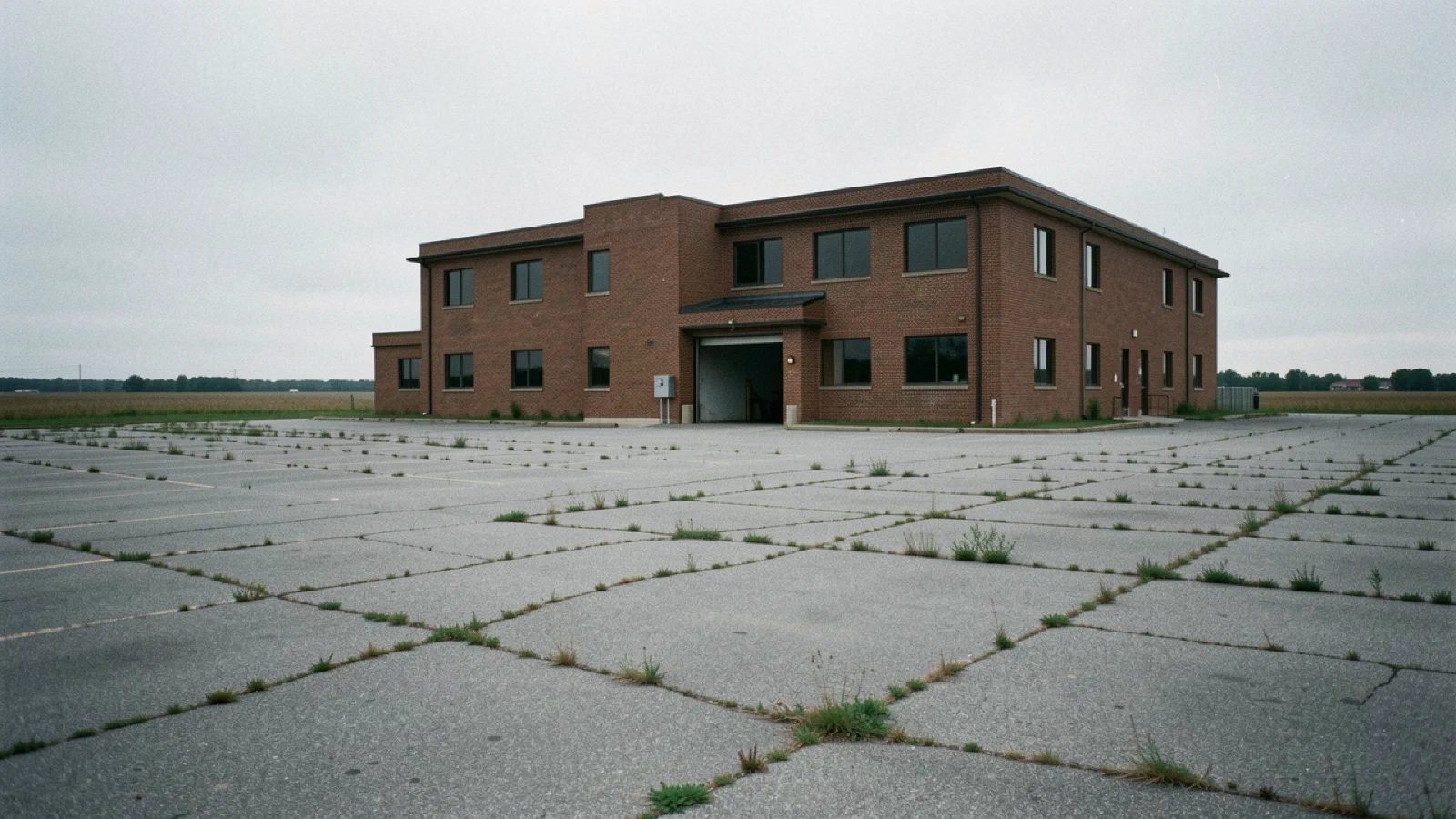
The Managed Decline Scenario
What Happens If Current Trajectories Continue
This is not doom-mongering. It is honest assessment of where current trends lead if nothing fundamental changes. The managed decline scenario exists to clarify what is at stake in pursuing transformation and to confront a possibility that policy discussions often avoid: that the most likely outcome of incremental approaches to rural healthcare is not incremental improvement but incremental collapse.
The word “managed” deserves scrutiny. Decline in rural healthcare is not managed in any meaningful sense. No agency is responsible for ensuring orderly transition when hospitals close. No authority coordinates care alternatives when providers depart. No system ensures that communities losing healthcare infrastructure receive compensating services. “Managed decline” is a polite term for uncoordinated abandonment, where each institutional exit is treated as an individual business decision rather than as a public health emergency.
The scenario assumptions are conservative. They do not require catastrophic policy change or unprecedented economic collapse. They require only that current trends continue at current rates in the absence of structural transformation. Every metric projected in this scenario extends trends already documented in Series 1, 11, and 12 of this project. The only assumption is that nothing interrupts them.
This scenario draws on the analysis in Series 12, which documented the policy earthquake of simultaneous Medicaid cuts ($911 billion over a decade), safety net erosion, Medicare payment changes, and workforce contraction. The convergence of these forces does not simply add pressure to rural health systems. It multiplies pressure through feedback mechanisms that accelerate decline beyond what any individual trend would produce alone.
Scenario Assumptions#
This scenario assumes the following conditions through 2035:
RHTP funding does not survive. The program’s current authorization expires, and political conditions prevent reauthorization at comparable scale. Partial renewal may occur, but at levels insufficient to sustain transformation investments initiated during the program period. Programs built on federal grant funding lose that funding. Staff hired with grant dollars are released. Technology deployed with grant capital is not maintained or upgraded.
Medicaid cuts proceed as legislated. The reconciliation law’s provisions reduce federal Medicaid spending by approximately $911 billion over a decade. Work requirements beginning January 2027 remove coverage from populations unable to document compliance. Enrollment declines continue the pattern observed during the 2023-2024 unwinding, when over 25 million people lost coverage, with 69% of disenrollments procedural rather than eligibility-based.
No major regulatory reform occurs. Scope of practice laws remain restrictive in states where they currently limit nurse practitioner and physician assistant autonomy. Facility licensing continues to require hospital-scale infrastructure for services that could be delivered in smaller settings. Telehealth reimbursement remains inconsistent across states. AI service delivery lacks liability and authorization frameworks.
Technology deployment remains fragmented. Telehealth expands incrementally but without the inverse hub infrastructure that would make it transformative. AI companion technology develops in the commercial market but does not deploy at scale in rural communities lacking broadband infrastructure, digital literacy support, and governance frameworks. Rural technology adoption follows the same pattern as previous innovations: urban deployment first, rural adaptation years later if ever.
Hospital closures continue at accelerating pace. The Chartis Group identified 432 rural hospitals vulnerable to closure as of early 2025, approximately one-quarter of all rural hospitals. States with the highest vulnerability include Texas (47), Kansas (46), Mississippi (28), Oklahoma (23), and Georgia (22). When examined as a percentage of each state’s rural hospitals, Arkansas leads at 50%, followed by Mississippi (49%), Kansas (47%), and Tennessee (44%). This scenario assumes vulnerability translates to closure at rates consistent with historical patterns, accelerated by converging policy pressures.
Workforce contraction exceeds pipeline production. HRSA projects a 141,160 physician shortage by 2038, with nonmetro areas facing 58% shortage compared to 5% in metro areas. More than half of rural physicians are aged 50 or older, with approximately 23% projected to retire by 2030. Nursing shortage projections exceed 500,000 registered nurses by 2030. Behavioral health workforce approaches total absence in many rural counties, with approximately 5 mental health providers per 100,000 population in rural areas compared to 30 per 100,000 in metro areas.
Timeline Projection#
| Period | Key Developments |
|---|---|
| 2026 to 2027 | RHTP funding continues but uncertainty grows. States implement current plans without new transformation initiatives. Work requirements begin reducing Medicaid enrollment. Hospital margins continue tightening. Provider retirement wave accelerates. |
| 2027 to 2028 | Federal budget pressure increases. RHTP funding threatened in reauthorization debate. Medicaid enrollment declines become visible in hospital revenue. First wave of RHTP-funded programs faces sustainability questions as grant periods end. |
| 2028 to 2029 | RHTP reduced or eliminated in budget negotiations. Medicaid cuts compound. Hospital closure rate increases. States lose coordination capacity as federal support contracts. Communities that built RHTP-funded programs watch them dissolve. |
| 2029 to 2031 | Closure rate accelerates as converging pressures reach critical mass. Workforce flight increases: providers depart communities where systems are collapsing. Emergency care capacity degrades as remaining hospitals reduce services. Service deserts expand from individual counties to multi-county regions. |
| 2031 to 2033 | Service deserts become normalized. Communities adapt through informal mechanisms. Emergency response times lengthen beyond clinical viability for time-sensitive conditions. Maternal care deserts expand further; currently 59% of rural hospitals no longer deliver babies, and this figure approaches 75%. |
| 2033 to 2035 | Stabilization at degraded equilibrium. Decline slows not because conditions improve but because there is less left to lose. Remaining infrastructure serves reduced, older, sicker populations with diminished expectations. Managed decline becomes the permanent condition rather than a transitional phase. |
Metrics Projection#
| Metric | 2025 Baseline | 2030 Projection | 2035 Projection |
|---|---|---|---|
| Rural hospitals operating | ~1,800 | ~1,500 | ~1,200 |
| Rural primary care access (within 30 min) | 65% | 55% | 45% |
| Rural behavioral health access | 40% | 30% | 20% |
| Rural dental access | 35% | 25% | 18% |
| Rural physician FTEs per 100,000 | 120 | 95 | 75 |
| Counties with no hospital | 700 | 900 | 1,100 |
| Rural-urban life expectancy gap | 2.4 years | 3.0 years | 3.8 years |
| Rural hospitals with OB services | 41% | 30% | 25% |
| 48% of rural hospitals at financial loss | 48% | 55% | 60%+ |
These projections extend current trends rather than modeling worst-case scenarios. The 2025 baseline already represents decades of decline. Each metric has been deteriorating for years; the projections assume that rate of deterioration continues, modestly accelerated by converging policy pressures.
The life expectancy gap projection deserves particular attention. The current 2.4-year gap between rural and urban residents already represents preventable death at population scale. A gap expanding to 3.8 years means that rural Americans as a group die nearly four years sooner than their urban counterparts, not because of genetic differences or personal choices but because of systematic disinvestment in the infrastructure that supports health.
What Managed Decline Looks Like#
Statistics measure decline at population level. Experience registers at individual and community level. Managed decline produces specific, concrete conditions that shape daily life:
Primary care becomes rationed by distance and time. The nearest provider is 45 to 60 minutes away. Appointments are available three to four weeks out. Each visit requires half a day away from work, childcare arrangements, and transportation that may not be available. Chronic disease management becomes episodic crisis response. Preventive care becomes theoretical.
Behavioral health becomes functionally unavailable. Rural areas with 5 mental health providers per 100,000 population already face severe shortage. Decline toward 3 per 100,000 or fewer means that depression, anxiety, substance use disorder, and serious mental illness receive no professional treatment in most rural communities. Self-medication through alcohol and drugs increases. Deaths of despair continue their upward trajectory. The opioid crisis that devastated rural Appalachia becomes a broader mental health crisis without professional response.
Emergency care becomes survival probability. When the nearest emergency department is 60 or more minutes away, survival rates for heart attack, stroke, and trauma decline dramatically. Every ten-minute increase in ambulance response time reduces survival probability for cardiac arrest by approximately 10%. Communities without hospitals become communities where medical emergencies that are survivable in urban settings become fatal.
Maternal care becomes dangerous. With 75% of rural hospitals lacking obstetric services by 2035, pregnant women face impossible choices. Drive 90 minutes for prenatal care. Deliver without nearby backup if complications arise. Accept risk that urban women do not face. Rural maternal mortality, already elevated, increases further. The story of Tamara Stuckey, who died from intrapartum hemorrhaging in Yazoo City, Mississippi, after traveling an hour for emergency obstetric care, becomes not an exceptional tragedy but a structural feature of rural pregnancy.
Elderly residents age without support. Aging in place, the preferred and cost-effective approach to elder care, requires accessible primary care, chronic disease management, and emergency response. Without these, aging in place becomes aging in isolation until crisis forces institutionalization. The nursing home becomes the default not because it is preferred but because community infrastructure cannot sustain independent living.
Young people leave because they must. Families with children need pediatric care, immunizations, developmental screening, and emergency services. When these are unavailable locally, young families relocate. This demographic sorting accelerates community aging, reduces tax base, and further undermines the economic conditions that might sustain healthcare infrastructure. Decline produces the conditions that deepen decline.
Regional Variation#
Managed decline does not distribute evenly. Regions already closest to collapse experience the worst outcomes, while regions with structural advantages decline more slowly.
Severe decline concentrates in communities already at the margins. Parts of the Mississippi Delta, where 49% of rural hospitals in Mississippi are vulnerable, face near-total healthcare infrastructure loss. Appalachian coalfield communities in eastern Kentucky and southern West Virginia, already depleted by coal industry collapse and the opioid epidemic, lose the last remaining healthcare anchors. High Plains frontier counties in western Kansas, Nebraska, and the Dakotas, where population density already makes conventional healthcare delivery unviable, see remaining services contract to regional centers 100 or more miles apart.
Significant decline affects most rural areas without a major employment anchor or metropolitan adjacency. Agricultural communities in the Midwest, timber communities in the Pacific Northwest, and small towns throughout the South lose hospitals and providers at rates that eliminate local access without reaching the extremity of frontier or persistent poverty regions.
Moderate decline occurs in rural areas adjacent to metropolitan regions, where residents can access urban healthcare systems with extended but manageable travel. These communities lose local convenience but not access entirely. Their decline is measured in longer drives, higher costs, and delayed care rather than complete absence.
Limited decline affects rural communities with destination appeal: recreation economies, retirement communities, and college towns that attract population, economic activity, and the provider workforce that follows. These communities are not immune to decline but possess structural buffers that delay and moderate its effects.
The geographic overlay with race, poverty, and historical disinvestment is not coincidental. Severe decline concentrates in the Black Belt, Delta, tribal lands, and Appalachian communities where centuries of extraction, discrimination, and policy neglect created the baseline conditions that managed decline extends. Healthcare infrastructure collapses fastest where it was thinnest, in communities that were served last and worst when systems functioned.
Adaptation Mechanisms#
Communities facing managed decline do not passively accept healthcare absence. They adapt through mechanisms that range from admirable to dangerous.
Informal care networks expand to fill gaps that formal systems abandon. Family members provide care that professionals once delivered. Church communities organize transportation, medication management, and wellness checks. Neighbors monitor elderly residents. These networks demonstrate rural resilience and community solidarity. They also impose enormous unpaid labor on people, predominantly women, who already carry disproportionate caregiving burden.
Self-treatment and delayed care become standard practice. Over-the-counter medications substitute for prescription management. Internet diagnosis replaces professional evaluation. Symptoms are endured until they become emergencies, at which point the absence of nearby emergency departments makes what was manageable into what is fatal. Delayed care is not a choice; it is the logical response to a system that makes timely care inaccessible.
Medical tourism emerges for communities near international borders. Residents of Texas border communities already access dental care, pharmaceuticals, and primary care in Mexico at lower cost and closer proximity than domestic alternatives. This practice expands as domestic options contract. It is practical adaptation that highlights domestic system failure.
Predatory providers fill gaps that legitimate providers vacate. Unlicensed practitioners, supplement sellers making therapeutic claims, and telehealth mills providing prescription access without meaningful evaluation exploit communities desperate for care. Where legitimate systems fail, illegitimate systems profit.
Acceptance of preventable suffering may be the most insidious adaptation. When conditions persist long enough, communities adjust expectations. Chronic pain becomes normal. Untreated depression becomes character. Preventable death becomes “he was getting older” or “she had a hard life.” The normalization of preventable suffering is the final stage of managed decline, when communities no longer recognize what they have lost because no one remembers what adequate healthcare felt like.
Why Managed Decline is Stable#
A critical and uncomfortable feature of this scenario is its stability. Managed decline does not generate the political pressure necessary to reverse it. Several mechanisms explain this paradox.
Rural political power declines with population. As decline drives out-migration, the political constituency for rural healthcare investment shrinks. Remaining residents have less political leverage, less organizational capacity, and less media attention. Urban and suburban priorities dominate legislative agendas. The communities that most need policy change are least able to demand it.
Remaining residents adapt expectations. Psychologically, humans adjust to conditions they cannot change. Communities that have lived without adequate healthcare for years stop imagining that adequate healthcare is possible. Advocacy diminishes not because need diminishes but because hope diminishes. Resignation replaces demand.
Crisis normalizes rather than forcing change. Each hospital closure is a crisis for the community it serves. But hospital closures have occurred at such frequency (182 since 2010, with 432 more vulnerable) that they no longer generate national political response. A single hospital closure is a tragedy. Hundreds of hospital closures become a statistic.
Resources flow to growing communities. Public and private investment follows population. As rural areas depopulate, investment concentrates in urban and suburban areas where returns are higher and political constituencies are larger. Capital allocation logic reinforces the conditions that capital allocation logic created.
No organized constituency demands transformation. Individual communities fight individual closures. But no national movement demands structural transformation of rural healthcare delivery. The National Rural Health Association advocates. State rural health associations coordinate. But the political power necessary to compel fundamental change does not exist in a system where rural representation is declining and rural healthcare is not a voting priority for urban majorities.
Vignette 1: Family Experience#
Rosa Garza is 71. Her husband Ernesto is 74 with advanced COPD from decades of ranch work in dust and heat. Their daughter Maria, 44, moved to Alpine twelve years ago because the school in Presidio was struggling and she wanted better for her kids. Their son Carlos, 48, stayed to run the ranch.
The Presidio clinic closed in 2029. The nurse practitioner who ran it relocated to Midland when the federal grant supporting her position expired. The nearest primary care is now in Marfa, 60 miles of desert highway. Ernesto sees the Marfa provider quarterly, each visit requiring Carlos to leave ranch work for most of a day. Between visits, Rosa manages Ernesto’s oxygen, medications, and breathing treatments based on instructions she memorized and notes she keeps in a spiral notebook.
Rosa tracks Ernesto’s medications on paper because the telehealth portal requires broadband they do not have. The satellite internet is too slow and too expensive for video visits. The provider in Marfa offered telephone check-ins, but Ernesto’s hearing loss makes phone calls difficult. Maria bought them a tablet, but without reliable connectivity it is a photo frame, not a medical device.
When Ernesto had a breathing crisis last January, Rosa called 911. The volunteer EMT from Presidio arrived in 22 minutes. The transport to the nearest emergency department in Alpine took another 90 minutes on roads that ice in winter. Ernesto survived. Rosa knows the arithmetic. The next crisis may happen when the volunteer EMT is on the ranch 40 miles away, or when the roads are worse, or when Ernesto’s lungs have less reserve.
Carlos’s wife Sofia needs prenatal care for their third child. The nearest OB provider is in Odessa, 200 miles away. Sofia drives four hours round trip for prenatal appointments, leaving their two children with Rosa, who is also monitoring Ernesto’s oxygen levels. Sofia’s previous deliveries were in Alpine, but Alpine’s hospital eliminated obstetric services in 2031.
The Garzas are not poor by local standards. They own land. Carlos runs cattle and manages a hunting lease that supplements ranch income. They lack healthcare not because they lack resources but because healthcare infrastructure no longer exists where they live. The choice is between the land that defines them and the healthcare that sustains them.
Ernesto told Carlos last month that when the time comes, he wants to die on the ranch. He was not being dramatic. He was being practical. The alternative is a crisis transport to a distant hospital where he would die among strangers. At home, Rosa can hold his hand. That is the healthcare the system still provides.
Vignette 2: State Health Official#
The morning briefing is familiar. Leflore County’s hospital reduced emergency department hours to 12 per day; it cannot staff 24-hour coverage. Sunflower County’s last primary care provider gave 90-day notice. Bolivar County’s ambulance service is operating with two of four rigs because the county cannot recruit paramedics at salaries it can afford.
Dr. Whitfield’s budget is smaller than it was five years ago. Federal support contracted when RHTP was not reauthorized. Medicaid enrollment dropped 18% statewide after work requirements took effect, reducing the revenue that kept marginal facilities open. The state’s general fund, never generous toward public health, faces competing demands from education, corrections, and infrastructure.
His team presents options for Sunflower County. Option one: recruit a replacement provider. Estimated timeline: 12 to 18 months, with no guarantee of success. The last three recruitment attempts in Delta counties failed. Option two: extend telehealth from the University Medical Center in Jackson. Possible but requires broadband that Sunflower County lacks in many areas and does not address the need for physical examination, procedures, or emergency stabilization. Option three: partner with a neighboring county to share a provider across two sites. Feasible if the neighboring county’s provider agrees, but doubles the wait time for both communities.
None of these options constitutes transformation. They are triage: redistributing shrinking resources among growing needs. Dr. Whitfield has been performing this triage for years, moving providers from slightly-less-desperate to slightly-more-desperate communities, negotiating with hospital administrators to maintain services another quarter, lobbying the legislature for funding that arrives at half the requested amount.
The political dynamics are corrosive. Legislative leadership attributes healthcare decline to “market forces” and “population trends,” framing structural abandonment as natural adjustment. Dr. Whitfield’s testimony about preventable deaths in communities without emergency access produces sympathetic nodding and unchanged appropriations. The legislature is not hostile to rural health. It is indifferent, which produces the same outcome.
Dr. Whitfield keeps a folder on his desk labeled “What Could Be.” It contains articles about service center models, AI companion deployment, sovereign investment mechanisms, and alternative governance structures. He reads them on evenings when the day’s triage has been particularly demoralizing. The models are compelling. The political conditions for implementing them in Mississippi do not exist.
He has considered resigning. His wife, a family physician in a Jackson suburb, asks periodically whether the work is sustainable. He stays because the alternative is someone who has not spent six years understanding which communities are closest to collapse and what interventions, however inadequate, might delay the worst outcomes for another year.
Managing decline is its own form of preventable suffering, inflicted on the officials who watch systems fail and lack the authority to prevent it.
Alternative Views#
Rural decline is natural economic adjustment that policy cannot reverse. Economic geography concentrates activity in areas where agglomeration effects produce efficiency. Rural depopulation reflects rational movement toward opportunity. Policy that attempts to sustain healthcare infrastructure in declining communities wastes resources that would produce greater benefit deployed where populations are growing.
This argument has internal logic. Economic restructuring does shift activity toward centers of productivity, and some rural population decline reflects this structural reality. But the argument treats healthcare access as equivalent to commercial services, subject to the same market logic. Healthcare differs from retail or entertainment because its absence produces death and disability, not inconvenience. The question is not whether all rural communities will maintain current population but whether residents of declining communities, many of whom cannot relocate, deserve basic healthcare access.
Resources should follow people to where opportunity exists. Rather than sustaining rural infrastructure, policy should invest in relocation assistance, urban absorption capacity, and transition support for communities that are contracting.
This argument ignores that many rural residents cannot move. Elderly residents on fixed incomes cannot afford urban housing costs. Agricultural producers are tied to land. Tribal members are connected to sovereign territory. Residents with deep community attachments, family obligations, and cultural identity rooted in place face relocation as a form of displacement rather than opportunity. Telling a 75-year-old rancher in Presidio County to move to Houston is not healthcare policy. It is abandonment dressed as pragmatism.
Trying to sustain rural communities is wasteful nostalgia. Rural America’s golden age is over. Sentiment should not drive resource allocation.
This argument mischaracterizes the case for rural healthcare investment. The argument is not nostalgic preservation of a vanished past. It is that 46 million Americans currently live in rural areas, that rural areas produce the food, energy, and natural resources that urban areas depend on, and that these Americans deserve healthcare access regardless of where they live. The question is not whether rural communities will look like they did in 1960 but whether they will have functional healthcare in 2035.
Conclusion#
The managed decline scenario requires no villain, no catastrophic policy failure, and no unprecedented economic collapse. It requires only that current trends continue and current institutions respond as they have responded for decades. Incremental deterioration, accepted individually, produces cumulative collapse experienced collectively.
This scenario is preventable. Every metric projected here can be altered by choices made between now and 2030. The transformation scenario described in RHTP 16.B and the alternative architecture detailed in Series 14 present a different trajectory. The enabling conditions analyzed in Series 15 identify what policy changes would be required.
But prevention requires action, not intention. The distance between recognizing that managed decline is the default trajectory and acting to prevent it is where most rural health policy has stalled for decades. Reports are written. Conferences are convened. Pilot programs are launched and then defunded. The trajectory continues because the forces producing decline are stronger than the forces opposing it, and because the people experiencing decline have less political power than the people who benefit from the current allocation of healthcare resources.
The managed decline scenario is not the worst case. It is the base case. It is what happens if the policy environment does not change, if political will does not materialize, if institutional capacity does not develop, and if communities are left to manage decline that they did not create and cannot reverse alone.
The question this scenario poses is not whether managed decline is possible. It is whether managed decline is acceptable. If it is not, then the alternative architecture described in this project deserves serious pursuit despite its difficulty, its uncertainty, and its cost. The cost of transformation is high. The cost of decline, measured in shortened lives, preventable suffering, community dissolution, and democratic failure, is higher.
How this article connects to others in Blue Gray Matters.
Sources cited in this article.
- American Hospital Association. "Rural Hospitals at Risk: Cuts to Medicaid Would Further Threaten Access." AHA Fact Sheet, 13 June 2025, aha.org.
- Boston University School of Public Health. "The Loss of a Rural Hospital Is Devastating for a Local Community." BU SPH, 2025, bu.edu/sph.
- Center for Healthcare Quality and Payment Reform. "Rural Hospitals at Risk of Closing." CHQPR, Dec. 2025, chqpr.org.
- Chartis Group. "2025 Rural Health State of the State." Chartis, 10 Feb. 2025, chartis.com.
- Commonwealth Fund. "Federal Cuts to Medicaid Could End Medicaid Expansion and Affect Hospitals in Nearly Every State." Commonwealth Fund, 22 May 2025, commonwealthfund.org.
- Fierce Healthcare. "Rural Hospitals' Labor and Delivery Closures Increased in 2025." Fierce Healthcare, 11 Nov. 2025, fiercehealthcare.com.
- Gurzenda, Susie, et al. "Rural Hospital Closures and Nursing Home Outcomes." Journal of Rural Health, vol. 41, no. 2, 2025, e70026.
- Balakrishnan, Kiruthika, et al. "Predictors of Rural Hospital Closures in the United States: A Systematic Review and Call for AI-Driven Early Warning Systems." BMC Health Services Research, vol. 26, no. 86, 2026.
- Southern Poverty Law Center. "Stepping Into the Gap: Medicaid Expansion in the Deep South as a Lifeline to Care." SPLC, June 2025, splcenter.org.
- Center on Budget and Policy Priorities. "Medicaid Expansion: Frequently Asked Questions." CBPP, June 2024, cbpp.org.