Community Action Guide
What Communities Can Do Without Waiting
Federal policy change takes years. State regulatory reform takes legislative sessions. Sovereign investment fund creation takes political movements. Rural communities facing healthcare crisis today cannot wait for any of these.
This article is different from everything else in the Rural Health Transformation Project. The preceding 166 articles analyze problems, describe systems, evaluate approaches, project futures. This one asks a simpler question: what can a rural community do right now, with existing authority and whatever resources it can assemble, to begin improving health?
The answer is more than most communities realize and less than most communities need. Some transformation requires no policy change at all. Communities can organize governance structures, deploy community health workers for education and navigation, implement telehealth within existing legal frameworks, launch food access programs, coordinate transportation, and build coalitions that create political pressure for further change. None of this requires permission from Washington or the state capital.
Other transformation requires policy change that communities cannot achieve alone. Expanded scope of practice for nurse practitioners, Medicaid billing pathways for CHW services, new facility licensing categories for service centers, liability frameworks for AI deployment, and global budget authority all depend on state or federal action. Communities need to know the difference between what they can do and what they need others to do, so they can pursue the first without waiting for the second.
This article provides a practical framework organized in three phases: foundation work achievable with minimal resources, infrastructure building requiring modest investment, and consolidation demanding significant commitment. It is not comprehensive. It cannot anticipate every community’s circumstances. But it offers a starting point for communities ready to act.
Readiness Assessment#
Before acting, communities benefit from honest assessment of what they have, what they lack, and what they face. Skipping assessment in favor of immediate action feels decisive but frequently produces initiatives that collapse because they misjudged their operating environment.
| Dimension | Core Questions | What Honest Answers Reveal |
|---|---|---|
| Leadership | Who would champion transformation? Is there trusted leadership with community credibility? | Whether initiative has the relational capital to survive early resistance |
| Coalition potential | Which organizations could partner? What divides (political, racial, institutional) must be bridged? | Whether the community can build broad enough support to sustain effort |
| Existing assets | What facilities, programs, organizations already exist? What works? | The foundation available for building rather than starting from zero |
| Community engagement | How engaged is the community in health decisions? What forums exist for participation? | Whether governance structures can draw genuine community voice |
| Political environment | Who supports change? Who opposes? What is achievable locally versus requiring state action? | The boundaries of local authority and the political cost of pushing them |
| Financial resources | What funding exists or could be assembled? From what sources? | Whether Phase 1 is possible now or requires initial fundraising |
| Technical capacity | What expertise exists locally? What must be imported through partnerships? | Where external technical assistance is essential versus helpful |
Readiness assessment is not a gatekeeping exercise. No community will score well on every dimension. The purpose is identifying which dimensions are strong enough to build on and which require early investment before other action becomes viable. A community with strong leadership but weak coalition potential needs to invest in bridge-building before launching visible initiatives. A community with strong existing assets but weak governance engagement needs to expand participation before making decisions about how to deploy those assets.
Communities that discover they lack readiness in multiple dimensions are not excluded from action. They are informed about where to start: leadership development, coalition building, and asset mapping before program launch.
Phase 1: Foundation (Year 1)#
What communities can do with minimal resources and existing authority.
Phase 1 costs range from volunteer time only to roughly $15,000 for communities that commission professional health assessment work. Every action in this phase is achievable under current law in every state without regulatory approval, licensure changes, or federal authorization.
Asset Mapping#
Most communities underestimate what they already have. Asset mapping inventories existing health resources, organizations, programs, and capacities before investing in new ones. The inventory typically reveals resources that could be coordinated more effectively: a food pantry operating independently from a diabetes education program, a transportation service that does not know about a homebound elder program, a school nurse disconnected from the community health center.
Asset mapping requires volunteer time, a coordinator, and a systematic approach. The Community Tool Box at the University of Kansas provides free frameworks. State rural health associations can often provide technical assistance. The product is not a report that sits on a shelf; it is a living inventory that becomes the foundation for coordination.
Coalition Building#
Health transformation requires partners that do not naturally collaborate. Hospitals and community organizations operate in different worlds with different cultures, funding structures, and measures of success. Faith communities and government agencies carry mutual suspicion in some regions. Healthcare providers and social service organizations compete for the same limited funding. Employers and advocacy groups see workforce issues through different lenses.
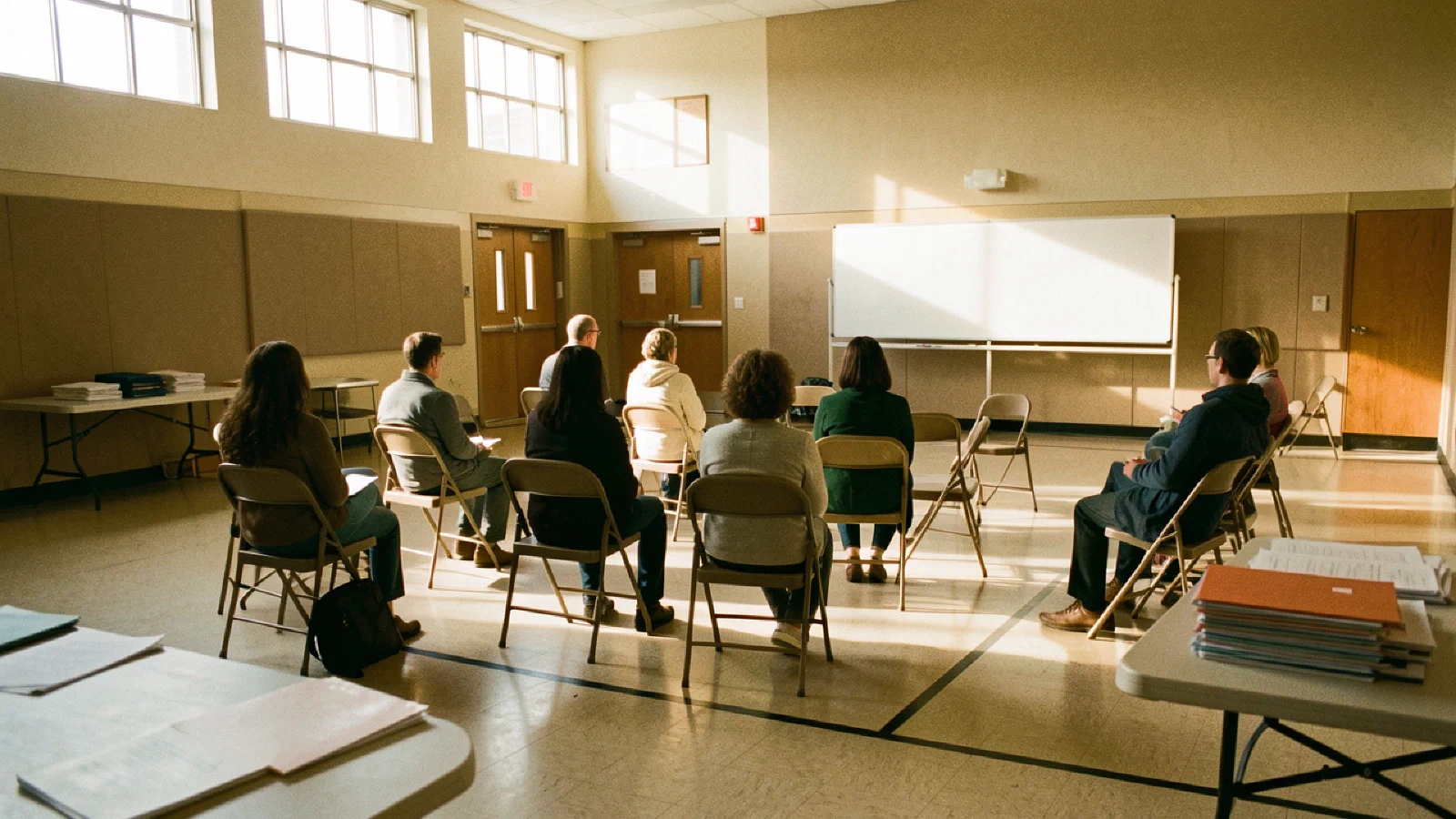
Coalition building starts with convening: bringing stakeholders into the same room to share perspectives on health challenges and possibilities. Early meetings should not attempt decision-making. They should build shared understanding of the problem and personal relationships among people who will need to trust each other later. Effective coalitions require a neutral convener, regular meeting cadence, and patience with the slow process of building trust across institutional boundaries.
The single most common coalition failure is moving to action before building relationships. Communities that form coalitions around a specific grant application or program launch find that the coalition dissolves when the grant ends or the program encounters difficulty. Coalitions built on relationships and shared understanding persist because participants value the connection independent of any specific initiative.
Community Health Assessment#
Documenting health needs, priorities, and gaps provides the evidence base for subsequent action. Many communities already have relevant data through hospital Community Health Needs Assessments (required every three years for tax-exempt hospitals), state health department surveys, or county-level data from the CDC and HRSA.
New primary data collection may not be necessary. Before commissioning surveys, communities should inventory existing data sources. County Health Rankings provide comparative data for every U.S. county. HRSA data portals provide Health Professional Shortage Area designations, medically underserved area status, and Federally Qualified Health Center service area information. State vital statistics offices provide mortality and morbidity data at the county level.
When existing data proves insufficient, community health assessment through surveys and listening sessions costs $5,000 to $15,000 if conducted by local partners, more if contracted to external consultants. The most valuable component is often qualitative: listening sessions where residents describe their health experiences in their own words. Numbers document the problem. Stories create the political will to act.
State Program Inventory#
Every state administers programs that rural communities can access but frequently do not. RHTP itself creates new funding streams, but existing programs through HRSA, USDA Rural Development, the Appalachian Regional Commission, and state rural health offices provide technical assistance, planning grants, and program funding that many communities have never applied for.
A thorough state program inventory identifies what is available, what the community qualifies for, and what application timelines and requirements exist. State Office of Rural Health staff, State Rural Health Association personnel, and Area Health Education Center staff can often guide communities through the inventory process at no cost.
Story Documentation#
Collecting and sharing community health stories creates the narrative foundation for advocacy, fundraising, and coalition expansion. A grandmother who drives 90 minutes for dialysis. A volunteer EMT who worked a cardiac arrest knowing the nearest hospital was 45 minutes away. A young family that left the community because there was no pediatrician within an hour. These stories make abstract statistics personal and create political pressure that data alone cannot generate.
Story documentation requires only volunteer time and basic recording capability. The stories become assets for grant applications, media engagement, legislative testimony, and coalition recruitment.
Phase 2: Infrastructure (Years 2-3)#
What communities can do with modest resources ($50,000 to $200,000 annually).
Phase 2 requires funding that most rural communities do not have readily available but can assemble through grants, partnerships, and local fundraising. Several Phase 2 actions create revenue that contributes to sustainability.
| Action | Description | Annual Cost Range | Revenue Potential |
|---|---|---|---|
| CHW program launch | Hire 1-3 CHWs, establish protocols, begin services | $80,000-$150,000 | Medicaid reimbursement in states with billing pathways |
| Telehealth deployment | Partner with telehealth provider, establish community access points | $20,000-$50,000 setup; $30,000-$60,000 annual | Reimbursement through provider billing |
| AI companion pilot | Deploy AI companions with 25-50 elders, evaluate outcomes | $15,000-$30,000 | None currently; demonstration value |
| Food access initiative | Farmers market, food pharmacy, community garden | $10,000-$30,000 startup | Modest sales revenue, SNAP redemption |
| Transportation coordination | Volunteer driver network, ride coordination platform | $10,000-$20,000 | Medicaid NEMT contracts in some states |
| Visiting professional hosting | Create space and scheduling for rotating providers | $10,000-$20,000 | Provider billing revenue |
| Governance formation | Establish community health board or advisory structure | Minimal direct cost | Positions community for funding |
Community Health Worker Deployment#
CHW deployment represents the highest-impact Phase 2 action for most communities. CHWs can begin providing health education, care navigation, social needs screening, and community outreach under existing authority in every state. Training programs range from 3 months to 1 year, with costs of $3,000 to $8,000 per trainee through community college programs, state certification pathways, or employer-based training.
The critical design decision is employment model. CHWs employed by healthcare systems tend toward clinical absorption, gradually becoming medical assistants with a different title. CHWs employed by community organizations maintain community identity but face funding instability. CHWs employed by community governance structures (health commons, cooperatives) potentially balance both, but these structures take time to develop. Most communities launching CHW programs will start with healthcare system or community organization employment and evolve the model as governance structures mature.
Medicaid reimbursement for CHW services varies dramatically by state. More than half of state Medicaid programs now provide some form of CHW coverage, and the 2024 Medicare Physician Fee Schedule introduced the first Medicare billing codes for CHW services. Communities should verify their state’s current CHW billing landscape before assuming revenue potential. In states without Medicaid CHW billing, CHW programs depend entirely on grants and organizational budgets, creating sustainability challenges from the outset.
Telehealth Access Points#
Telehealth is legal in all 50 states, though reimbursement rules, originating site requirements, and eligible provider types vary significantly. Communities do not need to build telehealth systems from scratch. Partnering with established telehealth providers and creating community access points (locations where residents with inadequate broadband can connect to telehealth services) extends specialist access without constructing new clinical facilities.
Effective telehealth access points require reliable broadband, a private room with adequate lighting and audio, a device capable of video conferencing, and someone available to help residents who are unfamiliar with the technology navigate the connection. Libraries, community centers, churches, and schools can all serve as access points. The barrier is not technology but facilitation: helping people who have never used video calling connect with a specialist 200 miles away.
Food Access and Transportation#
Food access programs and transportation coordination operate almost entirely outside healthcare regulation. Communities can launch these programs without licensure, certification, or regulatory approval. Farmers markets, community gardens, food pharmacies (programs that “prescribe” healthy food for chronic disease patients), and food pantry partnerships improve nutrition for populations where diet-related chronic disease drives the majority of health burden.
Transportation coordination, whether through volunteer driver networks, ride-sharing partnerships, or vehicle pooling, addresses the access barrier that underlies many rural health failures. When the nearest specialist is 90 minutes away and you do not drive, the quality of that specialist is irrelevant. Community-organized transportation fills gaps that formal non-emergency medical transportation programs leave, particularly for non-Medicaid populations.
Phase 3: Consolidation (Years 3-5)#
What communities can do with significant resources ($200,000 to $1 million annually).
Phase 3 represents commitment at a scale that transforms community health infrastructure. These actions typically require RHTP subaward funding, foundation grants, state program participation, or substantial local investment. They build on Phase 1 and Phase 2 foundations.
| Action | Description | Cost Range | Prerequisite |
|---|---|---|---|
| Service center development | Establish or convert facility to service center model | $300,000-$1M capital; $200,000-$400,000 operating | Governance structure, community support |
| CHW program expansion | Scale to 5-10 CHWs, add specializations | $200,000-$400,000 annually | Successful Phase 2 CHW pilot |
| Formal governance | Incorporate health commons or cooperative | $20,000-$50,000 legal and organizational | Community engagement, coalition maturity |
| Regional network | Formal partnerships with peer communities | Coordination resources | Relationships from Phase 1 regional connection |
| Nomadic professional engagement | Contract with rotating specialists | $100,000-$200,000 annually | Hosting infrastructure, scheduling systems |
| AI service expansion | Expand companion deployment, add legal/financial AI | $30,000-$75,000 annually | Successful Phase 2 pilot, broadband |
| Broadband advocacy | Partner on broadband deployment where gaps exist | Highly variable | Coalition relationships, political engagement |
Service Center Development#
The service center model described in Article 14D provides right-sized physical infrastructure for communities that cannot sustain a traditional hospital or large clinic. Service centers combine telehealth capability, basic diagnostic equipment, pharmacy services, and space for visiting professionals in a facility that costs a fraction of hospital construction and operation.
Service center development in Phase 3 may involve converting existing facilities (closed hospitals, underutilized clinics, repurposed commercial buildings) or constructing purpose-built facilities. Conversion costs less and moves faster but constrains design. New construction costs more and takes longer but produces facilities optimized for the service center model. Most communities will begin with conversion and move toward purpose-built facilities as resources and experience grow.
Formal Governance#
Governance formalization transforms informal coalition into legal structure with authority, accountability, and permanence. The health commons model creates community-owned infrastructure governed by democratic processes. Cooperative models provide member-owned structures with established legal frameworks. Distributed campus models connect multiple locations under coordinated governance.
Formal governance typically requires legal counsel experienced in nonprofit or cooperative formation, articles of incorporation or organization, bylaws, and board recruitment. The legal costs are modest ($20,000 to $50,000) compared to the organizational effort required to build a board that represents the community, establish decision-making processes that balance efficiency with participation, and create accountability mechanisms that prevent capture by any faction.
What Requires Policy Change#
Communities need clarity about which actions they can take independently and which require someone else to act first. Conflating the two leads either to paralysis (believing nothing is possible without policy change) or to frustration (launching initiatives that hit regulatory walls).
| Action | Current Authority | No Policy Change Needed |
|---|---|---|
| Organize governance structures | Communities can organize however they choose | Yes |
| Deploy CHWs for education and navigation | CHWs can provide non-clinical services everywhere | Yes |
| Implement telehealth | Legal in all states (reimbursement varies) | Yes |
| Pilot AI companions | Non-clinical AI does not require healthcare licensure | Yes |
| Create food access programs | Not healthcare-regulated | Yes |
| Coordinate transportation | Volunteer transportation not regulated | Yes |
| Build coalitions and advocate | Organizing requires no permission | Yes |
| Action | Required Change | Level of Government |
|---|---|---|
| Expanded CHW scope and Medicaid billing | CHW billing pathway authorization | State and Federal |
| Full nurse practitioner practice authority | Scope of practice reform | State |
| Service center as licensed facility category | New facility licensing rules | State |
| AI clinical service authorization | Liability and regulatory framework | State and Federal |
| Direct primary care arrangements | Insurance regulation flexibility | State |
| Global budget participation | CMS waiver or demonstration authority | Federal |
The distinction matters strategically. Communities should pursue Phase 1 and Phase 2 actions that require no policy change while simultaneously advocating for the policy changes that enable Phase 3 and beyond. Early action demonstrates community capacity, generates evidence, builds political credibility, and positions communities to absorb new resources and authority when policy changes arrive.
Resources for Communities#
Communities do not need to navigate transformation alone. Existing organizations provide technical assistance, funding guidance, peer connection, and expert consultation at low or no cost.
| Resource Type | Key Organizations | What They Provide |
|---|---|---|
| Technical assistance | State Offices of Rural Health, SHORCs, AHECs | Planning support, program development, regulatory guidance |
| Funding navigation | State rural health associations, regional foundations | Grant identification, application support, funder connection |
| Peer learning | National Rural Health Association, state rural health associations | Connection to communities with relevant experience |
| Training | Community college CHW programs, community organizing networks | Workforce development, leadership capacity building |
| Legal guidance | Cooperative development centers, nonprofit legal clinics | Governance formation, regulatory compliance |
| Data and evidence | County Health Rankings, HRSA data portal, state health departments | Community health data, comparison benchmarks |
State RHTP implementation creates new technical assistance resources. The Office of Rural Health Transformation at CMS provides state-level support, and states are establishing their own technical assistance mechanisms for communities participating in transformation activities. Communities should actively engage their state’s RHTP implementation structure to access available resources.
Common Pitfalls#
Community transformation efforts fail in predictable ways. Recognizing these patterns in advance does not guarantee avoidance, but it enables earlier course correction.
Waiting for perfect conditions. Communities that delay action until leadership, funding, political environment, and technical capacity all align may wait forever. Conditions are never perfect. Starting with what is possible now builds the momentum and credibility that improve conditions over time. Phase 1 actions are deliberately designed to be achievable under imperfect conditions.
Over-reliance on a single funding source. Communities that build programs entirely on one grant face existential crisis when that grant expires. Financial diversification should begin in Phase 1, even when a single large funder makes diversification feel unnecessary. The discipline of maintaining multiple revenue relationships pays off when any single source disappears.
Founder dependence. When one person holds all the relationships, knowledge, and decision-making authority, that person’s departure (through burnout, relocation, or life change) can collapse the entire initiative. Distributed leadership is slower but more durable. Invest in developing multiple leaders from the beginning, even when concentrating authority in one champion feels more efficient.
Ignoring opposition. Every community health initiative generates opposition: providers threatened by new models, politicians skeptical of community governance, residents suspicious of outside influence, institutions protecting their territory. Engaging opponents early, understanding their concerns, and addressing legitimate objections produces better outcomes than pretending opposition does not exist or dismissing it as uninformed.
Isolation. Communities attempting transformation alone reinvent solutions that peer communities have already developed, repeat mistakes others have already made, and lack the political weight that comes from collective advocacy. Connecting with peer communities and regional networks from Phase 1 provides learning, support, and solidarity.
Burnout. Community transformation is a marathon that participants often try to sprint. Sustainable pace, celebration of incremental progress, and realistic expectations about timelines prevent the exhaustion that causes communities to abandon promising initiatives.
Vignette: Transformation in Progress#
Eighteen months ago, the Clearwater County Community Health Coalition existed only as an idea in the mind of three women who had been complaining about healthcare access at the same diner for two years. Patricia Rivera, the school nurse. Diane Kowalski, the food pantry coordinator. Jenny Blackhawk, the tribal health liaison for the small reservation at the county’s eastern edge.
They started with what the outline would call Phase 1, though they had never seen an outline. Patricia mapped the county’s health assets on a whiteboard in the school cafeteria: two physician assistants at the rural health clinic, one dentist who came Tuesdays from the city, the tribal health center serving tribal members, three churches running food programs, an ambulance service staffed by volunteers, and a pharmacy that closed at 3 PM because the pharmacist drove home to the city.
Their first coalition meeting drew eleven people. By the fourth meeting, they had twenty-three, including the rural health clinic administrator who initially viewed them with suspicion and the county commissioner who attended to observe but ended up volunteering for the transportation committee.
The wins came slowly. A telehealth access point at the library, using equipment donated by the regional health system and broadband the library already had. A volunteer driver network organized through the churches, coordinating schedules through a shared spreadsheet that Jenny’s nephew built. A community garden on land the school district was not using, producing vegetables that Patricia incorporated into the school lunch program and Diane distributed through the pantry.
The harder work was navigating conflict. The rural health clinic administrator worried the coalition was trying to replace him. It took six months of relationship building before he understood that the coalition aimed to bring patients to his clinic rather than compete with it. The tribal health center operated under different federal rules, and integrating tribal and non-tribal services required navigating jurisdictional complexity that tested everyone’s patience.
They applied for a small USDA Rural Development grant and were rejected. They rewrote the application with help from the state rural health association and were funded on the second attempt: $45,000 for a community health worker pilot. They hired Maria Gutierrez, a CNA who had been commuting to a nursing home an hour away and wanted to work closer to her children. Maria completed CHW training in four months and started making home visits.
Maria’s first quarter statistics were modest. Thirty-two home visits, eighteen referrals to the rural health clinic, seven connections to food assistance, four transportation arrangements. The numbers would not impress a program evaluator. But the clinic administrator reported that three patients Maria referred had not been seen in over two years. The food pantry saw increased utilization because Maria was telling people it existed. Two elders Maria visited had been socially isolated for months.
Eighteen months in, the coalition has a governance charter but no legal incorporation. It has one paid staff member and a budget of $52,000. It has made mistakes: a community health assessment survey that got a 12% response rate because they mailed it during harvest season, a coalition meeting that devolved into argument about county politics, a broadband advocacy effort that went nowhere because the state legislature was not in session.
What the coalition has that cannot be quantified is momentum. Twenty-three people who show up regularly. A school nurse, a food pantry coordinator, and a tribal health liaison who have moved from complaining at a diner to governing a coalition. A community health worker making home visits. A county commissioner who now mentions healthcare access in every public meeting. Relationships across racial, institutional, and jurisdictional lines that did not exist two years ago.
They are nowhere near transformation. They are exactly where transformation begins.
Conclusion#
Rural communities possess more agency than the policy landscape suggests. The gap between what communities can do and what they believe they can do is often wider than the gap between what they can do and what they need. Phase 1 actions, asset mapping, coalition building, health assessment, program inventory, and story documentation, require no funding, no regulatory approval, and no outside permission. They require only the decision to start.
Phase 2 and Phase 3 actions demand progressively greater resources and organizational capacity. Not every community will reach Phase 3 during RHTP’s five-year window. Some communities will remain in Phase 1 for years, building the foundation that enables later action. The appropriate pace depends on the community’s circumstances, not an external timeline.
Community action is necessary but not sufficient. The policy changes outlined in Series 15, expanded scope of practice, new facility categories, AI governance frameworks, interstate coordination mechanisms, require state and federal action that communities can advocate for but cannot achieve alone. The honest assessment is that full transformation requires both community initiative and policy change, and neither alone will produce sustainable results.
But waiting for policy change to begin community action inverts the proper sequence. Communities that organize, demonstrate capacity, and generate evidence create the political conditions for policy change. The coalition that has already deployed CHWs and telehealth access points makes a more compelling case for expanded scope of practice than the community that has done nothing but waited. The community with formal governance and regional partnerships is better positioned to absorb new resources than the community that begins organizing only after funding arrives.
The path forward is not waiting. It is starting with what is possible and building toward what is necessary.
How this article connects to others in Blue Gray Matters.
Sources cited in this article.
- Centers for Medicare and Medicaid Services. "CMS Announces $50 Billion in Awards to Strengthen Rural Health in All 50 States." CMS Newsroom, 29 Dec. 2025, cms.gov.
- Centers for Medicare and Medicaid Services. "CMS Announces Establishment of the Office of Rural Health Transformation." CMS Newsroom, 22 Dec. 2025, cms.gov.
- Centers for Medicare and Medicaid Services. "Rural Health Transformation Program Overview." CMS, 2025, cms.gov/priorities/rural-health-transformation-rht-program/overview.
- Community Tool Box. "Assessing Community Needs and Resources." University of Kansas Center for Community Health and Development, 2025, ctb.ku.edu.
- County Health Rankings and Roadmaps. "How Healthy Is Your Community?" University of Wisconsin Population Health Institute, 2025, countyhealthrankings.org.
- Health Resources and Services Administration. "Health Professional Shortage Area Find." HRSA Data Portal, 2025, data.hrsa.gov.
- Kretzmann, John P., and John L. McKnight. "Building Communities from the Inside Out: A Path Toward Finding and Mobilizing a Community's Assets." ACTA Publications, 1993.
- National Association of Community Health Workers. "CHW Workforce and Medicaid Landscape." NACHW, 2025, nachw.org.
- National Rural Health Association. "NRHA Center for Rural Health Innovation: Rural Health Transformation Program." NRHA, 2025, ruralhealth.us.
- State Health and Value Strategies. "Tracking State Preparation for the Rural Health Transformation Program." SHVS, Sept. 2025, shvs.org.
- USDA Rural Development. "Rural Health and Safety Programs." USDA, 2025, rd.usda.gov.