The Nomadic Professional Model
Infrastructure for Professionals Who Serve Multiple Communities
The permanent relocation model for rural workforce has failed. Medical schools train professionals who will not move permanently to isolated communities. Recruitment bonuses attract practitioners who leave after obligations expire. J-1 visa physicians complete required terms and relocate. The fundamental assumption that rural healthcare requires permanently resident professionals no longer holds.
Alternative architecture assumes professionals serving multiple communities through rotation and virtual presence. A physician might spend two days monthly in each of five rural counties, providing procedures and complex care that cannot be virtualized, while managing patients virtually between visits. A behavioral health specialist might rotate through regional service centers on a predictable schedule, building relationships without permanent residence.
This model requires infrastructure that does not exist. Building it is the enabling condition that regulatory transformation alone cannot achieve.
Seven Infrastructure Gaps#
Interstate licensure remains the foundational barrier. The Interstate Medical Licensure Compact covers 42 states and has processed over 95,000 applications, but it provides expedited separate licenses, not automatic practice authority. A nomadic physician serving Montana, Wyoming, and South Dakota still holds three licenses with three fee schedules, three renewal cycles, and three disciplinary jurisdictions. The Nurse Licensure Compact proves the alternative is achievable: 43 states provide true multistate authority so nurses licensed in one compact state practice in all without additional applications or fees. That model must extend to all healthcare professions.
Credentialing fragmentation multiplies the burden beyond licensure. A nomadic physician serving five rural hospitals faces five credentialing processes, even within a single state. Each requires primary source verification, peer references, privilege delineation, and committee review. Credentialing verification organizations provide partial solutions, but no comprehensive system enables a professional to credential once for practice at multiple unaffiliated rural facilities.
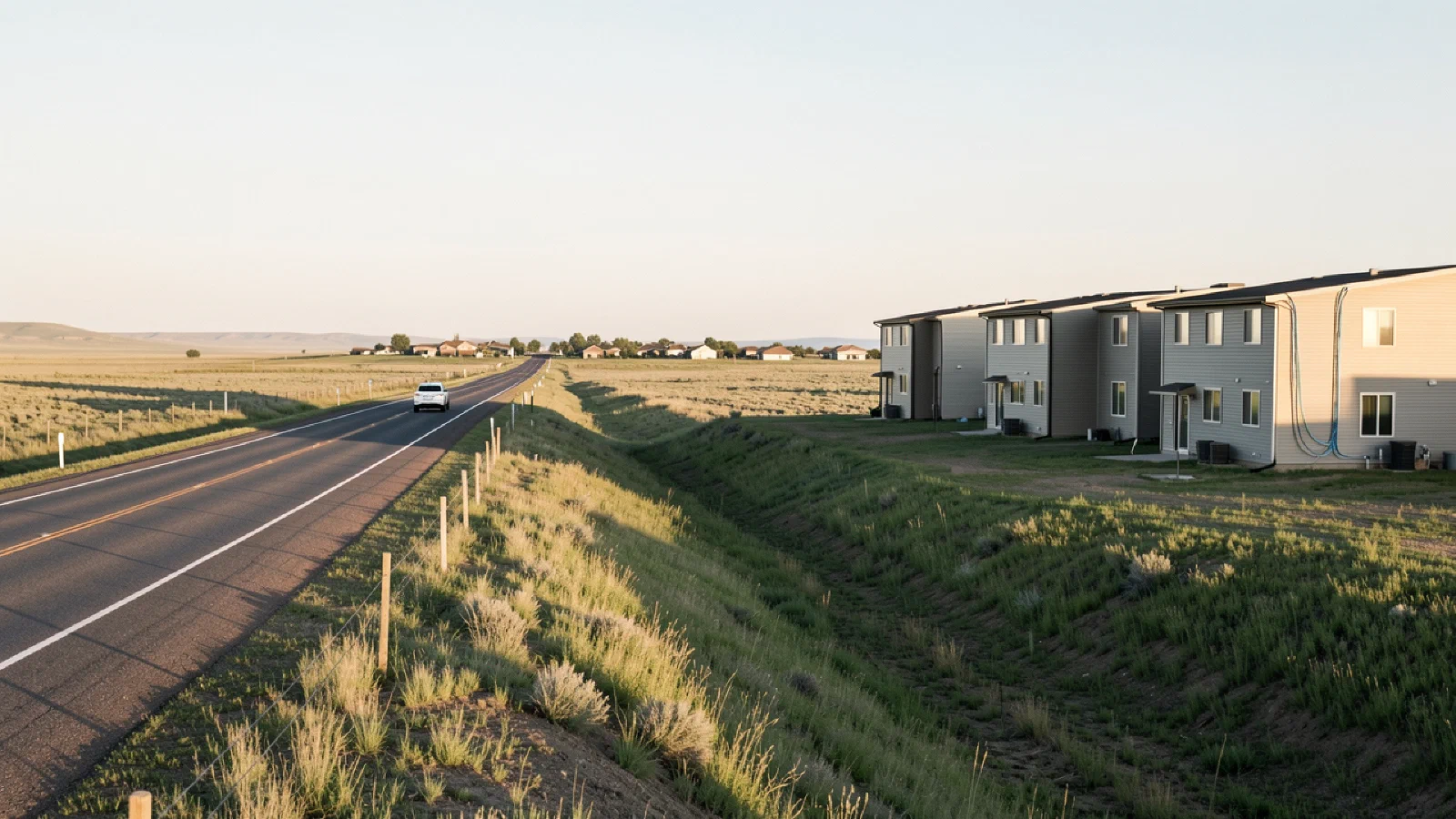
Housing infrastructure does not exist at the quality or scale nomadic practice requires. Hotels are expensive and often unavailable in small towns; long-term rentals require commitments longer than service periods; personal property purchase makes no sense for rotating practitioners. Dedicated professional housing networks: furnished apartments with fiber connectivity, dedicated workspace, and centralized booking, would require $15 to $20 million in capital investment per region. No obvious funder exists under current healthcare financing.
Employment structure assumes one employer, one location. A nomadic professional serving five communities might hold five separate employment relationships, or contract through a locum tenens agency that extracts substantial margins while providing less than facilities pay. Neither model suits ongoing community relationships. Regional health employment authorities providing unified employment, portable benefits, and centralized coordination represent the required alternative, and do not currently exist.
Compensation models assume presence-based work. Nomadic practitioners incur substantial unreimbursed costs: transit time, housing in multiple locations, technology for virtual care between visits. Value-based payment models: capitated arrangements paying for panel health outcomes rather than visit volume, would align compensation with how nomadic practice actually works, but CMS and Medicaid pilots for this payment structure in nomadic contexts remain nascent.
Professional community is why rural practitioners leave. Nomadic practice potentially worsens isolation because professionals become visitors in each community rather than members of any. A nomadic peer community: regional networks connecting professionals serving the same geography, virtual communities connecting nomadic practitioners nationally, deliberate professional identity development, must be constructed rather than assumed to emerge.
Scheduling and coordination complexity deters professionals even when other barriers are addressed. Nomadic practitioners coordinate manually with multiple facilities, manage separate patient panels in separate EHR systems, and plan their own travel logistics. Integrated platforms coordinating deployment, patient scheduling, and travel optimization would materially reduce this burden.
What Currently Exists#
The locum tenens industry, estimated at $6 to $8 billion annually, demonstrates that professionals can serve multiple facilities with appropriate support. Agencies manage multi-state credentialing, arrange housing, book travel, and provide malpractice coverage. But the model serves facility vacancy needs rather than community continuity. Assignments are temporary; agencies extract premiums that increase cost substantially; the model optimizes for facility convenience rather than patient relationship.
Academic health center outreach demonstrates that periodic specialist presence can provide meaningful access. A cardiologist visiting a rural community monthly manages patients who would otherwise drive hours for appointments. But outreach typically covers specialty services, not primary care, and often depends on grant funding without durable financial models.
Telehealth-anchored practice has shown that physical presence need not be continuous for effective care relationships. A behavioral health provider maintaining virtual care between quarterly in-person visits can sustain therapeutic relationships that monthly in-person-only practice cannot. The infrastructure currently supports individual arrangements rather than systematic regional deployment.
Implementation Pathway#
Years 1-3 center on compact enhancement: extending automatic practice authority to all healthcare professional compacts through federal incentives conditioning Medicare and Medicaid participation on compact membership. Years 2-4 focus on regional employment entities and portable credentialing agreements developed through state health departments and hospital associations. Years 3-6 address physical infrastructure: housing networks funded through USDA rural development, state health financing authorities, and hospital community benefit obligations, combined with service center development. Years 4-6 align payment and community systems: value-based payment pilots through CMS, peer networks hosted through professional associations, and integrated scheduling platforms.
Vignette: Dr. Okonkwo’s Monthly Circuit#
Dr. Amara Okonkwo leaves Bozeman at 5:30 AM on the first Monday of October 2029. She drives two hours to the Miles City Service Center, where her housing unit, maintained by the Northern Plains Health Network, has fast fiber internet and examination rooms adjacent. She sees 24 complex diabetes patients over two days, most of them panel patients she has known for three years. Between visits she manages them virtually: monthly video encounters, secure messaging, remote glucose monitoring.
Her multistate license covers Montana, Wyoming, and the Dakotas through enhanced compact authority. Her credentialing at all five service centers was handled by the Network through regional agreement. Her compensation is capitated: per-member-per-month payments with outcomes bonuses for diabetes control, travel reimbursed at federal rates, housing at no cost.
Her Miles City panel has an average HbA1c of 7.2%, better than national benchmarks. Before the Network developed the circuit model, these patients drove four hours to Billings for endocrinology, if they went at all. Most did not. Amputations and dialysis followed.
Amara does not live in any community she serves. She has served them continuously for three years, and she knows she will serve them for years more. That continuity, enabled by infrastructure that did not exist a decade before, is what makes the care work.
How this article connects to others in Blue Gray Matters.
Sources cited in this article.
- American Medical Association. "Interstate Medical Licensure Compact Issue Brief." AMA, 2025.
- Association of American Medical Colleges. "The Complexities of Physician Supply and Demand: Projections from 2021 to 2036." AAMC, Mar. 2024.
- Federation of State Medical Boards. "Interstate Medical Licensure Compact Commission Annual Report FY 2025." IMLCC, 2025.
- Interstate Medical Licensure Compact Commission. "General FAQs." IMLCC, 2025, imlcc.com/faqs/.
- National Council of State Boards of Nursing. "Nurse Licensure Compact." NCSBN, 2025.
- National Rural Health Association. "Recruitment and Retention of a Quality Health Workforce in Rural Areas." NRHA Policy Brief, 2024.
- Patterson, David G., and C. Holly A. Andrilla. "Physician Assistant Workforce in Rural and Underserved Areas." WWAMI Rural Health Research Center, 2024.
- Psychology Interjurisdictional Compact. "PSYPACT Map and Implementation Status." ASPPB, 2025.
- Rural Health Information Hub. "Healthcare Workforce Distribution and Shortage Areas." RHIhub, 2025.
- Skillman, Susan M., et al. "Physician Supply and Demand in Rural America." University of Washington WWAMI Rural Health Research Center, 2024.
- Social Work Licensure Compact. "Compact Map and Participating States." SWLC, 2025.
- Telehealth.HHS.gov. "Licensure Compacts Overview." U.S. Department of Health and Human Services, 2025.
- Weatherby Healthcare. "IMLC Providing Expedited Licensure in 42 States in 2026." Weatherby Healthcare, Jan. 2026.
- Xue, Ying, et al. "Full Scope-of-Practice Regulation Is Associated with Higher Supply of Nurse Practitioners in Rural and Primary Care Health Professional Shortage Counties." Journal of General Internal Medicine, vol. 33, 2018, pp. 1975-1981.