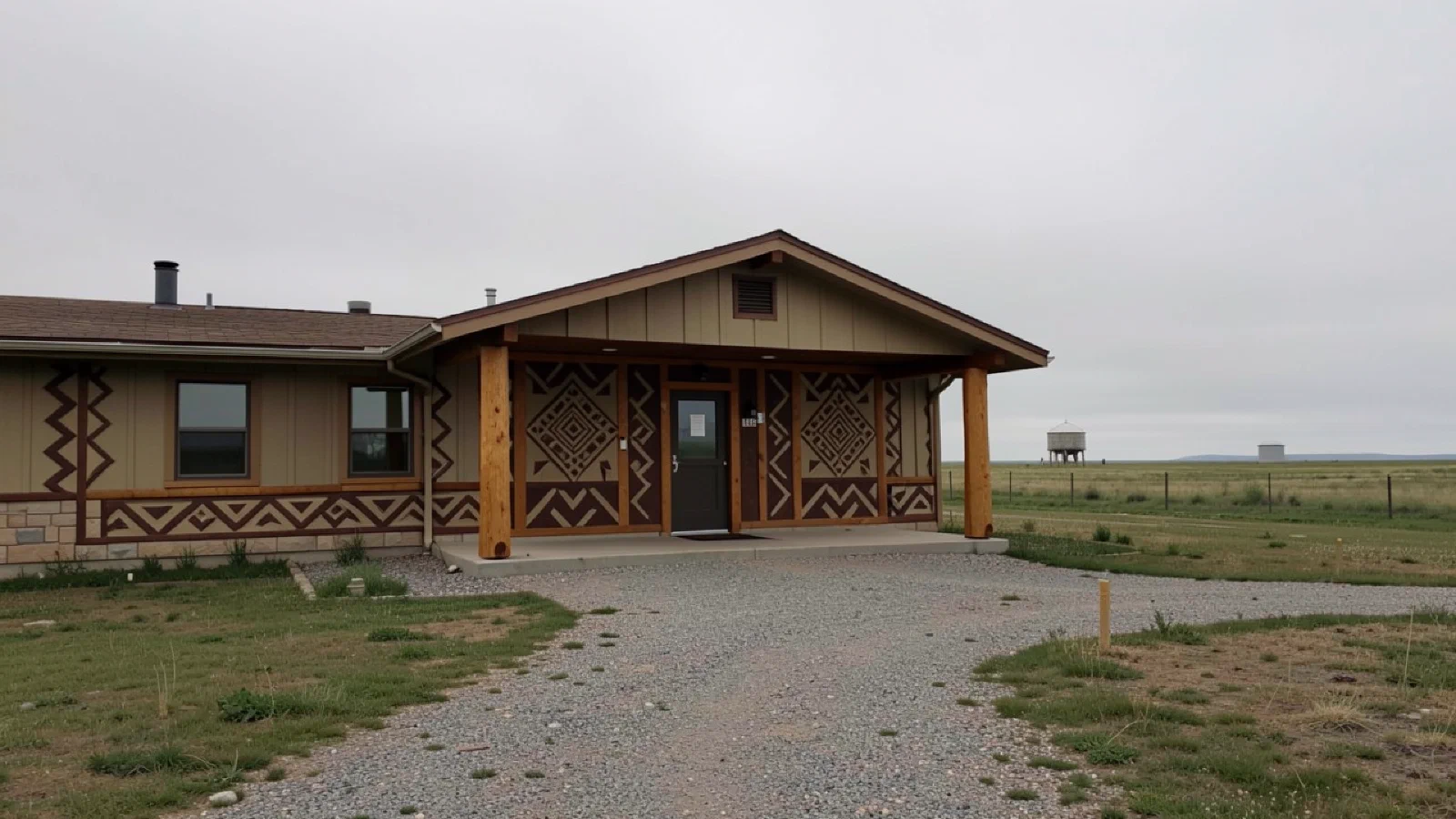
Tribal Demonstration
Sovereignty as Regulatory Laboratory
Sovereignty as Regulatory Laboratory#
Series 14 components require state regulatory change before implementation, including telehealth parity laws,, liability frameworks, scope of practice expansions, facility licensing categories, corporate law modifications. Tribal nations can implement all of these tomorrow. The 574 federally recognized tribes maintain government-to-government relationships that predate the Constitution. State laws do not apply on tribal lands absent congressional authorization. Tribes operate health systems under federal authority and tribal law, not state regulation.
Tribal nations possess both legal authority and organizational capacity to demonstrate alternative architecture works. Capabilities that produced $43.9 billion in gaming revenue, governance structures managing enterprises employing hundreds of thousands, training systems that created Community Health Aide Program: these can build health systems designed for rural reality. Tribal demonstration matters for all rural America. When tribes prove dental therapists provide quality care, states face pressure to authorize. When tribes show AI companions reduce elder isolation, federal agencies develop frameworks. Tribal success creates proof that enables broader change.
This article presents tribal demonstration model, connects it to Series 14 components, addresses limitations honestly. Tribal health transformation is not substitute for broader rural health policy. It is accelerant.
The Current Model Failure#
State regulatory frameworks assume urban healthcare delivery. Licensing requirements, scope of practice laws, facility standards, payment rules developed in legislatures dominated by urban representatives. Scope of practice restrictions prevent qualified providers from practicing fully: 28 states require physician supervision of nurse practitioners, 43 states prohibit dental therapists, community health workers cannot bill Medicare in most states. Facility licensing requires configurations rural communities cannot sustain: Critical Access Hospital designation requires 24/7 emergency services and staffing ratios designed for 25 patients daily; Rural Health Clinic certification requires on-site physician presence. Requirements assume volume and professionals rural communities lack.
Technology deployment faces regulatory uncertainty creating liability exposure. AI-assisted diagnosis, remote monitoring as primary care mode, robot-assisted service delivery: none fit existing regulatory categories. State medical boards have not determined whether AI clinical decision support constitutes medicine practice. Liability insurers do not know how to price coverage. Providers cannot adopt technologies whose legal status remains undefined.
Rural communities cannot innovate within state regulatory frameworks. Innovations this series proposes require regulatory change that may take decades. States face lobbying from professional associations protecting incumbent scope. Federal agencies move slowly. Rural communities wait while people die from conditions transformed systems could address.
Tribal Sovereignty and Regulatory Authority#
Tribal sovereignty enables regulatory bypass. Within tribal jurisdiction, tribes establish licensing standards, facility requirements, scope of practice rules, technology frameworks. State boards have no authority over tribal health facilities on tribal lands. Authority is neither theoretical nor new: Community Health Aide Program (CHAP) has operated in Alaska since 1960s, training community members to provide primary care services state laws would prohibit elsewhere. Dental Health Aide Therapists (DHATs) have practiced in tribal communities since 2006, performing extractions and restorations illegal in most states.
| Barrier | State Limitation | Tribal Authority |
|---|---|---|
| Nurse practitioner scope | Physician supervision required in 28 states | Tribe establishes supervision standards |
| Pharmacist prescribing | Prohibited in most states | Tribe can authorize collaborative practice |
| Dental therapists | Illegal in 43 states | Tribe licenses and employs DHATs |
| Community health worker billing | Limited Medicaid pathways | Tribe negotiates directly with CMS for 100% FMAP |
| Facility categories | Rigid state licensing requirements | Tribe creates appropriate facility categories |
| AI clinical services | Uncertain liability, undefined scope | Tribe establishes liability framework under tribal law |
| Telehealth modality | State-specific parity and originating site rules | Tribe determines appropriate telehealth delivery |
Indian Self-Determination and Education Assistance Act of 1975 established framework for tribes to operate health programs IHS would otherwise provide. As of 2024, 92% of tribes (526 of 574) had self-determination contracts, 51% (295) had self-governance compacts. Tribes administer over 60% of IHS budget through these mechanisms. Self-governance enables tribes to redesign programs according to tribal priorities. Southcentral Foundation’s takeover created Nuka System of Care, two-time Malcolm Baldrige National Quality Award recipient inspiring healthcare organizations worldwide.
The Gaming Enterprise Precedent#
Tribal healthcare transformation may seem ambitious until compared to tribal gaming transformation over the past three decades.
Tribal gaming scale (FY 2024):
| Metric | Scale |
|---|---|
| Total gross gaming revenue | $43.9 billion |
| Gaming operations | 532 |
| Federally recognized tribes with gaming | 243 |
| States with tribal gaming | 29 |
| Year-over-year growth | 4.6% |
| Revenue growth since pandemic low (2020) | 58% |
Before Indian Gaming Regulatory Act of 1988, tribal gaming barely existed. Thirty-five years later, tribal gaming generates more revenue than Las Vegas and Atlantic City combined.
Gaming enterprises demonstrate organizational capacity transferable to health enterprise: regulatory navigation (gaming compacts with states, federal oversight, complex compliance), financial management (billions in revenue, audited statements, sustained operations through economic cycles including pandemic), workforce development (700,000 workers employed, training programs, career pathways), technology deployment (surveillance, electronic gaming, financial software, cybersecurity), community benefit management (IGRA-mandated governance structures directing enterprise revenue toward tribal priorities). Question is not whether tribes can operate complex health systems but whether tribes choose to prioritize health transformation and whether federal policy supports rather than obstructs.
The Tribal Health Enterprise Model#
The alternative architecture described throughout Series 14 can be implemented as integrated tribal health enterprise:
| Component | Tribal Enterprise Specification |
|---|---|
| Governance | Tribal council oversight, dedicated health board with clinical expertise, elder advisory council for cultural guidance, community member input mechanisms |
| Service delivery | Service centers on tribal lands, mobile units serving dispersed populations, home-based care for elders and mobility-limited, virtual-first primary care |
| Workforce | Community Health Representatives with expanded scope, digital navigation staff, robot maintenance technicians, cultural wellness practitioners, behavioral health aides |
| Technology | Tribal-owned broadband infrastructure, culturally-customized AI companions, telemedicine platforms, remote monitoring systems, health information exchange |
| Funding | Gaming revenue allocation, IHS appropriations, Medicaid/Medicare billing at 100% FMAP, RHTP and federal grant programs, 477 program integration |
| Regional role | Serve tribal members on and off reservation, potentially extend services to surrounding non-tribal rural communities |
Funding integration deserves particular attention. Public Law 102-477 allows tribes to integrate employment, training, and related services funding from multiple federal agencies into single plan; health workforce development funded through integrated 477 plans aligns training with community health needs. 100% Federal Medical Assistance Percentage (FMAP) applies to services at IHS and tribal facilities (non-tribal providers receive 50-75% match); this funding advantage enables tribal facilities to sustain services non-tribal rural providers cannot. Self-governance budget flexibility allows tribes with compacts to redesign programs rather than administering federal templates, redirecting funding toward community priorities including those not fitting federal categorical programs.
Gaming revenue creates sovereign fund capacity. 243 tribes with gaming operations (42% of 574 tribes) vary enormously in revenue; some generate hundreds of millions annually (Cherokee Nation, Mashantucket Pequot, Seminole), others minimal. Gaming-rich tribes can apply state sovereign investment model (Article 14E): gaming revenue → health infrastructure, permanent capital for transformation. Cherokee Nation dedicates $40M annually to health services from gaming. Non-gaming tribes (331 tribes, 58% of all tribes) depend on IHS appropriations + federal grants + Medicaid/Medicare billing. Alaska tribes operate without gaming revenue (state prohibits tribal gaming), funding health through IHS + grants. Inter-tribal networks more critical for non-gaming tribes pooling resources for technology, training, purchasing.
Existing Tribal Health Innovations#
Tribal health systems have already implemented components of alternative architecture. Alaska demonstrates what’s possible; lower 48 tribes face different expansion challenges. Large tribes build comprehensive systems; small tribes need inter-tribal networks.
Alaska Community Health Aide Program: 550 Community Health Aides and Practitioners serve over 170 villages, providing primary care, emergency response, chronic disease management, care coordination. CHAPs train through rigorous certification, practice under physician supervision via telehealth, remain in home communities. CHAP model inspired national expansion. IHS issued Circular 24-16 in November 2024 establishing national CHAP guidance. Alaska precedent proven but lower 48 expansion different: Alaska Native corporations ≠ tribal governments, training infrastructure exists in Alaska but must be built elsewhere, remote villages (some <200 people, no road access) create unique delivery challenges.
Dental Health Aide Therapist Program: DHATs practiced in Alaska since 2006, providing preventive and restorative care in communities never having dentists. DHATs complete three-year training, practice under dentist supervision, perform ~40 procedures including extractions. 45,000 Alaska Natives now have regular dental access. Swinomish established first tribal DHAT licensing outside Alaska (2015); Ninth Circuit ordered CMS to approve Medicaid funding for Washington tribal DHATs (January 2025).
Southcentral Foundation’s Nuka System of Care: Serving 70,000 Alaska Native and American Indian people in Southcentral Alaska, Nuka represents comprehensive healthcare redesign. Results: 36% reduction hospital days, 42% reduction emergency/urgent care, 58% reduction specialty visits, sustained over decade. Staff turnover dropped to one-fourth previous levels. Customer satisfaction with cultural respect 94%. Malcolm Baldrige Award twice (2011, 2017).
Cherokee Nation Health Services: Operates eight health centers, hospital, specialty clinics serving 350,000 tribal citizens. Developed career pathway programs training Cherokee citizens as providers, addressing workforce through community investment. Scale enables comprehensive systems: Cherokee Nation (350K), Navajo Nation (300K+), Choctaw Nation (200K+) can build full health enterprises. Medium tribes (5K-50K) can operate service centers + mobile units with inter-tribal support. Small tribes (<5K) likely need inter-tribal consortium model for viability, as demonstrated by Alaska villages (CHAP in villages 200-500 people).
Tribal health systems already outperform many non-tribal rural systems on access, quality, cultural appropriateness, workforce retention. Alternative architecture not theoretical. Operational.
Inter-Tribal Networks#
Tribal demonstration more powerful through inter-tribal coordination: technology consortium (pooling resources for platform development, AI customization, cybersecurity; shared platforms reduce per-tribe costs while enabling customization; consortium governance ensures data sovereignty), nomadic professional network (physicians/dentists/specialists serving multiple communities through rotation and virtual availability; coordination ensures coverage continuity), training consortium (tribal colleges coordinating workforce programs; shared curriculum, clinical placements, credential portability; reduces dependence on non-tribal institutions), purchasing cooperative (volume purchasing achieves discounts individual facilities cannot negotiate), research collaboration (coordinated data collection with tribal governance ensuring research serves tribal priorities and respects data sovereignty; generates evidence informing tribal practice and policy advocacy).
The Demonstration Effect#
Tribal health innovation creates evidence enabling broader change:
Phase 1: Tribal Implementation. Tribes implement alternative architecture using sovereign authority. DHATs provide dental care, expanded-scope CHWs deliver primary care, AI companions support elders, service centers replace traditional facilities. Tribal systems generate evidence on safety, quality, cost, access.
Phase 2: Evidence Documentation. Rigorous evaluation documents outcomes. Peer-reviewed research demonstrates innovations work. Professional associations and state regulators can no longer claim unknown risks. Evidence shifts debates from hypothetical to empirical.
Phase 3: State Innovation Zones. States seeking to address rural health crises point to tribal evidence. State Innovation Zones (Article 14F) adopt tribal-demonstrated models under regulatory waivers. Multiple states experimenting create broader evidence base.
Phase 4: Federal Policy Change. CMS approves billing codes for new provider types. Federal liability frameworks incorporate AI and technology innovations. Medicare and Medicaid modernize to support alternative delivery. Federal policy enables nationwide adoption.
Phase 5: National Implementation. Alternative architecture becomes standard option for rural communities nationwide. Tribal demonstration accelerated change that might otherwise have required decades.
Precedent exists: dental therapy authorization began Alaska tribal (2006), spread to tribal programs other states, then state authorization (Minnesota 2009, Maine 2014, Vermont 2016, now 14 states plus tribal). Community health worker Medicaid billing began tribal programs negotiating CMS directly, spread to state Medicaid. Telehealth expansion during COVID built on years tribal telehealth experience. Tribal innovation does not remain tribal. It becomes evidence transforming national policy.
Implementation Requirements#
Infrastructure requirements:
| Category | Requirement | Tribal Capacity |
|---|---|---|
| Broadband | Reliable connectivity to all service points | Many tribes have invested in tribal-owned broadband; others require infrastructure development |
| Facilities | Service center space, mobile unit fleet, home monitoring equipment | Existing tribal facilities can be repurposed; new construction follows proven tribal infrastructure development |
| Technology | EHR, telehealth platform, AI systems, remote monitoring | Technology deployment requires investment but follows patterns established in gaming and other tribal enterprises |
| Transportation | Patient transport, mobile unit deployment, equipment delivery | Tribes in remote areas have existing transportation infrastructure; others can develop |
Workforce requirements:
| Role | Training Pathway | Tribal Readiness |
|---|---|---|
| Community Health Aides | CHAP certification (18-24 months training) | Alaska infrastructure proven; national expansion underway |
| Dental Health Aide Therapists | DHAT certification (3 years training) | Alaska infrastructure proven; training program expansion possible |
| Behavioral Health Aides | BHA certification (varied training) | Established in Alaska CHAP system |
| AI/Technology Staff | Technical training programs | Adaptable from gaming technology workforce |
| Care Coordinators | Care management training | Existing tribal health workers can be trained |
Financial requirements:
| Category | Estimated Investment | Funding Sources |
|---|---|---|
| Infrastructure development | $5-20 million per tribal system depending on scope | Gaming revenue, federal facilities grants, USDA rural development |
| Technology deployment | $2-5 million initial, ongoing maintenance | RHTP, telehealth grants, tribal technology investment |
| Workforce development | $1-3 million for training infrastructure | IHS workforce funds, 477 integration, tribal college funding |
| Operating subsidy (initial years) | Variable by tribal resources | Gaming allocation, IHS, Medicaid revenue buildup |
Governance requirements: Balance community accountability with operational effectiveness. Successful models: dedicated health boards with community and clinical representation, clear tribal council relationships, elder advisory councils for cultural appropriateness, professional management within governance oversight.
Problem Resolution#
Tribal demonstration addresses eleven problems within tribal communities, creates evidence enabling solutions for broader rural America:
| Problem | Tribal Demonstration Response |
|---|---|
| 1. Hospital survival | Service center model eliminates unsustainable hospital infrastructure need |
| 2. Professional recruitment | Local workforce (CHAs, DHATs, BHAs) eliminates recruitment dependency; nomadic professionals fill specialist needs |
| 3. Technology adoption | Sovereign authority enables rapid deployment without state regulatory barriers |
| 4. Broadband | Tribal broadband investment underway in many nations; enterprise revenues fund infrastructure |
| 5. Public-private partnership | Tribal enterprise integrates public mission with business capacity |
| 6. Aging in place | AI companions, home monitoring, community-based workforce support aging in place |
| 7. Nutrition | 477 integration connects health services with food security programs |
| 8. Behavioral health | Behavioral health aides, AI companions, integrated care address gaps |
| 9. Dental deserts | DHATs directly address dental deserts through mid-level care |
| 10. Social coordination | Integrated tribal services eliminate fragmentation in mainstream systems |
| 11. Financial/legal help | AI-assisted legal and financial services provided through tribal programs |
Barriers and Counterarguments#
Scale limitation: Tribes represent 2% of rural population. Tribal success cannot substitute for broader policy change. Accurate. Tribal demonstration is accelerant, not solution. Value lies in evidence generation and policy momentum, not direct service to majority rural Americans. Resource variation: 243 tribes with gaming vary enormously in revenue; tribes without gaming or with limited gaming may lack capital for health enterprise investment. Federal investment through IHS, RHTP, other programs remains essential for tribes without independent resources.
Governance challenges: Tribal governments face the same challenges as any government: political transitions, internal conflicts, capacity limitations. Tribal health enterprise success depends on governance quality. Not all tribes will succeed. But tribal governance proven capable managing complex enterprises, as gaming revenues demonstrate. IHS underfunding: Indian Health Service per-capita spending 40-60% below federal spending for other populations, constraining tribal health innovation regardless of regulatory authority. Federal appropriations fully funding trust responsibility would dramatically expand tribal capacity.
Urban Indian exclusion: 70% of American Indians and Alaska Natives live in urban areas, served by Urban Indian Organizations receiving only 1% of IHS budget, cannot access self-determination contracting. Reservation-based tribal demonstration does not directly serve urban Native populations. Urban Indian health requires different strategies. Sovereignty concerns: Some argue framing tribal health as “demonstration” for non-tribal benefit instrumentalizes tribal sovereignty. Concern has validity. Tribal health transformation should serve tribal communities first. Demonstration effect is byproduct, not purpose. Framing matters: tribal health transformation is tribal self-determination, not experiment for non-tribal benefit.
Vignette: Turtle Mountain#
Turtle Mountain Band of Chippewa Indians reservation, north-central North Dakota, four miles from Canadian border. 15,000 enrolled members, nearest full-service hospital 90 miles away in Minot. IHS health center couldn’t recruit dentists for more than a few months. Kids went years between dental visits. Elders lost teeth that could have been saved.
Dental Health Aide Therapist arrived 2021, one of first DHATs outside Alaska. Sarah Morin grew up on reservation, trained through Alaska Native Tribal Health Consortium, returned to serve. Provides cleanings, fillings, extractions, preventive care under remote dentist supervision. Dentist visits monthly for complex cases; routine care happens locally, continuously, by someone who knows everyone’s grandmother. Wait times dropped from eight weeks to three days. Children with untreated cavities fell by half within two years.
Tribe expanded the Community Health Representative program; CHRs now carry tablets with AI-assisted navigation. Robert Walking Eagle’s CHR helped him apply for VA benefits, Medicare Extra Help, Medicaid in single home visit; AI handled eligibility screening and forms. Elder companion pilot: twelve elders with dementia/isolation have voice-activated AI companions providing wellness checks, medication reminders, cognitive engagement, clinic connection. Mary Two Shields: “like having company without having to make coffee for anyone.”
Gaming revenue from casino 20 miles away funds what federal programs cannot. Tribal council allocated $3M annually after documenting preventable hospitalizations cost more than prevention. Not perfect: broadband unreliable in remote areas, staff turnover disrupts continuity, DHAT cannot do everything dentist could. But she does what no dentist ever did: stay.
North Dakota prohibits dental therapists. State law doesn’t apply on tribal land. Turtle Mountain demonstrated what works. State legislators now hear from rural communities asking why their residents cannot access what reservation has. Sovereignty made demonstration possible.
Conclusion#
Tribal nations possess legal authority and organizational capacity to implement alternative architecture state-regulated rural healthcare cannot adopt. Sovereignty that enabled $43.9 billion gaming enterprises, self-determination that created CHAP and DHATs, governance that earned Nuka international recognition: these can build health systems designed for rural reality. Tribal contexts vary: Oklahoma (39 tribes, Cherokee Nation largest), New Mexico (23 tribes, pueblo governance), Alaska (229 tribes, Native corporations, no gaming), Great Lakes (gaming-successful Chippewa/Ojibwe), Great Plains (Sioux nations, frontier geography). Gaming vs non-gaming, large vs small tribes, Alaska vs lower 48: variation shapes implementation but sovereignty is universal.
Tribal demonstration not substitute for broader policy. Tribes represent 2% rural population. Resource variation, IHS underfunding, urban Indian exclusion limit tribal enterprise. Federal and state policy change essential. But tribal demonstration creates evidence policy change requires. When opponents claim dental therapists unsafe, point to DHATs practicing two decades. When opponents claim AI companions inappropriate for elders, point to tribal programs proving otherwise. When opponents claim alternative workforce lacks evidence, point to tribal systems outperforming conventional models.
Series 15 examines enabling conditions for alternative architecture spreading beyond tribal communities. Article 15A addresses regulatory transformation. Evidence for regulatory change comes, significantly, from tribal demonstration. Sovereignty makes laboratory possible. Evidence from laboratory makes transformation achievable.
How this article connects to others in Blue Gray Matters.
Sources cited in this article.
- Alaska Native Tribal Health Consortium. "Community Health Aide Program: Training and Certification." *ANTHC*, 2024, www.anthc.org/community-health-aide-program/.
- Centers for Health Care Strategies. "An Embedded Approach to Engaging Community Members: Lessons from Southcentral Foundation's Nuka System of Care." *CHCS*, Sept. 2023, www.chcs.org/an-embedded-approach-to-engaging-community-members-lessons-from-southcentral-foundations-nuka-system-of-care/.
- Federal Reserve Bank of Minneapolis. "The Economic Ripple Effects of Tribal Gaming and Federal Contracting." *Minneapolis Fed*, 2024, www.minneapolisfed.org/article/2024/the-economic-ripple-effects-of-tribal-gaming-and-federal-contracting.
- Gottlieb, Katherine. "The Nuka System of Care: Improving Health Through Ownership and Relationships." *International Journal of Circumpolar Health*, vol. 72, 2013, doi:10.3402/ijch.v72i0.21118.
- Indian Health Service. "Community Health Aide Program Expansion: FAQs." *IHS*, 2024, www.ihs.gov/chap/faqs/.
- National Indian Gaming Commission. "Gross Gaming Revenue Report FY 2024." *NIGC*, July 2025, www.nigc.gov.
- Oral Health Workforce Research Center. "State-by-State Dental Therapist Authorization Overview." *OHWRC*, Mar. 2025, oralhealthworkforce.org/infographics/authorization-status-of-dental-therapists-by-state/.
- Southcentral Foundation. "Nuka System of Care." *SCF*, 2025, www.southcentralfoundation.com/nuka-system-of-care/.
- Stakeholder Health. "Nuka System of Care." *Stakeholder Health*, 2023, stakeholderhealth.org/nuka-system-care/.
- *Tribal Business News*. "Tribal Gaming Revenues Hit Record $43.9 Billion as Growth Streak Continues." *Tribal Business News*, July 2025, tribalbusinessnews.com/sections/gaming/15230-tribal-gaming-revenues-hit-record-43-9-billion-fourth-straight-year-of-growth.
- Washington State Office of the Attorney General. "Ninth Circuit Reverses Trump Administration Decision to Deny Medicaid Funding for Tribal Dental Health Aide Therapists." *Washington AG*, Jan. 2025, www.atg.wa.gov/news/news-releases/ninth-circuit-reverses-trump-administration-decision-deny-medicaid-funding-tribal.