The Inverse Hub
When Expertise Travels to Patients
When Expertise Travels to Patients#
Rural health policy has spent decades solving the wrong problem: recruiting professionals to places they don’t want to live. The evidence suggests this approach is fundamentally flawed. Rural America needs different systems designed for rural realities, not smaller versions of urban healthcare.
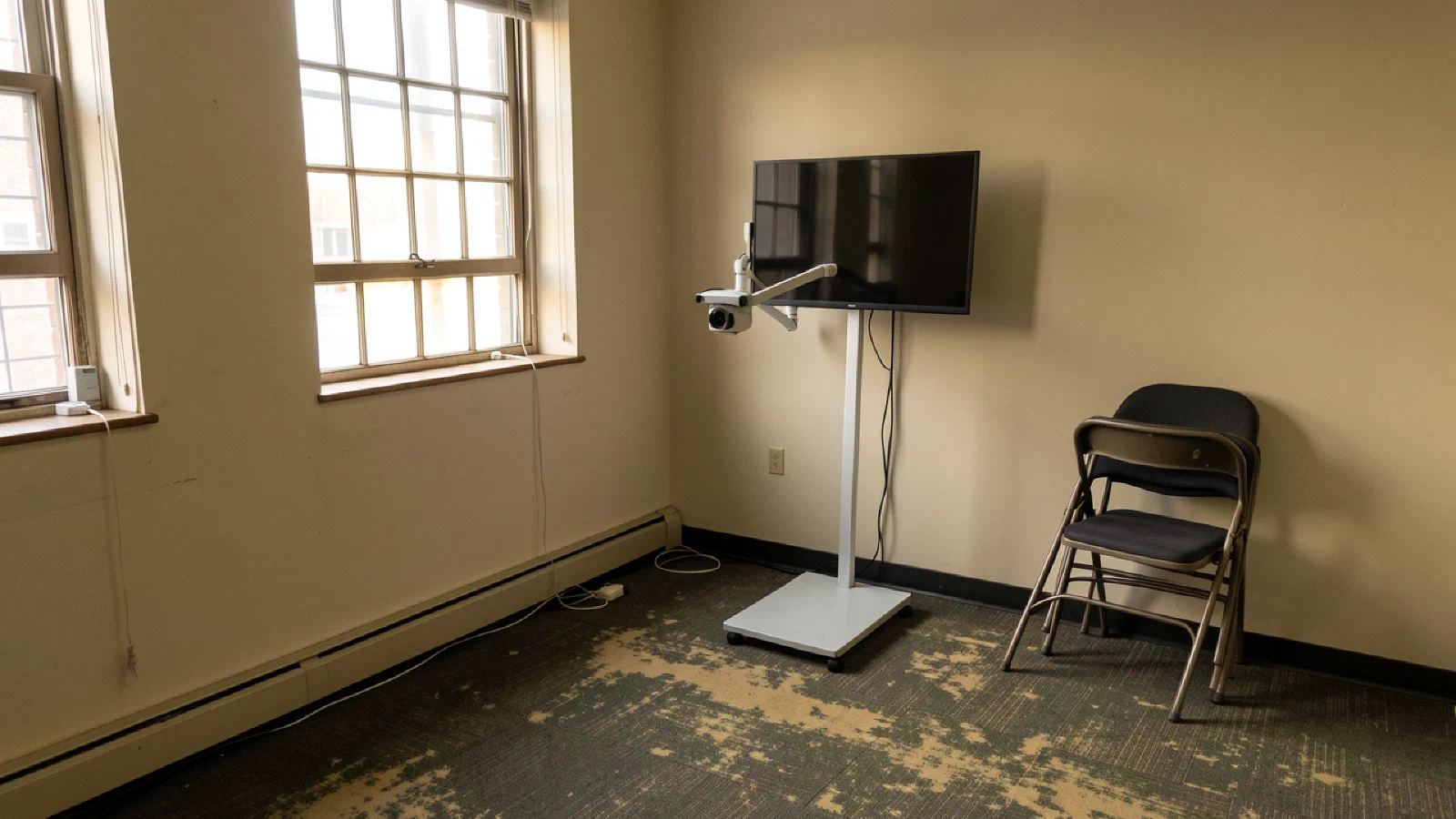
The inverse hub abandons the premise that patients must travel to expertise. Instead, expertise travels to patients through digital infrastructure and mobile professionals. The technology platform becomes the hub; professionals become resources serving multiple communities through virtual presence and strategic rotation.
The inverse hub connects to every other component. AI infrastructure (14B) provides always-available triage. Local workforce (14C) staffs physical touchpoints. Service centers (14D) provide minimal footprint. State sovereign investment (14E) provides patient capital. Governance models (14F) ensure community control.
The Current Model Failure#
Hub-and-spoke healthcare assumes patients travel to expertise. Academic medical centers and specialty clinics concentrate services where volume sustains them. Rural geography breaks this model completely. Four-hour drives to specialty care become barriers that determine whether people seek care at all.
Workforce recruitment assumes professionals will relocate permanently. Loan forgiveness, signing bonuses, and housing assistance attempt to overcome resistance to rural practice. The strategy fails systematically. Spousal employment, children’s education, professional isolation, and lifestyle preferences outweigh financial inducements. Rural counties with 14% of population have 10% of physicians and declining shares of younger practitioners.
Facility investment assumes volume rural areas cannot generate. Over 150 rural hospitals closed since 2010 despite Critical Access Hospital protections. Facilities designed for 20,000 annual encounters cannot survive in communities of 3,000 people.
The result: access deserts expand, specialties disappear, emergency care becomes emergency transport, chronic disease management deteriorates. Current models fail because they attempt to make rural areas behave like urban areas with fewer people.
The Alternative Model#
The inverse hub inverts the fundamental assumption: build digital infrastructure that makes physical presence unnecessary for most care and design workforce models aligned with professional preferences rather than fighting them.
The insight is not that virtual care exists but that rural healthcare can be redesigned around virtual care as default rather than supplement. Urban healthcare systems add telehealth to existing brick-and-mortar delivery. The inverse hub starts from virtual delivery and adds physical presence only where clinical evidence demands it. This changes everything: facility requirements shrink from 20,000 square feet to 2,000 because most encounters happen through screens rather than exam rooms. Staffing shifts from recruiting licensed professionals willing to relocate to employing community members who facilitate virtual connections. Capital requirements drop by 80 to 95 percent because the most expensive element of healthcare delivery, the building, largely disappears.
Physical Infrastructure
Communities need approximately 2,000 square feet versus 20,000-square-foot hospitals:
| Component | Specifications |
|---|---|
| Telehealth pods | 2-3 enclosed spaces, 64 sq ft each, medical-grade video/audio |
| Vital signs station | Automated biometrics, direct EHR integration |
| Equipment lending | 50-100 connected devices for home monitoring |
| Visiting workspace | Basic exam room, 150 sq ft |
| Mobile unit docking | External connections for specialized equipment |
These components occupy existing buildings: libraries, post offices, fire stations, community centers, churches. The reuse matters not only for cost but for community acceptance. A telehealth pod in the library where people already go feels like an extension of community life. A purpose-built health facility in a town that just lost its hospital feels like a consolation prize.
Virtual Infrastructure
| Component | Requirements |
|---|---|
| 24/7 AI triage | Natural language, symptom analysis, escalation protocols |
| Synchronous telehealth | Sub-200ms latency, peripheral device integration |
| Asynchronous communication | Secure messaging, store-and-forward imaging |
| Remote monitoring | Multi-device aggregation, alert thresholds, care team notification |
| Care coordination | Referral management, scheduling, care plan sharing |
Minimum connectivity: 25 Mbps download, 10 Mbps upload, 99.5% uptime. Satellite and fixed wireless meet these thresholds where fiber unavailable. The connectivity requirement is non-negotiable because the entire model depends on reliable digital infrastructure. When broadband fails, the inverse hub fails. This vulnerability is real and must be addressed through redundant systems rather than wished away.
Workforce Model
| Role | Location | Function | Compensation |
|---|---|---|---|
| CHWs (2 FTE) | Local permanent | Patient navigation, vitals, device assistance | $70K-90K total |
| MA (1 FTE) | Local permanent | Clinical support, telehealth facilitation | $35K-45K |
| Community Paramedics | Local permanent | Emergency response, home visits | Salary + emergency pay |
| Primary Care | Remote/periodic visiting | Telehealth consultations, visiting clinic days | Salary with productivity |
| Specialists | Remote/rare visiting | Video consultations, procedures as needed | Per-consultation |
| Behavioral Health | Remote | Therapy, medication management, crisis | Per-session or panel-based |
No licensed professional lives locally. This is the model’s most radical feature and its most honest acknowledgment of reality. Decades of loan forgiveness, signing bonuses, and lifestyle marketing have not convinced physicians to relocate permanently to rural communities. The inverse hub stops pretending they will and designs around their absence. Local workforce provides career opportunities without requiring professional licensure or relocation, creating employment that stays when visiting professionals rotate through.
ECHO as Inverse Hub Implementation#
Project ECHO (Extension for Community Healthcare Outcomes), developed at UNM in 2003, represents the inverse hub principle before anyone called it that. The model connects primary care clinicians with specialists through weekly video conferences for case-based learning, where specialists mentor rural providers to manage conditions they would otherwise refer. One hepatologist mentoring 50 providers reaches more patients than consulting on individual cases because the learning compounds: each participating provider gains capability that applies to their entire patient panel, not just the cases discussed.
The evolution from teaching model to treating model reveals something important about how virtual care delivery matures in practice. ECHO began as pure education: specialists taught generalists who then treated patients independently. But clinical reality pushed the model toward increasingly direct specialist involvement, not because the teaching failed but because some conditions require ongoing specialist input that periodic mentorship cannot provide. The three-stage evolution reflects this pragmatic adaptation:
| ECHO Model | Specialist Role | Patient Location | Best Use |
|---|---|---|---|
| Original | Mentor, educator | With local provider | Building local expertise for chronic conditions |
| ECHO Plus | Mentor + direct consultation | With local provider facilitated | Complex cases requiring ongoing specialist input |
| ECHO Direct | Direct patient care | At service center with CHW | Specialty access where no local providers exist |
UNM Infrastructure Asset: New Mexico’s UNM Health Sciences operates 74 free ECHO programs covering hepatitis C to complex pediatrics. Expanding to inverse hub delivery requires additional specialist FTE, enhanced technology ($2-5M regional), CHW facilitation training, and full EHR integration. Cost: $15-25M comprehensive statewide deployment serving 50K-100K rural residents versus $10-50M for traditional brick-and-mortar specialty clinics. The cost comparison alone justifies the model, but the more important point is that the specialty clinics cannot be staffed even if they could be built. ECHO Direct creates specialty access that no amount of facility investment produces without specialists willing to practice in those facilities.
Evidence: Systematic reviews demonstrate improved provider knowledge, hepatitis C cure rates, diabetes control, pain management. Critical gap: Limited evidence comparing ECHO-facilitated direct virtual specialty care to in-person consultations. Patient acceptance varies by population; older patients initially resist but often become strong adopters after experiencing convenience. The evidence gap matters because payers use it to justify lower reimbursement for virtual encounters, creating a financial disincentive that policy must address even as the clinical evidence strengthens.
Nomadic Professional Integration#
Nomadic professionals combine virtual-first delivery with strategic physical presence through structured rotations. The model works because it aligns with what professionals actually want rather than fighting their preferences. Physicians increasingly value flexibility, geographic variety, and freedom from administrative burden. Rural communities need periodic physical presence for examinations, procedures, and relationship maintenance that builds patient trust in virtual encounters. The nomadic model serves both: professionals design careers around movement while communities receive reliable, scheduled access.
The critical distinction from locum tenens staffing is continuity. Traditional locum arrangements send different providers each time, destroying the patient-provider relationship that determines whether rural residents trust the care they receive. Nomadic professionals serve the same communities on predictable schedules, conducting virtual visits between physical rotations so that the provider who examines you in person this month is the same one you see on screen next month. The relationship persists even as the professional’s location changes.
Compensation and Logistics
| Professional Type | Arrangement | Compensation | Regional Variation |
|---|---|---|---|
| Primary care | 2-4 days monthly | $300-450/hour or $2,500-3,500/day | Higher in frontier, lower in compact |
| Specialists | Quarterly, 1-2 days | $350-500/hour or $3,000-4,500/day | Varies by specialty demand |
| Procedural | As needed | $400-600/hour plus procedures | Equipment increases frontier costs |
| Behavioral health | Monthly, 1-2 days | $150-250/hour or $1,200-2,000/day | Virtual reduces geographic premium |
| Dental | Monthly mobile | $250-400/hour or $2,000-3,500/day | Mobile equipment significant |
Infrastructure costs: Multi-state licensure ($700-1,500/state), malpractice ($15K-40K/year), travel ($200-2,000/visit), local workspace ($25K-75K setup), coordination staffing ($50K-70K/year).
Regional Deployment Patterns
Geography determines rotation frequency and cost-effectiveness, and understanding these patterns explains why no single deployment model works everywhere:
Compact (NJ, CT): 30-90 minute travel, weekly/twice-monthly rotations, multiple sites same day. Effective hybrid: 60% virtual, 40% in-person. Proximity allows frequent visits that make the virtual-physical boundary almost invisible to patients.
Rural (AL, KY): 1-3 hour travel, monthly rotations, single site per day. Effective hybrid: 75% virtual, 25% in-person. Distance makes visits less frequent but still regular enough that patients know when their provider will next be physically present.
Frontier (MT, WY): 3+ hour travel often by air, quarterly rotations, multi-day stays clustering sites. Effective hybrid: 85% virtual, 15% in-person. Physical visits become events that communities plan around, with multiple patients scheduling examinations during the two or three days the specialist is present.
Between physical visits, same professionals provide virtual consultations creating continuity impossible with referral-based specialty access. Critical success factor: Adequate patient panels across multiple sites to justify travel costs. Very small communities (under 1,000) may require regional clustering or longer intervals, which means some patients still travel, though to a regional service center 30 minutes away rather than a specialty clinic three hours away.
The India Stack Parallel#
India faced a comparable challenge in 2009: delivering services to 1.2 billion people, many in areas without physical infrastructure for banking, healthcare, identity verification, or government services. The conventional approach would have built banks, hospitals, and government offices in every village. India chose differently.
India Stack built digital rails that made physical presence unnecessary for most services. Aadhaar provided universal biometric identity verification. Jan Dhan created universal bank accounts accessible through mobile phones. DigiLocker established verified document repositories eliminating paper records. The Unified Payments Interface enabled instant financial transactions between any accounts. The Ayushman Bharat Digital Mission integrated health records across providers.
Where physical presence remained necessary, India created Common Service Centers (CSCs): minimal physical touchpoints providing digital access. As of April 2025, India operates over 534,000 CSCs, with 417,000 in rural areas. Village Level Entrepreneurs staff these centers, providing local presence without professional credentials. The CSCs connect citizens to services delivered remotely through digital infrastructure.
The healthcare results are instructive. The eSanjeevani telemedicine platform facilitated over 270 million teleconsultations by August 2024. The Ayushman Bharat Health Account system created 568 million digital health identities with 350 million health records integrated into the national ecosystem. Over 230,000 health facilities now connect to the digital health infrastructure.
The parallel is not exact. India’s population density differs from rural America’s. Infrastructure conditions vary. Cultural contexts diverge. But the strategic insight transfers: when physical presence is the bottleneck, build digital infrastructure that makes physical presence unnecessary for most functions and create minimal physical touchpoints for functions that genuinely require presence. India Stack demonstrates this at a scale that makes American rural health transformation look modest by comparison.
Evidence Base#
Telehealth evidence supports the inverse hub model’s core premise: that virtual care produces equivalent outcomes to in-person care for most conditions, with exceptions that can be identified and accommodated.
Strong Evidence for Virtual Delivery
| Application | Evidence Quality | Effect Size | Rural Evidence |
|---|---|---|---|
| Mental health treatment | Strong | Equivalent to in-person | Yes, addresses stigma and shortage |
| Acute stroke consultation | Strong | Large mortality reduction | Yes, STRokE DOC trials |
| Dermatology (store-and-forward) | Strong | Equivalent diagnostic accuracy | Yes, image-based diagnosis |
| Medication management | Moderate | Equivalent for stable patients | Yes |
| Chronic disease monitoring | Moderate | Small to moderate improvements | Limited, implementation-dependent |
AHRQ systematic reviews synthesizing over 950 studies found telehealth produces outcomes equivalent to or better than in-person care for behavioral health, stroke consultation, and dermatology. The evidence is particularly strong for applications where visual assessment and verbal communication comprise the primary clinical functions, which describes the majority of primary care encounters for established patients with stable chronic conditions.
Telestroke networks demonstrate what becomes possible when expertise travels virtually. The STRokE DOC trials established that video-based neurologist consultation produces outcomes equivalent to in-person evaluation. Rural hospitals implementing telestroke networks achieve tPA administration rates approaching urban hospitals, with corresponding reductions in disability and mortality. The time-critical nature of stroke treatment makes the case for virtual consultation clearest: by the time a stroke patient reaches an urban neurologist by ambulance, the treatment window has closed. Virtual consultation enables treatment that transport-based care delivery renders impossible.
Telebehavioral health addresses both shortage and stigma. Systematic reviews consistently demonstrate non-inferiority of video-based mental health treatment across depression, anxiety, PTSD, and substance use disorders. In rural communities where stigma may prevent seeking local care, receiving services from a distant provider through a screen removes a genuine barrier. Audio-only mental health services reach populations excluded by video requirements, with Medicare data showing older, lower-income, and minority beneficiaries more likely to access audio services.
Conditions Requiring Physical Presence
Not everything transfers to virtual delivery, and the inverse hub model explicitly accommodates services requiring hands-on intervention rather than pretending virtual care replaces all care:
| Service Type | Physical Presence Need | Accommodation Strategy |
|---|---|---|
| Initial diagnostic evaluation | Often necessary | Visiting provider rotations, mobile units |
| Acute emergency intervention | Always necessary | EMS integration, stabilization protocols, transfer |
| Procedures (surgical, diagnostic) | Always necessary | Mobile procedure units, scheduled visiting surgery |
| Pediatric developmental assessment | Usually necessary | Visiting pediatric specialist rotations |
| Complex physical examination | Variable by condition | Hybrid model, telehealth with periodic in-person |
The evidence suggests approximately 60-70% of primary care encounters can occur virtually for established patients with stable conditions. Initial evaluations, acute changes, and complex diagnostic workups require in-person assessment. The inverse hub design provides pathways for both: virtual-first for routine care, visiting professional rotations and mobile services for hands-on needs. The 30-40% of encounters requiring physical presence is why the inverse hub is not a telehealth program but a redesigned delivery system with physical infrastructure, visiting professionals, and mobile units accommodating what virtual care cannot do.
Implementation Requirements#
Infrastructure Requirements by Regional Context
Initial capital requirements vary significantly by geography and deployment model:
| Component | Compact Geography (NJ, CT) | Rural Geography (AL, IA) | Frontier Geography (MT, WY, AK) |
|---|---|---|---|
| Broadband connectivity | $500-800/month (fiber available) | $800-1,200/month (fixed wireless common) | $1,500-3,000/month (satellite often required) |
| Telehealth equipment | $15,000-20,000 initial | $18,000-23,000 initial | $22,000-28,000 initial (backup systems required) |
| Vital signs station | $10,000-15,000 | $12,000-18,000 | $15,000-22,000 (higher shipping costs) |
| Equipment lending library | $25,000-40,000 (50-75 devices) | $30,000-50,000 (75-100 devices) | $40,000-70,000 (100-150 devices, greater distance) |
| Space renovation | $25,000-50,000 (repurposed existing) | $40,000-65,000 | $60,000-90,000 (construction costs higher, limited contractors) |
| Mobile unit | $150,000-250,000 (smaller van) | $200,000-300,000 (equipped van) | $300,000-400,000 (rugged chassis, weather protection) |
Total initial capital ranges:
- Compact geography: $225,000-375,000
- Rural geography: $300,000-460,000
- Frontier geography: $435,000-610,000
Annual operating costs also vary by context:
| Category | Compact | Rural | Frontier |
|---|---|---|---|
| Connectivity | $6,000-10,000 | $10,000-15,000 | $18,000-36,000 |
| Equipment maintenance | $3,000-5,000 | $4,000-6,000 | $6,000-9,000 |
| Device replenishment | $5,000-8,000 | $7,000-10,000 | $10,000-15,000 |
| Nomadic professional costs | $120,000-180,000 (frequent rotation) | $150,000-220,000 (monthly rotation) | $220,000-350,000 (quarterly rotation, travel costs) |
| Total operating (annual) | $400,000-550,000 | $500,000-700,000 | $650,000-900,000 |
These ranges reflect verified costs from existing rural telehealth programs, RHTP state applications, and market research on professional compensation and technology deployment in different rural contexts.
Workforce Requirements
| Role | Annual Compensation | Training Requirements | Recruitment Source |
|---|---|---|---|
| CHW (2 FTE) | $70,000-90,000 total | 60-120 hours, ongoing education | Local community members |
| MA (1 FTE) | $35,000-45,000 | Certified program, 9-12 months | Local or regional training |
| Virtual primary care access | $100,000-150,000 (partial FTE equivalent) | Licensed, multi-state credentialed | National recruitment |
| Specialist access | Variable by specialty | Licensed, credentialed | National networks |
Financial Model
| Revenue Source | Estimated Annual | Notes |
|---|---|---|
| Telehealth professional services | $300,000-600,000 | Depends on volume, payer mix |
| Chronic care management fees | $75,000-150,000 | Remote monitoring, care coordination |
| Community paramedicine | $50,000-100,000 | Where Medicaid covers |
| Grant funding | Variable | RHTP, USDA, foundation |
| Community contribution | $25,000-75,000 | Local tax, subscription model |
Estimated annual operating cost: $400,000-700,000. Revenue projections suggest sustainability is achievable but not guaranteed, with dependence on reimbursement policy and volume. The financial model works when reimbursement treats virtual encounters equivalently to in-person encounters, which current policy does inconsistently. Fee-for-service payment rewards volume that virtual care may reduce, creating perverse incentives. Value-based payment models align better with virtual-first delivery because they reward outcomes rather than encounter counts, but value-based contracting remains incompletely implemented in rural markets where payer leverage is limited.
Problem Resolution#
The inverse hub directly addresses eight of the eleven structural problems:
| Problem | Inverse Hub Contribution | Mechanism |
|---|---|---|
| 1. Hospital survival | Reduces need for inpatient infrastructure | Virtual-first reduces demand for facility-based care |
| 2. Workforce flight | Makes professional location irrelevant | Expertise travels virtually; no relocation required |
| 3. Technology adoption | Technology is the delivery model | Adoption required for function, not optional enhancement |
| 4. Broadband | Creates demand that drives investment | Healthcare becomes connectivity anchor tenant |
| 5. Public-private partnerships | Clear technology partnership opportunity | Platform development, connectivity, device deployment |
| 6. Aging in place | Enables monitoring without institutionalization | Remote monitoring, virtual check-ins, local CHW support |
| 8. Behavioral health | Primary delivery mechanism | Virtual behavioral health addresses shortage and stigma |
| 10. Social coordination | Platform enables navigation | Unified system connects services |
Problems 7 (food access), 9 (dental deserts), and 11 (financial/legal) require additional components but benefit from the inverse hub’s platform and coordination infrastructure. Dental services require visiting providers and mobile units; the inverse hub provides the platform for scheduling and coordination. Food access requires supply chain and physical distribution; the inverse hub provides digital infrastructure for coordination. Financial and legal services connect through the AI layer addressed in Article 14B.
Barriers and Counterarguments#
Regulatory frameworks designed for physical healthcare create friction not because regulators oppose virtual care but because existing rules assume a world where care delivery requires physical co-location of provider and patient. Interstate licensure illustrates the problem precisely: a cardiologist in Lexington providing virtual consultations to patients in Floyd County, Kentucky needs only a Kentucky license. But the same cardiologist serving patients across the border in Mingo County, West Virginia needs a West Virginia license too, even though the clinical encounter is identical and the patient is 20 miles away. The Interstate Medical Licensure Compact covers 43 states but excludes some states with significant rural populations. Originating site requirements in some payer contracts still assume patients must be at approved healthcare facilities for telehealth reimbursement, a rule written for an era when video consultations were novelty add-ons rather than primary care modality. Scope of practice restrictions determine what CHWs and community paramedics can do at the service center when no licensed professional is physically present, and these restrictions vary dramatically across state lines. COVID-19 flexibilities demonstrated that relaxing these constraints did not produce the quality disasters opponents predicted, but converting emergency waivers to permanent policy reform requires legislative action that professional associations often resist. Series 15A addresses the full regulatory transformation agenda.
Capital requirements exceed what rural communities can self-finance, and this creates a dependency on external funding that contradicts the self-determination the model promises. Initial investment of $225,000 to $610,000 and annual operations of $400,000 to $700,000 are modest by healthcare standards but enormous for communities where the tax base is shrinking and the largest employer may have just closed. State sovereign investment (14E) addresses the capital gap through patient capital with 15- to 25-year horizons. Philanthropic capital (14J) funds pilots and proof-of-concept demonstrations. But the financial model ultimately depends on reimbursement policy: virtual encounters must be paid at rates that sustain virtual-first delivery systems, which means fee-for-service payment must either value virtual encounters equivalently or yield to value-based models where the encounter type matters less than the outcome achieved. Without payment reform, the inverse hub can be built but cannot be sustained.
Broadband gaps remain the most intractable barrier because they are the one constraint the healthcare system cannot solve independently. Twenty-one percent of rural Americans lack the minimum 25 Mbps download speed the inverse hub requires. Satellite services (Starlink, Project Kuiper) fill gaps at higher cost and latency, and latency matters when a telestroke consultation depends on sub-200ms response times. The healthcare case for broadband is powerful: virtual care becomes the anchor tenant justifying rural connectivity investment the same way hospitals once justified rural road construction. But broadband deployment timelines consistently lag behind projections, and communities cannot wait for connectivity that arrives years after the hospital closes. Redundant systems (satellite backup for terrestrial broadband, cellular failover, cached clinical decision support for offline operation) provide partial mitigation. The honest assessment is that frontier communities with the worst broadband access also have the greatest need for virtual care, and resolving this contradiction requires infrastructure investment beyond what healthcare programs can fund.
Cultural resistance to virtual care is real but diminishing, and the pattern of resistance matters more than the fact of it. Older patients who have never used video communication express strongest initial skepticism, but studies consistently show that after two or three successful virtual encounters, satisfaction rates match or exceed in-person care. The reason is instructive: virtual care eliminates the four-hour round trip, the day of work missed, the parking, the waiting room. Once patients experience the convenience, the novelty objection fades. The deeper cultural issue is not technology resistance but trust. Rural communities that watched their hospital close, their physicians leave, and their care options narrow have legitimate reason to distrust the next promise of something better. The inverse hub asks communities to trust that a screen and a visiting professional provide adequate care when the building they relied on is gone. That trust builds through experience, not through marketing. Local CHWs who are community members themselves bridge the trust gap because they represent the community’s own investment in its health rather than another outside intervention.
Vignette: Floyd County, Kentucky#
Mountain Regional Hospital closed March 2024. Floyd County’s 17,000 residents lost their only local hospital after a decade of losses. Margaret Combs, 73, has diabetes, hypertension, CHF. Before closure, she saw her doctor quarterly when her daughter could drive her.
The Appalachian Regional Commission funded a Floyd County Health Hub in an old grocery building. Margaret’s community health worker was Tammy Sloane, former hospital nursing assistant, who set up connected monitoring devices and showed Margaret the one-button video connection.
Margaret’s Lexington cardiologist, whom she’s never met in person, sees her monthly via screen. When her weight spiked last October, monitoring flagged it before symptoms appeared. Medication adjusted same day; no hospitalization. Visiting NPs hold clinic twice weekly. Mobile dental unit comes Thursdays. Her neighbor’s behavioral health counselor appears reliably from Louisville.
Not everything works: Internet down two days during January ice storm. Surgery patients still travel to Lexington. But Margaret hasn’t been hospitalized since the Hub opened. A1C dropped 8.9 to 7.2. “I miss the hospital. But I’m not sure it was keeping me alive the way this does.”
Conclusion#
The inverse hub reconceives how healthcare reaches rural populations by accepting what decades of failed recruitment demonstrate: most licensed professionals will not relocate to rural communities permanently, and building facilities that require their permanent presence is building for failure. Rather than replicating urban institutions at unviable scale, the inverse hub makes geography irrelevant for most care through digital infrastructure and workforce models aligned with professional preferences.
Evidence supports the core premises. Virtual care produces equivalent outcomes for the majority of primary care and behavioral health encounters. ECHO demonstrates that specialist expertise can be distributed without specialist relocation. India Stack proves that digital-first infrastructure can reach previously excluded populations at continental scale. The technology is not speculative. It exists, it works, and it has been validated across conditions and populations.
What remains unresolved is whether policy, financing, and implementation capacity will match the technology’s capability. Regulatory reform must make interstate practice routine rather than exceptional. Reimbursement must sustain virtual-first delivery rather than penalizing it. Broadband deployment must reach communities that need virtual care most. Capital must flow to communities that cannot self-finance transformation. These are political and institutional barriers, not technical ones, and they determine whether the inverse hub remains a compelling idea or becomes operational reality.
The inverse hub is not a telehealth program. It is a different architecture for delivering healthcare that happens to use technology as its backbone. The distinction matters because telehealth programs supplement existing systems while the inverse hub replaces a system that has already failed. For communities where the hospital has closed, the physicians have left, and the nearest specialist is three hours away, the question is not whether the inverse hub is ideal. The question is whether it produces better outcomes than the alternative, which in many rural communities is nothing at all.
The 3A Policy Environment: When Policy Pays for What the Model Describes#
The Consolidated Appropriations Act of 2026 contains a provision that reads almost as if someone had been studying the Inverse Hub framework before writing it. The ACCESS model (Achieving Comprehensive Care for Everyone through Sustainable Services) authorizes a 10-year Medicare payment track for clinics providing chronic disease management through remote monitoring, care coordination, and AI-assisted triage. The clinical functions ACCESS pays for, continuous remote monitoring of complex chronic conditions, specialist-level virtual consultations coordinated through primary care, AI triage routing patients to appropriate care levels, are exactly what the Inverse Hub describes as its core operating model.
This is not coincidence. ACCESS emerged from CMS recognition that fee-for-service payment cannot sustain virtual-first delivery. Paying for individual telehealth visits fails to capture the monitoring and coordination functions that make virtual care effective for complex patients. ACCESS pays for the care management infrastructure, not just the encounters, which is precisely the payment reform necessary for Inverse Hub financial viability.
The constructive provisions are real but bounded. ACCESS reaches an estimated 15-20% of rural Medicare beneficiaries, those with multiple chronic conditions enrolled in fee-for-service. Medicare Advantage beneficiaries, approximately 40-50% of rural Medicare in high-penetration counties, access ACCESS-equivalent services only if their MA plan contracts with participating clinics, which is not guaranteed. The Inverse Hub depends on sustainable payment for its virtual-first model; ACCESS provides that sustainability for a meaningful fraction of the patient population while leaving others dependent on MA plan contracting decisions outside community control.
The Making Care Primary cancellation precedent applies directly. ACCESS carries a 10-year authorization, longer than any standard CMMI model. But Making Care Primary, also a CMMI model with multi-year commitments, was cancelled before completion for administrative rather than clinical reasons. Inverse Hub developers designing capital investments around ACCESS revenue must acknowledge that CMMI commitments are aspirational rather than contractual. A payment model that disappears in year 4 of a 15-year infrastructure investment creates precisely the sustainability problem Article 16E addresses.
The LEAD model (Low-Enrollment Accommodation for Delivering care) provides separate accommodation for small independent practices that cannot meet ACCESS volume thresholds. LEAD’s simplified reporting and minimum panel requirements make ACCESS-equivalent payment accessible to the rural independent physicians who serve as visiting professionals in nomadic rotation models, directly supporting the workforce design this article describes.
Cross-reference: 3A RHTP Inside HR1 for full ACCESS and LEAD model analysis; 12C Medicare’s Rural Reckoning for revenue impact context; 4F Payment Model Innovation for value-based payment landscape.
How this article connects to others in Blue Gray Matters.
Sources cited in this article.
- Arora, Sanjeev, et al. "Outcomes of Treatment for Hepatitis C Virus Infection by Primary Care Providers." New England Journal of Medicine, vol. 364, no. 23, 2011, pp. 2199-2207.
- Agency for Healthcare Research and Quality. "Telehealth: Mapping the Evidence for Patient Outcomes From Systematic Reviews." Evidence Report No. 209, AHRQ, June 2016.
- Association of American Medical Colleges. "The Complexities of Physician Supply and Demand: Projections From 2021 to 2036." AAMC, Mar. 2024.
- Broadbent, Elizabeth, et al. "ElliQ, an AI-Driven Social Robot to Alleviate Loneliness: Progress and Lessons Learned." Journal of Aging Research and Lifestyle, vol. 13, 2024, pp. 22-28.
- Common Service Centres India. "CSC Statistics Dashboard." CSC e-Governance Services India Limited, Apr. 2025, csc.gov.in.
- Havens, Jolene M., et al. "Telestroke for Acute Stroke Care in Rural Settings: A Systematic Review." Telemedicine and e-Health, vol. 25, no. 8, 2019, pp. 655-663.
- Hilty, Donald M., et al. "The Effectiveness of Telemental Health: A 2013 Review." Telemedicine and e-Health, vol. 19, no. 6, 2013, pp. 444-454.
- Lalloo, Chitra, et al. "Impact of Project ECHO on Patient and Community Health Outcomes: A Scoping Review." Academic Medicine, vol. 97, no. 9, 2022, pp. 1370-1380.
- McBain, Ryan K., et al. "Impact of Project ECHO Models of Medical Tele-Education: A Systematic Review." Journal of General Internal Medicine, vol. 34, 2019, pp. 2842-2857.
- Ministry of Health and Family Welfare, Government of India. "Ayushman Bharat Digital Mission: Annual Report 2023-24." National Health Authority, 2024.
- National Health Authority of India. "eSanjeevani Telemedicine: Implementation Report." NHA, Aug. 2024.
- Schwamm, Lee H., et al. "A Review of the Evidence for the Use of Telemedicine within Stroke Systems of Care." Stroke, vol. 40, no. 7, 2009, pp. 2616-2634.
- Springer Open. "The Digital Revolution in India: Bridging the Gap in Rural Technology Adoption." Journal of Innovation and Entrepreneurship, May 2024.
- Totten, Annette M., et al. "Telehealth for Acute and Chronic Care Consultations." Comparative Effectiveness Review No. 216, AHRQ, Apr. 2019.
- World Economic Forum. "India Can Be a Global Pathfinder in Digital Health." WEF Agenda, Jan. 2025.
- Zhou, Chenglin, et al. "The Impact of Project ECHO on Participant and Patient Outcomes: A Systematic Review." Academic Medicine, vol. 91, no. 10, 2016, pp. 1439-1461.