Trust and Distrust
Rural Americans do not distrust healthcare because they are ignorant, stubborn, or irrational. They distrust healthcare because they have learned from experience that institutions promising help often deliver harm. The Tuskegee Syphilis Study was not an aberration; it was one event in a long pattern of institutional betrayal that shapes how rural communities receive well-intentioned interventions. Understanding this history is not a matter of historical curiosity. It determines whether Rural Health Transformation Program investments will succeed or fail.
This article examines why trust matters for transformation, what produced the distrust that exists, and what approaches can rebuild relationships between rural communities and the institutions trying to help them. The central argument is simple: distrust is rational, and transformation that ignores its roots will repeat the patterns that created it.
Vignette: The Clinic That Left#
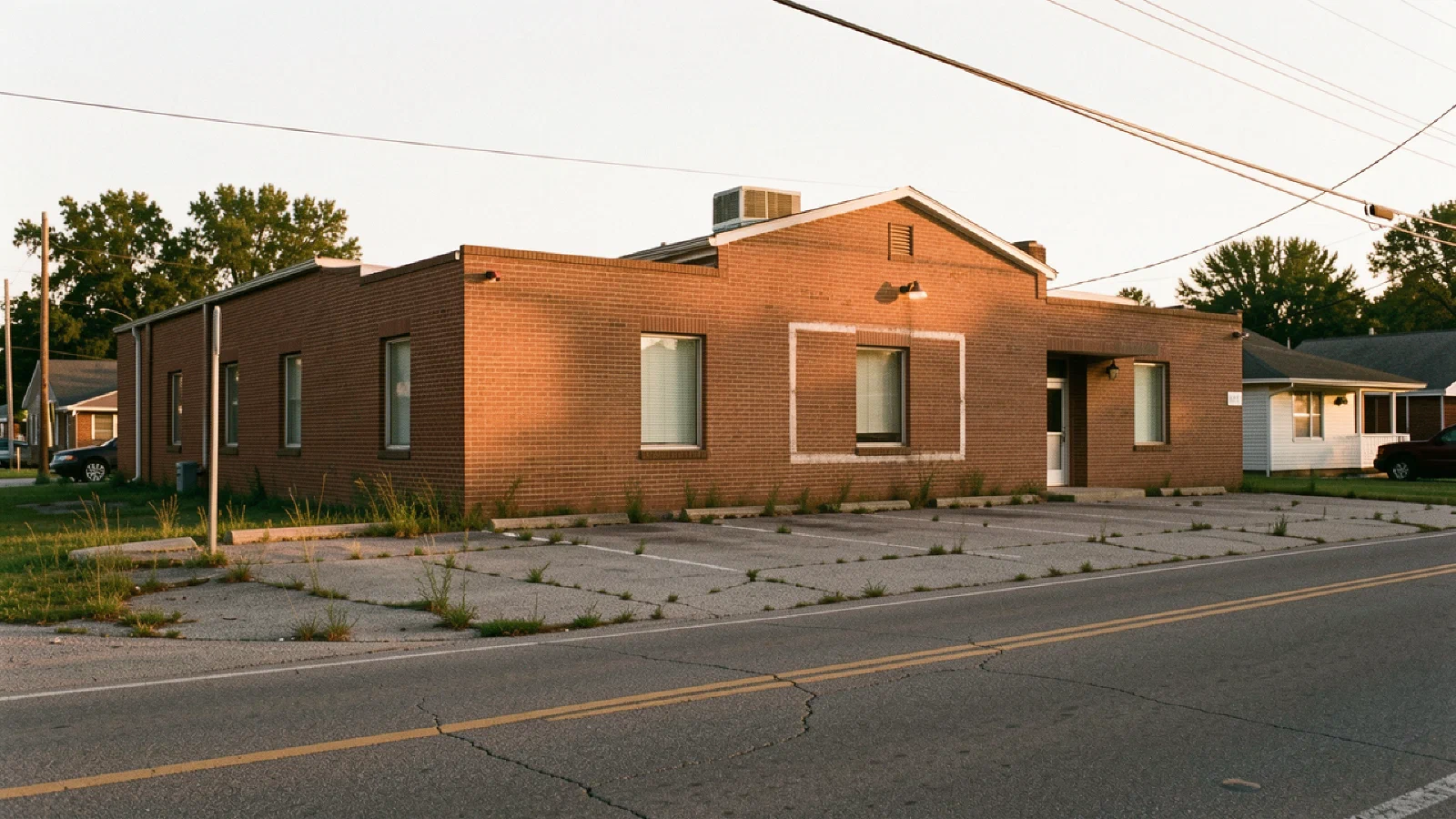
Margaret Hollis still drives past the building every day on her way to the feed store. The parking lot is cracked now, weeds pushing through where ambulances used to idle. The sign came down three years ago, but you can still see the outline where it hung: Riverton Community Medical Center.
She remembers when the clinic opened in 2014. The ribbon cutting drew three hundred people. State officials made speeches about how this facility would transform healthcare access for the county. Federal grants had paid for the equipment. A regional health system had committed to staffing and operations. For the first time in a decade, residents would not have to drive forty-five minutes to see a doctor.
Margaret’s husband Walter was one of the first patients. Diabetes and high blood pressure, the usual combination for men his age. The new doctor, fresh out of residency, seemed earnest enough. She adjusted his medications, scheduled quarterly visits, talked about lifestyle changes.
Then the doctor left after eighteen months. The replacement lasted a year. The third one commuted from the city and was only there two days a week. By 2019, patients were waiting three weeks for appointments. By 2021, the health system announced it could no longer sustain operations. Low patient volume, they said. Insufficient reimbursement. The community had not used the clinic enough to justify keeping it open.
Margaret thinks about this when she hears about the new transformation program. More grants. More promises. More outside experts explaining what the community needs. She knows what they need. They need someone who stays. They need a clinic that does not close. They need institutions that keep their promises.
“Fool me once,” she tells her daughter. “Fool me twice. But I’m seventy-three years old. I don’t have time to be fooled again.”
The Phenomenon#
Trust in American healthcare institutions has declined sharply across all populations over the past five decades. A 2024 Gallup poll found that only 36% of U.S. adults report high confidence in the medical system, down from 80% in 1975. But this decline is not evenly distributed. Rural residents, along with racial minorities, low-income populations, and those with disabilities, report significantly lower levels of trust in hospitals and health systems compared to their urban counterparts.
The phenomenon manifests across multiple dimensions. Interpersonal distrust appears in patient encounters: hesitation to share symptoms, skepticism about diagnoses, resistance to recommended treatments. Providers experience this as “non-compliance” or “poor health literacy.” Patients experience it as self-protection against a system that has earned their skepticism.
Institutional distrust operates at a broader level. Rural communities question whether health systems, public health agencies, and government programs have their interests at heart. The closure of 182 rural hospitals since 2010 provides daily evidence that institutions will abandon communities when financial calculations favor withdrawal. When the only hospital in town closes, abstract arguments about institutional trustworthiness become concrete lived experience.
Political distrust has intensified in recent years, particularly around public health interventions. The COVID-19 pandemic exposed deep rifts between public health messaging and rural reception. Vaccination campaigns that worked in urban areas failed in many rural communities not because information was unavailable but because the messengers had not earned the right to be believed.
The distinction between distrust and mistrust matters. Mistrust involves vague unease or skepticism that may not have clear sources. Distrust is more severe, reflecting firm belief that healthcare institutions are untrustworthy, rooted in personal or community experiences of harm or betrayal. What rural communities express is primarily distrust. It is not a failure of understanding but a form of learning from experience.
Tensions and Dynamics#
The central tension animating rural healthcare distrust is the gap between institutional intent and historical experience. Healthcare institutions genuinely intend to help. Their mission statements emphasize service, healing, and community benefit. The physicians and nurses who work in rural settings often do so out of commitment to underserved populations. Yet communities have learned that good intentions do not guarantee good outcomes, and that promises made are not always promises kept.
This tension is not resolvable through better communication alone. When a health system executive explains that a hospital closure was necessary due to financial constraints, they may be speaking truthfully about institutional reality while simultaneously confirming community beliefs that profit matters more than people. The explanation that makes sense from an organizational perspective deepens distrust from a community perspective.
A related tension exists between expertise and local knowledge. Transformation programs typically bring external expertise: consultants, academic researchers, clinical specialists who know what evidence-based practice looks like. Communities possess knowledge that experts lack: which interventions have been tried before and failed, which local leaders have credibility, which approaches violate cultural norms that may not appear in program documentation. Expertise that dismisses local knowledge as ignorance or resistance reproduces the pattern of outsiders knowing better that communities have experienced repeatedly.
The alternative view holds that distrust is an irrational barrier to beneficial intervention. Historical harms are in the past. Current programs are designed with community input and ethical oversight. Transformation cannot wait for perfect trust. Public health communication can overcome skepticism if messengers are skilled enough.
This view has some merit. Perfect trust is not a prerequisite for action. Some skepticism does reflect misinformation that can be corrected. But the alternative view fundamentally misdiagnoses the problem. Distrust is not an irrational pathology requiring therapeutic intervention. It is a reasonable response to accumulated experience. Approaches that treat distrust as a problem in the community rather than a reflection of institutional behavior will fail because they repeat the very pattern that created distrust: experts who think they know better than the people they purport to serve.
Vignette: What Tuskegee Teaches#
Rueben Warren directs the National Center for Bioethics in Research and Health Care at Tuskegee University, an institution established partly in response to the infamous syphilis study. When people ask him about vaccine hesitancy or clinical trial participation in Black communities, he offers a correction: “It is not the science we distrust, it is the scientists. It is not the medical system we distrust; it is those who perform it.”
The Tuskegee Study of Untreated Syphilis in the Negro Male ran from 1932 to 1972. U.S. Public Health Service researchers tracked approximately 600 Black men in rural Alabama, most of whom had syphilis, without treating them even after penicillin became widely available in the 1940s. The study offered free meals, free medical exams, and burial insurance. It never explained that participants were human subjects in research designed to withhold treatment.
Research by economists Marcella Alsan and Marianne Wanamaker found that disclosure of the study in 1972 correlated with significant declines in life expectancy among Black men. Their estimates suggest that life expectancy at age 45 fell by up to 1.4 years in response to the disclosure, potentially explaining 35% of the Black-white male life expectancy gap that existed in 1980. Distrust was not just an attitude; it translated into reduced healthcare utilization with measurable mortality consequences.
But Warren emphasizes that Tuskegee was not an isolated incident. It was preceded by J. Marion Sims’s experiments on enslaved women, by the eugenics movement that forcibly sterilized those deemed “unfit,” by centuries of what he calls “the use and abuse of Black bodies.” And it has been followed by contemporary incidents that confirm the pattern continues. As recently as the 1990s, prestigious academic institutions conducted ethically problematic research targeting minority children.
The lesson Warren draws is about trustworthiness, not trust. “A trustworthy person is acting when they keep their promises, act reliably, and do what they say they are going to do.” The problem is not that communities distrust unfairly. The problem is that institutions have not demonstrated the consistent behavior that would make them worthy of trust.
Determinants and Dynamics#
Understanding how distrust developed requires examining multiple layers of causation that accumulate over time and across generations.
Historical betrayals provide the deepest foundation. The Tuskegee study resonates in rural communities partly because it occurred in a rural setting, targeting poor Black farmers who trusted that free healthcare from the government would help rather than harm. Similar patterns of exploitation occurred across rural America: forced sterilization programs that disproportionately targeted rural women deemed unfit for reproduction; medical experiments conducted on institutionalized populations in rural state facilities; indigenous communities subjected to research without consent. These are not abstract historical facts for communities where family members experienced them directly.
Contemporary institutional behavior reinforces historical lessons. The 182 rural hospitals that have closed or converted since 2010 represent recent evidence that healthcare institutions will leave when conditions become unfavorable. From 2014 to 2024, two-thirds of rural hospital closures occurred in states that had not expanded Medicaid, concentrating abandonment in the communities least able to absorb the loss. When rural residents hear transformation promises, they hear them against the backdrop of promises previously broken.
Provider turnover compounds institutional departure. Rural communities frequently experience what researchers call the “revolving door” phenomenon: new physicians arrive with enthusiasm, stay one to three years, then leave for better opportunities. Each departure represents a relationship lost, a trust rebuilt and then broken. One qualitative study found that rural older adults identified the strongest barrier to healthcare as lack of confidence that providers would remain long enough to know them.
Cultural mismatch creates friction even when institutions remain. Transformation programs often arrive with frameworks developed in academic settings and tested in urban environments. The language of public health, the assumptions of clinical protocols, the behavioral expectations embedded in program design may conflict with rural cultural norms around independence, self-reliance, and skepticism of outside authority. When providers dismiss traditional remedies, question lifestyle choices, or express impatience with patients who do not conform to clinical expectations, they confirm beliefs that healthcare is not designed for people like us.
Economic distrust adds another dimension. Many rural residents perceive healthcare as extraction rather than service. Hospitals that were once community institutions have been acquired by distant corporations. Clinics operate with an eye toward profitability rather than community need. When the doctor recommends an expensive test or the specialist requires a long drive to a tertiary center, patients wonder whether the recommendation serves their health or someone’s revenue. The financialization of healthcare makes such suspicions difficult to dismiss.
Political distrust has intensified particularly around public health interventions. COVID-19 revealed deep gaps between public health messaging and rural reception. But the pattern predates the pandemic. When government agencies issue recommendations that conflict with community practices, when regulations threaten rural livelihoods, when urban majorities make decisions affecting rural minorities, the cumulative effect is skepticism that government knows or cares what rural communities need.
Transformation Implications#
If distrust is learned from experience, then rebuilding trust requires changed experience over time. This has concrete implications for how RHTP investments are designed and implemented.
Time horizons matter. Trust-building cannot happen on grant cycle timelines. The typical three-to-five-year transformation grant assumes that relationships can be established, interventions implemented, and outcomes demonstrated within a period that may be insufficient even to earn the right to be heard. Communities have learned to wait out initiatives, knowing that programs come and go while community needs persist. Transformation approaches that signal long-term commitment through sustained presence, multi-year funding, and institutional investment have a better chance of overcoming justified skepticism.
Who delivers matters more than what is delivered. Evidence shows that concordance between providers and patients improves trust and outcomes. But concordance goes beyond demographic matching. It includes shared history, demonstrated commitment, and relationships built over time. Community health workers who are trusted community members can bridge gaps that outside experts cannot cross. Faith leaders, local employers, and respected elders carry credibility that credentialed strangers must earn.
Institutional accountability builds trust incrementally. When institutions make promises, they must keep them. When they fail, they must acknowledge failure honestly rather than offering explanations that sound like excuses. When they make decisions that harm communities, they must demonstrate that harm was not the intention and that measures will prevent recurrence. This kind of accountability is rare in healthcare systems oriented toward legal protection and reputation management.
Local control supports trust. Communities distrust decisions made about them without their input. Transformation programs that position communities as recipients of expert wisdom reproduce the patterns that generated distrust. Programs that position communities as partners with decision-making authority over how resources are used, what priorities are pursued, and how success is defined have a better chance of earning the trust that enables effective implementation.
The alternative view suggests that transformation cannot wait for perfect trust. This is true. But it creates a false choice between acting without trust and waiting until trust is perfect. The third option is to act in ways that build trust through the action itself: keeping promises, maintaining presence, sharing power, acknowledging failures, and demonstrating through behavior that this time might be different from the times before.
Conclusion#
Rural healthcare distrust is not a problem to be solved through better messaging or more sophisticated communication strategies. It is a reasonable response to accumulated experience that institutions will review carefully before deciding whether to trust again.
Transformation programs that ignore this history will fail. They will promise benefits that communities have heard promised before. They will bring outside experts who will leave when their contracts end. They will implement programs designed elsewhere that fit poorly with local realities. And they will wonder why communities did not engage more enthusiastically with interventions that were, after all, designed to help.
The path forward requires something harder than programmatic innovation. It requires institutional change that makes healthcare organizations worthy of the trust they seek. It requires keeping promises, maintaining presence, sharing power, and demonstrating through consistent behavior that rural communities matter not just as rhetoric but as practice.
This is the foundation on which all other transformation efforts depend. Navigation burden, isolation, and dignity issues examined in subsequent articles all interact with trust. Communities that distrust will not navigate systems they believe are designed to fail them. They will not reach out from isolation to institutions they expect to harm them. They will not accept help that feels like colonization. Trust is not merely one dimension of experience among others. It is the precondition that shapes whether any transformation effort can succeed.
How this article connects to others in Blue Gray Matters.
Sources cited in this article.
- Alsan, Marcella, and Marianne Wanamaker. "Tuskegee and the Health of Black Men." *NBER Working Paper 22323*, National Bureau of Economic Research, 2016.
- Benkert, Ramona, et al. "More than Tuskegee: Understanding Mistrust about Research Participation." *Journal of Health Care for the Poor and Underserved*, vol. 30, no. 4, 2019, pp. 1483-1502.
- Dula, Annette, and Sara Goering. "From Distrust to Confidence: Can Science and Health Care Gain What's Missing?" *The Pew Charitable Trusts*, 17 Oct. 2024.
- Fiscella, Kevin, et al. "Rural Mistrust of Public Health Interventions in the United States: A Call for Taking the Long View to Improve Adoption." *Journal of Rural Health*, vol. 38, no. 4, 2022, pp. 941-946.
- Halverson, Joel, et al. "A Qualitative Study of Rural Healthcare Providers' Views of Social, Cultural, and Programmatic Barriers to Healthcare Access." *BMC Health Services Research*, vol. 22, 2022, article 322.
- Kye, Samuel. "Trust Trends: U.S. Adults' Gradually Declining Trust in Institutions, 2021-2024." AAMC Center for Health Justice, 2024.
- Warren, Rueben. "Historical Roots of Medical Mistrust." *Leveraging Trust to Advance Science, Engineering, and Medicine in the Black Community*, National Academies Press, 2025.
- Washington, Harriet A. *Medical Apartheid: The Dark History of Medical Experimentation on Black Americans from Colonial Times to the Present*. Anchor Books, 2006.