Isolation and Connection
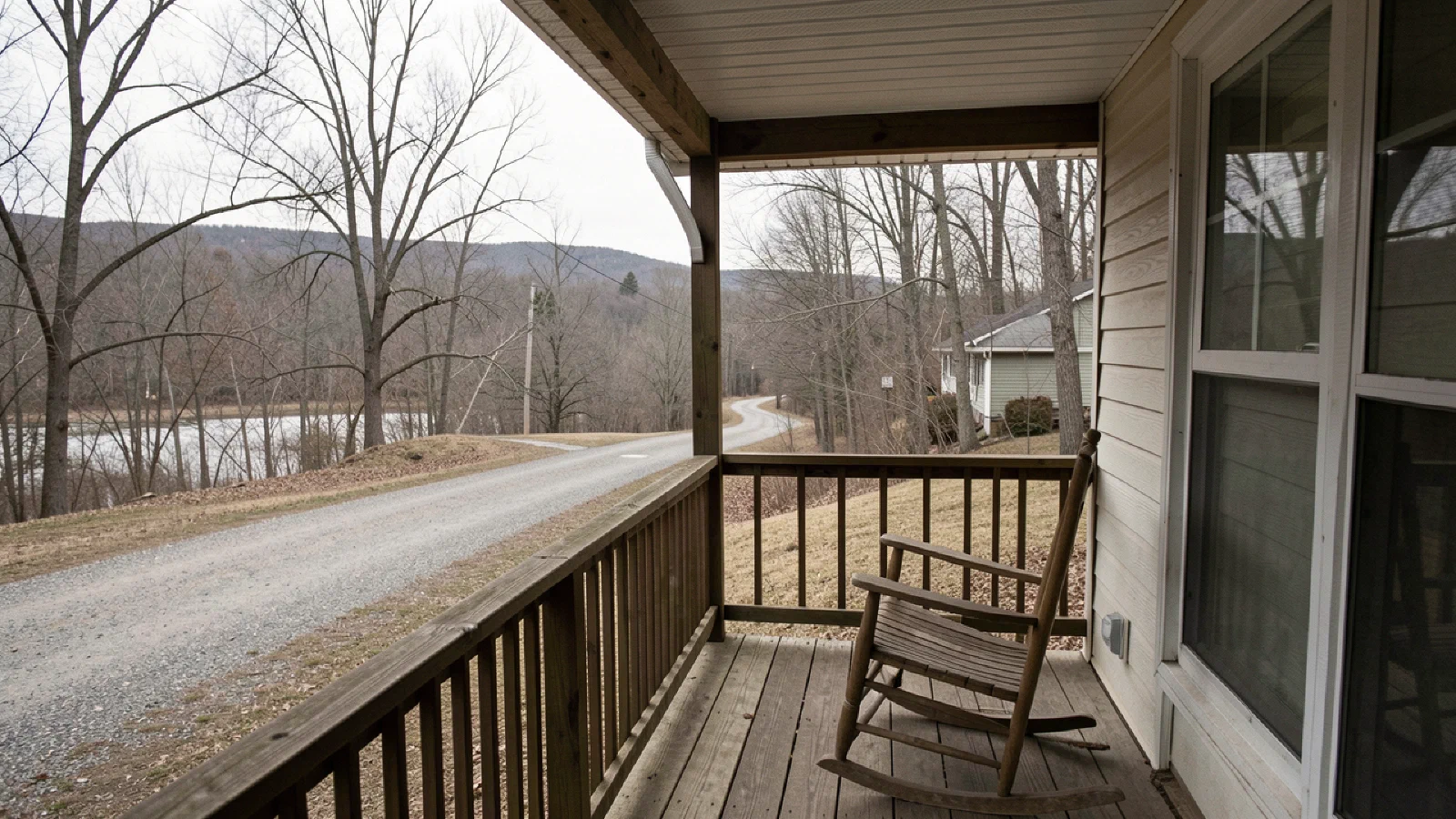
Margaret Hollis has not left her property in Harlan County, Kentucky in three weeks. She is eighty-one years old, widowed for nine years, and the last of her generation on the hollow where she was born. Her children moved to Lexington and Cincinnati decades ago, following jobs that no longer existed in the coalfields. They call on Sundays and visit at Christmas. Her nearest neighbor is a quarter mile down a gravel road that the county stopped maintaining after the mine closed. She sees the mail carrier five days a week, waves through her kitchen window, and considers that her primary social contact.
When her doctor in Hazard asks about her mood, she says she is fine. When he asks if she feels lonely, she pauses. “I have been alone my whole life, in one way or another,” she tells him. “It is not the same as lonely.” But she also admits that she has stopped taking her blood pressure medication because driving the forty minutes to the pharmacy exhausts her, and asking her children to send it feels like an imposition. She has not attended her church, Cloverfork Baptist, since the congregation dwindled to eleven members and merged with a church in town that she does not recognize as her own.
Margaret is socially isolated by any objective measure, but whether she experiences loneliness depends on questions her doctor has neither time nor training to explore. Her health is deteriorating in ways connected to her isolation, but the connection operates through mechanisms that clinical intervention cannot reach: the medication she does not refill, the symptoms she does not report, the falls no one witnesses, the depression that presents as tiredness. Her isolation is not a clinical condition awaiting diagnosis. It is the residue of community decline that no transformation program can reverse.
The Phenomenon#
Rural isolation operates across multiple dimensions that interact and compound. Geographic isolation, the simple fact of distance, has always characterized rural life. But contemporary rural isolation layers additional dimensions onto geographic distance in ways that previous generations did not experience.
Geographic isolation in rural America means more than miles from services. It means miles from other people. The population density that creates casual social contact in urban settings does not exist. A rural resident may drive twenty miles without passing another vehicle. The coffee shop where urban dwellers encounter acquaintances does not exist because the town that might have supported it lost its economic base. Distance precludes the incidental encounters that constitute much of human social contact.
Social isolation builds on geographic distance. The Surgeon General’s 2023 advisory on loneliness identified social isolation as a public health crisis, but the advisory’s framing emphasized individual intervention for what is fundamentally a structural condition. Rural social isolation reflects the departure of the institutions and people who once provided connection: the churches that merged or closed, the schools that consolidated, the businesses that failed, the young people who left.
Research documents the scope of rural isolation consistently. Social isolation is associated with a 29 to 35 percent increased risk of all-cause mortality, comparable to smoking fifteen cigarettes daily. Loneliness, the subjective experience of isolation, carries a 26 percent increased mortality risk. These associations persist after controlling for other risk factors, suggesting that isolation operates through independent mechanisms affecting health.
Rural populations experience isolation at rates exceeding urban populations across multiple measures. Older adults in rural Appalachia face what researchers term “triple jeopardy”: geographic isolation, limited availability of health and social services, and cultural values that may inhibit help-seeking behavior. The conditions compound rather than simply add.
Digital isolation creates a newer dimension. The internet promised to transcend geography, enabling connection regardless of physical distance. For rural residents with reliable broadband, digital tools do provide connection: video calls with distant family, online communities of shared interest, telehealth visits that would otherwise require long drives. But broadband access remains limited in rural areas, and digital literacy varies by age and education in ways that exclude many rural residents from digital connection.
The FCC’s 2024 broadband deployment report documented that 17 percent of rural Americans lack access to fixed broadband at minimally acceptable speeds, compared to less than 1 percent of urban Americans. Even where broadband exists, adoption rates lag. The rural senior attempting to video call grandchildren may face equipment she cannot afford, interfaces she cannot navigate, and connectivity that drops unpredictably. Digital solutions assume digital access that many rural residents lack.
Professional isolation affects the providers who remain in rural communities. A physician practicing alone in a Critical Access Hospital lacks the professional community that urban physicians take for granted: colleagues to consult on difficult cases, peer support during challenging events, professional development opportunities, coverage for time away. Professional isolation contributes to burnout that drives provider departure, deepening the isolation of the communities they leave behind.
Existential isolation may be the hardest dimension to address. Rural residents watch their communities decline, their institutions disappear, their children leave. The sense of belonging that comes from living in a place that matters, a place with a future, erodes as population dwindles and businesses close. This is isolation from meaning as much as isolation from people.
The Core Tension: Individual Pathology vs. Community Absence#
Clinical and policy approaches to isolation typically frame it as individual condition requiring individual intervention. Screening tools identify isolated patients. Care plans include social referrals. Community health workers conduct wellness checks. The framework treats isolation as something wrong with the person that services can address.
This framing misses what Margaret Hollis experiences. Her isolation does not reflect individual pathology. It reflects community collapse that no individual intervention can reverse. Her church did not close because she failed to attend but because its congregation died and moved away. Her children did not leave because she pushed them away but because economic opportunity departed the region. Her pharmacy is not far because she chose to live remotely but because the closer pharmacy closed when the town’s population fell below the threshold that supported it.
Treating individuals for community problems cannot succeed. The isolated elder screened at a primary care visit and referred to social services encounters a social service system that cannot rebuild the community she lost. The referral to a senior center requires transportation she lacks to reach a facility that may not exist in her county. The recommendation to join activities assumes activities to join, in a community where institutions have closed.
The alternative view holds that structural isolation requires structural response. Community decline produces isolation; community investment might reverse it. But transformation programs operate on timelines too short and scales too small to rebuild communities that declined over decades. The five-year RHTP window cannot reverse the fifty-year economic collapse of the coalfields.
Screening vs. Addressing#
RHTP applications across states emphasize social isolation screening as a transformation strategy. The approach reflects broader healthcare emphasis on social determinants of health: identify patients with social needs, document those needs, refer to resources. The logic assumes that identification enables intervention.
But screening without capacity to address creates its own problems. Documenting isolation without building connection may be worse than not screening at all. The patient who acknowledges loneliness in response to a screening question has disclosed vulnerability. If that disclosure leads nowhere, if the referral reaches a waiting list or a program that cannot help, the patient learns that disclosure is pointless. Trust erodes. Future screenings elicit denial.
The evidence on social needs screening reflects this concern. Studies show that screening identifies needs but often fails to connect patients to effective interventions. The gap between identification and intervention is particularly wide for social isolation, where effective interventions require sustained relationship rather than one-time service.
“We ask people about loneliness now,” a community health center nurse in rural Missouri explained to researchers. “We have a checkbox. But when they say yes, I do not know what to tell them. There is no prescription for loneliness. There is no referral that fixes it.”
The honest assessment: screening for isolation without capacity to address it represents performance rather than care. It satisfies documentation requirements while leaving underlying conditions unchanged. It may actually harm by eliciting vulnerable disclosure that leads nowhere.
Alternative Perspectives#
The alternative view holds that digital connection and targeted interventions can meaningfully address rural isolation even without community rebuilding.
Telehealth and digital connection arguments contend that technology can transcend geography. The isolated elder can video call family. The depressed farmer can access online mental health support. The professional isolated rural physician can participate in virtual communities of practice. Digital tools cannot replace physical presence but can supplement connection in ways that genuinely help.
Individual intervention evidence supports some clinical approaches to isolation. Cognitive behavioral therapy addressing the thought patterns associated with loneliness shows effectiveness. Group-based interventions that bring isolated individuals together produce connection that persists beyond program duration. The National Academies consensus report on social isolation and loneliness identifies evidence-based interventions that mental health professionals can implement.
Rural community strength arguments observe that rural communities often maintain stronger social ties than urban areas despite geographic distance. Extended family networks persist. Faith communities provide connection. Neighbor-helping-neighbor traditions continue. Rural social isolation may be overstated by researchers applying urban norms to rural contexts.
These perspectives contain partial truth. Digital tools help those who can access them. Some clinical interventions demonstrate effectiveness. Rural communities retain social capital that urban areas lack.
But each perspective faces limitations that honest assessment must acknowledge. Telehealth requires broadband access and digital literacy that many isolated rural residents lack, and video connection cannot replicate physical presence for social species evolved for embodied interaction. Individual interventions cannot rebuild community infrastructure that structural forces dismantled. Rural social ties exist but are strained by decades of out-migration and community decline. The alternative views offer individual and technological solutions to what remains fundamentally a structural problem.
Vignette: What Connection Requires#
Reverend James Whitaker has served three small Baptist churches in Perry County, Kentucky since 1998. His congregations have shrunk from a combined 340 members to fewer than 90, most over seventy years old. He spends much of his week visiting homebound members, driving his pickup truck up hollows to check on people who might not see another person until his next visit.
“They call it pastoral care,” he says. “I call it keeping people alive.”
He describes arriving at the home of Vernon Sizemore, 84, a former miner whose wife died in 2019. Vernon had not answered his phone for two days. Whitaker found him on the kitchen floor, conscious but unable to stand after a fall. Vernon had been there for at least twenty hours.
“He was not hurt badly, thank God. But if I had not come when I did, he would have laid there until he died. There is no one else to check. His kids are in Ohio. His neighbors are gone or dead. I am what he has.”
Whitaker provides what no program can scale: consistent presence built on decades of relationship. Vernon trusts him because Whitaker has been there through Vernon’s wife’s cancer, through his own black lung diagnosis, through the closure of the mine that employed him for thirty-two years. That trust took years to build and cannot be replicated by a community health worker newly hired under a grant.
But Whitaker is also seventy-one years old, with his own health problems. He has no successor. The seminary graduates who once came to rural Kentucky now go elsewhere. When he retires or dies, no one will drive up the hollows. The connection he provides will disappear.
“I cannot fix what has happened to these communities,” Whitaker says. “I cannot bring back the jobs or the young people or the churches that closed. All I can do is be here while I am still here. But that is ending too.”
His ministry illustrates both what addressing isolation requires and why transformation programs struggle to provide it. Connection requires presence, consistency, trust built over time, and embeddedness in community. Programs offer episodic contact, staff turnover, external accountability, and funding cycles that measure impact in months rather than decades.
Health Consequences of Isolation#
The pathways from isolation to poor health operate through multiple mechanisms that clinical intervention partially addresses at best.
Behavioral mechanisms explain part of the association. Isolated individuals lack the social monitoring that encourages healthy behavior. No one notices the medication not taken, the meal not eaten, the symptom not reported. Health-maintaining behaviors that feel worth the effort when one matters to others feel pointless when no one notices or cares. Social isolation removes the “why” from health behavior in ways that education and motivation cannot replace.
Psychological mechanisms compound behavioral effects. Loneliness and social isolation correlate with depression, anxiety, and cognitive decline. The mental health consequences of isolation then affect health behaviors, healthcare utilization, and disease management. Isolated elders with depression manage chronic conditions worse than connected elders without depression, producing a cascade of deteriorating health.
Physiological mechanisms operate independently of behavior and psychology. Chronic loneliness triggers stress responses with measurable biological consequences: elevated cortisol, chronic inflammation, immune dysfunction, cardiovascular strain. These effects occur regardless of health behaviors, suggesting that isolation harms health directly through physiological pathways that no intervention addresses without addressing isolation itself.
Healthcare utilization patterns differ for isolated populations. They may delay seeking care because no one notices symptoms or encourages visits. They may miss appointments because no one provides transportation or reminds them. They may be unable to follow treatment plans requiring assistance they lack. The healthcare system assumes support that isolated patients do not have.
Emergency utilization often increases among isolated populations. Conditions that connected patients address in primary care become emergencies when isolated patients delay until crises. The fall not witnessed for twenty hours becomes a hospitalization that earlier intervention might have prevented.
What Transformation Offers#
RHTP state applications include multiple isolation-related strategies that reflect the limits of what transformation can provide.
Community health worker deployment appears in nearly every state application. CHWs can identify isolated individuals, conduct home visits, connect patients to services, and provide human contact that isolated patients otherwise lack. The strategy has evidence supporting its effectiveness in populations where CHWs share community identity with those they serve.
But CHW effectiveness depends on community embeddedness that hiring processes may not prioritize. The CHW who grew up in the community, knows its residents, shares its history brings relationship that creates trust. The CHW hired from elsewhere and assigned a caseload provides service but may not provide connection. Transformation programs need staff quickly; trust builds slowly.
Telehealth expansion receives substantial RHTP investment. For patients with technology access, telehealth can reduce geographic isolation from clinical care. Video visits with mental health providers address professional shortage. Remote patient monitoring enables oversight without travel.
Telehealth does not address social isolation, and may worsen it for patients who experience in-person healthcare visits as social contact. The elderly patient whose monthly visit with her primary care provider represents her primary human interaction gains something from that visit beyond clinical care. Converting the visit to video may improve efficiency while deepening isolation.
Social needs screening and referral appears in applications as an element of whole-person care. The strategy identifies isolated patients and documents their status. Referral to social services follows identification.
The gap between identification and effective intervention limits this strategy’s impact. Social services themselves face capacity constraints. The referral to a senior center that has closed, to a program with a waiting list, to a resource that does not exist accomplishes nothing beyond documentation.
Transportation programs address one barrier to connection. Patients who cannot drive and lack rides cannot access healthcare, cannot attend activities, cannot maintain social connections. Transportation investment enables other interventions.
Transportation helps, but cannot replace what is no longer there to reach. The ride to a church that has closed, to a community center that never existed, to visit friends who have moved away provides transportation without providing connection.
Honest Assessment#
The core tension between individual pathology and community absence resolves not through choosing one view but through recognizing what each explains.
Individual intervention can help individuals. Clinical approaches to loneliness show effectiveness for some patients. CHW visits provide human contact that isolated patients value. Telehealth reduces geographic barriers to clinical care. Transportation enables access. These interventions matter for the individuals they reach.
But individual intervention cannot address community collapse. The structural forces that produce rural isolation, economic decline, out-migration, institutional closure, require structural response at scales and timelines that transformation programs cannot achieve. Screening individuals for the consequences of community decline while leaving community decline unaddressed treats symptoms while causes persist.
The honest assessment is that RHTP cannot solve rural isolation because rural isolation reflects conditions beyond healthcare’s scope. Economic development, infrastructure investment, and policy choices spanning decades created communities where isolation is endemic. Healthcare transformation cannot reverse those forces in five years.
What RHTP can do is provide some mitigation for individuals while structural conditions persist. CHWs can check on isolated elders. Telehealth can reach patients who cannot travel. Transportation can enable access. These interventions help without solving the underlying problem.
The risk is that mitigation becomes substitute for structural change. If transformation programs document isolation, deploy CHWs, and claim success while communities continue to collapse, they provide political cover for continued neglect of the structural conditions that produce isolation. The population receiving RHTP-funded services remains isolated; the isolation simply becomes documented and managed rather than addressed.
Communities need what transformation cannot provide: economic viability, institutions that persist, young people who stay. Without those conditions, isolation mitigation remains perpetual, one generation of isolated elders succeeded by another, each receiving services while community decline continues.
Margaret Hollis will receive a CHW visit under her county’s RHTP implementation plan. The CHW will assess her needs, document her isolation, refer her to services that may or may not exist. The visit will provide human contact she values. It will not rebuild her church, return her children, or restore the community that raised her.
Whether that visit represents meaningful transformation or documented inadequacy depends on what one believes transformation should accomplish. For Margaret, the visit will be welcome. She will appreciate the contact. But she will understand, better than the systems serving her, that connection cannot be manufactured by programs operating on grant cycles. It arises from communities that cohere over generations, and that her community has lost.
How this article connects to others in Blue Gray Matters.
Sources cited in this article.
- Holt-Lunstad, Julianne, et al. "Loneliness and Social Isolation as Risk Factors for Mortality: A Meta-Analytic Review." *Perspectives on Psychological Science*, vol. 10, no. 2, 2015, pp. 227-237.
- Imamura, Keigo, et al. "Social Isolation, Regardless of Living Alone, Is Associated with Mortality: The Otassha Study." *Frontiers in Public Health*, vol. 12, 2024.
- National Academies of Sciences, Engineering, and Medicine. *Social Isolation and Loneliness in Older Adults: Opportunities for the Health Care System.* National Academies Press, 2020.
- Office of the Surgeon General. *Our Epidemic of Loneliness and Isolation: The U.S. Surgeon General's Advisory on the Healing Effects of Social Connection and Community.* U.S. Department of Health and Human Services, 2023.
- Southerland, Jennifer, et al. "Social Isolation and Loneliness Prevention Among Rural Older Adults Aging-in-Place: A Needs Assessment." *Frontiers in Public Health*, vol. 12, 2024.
- Wang, Fei, et al. "Social Isolation as a Risk Factor for All-Cause Mortality: Systematic Review and Meta-Analysis of Cohort Studies." *PLOS ONE*, vol. 18, no. 1, 2023.
- Welch, Vivian, et al. "In-Person Interventions to Reduce Social Isolation and Loneliness: An Evidence and Gap Map." *Campbell Systematic Reviews*, vol. 20, no. 2, 2024.
- Federal Communications Commission. *2024 Broadband Deployment Report.* FCC, 2024.