Building for the Earthquake
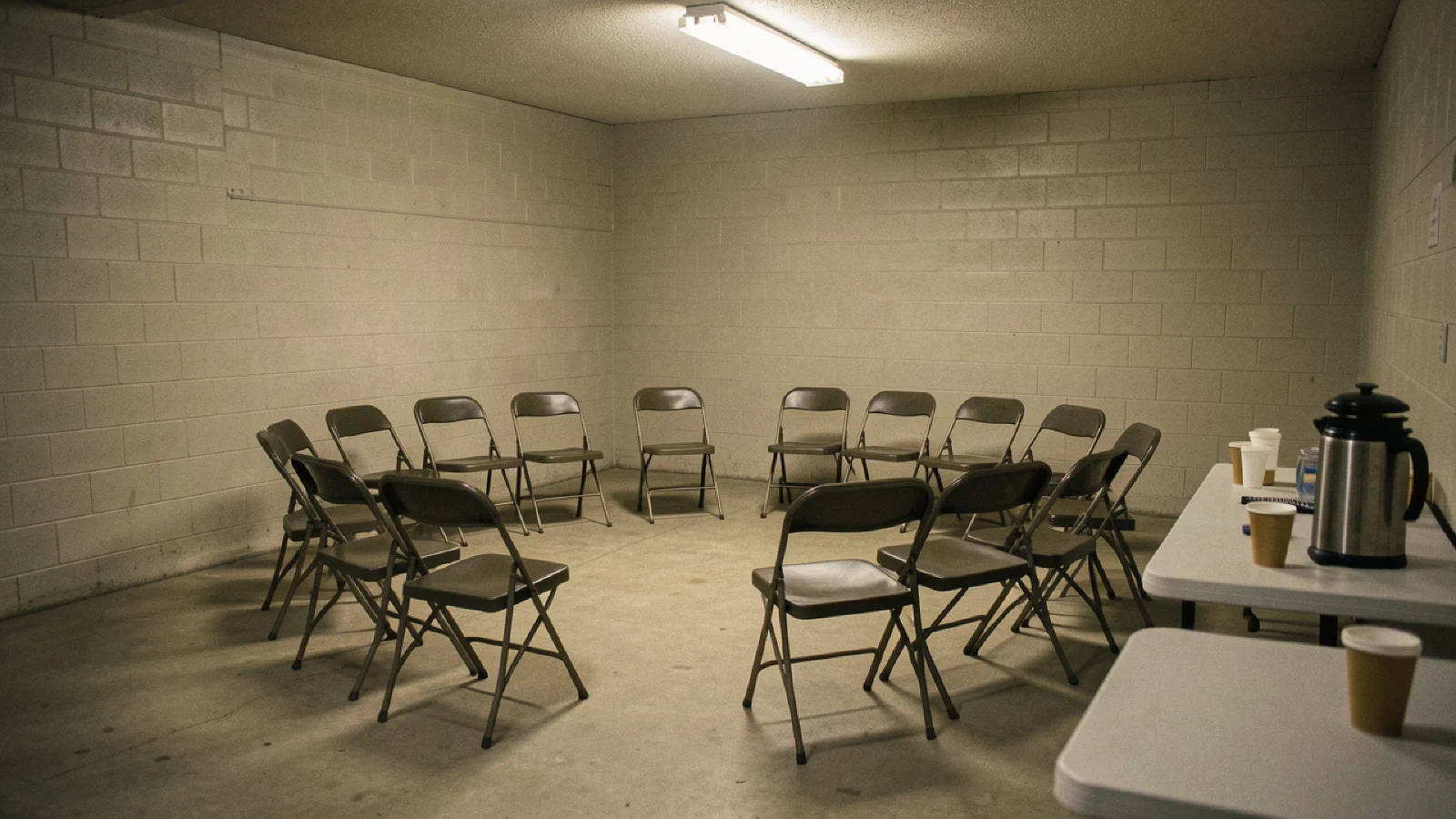
The meeting happens in a church basement in Harlan County, Kentucky, on a Thursday evening in October 2027. Fourteen people sit in folding chairs. The hospital closed six weeks ago. Not dramatically, not with protest signs and television cameras. The last physician left in August. The travel nurses’ contracts were not renewed because the facility could not cover their rates after Medicaid work requirements removed 2,400 enrollees from the service area. The ER stopped accepting patients on September 3rd. The building still stands, lights still on in the lobby, as if waiting for someone to come back.
Nobody is coming back.
The fourteen people in the church basement are not waiting for rescue. They are figuring out what to do now. A retired nurse. Two EMTs who lost their ambulance agency. A pastor whose congregation includes most of the county’s diabetics. A school nurse covering three elementary schools. A social worker who drives two hours each way to the nearest behavioral health provider with her clients in the back seat. A county judge who controls a small budget for public health. Eight residents who showed up because the flyer at the dollar store said “Community Health Meeting.”
They have no transformation grant. No RHTP coordinator. No state agency liaison. They have the question that Series 12 documents but does not answer: what do communities do when the earthquake wins?
The Series 12 Synthesis concluded that RHTP’s $50 billion faces converging policy forces, $911 billion in Medicaid cuts, safety net destruction, Medicare payment erosion, and workforce collapse, that transformation investment cannot offset. The synthesis asked whether rural health can survive the policy earthquake. This companion accepts the premise that in many communities, it cannot, and asks what resilience looks like when the institutional healthcare system fails.
Part I: Why This Document Exists#
The Unsayable#
Healthcare policy does not plan for failure. Programs assume success with variations in degree. RHTP state applications describe what will be built, not what will collapse. Performance metrics track progress, not managed decline. Federal guidance envisions transformation, not triage.
This optimism has costs. Communities where institutional healthcare will not survive the converging policy pressures receive no guidance on alternatives. When the hospital closes, when the clinic shuts down, when the last physician leaves, these communities discover their abandonment in real time. No plan exists for what comes next because no one in the policy apparatus was permitted to plan for failure.
This companion plans for failure. Not because failure is desired, but because failure is predictable for a identifiable subset of rural communities, and refusing to plan for predictable outcomes is not optimism but negligence.
Series 12E identified “concentration zones” where multiple policy changes converge with greatest force: non-expansion states with high poverty, limited provider infrastructure, workforce shortages, and economic dependence on public programs that are being cut. These zones are knowable. The communities within them can be identified. The trajectory can be projected with reasonable confidence.
The question is whether policy will acknowledge this trajectory and prepare, or maintain the fiction of universal transformation until individual communities discover reality through institutional collapse.
Who This Document Serves#
This companion is written for the fourteen people in the church basement. For community leaders in places where the hospital is closing, the clinic is unstaffed, the ambulance agency is folding, and the transformation grant either never arrived or funded improvements to infrastructure that no longer exists.
It is also written for state agencies that know certain communities face facility loss but lack frameworks for managed transition. For federal officials who understand that $50 billion cannot offset $911 billion but need analysis supporting honest planning within political constraints. For the organizations that will work with communities after institutional failure, who need models for what community health looks like without community healthcare institutions.
This document does not replace transformation. Where transformation is viable, pursue it aggressively. This companion addresses the places where it is not.
Part II: Defining Resilience#
What Resilience Is Not#
Resilience is not pretending the earthquake did not happen. Communities that lose healthcare institutions face genuine loss. Resilience does not minimize what was lost or suggest that community alternatives are equivalent to institutional care. A retired nurse checking on neighbors is not the same as a functioning emergency department. Acknowledging the gap is essential to honest resilience planning.
Resilience is not self-reliance rhetoric. Rural communities have been told for generations that they should take care of their own. This narrative conveniently absolves systems that failed them. Resilience as used here does not mean communities should cheerfully manage without the healthcare infrastructure that policy decisions destroyed. It means communities deserve practical guidance for circumstances that policy created and that policy has not addressed.
Resilience is not permanent. The strategies described here are transitional. They sustain communities through the gap between institutional failure and alternative architecture. Series 14 envisions what that architecture looks like. This companion addresses the period before it arrives, which for some communities may extend years or decades.
What Resilience Is#
Resilience is the capacity to maintain community health at acceptable levels when institutional healthcare infrastructure fails. It accepts constraints rather than denying them. It builds on assets communities actually possess rather than resources they should receive. It prioritizes preventing the worst outcomes rather than optimizing all outcomes.
Resilience operates on three principles:
Triage, not universality. When resources are radically constrained, attempting to address all health needs equally produces inadequate response to everything. Resilience prioritizes: preventing deaths that can be prevented, managing chronic conditions that, unmanaged, produce emergencies, and maintaining connections that prevent isolation from becoming abandonment.
Existing assets, not new infrastructure. Communities facing institutional healthcare failure cannot build new infrastructure. Resilience uses what exists: churches with gathering spaces, schools with nurses, retired professionals with clinical knowledge, social networks with caregiving capacity, technology platforms accessible through basic connectivity.
Relationships, not systems. Institutional healthcare operates through systems. Community resilience operates through relationships. The retired nurse who checks on her neighbors provides care through relationship. The pastor who drives parishioners to distant appointments provides navigation through relationship. When systems fail, relationships remain. Resilience builds on them rather than attempting to reconstruct the systems that failed.
Part III: A Resilience Framework#
Layer 1: Preventing Avoidable Death#
The highest priority after institutional failure is preventing deaths that would not occur if healthcare institutions existed. Three categories dominate:
Emergency stabilization and transport. When the emergency department closes, cardiac events, strokes, severe injuries, and obstetric emergencies become potentially fatal rather than treatable. Communities need stabilization capacity: people trained in basic and advanced life support, equipment for stabilization, and reliable transport to the nearest functioning facility.
Practical approaches. Community paramedicine programs that outlive the agencies that housed them. Stop-the-bleed training for community members. Automated external defibrillator placement in high-traffic community locations. Formal relationships with regional medical centers establishing transport protocols. Volunteer driver networks for emergency transport when ambulance service is unavailable. Telemedicine connections enabling remote physician guidance during stabilization.
The county judge in Harlan County controls enough budget to equip the fire station as a stabilization point and train a dozen community members in advanced first aid. It is not an emergency department. It keeps people alive for the 45-minute transport to the nearest hospital.
Medication continuity for life-threatening conditions. Patients on insulin, blood thinners, seizure medications, cardiac drugs, and psychiatric medications face life-threatening discontinuation when prescribers leave and pharmacies close. Medication gaps produce the emergencies that overwhelm communities without emergency capacity.
Practical approaches. Extended prescription authorities allowing 90-day or 180-day supplies before provider departure. Telehealth prescribing relationships with distant providers maintaining medication management. Community pharmacy partnerships with mail-order programs ensuring medication delivery. Medication continuity protocols activated before provider departure rather than after, treating prescriber loss as a predictable event requiring advance planning.
Maternal and infant survival. Communities losing obstetric services face increased maternal and infant mortality. The evidence is unambiguous: closure of obstetric units increases distance to delivery care and worsens outcomes, particularly for high-risk pregnancies.
Practical approaches. Midwifery-based birth centers operating under simplified regulatory frameworks. Community doula programs providing labor support and postpartum monitoring. Telehealth connections to maternal-fetal medicine specialists for risk assessment and management. Clear protocols for identifying high-risk pregnancies requiring delivery at equipped facilities. Community-based prenatal care that does not require a hospital to function.
Layer 2: Chronic Disease Management#
Rural communities carry disproportionate chronic disease burden: diabetes, hypertension, COPD, heart failure, depression. Institutional healthcare manages these conditions through regular provider visits, laboratory monitoring, medication adjustment, and complication screening. When institutions fail, chronic disease becomes unmanaged, producing the emergencies that Layer 1 addresses.
Effective chronic disease management does not require physicians in every community. It requires monitoring, medication access, behavioral support, and escalation protocols for complications.
Community health worker networks. CHWs trained in chronic disease management can monitor blood glucose, blood pressure, and weight. They can support medication adherence, dietary management, and physical activity. They can recognize warning signs requiring clinical intervention. They cannot prescribe or diagnose, but they can maintain the monitoring and behavioral support that prevents most complications.
Remote clinical supervision. Telehealth connects community health workers with physicians and advanced practice providers at distance. The clinical brain does not need to be in the community if the clinical hands are. A CHW measuring blood pressure in someone’s kitchen, transmitting data to a nurse practitioner fifty miles away, who adjusts medications through telepharmacy: this is not inferior care for chronic disease management. For some patients, it is better care because it occurs in their home on their schedule rather than requiring a day-long trip to a distant clinic.
Group-based models. Diabetes management groups, cardiac rehabilitation classes, COPD support programs, and depression peer support operate effectively through community settings. The church basement in Harlan County could host weekly diabetes management meetings led by the retired nurse with telehealth physician oversight. The evidence for group-based chronic disease management is strong. The model does not require institutional healthcare infrastructure.
Practical approaches. Train community health workers from the community they serve, not imported from elsewhere. Establish remote clinical supervision agreements with regional medical centers before institutional failure occurs. Create group-based programs using existing community spaces. Deploy basic monitoring equipment (blood pressure cuffs, glucometers, pulse oximeters, scales) to community health workers and patient homes.
Layer 3: Mental Health and Connection#
Institutional healthcare failure produces community trauma. The hospital represented more than healthcare; it represented community viability, economic stability, and the assurance that help existed nearby. Its loss produces grief, anxiety, and despair that compound existing mental health burdens.
Community mental health resilience cannot replicate clinical mental health services. It can prevent isolation from becoming despair, maintain human connection through loss, and identify individuals requiring clinical intervention available at distance.
Practical approaches. Community gathering programs that normalize conversation about loss and uncertainty. Peer support networks connecting people experiencing similar challenges. Mental Health First Aid training for community leaders, clergy, teachers, and employers. Telehealth connections to behavioral health providers for individuals requiring clinical care. Substance use support groups maintaining recovery communities when treatment providers depart.
The pastor in Harlan County already functions as the community’s primary mental health resource. Resilience design supports what he already does rather than requiring him to become something he is not. Training, connection to clinical supervision, and recognition of his role within a formal resilience framework give structure to work he performs informally.
Layer 4: Social Determinants Infrastructure#
Series 12B documented safety net destruction compounding healthcare institutional failure. Communities losing healthcare also lose food assistance, housing support, energy assistance, and economic opportunity. Resilience that addresses healthcare without addressing the social conditions driving healthcare need addresses symptoms rather than causes.
Practical approaches. Community food systems: gardens, food banks, cooperative purchasing, gleaning programs, community kitchens. Housing weatherization and repair programs reducing energy costs and environmental health hazards. Transportation networks enabling access to regional services. Economic development connecting community health to community economy through health worker training producing local employment while producing local care capacity.
These approaches do not replace the federal safety net programs that policy destroyed. They create community-level substitutes that maintain minimum social conditions while communities advocate for policy restoration. The distinction matters: resilience is not acceptance of policy destruction. It is survival while working to reverse it.
Part IV: Managed Transition#
Planning for Failure Before Failure Occurs#
Resilience works better when established before institutional collapse rather than improvised after. States can identify communities facing probable facility loss through financial indicators, workforce trajectories, and convergence zone mapping.
Pre-failure planning. When a state identifies a community at high probability of facility loss, the honest response is dual-track planning: support facility survival efforts while simultaneously building resilience infrastructure. This is not defeatism. It is the same logic that motivates earthquake preparedness in seismically active regions. Building to withstand the earthquake does not cause the earthquake. It reduces harm when the earthquake comes.
Transition protocols. Orderly facility closure produces better community outcomes than chaotic collapse. Transition protocols include medication continuity planning, patient record transfer, equipment redistribution to community health settings, staff redeployment into community health roles, and community engagement in redesign. Protocols require development before need. Communities in crisis cannot design protocols in real time.
Resource reallocation. RHTP funds currently committed to facilities unlikely to survive could instead fund resilience infrastructure for communities those facilities serve. This reallocation is politically difficult because it requires acknowledging probable failure. It is analytically obvious because it directs resources where they can produce durable benefit rather than temporary preservation.
The Transition Timeline#
The period between institutional failure and alternative architecture (as envisioned in Series 14) may extend five to fifteen years. Resilience strategies must sustain communities through this entire period, not merely through the initial crisis.
Phase 1: Stabilization (months 0 to 6). Immediate response to institutional loss. Emergency protocols, medication continuity, community gathering, grief processing. This phase is crisis management. It requires advance preparation to function.
Phase 2: Organization (months 6 to 18). Community health structures emerge. CHW networks establish. Remote clinical relationships formalize. Group-based programs launch. Community spaces adapt to health functions. This phase builds the infrastructure that sustains long-term resilience.
Phase 3: Maturation (months 18 to 60). Community health models demonstrate capacity. Data emerges on what works. Refinement replaces improvisation. Regional connections strengthen. Alternative architecture elements begin arriving: mobile health units, AI diagnostic platforms, community-owned health enterprises.
Phase 4: Transition to alternative architecture (year 5 and beyond). Resilience structures integrate into the emerging delivery models that Series 14 envisions. Community health workers become the workforce foundation of new models. Community spaces become nodes in distributed health networks. Relationships built during resilience become the trust infrastructure for new institutions.
Part V: What Policy Must Do#
Community resilience cannot substitute for policy. The earthquake is policy-made, and only policy reversal prevents the need for resilience in many communities. This companion addresses the gap between current policy trajectory and eventual correction, acknowledging that correction may take years or may not come.
What federal policy should do. Create explicit transition authority within RHTP allowing states to fund resilience infrastructure where transformation is nonviable. Develop managed closure protocols that protect communities during facility transitions. Fund community health worker training at scale as both resilience strategy and alternative workforce development. Authorize telehealth prescribing and supervision frameworks that enable remote clinical support without requiring physical infrastructure.
What state policy should do. Identify convergence zone communities facing probable facility loss. Develop dual-track plans supporting facility survival where viable and resilience infrastructure where not. Allocate RHTP resources to resilience investments rather than exclusively to institutional transformation. Engage communities honestly about healthcare trajectory and involve them in resilience design.
What communities should do. Organize. The fourteen people in the church basement are the foundation. Identify assets: who has clinical training, who has caregiving capacity, what spaces exist, what technology is available. Build relationships with regional medical centers willing to provide remote support. Advocate for policy change while building resilience against current policy consequences.
Conclusion#
The earthquake will win in some places. This is not pessimism. It is the analytical conclusion of Series 12 carried to its honest implication. RHTP’s $50 billion cannot offset $911 billion in Medicaid cuts, $186 billion in safety net destruction, Medicare payment erosion, and workforce collapse occurring simultaneously in communities already at structural disadvantage.
Pretending otherwise wastes the time communities need to prepare. The transformation narrative that promises universal improvement denies the reality that identifiable communities face institutional healthcare failure within the RHTP implementation window.
Resilience is not the outcome anyone wanted. It is the outcome some communities will need. Planning for it is not defeatism but responsibility. Building it before failure occurs is not pessimism but preparation. Sustaining it through the transition to alternative architecture is not acceptance of permanent deprivation but management of temporary crisis.
The fourteen people in the church basement will not wait for permission to organize their community’s health. They will do what rural communities have always done: figure out survival with whatever they have. This companion provides frameworks for that work. It does not pretend the frameworks are sufficient. It does not suggest that community resilience excuses the policy decisions that made resilience necessary.
It says, clearly, that some communities are going to need this. And that honest policy would help them build it before the need becomes desperate.
How this article connects to others in Blue Gray Matters.
Sources cited in this article.
- Appalachian Regional Commission. "Health Disparities in Appalachia." ARC, August 2017.
- Center on Budget and Policy Priorities. "Many Low-Income People Will Soon Begin to Lose Food Assistance Under Republican Megabill." CBPP, September 10, 2025.
- Centers for Disease Control and Prevention. "Rural Health." CDC, 2025.
- Chartis Center for Rural Health. "2025 State of the State: Rural Hospital Closures and Care-Access Crisis." February 2025.
- Commonwealth Fund. "Federal Cuts to Medicaid Could End Medicaid Expansion and Affect Hospitals in Nearly Every State." Commonwealth Fund, 22 May 2025.
- Congressional Budget Office. "Budgetary Effects of H.R. 1, the One Big Beautiful Bill Act." CBO, July 2025.
- Gale, John A., and Andrew F. Coburn. "The Characteristics and Roles of Rural Health Clinics in the United States." Maine Rural Health Research Center, University of Southern Maine, 2003.
- Kaiser Family Foundation. "Medicaid Enrollment and Unwinding Tracker." KFF, updated January 2026.
- National Academies of Sciences, Engineering, and Medicine. "Implementing High-Quality Primary Care: Rebuilding the Foundation of Health Care." National Academies Press, 2021.
- National Rural Health Association. "Rural Physician Burnout and Staffing Shortage Impact." NRHA, June 2025.
- Norris, Fran H., et al. "Community Resilience as a Metaphor, Theory, Set of Capacities, and Strategy for Disaster Readiness." American Journal of Community Psychology, vol. 41, no. 1-2, 2008, pp. 127-150.
- Rural Health Information Hub. "Rural Community Health Toolkit." RHIhub, 2025.