Oral Health and the Dental Desert
Mouth Separated from Body
What happens when oral health is excluded from health, and mouths are not part of medicine? The answer is visible in every rural emergency department where patients arrive with dental abscesses that could have been prevented with fillings, in every nursing home where residents have lost all their teeth and struggle to eat, in every child whose untreated cavities become systemic infections.
American healthcare treats oral health as separate from medical health. Insurance systems divide them. Training programs separate them. Delivery systems segregate them. Reimbursement structures ignore their connection. But clinical reality does not recognize this artificial boundary. Periodontal disease increases cardiovascular risk. Oral infections become bloodstream infections. Dental pain prevents eating, working, sleeping, and functioning. The mouth is part of the body, even if American healthcare policy pretends otherwise.
Rural America experiences this policy failure with particular intensity. Approximately 66% of the nation’s Dental Health Professional Shortage Areas are located in rural areas. Rural counties average 4.7 dentists per 10,000 people compared to 7.8 in urban areas, and this gap has widened over two decades as younger dentists increasingly choose metropolitan practice. The result is a dental desert overlaying the medical access challenges already documented throughout this series.
This article examines two core tensions that define rural oral health. The first is mouth separated from body: the systemic policy decision to exclude dental care from health care and its clinical consequences. The second is private practice model versus safety net need: the fundamental incompatibility between dentistry’s private practice structure and the needs of populations who cannot afford market-rate dental care.
RHTP places limited direct emphasis on dental health. The $50 billion initiative focuses primarily on medical care, hospital sustainability, and behavioral health. Yet oral health directly affects the conditions RHTP aims to address: chronic disease management, workforce participation, and quality of life. The question is whether this peripheral attention represents appropriate prioritization or a critical oversight that undermines transformation goals.
Epidemiological Landscape#
The Burden of Oral Disease#
Oral disease is among the most prevalent chronic conditions in America. More than 90% of adults have experienced dental caries. Approximately 47% of adults over 30 have some form of periodontal disease. Nearly 25% of adults aged 65 and older have lost all their teeth.
Rural populations experience higher rates of oral disease across virtually every measure. Adult tooth loss rates in rural areas exceed urban rates by 30-50%, with some rural regions reporting complete edentulism (total tooth loss) rates above 25% among seniors. Untreated dental caries affect rural children at rates 40% higher than urban children. Periodontal disease prevalence follows similar patterns.
The consequences extend beyond the mouth. Chronic periodontitis is associated with increased cardiovascular disease risk, diabetes complications, adverse pregnancy outcomes, and systemic inflammation. Oral infections cause approximately 2,000 hospitalizations for dental abscesses annually, with disproportionate burden in areas lacking preventive dental care. Dental pain is a leading cause of work absence and reduced productivity.
Regional Variation#
Oral health disparities follow familiar geographic patterns. Appalachia, the Mississippi Delta, and the Black Belt report the worst oral health outcomes nationally. Complete tooth loss rates in eastern Kentucky, western Virginia, and the Alabama Black Belt approach 40% among older adults, compared to 15% in metropolitan areas.
The “Mountain Dew mouth” phenomenon in Appalachia illustrates how social determinants compound access barriers. High consumption of sugar-sweetened beverages combines with fluoride-absent well water, tobacco use, poverty, and dental care absence to produce oral disease prevalence rivaling developing nations.
Tribal communities experience distinct oral health challenges. American Indian and Alaska Native populations have dental caries rates two to four times the national average. The Indian Health Service dental program provides care but operates with chronic underfunding; wait times for dental appointments at IHS facilities can exceed six months.
Pediatric Oral Health#
Children’s oral health establishes patterns that persist through adulthood. Early childhood caries (tooth decay before age six) affects approximately 23% of children nationally, with higher rates in rural areas. Dental disease is the most common chronic condition among American children, more prevalent than asthma.
Rural children face compounded barriers. Pediatric dentists are essentially nonexistent outside metropolitan areas. General dentists in rural practice may lack training or comfort treating young children. School-based dental programs, which provide the only access for many rural children, exist in some districts but not others.
The Head Start dental requirement reveals the gap. Federal regulations mandate dental examinations for Head Start participants, but many rural programs struggle to comply because no dentist is available within reasonable travel distance. Children receive waivers rather than care.
The Core Tensions#
Mouth Separated from Body#
The exclusion of dental care from medical care is a policy choice, not a clinical necessity. Medicare, the primary insurer for 65 million Americans, provides essentially no dental coverage. Medicaid dental benefits for adults are optional; states may offer full benefits, limited benefits, or no benefits at all. Private health insurance rarely includes dental, requiring separate dental policies with separate premiums, separate networks, and separate cost-sharing.
This separation has no clinical justification. Oral health affects systemic health through multiple pathways. Periodontal bacteria enter the bloodstream and contribute to atherosclerosis. Chronic oral inflammation affects glycemic control in diabetes. Oral infections during pregnancy increase preterm birth risk. Poor dentition prevents adequate nutrition, affecting every organ system.
The separation has historical roots in professional turf, insurance design, and the evolution of American healthcare financing. Dentistry developed as a separate profession with separate schools, separate licensing, and separate payment structures. When Medicare was designed in 1965, dental benefits were excluded to manage program costs. The exclusion persisted as “normal” despite accumulating evidence of oral-systemic connections.
Rural areas bear the greatest consequences of this artificial division. A patient with diabetes managed at the rural health clinic receives no dental referral because there is no dentist to refer to. A patient with cardiovascular disease receives no periodontal assessment because the family physician was not trained to examine gums. A patient hospitalized for endocarditis receives treatment for the infected heart valve but returns to the untreated dental disease that seeded the infection.
Private Practice Model Versus Safety Net Need#
Dentistry operates almost entirely as private practice. Unlike medicine, where hospitals, community health centers, and safety net clinics provide substantial care to underserved populations, dental care is delivered overwhelmingly through solo and small group practices that depend on fee-for-service payment.
This practice model fails where markets fail. Medicaid dental reimbursement averages 48% of dentist charges nationally, with some states paying below 30%. A rural dental practice with high Medicaid patient concentration cannot cover overhead at these rates. Dentists rationally limit Medicaid patients to preserve practice viability.
Only 41% of U.S. dentists participate in Medicaid or CHIP as of 2024. Participation rates are lower in rural areas where Medicaid patients represent a higher proportion of potential patient base. The mathematics is straightforward: a rural practice serving a population that is 60% Medicaid-covered cannot survive on 48% reimbursement.
The safety net alternative is thin. Federally Qualified Health Centers represent the primary organized dental safety net, with 73% of FQHCs operating dental facilities. But FQHC dental programs face persistent workforce challenges: recruiting dentists to FQHC positions requires competitive salaries that strain organizational budgets. National Health Service Corps loan repayment helps but does not eliminate the recruitment gap.
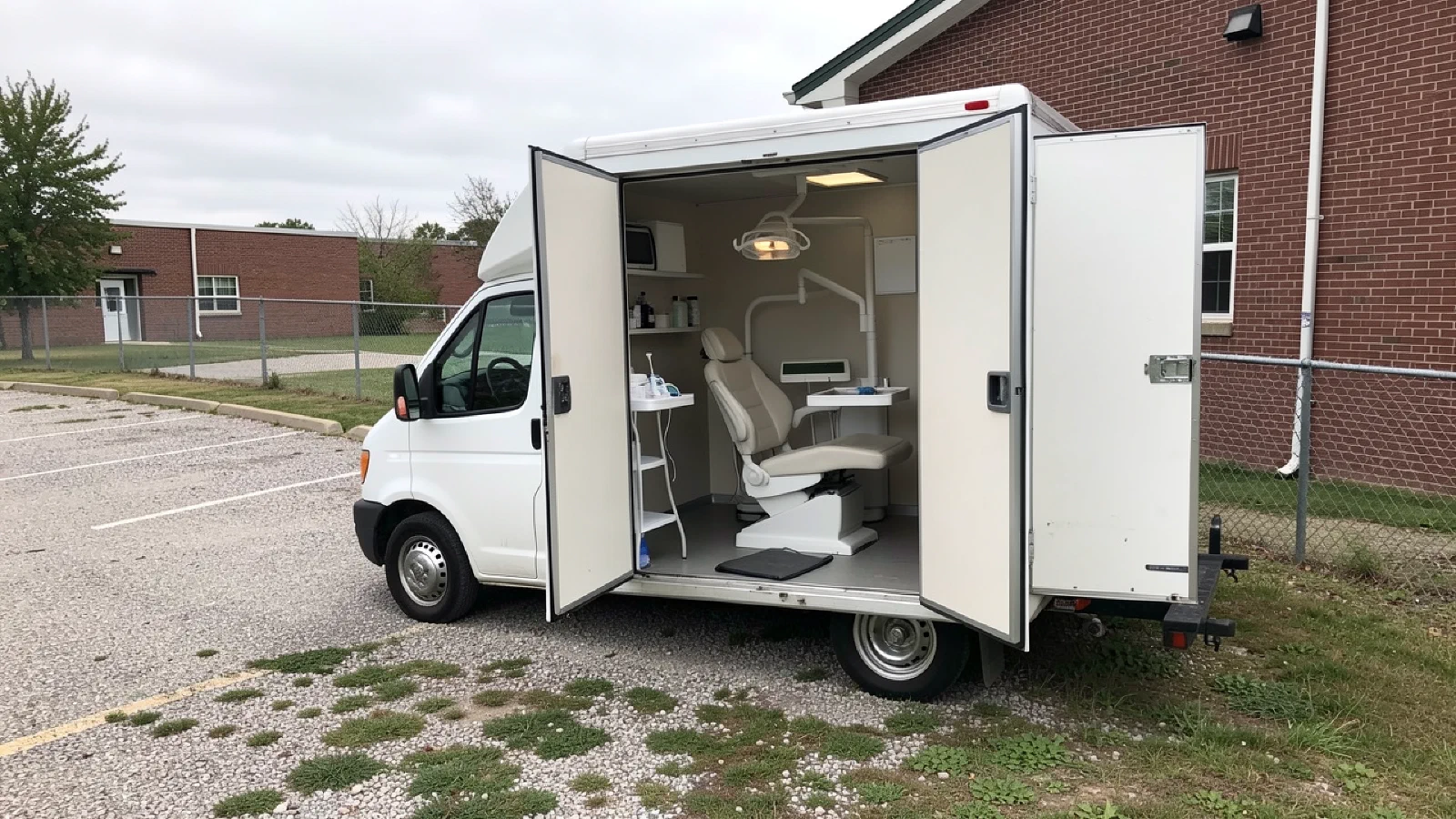
Rural communities without FQHCs have essentially no dental safety net. Mobile dental clinics provide episodic care. Charitable events like Remote Area Medical offer extractions to hundreds of patients in weekend clinics. But extraction is not dental care; it is the final consequence of dental care’s absence.
Vignette: The Emergency Room Extraction#
David was 34 years old when his tooth finally broke him. He had lived with dental pain for three years, managing it with ibuprofen and whiskey, avoiding the dentist because the nearest one was 40 miles away and charged more than he earned in a week at the lumber mill.
The tooth had been filled once, back when his parents’ insurance covered him. The filling failed. The decay advanced. The pain came and went. He learned to chew on one side. When abscesses formed, he took leftover antibiotics from his mother’s cupboard. The system had taught him that dental care was not for people like him.
By the time he arrived at the emergency department, the infection had spread through his jaw. His face was swollen, his temperature was 103, and he could barely swallow. The ER physician gave him IV antibiotics and pain medication, took X-rays that showed the problem clearly, and explained there was nothing more the hospital could do.
“You need to see a dentist,” she said, writing a prescription for more antibiotics and narcotics.
“Where?” he asked. There was no oral surgeon within 60 miles. The one dentist in the county did not take Medicaid and was not accepting new patients anyway. The hospital had no oral surgery capacity; that service had been eliminated years ago.
He returned twice more before the antibiotics finally controlled the infection. The tooth remained, rotting but temporarily quiet. The ER visits cost the healthcare system more than the extraction and filling would have. But there was no mechanism to provide the simple care that would have prevented the crisis, only the expensive care to manage its consequences.
Clinical Access Analysis#
Workforce Distribution#
The dental workforce maldistribution is more severe than physician maldistribution. As of September 2025, HRSA designates 7,254 Dental Health Professional Shortage Areas nationally, with 5,185 (71%) located in rural or partially rural areas. An estimated 10,143 additional dental practitioners would be needed to eliminate all dental HPSAs.
Rural areas have 4.7 dentists per 10,000 people compared to 7.8 in urban areas. The American Dental Association reports the gap has widened over two decades as younger dentists increasingly choose metropolitan practice. Recent ADA data indicates rural areas now have 32.7 dentists per 100,000 people compared to 64.7 in urban areas.
State variation is extreme. Arkansas has the nation’s lowest dentist-to-population ratio at 40.2 per 100,000, while the District of Columbia leads at 103.2. States with large rural populations including Mississippi, Alabama, West Virginia, and Kentucky cluster at the bottom of workforce rankings.
Emergency Department Dental Visits#
When dental care is unavailable, emergency departments become the default. Approximately 2.2 million emergency department visits annually are for dental conditions. These visits cost an estimated $1.6 billion and produce poor outcomes: emergency departments can provide antibiotics and pain medication but rarely definitive dental treatment.
Rural emergency departments see disproportionate dental utilization. In some rural hospitals, dental complaints represent 5-10% of emergency visits. The only treatment often available is extraction, performed by physicians or oral surgeons who happen to be available, removing teeth that could have been saved with timely preventive care.
This represents healthcare system failure translated into individual suffering. Every emergency department dental visit reflects a preceding series of access barriers: no local dentist, no affordable dentist, no Medicaid-accepting dentist, no appointment available, no transportation to reach care.
FQHC Dental Capacity#
FQHCs served more than 31.5 million patients nationally in 2023, with dental services available at approximately 73% of centers. FQHC dental programs operate under economics that differ from private practice: Section 330 grant funding covers sliding-scale discounts, and Prospective Payment System reimbursement provides more favorable Medicaid rates.
But FQHC dental programs cannot fill all gaps. Not every rural community has or can support an FQHC. The Health Center Program application process is complex and competitive. Dental recruitment to FQHC positions remains challenging despite more favorable compensation structures.
Rural FQHCs with dental services report high demand and limited capacity. Wait times for dental appointments at rural FQHCs can exceed three months. Urgent dental needs may be accommodated, but preventive and restorative care faces backlogs that discourage utilization.
The Alternative Perspective: Dental Therapists and Workforce Innovation#
The argument that dental care requires dentist-level training for all services deserves scrutiny. Dental therapists provide safe, effective care for routine procedures including examinations, fillings, extractions of primary teeth, and preventive services.
More than 50 countries utilize dental therapists, with outcomes evidence demonstrating equivalent safety and quality for procedures within their scope. Alaska pioneered U.S. dental therapy in 2004 to address catastrophic oral health among Alaska Natives in remote villages. The evidence from Alaska shows improved access, equivalent quality, and high patient satisfaction.
As of March 2025, 14 states have authorized dental therapists: Alaska, Arizona, Colorado, Connecticut, Idaho, Maine, Michigan, Minnesota, Nevada, New Mexico, Oregon, Vermont, Washington, and Wisconsin. Several states have established or are developing dental therapy education programs.
Dental therapy advocates argue that professional resistance, not clinical evidence, blocks workforce innovation. The American Dental Association historically opposed dental therapy expansion, citing quality concerns that evidence does not support. State dental associations have lobbied against dental therapy legislation even in states with severe access shortages.
The alternative perspective has merit. Dental therapists can provide the preventive and restorative care that prevents dental emergencies, working in communities where no dentist practices. Their scope covers approximately one-quarter of general dentist procedures, the procedures most needed in underserved areas.
However, dental therapy is not a complete solution. Training programs take time to develop and graduate practitioners. Dental therapists still require dentist supervision in most states, limiting deployment where no supervising dentist exists. The economics of dental therapy practice face similar challenges to dental hygiene: if Medicaid reimbursement cannot sustain dental practices, it may not sustain dental therapy practices either.
The honest assessment is that dental therapy can expand access but cannot transform dental care economics. It addresses workforce supply without addressing payment adequacy. States that authorize dental therapy while maintaining Medicaid dental reimbursement at 30% of charges will still struggle to deliver care to low-income populations.
What RHTP Can and Cannot Achieve#
RHTP places minimal direct focus on dental health. State applications mention oral health peripherally, typically in connection with community health workers who provide oral health education or FQHCs that include dental services among integrated care offerings.
What RHTP might achieve for oral health:
States that use RHTP funds to support community health workers can include oral health screening and referral in CHW training. Workers who connect patients to medical homes can also connect them to dental homes where they exist.
States that strengthen FQHC infrastructure through RHTP investment may indirectly expand FQHC dental capacity, though dental services are not the primary focus.
States pursuing workforce transformation might include dental hygiene or dental therapy training expansion alongside medical and nursing workforce development.
What RHTP cannot achieve for oral health:
RHTP cannot transform dental practice economics. The fundamental incompatibility between Medicaid reimbursement and dental practice costs requires Medicaid payment reform, not transformation grants.
RHTP cannot create Medicare dental benefits. The largest gap in dental coverage affects the Medicare population; only federal legislation can address this.
RHTP cannot recruit dentists to rural practice. The same factors that make rural medical practice challenging apply equally to dentistry, compounded by dentistry’s higher dependence on private-pay patients.
RHTP cannot address the mouth-body separation in healthcare financing. This is a structural feature of American healthcare that no state-level grant program can remedy.
The realistic assessment: Dental health will remain a secondary consideration in rural health transformation despite its clinical importance. The structure of dental care financing, the separation of dental from medical systems, and the mismatch between RHTP priorities and oral health needs will produce incremental improvement at best. The dental desert will persist.
Implications for Transformation Planning#
States serious about comprehensive rural health transformation should consider dental access as a distinct policy domain requiring targeted intervention. Several approaches merit consideration:
Medicaid dental payment reform offers the most direct business model intervention. States that increase dental reimbursement rates have generally seen increased dentist participation. The fiscal constraint is substantial, but rate adequacy is the most evidence-supported approach to expanding Medicaid dental access.
Dental therapy authorization in states that have not yet acted expands workforce supply. Effective deployment requires linking authorization to underserved area practice requirements rather than allowing dental therapists to locate wherever they choose.
FQHC dental program strengthening invests in the existing safety net rather than creating new infrastructure. Many FQHCs have dental facilities but insufficient staffing; targeted workforce investment could expand capacity without new organizational development.
Integration of oral health into primary care allows medical providers to conduct basic oral health screening and fluoride varnish application, bridging the mouth-body divide within existing care delivery. This approach cannot provide restorative care but can identify needs and provide prevention.
School-based dental programs reach children regardless of family dental insurance status or transportation access. Sealant programs and preventive care delivered in schools interrupt the cycle of untreated childhood caries becoming adult tooth loss.
Conclusion#
Rural oral health represents a policy failure so complete it has become invisible. The mouth is separated from the body in financing, training, delivery, and attention. The consequences include dental disease rates approaching those of developing nations, emergency departments serving as default dental clinics, and adults losing teeth that could have been saved with basic care.
The two tensions examined in this article have no easy resolution. Integrating oral health into medical care requires restructuring insurance, training, and delivery systems that evolved over a century. Transforming dental practice economics requires payment reform that states resist and federal policy ignores.
RHTP will not solve rural oral health problems because RHTP is not designed to address them. The $50 billion investment focuses on medical infrastructure, hospital sustainability, and behavioral health, treating dental health as peripheral to transformation despite evidence of oral-systemic connections and despite oral disease burden that rivals any medical condition in prevalence and impact.
The honest conclusion acknowledges that rural residents will continue to lose teeth, develop preventable infections, and suffer diminished quality of life because American healthcare policy decided that mouths do not matter. Dental therapists may expand access at the margins. FQHCs may provide safety net care where they exist. But the dental desert will persist because no one with power to change it has decided that rural oral health deserves the investment that could make a difference.
The mouth is part of the body. Healthcare policy should act like it.
The 3A Policy Environment: The Dental Desert Deepens#
This article argues that oral health operates at the intersection of two policy failures: exclusion from medical insurance systems and dependence on a private practice model that collapses where Medicaid dominates the payer mix. The One Big Beautiful Bill Act worsens both conditions while providing no direct dental health provisions. Article 3A (RHTP Inside HR1) documents the policy environment comprehensively; this section identifies its specific effects on rural oral health.
Medicaid coverage erosion directly threatens the dental safety net. FQHCs represent the primary organized dental safety net in rural America, providing discounted dental care to low-income populations through Section 330 grant support and enhanced Medicaid reimbursement. The FQHC base rate increased to $207.72 for 2026 - a positive provision in an otherwise difficult environment. But this rate improvement is partially offset by the coverage losses that reduce the insured population FQHCs serve. When Medicaid work requirements disenroll adults who rely on FQHC dental care, FQHCs face reduced Medicaid billing revenue alongside flat grant funding. The sliding-fee obligation means disenrolled patients do not disappear from FQHC dental chairs; they receive care at steeper discounts that strain organizational finances. Every Medicaid dental patient who loses coverage through work requirement documentation failure becomes a patient the FQHC serves at greater financial loss.
SNAP cuts worsen oral health at the community level. The connection between food insecurity and oral disease operates through multiple pathways. Families managing food insecurity consume more sugar-dense, shelf-stable foods - the food environment associated with highest caries risk. Fresh fruits and vegetables that support oral health become unaffordable luxuries. Children in food-insecure households have higher rates of early childhood caries, the most prevalent chronic condition among American children. SNAP work requirements extending through age 64 will affect the household food budget in communities where one in seven families currently relies on assistance. In Appalachian communities where Mountain Dew mouth already reflects sugar-sweetened beverage culture driven partly by affordability, SNAP cuts further constrain the nutritional conditions that oral health requires.
FMAP phase-down constrains state Medicaid dental benefit decisions. Medicaid adult dental benefits are optional; states choose coverage scope and reimbursement levels. The FMAP reduction from 90 to 70 percent makes optional benefits the first candidates for elimination when states face Medicaid fiscal pressure. States that expanded Medicaid and maintained adult dental benefits did so under fiscal assumptions that the FMAP phase-down overturns. A state cutting Medicaid dental benefits to manage FMAP-driven cost pressure eliminates the only coverage pathway for rural adults who cannot afford private dental care. In states where Medicaid adult dental coverage is already limited, further restriction could effectively end organized dental access for low-income rural populations.
The 3A policy environment offers no constructive counterweight for oral health. Unlike chronic disease management (BALANCE model), behavioral health (telehealth extension, RCORP), or maternal care (cost reporting requirements), oral health receives no positive provision in the CAA 2026 or associated regulations. The dental desert will not narrow through 3A provisions; it will deepen as Medicaid fiscal pressure restricts optional dental benefits and SNAP cuts worsen nutritional conditions that drive oral disease.
What this means for transformation: RHTP investments in community health workers who provide oral health education and FQHC strengthening that indirectly supports dental capacity are valuable but operate in a policy environment that is removing the coverage and nutritional foundations oral health requires. States should document the gap between RHTP’s minimal oral health focus and the clinical evidence of oral-systemic connections - and press for future transformation funds to address it directly.
How this article connects to others in Blue Gray Matters.
Sources cited in this article.
- American Dental Association Health Policy Institute. "U.S. Dentist Workforce: 2025 Update." American Dental Association, 2025.
- American Dental Association Health Policy Institute. "Dental Care in Medicaid Programs: Update Based on Latest Available Data." American Dental Association, Dec. 2025.
- CareQuest Institute for Oral Health. "Rural Oral Health Access Report." CareQuest Institute, 2024.
- Health Resources and Services Administration. "Designated Health Professional Shortage Areas Statistics: Quarterly Report." HRSA Data Warehouse, Sept. 2025.
- National Partnership for Dental Therapy. "State-by-State Dental Therapist Authorization Overview." Oral Health Workforce Research Center, Mar. 2025.
- Oral Health Workforce Research Center. "Changes in Dental Hygiene Scope of Practice by State, 2019-2024." University at Albany, 2025.
- Rural Health Information Hub. "Oral Health in Rural Communities Overview." RHIhub, 2025.
- U.S. Department of Health and Human Services. "Oral Health in America: Advances and Challenges." National Institute of Dental and Craniofacial Research, 2021.
- Wall, Thomas, et al. "Recent Trends in Dental Emergency Department Visits in the United States." Journal of the American Dental Association, vol. 155, no. 3, 2024.
- Wisconsin State Legislature. "Dental Workforce Package: Assembly Bills 123-127." 2024 Wisconsin Act, signed Sept. 2025.