Tribal Lands
Sovereignty, Treaties, and the Limits of State Administration
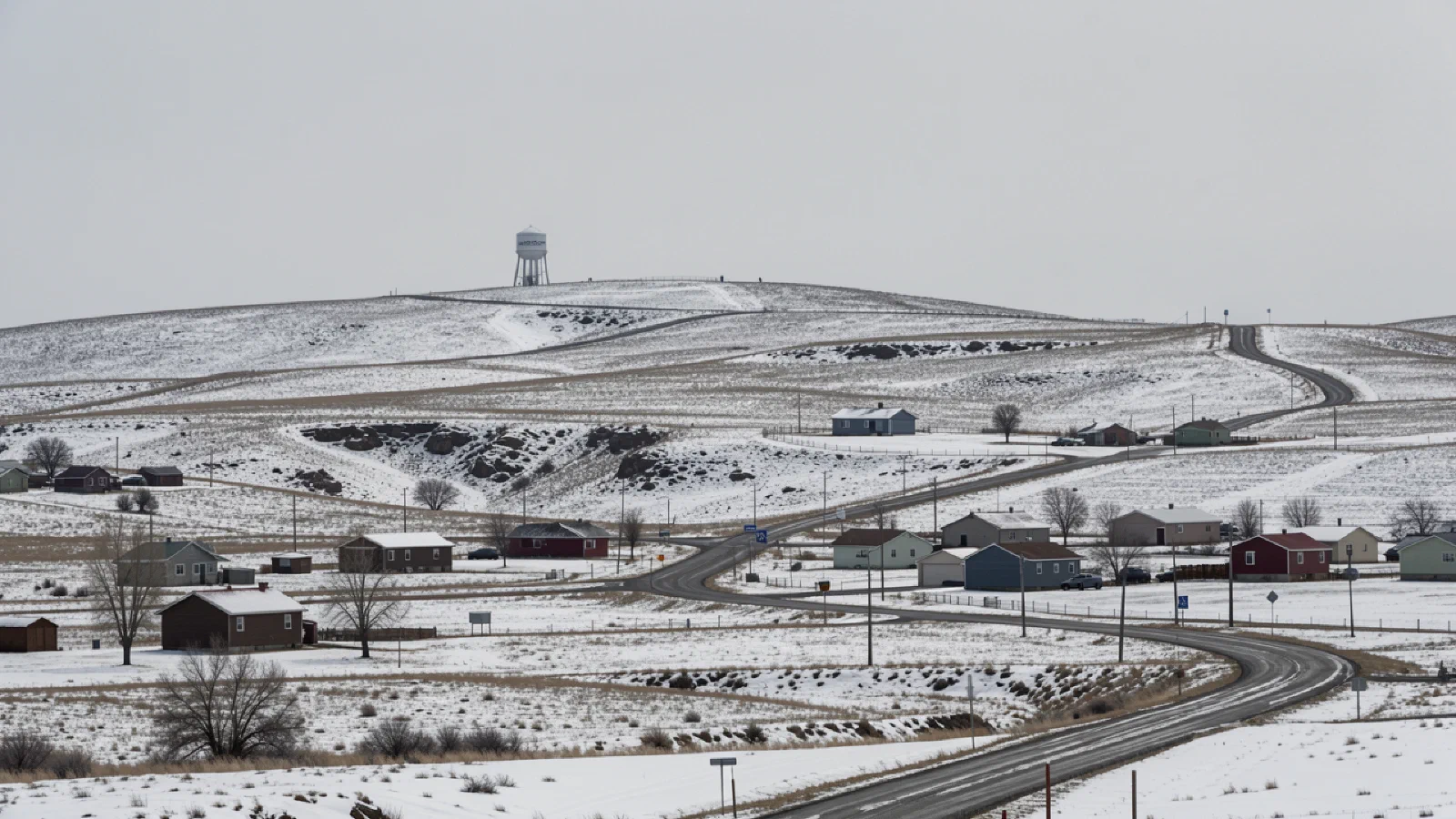
The Navajo Nation spans 27,413 square miles across Arizona, New Mexico, and Utah, making it larger than ten U.S. states. It has its own government, its own court system, its own police force, its own healthcare system. When CMS announced RHTP allocations in December 2025, the awards went to Arizona, New Mexico, and Utah. The Navajo Nation, a sovereign government responsible for healthcare across territory larger than West Virginia, received nothing directly.
This is not an oversight. It is the architecture. RHTP flows through states because federal health policy flows through states. Tribal nations, sovereign governments with treaty rights to healthcare, receive federal dollars mediated through state governments that historically excluded, displaced, and actively harmed their populations. The structural mismatch between state administration and tribal sovereignty defines healthcare transformation possibilities for 4.1 million American Indians and Alaska Natives.
The core tension is Sovereignty vs. Integration. Should tribal healthcare systems pursue independent capacity under sovereign authority, or integrate with state and regional systems that may provide economies of scale and coordination benefits at the cost of self-determination? The tension has no simple resolution because both values have legitimate claim.
A secondary tension pervades: State Administration vs. Regional Reality. Tribal lands cross state boundaries in ways that state administration cannot address. The Navajo Nation spans three states. Pine Ridge Reservation spans two. Tribal populations move between reservations and urban areas in patterns that state-based programs cannot track. RHTP’s state-level structure fragments tribal healthcare transformation.
This analysis matters because it tests whether federal rural health policy can accommodate sovereignty. If tribal nations cannot exercise self-determination in healthcare transformation, RHTP replicates rather than transforms historical patterns of federal-tribal relations.
Regional Definition#
Tribal Lands encompasses the 326 federally recognized reservations and associated trust lands across 36 states, totaling approximately 56 million acres. This is not a contiguous geography but a patchwork of sovereign territories with diverse characteristics united by political status and relationship to federal government.
Geographic Distribution#
Great Plains/Northern Tier: Large reservations in Montana, North Dakota, South Dakota, Wyoming, and Nebraska, including Pine Ridge, Rosebud, Standing Rock, Fort Peck, Crow, and Northern Cheyenne. These reservations span vast areas with sparse populations, extreme poverty, and minimal healthcare infrastructure.
Southwest: The Navajo Nation plus Pueblos in New Mexico, reservations in Arizona including Gila River, Tohono O’odham, Fort Apache, and San Carlos. This region includes both the largest reservation (Navajo) and some of the most challenged (San Carlos, with documented infrastructure crises).
Pacific Northwest: Reservations in Washington, Oregon, and Idaho, including Yakama, Warm Springs, Colville, and smaller coastal tribes. These vary from large, rural reservations to smaller urban-proximate communities.
Oklahoma Tribal Jurisdictions: Following McGirt v. Oklahoma (2020), eastern Oklahoma includes tribal jurisdictions for Cherokee, Muscogee, Choctaw, Chickasaw, and Seminole nations. These jurisdictions overlay rather than replace state governance, creating unique implementation complexity.
California Rancherias: Small tribal lands throughout California, many encompassing only hundreds of acres, with populations often under 1,000. Scale prevents independent healthcare systems; tribes must coordinate with county and regional services.
Alaska Native Villages: The 229 federally recognized tribes in Alaska, addressed in Article 10Q but warranting mention here for national tribal landscape completeness.
Eastern Tribes: Smaller reservations and trust lands throughout the eastern United States, including Penobscot and Passamaquoddy in Maine, Oneida in Wisconsin, and the Eastern Band of Cherokee in North Carolina.
Tribal Lands by Region
| Region | Reservations | Population | Land Area | Primary Health System |
|---|---|---|---|---|
| Great Plains | 32 | 268,000 | 14.2M acres | IHS Direct/Tribal |
| Southwest | 47 | 412,000 | 18.7M acres | IHS Direct/Tribal/Urban |
| Pacific Northwest | 43 | 156,000 | 3.8M acres | Tribal 638/IHS |
| Oklahoma | 39 | 397,000 | Jurisdictional | Tribal 638/Urban |
| California | 109 | 124,000 | 0.5M acres | Tribal 638/Urban |
| Alaska | 229 | 138,000 | Variable | Tribal 638 |
| Eastern/Other | 27+ | 98,000 | Variable | Mixed |
What State Level Analysis Misses#
State RHTP applications address “rural tribal populations” as one of many demographics requiring attention. This framing misunderstands tribal nations’ political status. Tribes are not demographic groups. They are sovereign governments with treaty-based healthcare rights.
The Indian Health Service system, the Urban Indian Health Program, and tribally-operated health facilities under 638 contracting create healthcare infrastructure that exists parallel to and often independent of state systems. State RHTP plans that treat tribal populations as underserved demographics rather than sovereign partners mischaracterize the relationship and the implementation challenge.
State-level analysis also misses cross-boundary dynamics that define tribal healthcare. Navajo Nation members in Arizona, New Mexico, and Utah need coordinated care. Standing Rock members in North and South Dakota face care fragmentation at the state border that bisects their reservation. State administration cannot address healthcare needs that cross state boundaries tribal nations transcend.
Historical Context#
Treaty Rights and Trust Responsibility#
The federal government’s trust responsibility for tribal healthcare derives from treaties that ceded millions of acres in exchange for federal obligations including healthcare. This is not charity. It is payment for land. The Supreme Court has repeatedly affirmed that trust responsibility constitutes legal obligation, not discretionary program.
The Indian Health Service, established in 1955 when healthcare responsibility transferred from the Bureau of Indian Affairs to the Department of Health, Education, and Welfare, operationalizes trust responsibility. IHS operates direct service facilities, funds tribally-operated facilities through 638 contracting, and supports Urban Indian Health Programs serving the 70 percent of American Indians and Alaska Natives who live in urban areas.
But trust responsibility has never been fully funded. IHS per-capita spending consistently runs 40-60 percent below federal spending for other populations, including Medicare beneficiaries, Medicaid recipients, and federal employees. The gap represents accumulated underfunding totaling tens of billions of dollars.
The Indian Self-Determination Act#
The Indian Self-Determination and Education Assistance Act of 1975 (Public Law 93-638) transformed tribal healthcare by enabling tribes to assume operation of IHS facilities and programs. Under 638 contracting, tribes receive federal funding to operate their own healthcare systems rather than receiving care from federal employees in federal facilities.
638 contracting has produced documented improvements where tribes have implemented it. Tribally-operated facilities generally achieve better outcomes, higher patient satisfaction, and greater cultural appropriateness than directly-operated IHS facilities. The model demonstrates that tribal self-determination and healthcare quality align.
But 638 contracting occurs within IHS funding constraints. Tribes can operate facilities more effectively than IHS, but they cannot operate them without resources. Contract Support Costs, the indirect costs of operating health programs, were chronically underfunded until Supreme Court decisions required full payment. Even with full CSC funding, base program resources remain inadequate.
Termination, Relocation, and Urban Indians#
Federal policy in the mid-twentieth century sought to terminate tribal sovereignty and relocate tribal members to cities. The termination era (1940s-1960s) ended federal recognition for over 100 tribes and encouraged urban relocation through job training programs that moved Native people to cities without providing support systems.
The legacy persists in the Urban Indian population. Approximately 70 percent of American Indians and Alaska Natives now live in urban areas, many descended from relocation-era migration. The Urban Indian Health Program receives approximately 1 percent of IHS funding to serve this majority population. Urban Indians fall between systems: not on reservations where IHS provides care, not eligible for Medicaid in many states, not visible in state RHTP plans that focus on reservation populations.
Vignette: Three States, One Patient
Agnes Yazzie has diabetes, hypertension, and early-stage kidney disease. She lives in Shiprock, New Mexico, on the Navajo Nation. Her primary care comes from the Northern Navajo Medical Center, an IHS hospital. Her endocrinologist practices in Farmington, New Mexico, at a San Juan Regional Medical Center satellite clinic. When she needed cardiac catheterization, the nearest facility with that capability was in Albuquerque, 180 miles away.
Her nephew Albert lives in Chinle, Arizona, on the same reservation. He has similar conditions. His primary care comes from the Chinle Comprehensive Health Care Facility, also IHS. His specialists are in Flagstaff or Phoenix. Same nation, different state, different referral networks.
When Agnes visits her sister in Blanding, Utah, she can access the IHS Monument Valley Health Center. Different state, different IHS service unit, different medical records system.
“They ask why I don’t have better control of my sugar,” Agnes says. “I tell them I have three states of doctors who don’t talk to each other. They look at me like I’m making excuses.”
The Navajo Nation has undertaken massive investment in health information exchange to connect its facilities across three states. But state RHTP programs address Navajo health in Arizona, New Mexico, and Utah separately, as if state boundaries matter to a population whose nation predates those states by centuries.
The Core Tensions#
Sovereignty vs. Integration#
Tribal nations possess sovereignty that predates the Constitution. Treaties with the federal government establish nation-to-nation relationships. Healthcare transformation that runs through state administration contradicts this sovereign status and the federal trust relationship that states cannot fulfill.
The Sovereignty View holds that tribal healthcare is a federal trust responsibility that should operate through direct federal-tribal relationship. State mediation adds administrative cost, introduces historical antagonism, and undermines self-determination. Tribes should receive RHTP funding directly, implement transformation according to tribal priorities, and be accountable to federal government under treaty obligations rather than to state governments that have no treaty relationship with them.
The Integration View holds that tribal populations’ healthcare needs require coordination with non-tribal systems. Tribal members use state Medicaid programs. They seek care at non-tribal facilities. Emergency services cross jurisdictional boundaries. Integration enables coordination that separation prevents. State-tribal partnerships can achieve what neither can accomplish alone.
The Evidence Assessment: Both views have validity, but evidence favors sovereignty as the foundation. Tribally-operated healthcare systems consistently outperform state-operated programs serving similar populations. The Alaska Native tribal health system, the Cherokee Nation health system, and other tribal systems demonstrate that tribal self-determination produces better outcomes, not worse. Integration should occur on tribal terms, as partnership rather than subordination.
RHTP’s state administration structure contradicts evidence about what works. Direct federal-tribal RHTP pathways would align program architecture with demonstrated effectiveness. State-mediated funding reverses the relationship, making tribal nations subordinate to state governments in violation of their sovereign status.
State Administration vs. Regional Reality#
RHTP’s state-based distribution cannot address healthcare challenges that cross state boundaries. The Navajo Nation crosses three states. Pine Ridge Reservation crosses two. The Yakama Nation spans areas with different state Medicaid programs. State administration fragments tribal healthcare transformation along boundaries that tribal nations do not recognize because those boundaries were drawn across their territories.
The State Administration View holds that states are constitutionally responsible for health policy and administratively capable of distributing federal funding. Multi-state coordination is possible through interstate compacts. States can target tribal populations within their boundaries even if they cannot coordinate across boundaries.
The Regional Reality View holds that tribal nations constitute their own regions with their own healthcare systems that state boundaries bisect arbitrarily. Effective transformation requires tribal-level coordination that state administration prevents. A Navajo healthcare transformation strategy requires Navajo authority, not Arizona, New Mexico, and Utah coordination.
The Evidence Assessment: State administration fails tribal populations by definition. States cannot coordinate what they separately administer. Interstate compacts require voluntary state participation and ongoing negotiation. Tribal-level coordination would be more efficient and more aligned with tribal governance structures. RHTP architecture ensures fragmented tribal transformation by channeling resources through fragmenting structures.
Current Conditions#
Healthcare Infrastructure#
Tribal Healthcare System Overview
| System Component | Facilities | Funding Source | Governance |
|---|---|---|---|
| IHS Direct Service | 46 hospitals, 56 health centers | IHS appropriations | Federal |
| Tribally-Operated (638) | 360+ facilities | IHS 638 contracts | Tribal |
| Urban Indian Health | 41 programs | IHS allocation | Nonprofit |
| Purchased/Referred Care | N/A | IHS PRC funds | IHS referral |
The Indian Health Service budget for FY2026 is approximately $7.8 billion, serving 2.7 million users at IHS and tribal facilities. Per-capita funding of approximately $4,100 compares to Medicare per-capita spending of approximately $14,000 and federal employee health benefits of approximately $7,500. The funding gap represents accumulated underfunding that RHTP cannot close.
Tribally-operated facilities under 638 contracting have expanded significantly. Approximately 60 percent of IHS funding now flows through tribal 638 contracts. Tribes have demonstrated that self-determination improves healthcare delivery, a finding with direct implications for RHTP implementation.
Health Outcomes#
American Indian/Alaska Native Health Metrics
| Measure | AI/AN | All U.S. | Gap |
|---|---|---|---|
| Life Expectancy | 65.2 years | 77.5 years | -12.3 years |
| Infant Mortality | 8.2/1,000 | 5.4/1,000 | +2.8 |
| Diabetes Prevalence | 14.7% | 10.5% | +4.2% |
| Heart Disease Mortality | 175/100,000 | 170/100,000 | +5 |
| Suicide Rate | 23.9/100,000 | 14.5/100,000 | +9.4 |
| Unintentional Injury | 79.5/100,000 | 52.7/100,000 | +26.8 |
The 12.3-year life expectancy gap between American Indians/Alaska Natives and the general U.S. population represents the most severe health disparity for any population group. The gap has widened in recent years, particularly during COVID-19, when AI/AN populations experienced mortality rates more than double the general population.
Chronic disease prevalence runs substantially higher than general population rates, reflecting accumulated impacts of poverty, food insecurity, environmental exposures, and historical trauma. Diabetes prevalence nearly 50 percent above national rates drives complications that cascade through healthcare systems.
Behavioral health crises affect tribal communities at levels that constitute emergencies. Suicide rates 65 percent above national rates. Substance use disorders at epidemic levels. Mental health provider shortages more severe than any other shortage. The crisis reflects historical trauma, ongoing marginalization, and healthcare system inadequacy that RHTP cannot address at available funding levels.
Workforce Crisis#
Healthcare workforce shortages on tribal lands exceed shortages elsewhere. IHS vacancy rates run approximately 25 percent for physicians and higher for specialists. Remote reservations compete against entire national healthcare market for providers, offering lower compensation, challenging conditions, and limited amenities.
The Community Health Representative program provides community-based workers who can provide health education, navigation, and basic services. CHRs are the tribal equivalent of community health workers, employed by tribes rather than healthcare facilities. The model works where funded but remains underfunded relative to need.
Vignette: The 638 Success Story
The Cherokee Nation Health Services operates one of the most comprehensive tribal health systems in the country. Serving over 400,000 tribal citizens across northeastern Oklahoma, the system includes W.W. Hastings Hospital in Tahlequah, eight outpatient health centers, and comprehensive behavioral health services.
In 1990, Cherokee Nation assumed operation of its IHS facilities under 638 contracting. Since then, the system has expanded services, improved outcomes, and achieved patient satisfaction scores exceeding most regional health systems.
“Self-determination works,” says Dr. Cara Cowan Watts, a Cherokee Nation executive. “When you give tribal nations the authority to run their own health systems, we run them better than anyone else could. We know our communities. We employ our people. We understand what our patients need.”
Cherokee Nation Health Services has invested in electronic health records, community health worker programs, and integrated behavioral health. The system coordinates with Oklahoma Medicaid, commercial insurers, and IHS to maximize resources from all available streams.
But Cherokee Nation operates within Oklahoma, a single-state jurisdiction. The Navajo Nation, with comparable population, must navigate three states with three Medicaid programs, three RHTP allocations, and three state bureaucracies. Cherokee Nation’s success demonstrates what tribal self-determination can achieve. Navajo Nation’s fragmentation demonstrates what state-based administration produces.
RHTP in This Region#
Federal Trust Responsibility vs. State Administration#
RHTP’s architecture creates a structural contradiction for tribal healthcare. The federal government has trust responsibility for tribal healthcare. RHTP flows through states. States have no trust responsibility for tribal healthcare and, historically, have often worked against tribal interests.
No state RHTP application addresses tribal nations as sovereign governments. Tribal populations appear as demographics to serve, not as partners in transformation design. Tribal consultation, where it occurred, involved soliciting input rather than sharing authority. The applications treat tribes as stakeholders rather than as governments with superior claim to federal healthcare resources.
Tribal RHTP Allocation#
RHTP provides no direct tribal allocation. States receive funding and may, at their discretion, direct resources to tribal populations within their boundaries. Some states have done so meaningfully. Others have not. Tribal transformation depends on state decisions that tribal governments cannot control.
Estimated RHTP Resources for Tribal Populations
| State | Tribal Population | RHTP Allocation | Tribal-Targeted | Per Tribal Resident |
|---|---|---|---|---|
| Arizona | 296,000 | $168.2M | $25M (est.) | $84 |
| New Mexico | 212,000 | $132.8M | $18M (est.) | $85 |
| Oklahoma | 397,000 | $198.4M | $15M (est.) | $38 |
| Montana | 66,000 | $97.6M | $12M (est.) | $182 |
| South Dakota | 82,000 | $89.2M | $14M (est.) | $171 |
| North Dakota | 38,000 | $78.9M | $8M (est.) | $211 |
Estimates based on state application language and tribal population share. Actual allocations subject to state implementation decisions not yet finalized.
What Direct Tribal RHTP Would Require#
Direct federal-tribal RHTP pathways would require:
- Congressional authorization for tribal set-aside or direct application pathway
- Tribal application process parallel to state process
- CMS tribal liaison capacity for implementation support
- Coordination requirements between state and tribal RHTP programs
- Multi-state tribal provisions for nations spanning state boundaries
None of these requirements are insurmountable. The IHS 638 contracting model provides precedent. CMS has tribal consultation requirements for Medicaid. The Affordable Care Act included tribal provisions that RHTP could have replicated but did not.
Alternative Perspective Assessment#
The Integration Imperative Argument#
Some analysts argue that tribal healthcare cannot succeed in isolation and that integration with state and regional systems is necessary for sustainable transformation, regardless of sovereignty concerns.
Strongest Version: Tribal populations use non-tribal healthcare systems extensively. Medicaid is the largest payer for IHS and tribal facilities. Emergency care happens at the nearest facility regardless of jurisdiction. Specialty care requires referral to non-tribal systems. Integration is reality; policy should facilitate rather than resist it. Separate tribal RHTP pathways would fragment healthcare systems that function through integration.
Assessment: The argument correctly identifies integration reality but draws incorrect policy conclusions. Tribal members use non-tribal systems because tribal systems are inadequately funded, not because integration is inherently superior. With adequate resources, tribal systems could provide more services internally. Integration occurs because of scarcity, not preference.
Moreover, integration can occur within tribal-led frameworks. Cherokee Nation coordinates with Oklahoma Medicaid while maintaining tribal system control. Navajo Nation partners with Arizona, New Mexico, and Utah health systems while operating its own facilities. Integration and sovereignty are not opposites. Tribal-led integration differs fundamentally from state-administered integration that subordinates tribal authority.
Regional Strengths and Resources#
Tribal communities possess resources that transformation can build upon.
Tribal governance capacity exists and functions. Tribes operate governments, health systems, enterprises, and programs. The capacity for self-determined transformation exists where resources are provided.
Cultural frameworks for health and wellness predate Western medicine and provide foundations for population health approaches. Traditional healing, community wellness, and holistic health concepts align with contemporary population health strategies.
Community health representative networks provide infrastructure for community-based care that can be expanded with investment.
Tribal colleges and universities offer workforce pipeline opportunities for healthcare training programs rooted in tribal communities.
Land base and sovereignty provide authority for tribal nations to implement transformation according to tribal priorities without state interference, where federal resources allow.
Transformation Assessment#
What Transformation Requires#
Effective tribal healthcare transformation requires:
- Direct federal-tribal funding pathway eliminating state mediation for tribal RHTP resources
- Multi-state tribal provisions enabling Navajo Nation and other cross-boundary nations to implement unified strategies
- IHS baseline increase providing foundation RHTP can build upon rather than substitute for
- Tribal priority authority allowing tribes to define transformation goals rather than accepting state definitions
- Long-term commitment extending beyond RHTP’s five-year timeline to match generational transformation needs
What Transformation Can Achieve#
With appropriate resources and authority:
- Tribal health systems can expand capacity and services
- Workforce pipelines can develop through tribal colleges
- Community health programs can reach underserved populations
- Traditional healing integration can enhance cultural appropriateness
- Behavioral health crisis can begin to be addressed
What Transformation Cannot Achieve#
Healthcare transformation cannot:
- Close the IHS funding gap through RHTP supplementation
- Override state Medicaid decisions affecting tribal populations
- Address historical trauma through clinical intervention alone
- Create infrastructure on reservations lacking basic utilities
- Force state-tribal coordination where states resist
Honest Assessment#
RHTP fails tribal nations by architecture, not implementation. State-mediated funding for sovereign nations with federal trust relationship contradicts both treaty obligations and evidence about what produces healthcare improvement.
The evidence is clear: tribal self-determination produces better healthcare outcomes. Tribally-operated systems outperform IHS direct service and dramatically outperform state-administered programs serving comparable populations. RHTP could have aligned with this evidence through direct tribal pathways. It did not.
The honest assessment is that tribal healthcare transformation requires policy changes beyond RHTP’s scope. Full IHS funding at levels comparable to other federal health programs. Direct federal-tribal relationships for federal healthcare initiatives. Multi-state provisions for nations spanning state boundaries. These changes require Congressional action that RHTP cannot substitute for.
Within RHTP’s constraints, tribal nations can optimize available resources through 638-style mechanisms, state advocacy for tribal targeting, and tribal-state partnerships that tribal nations control. But optimization cannot overcome architecture. State-administered RHTP for sovereign nations represents a fundamental category error that better implementation cannot correct.
Tribal nations survived centuries of federal policy designed to eliminate them. They will survive RHTP’s architectural failures. The question is whether federal policy will eventually align with evidence and respect for sovereignty, or whether successive programs will continue imposing state mediation on nation-to-nation relationships that states have no legitimate role in.
How this article connects to others in Blue Gray Matters.
Sources cited in this article.
- ASPE. "Indian Health Service Funding: Disparities and Health Outcomes." *U.S. Department of Health and Human Services*, Office of the Assistant Secretary for Planning and Evaluation, July 2022, aspe.hhs.gov/sites/default/files/documents/e7b3d02affdda1949c215f57b65b5541/aspe-ihs-funding-disparities-report.pdf.
- Gone, Joseph P. "Reconsidering American Indian Historical Trauma: Lessons from an Early Gros Ventre War Narrative." *Transcultural Psychiatry*, vol. 51, no. 3, 2014, pp. 387-406.
- Indian Health Service. "FY 2024 Congressional Justification." *IHS*, 2023, www.ihs.gov/budgetformulation.
- Indian Health Service. "Health Equity Report 2024." *IHS*, 2024, www.ihs.gov/sites/newsroom/themes/responsive2017/display_objects/documents/factsheets/IHS_Health_Equity_Report_FactSheet_2024.pdf.
- Indian Health Service. "Tribal Self-Governance Program." *IHS*, 2024, www.ihs.gov/selfgovernance.
- National Congress of American Indians. "Tribal Nations and the United States: An Introduction." *NCAI*, 2020.
- National Indian Health Board. "IHS Appropriations: Tribal Budget Formulation Recommendations." *NIHB*, 2024, www.nihb.org/category/government-affairs/ihs-appropriations/.
- Tribal Budget Formulation Workgroup. "FY 2025 Budget Recommendations: Investing in the Health of American Indians and Alaska Natives." *TBFWG*, 2024.
- U.S. Commission on Civil Rights. "Broken Promises: Continuing Federal Funding Shortfall for Native Americans." *USCCR*, Dec. 2018.
- U.S. Government Accountability Office. "Indian Health Service: Spending Levels and Characteristics of IHS and Three Other Federal Health Care Programs." GAO-19-74R, Dec. 2018.
- Urban Institute. "Guide to Equity in the Indian Health Service." *Urban Institute*, April 2024, www.urban.org/sites/default/files/2024-04/Guide_to_Equity_in_the_Indian_Health_Service.pdf.
- Warne, Donald, and Siobhan Wescott. "Social Determinants of American Indian Nutritional Health." *Current Developments in Nutrition*, vol. 3, Suppl. 2, 2019, pp. 12-18.