The Pacific Interior
California's Other Rural Realities: Farmworkers, Forests, and Forgotten Places
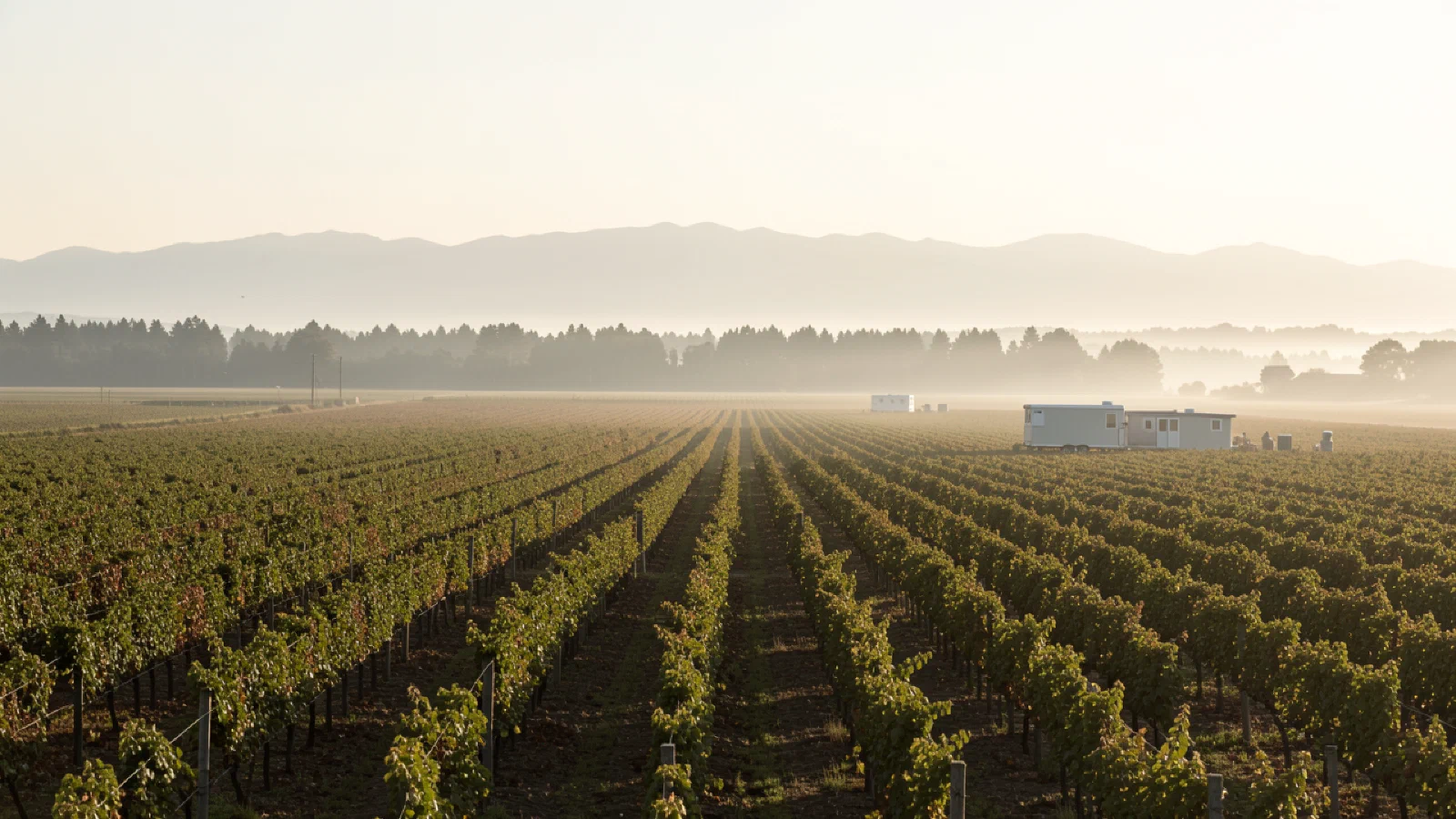
California’s rural reality exists invisible behind its coastal image. Silicon Valley innovation, Hollywood glamour, and beach culture define external perception. But behind the Coast Ranges lies a different California: the Central Valley’s agricultural empire with its farmworker health crisis, and the northern mountains where sparse populations struggle with timber decline and cannabis economy.
These sub-regions share California’s state administration but share little else. The Central Valley’s Fresno County has 1 million residents; northern California’s Modoc County has 9,000. The Valley needs farmworker-specific services addressing heat illness, pesticide exposure, and agricultural occupational health. The northern region needs distance-appropriate care through telehealth and hub-and-spoke models. One state strategy cannot serve both.
The core tension this article examines is regional concentration versus distributed resources. Should California concentrate RHTP investment in the farmworker-dense Central Valley where population creates need intensity? Or distribute resources across the vast northern region where geography creates access impossibility? The allocation question forces choice between population logic and geography logic, between serving more people adequately and serving fewer people at all.
What analytical value does this article add? It demonstrates within-state variation that state-level analysis obscures. California’s $233.6 million RHTP award must deploy across contexts so different they might as well be separate states. The Pacific Interior challenge reveals that even large state awards become inadequate when distributed across incompatible regional needs.
Regional Definition#
Geographic Scope#
The Pacific Interior encompasses two distinct sub-regions within California plus adjacent southern Oregon that share distance from coastal population centers and state administrative attention.
The Central Valley:
The Central Valley stretches 450 miles from Redding to Bakersfield, bounded by the Sierra Nevada and Coast Ranges. This agricultural powerhouse produces more than half of U.S. fruits, vegetables, and nuts. The Valley’s population exceeds 6.5 million, with approximately 2.5 million in rural and small-town settings.
| County | Population | Primary Economy | Health Designation |
|---|---|---|---|
| Fresno | 1,008,000 | Agriculture, health services | Whole-county HPSA |
| Kern | 909,000 | Agriculture, oil, logistics | Partial HPSA |
| Tulare | 473,000 | Agriculture, dairy | Whole-county HPSA |
| Stanislaus | 552,000 | Agriculture, food processing | Partial HPSA |
| Merced | 286,000 | Agriculture, university | Whole-county HPSA |
| Kings | 153,000 | Agriculture, dairy | Whole-county HPSA |
| Madera | 160,000 | Agriculture, timber | Whole-county HPSA |
Northern California and Southern Oregon:
Northern California’s rural region extends from the Sacramento Valley’s northern edge through the Cascade Range and Modoc Plateau. Population is sparse, distances are extreme, and economic activity combines remnant timber, cannabis cultivation, ranching, and tourism.
| County | Population | Primary Economy | Notes |
|---|---|---|---|
| Shasta | 182,000 | Healthcare, retail, government | Regional hub (Redding) |
| Siskiyou | 44,000 | Timber, cannabis, ranching | No hospital in large areas |
| Modoc | 9,000 | Ranching, government | Among lowest density in CA |
| Lassen | 31,000 | Prisons, ranching | Prison economy distorts data |
| Trinity | 16,000 | Cannabis, timber | Extremely isolated |
| Del Norte | 28,000 | Prison, fishing, timber | Remote coastal |
| Humboldt | 136,000 | Cannabis, timber, university | Isolated but services present |
Southern Oregon’s Jackson, Josephine, and Klamath counties share characteristics with northern California: timber decline, cannabis economy, distance from state centers, and healthcare access challenges. State boundaries separate administratively similar communities.
Why These Constitute One Region#
The Pacific Interior achieves coherence through shared marginalization from coastal California. State political attention, investment, and administrative focus concentrate in the Bay Area, Los Angeles, and San Diego. Sacramento and the Central Valley receive attention proportional to population and political power. Northern California exists as afterthought.
Both sub-regions experience state neglect within state administration. The Central Valley’s farmworker health crisis has persisted for decades despite advocacy. Northern California’s isolation creates access problems the state has not prioritized. When California discusses rural health, it often means Central Valley agriculture, leaving northern mountain counties invisible.
The grouping also reflects allocation competition within RHTP. California’s $233.6 million must serve both sub-regions. Resources concentrated in the Valley reduce availability for the north. Resources distributed to sparse northern populations reduce Valley intensity. The regions compete for the same inadequate funding pool.
Historical Context#
Central Valley: Agricultural Development and Farmworker Labor#
The Central Valley’s transformation from seasonal marsh and grassland to agricultural empire required massive irrigation infrastructure built with federal and state investment. The Central Valley Project and State Water Project diverted Sierra snowmelt to fields that produce year-round crops.
Agricultural development created labor demand met initially by Chinese and Japanese workers, then by Filipino and Mexican laborers, and now by predominantly Mexican and Central American farmworkers. The labor system has always prioritized crop production over worker welfare.
Key Historical Markers:
| Period | Development | Health Impact |
|---|---|---|
| 1930s to 1950s | Bracero Program | Guest workers without healthcare rights |
| 1960s | Cesar Chavez organizing | First attention to farmworker conditions |
| 1970s to 1990s | Mechanization increases | Remaining hand-harvest work is hardest |
| 2000s to Present | Climate intensification | Heat illness increases |
Farmworker health policy has always lagged agricultural policy. Crop production received investment, infrastructure, and regulatory support. Worker health received minimal attention until community health centers began addressing populations agriculture employed but would not protect.
Northern California: Gold, Timber, and Decline#
Northern California’s economy cycled through extraction phases that built communities subsequently abandoned. Gold mining created nineteenth-century settlements. Timber became twentieth-century economic base. Each extraction produced wealth exported elsewhere while communities bore environmental and social costs.
The spotted owl decision (see Article 10M) affected northern California timber communities alongside Oregon and Washington. Mills closed. Jobs disappeared. Communities that had provided middle-class timber employment became poverty zones with cannabis replacing timber as primary economic activity.
The back-to-land movement of the 1970s brought counterculture migrants to remote northern California counties. Some brought resources and education. Others brought alternative lifestyles that did not include conventional employment or healthcare. Cannabis cultivation that began as counterculture activity became regional economic base.
Water Politics: The Central Valley’s Defining Issue#
Central Valley agriculture depends on water that arrives from elsewhere. The Sacramento-San Joaquin Delta supplies water pumped south to Valley farms. Sierra snowpack feeds reservoirs. Climate change reduces snowpack while increasing agricultural water demand.
Water politics shape everything in the Valley. Agricultural interests compete with environmental protection, urban demand, and fish habitat requirements. Drought years force allocation choices that pit farms against cities against ecosystems.
Healthcare transformation occurs within water politics context. Economic uncertainty from water supply variability affects all Valley planning. Agricultural employers facing water curtailment cannot guarantee employment that might support insurance. Community stability depends on water availability that climate change makes uncertain.
Current Conditions#
Central Valley Demographics#
The Central Valley’s population combines long-term residents, recent immigrants, and farmworker families in proportions varying by county and community.
Demographic Profile:
| Measure | Central Valley | California | National Rural |
|---|---|---|---|
| Hispanic/Latino | 52.8% | 40.2% | 9.4% |
| Poverty Rate | 19.2% | 11.8% | 15.4% |
| Median Household Income | $54,000 | $84,000 | $52,000 |
| Uninsured Rate | 10.8% | 6.8% | 12.1% |
| Limited English Proficiency | 22.4% | 18.1% | 4.2% |
The Valley’s Hispanic majority reflects agricultural labor history and current employment. Many families have multi-generational Valley presence. Others are recent arrivals. Immigration status varies from multi-generation citizens through recent undocumented arrivals, creating healthcare access complexity.
Northern California Demographics#
Northern California’s sparse population skews older and whiter than the Valley, with Native American populations significant in several counties.
Demographic Profile:
| Measure | Northern CA Rural | California | National Rural |
|---|---|---|---|
| Non-Hispanic White | 74.2% | 34.7% | 76.8% |
| Median Age | 46 years | 37 years | 41 years |
| Poverty Rate | 17.1% | 11.8% | 15.4% |
| Population Change (2010 to 2020) | -3.2% | +6.1% | -0.1% |
Northern counties experience population loss as young people leave and aging residents remain. The pattern mirrors other rural regions with extraction economy decline. What distinguishes northern California is combination of decline with cannabis economy emergence.
Healthcare Infrastructure#
Healthcare infrastructure varies dramatically between sub-regions, with the Valley underresourced relative to population and the north underresourced relative to geography.
Central Valley:
| Facility Type | Count | Adequacy | Notes |
|---|---|---|---|
| Hospitals | 42 | Insufficient | Concentrated in larger cities |
| FQHCs | 89 sites | Growing | Primary access for farmworkers |
| Rural Health Clinics | 34 | Stable | Distribution uneven |
| Community Health Centers | 45+ | Essential | Serve uninsured populations |
Central Valley Federally Qualified Health Centers provide essential access for farmworker populations. Organizations like Clinica Sierra Vista, Golden Valley Health Centers, and United Health Centers serve hundreds of thousands of patients, many uninsured or Medicaid-enrolled.
Northern California:
| Facility Type | Count | Adequacy | Notes |
|---|---|---|---|
| Critical Access Hospitals | 8 | Stressed | Financial margins thin |
| FQHCs | 12 sites | Growing | Geographic spread limits access |
| Tribal Health Programs | Multiple | Serving enrolled | Sovereignty respected |
| Distance to Hospital | Up to 100 miles | Dangerous | Emergency transport essential |
Northern California’s sparse infrastructure reflects sparse population. Modoc County’s 9,000 residents cannot support hospital. Trinity County’s 16,000 cannot support more than minimal services. Regional hub in Redding (Mercy Medical Center) serves enormous geographic catchment.
Health Outcomes#
Health outcomes in both sub-regions trail state averages significantly:
Central Valley:
| Measure | Central Valley | California | Gap |
|---|---|---|---|
| Life Expectancy | 77.4 years | 81.0 years | -3.6 years |
| Infant Mortality | 5.8/1,000 | 4.2/1,000 | +1.6 |
| Diabetes Prevalence | 12.4% | 9.2% | +3.2% |
| Asthma Prevalence | 9.8% | 8.1% | +1.7% |
| Pesticide-Related Illness | Highest in state | N/A | N/A |
Northern California:
| Measure | Northern CA | California | Gap |
|---|---|---|---|
| Life Expectancy | 76.8 years | 81.0 years | -4.2 years |
| Drug Overdose Rate | 24.1/100K | 14.2/100K | +9.9 |
| Suicide Rate | 19.8/100K | 10.4/100K | +9.4 |
| Mental Health Access | Severe shortage | Shortage | Worse |
The Valley’s health crisis reflects occupational and environmental exposures: pesticides, heat, air quality from agricultural operations and wildfire smoke. The north’s health crisis reflects economic decline and isolation: substance abuse, mental health, and distance-related emergency care delays.
Two Clinics, Two Realities#
Clinica Sierra Vista operates a community health center in Lamont, a small agricultural town in Kern County. The clinic serves 15,000 patients annually with two physicians, two nurse practitioners, and support staff. Most patients are farmworkers or their families. Most speak Spanish as primary language. Most have Medi-Cal or no insurance.
Dr. Maria Gonzalez arrived from residency in Los Angeles three years ago, recruited through NHSC loan repayment. She sees 24 patients daily. The waiting room is always full. Patients present with diabetes complicated by inadequate medication adherence because they cannot afford time off work for follow-up. They present with chronic respiratory conditions from dust and pesticide exposure. They present with heat illness in summer, preventable deaths that occur anyway.
“We’re always behind,” Dr. Gonzalez says. “We opened a new exam room last year. It filled immediately. We could double our capacity and still have waitlists.”
Four hundred miles north, the Mountain Valley Health Center in Weaverville serves Trinity County’s 16,000 residents. The clinic has one physician, one nurse practitioner, and a rotating locum tenens when the physician takes vacation. The nearest hospital is in Redding, 50 miles away over winding mountain roads.
Dr. James Chen has practiced in Weaverville for 22 years. He knows most of his patients by name. He delivers babies, manages chronic disease, and provides emergency stabilization for patients who cannot survive transport to Redding. He is 64 years old. No younger physician has expressed interest in replacing him.
“When I retire, I don’t know what happens,” Dr. Chen says. “The county can’t support a hospital. It can barely support this clinic. Someone has to provide care. I just don’t know who.”
Both clinics are underfunded. Both serve populations with serious health needs. Both could use more resources. But their needs are incompatible. Lamont needs more providers to serve more patients. Weaverville needs any provider at all to maintain existing care. California must choose, or attempt to serve both inadequately.
The Core Tension: Regional Concentration vs. Distributed Resources#
The Concentration View#
The concentration view argues that resources should follow population density. The Central Valley has 2.5 million rural residents. Northern California has perhaps 400,000. Concentrating resources where people live serves more people more intensively.
Proponents argue that:
Population mathematics favor concentration. A dollar invested in Valley infrastructure serves more patients than a dollar in northern California. Cost per beneficiary is lower. Impact per dollar is higher. With limited resources, concentration maximizes total benefit.
Farmworker health is crisis requiring urgent response. Agricultural workers face occupational exposures, inadequate housing, economic precarity, and access barriers. Their health needs are immediate and intense. Delayed intervention costs lives. The Valley’s farmworker crisis demands resource concentration.
Northern residents chose isolation. People who live in remote northern California accepted limited services when they chose remote residence. They cannot expect urban-level access in population settings that cannot support it. Concentration in the Valley serves those who did not choose limited access.
The Distribution View#
The distribution view argues that healthcare is not optional regardless of where people live. Northern California residents deserve access even if their population cannot support intensive infrastructure.
Proponents argue that:
Healthcare is a right, not a market good. Access should not depend on population density. Someone having a heart attack in Modoc County matters as much as someone in Fresno. Distribution ensures all Californians have some access rather than some Californians having excellent access.
Farmworkers are in the Valley because agriculture needs them. They did not choose the Valley freely any more than northern residents chose mountains freely. Agricultural labor demand created farmworker presence. Framing Valley investment as serving those who “didn’t choose” limited access misrepresents farmworker agency.
Northern California abandonment accelerates decline. Withdrawing healthcare infrastructure signals communities have no future. Young people leave when services disappear. Aging residents face impossible choices. Distribution at least maintains community viability.
Evidence Assessment#
The evidence suggests both views contain partial truth, requiring allocation strategy more nuanced than pure concentration or distribution.
Population mathematics favor Valley investment, but magnitude of difference matters. If concentrating all resources in the Valley doubles Valley access while eliminating northern access, the tradeoff may not be justified. If concentration modestly improves Valley access while devastating northern access, concentration is problematic.
Farmworker health does require urgent response, but urgency does not eliminate northern need. Emergency care delays in northern California kill people too. Drug overdose and suicide rates in northern counties exceed Valley rates. Urgency exists in both sub-regions.
Practical allocation probably requires tiered strategy:
- Primary investment in Valley infrastructure addressing farmworker health crisis
- Baseline investment in northern telehealth and emergency services maintaining minimal access
- Regional hub support in Redding serving northern catchment
- Explicit acknowledgment that access parity is impossible with available resources
What Transformation Requires#
Farmworker-Specific Services#
Central Valley transformation must design for agricultural populations with needs distinct from general rural populations:
Heat illness prevention and response: Extreme heat events are increasing. Agricultural workers face highest exposure. Transformation should include heat illness protocols, cooling stations, and emergency response appropriate to field settings.
Pesticide exposure monitoring: Agricultural workers experience pesticide exposure through application, drift, and residue contact. Transformation should include occupational health services with pesticide exposure expertise.
Mobile and seasonal services: Farmworker populations move with harvest seasons. Fixed clinic locations serve some populations poorly. Mobile health services, flexible scheduling, and regional coordination can address mobility.
Language and cultural competence: Spanish-language services should be default, not accommodation. Indigenous language capacity (Mixtec, Zapotec, others) serves populations for whom Spanish is also second language.
Distance-Appropriate Care for Northern Region#
Northern California transformation must substitute technology and transport for physical presence that population cannot support:
Telehealth maximization: Every northern resident should have telehealth access for primary care, behavioral health, and specialty consultation. Broadband infrastructure investment enables telehealth capacity.
Emergency transport systems: When hospitals are 50 to 100 miles distant, emergency transport determines survival. Helicopter, fixed-wing, and ground transport systems require investment and coordination.
Hub-and-spoke coordination: Redding serves as regional hub. Spoke facilities in outlying counties should coordinate with hub for services they cannot provide locally. Clear referral pathways and transport arrangements maintain access.
Community health worker deployment: CHWs can extend provider capacity in sparse-population settings. Trained local residents can provide health education, chronic disease support, and care coordination.
State Acknowledgment of Internal Diversity#
California RHTP must explicitly recognize sub-regional variation rather than treating “rural California” as homogeneous:
Differentiated strategies: The state plan should articulate distinct strategies for farmworker-dense Valley versus sparse northern region. One size cannot fit both.
Regional allocation transparency: Californians should know how RHTP resources distribute between sub-regions. Allocation decisions should be explicit rather than obscured in statewide aggregation.
Performance metrics appropriate to context: Success in the Valley means more patients served at adequate capacity. Success in the north means access maintained despite population constraints. Different contexts require different metrics.
What Transformation Cannot Achieve#
Equal Access Across Geography#
California’s geography makes equal healthcare access impossible. A Fresno resident will always have better access than a Modoc resident. Transformation can reduce disparity but cannot eliminate it.
The honest question is how much disparity is acceptable. Transformation should ensure northern residents can access emergency care, manage chronic disease, and obtain basic services. It cannot ensure equivalent access to what Valley residents experience.
Resolution of Water Politics#
Water politics shape Central Valley viability that healthcare transformation cannot affect. If agricultural production declines due to water limitations, farmworker populations will decline. Healthcare infrastructure sized for current population may become oversized.
RHTP cannot plan for water futures that remain uncertain. Transformation should build flexible capacity rather than fixed infrastructure that assumes stable water supply.
Farmworker Health Without Agricultural Reform#
Farmworker health outcomes reflect agricultural employment conditions that healthcare intervention alone cannot address. Heat illness prevention requires employer practices. Pesticide exposure reduction requires agricultural regulation. Housing conditions require housing policy.
Healthcare transformation can treat conditions agricultural work creates. It cannot prevent those conditions without agricultural sector changes beyond RHTP scope.
Implications and Recommendations#
For California RHTP Implementation#
California should explicitly bifurcate Pacific Interior strategy:
Central Valley Strategy:
- Concentrate FQHC expansion investment
- Deploy farmworker-specific occupational health services
- Prioritize heat illness and pesticide exposure capacity
- Build mobile health infrastructure following agricultural work patterns
Northern California Strategy:
- Maximize telehealth capacity through broadband partnership
- Invest in emergency transport systems
- Support Redding hub capacity for regional referral
- Maintain community health worker presence in sparse counties
For CMS#
Federal guidance should recognize within-state variation that state applications may obscure:
- Require state plans to address regional variation explicitly
- Allow flexibility for differentiated sub-regional strategies
- Consider pilot programs addressing farmworker health specifically
- Enable cross-state coordination for northern California/southern Oregon region
For Regional Organizations#
The Central Valley has established farmworker health advocates who should engage RHTP actively:
- FQHC networks should coordinate RHTP engagement
- Farmworker advocacy organizations should monitor implementation
- Northern California counties should coordinate regional voice
Conclusion#
The Pacific Interior demonstrates within-state variation that state administration struggles to address. California’s massive RHTP award becomes inadequate when distributed across sub-regions with incompatible needs. Farmworker health crisis requires population-appropriate services. Northern isolation requires geography-appropriate alternatives. Both deserve response. Available resources cannot fully serve either.
Transformation requires explicit recognition that one strategy cannot serve both, allocation decisions transparent enough for accountability, and metrics appropriate to different contexts. It requires honest acknowledgment that equal access is impossible and that transformation must accept disparity while reducing it.
What transformation cannot achieve is resolution of the underlying allocation tension. Resources concentrated for maximum impact leave some areas unserved. Resources distributed for minimum coverage provide inadequate intensity everywhere. California must choose its failure mode: serve fewer people well, or serve more people poorly.
The Pacific Interior test is whether state administration can address sub-state variation honestly. The answer determines whether transformation serves California’s diverse rural populations or merely its largest ones.
How this article connects to others in Blue Gray Matters.
Sources cited in this article.
- California Department of Food and Agriculture. "California Agricultural Statistics Review 2023-2024." *CDFA*, 2024, www.cdfa.ca.gov/Statistics/.
- California Health Care Foundation. "California Health Policy Survey 2024: Central Valley Regional Brief." *CHCF*, Sept. 2024, www.chcf.org/publication/california-health-policy-survey-2024.
- California Primary Care Association. "Community Health Centers: California's Primary Care Safety Net." *CPCA*, 2024, www.cpca.org/impact.
- Castaneda, Heide, et al. "Immigration as a Social Determinant of Health." *Annual Review of Public Health*, vol. 36, 2015, pp. 375-392.
- Holmes, Seth M. *Fresh Fruit, Broken Bodies: Migrant Farmworkers in the United States*. University of California Press, 2013.
- Madera Community Hospital. "Hospital Closure Announcement." *Madera Tribune*, Jan. 2023.
- Mines, Richard, et al. "California's Indigenous Farmworkers." Indigenous Farmworker Study, California Institute for Rural Studies, 2010.
- Rural Health Information Hub. "California Rural Health Resources." *Rural Health Information Hub*, 2025, www.ruralhealthinfo.org/states/california.
- Schenker, Marc B. "A Global Perspective of Migration and Occupational Health." *American Journal of Industrial Medicine*, vol. 53, no. 4, 2010, pp. 329-337.
- UC Davis Western Center for Agricultural Health and Safety. "Farmworker Health in California: Current Status and Policy Recommendations." *WCAHS*, 2023, aghealth.ucdavis.edu.
- UC Merced Community and Labor Center. "Central Valley Farmworker Health Study 2023." *UC Merced*, 2023, clc.ucmerced.edu/farmworker-health.
- Villarejo, Don. "The Health of U.S. Hired Farm Workers." *Annual Review of Public Health*, vol. 24, 2003, pp. 175-193.