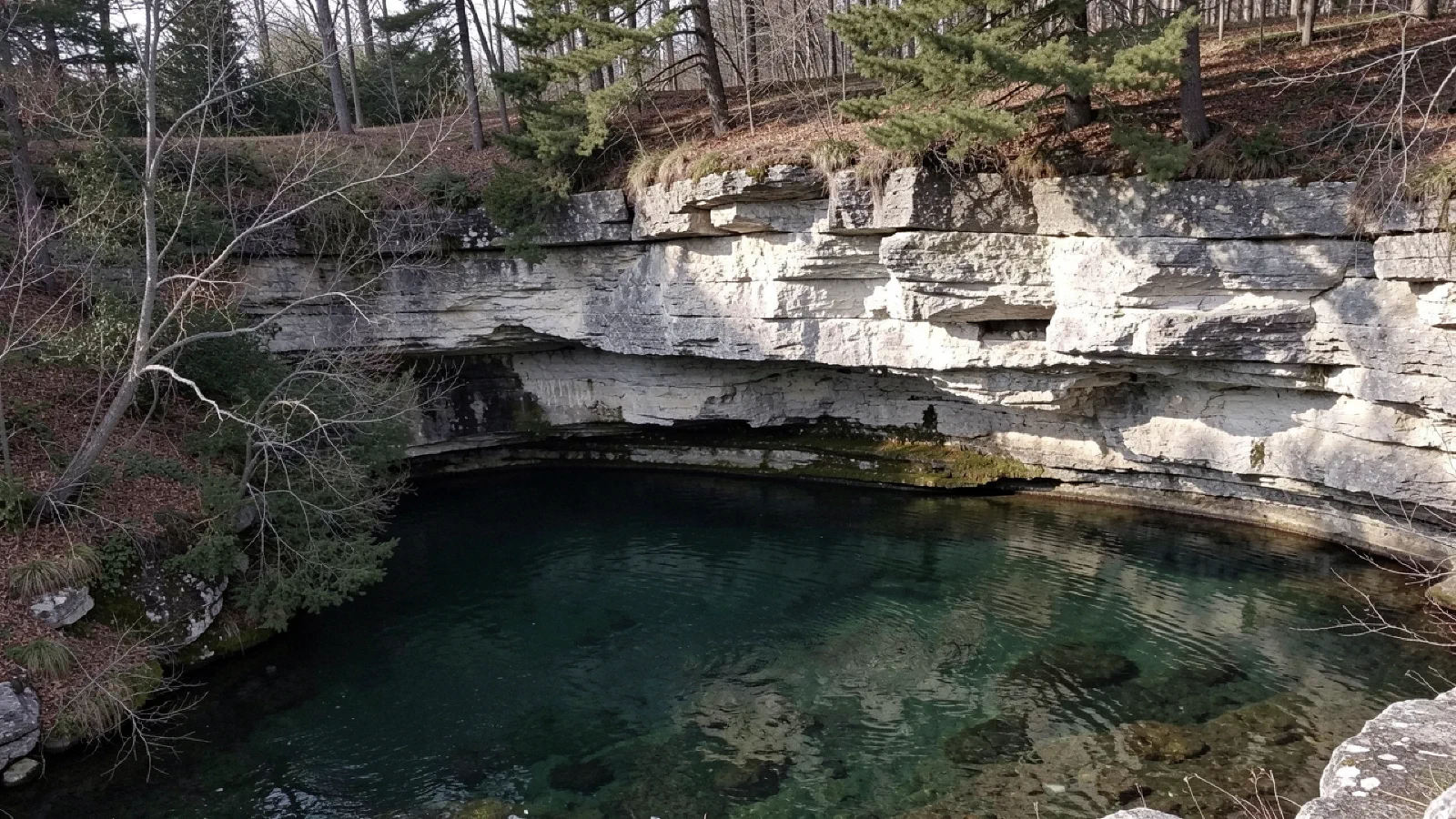
The Ozark Mountains
Hidden Appalachia Without the Federal Attention
The Ozark Mountains share nearly every characteristic that defines Appalachian crisis yet receive none of Appalachia’s federal recognition. Rugged terrain isolates communities across county and state lines. Poverty persists across generations in hollows where the formal economy never fully arrived. Methamphetamine devastated the region before fentanyl arrived to compound the damage. Hospital closures accelerate. Workforce shortages leave communities without primary care. The Ozarks experience Appalachian health challenges without an Appalachian Regional Commission, without dedicated federal research, without the policy identity that drives targeted intervention.
This absence raises the central question for regional analysis: Do the Ozarks require distinctly Ozark approaches, or can solutions developed for Appalachia transfer across the Mississippi River? The scalable solution view suggests that telehealth, community health workers, hub-and-spoke networks, and integrated behavioral health should work in any isolated mountain region facing similar challenges. The regional specificity view counters that the Ozarks lack the institutional infrastructure that makes Appalachian approaches possible, that solutions require someone to implement them, and that the Ozarks’ policy invisibility means no entity exists to scale solutions even when proven.
The honest assessment: Approaches proven in Appalachia should inform Ozark transformation, but the region lacks the institutional capacity to implement them at scale. Four separate state RHTP administrations serve Ozark counties with no coordination mechanism. No regional health organizations span the plateau. The Missouri Ozarks Community Health Center describes filling gaps that the formal system cannot address, but gap-filling is not transformation. The Ozarks need what Appalachia has built over 60 years of federal attention, and RHTP cannot create that institutional foundation in five years.
Regional Definition#
The Ozark Plateau rises across southern Missouri, northern and western Arkansas, northeastern Oklahoma, and southeastern Kansas, covering approximately 47,000 square miles. The region encompasses the Boston Mountains, the Salem Plateau, the Springfield Plateau, and the dissected terrain of the Ozark Highlands. Karst topography creates caves, springs, and sinkholes that complicate infrastructure development. Elevations reach 2,500 feet in the Boston Mountains, modest by Appalachian standards but sufficient to create isolation.
Population estimates range from 2.2 to 3 million depending on boundary definition. No official federal designation exists comparable to ARC’s Appalachian boundary. The Census Bureau does not track “Ozark” as a regional category. Researchers define the region by topography, cultural history, or arbitrary county groupings. This definitional ambiguity itself reflects the policy invisibility that shapes Ozark health challenges.
| State | Ozark Counties (approx.) | Ozark Population | Rural Hospital Risk | RHTP Award |
|---|---|---|---|---|
| Missouri | 28 | 1,100,000 | 34% at risk | $216M |
| Arkansas | 26 | 850,000 | 50% at risk | $209M |
| Oklahoma | 8 | 180,000 | 34% at risk | $223M |
| Kansas | 4 | 70,000 | 47% at risk | $204M |
The region’s coherence emerges from shared topography, settlement history, and economic marginality rather than from policy recognition. Ozark communities on opposite sides of the Missouri-Arkansas border share more with each other than with their respective state capitals. Yet healthcare planning occurs in Jefferson City, Little Rock, Oklahoma City, and Topeka with no mechanism to recognize cross-border regional reality.
Historical Context#
The Ozarks developed outside the mainstream currents of American economic history. While Appalachia’s coal seams attracted industrial capital that built company towns and extracted wealth, the Ozarks offered limited extractable resources. Lead and zinc mining created pockets of industrial activity in Missouri’s Old Lead Belt and the Tri-State Mining District spanning Missouri, Oklahoma, and Kansas. Timber extraction cleared forests in the late 1800s and early 1900s. But the region never experienced Appalachia’s concentrated extraction economy.
What developed instead was subsistence agriculture, small-scale timbering, and geographic isolation that persisted as surrounding regions modernized. The Ozarks remained a backwater: roads arrived late, electricity arrived later, and the formal healthcare system barely arrived at all. Communities developed self-reliance not from cultural preference but from necessity.
The methamphetamine epidemic hit the Ozarks before anywhere else in America. Rural isolation, readily available precursor chemicals, and limited law enforcement created conditions for small-scale meth production that spread through the 1990s and 2000s. The Drug Enforcement Administration reported that Missouri led the nation in meth lab seizures for years. Law enforcement focused on production while treatment infrastructure remained absent.
The meth epidemic transitioned to the opioid epidemic as prescription pills and then fentanyl flooded the same communities. Polysubstance use combining methamphetamine and fentanyl now characterizes the Ozark drug crisis. Treatment facilities that never adequately addressed meth addiction now face a more lethal combination. Rural communities that developed informal coping mechanisms for meth find those mechanisms inadequate for fentanyl’s overdose risk.
Lisa Rankin has worked the front desk at the Stone County Health Department in Crane, Missouri for 18 years. She watched the meth epidemic unfold and transition. In the early 2000s, families came seeking help for relatives cooking meth in back sheds. The health department had nothing to offer. By 2010, the same families returned with opioid prescriptions spiraling out of control. Now fentanyl overdoses kill people she has known her entire life.
“We’ve been crying for help for 25 years,” she says. “Nobody answered. Appalachia gets studies and commissions and congressional attention. We get forgotten. Same mountains, same problems, same nothing.”
The Stone County seat of Galena has 450 people. The nearest hospital is 45 minutes away in Branson, which serves tourists rather than locals. The nearest addiction treatment facility accepting Medicaid is in Springfield, 90 minutes north. Lisa knows the geography of desperation: which churches run informal recovery groups, which preachers will talk someone through withdrawal, which neighbors have Narcan.
“We built our own system because nobody built one for us. But people are still dying.”
Current Conditions#
Health Outcomes#
Ozark counties consistently rank at or near the bottom of health outcomes within their respective states. Missouri’s Ozark County (not to be confused with the broader region) has the state’s highest poverty rate at 29.6%. Arkansas Ozark counties rank among the state’s least healthy.
| Measure | Missouri Ozarks | Arkansas Ozarks | Oklahoma Ozarks | National Rural |
|---|---|---|---|---|
| Life Expectancy | 74.2 years | 73.8 years | 74.5 years | 76.1 years |
| Overdose Deaths (per 100K) | 32.4 | 28.6 | 26.8 | 25.6 |
| Diabetes Prevalence | 13.2% | 14.1% | 12.8% | 11.2% |
| Adult Obesity | 36.5% | 38.2% | 35.8% | 34.1% |
| Uninsured Rate | 12.4% | 11.2% | 15.6% | 12.8% |
The 2 to 2.5 year life expectancy gap compared to national rural averages reflects cumulative impact of chronic disease, substance use, and healthcare access barriers. Ozark residents die younger than their rural counterparts elsewhere, a disparity that receives no federal study or targeted response.
Healthcare Infrastructure#
Rural hospital vulnerability in Ozark states ranks among the nation’s highest. Arkansas’s 50% vulnerability rate leads the nation. Kansas follows at 47%, Missouri at 34%, and Oklahoma at 34%. These aggregate state figures understate Ozark regional concentration: the most vulnerable facilities cluster in isolated counties where closure would eliminate all hospital access.
The Missouri Ozarks Community Health Center in Ava serves as the region’s de facto safety net, operating five clinic sites across Douglas, Ozark, Taney, and Webster counties. CEO Jennifer Heinlein describes a facility functioning as “emergency department, addiction treatment, dental care, and social services” for communities with no other option. Staff vacancy rates remain elevated. Behavioral health appointments book two months in advance. Severe cases require referrals outside the network that patients cannot reliably access.
Mercy Health, headquartered in St. Louis, operates hospitals across the Arkansas Ozarks including facilities in Berryville, Waldron, and Ozark (the town). The University of Arkansas for Medical Sciences proposed a “clinically integrated network” of 30 rural hospitals and clinics to share data, care teams, and purchasing power. The proposal requires $100 to $153 million and represents the kind of regional coordination that Ozark counties need but that state boundaries fragment.
Workforce#
Provider shortages in the Ozarks exceed already severe rural averages. Missouri’s Ozark counties have primary care physician ratios of 38 to 45 per 100,000, compared to 78 per 100,000 for urban Missouri and 52 per 100,000 for national rural. Mental health provider shortages are more severe still.
The Missouri Rural Health Association reports that one-third of Missouri’s population lives in rural areas but only one-fifth of providers practice there. Ozark recruitment faces compounded barriers: geographic isolation limits professional networks, sparse population limits practice volume, and limited amenities discourage families from relocating. A 2023 study found that all 75 Arkansas counties have at least one ambulance desert, meaning paramedics require more than 25 minutes to reach some residents.
The Core Tension: Regional Approaches vs. Scalable Solutions#
The scalable solution argument holds that Appalachian approaches should transfer directly to the Ozarks. Telehealth overcomes geographic isolation regardless of which mountain range creates it. Community health workers from communities build trust in Missouri hollows as effectively as Kentucky hollows. Hub-and-spoke networks can route patients to regional centers whether the hub is in Springfield, Missouri or Lexington, Kentucky.
This argument has merit. The fundamental challenges are similar: isolation, poverty, workforce shortage, substance use, chronic disease, aging population, economic decline. Solutions addressing these challenges should not require regional customization for every mountain region. Reinventing approaches county by county wastes resources that could instead implement proven models.
The regional specificity argument counters that approaches require institutional infrastructure to implement them. Appalachia has the ARC coordinating research and investment. Appalachia has regional health organizations spanning state boundaries. Appalachia has six decades of policy attention that built capacity incrementally. The Ozarks have none of this.
Telehealth requires someone to establish it. Community health worker programs require organizations to train and employ workers. Hub-and-spoke networks require hubs with capacity to receive referrals. Consider the contrast: when Kentucky needs to expand community health workers, the Kentucky Primary Care Association and Kentucky Homeplace provide infrastructure. When Missouri Ozark counties need the same expansion, no equivalent organization exists.
Dr. Marcus Webb practiced family medicine in Mountain View, Arkansas for 12 years before burnout forced him to urban practice in Little Rock. He returned to Mountain View part-time in 2023, driving three hours each way twice monthly to see patients who have no other physician.
“I know what works. I’ve read the Appalachian research. Community health workers, integrated behavioral health, telehealth for specialty access. We could implement all of it. But who implements it? I’m one doctor driving six hours to see 40 patients twice a month. The nearest FQHC is in Mountain Home, 45 minutes away, and they’re already overwhelmed.”
He describes the implementation gap: “The solutions exist. The infrastructure to deploy them doesn’t. Appalachia built that infrastructure over decades. We’re supposed to build it in five years with RHTP money that flows to four different states with four different priorities?”
The evidence suggests both views contain partial truth. Approaches proven elsewhere should inform Ozark implementation rather than starting from scratch. But implementation requires institutional capacity that the Ozarks currently lack and that RHTP cannot create in five years.
RHTP in the Region#
Each state’s RHTP application addresses its Ozark counties within broader rural strategies. None proposes regional coordination across state lines. None recognizes the Ozarks as a coherent region requiring coherent response.
Missouri’s ToRCH Program (Transformation of Rural Community Health) launched in July 2024 with six hospital hubs coordinating social determinants of health interventions. The state plans statewide scaling but does not specifically target Ozark counties. Arkansas’s RHTP approach emphasizes hospital stabilization and workforce development. The UAMS clinically integrated network proposal could benefit Ozark hospitals if funded. Oklahoma’s tribal health integration dominates its RHTP strategy. Eastern Oklahoma Ozark counties contain Cherokee Nation facilities that serve broader populations but receive no distinct regional attention. Kansas’s RHTP allocation addresses the state’s severe hospital vulnerability but its four southeastern Ozark counties represent a small portion of overall rural population.
Across four states, RHTP investments totaling approximately $850 million reach Ozark counties through state programs. Key elements include:
Workforce development in each state includes loan repayment and residency support, but programs compete with urban and other rural regions within states. No Ozark-specific recruitment exists.
Telehealth expansion receives significant funding in all four states. Missouri’s digital backbone could improve connectivity. But telehealth requires both infrastructure and clinical capacity at distant ends.
Hospital stabilization efforts vary. Arkansas’s UAMS network proposal could coordinate Ozark facilities. Mercy Health’s cross-state presence creates de facto regional coordination for its facilities but fragments from other systems.
What RHTP misses: Regional coordination across four states. The Ozarks constitute a coherent region that four state administrations fragment. Regional identity in federal policy that Appalachia receives through ARC. Institutional capacity building that RHTP’s program focus cannot provide. And meth-to-fentanyl transition response matching regional substance use patterns.
Alternative Perspective: The Scalable Solution View#
The strongest case for scalable solutions argues that insisting on regional specificity becomes an excuse for inaction. If every region requires custom approaches developed over decades, transformation becomes impossible within any reasonable timeline. Pragmatic implementation takes proven models and adapts them to local conditions without demanding perfect institutional fit.
Telehealth companies can deploy connectivity without regional commissions. National FQHC networks can expand into Ozark counties using federal expansion grants. Community health worker training curricula developed in Appalachia can transfer directly. Missouri Ozarks Community Health Center already implements integrated behavioral health without waiting for regional coordination.
This argument correctly identifies adaptation pathways. HRSA funding for FQHCs does not require ARC-equivalent regional authorities. State loan repayment programs can target Ozark counties specifically. Mercy Health’s multi-state presence creates operational regional coordination even without policy recognition.
But the counter-argument holds. Organizations implementing these adaptations must exist and must have capacity. Missouri Ozarks Community Health Center is overwhelmed. Mercy Health’s mission serves its facilities, not the region broadly. No entity exists to coordinate a regional community health worker deployment or a regional workforce pipeline. Scalable solutions require someone to scale them.
The evidence suggests that both views contain partial truth. Approaches proven elsewhere should inform Ozark implementation rather than starting from scratch. But implementation requires institutional capacity that the Ozarks currently lack and that RHTP cannot create in five years.
Regional Strengths#
The Ozarks possess strengths that transformation can build on. Community bonds remain strong despite economic strain. Faith communities provide social infrastructure where government programs do not reach. The region’s tourism economy, concentrated around Branson and the Buffalo National River, brings outside resources that support some local healthcare capacity.
Mercy Health’s regional presence creates de facto coordination across state lines. The St. Louis-based system operates hospitals and clinics across Missouri, Arkansas, Oklahoma, and Kansas. Mercy’s integrated records, shared protocols, and coordinated workforce represent regional healthcare infrastructure that other systems lack. Mercy cannot solve regional challenges alone but provides organizational foundation.
University of Arkansas for Medical Sciences has invested in rural health partnerships through the Arkansas Rural Health Partnership, bringing academic medical center resources to rural hospitals. The UAMS model of shared data, care teams, and purchasing power could provide institutional infrastructure if RHTP funding permits expansion.
Missouri’s ToRCH pilot demonstrates state willingness to innovate on rural health delivery. The six-hospital hub model testing social determinants integration could inform Ozark-specific implementation if the state prioritizes regional targeting.
Betty Caldwell runs the food pantry at First Baptist Church of Ava, Missouri, the same town where Missouri Ozarks Community Health Center is headquartered. Her pantry serves 200 families monthly, and she knows most of them by name.
“When the clinic can’t get someone in for two months, they come to me first. Not for food, though they need that too. They come because I can connect them. I know who has a car. I know who’s in recovery and who’s struggling. I know which families need help before they’ll ask.”
Her informal network represents community health work without the formal title. Churches across the Ozarks operate similar networks: transportation coordination, medication assistance, crisis response, and the relational knowledge that formal systems cannot replicate.
“They talk about community health workers like it’s something new. We’ve been doing this forever. We just don’t get paid for it, and we don’t have medical training. Give us training and support, and we can do more. But nobody’s offered.”
Betty’s observation captures the transformation opportunity: community capacity exists but lacks formal support. Training, compensation, and integration with clinical care could formalize existing strengths into sustainable programs.
Transformation Assessment#
What Transformation Requires: State recognition of Ozark regional needs within RHTP strategies. Interstate coordination through voluntary state cooperation for workforce sharing, telehealth licensing, and referral networks. Institutional capacity building beyond program funding. Polysubstance treatment integration addressing meth and fentanyl simultaneously. Faith community partnership formalizing existing informal networks through training and clinical integration.
What Transformation Can Achieve: Within the RHTP timeline, transformation can stabilize existing facilities, expand telehealth where state programs permit, deploy community health workers through FQHCs and faith partnerships, and integrate behavioral health into primary care settings. Transformation can build demonstration models showing what regional coordination could achieve, even without regional governance.
What Transformation Cannot Achieve: Transformation cannot create regional governance that federal policy does not provide. Four states will implement four strategies with voluntary coordination at best. The Ozarks will not receive their ARC equivalent through RHTP. Transformation cannot create regional identity in federal policy discourse or immediately build institutional capacity that Appalachia developed over 60 years. Transformation cannot resolve the underlying economic challenges driving Ozark health crisis.
Implications and Recommendations#
For States: Missouri, Arkansas, Oklahoma, and Kansas should each explicitly target Ozark counties within RHTP implementation. States should pursue voluntary interstate coordination for workforce sharing, telehealth licensing, and referral networks. States should consider joint funding for regional coordinator positions spanning state lines.
For CMS: CMS should allow flexibility for multi-state regional approaches, permitting voluntary joint strategies for shared regions like the Ozarks. CMS guidance should recognize that state boundaries often do not match healthcare markets or regional challenges.
For Health Systems: Mercy Health and other multi-state systems should leverage their cross-border presence for regional coordination. Systems should share lessons learned across facilities facing similar challenges in different states.
For Faith Communities: Churches and faith organizations should formalize community health functions through training and partnership with clinical providers. Faith-based community health worker programs could build on existing relational infrastructure.
For Researchers: Academic institutions should document Ozark health challenges with the rigor applied to Appalachia. Evidence of regional need could inform future policy attention. UAMS and University of Missouri should collaborate on regional health research.
How this article connects to others in Blue Gray Matters.
Sources cited in this article.
- Chartis Center for Rural Health. "2025 State of the State: Rural Hospital Closures and Care-Access Crisis." Chartis, 2025.
- Center for Healthcare Quality and Payment Reform. "Rural Hospital Closures and Financial Distress." CHQPR, December 2025.
- Commonwealth of Arkansas. "Rural Health Transformation Program Application." Arkansas Department of Health, 2025.
- Drug Enforcement Administration. "2020 National Drug Threat Assessment Summary." DEA, 2020.
- Heinlein, Jennifer. Interview with KY3 News. "Report reveals the struggles of Missouri's rural hospitals." February 5, 2024.
- Mercy Health System. "RHTP Funding Proposal." Mercy, 2025.
- Missouri Department of Health and Senior Services. "Health in Rural Missouri: Biennial Report 2020-2021." DHSS, 2021.
- Missouri Rural Health Association. "Rural Health in Missouri: Status and Challenges." MRHA, 2024.
- State of Kansas. "Rural Health Transformation Program Application." Kansas Department of Health and Environment, 2025.
- State of Missouri. "Rural Health Transformation Program Application." Missouri Department of Health and Senior Services, 2025.
- State of Oklahoma. "Rural Health Transformation Program Application." Oklahoma State Department of Health, 2025.
- University of Arkansas for Medical Sciences. "Clinically Integrated Network Proposal." UAMS, 2025.
- University of Wisconsin Population Health Institute. "County Health Rankings 2024." countyhealthrankings.org.
- U.S. Census Bureau. "American Community Survey 5-Year Estimates, 2019-2023." census.gov.
- Vrbin, Tess. "Arkansas hospitals, nursing homes, EMS providers seek federal rural health transformation funds." Arkansas Advocate, November 10, 2025.