The Intermountain West
Federal Land and the Allocation Question
The Intermountain West presents a distinctive paradox: a region where most land belongs to the federal government yet healthcare transformation flows through state administration, where tribal nations constitute significant population centers yet state RHTP applications treat sovereignty as complication rather than foundation, and where vast distances separate tiny communities yet funding formulas assume population density that does not exist.
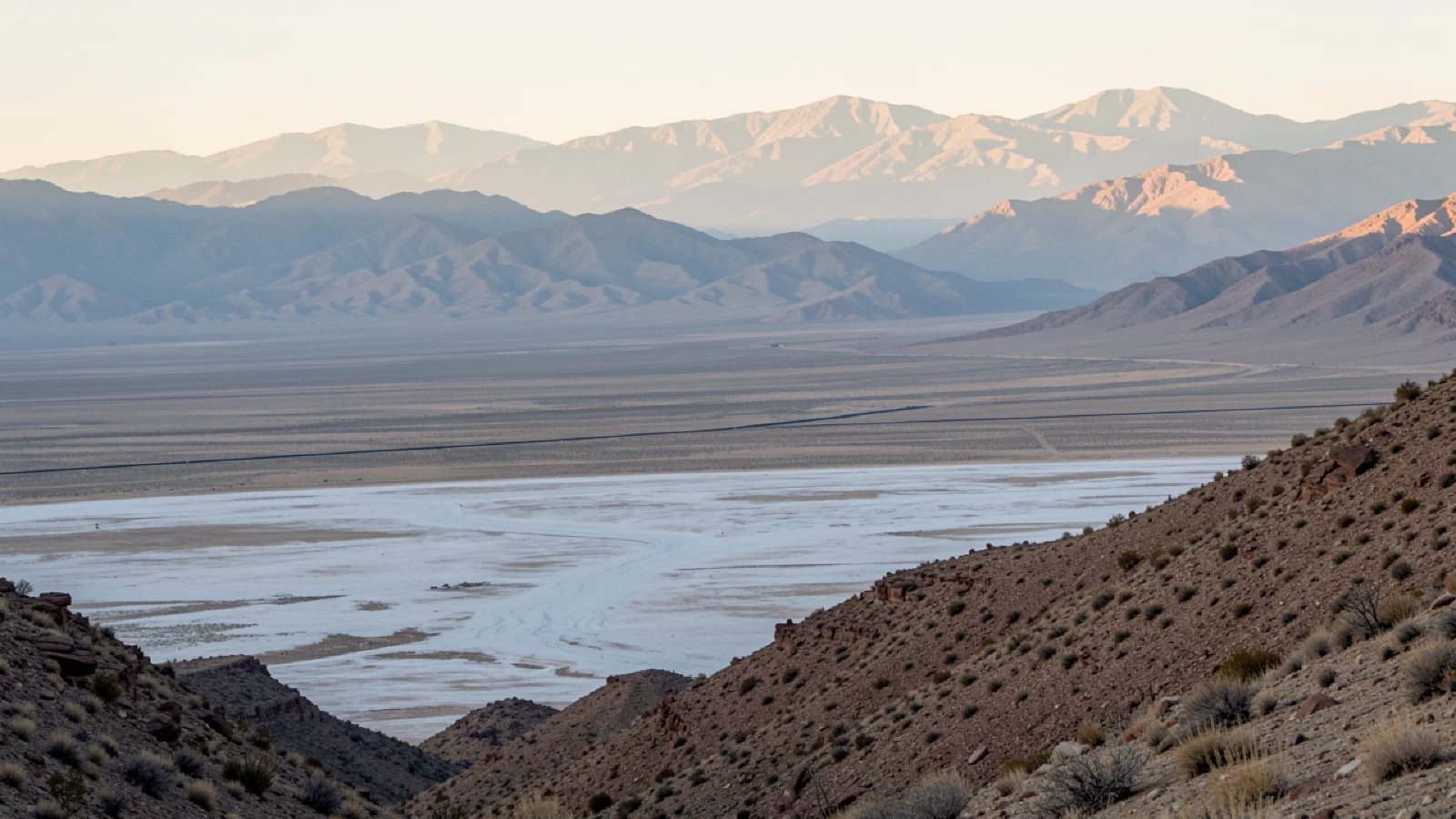
Nevada, Utah, and Arizona share basin-and-range topography: parallel mountain ranges separated by broad valleys, extreme aridity, and population concentrated in isolated nodes surrounded by uninhabited terrain. The Bureau of Land Management and Forest Service control more land than private owners in each state.
The core analytical tension for the Intermountain West is whether RHTP should concentrate resources in tribal communities with the worst health outcomes or distribute them across the entire sparse non-tribal population. Both approaches have logic. Both have problems. The region illuminates how allocation decisions reflect values about equity, efficiency, and whose suffering receives priority.
Regional Definition#
The Intermountain West encompasses the basin-and-range province stretching from southern Idaho through Nevada, western Utah, and Arizona.
| State | Counties Included | Population | Federal Land Share |
|---|---|---|---|
| Nevada | All rural counties (15) | 232,000 | 80.1% |
| Utah | Rural counties (21) | 679,000 | 63.1% |
| Arizona | Rural counties (11) | 720,000 | 38.6% |
| Regional Total | 47 counties | 1.63 million | Variable |
Federal Land Dominance
In Nevada, the federal government owns more than 80% of all land. Private land is confined to valleys where water access permitted historical settlement. Healthcare facilities must locate on available private land. Roads traverse federal land under easements that do not guarantee permanent access. States administer RHTP but control little of the territory where implementation must occur.
Tribal Lands as Regional Feature
The Navajo Nation alone spans 27,000 square miles across Arizona, New Mexico, and Utah, larger than ten states. These tribal lands represent sovereign nations with distinct health systems, primarily served by Indian Health Service facilities or tribally operated programs. State RHTP applications must navigate this sovereignty, and the navigation reveals fundamental tensions about who controls healthcare transformation.
Historical Context#
Mining Economy: Boom and Bust
The region’s non-tribal settlement followed mineral discovery. Mining towns appeared rapidly and disappeared nearly as fast. Virginia City housed 30,000 residents at its peak; fewer than 800 remain today. Healthcare infrastructure served populations that then vanished. The residue of extraction persists: communities built on exhausted resource bases with no alternative economy.
Ranching: Public Land Dependency
With private ownership limited by federal retention, ranching operations relied on grazing permits for federal land, creating perpetual dependence on federal decisions. A ranch operation might span 50 miles, with the nearest neighbor 20 miles distant. Fourth-generation ranching families accept that medical emergencies will always be complicated by distance.
Tribal History: Displacement and Survival
For tribal nations, history is one of systematic displacement, confinement, and survival despite federal efforts at elimination. The Navajo Long Walk of 1864 forced 8,000 people on a 300-mile march to internment. The Indian Health Service emerged from this history: federal provision of healthcare as partial fulfillment of treaty obligations. IHS facilities reflect 19th-century policy decisions, not contemporary service optimization. The 8.3-year life expectancy gap between American Indian populations and national averages is not random variation but accumulated damage.
Current Conditions#
Demographics#
| County | State | Population | Trend | Median Age | Poverty Rate |
|---|---|---|---|---|---|
| Apache | AZ | 66,000 | -1.8% | 32 | 36.2% |
| Navajo | AZ | 110,000 | -0.4% | 34 | 31.8% |
| Pershing | NV | 6,800 | -3.2% | 41 | 14.8% |
| Beaver | UT | 7,100 | +1.2% | 33 | 9.8% |
Poverty rates diverge dramatically between tribal and non-tribal populations. Apache County has a poverty rate of 36.2%, among the highest nationally. This disparity frames the allocation question: does transformation concentrate resources where poverty concentrates?
Healthcare Infrastructure#
| Facility Type | Nevada Rural | Utah Rural | Arizona Rural | Regional Total |
|---|---|---|---|---|
| Critical Access Hospitals | 6 | 14 | 14 | 34 |
| IHS/Tribal Facilities | 3 | 1 | 18 | 22 |
| Total Licensed Beds | 156 | 412 | 524 | 1,092 |
Healthcare infrastructure concentrates in limited locations where development is possible. A patient in northern Nevada might be 100 miles from the nearest hospital in any direction. IHS facilities operate separately from state-regulated healthcare infrastructure. The parallel infrastructure problem creates inefficiency that funding cannot solve: two incomplete systems operate side by side without serving each other’s populations.
Health Outcomes#
| Measure | Navajo Nation | Non-Tribal Rural | National Rural |
|---|---|---|---|
| Life expectancy | 64.5 years | 76.2 years | 76.8 years |
| Diabetes prevalence | 22.8% | 11.2% | 11.8% |
| Infant mortality (per 1,000) | 8.4 | 5.8 | 5.9 |
| Uninsured rate | 24.1% | 14.2% | 12.4% |
Life expectancy on the Navajo Nation is more than 14 years lower than state averages. This disparity creates the moral arithmetic of allocation: concentrating resources in tribal communities would address greatest need but leave non-tribal populations without investment.
Workforce#
Nevada ranks last nationally in physicians per capita for rural areas. Three rural counties have no physician at all. Arizona’s tribal communities face severe shortages despite IHS recruitment efforts, with average IHS vacancy rates exceeding 25%. The regional pattern: providers locate where they want to live. Mining towns and reservation communities cannot attract providers at any salary level.
Vignette: Esmeralda County’s Impossible Geography#
Esmeralda County, Nevada, covers 3,589 square miles with approximately 1,000 residents. There is no hospital. No physician. No clinic. The nearest emergency room is in Tonopah, 26 miles north.
Maria Gonzalez, a home health aide, drives 180 miles round trip twice weekly. Her patients are mostly elderly former miners who stayed when mines closed because they could not afford to leave.
“My patients have nothing,” Maria explained. “Mr. Henderson is 84, diabetic. I check his blood sugar and try to keep him out of the emergency room because if he goes, there’s no one to care for his wife.”
Emergency services depend on volunteers. Response times can exceed an hour. Helicopter evacuation costs $50,000.
“They tell us to use telehealth. Half my patients don’t have internet. Telehealth assumes you have someone who can help you use it. My patients are alone.”
The Core Tension: Concentration vs. Distribution#
The Case for Concentration
Equity principles suggest concentration. Resources directed at those furthest behind produce the greatest movement toward equality. A dollar invested in Navajo Nation health produces more marginal improvement than a dollar in rural Utah.
Impact is measurable with concentration. Spreading $500 million across 1.6 million people dispersed over 300,000 square miles achieves little visible impact. Concentrating investment in tribal communities with 200,000 residents might achieve demonstrable improvement.
Historical justice supports concentration. Federal policy created tribal health disparities: forced relocation, treaty violations, systematic IHS underfunding.
The Case for Distribution
Non-tribal rural populations also lack healthcare access. The Esmeralda County resident has legitimate claim on transformation resources. Need is not competitive; greater need elsewhere does not eliminate need everywhere.
Political sustainability requires distribution. State administrators who concentrate resources face political backlash from neglected regions.
Tribal sovereignty complicates concentration. Tribal nations may prefer direct federal funding respecting sovereignty over state-administered programs.
The Honest Assessment
The optimal approach likely involves tribal-controlled resources for tribal transformation, flowing directly from federal sources rather than through state intermediation, alongside state-administered resources for non-tribal transformation distributed with sufficient targeting to achieve impact. This approach accepts that perfect allocation is impossible in a region where governance structures do not match healthcare needs.
RHTP in This Region#
| State | FY2026 Award | Per Capita Rural | Tribal Provisions |
|---|---|---|---|
| Nevada | $179.9 million | $775 | Minimal, consultation only |
| Utah | $195.7 million | $288 | Limited |
| Arizona | $166.9 million | $232 | Substantial, Navajo partnership |
Nevada’s RHTP application emphasizes workforce recruitment and telehealth with minimal tribal provisions. Utah’s application proposes the Rural 9 Network without addressing tribal communities. Arizona’s application includes substantial tribal provisions but forced cuts affected some tribal components.
No state explicitly allocates RHTP resources to the Intermountain West as a region. Each treats its rural areas as state-level challenge, missing regional coherence crossing state boundaries.
What RHTP Misses#
Multi-state coordination does not exist. The basin-and-range region appears in no coordination mechanism. Federal land constraints receive no attention. Tribal sovereignty and state administration conflict fundamentally: RHTP flows through states with no authority over tribal health systems. The IHS funding gap remains: the $8.1 billion federal IHS budget falls far short of the $63 billion that tribal budget formulations identify as necessary.
Vignette: Navajo Nation’s Parallel System#
Dr. Jennifer Yazzie works at Chinle Comprehensive Health Care Facility, a 60-bed hospital serving the eastern Navajo Nation.
“Arizona’s RHTP wants to coordinate with us. But we’re a sovereign nation with our own health department. We don’t report to Arizona. When they say coordinate, they mean they want us to fit into their system.”
“RHTP could help. We need workforce, infrastructure, telehealth. But we need it on our terms. Our definition of health includes spiritual and community wellness. State administrators don’t understand that a health visit here might include a traditional healer alongside a physician.”
Arizona proposes routing RHTP resources through the state to Navajo programs. Navajo health leadership has asked instead for direct federal-to-tribal RHTP funding.
“They call it transformation. For us, transformation means self-determination. It means controlling our own healthcare without states telling us how.”
Regional Strengths#
Tribal Health Infrastructure
IHS and tribally operated facilities provide institutional foundation. Tribal health programs have developed innovations: Community Health Representatives placing community members as health navigators, traditional healing integration, and low-bandwidth telehealth applications.
Community Resilience
Populations that have survived in extreme environments possess adaptive capacity. Communities have experience solving problems without external support.
Transformation Assessment#
What Transformation Can Achieve#
Stabilization of existing infrastructure: preventing CAH and clinic closures. Incremental workforce improvement through loan repayment and training. Telehealth foundation for populations with connectivity. Improved coordination between state programs and tribal health systems. Demonstration of tribal transformation models applicable to other tribal communities nationally.
What Transformation Cannot Achieve#
Healthcare infrastructure in every community: some communities are too small and isolated to support any healthcare presence. Resolution of tribal health disparities: the 14-year life expectancy gap reflects centuries of accumulated damage that five years cannot repair. Provider presence where providers will not live: no incentive makes isolated mining towns or remote reservations attractive. Integration of tribal and non-tribal systems: sovereignty means separate operation. Coordination is possible; integration should not be the goal.
Vignette: What Transformation Could Look Like#
The Arizona-Utah Navajo Border Health Initiative, if it existed, might work like this:
Federal funding flows directly to Navajo Nation Department of Health. The Nation uses resources to expand the Community Health Representative program, training 50 new CHRs who live in remote chapter houses.
CHRs are equipped with point-of-care diagnostics, satellite-enabled telehealth, and emergency kits. For emergencies, they stabilize patients and coordinate helicopter transport. Traditional healing is integrated throughout.
Five years in, life expectancy on the Navajo portion has increased by 0.8 years. Diabetes complications have decreased by 12%. Emergency room utilization at distant facilities has dropped by 20%.
This initiative does not exist. It illustrates what would be possible if transformation structures matched transformation rhetoric.
Recommendations#
For States#
Nevada should explicitly address frontier counties in implementation planning. Utah should consider how its Rural 9 Network interacts with tribal communities. Arizona should advocate with CMS for direct federal-to-tribal RHTP pathways.
For Multi-State Coordination#
Nevada, Utah, and Arizona should explore joint workforce initiatives, coordinated telehealth policy, and joint tribal engagement recognizing that tribal nations span state boundaries.
For CMS#
Allow multi-state RHTP applications for regions with coherent geography. Develop direct federal-to-tribal RHTP pathway respecting sovereignty. Require state plans to address within-state regional variation.
For Tribal Nations#
Assert sovereignty in RHTP engagement. Develop tribal transformation models other communities can adapt. Coordinate across tribal lines where shared challenges suggest shared response.
How this article connects to others in Blue Gray Matters.
Sources cited in this article.
- Arizona Department of Health Services. "Rural and Frontier Health in Arizona." *ADHS*, 2024.
- Bureau of Land Management. "Public Land Statistics 2024." *U.S. Department of the Interior*, 2024.
- Centers for Medicare and Medicaid Services. "CMS Announces $50 Billion in Awards to Strengthen Rural Health in All 50 States." *CMS Newsroom*, 29 Dec. 2025.
- Indian Health Service. "IHS Profile: Navajo Area." *U.S. Department of Health and Human Services*, 2024.
- National Indian Health Board. "Tribal Budget Formulation Workgroup Recommendations for the Indian Health Service Fiscal Year 2026 Budget." *NIHB*, 2024.
- Navajo Nation Department of Health. "Navajo Nation Health Status Report." *Navajo Nation*, 2024.
- Nevada Division of Public and Behavioral Health. "Nevada Rural Health Profile." *State of Nevada*, 2024.
- Sequist, Thomas D. "Health Care for American Indians and Alaska Natives: Progress, Problems, and Promise." *New England Journal of Medicine*, vol. 386, 2022, pp. 1071-1079.
- U.S. Census Bureau. "American Community Survey 5-Year Estimates: Nevada, Utah, Arizona." *Census.gov*, 2023.
- U.S. Department of Agriculture Economic Research Service. "Rural-Urban Continuum Codes." *USDA ERS*, 2023.
- Utah Department of Health and Human Services. "Rural Health in Utah." *DHHS*, 2024.
- Warne, Donald, and Frizzell, Linda B. "American Indian Health Policy: Historical Trends and Contemporary Issues." *American Journal of Public Health*, vol. 104, no. S3, 2014, pp. S263-S267.