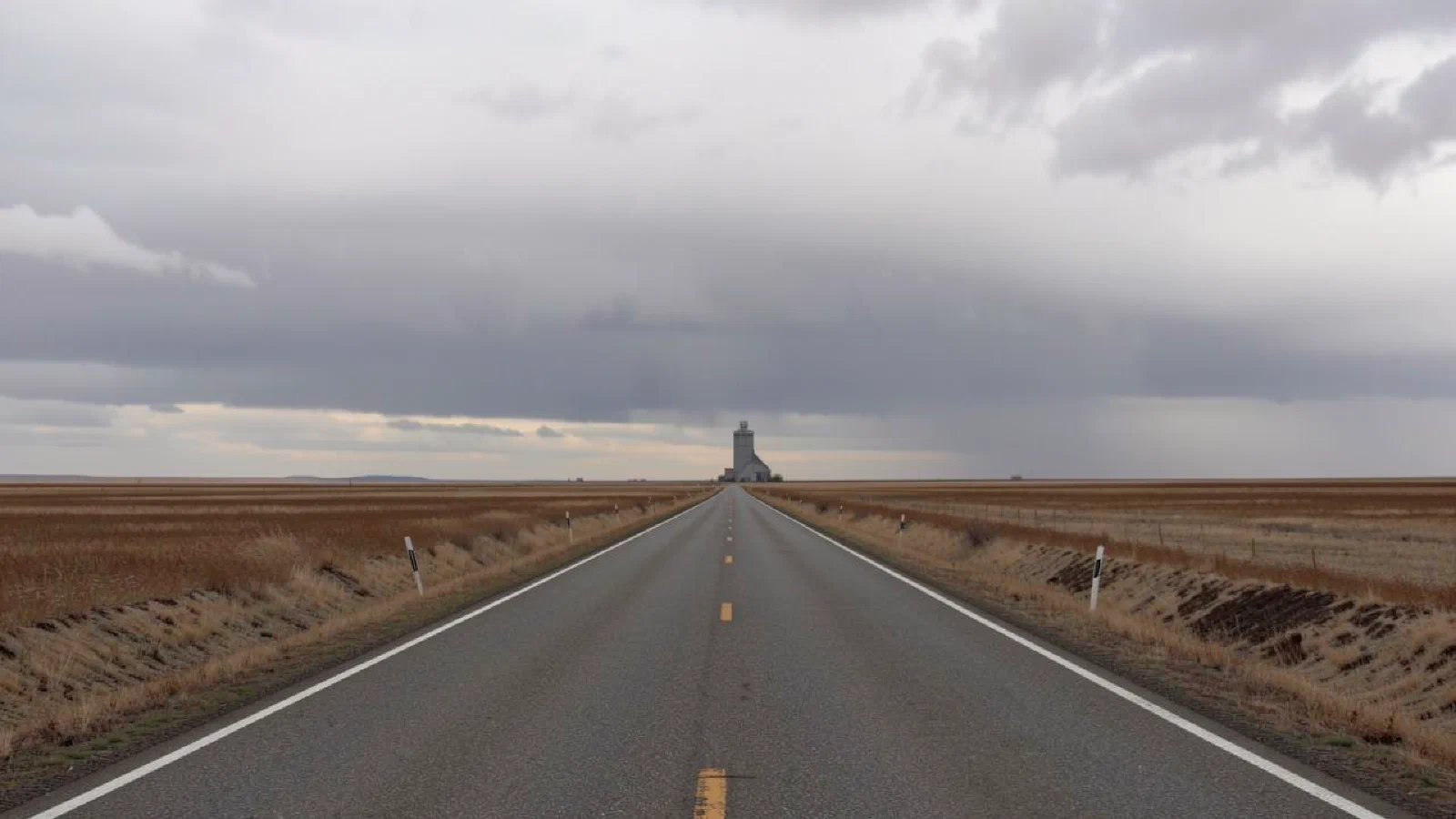
The Great Plains
Extreme Distance, Extreme Depopulation
The Great Plains stretch from the Texas Panhandle to the Canadian border, encompassing portions of ten states across America’s agricultural heartland. Wheat fields, cattle ranches, and small towns punctuate a landscape of vast distances and vanishing population. Counties that once supported schools, hospitals, and main street businesses now struggle to sustain any services. Population density in many counties falls below six people per square mile, meeting the Census Bureau’s definition of frontier territory.
This article examines the tension between place-based investment and people-based support. Should RHTP concentrate resources in places that may not be viable for healthcare infrastructure at any investment level? Or should transformation support people accessing care elsewhere, including through relocation? The question challenges fundamental assumptions about rural policy.
The Great Plains present healthcare’s ultimate sustainability challenge. Agricultural consolidation continues inexorably: farms grow larger, employment shrinks, towns depopulate. Young people leave for education and opportunity. Those who remain are older, often on fixed incomes, increasingly isolated. When counties lose 40% of their population in a generation, can healthcare investment create sustainable infrastructure? Or does investment delay inevitable decline while consuming resources that could help more people elsewhere?
The evidence does not provide clean answers. Some Great Plains communities demonstrate resilience and adaptation. Others decline regardless of intervention. The honest assessment is that not all places can be saved, but determining which places warrant investment and which warrant different approaches requires judgment that formulas cannot provide.
Regional Definition#
Geographic Boundaries#
The Great Plains occupy the interior grassland of North America, bounded roughly by the 98th meridian to the east (where annual rainfall drops below 20 inches) and the Rocky Mountain foothills to the west. The region includes portions of ten states: Texas, Oklahoma, Kansas, Nebraska, South Dakota, North Dakota, Montana, Wyoming, Colorado, and New Mexico.
Regional Scope:
| State | Great Plains Counties | Rural Population | Density (per sq mi) |
|---|---|---|---|
| Kansas | ~80 western counties | ~320,000 | 4.2 |
| Nebraska | ~70 western counties | ~280,000 | 3.8 |
| Oklahoma | ~30 Panhandle/western | ~140,000 | 5.1 |
| Texas | ~50 Panhandle/South Plains | ~380,000 | 6.2 |
| South Dakota | ~50 western counties | ~180,000 | 3.1 |
| North Dakota | ~40 western counties | ~120,000 | 2.8 |
| Montana | ~40 eastern counties | ~150,000 | 1.9 |
| Wyoming | ~15 eastern counties | ~80,000 | 2.4 |
| Colorado | ~30 eastern counties | ~110,000 | 4.5 |
| New Mexico | ~12 eastern counties | ~90,000 | 3.7 |
| Total | ~420 counties | ~1.85 million | ~3.8 average |
Why Distance Defines This Region#
The Great Plains experience distance differently than other rural regions. Appalachian isolation results from terrain: mountains create barriers. Great Plains isolation results from sheer expanse: nothing blocks movement, but destinations are simply far apart.
Distance Indicators:
| Measure | Great Plains | National Rural | Difference |
|---|---|---|---|
| Average to Hospital | 47 miles | 17 miles | +30 miles |
| Average to Specialist | 112 miles | 42 miles | +70 miles |
| EMS Response Time | 38 minutes | 14 minutes | +24 minutes |
| Counties Without Hospital | 58% | 28% | +30% |
These distances create different healthcare dynamics. An emergency that would be routine elsewhere becomes life-threatening on the Great Plains. A 30-minute drive to the hospital in rain becomes a 90-minute ordeal in a blizzard. Conditions that require specialist care mean day trips, not afternoon appointments.
Depopulation Trajectory#
The Great Plains have been depopulating for over a century. Peak population in many counties occurred between 1900 and 1930, when homesteading attracted settlers and before agricultural mechanization reduced labor needs.
Population Trends:
| Period | Driving Force | Population Impact |
|---|---|---|
| 1870-1920 | Homesteading | Peak settlement, maximum population |
| 1930s | Dust Bowl | First mass exodus |
| 1950-1980 | Agricultural mechanization | Steady decline, farm consolidation |
| 1980-2000 | Farm crisis | Accelerated decline, town collapse |
| 2000-Present | Continued consolidation | Ongoing loss, aging population |
Some Great Plains counties have lost more than 60% of their peak population. Others continue declining at 1-2% annually. The demographic trajectory shows no evidence of stabilization in most areas.
Historical Context#
Settlement and Expectation#
The Great Plains were settled with expectations that proved false. Homestead Act promoters claimed “rain follows the plow,” suggesting that agricultural development would increase rainfall. It did not. The semi-arid grassland could support grazing and dryland wheat but not the intensive agriculture settlers imagined.
Settlement Phases:
| Phase | Period | Expectation | Reality |
|---|---|---|---|
| Initial Settlement | 1870-1890 | Permanent agricultural communities | Boom followed by drought |
| Second Wave | 1900-1920 | Technology would overcome climate | Partial success, ongoing vulnerability |
| Dust Bowl | 1930s | Land would recover | Permanent soil loss, mass exodus |
| Post-War | 1945-1970 | Irrigation would transform | Temporary success, aquifer depletion |
| Modern | 1980-Present | Efficiency would sustain | Consolidation and depopulation |
Each generation believed technology would overcome the fundamental challenge: the Great Plains are marginal for intensive settlement. Irrigation extended agricultural productivity but depleted aquifers. Mechanization increased yields per acre but eliminated jobs. The same efficiencies that make agriculture viable make communities nonviable.
The Healthcare Infrastructure Problem#
Healthcare infrastructure developed when populations were larger. Hospitals built for 10,000 now serve 3,000. Fixed costs designed for larger populations become unsustainable as populations decline.
Critical Access Hospital designation provides relief but cannot resolve fundamental math. Medicare pays CAHs at cost, but when volume falls below minimum thresholds, even cost-based payment cannot sustain services. The median operating margin for Kansas rural hospitals is negative 12.7%, among the worst in the nation.
Current Conditions#
Demographics#
Great Plains demographics reflect selective out-migration. Young adults leave for education and employment. Those who remain are older, more likely to be disabled, more dependent on fixed incomes, and more in need of healthcare services they cannot access locally.
Demographic Indicators:
| Measure | Great Plains | National Rural | Gap |
|---|---|---|---|
| Median Age | 48 years | 41 years | +7 years |
| Population 65+ | 24% | 17% | +7% |
| Population Change (2010-2020) | -8.4% | -0.2% | -8.2% |
| Disability Rate | 18.2% | 14.8% | +3.4% |
| Labor Force Participation | 52% | 58% | -6% |
The population that remains is the population that needs healthcare most: older, sicker, less mobile, less able to travel to distant services.
Healthcare Infrastructure Crisis#
Great Plains healthcare infrastructure operates in perpetual crisis. Kansas has 46 rural hospitals at risk of closure, representing 47% of the state’s rural hospitals. Oklahoma has 22 hospitals at immediate closure risk. The pattern repeats across the region.
Hospital Vulnerability by State:
| State | Rural Hospitals | At Risk | Immediate Risk | % At Risk |
|---|---|---|---|---|
| Kansas | 98 | 46 | 32 | 47% |
| Oklahoma | 77 | 23 | 22 | 30% |
| Nebraska | 74 | 6 | 3 | 8% |
| Texas (Great Plains) | ~50 | ~25 | ~15 | ~50% |
| North Dakota | 36 | 4 | 2 | 11% |
| South Dakota | 48 | 8 | 5 | 17% |
Nebraska and the Dakotas show lower risk partly because of favorable RHTP funding positions. Wyoming receives over $6,000 per rural resident from RHTP. Kansas receives approximately $300. The funding formula advantages smaller rural populations, which concentrates in these states.
Service Contraction#
Beyond hospital closures, services have contracted across the region.
Service Loss (2014-2024):
| Service | Great Plains Loss | National Rural Loss |
|---|---|---|
| OB Units Closed | 42% | 28% |
| Chemotherapy Stopped | 38% | 21% |
| Surgery Eliminated | 31% | 18% |
| ICU Closed | 27% | 14% |
Women delivering babies must travel farther. Cancer patients drive hours for chemotherapy. Surgical patients leave the region entirely. Each service contraction makes remaining services less viable by reducing hospital volume.
Living at the Edge#
Wayne and Darlene Hendricks ranch 12,000 acres near Cimarron, Kansas. Their nearest neighbor is 8 miles away. The nearest hospital is 47 miles in Liberal. Wayne is 68 with a heart condition. Darlene is 65 and manages his medications.
“We know the risks,” Wayne says. “We’ve thought about it. If I have a heart attack out checking cattle, Darlene can’t reach me in time to save me. We’ve accepted that.”
They haven’t always lived with this acceptance. When they were young, Cimarron had a clinic. Dodge City, 30 miles away, had a fully functioning hospital. Specialists visited regularly. Healthcare was distant but accessible.
Now the Cimarron clinic is gone. Dodge City’s hospital has eliminated services. Wayne’s cardiologist is in Wichita, 160 miles away. A routine appointment means a full day of driving.
“The government says they want to help rural areas,” Darlene observes. “But what does help look like for us? You can’t put a hospital in Cimarron. There’s maybe 2,000 people in the whole county. It wouldn’t make sense. But you can’t tell us to move either. This ranch has been in Wayne’s family since 1908. It’s who we are.”
They’ve talked about what happens when Wayne can’t ranch anymore. The land will probably sell to a larger operation. The family legacy ends. There’s no one to pass it to; their children left for Denver and Kansas City years ago.
“People in Washington think they can fix rural America,” Wayne says. “They can’t fix this. The land will still be here. The wheat will still grow. But there won’t be people to grow it, not like there used to be. Whatever they’re spending on rural health, I hope it helps somebody. But for folks like us, our time is passing.”
The Core Tension#
Place-Based Investment vs. People-Based Support#
The place-based investment view holds that rural communities deserve investment regardless of population trends. People should not have to abandon their homes, their land, their family histories to access healthcare. Place-based investment preserves communities and enables those who want to stay. Abandoning places abandons the people who live there.
Proponents argue that efficiency calculations miss what matters. Cost-per-patient metrics cannot capture what communities mean to people. Wayne Hendricks’ ranch represents four generations. No economic calculation captures that value. Rural communities provide food, energy, and land stewardship that benefit everyone. Investing in their healthcare is investing in their continuation.
The people-based support view argues that some places cannot sustain healthcare infrastructure at any investment level. Population too sparse, decline too advanced, distances too extreme. Investing in places that cannot sustain services wastes resources that could help more people elsewhere. People-based support might mean: enhanced telehealth anywhere, transportation assistance to reach services, relocation support for those who choose it.
Proponents argue that resource constraints require choices. RHTP has $50 billion for five years across all rural America. Investing disproportionately in places serving 3,000 people means investing less in places serving 30,000. If the goal is helping the most people, concentration in non-viable places is indefensible.
Evidence Assessment:
The evidence suggests neither pure position is tenable. Some Great Plains communities can sustain services with investment. Others cannot. The question is not whether to invest but where and how.
Several factors predict sustainability:
- Population above 5,000 in service area
- Distance from alternative facilities (no hospital within 35 miles)
- Economic diversification beyond agriculture
- Community institutions (schools, churches) still functioning
- Population decline slowed or stabilized
Communities meeting these criteria warrant place-based investment. Communities failing multiple criteria may warrant different approaches: enhanced EMS, telehealth, transportation to regional centers, support for those who choose relocation.
The honest position is that triage is necessary but should be community-informed. Federal agencies cannot determine from Washington which communities are viable. But communities should not have veto over efficiency considerations. The resolution is dialogue: federal resources, state administration, community voice, honest conversation about what is possible.
Alternative Perspective: The Place-Based Investment View#
The place-based investment view argues that viability assessments are self-fulfilling prophecies. Call a community nonviable, withdraw investment, and it becomes nonviable. Places that might sustain with support collapse without it. Every efficiency calculation that redirects resources accelerates the decline it claims to predict.
Strongest Version: Rural communities have intrinsic value beyond healthcare economics. They produce food, manage land, preserve culture, maintain communities that benefit everyone. Healthcare is not a luxury good available only to efficient populations. It is a right that extends to people wherever they live. Investment should follow people, not efficiency.
Counter-Assessment: The view has moral force but faces resource limits. RHTP cannot sustain healthcare in every Great Plains county. At some density threshold, facility-based care becomes impossible. The question is not whether limits exist but where they fall. Denying limits does not eliminate them.
Where This Leaves Us: Place-based investment is appropriate for communities above viability thresholds. For communities below, investment should shift toward people-based support: telehealth, EMS, transportation, and honest conversation about alternatives. This is not abandonment but acknowledgment of limits.
What Transformation Could Look Like#
For Communities Above Threshold#
Communities with service area populations above 5,000, no nearby alternative hospitals, economic diversification, and stable or slowing population decline could sustain with targeted investment:
Hub-and-Spoke Networks. Regional hospitals (Dodge City, Liberal, Garden City in Kansas; North Platte, Scottsbluff in Nebraska) serve as hubs. Smaller communities connect through telehealth, mobile services, and transportation networks.
Telehealth as Primary Care. Rather than recruiting physicians who will not stay, invest in telehealth infrastructure that connects every community to specialists. Primary care through community health workers supervised remotely.
EMS as Healthcare Delivery. Community paramedicine programs transform EMS from transport to care delivery. Paramedics make home visits, manage chronic conditions, prevent emergencies.
For Communities Below Threshold#
Communities with service area populations below 3,000, nearby alternatives within 50 miles, continued steep decline, and collapsed community institutions require different approaches:
Enhanced Transportation. Rather than sustaining facilities that cannot survive, invest in transportation to regional centers. Volunteer driver networks, subsidized mileage, coordination with medical appointments.
Telehealth Everywhere. Ensure broadband access in every home. Provide devices and training. Connect people to care without requiring travel for routine needs.
Relocation Support. For those who choose it, provide support for relocating closer to services. This is not forced relocation but assisted choice for those who recognize their situation.
Honest Conversation. Communities deserve truth, not false hope. If a community cannot sustain healthcare infrastructure, residents deserve to know. They can then make informed choices about their futures.
What a Ranching Family Faces#
The Hendricks’ situation illustrates the dilemma. Their county cannot sustain a hospital. At 2,000 people across 1,500 square miles, no business model works. The nearest viable hospital is 47 miles away, too far for many emergencies.
What could RHTP provide them?
Telehealth could connect Wayne to his cardiologist without driving to Wichita. Remote monitoring could track his heart condition continuously. A community paramedic could visit monthly, check vitals, adjust medications.
But when the emergency comes, none of that helps. The 47-mile drive, the 38-minute EMS response, the golden hour already passed by the time the ambulance arrives. Healthcare transformation cannot overcome physics.
Wayne and Darlene have made their choice. They will stay on the ranch until they cannot. They accept the risks because the land matters more to them than safety. That is their right.
But their choice is not universal. Other Great Plains residents might choose differently if they had alternatives. Some elderly residents stay not because they want to but because they cannot afford to leave. They are trapped, not choosing.
RHTP cannot give the Hendricks a hospital. It could give them telehealth, community paramedicine, and the knowledge that they have made an informed choice. It could give others who want to leave the support to do so.
RHTP Implications#
What RHTP Could Provide#
Telehealth infrastructure universally. Every Great Plains home should have broadband and devices for telehealth. This is achievable within RHTP resources and addresses routine care needs regardless of location.
Community paramedicine expansion. Train and deploy paramedics as community health workers providing chronic disease management, preventive care, and early intervention. This extends healthcare presence without facility construction.
Hub-and-spoke formalization. Designate regional hubs with enhanced capacity. Connect surrounding communities through defined networks. Create expectations about what services are available where.
Transportation networks. Fund volunteer driver programs, mileage subsidies, and coordination systems. Make accessing regional services feasible for those without transportation.
Honest viability assessment. Develop criteria for sustainable investment. Share criteria with communities. Enable informed planning rather than false hope.
What RHTP Cannot Provide#
Hospitals everywhere. The math does not work for facilities serving 3,000 people across 1,500 square miles.
Physician recruitment where none will go. Loan repayment helps in marginally attractive communities. It does not attract physicians to frontier Kansas.
Population stabilization. Healthcare transformation cannot reverse agricultural consolidation or economic trends driving depopulation.
Elimination of emergency risk. Distance is irreducible. Some emergencies will remain fatal regardless of investment.
Easy answers. The Great Plains present genuinely hard choices. RHTP can inform choices but cannot eliminate the need to make them.
How this article connects to others in Blue Gray Matters.
Sources cited in this article.
- Center for Healthcare Quality and Payment Reform. "Rural Hospital Vulnerability Analysis." August 2025.
- Chartis. "2025 Rural Health State of the State." January 2025.
- Congressional Budget Office. "Medicaid Spending Projections Under the Consolidated Appropriations Act." June 2025.
- Cromartie, John. "Rural America at a Glance, 2023 Edition." USDA Economic Research Service, November 2023.
- Federal Office of Rural Health Policy. "Rural Hospital Closures Database." HRSA, updated January 2026.
- Harvest Public Media. "Already in the Red, Rural Hospitals Across the Midwest Brace for Medicaid Changes." July 2025.
- Kansas Hospital Association. "2024 Financial Status Report." 2024.
- Levitt, Larry. "Medicaid Cuts and Rural Health: What Lies Ahead." KFF Webinar, July 2025.
- Oklahoma Hospital Association. "Rural Hospital Financial Analysis." 2025.
- Popper, Deborah E., and Frank J. Popper. "The Great Plains: From Dust to Dust." Planning, December 1987, pp. 12-18.
- Rural Health Information Hub. "Rural Health Disparities Overview." Updated December 2024.
- Sheps Center for Health Services Research. "Rural Hospital Closures Since 2010." University of North Carolina, updated January 2026.
- University of Wisconsin Population Health Institute. "County Health Rankings & Roadmaps 2024." 2024.
- USDA Economic Research Service. "Atlas of Rural and Small-Town America." Updated 2024.
- Wikipedia. "Depopulation of the Great Plains." Updated September 2025.
- Winkler, Richelle. "Research Realities: Understanding Rural Depopulation." Rural Sociology, vol. 87, no. 3, 2022, pp. 684-712.