The Black Belt
Plantation Legacy and the Mathematics of Extraction
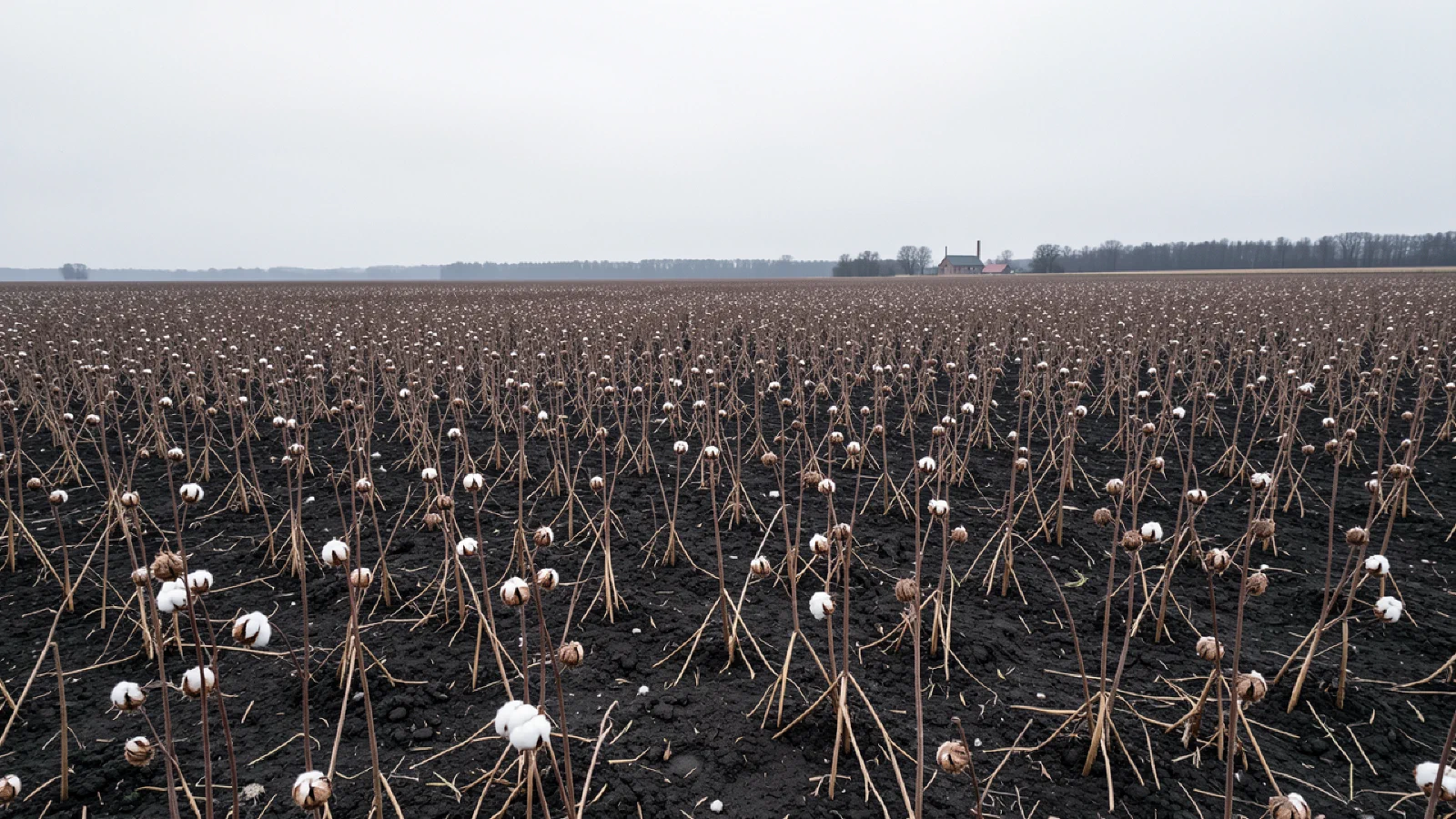
The Black Belt stretches in a crescent across the Deep South from Virginia through the Carolinas, Georgia, Alabama, Mississippi, and into Louisiana. Named for the dark, fertile soil that supported cotton cultivation, the region now carries that name as a marker of the African American population concentration that plantation economics created. Approximately 4.5 million people live in Black Belt counties, with African Americans comprising 50 to 85 percent of population.
This article examines whether RHTP transformation can address health outcomes rooted in 400 years of plantation economy, slavery, Jim Crow, and systematic disinvestment. The program operates on a five year timeline ending in 2030. Can a healthcare intervention with a fixed endpoint address conditions transmitted across centuries?
The tension is not academic. If transformation requires addressing historical causes, RHTP’s timeline and resources are fundamentally inadequate. If transformation can address current conditions without engaging history, then RHTP’s approach may succeed. The evidence suggests neither extreme is correct. Historical understanding must inform intervention design, but interventions must focus on what can change within available constraints.
The analytical value lies not in documenting Black Belt health burdens but in assessing whether RHTP’s universal approach can address a region where outcomes reflect centuries of deliberate extraction. State level analysis treats Alabama, Georgia, and Mississippi as separate contexts. The Black Belt crosses all three and constitutes a single region that state administration cannot coherently address.
Regional Definition#
The Black Belt proper encompasses approximately 200 counties across eight states, defined by majority African American population, persistent poverty, and historical connection to cotton plantation agriculture.
| State | Black Belt Counties | Population | African American % | Persistent Poverty Counties |
|---|---|---|---|---|
| Alabama | 24 | ~500,000 | 50-85% | 24 |
| Georgia | 32 | ~600,000 | 40-70% | 26 |
| Mississippi | 18 | ~350,000 | 50-80% | 18 |
| South Carolina | 15 | ~400,000 | 45-65% | 12 |
| North Carolina | 13 | ~300,000 | 40-60% | 8 |
| Louisiana | 12 | ~250,000 | 40-70% | 10 |
| Virginia | 8 | ~150,000 | 40-55% | 6 |
| Texas | 6 | ~100,000 | 35-50% | 4 |
The Black Belt is unified by soil, history, and contemporary crisis. The fertile dark soil supported intensive cotton cultivation requiring massive labor. Plantation economy concentrated wealth while creating majority Black populations. After the Great Migration depleted population, those who remained faced declining economies and eroding services.
State level analysis misses regional coherence. Alabama’s Black Belt shares more with Georgia’s than with Alabama’s Tennessee Valley. Georgia’s Black Belt shares more with Alabama’s than with Georgia’s Appalachian north. RHTP funds flow to Montgomery, Atlanta, and Jackson, not to the region itself. No mechanism exists for Black Belt regional coordination across state boundaries.
Historical Context#
The Mathematics of Extraction#
Understanding Black Belt health outcomes requires understanding how wealth extraction worked. The plantation economy transferred labor value from enslaved people to slaveholders and from the region to distant financial centers.
Antebellum economics: Cotton produced in the Black Belt generated wealth for plantation owners, factors in Mobile and Savannah, shippers in New York, textile manufacturers in New England, and bankers in London. The people whose labor created this wealth received nothing. Health costs from brutal labor conditions were borne locally; profits flowed elsewhere.
Postbellum continuation: Emancipation ended legal slavery but sharecropping continued extraction. Landowners provided land, tools, and credit; sharecroppers provided labor; accounting systems ensured sharecroppers remained perpetually in debt. Wealth continued flowing from Black labor to white landowners. This system persisted into the 1960s.
Jim Crow reinforcement: Segregation laws formalized inferior public services. Black schools received fractions of white school funding. Black hospitals operated with minimal resources or did not exist. The tax base generated by Black labor funded services Black residents could not access.
Great Migration consequences: Between 1910 and 1970, millions left for northern cities. Population halved in many counties. Those who remained faced declining populations, shrinking economies, and reduced services. The counties hollowed out.
What remained: Counties stripped of wealth for 400 years, depleted of population for 100 years, with majority Black populations, no industrial diversification, limited tax base, and health infrastructure built on the assumption of continued extraction.
Health as Historical Echo#
Black Belt health outcomes are echoes of historical extraction compounding across generations. Maternal health affects child health. Child health affects adult health. Adult health affects the next generation. Populations subjected to slavery, Jim Crow, and systematic deprivation accumulated deficits that transmit intergenerationally.
Infrastructure absence is historical artifact. Black Belt hospitals that closed often never should have existed as isolated facilities serving impoverished populations. They represented attempts to provide something rather than nothing after integration, built on financial foundations that could not sustain them.
Provider distribution reflects market outcomes shaped by history. Physicians choose practice locations based partly on payer mix. Communities where 40 to 60 percent of patients have Medicaid and 15 to 20 percent are uninsured offer practice economics many providers will not accept. The payer mix reflects poverty. The poverty reflects history.
Current Conditions#
Demographics#
The Black Belt continues experiencing population decline as young adults leave for opportunities elsewhere. Those remaining are disproportionately elderly, disabled, or economically trapped.
Alabama Black Belt Demographics:
| County | Population | 10 Year Trend | Median Age | Poverty Rate | African American % |
|---|---|---|---|---|---|
| Dallas | 38,000 | -8.2% | 41 | 29.8% | 70.1% |
| Wilcox | 10,000 | -12.4% | 43 | 32.1% | 71.8% |
| Lowndes | 9,000 | -14.1% | 44 | 31.2% | 73.4% |
| Perry | 9,000 | -11.8% | 42 | 28.7% | 68.9% |
| Marengo | 19,000 | -9.3% | 42 | 25.4% | 51.2% |
| Greene | 8,000 | -15.7% | 46 | 33.8% | 80.4% |
| Sumter | 12,000 | -13.2% | 44 | 30.1% | 74.2% |
| Hale | 14,000 | -10.6% | 41 | 24.2% | 58.3% |
Georgia Black Belt Demographics:
| County | Population | 10 Year Trend | Median Age | Poverty Rate | African American % |
|---|---|---|---|---|---|
| Hancock | 8,500 | -11.3% | 45 | 28.4% | 72.1% |
| Warren | 5,300 | -13.8% | 46 | 29.1% | 61.4% |
| Taliaferro | 1,600 | -16.2% | 48 | 31.7% | 59.8% |
| Quitman | 2,300 | -14.9% | 47 | 33.2% | 46.3% |
| Stewart | 6,100 | -12.1% | 44 | 27.8% | 61.9% |
| Randolph | 6,800 | -10.4% | 43 | 26.3% | 58.7% |
| Terrell | 8,800 | -9.8% | 42 | 25.1% | 61.3% |
The pattern repeats across the region: population declining 10 to 16 percent per decade, median ages rising into the mid 40s, poverty rates exceeding 25 percent, and African American majorities maintained as white residents also leave.
Healthcare Infrastructure#
Hospital Status in Alabama Black Belt:
| County | Hospital | Status | Notes |
|---|---|---|---|
| Dallas | Vaughan Regional Medical Center | Operating, stressed | Regional referral for western Black Belt |
| Wilcox | Converted | Rural Emergency Hospital | No longer inpatient |
| Lowndes | None | Closed 2019 | Nearest hospital 45 minutes |
| Perry | None | Never had hospital | Depends on Selma, Tuscaloosa |
| Marengo | Bryan W. Whitfield Memorial | Operating, at risk | L&D unit closed |
| Greene | None | Closed 2012 | Depends on Tuscaloosa, 50+ miles |
| Sumter | Hill Hospital of Sumter County | Struggling | Limited services |
| Hale | None | Closed 2014 | Depends on Tuscaloosa |
Hospital Status in Georgia Black Belt:
| County | Hospital | Status | Notes |
|---|---|---|---|
| Hancock | None | Never had | Depends on Augusta, Milledgeville |
| Warren | None | Closed | Nearest facility 35+ miles |
| Terrell | None | Closed 2013 | Depends on Albany, Americus |
| Early | None | Closed 2016 | Southwest Georgia crisis zone |
| Miller | None | Closed 2020 | Nearest hospital 45+ miles |
| Seminole | None | Closed 2017 | Depends on Donalsonville, Bainbridge |
Georgia’s southwestern hospital closure crisis concentrated in Black Belt counties. Between 2013 and 2020, multiple facilities closed, creating healthcare deserts covering thousands of square miles with no inpatient services.
Health Outcomes#
| Measure | Black Belt | State Average | National Rural | National | Gap |
|---|---|---|---|---|---|
| Life expectancy | 71.2 years | 75.8 years | 76.4 years | 78.6 years | -7.4 years |
| Infant mortality (per 1,000) | 12.4 | 7.8 | 6.2 | 5.4 | +7.0 |
| Maternal mortality (per 100K) | 89 | 38 | 32 | 24 | +65 |
| Diabetes prevalence | 17.8% | 12.4% | 10.8% | 9.4% | +8.4% |
| Heart disease mortality (per 100K) | 298 | 212 | 189 | 165 | +133 |
| Stroke mortality (per 100K) | 72 | 48 | 42 | 37 | +35 |
| Premature death years (per 100K) | 14,200 | 9,400 | 7,800 | 6,600 | +7,600 |
Life expectancy in six Alabama rural counties falls below 70 years. National life expectancy exceeds 78 years. The eight year gap represents decades of life lost to preventable conditions, manageable chronic diseases, and treatable acute events becoming fatal in absence of accessible care.
The Lowndes County Crisis#
Lowndes County illustrates the intersection of historical extraction and contemporary health crisis. Population 9,000. Median income $26,100. One physician for every 9,641 residents. No hospital. No OB/GYN. The nearest delivering hospital is 45 minutes away.
The county also features the sanitation crisis that became nationally visible in 2017. Failing septic systems, inadequate municipal sewage infrastructure, and poverty preventing repairs mean raw sewage surfaces in yards. Hookworm, a parasitic infection largely eliminated elsewhere, persists in Lowndes County. RHTP’s clinical investments cannot install functioning sewage systems. The social determinants of health extend to infrastructure healthcare programs cannot address.
The Core Tension: Historical Depth vs. Current Intervention#
The Historical Necessity View: Understanding history is essential for effective intervention. Black Belt poverty is the predictable outcome of deliberate policies. Transformation ignorant of history will fail to understand why standard interventions fail here, why provider recruitment fails, why communities distrust outside intervention. Investment must be proportional to extraction. If 400 years of wealth flowed out, transformation requires sustained investment flowing in at scale no five year program can provide.
The Current Focus View: Transformation must address current conditions with current resources. RHTP ends in 2030. Historical analysis cannot resuscitate someone having a heart attack with the nearest hospital 60 miles away. Focus on what can change: build telehealth capacity, train community health workers, stabilize remaining hospitals. Historical context can inform design, but services must be designed for current delivery.
Where Evidence Points: Neither extreme satisfies. Pure historical focus produces paralysis: if the problem requires four centuries of investment, why attempt five years? Pure current focus produces repeated failure: interventions ignorant of why previous efforts failed will fail the same ways.
Historically informed, practically focused transformation represents the synthesis. Use historical understanding to design interventions differently: understand why provider recruitment fails and design recruitment that might succeed; understand why communities distrust healthcare systems and build systems that might earn trust. But keep focus on current action. The goal is measurable improvement for people living in the Black Belt today.
The Lived Reality#
Ms. Johnson is 62, diabetic with hypertension and early kidney disease, living alone in a mobile home outside Hayneville in Lowndes County. Her daughter moved to Montgomery for work. Her church provides her main social support.
Managing her conditions requires regular lab work, medication adjustments, and monitoring. The nearest primary care clinic with lab services is 25 miles away. She does not drive. Medicaid transportation requires a week’s notice and runs unpredictable schedules.
She misses appointments. Her A1C rises. Her kidney function declines. When her chest tightens and she cannot catch her breath, the ambulance takes 18 minutes to arrive. The drive to Selma takes 45 minutes. She survives this episode. Her kidney disease has progressed to requiring dialysis discussions.
Dialysis means traveling to Montgomery, 50 miles, three times weekly. The transportation burden will consume whatever remains of her life. She wonders if she should move, leaving the church and community that sustained her for sixty years.
What does transformation mean for Ms. Johnson? RHTP will not rebuild the Lowndes County hospital. Population too small, payer mix too poor, economics impossible. RHTP might fund telehealth letting her see a provider on screen. RHTP might fund a community health worker who visits and monitors her. RHTP might fund transportation improvements.
None equals having a hospital in her county. None addresses why Lowndes County has no hospital when similarly sized white rural counties often do. None addresses the sewage pooling in her neighbor’s yard.
Kendra is 24, pregnant with her second child in Terrell County, Georgia. The county lost its hospital in 2013. Nearest OB is in Albany, 30 miles. She works hourly at a convenience store without leave. Prenatal care requires missing work and arranging transportation.
She makes some prenatal visits, misses others. Her blood pressure rises. At 34 weeks, severe headache and blurred vision. Her mother drives her to Albany, 45 minutes that feel like hours. Emergency cesarean. Baby in NICU for two weeks.
Mother and child survive. The hospital bill will take years to pay, if ever. Georgia’s maternal mortality rate for Black women exceeds 60 per 100,000 live births. In Black Belt counties, the rate approaches 90. National rate: 24.
Alternative Perspectives#
The System Discrimination View#
The strongest alternative perspective holds that Black Belt health outcomes reflect system discrimination, not population characteristics. Identical individuals in different geographic contexts experience different outcomes. The difference is place, not person.
Evidence: When Black Belt residents move to areas with functioning healthcare, outcomes improve. Hospital closures concentrated here at rates exceeding other rural counties with similar characteristics. Medicaid policy, decided by state legislators who mostly do not represent Black Belt populations, leaves working age adults uninsured.
Assessment: This view has overwhelming evidentiary support. Outcomes reflect where people live and how systems treat them more than who they are. “Population characteristics” explains nothing that geographic and policy context does not explain better.
The Triage Necessity View#
An uncomfortable perspective: some Black Belt counties may be beyond transformation with RHTP resources. Greene County, Alabama: population 8,000 declining at 15 percent per decade. No hospital. No substantial employer. Projection suggests below 5,000 by 2040.
Can infrastructure investment justify serving a shrinking population? Perhaps resources should help people access care elsewhere rather than building infrastructure that cannot survive.
Assessment: Contains uncomfortable truths. Not every place can sustain healthcare infrastructure. But the argument depends on assumptions about viability that may reflect historical discrimination rather than natural limits. If Greene County cannot sustain services, is that inherent or because extraction made it unsustainable? The triage view risks accepting outcomes of discrimination as neutral facts.
State Approaches#
Alabama#
$200 million RHTP funding. No Medicaid expansion, leaving approximately 100,000 residents in coverage gap, heavily concentrated in Black Belt.
Alabama’s approach emphasizes telehealth, workforce development, and hospital stabilization but does not specifically target the Black Belt as requiring distinct treatment. The absence of regional targeting means Black Belt counties compete with less distressed rural areas for resources. Without expansion, the coverage gap undermines infrastructure investment.
What Alabama should do differently: Target Black Belt explicitly with higher per capita investment. Pursue coverage expansion recognizing infrastructure investment without coverage produces limited returns. Develop workforce pipelines specifically recruiting Black Belt natives. Engage Black Belt community organizations in implementation design.
Georgia#
$245 million RHTP funding. Georgia Pathways enrolled fewer than 4,000 against projections of 100,000. Approximately 175,000 remain in coverage gap.
Georgia’s approach emphasizes regional networks and workforce but does not detail specific Black Belt interventions. The continued coverage gap undermines transformation investment.
What Georgia should do differently: Abandon Pathways complexity to achieve actual expansion. Target southwestern hospital closure zone with emergency intervention. Develop regional hub strategy using Albany’s Phoebe Putney as anchor for surrounding Black Belt counties.
Mississippi#
$206 million RHTP funding. No Medicaid expansion.
Mississippi’s CRIS regional networks represent more sophisticated regional thinking than Alabama or Georgia. But the state treats the Delta as primary focus, potentially underweighting eastern Black Belt counties that share Black Belt characteristics without Delta visibility.
What Mississippi should do differently: Extend CRIS coordination to Black Belt counties east of Delta. Pursue Medicaid expansion. Coordinate with Alabama on counties along the state border.
What Transformation Requires and Cannot Achieve#
Requires#
- Investment proportional to disinvestment: Sustained commitment reflecting severity of historical extraction
- Workforce reflecting community demographics: Pipeline programs recruiting, training, and returning Black Belt natives
- Community controlled implementation: Black Belt residents determining priorities and approaches
- Historical acknowledgment: Recognition of how history shapes current conditions
- Maternal health emergency response: Crisis intensity requires emergency attention
Cannot Achieve#
- Reversal of 400 years of extraction: Historical accounting is not achievable standard
- Economic development beyond healthcare scope: RHTP is healthcare program
- Resolution of structural racism: Healthcare transformation cannot end racism
- Immediate infrastructure where none exists: Building capacity takes years
- Sanitation infrastructure: RHTP cannot fund sewage systems
Conclusion#
The Black Belt presents RHTP with its starkest test: can healthcare transformation address outcomes rooted in 400 years of extraction? Transformation as currently structured cannot resolve historical burden but can make meaningful difference within that constraint.
What transformation can do: provide telehealth connecting isolated populations to providers, train and retain workforce with community ties, stabilize remaining healthcare institutions, improve maternal health outcomes through targeted intervention.
What transformation cannot do: reverse four centuries of wealth extraction, build sustainable infrastructure in every declining county, resolve the coverage gap without political change, address social determinants healthcare programs cannot reach.
The core tension resolves not in choosing historical depth or current focus but in using historical understanding to inform current action. Black Belt transformation must acknowledge why this region differs, why standard approaches fail, why community distrust exists. That understanding should shape design, not paralyze action.
The Black Belt will not be transformed in five years. But five years of historically informed, community engaged intervention can begin transformation continuing beyond RHTP. The question is whether states design for Black Belt reality or treat the region as generic rural. Generic approaches will fail. Black Belt specific approaches might succeed.
How this article connects to others in Blue Gray Matters.
Sources cited in this article.
- Alabama Department of Public Health. "Primary Care and Rural Health." ADPH, 2025, www.alabamapublichealth.gov/ruralhealth/.
- America's Health Rankings. "2025 Annual Report." United Health Foundation, 2025, www.americashealthrankings.org/.
- Center for Healthcare Quality and Payment Reform. "Rural Hospitals at Risk of Closing." CHQPR, Dec. 2025, chqpr.org/downloads/Rural_Hospitals_at_Risk_of_Closing.pdf.
- Centers for Disease Control and Prevention. "National Vital Statistics System: Mortality Data." CDC, 2025, www.cdc.gov/nchs/nvss/deaths.htm.
- Chartis Center for Rural Health. "2025 State of the State: Rural Hospital Closures." Chartis, Feb. 2025, www.chartis.com/insights/2025-rural-health-state-state.
- County Health Rankings. "2025 County Health Rankings." University of Wisconsin Population Health Institute, 2025, www.countyhealthrankings.org/.
- Flowers, Catherine Coleman. *Waste: One Woman's Fight Against America's Dirty Secret.* The New Press, 2020.
- Georgia Department of Public Health. "Rural Health." DPH, 2025, dph.georgia.gov/rural-health.
- Georgia Watch. "Georgia's Rural Hospital Crisis." Georgia Watch, 2025, www.georgiawatch.org/healthcare/.
- Kaiser Family Foundation. "Status of State Medicaid Expansion Decisions." KFF, 2025, www.kff.org/medicaid/issue-brief/status-of-state-medicaid-expansion-decisions/.
- Mississippi State Department of Health. "Rural Health in Mississippi." MSDH, 2025, msdh.ms.gov/page/44,0,372.html.
- University of Alabama at Birmingham. "Black Belt Health: Research and Initiatives." UAB School of Public Health, 2025.
- USDA Economic Research Service. "Rural Poverty and Well-Being." ERS, 2025, www.ers.usda.gov/topics/rural-economy-population/rural-poverty-well-being/.
- USDA Economic Research Service. "Atlas of Rural and Small-Town America." ERS, 2025, www.ers.usda.gov/data-products/atlas-of-rural-and-small-town-america/.