Florida Rural
The Tourism State's Invisible Interior
Florida’s brand is beaches, theme parks, and retirement communities. The state’s $101 billion tourism industry concentrates attention on coastal corridors and metropolitan Orlando while rendering invisible the rural interior and panhandle where 1.2 million Floridians live in conditions that contradict the Sunshine State’s prosperity narrative. This article examines whether state-administered RHTP can address regions that state identity actively obscures.
The core tension is Regional Identity vs. External Characterization. Florida’s external image as wealthy retirement destination conflicts with internal reality in rural counties where poverty rates exceed 25 percent, where hospitals have closed and not reopened, where agricultural workers harvest crops Americans eat while lacking access to healthcare for themselves. The state’s self-presentation becomes a barrier to recognizing and addressing rural need.
A secondary tension emerges: Historical Depth vs. Current Intervention. Florida’s rural regions carry distinct histories that current RHTP strategies largely ignore. The Panhandle’s ties to Deep South plantation economy. Central Florida’s cattle and citrus heritage. The Glades’ sugar industry and migrant labor exploitation. These histories shape present conditions in ways that generic rural healthcare approaches cannot address.
This analysis matters because Florida illustrates how state branding can become policy obstacle. When a state’s identity emphasizes prosperity, acknowledging rural poverty becomes politically difficult. When tourism dominates economic narrative, agricultural and timber regions become afterthoughts. Florida’s rural residents suffer not just from their conditions but from their invisibility within state discourse.
Regional Definition#
Florida Rural encompasses the interior and panhandle counties that share neither coastal development nor metropolitan growth. This includes approximately 35 counties with rural character, roughly 21,000 square miles, containing 1.2 million residents.
Geographic Subregions#
The Panhandle stretches from Pensacola east to Tallahassee, including counties that share more cultural and economic characteristics with Alabama and Georgia than with South Florida. Holmes, Washington, Jackson, Calhoun, Liberty, Gulf, and Franklin counties form a belt of rural poverty that most Florida tourists never see.
North Central Florida includes the region surrounding Gainesville but excluding the university city itself. Bradford, Union, Baker, Gilchrist, Dixie, Levy, and Lafayette counties contain some of Florida’s deepest rural poverty adjacent to one of its most prosperous small cities.
The Heartland runs through central Florida’s interior, including Hardee, Highlands, Okeechobee, DeSoto, and Glades counties. This is cattle country and citrus country, with agricultural economy dominant and healthcare infrastructure thin.
Florida Rural Demographics
| County | Population | Poverty Rate | Uninsured Rate | Nearest Hospital |
|---|---|---|---|---|
| Holmes | 19,800 | 23.4% | 18.2% | 25 miles |
| Liberty | 8,100 | 21.7% | 16.8% | 35 miles |
| Calhoun | 13,900 | 24.2% | 19.1% | 40 miles |
| Lafayette | 8,400 | 18.9% | 17.4% | 32 miles |
| Glades | 13,500 | 19.8% | 22.4% | 28 miles |
| Hardee | 26,200 | 22.1% | 28.3% | 18 miles |
| Dixie | 16,800 | 20.6% | 19.7% | 30 miles |
| Union | 15,700 | 16.4% | 15.2% | 22 miles |
| DeSoto | 35,400 | 21.3% | 24.7% | 15 miles |
| Okeechobee | 41,200 | 19.2% | 21.8% | Local |
What State Level Analysis Misses#
State averages paint Florida as relatively healthy and prosperous. Median household income exceeds $67,000 statewide. Uninsured rates hover around 12 percent. Life expectancy exceeds 78 years. These figures obscure dramatic within-state variation.
In Hardee County, median household income falls below $43,000, nearly 40 percent lower than state average. In Holmes County, poverty rates exceed 23 percent, double the state rate. In Glades County, the uninsured rate approaches 23 percent, nearly double the state average. Rural Florida exists in a different economic and health reality than metropolitan Florida, but state-level data buries this distinction.
The “Two Floridas” phenomenon is well documented in state policy discourse but rarely addressed in state policy action. Metropolitan Florida attracts investment, economic development priority, and political attention. Rural Florida receives acknowledgment in campaign speeches and neglect in budget allocations.
Historical Context#
Plantation Legacy in the Panhandle#
The Florida Panhandle was not developed as a tourist destination. It was cotton country, part of the plantation economy that defined the antebellum South. Jackson County had more enslaved people than any other Florida county before the Civil War. The legacy persists in demographics, in wealth distribution, in the racial composition of poverty.
After the Civil War, timber extraction replaced cotton as the dominant economy. Turpentine camps and sawmills employed both Black and white workers in conditions that resembled debt peonage. When the timber played out, nothing replaced it. The Panhandle’s persistent poverty has roots in extraction economy that took resources and left behind communities without economic foundation.
Agricultural Development in the Interior#
Central Florida’s interior developed around cattle ranching and citrus groves. Unlike the plantation economy, these industries required seasonal rather than permanent labor. The result was infrastructure built for extraction rather than community: processing facilities but not hospitals, transportation for products but not people.
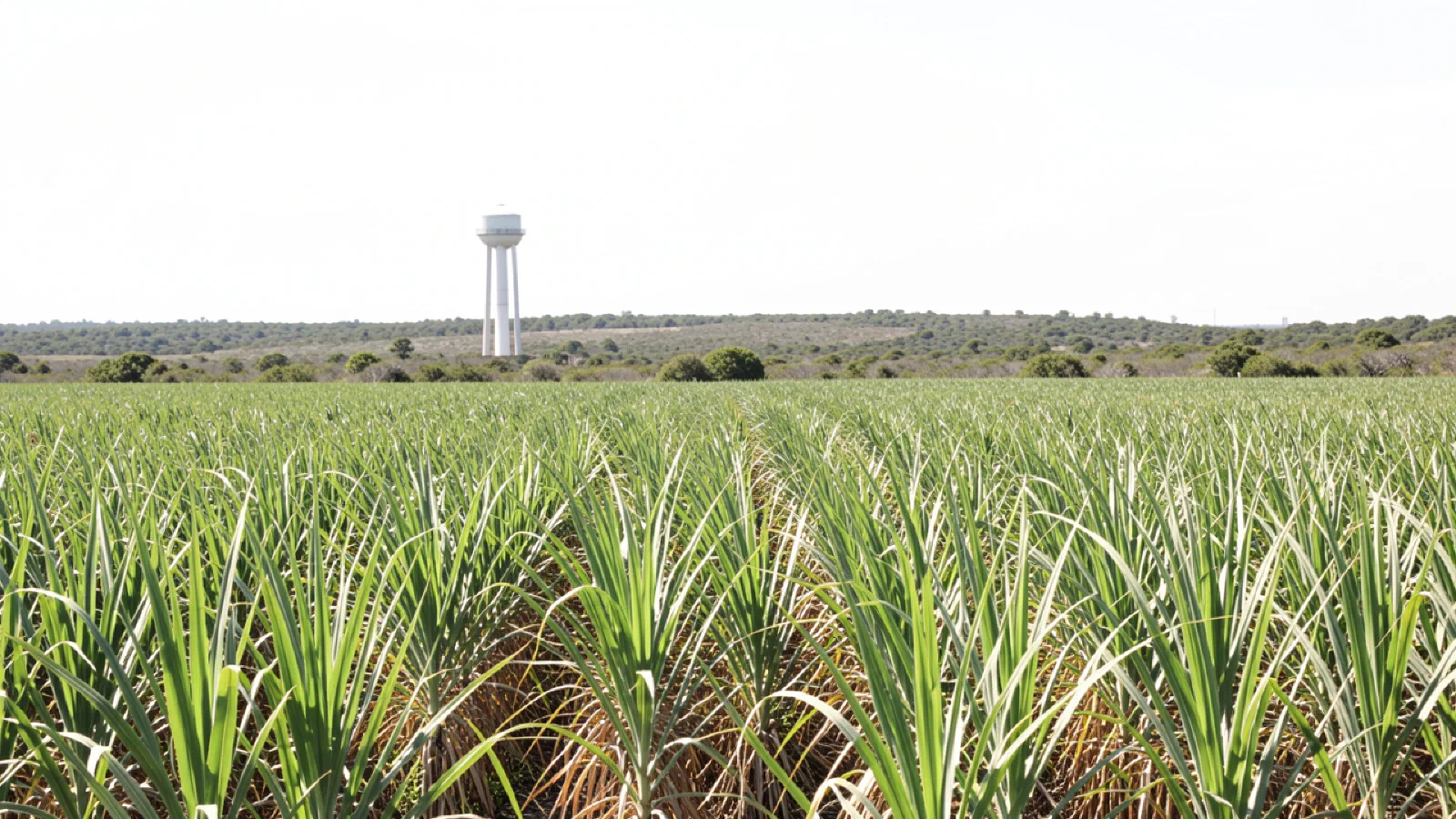
The Glades region developed around sugar production, an industry that from its beginning relied on migrant labor from the Caribbean and Central America. Belle Glade, Clewiston, and surrounding communities became agricultural processing centers where workers’ health was secondary to harvest schedules. This history shapes present conditions where agricultural workers remain underserved by healthcare systems built to serve permanent residents.
Hurricane Devastation and Uneven Recovery#
Natural disaster has shaped rural Florida’s recent history. Hurricane Michael in 2018 devastated Panhandle counties with Category 5 intensity. Jackson, Calhoun, and Gulf counties experienced destruction that has still not been fully remediated. Healthcare facilities damaged in the storm faced insurance battles, reconstruction delays, and workforce departures that some have not overcome.
The uneven recovery pattern repeated Florida’s historical tendency to prioritize coastal and metropolitan areas. Federal disaster funding flowed according to formulas that favored property value over population need. Wealthy coastal communities rebuilt quickly. Poor rural communities waited years for assistance that sometimes never arrived.
Vignette: The Invisible Farmworker
Maria Elena picks tomatoes in Immokalee from November through May, then follows the harvest north to Georgia and the Carolinas before returning south. She has worked Florida’s agricultural circuit for 23 years. She has never had health insurance.
When she developed persistent abdominal pain in February 2025, she waited three weeks before seeking care, hoping it would resolve. Clinic visits cost money she needed for rent and food. When the pain became unbearable, she went to the emergency room in Fort Myers, a 45-minute drive from the labor camp where she lived.
The diagnosis was advanced ovarian cancer. The ER stabilized her and discharged her with instructions to follow up with an oncologist. She has no car. No insurance. No way to pay for chemotherapy even if she could reach the cancer center in Naples.
“They tell me I should have come sooner,” Maria Elena says. “Come where? With what money? In whose car?”
She represents thousands of agricultural workers who make Florida’s $8 billion produce industry possible while remaining invisible to Florida’s healthcare system. When RHTP planners discuss rural transformation in Tallahassee, farmworkers like Maria Elena appear in no databases, qualify for no programs, receive no consideration.
The Core Tensions#
Regional Identity vs. External Characterization#
Florida’s external identity as tourism and retirement destination shapes how the state presents itself and how policymakers understand state needs. Rural agricultural communities contradict this identity and therefore receive minimal attention in state planning.
The External Characterization View holds that Florida’s economy depends on maintaining its image as prosperous, healthy, and welcoming. Emphasizing rural poverty undermines economic development strategy. Tourism marketing cannot coexist with poverty documentation. The state’s economic health requires promoting the Florida that attracts investment, not the Florida that needs public support.
The Regional Identity View holds that rural Florida communities have their own identities independent of state branding. Panhandle residents identify with Southern culture and working-class values, not with Miami glamour. Agricultural communities identify with food production and land stewardship, not with theme parks. Imposing tourist Florida’s identity on agricultural Florida misunderstands and disrespects distinct regional cultures.
The Evidence Assessment: Both views contain validity but with asymmetric policy implications. External characterization dominates state policy because coastal metropolitan interests dominate state politics. Rural communities lack political power to assert their identity against state branding. The result is systematic underinvestment in regions that do not fit state narrative.
RHTP implementation in Florida shows this dynamic in action. The state’s application emphasized telehealth technology and workforce recruitment, approaches that translate across rural and urban contexts without requiring acknowledgment of rural Florida’s distinct conditions. No specific strategies addressed farmworker health, Panhandle persistent poverty, or the historical factors shaping regional outcomes.
Historical Depth vs. Current Intervention#
Rural Florida’s challenges have historical roots that five-year RHTP programs cannot address. The Panhandle’s poverty reflects plantation and extraction economy legacies spanning 150 years. Agricultural Florida’s farmworker health crisis reflects a century of labor exploitation enabled by policy choices. Current intervention that ignores this history repeats patterns that created present conditions.
The Historical Necessity View argues that understanding how the Panhandle became poor is essential for making it less poor. Generic workforce recruitment fails where the workforce left because there were no jobs, and there were no jobs because extraction economy depleted resources without building sustainable economic base. Transformation requires addressing what extraction left behind, not pretending to start fresh.
The Current Focus View argues that RHTP resources are limited and time-bound. Historical analysis, however accurate, cannot rebuild economies or undo segregation. Focus on current barriers, current interventions, current populations. Let historians debate the past while practitioners address the present.
The Evidence Assessment: History shapes present conditions in ways that make historically-ignorant intervention ineffective. But historical understanding does not automatically produce effective intervention strategies. The synthesis requires using historical analysis to inform intervention design without being paralyzed by historical complexity. Florida’s RHTP application showed no evidence of this synthesis, treating rural Florida as generic rural America without regional historical context.
Current Conditions#
Healthcare Infrastructure#
Florida Rural Healthcare Facilities
| Facility Type | Count | Trend | Service Status |
|---|---|---|---|
| Rural Hospitals | 23 | Declining | 4 at immediate closure risk |
| Critical Access Hospitals | 5 | Stable | Limited service lines |
| FQHCs | 47 sites | Expanding | Strained capacity |
| Rural Health Clinics | 89 | Stable | Uneven distribution |
| Nursing Homes | 67 | Declining | Closures ongoing |
The hospital closure pattern in rural Florida follows national trends but with Florida-specific acceleration. Calhoun-Liberty Hospital in Blountstown reduced services after chronic financial losses. Several Panhandle hospitals damaged by Hurricane Michael never fully restored services. The conversion to freestanding emergency departments has proceeded faster in Florida than in most states, replacing inpatient capacity with limited emergency services.
Health Outcomes#
Florida Rural Health Metrics
| Measure | Florida Rural | Florida State | National Rural | Gap |
|---|---|---|---|---|
| Life Expectancy | 74.8 years | 78.3 years | 76.2 years | -3.5 vs state |
| Infant Mortality | 8.2/1,000 | 5.9/1,000 | 6.4/1,000 | +2.3 vs state |
| Diabetes Prevalence | 14.8% | 11.2% | 12.6% | +3.6 vs state |
| Mental Health Provider Shortage | 89% in HPSA | 34% in HPSA | 62% in HPSA | +55 vs state |
| Uninsured Rate | 19.4% | 12.1% | 11.2% | +7.3 vs state |
The uninsured rate gap between rural and urban Florida exceeds national patterns. Florida’s refusal to expand Medicaid under the Affordable Care Act hits rural populations hardest. Agricultural workers, seasonal employees, and low-wage workers in rural economies fall into the coverage gap at higher rates than their urban counterparts.
Workforce Crisis#
Rural Florida faces severe healthcare workforce shortages across all clinical disciplines. Primary care physician shortages affect 85 percent of rural counties. Mental health professional shortages affect 89 percent. Nursing shortages reach critical levels in facilities that compete against better-paying urban hospitals for the same limited graduate supply.
The retirement pipeline compounds immediate shortages. Many rural Florida physicians are over 60, approaching retirement with no succession plan. Rural practices struggle to recruit young physicians who carry medical school debt averaging $200,000 and see no financial path to rural practice at rural reimbursement rates.
Vignette: The Last Doctor in Liberty County
Dr. Richard Hardee has practiced family medicine in Bristol, Liberty County, for 37 years. He turned 68 in January 2026. His patients, many of whom he has treated for three generations, ask when he’s going to retire. He asks them what they’ll do when he does.
Liberty County has 8,100 residents and one physician: him. The next nearest primary care provider is in Blountstown, 25 miles away, where the clinic operates at capacity and cannot accept new patients. After that, patients must travel to Tallahassee, 50 miles distant.
Dr. Hardee has tried to recruit a successor for eight years. Young physicians visit, see the patient load, the isolation, the on-call demands, the reimbursement rates, and decline. “They’d have to take a $100,000 pay cut to practice here,” he explains. “And they’d be on call 24/7 because there’s no one to share call with.”
He applied for NHSC loan repayment support for a physician assistant position. The application was denied due to scoring that favored larger practices with more “impact.” He applied for state workforce recruitment assistance. The program prioritized urban underserved areas with higher patient volumes.
“The programs aren’t designed for places like Liberty County,” Dr. Hardee says. “They’re designed for places where the problem is bad. Here the problem is total.”
When Dr. Hardee retires, Liberty County will have no physician. RHTP’s workforce development funding flows through state-designed programs optimized for urban underserved populations. Rural Florida’s smallest, most isolated communities fall through every programmatic gap.
RHTP in This Region#
State RHTP Context#
Florida received $215.6 million in FY2026 RHTP funding, ranking eighth nationally in absolute dollars. Divided across 1.2 million rural residents, this amounts to approximately $180 per rural resident annually, above the national average but below many peer states with comparable rural challenges.
Florida’s RHTP Strategy emphasizes three priorities:
- Telehealth expansion to bridge geographic access gaps
- Workforce recruitment and retention through loan repayment and incentives
- Hospital financial stabilization through operating support
The strategy does not differentiate between Panhandle, interior, and agricultural regions. It does not address farmworker populations specifically. It does not acknowledge historical factors shaping regional conditions. Rural Florida is treated as homogeneous space requiring generic intervention.
Regional Targeting Assessment#
Florida RHTP Regional Provisions
| Region | Specific Provisions | Designated Funding | Assessment |
|---|---|---|---|
| Panhandle | None specified | General pool | No regional targeting |
| North Central | None specified | General pool | No regional targeting |
| Heartland | None specified | General pool | No regional targeting |
| Agricultural areas | None specified | General pool | Farmworker populations unaddressed |
Florida’s RHTP application contains no sub-state regional analysis. The Panhandle, with its Deep South characteristics and Hurricane Michael recovery needs, receives no differentiated approach. The Heartland, with its agricultural economy and migrant worker populations, receives no specific programming. The application treats all rural Florida as equivalent.
What RHTP Misses#
Farmworker health represents the most significant gap. Florida’s $8 billion produce industry depends on approximately 200,000 farmworkers, many of whom are undocumented and invisible to traditional healthcare data systems. These workers live in labor camps, follow harvest cycles, and access healthcare only through emergency rooms when conditions become emergencies. RHTP’s framework, designed for permanent resident populations, cannot reach populations who move, who lack addresses, who fear documentation requirements.
Panhandle recovery from Hurricane Michael remains incomplete. Healthcare facilities damaged in 2018 still operate at reduced capacity. Workforce that evacuated during the storm often did not return. The region needs disaster recovery integration with healthcare transformation, but RHTP does not coordinate with FEMA recovery programs or acknowledge disaster impacts on healthcare infrastructure.
Historical poverty patterns receive no acknowledgment. The same counties that were poor in 1960 are poor in 2026. The structural factors producing multigenerational poverty, including limited economic diversification, inadequate educational infrastructure, and racial disparities in wealth accumulation, cannot be addressed through healthcare programs alone, but healthcare programs ignorant of these factors repeat interventions that have failed for decades.
Alternative Perspective Assessment#
The Florida Exceptionalism Argument#
Some observers argue that Florida’s rural healthcare challenges are less severe than other Southern states because Florida’s economy provides resources that poorer states lack. State revenue from tourism and development can, in theory, cross-subsidize rural healthcare investment. Florida’s retired population creates healthcare demand that attracts providers. The state’s climate advantages reduce some health risks associated with harsh winters elsewhere.
Strongest Version: Florida has economic resources that Mississippi, Alabama, and Arkansas lack. If Florida’s rural areas underperform, it reflects state policy choices rather than fundamental resource constraints. The solution is political will to redirect resources, not federal intervention design. Florida can solve its rural healthcare crisis if it chooses to do so.
Assessment: The argument correctly identifies Florida’s greater fiscal capacity relative to Deep South peers. It incorrectly assumes that fiscal capacity translates to political will. Florida’s political economy directs resources toward constituencies with political power, which means coastal metropolitan areas and retiree populations, not rural agricultural communities. The populations suffering most from Florida’s rural healthcare crisis have the least political voice to change state resource allocation. Federal RHTP design cannot assume state political will that evidence does not support.
Regional Strengths and Resources#
Not all is deficit in rural Florida. Regions possess resources that transformation can build upon.
Agricultural economy provides stable employment base even as other rural economies decline. Food production will continue regardless of other economic shifts. Communities anchored by agriculture have economic foundation that purely service or extraction economies lack.
Community health worker tradition exists in farmworker communities, where promotoras have provided health education and navigation for decades. This model predates federal CHW policy interest and represents authentic community-based health infrastructure.
FQHC network has expanded significantly in rural Florida over the past decade. Federally Qualified Health Centers provide primary care access in counties where other options have closed. Building on this infrastructure offers more promising path than recreating parallel systems.
Faith communities serve connector functions in rural Florida as elsewhere in the South. Churches provide transportation, support networks, and community gathering spaces that healthcare transformation can partner with rather than replace.
Transformation Assessment#
What Transformation Requires#
Effective transformation in rural Florida requires:
- Subregional differentiation recognizing distinct Panhandle, interior, and agricultural community needs
- Farmworker-specific programming reaching mobile populations outside traditional healthcare frameworks
- Historical responsiveness acknowledging how past policy shaped present conditions
- Disaster recovery integration connecting RHTP with ongoing Hurricane Michael recovery
- State identity evolution allowing acknowledgment of rural poverty without undermining tourism branding
What Transformation Can Achieve#
With adequate resources and political commitment, RHTP could:
- Stabilize existing rural hospitals through operating support
- Expand FQHC capacity in underserved counties
- Develop farmworker health programs modeled on successful promotora networks
- Support workforce recruitment through meaningful loan repayment
What Transformation Cannot Achieve#
Healthcare transformation cannot:
- Reverse 150 years of extraction economy consequences
- Create economic opportunity where geographic isolation limits development
- Overcome political dynamics that direct state resources toward powerful constituencies
- Force state acknowledgment of rural poverty that contradicts state branding
Honest Assessment#
Florida’s rural healthcare crisis persists not because solutions are unknown but because political economy directs resources elsewhere. The same state that builds luxury retirement communities cannot find resources for rural hospitals. The same economy that depends on farmworker labor provides no healthcare for farmworkers. The same political system that celebrates agricultural heritage neglects agricultural communities.
RHTP provides resources that could make meaningful difference in rural Florida. Whether those resources reach the populations most in need depends on state implementation decisions that federal formula cannot control. Current evidence suggests Florida will implement RHTP in ways that maintain existing patterns: metropolitan priority, coastal preference, and rural neglect dressed in rural rhetoric.
The gap between what Florida could do and what Florida will do illustrates the fundamental limitation of state-administered transformation programs. States with political will need fewer federal resources. States without political will use federal resources to continue existing priorities. Florida has resources. Florida lacks will.
How this article connects to others in Blue Gray Matters.
Sources cited in this article.
- Becker, Gay. "Deadly Inequality in the Health Care 'Safety Net': Uninsured Ethnic Minorities' Struggle to Live with Life-Threatening Illnesses." *Medical Anthropology Quarterly*, vol. 18, no. 2, 2004, pp. 258-275.
- Chartis Group. "2025 Rural Health State of the State: Rural Hospital Closures and Care-Access Crisis." *Chartis*, 2025, www.chartis.com/insights/2025-rural-health-state-state.
- Florida Department of Health. "Florida Rural Health Plan 2022-2024." *Florida Health*, 2022, www.floridahealth.gov/provider-and-partner-resources/community-health-workers/rural-health.
- Florida Department of Health. "Health Equity Report 2024." *Florida Health*, 2024, www.floridahealth.gov/programs-and-services/minority-health.
- Florida Health Care Association. "Nursing Home and Long-Term Care Data." *FHCA*, 2024, www.fhca.org/research.
- Radcliff, Elizabeth, et al. "Obstetric Unit Closures in the United States, 2010-2020." *Obstetrics and Gynecology*, vol. 141, no. 3, 2023, pp. 521-528.
- Rural Health Information Hub. "Florida Rural Health Resources." *Rural Health Information Hub*, 2025, www.ruralhealthinfo.org/states/florida.
- Sheps Center for Health Services Research. "Rural Hospital Closures Map." *University of North Carolina*, 2025, www.shepscenter.unc.edu/programs-projects/rural-health/rural-hospital-closures/.
- Thomas, Stephen B., and Sandra Crouse Quinn. "The Tuskegee Syphilis Study, 1932 to 1972: Implications for HIV Education and AIDS Risk Education Programs in the Black Community." *American Journal of Public Health*, vol. 81, no. 11, 1991, pp. 1498-1505.
- U.S. Census Bureau. "Florida Rural Population Estimates 2023." *American Community Survey*, 2024.
- Villarejo, Don. "Health-Related Inequities Among Hired Farm Workers and the Resurgence of Labor-Intensive Agriculture." *The Kresge Foundation*, 2012.
- Wishner, Jane, et al. "A Look at Rural Hospital Closures and Implications for Access to Care." *Kaiser Family Foundation*, July 2016.