Does State Administration Fit Regional Reality?
When Boundaries Cannot Contain Health
The CMS analyst reviews RHTP applications from all 50 states. Each plan addresses “rural areas” as if they were homogeneous within state boundaries. Ohio’s application treats Appalachian counties the same as agricultural counties. Texas applies a single strategy to the Panhandle, the Piney Woods, and the border. Mississippi’s plan cannot distinguish between the Delta and the Black Belt. Tribal populations appear as demographic checkboxes rather than sovereign governments.
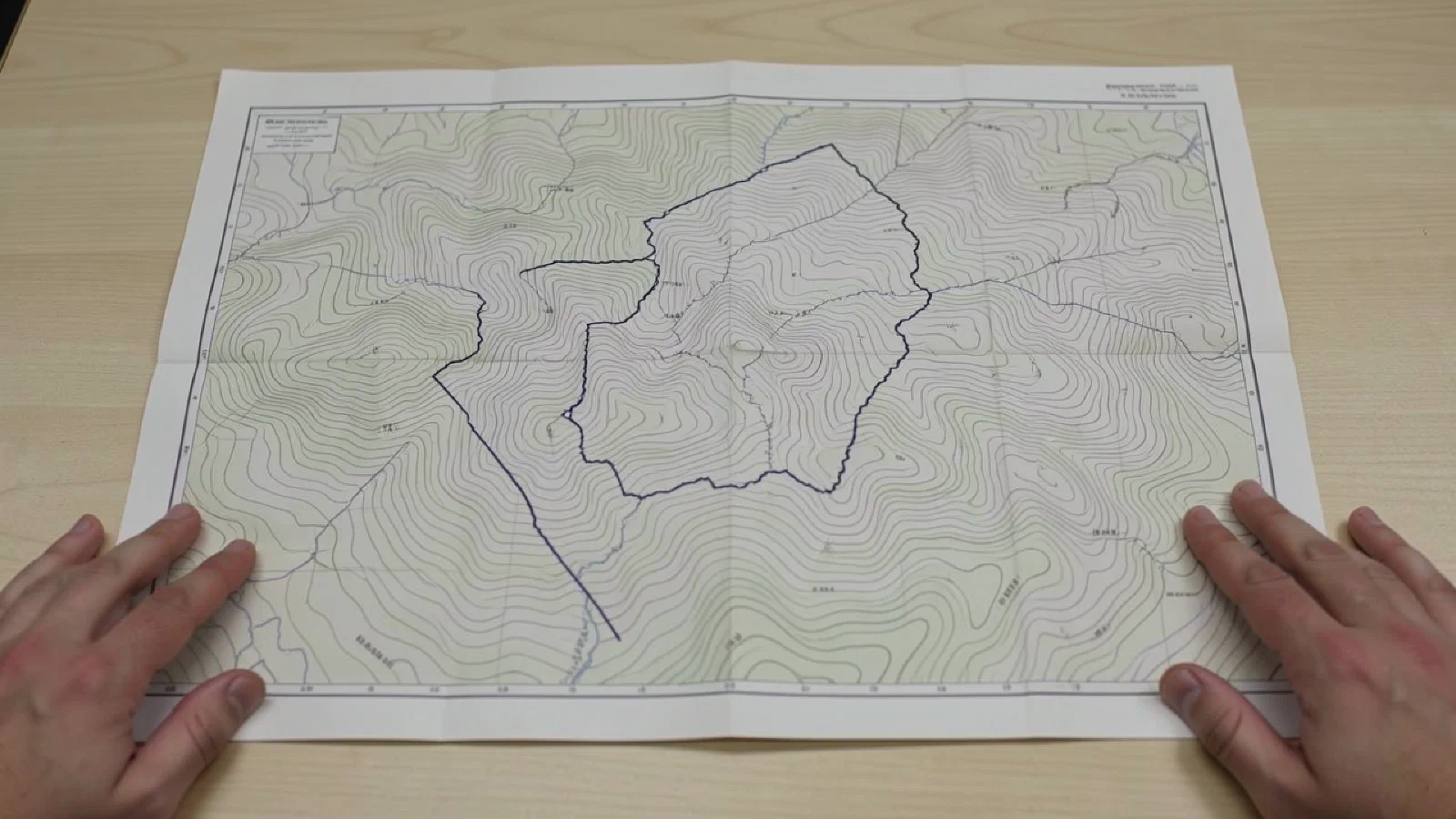
She pulls up a map showing regional health outcomes. The worst mortality corridors ignore state lines entirely. Central Appalachia spans Kentucky, West Virginia, Virginia, Tennessee, and Ohio. The Mississippi Delta spans Arkansas, Mississippi, and Louisiana. The Black Belt crosses Alabama, Georgia, and South Carolina. The Great Plains stretch across ten states. Each region is coherent in its challenges but fragmented in its governance.
The question she cannot answer: Can state-administered transformation address regional challenges that cross state boundaries, constitute distinct sub-state areas, or involve sovereign tribal nations?
Series 10 examined 18 distinct rural regions to answer this question. The answer is qualified and uncomfortable: state administration is an imperfect fit for regional reality, but is the available mechanism for most populations. Improvements within state administration can help. Interstate coordination can supplement. But the fundamental governance mismatch between regional challenges and state-based funding remains structural and largely unresolved.
Part I: The Governance Mismatch#
RHTP flows through states because American federalism flows through states. The Constitution establishes states as the primary governance unit below the federal level. Health policy has followed this structure since Medicaid’s creation in 1965. CMS has no mechanism to fund regions, no pathway to bypass states, no authority to require interstate coordination.
Rural health challenges are often regional, not state-bounded:
Multi-state regions share challenges that cross boundaries. Appalachia spans 13 states with a single opioid crisis, a shared extraction history, and coordinated need for workforce development that 13 separate state strategies cannot provide. The Mississippi Delta spans three states with identical poverty, maternal mortality, and infrastructure collapse requiring coordinated response no state can independently deliver.
Sub-state regions have distinct needs that state strategies flatten. Texas contains frontier High Plains, agricultural Piney Woods, and binational border, each requiring different approaches that a single state strategy cannot accommodate. Ohio’s Appalachian counties share more with West Virginia than with Ohio’s agricultural northwest.
Sovereign tribal lands cross 36 states with federal trust relationships that state administration cannot appropriately mediate. The Navajo Nation spans Arizona, New Mexico, and Utah. Standing Rock spans North and South Dakota. State-administered RHTP for sovereign nations represents a category error that better implementation cannot correct.
Climate-threatened regions face viability questions that healthcare investment alone cannot address. Alaska Native villages experiencing coastal erosion may not exist at current locations by 2035. Great Plains communities depleting the Ogallala Aquifer face agricultural collapse within decades. Infrastructure investment assumes community continuity that climate change challenges.
The mismatch is structural, not incidental. RHTP’s designers did not overlook regional reality; they accepted state administration as the available mechanism despite its limitations.
Part II: Cross-Regional Synthesis#
Series 10 examined 18 distinct regions. The following matrix synthesizes findings on state administration fit and regional response need:
| Region | States | Core Challenge | State Admin Fit | Regional Need |
|---|---|---|---|---|
| Appalachian Mountains | 13 | Multi-state fragmentation, opioid crisis | Poor | Very High |
| Ozark Mountains | 4 | Policy invisibility, scattered identity | Poor | High |
| Black Belt | 8 | Historical extraction, persistent poverty | Poor | High |
| Mississippi Delta | 3 | Extreme poverty, maternal mortality | Poor | Very High |
| Piney Woods | 3 | Regional invisibility, economic transition | Poor | Moderate |
| Great Plains | 10 | Extreme depopulation, distance | Poor | High |
| High Plains | 5 | Aquifer depletion, resource crisis | Moderate | Moderate |
| Upland South | 6+ | Cultural resistance, coal transition | Moderate | Moderate |
| Intermountain West | 3 | Federal land dominance, sparse population | Moderate | Moderate |
| Rocky Mountain West | 4 | Amenity bifurcation, wealth disparity | Moderate | Moderate |
| Upper Midwest | 4 | Manufacturing decline, aging | Moderate | Moderate |
| Northern New England | 3 | Oldest population, progressive context | Good | Moderate |
| Pacific Northwest Timber | 2 | Economic collapse, mill town decline | Moderate | Moderate |
| Pacific Interior | 2 | Internal diversity, agricultural labor | Moderate | Moderate |
| Texas-Mexico Border | 1 + Mexico | Binational reality, colonias | Poor | Very High |
| Florida Rural | 1 | Climate vulnerability, migrant labor | Good | Moderate |
| Alaska | 1 | Extreme isolation, climate threat | Good (single state) | Very High |
| Tribal Lands | 36 | Sovereignty, treaty rights | Poor | Very High |
Patterns in State Administration Fit#
Good fit occurs when regional challenges align with state boundaries and states possess capacity and political will for response. Northern New England benefits from small-state coordination capacity, progressive politics, and regional coherence within manageable interstate relationships. Florida Rural exists entirely within one state. Alaska’s extreme conditions paradoxically create good administrative fit because the entire challenge falls within single-state authority, though the challenges themselves exceed what state-administered transformation can address.
Moderate fit occurs when sub-state regional targeting is possible but requires explicit state attention that may not occur. The Upland South, Rocky Mountain West, and Upper Midwest can be addressed through state strategies that recognize internal variation. Whether states actually target distinct sub-state regions varies. Texas’s RHTP application addresses border, Panhandle, and East Texas differently. Ohio’s application does not distinguish Appalachian counties from agricultural regions.
Poor fit occurs when regional challenges cross state boundaries, involve sovereign governments, or require coordination mechanisms that do not exist. Multi-state regions like Appalachia, the Delta, and the Great Plains lack governance for coordinated response. Tribal lands require government-to-government relationships that state RHTP cannot provide. Binational regions like the Texas-Mexico border face challenges that domestic policy cannot fully address.
Regional Response Need#
Very High regional response need indicates that transformation cannot succeed through state administration alone. These regions require governance mechanisms that do not exist or fundamental policy architecture changes beyond RHTP scope.
High regional response need indicates that state administration produces fragmented response to coherent regional challenges. Voluntary interstate coordination could help but is not required and may not occur.
Moderate regional response need indicates that sub-state targeting within state strategies could address regional distinctiveness. Success depends on state recognition of internal variation.
Part III: What Evidence Supports#
Series 10 analysis supports six core findings with varying confidence levels.
Finding 1: State Administration Cannot Address Multi-State Regional Challenges#
Confidence: High
The evidence is consistent across regions. Appalachia’s 13-state fragmentation prevents coordinated workforce development, shared technology platforms, or aligned hospital network planning. The Delta’s three-state division means identical challenges receive three different responses with no coordination requirement. No multi-state region examined in Series 10 has adequate governance mechanisms for healthcare transformation.
The Appalachian Regional Commission demonstrates both possibility and limitation. ARC provides regional research, convening, and economic development investment. But ARC has no health authority. It cannot administer RHTP funds or require interstate health coordination. The model shows regional governance is possible; its limitations show current regional governance does not extend to healthcare.
The Delta Regional Authority has even less healthcare engagement than ARC. The Mississippi Delta’s transformation occurs through state RHTP without DRA coordination role.
Implication: Multi-state regions require new governance mechanisms or accept fragmented response. RHTP cannot create regional governance, but CMS could incentivize interstate coordination through favorable treatment of coordinated proposals.
Finding 2: Within-State Regional Variation Requires Explicit Targeting#
Confidence: High
States contain multiple distinct rural regions with different challenges. Evidence consistently shows that state strategies without explicit regional targeting treat distinct regions identically, applying approaches appropriate for some regions but not others.
Texas’s RHTP application demonstrates explicit regional targeting: border, Panhandle, East Texas, and Central Texas receive differentiated attention. Kentucky’s application prioritizes Appalachian counties. These states recognize internal variation.
Other states apply uniform approaches. Ohio’s application does not distinguish Appalachian southeast from agricultural northwest. Georgia’s application does not separate Black Belt southwest from Appalachian north. Uniform approaches disadvantage regions whose challenges differ from state averages.
Implication: States should explicitly identify and target distinct regions within state strategies. CMS should require state plans to address within-state regional variation.
Finding 3: Historical Understanding Must Inform Current Intervention#
Confidence: High
Regional challenges have historical roots that shape present conditions and intervention possibilities. The Black Belt’s health outcomes reflect 400 years of plantation extraction. Appalachian health reflects coal industry exploitation and abandonment. Tribal health reflects colonization and treaty violation. Transformation ignorant of history repeats failures and generates community resistance.
The tension between historical depth and current intervention resolves through synthesis, not choice. Historical understanding should inform intervention design without paralyzing action. Black Belt transformation must acknowledge why the region differs, why standard approaches fail, why community distrust exists. That understanding shapes design without preventing action.
Implication: RHTP implementation should acknowledge historical context shaping regional challenges and incorporate historical understanding into design rather than applying ahistorical universal templates.
Finding 4: Place-Based Investment Is Appropriate for Some Regions, Not All#
Confidence: Moderate-High
The Great Plains and Alaska reveal the limits of place-based investment. Some communities cannot sustain healthcare infrastructure at any investment level. Population too sparse, distance too great, decline too advanced, climate threat too immediate.
The evidence suggests distinguishing between sustainable and unsustainable places, though criteria remain contested:
Sustainable indicators: Service area population above 5,000, no nearby alternative, economic diversification, stable or slowing decline, strong community institutions.
Unsustainable indicators: Service area population below 3,000, alternatives within 50 miles, continued steep decline, collapsed institutions, climate viability questions.
Communities below sustainability thresholds may benefit more from enhanced transportation, telehealth, and relocation support than from facility investment that delays but cannot prevent closure.
Implication: RHTP should develop and apply sustainability criteria distinguishing places warranting infrastructure investment from places warranting people-based support. Criteria should be transparent and shared with communities.
Finding 5: Tribal Sovereignty Requires Government-to-Government Relationships#
Confidence: Very High
Tribal nations are sovereign governments with treaty-based healthcare rights, not demographic groups requiring state attention. State-administered RHTP for sovereign nations represents a fundamental category error.
The evidence from tribally-operated healthcare systems is clear: tribal self-determination produces better outcomes. Tribally-operated systems under 638 contracting outperform IHS direct service and dramatically outperform state-administered programs. RHTP could have aligned with this evidence through direct federal-tribal pathways. It did not.
Multi-state tribal nations face additional fragmentation. Navajo Nation healthcare transformation receives RHTP dollars from Arizona, New Mexico, and Utah with no coordination mechanism. Pine Ridge receives funding from North and South Dakota. State administration fragments tribal healthcare that should be unified.
Implication: RHTP requires policy changes beyond program scope. Direct federal-tribal RHTP pathway. Multi-state provisions for nations spanning boundaries. Tribal priority authority allowing tribes to define transformation rather than accepting state definitions.
Finding 6: Climate Increasingly Shapes Regional Healthcare Viability#
Confidence: Moderate-High
Climate change emerged as transformation factor across multiple regions. Alaska villages face relocation decisions within RHTP timeline. Great Plains communities depleting aquifers face agricultural collapse affecting community viability. Florida faces hurricane and flooding threats to healthcare infrastructure. Border regions experience extreme heat affecting population health.
Infrastructure investment in climate-threatened locations requires viability assessment. Building a $10 million facility in a community that may not exist at current location by 2035 is not transformation; it is waste. Climate adaptation must inform infrastructure decisions.
Implication: RHTP should integrate climate assessment into infrastructure investment decisions and permit climate adaptation as allowable expense.
Part IV: What Evidence Questions#
Series 10 identified five questions where evidence remains insufficient for confident conclusions.
Question 1: Can Regional Governance Expand?#
The ARC model demonstrates regional governance is possible. Could the model expand to other regions or to health specifically?
What we know: ARC required Congressional authorization and sustained federal-state partnership. Replication would require similar political investment. The Delta Regional Authority exists but with less capacity. No regional health authority exists for any multi-state region.
What we don’t know: Whether political will exists for regional health governance. Whether ARC’s economic development model translates to healthcare. Whether states would accept regional authority reducing state control.
Question 2: Can Interstate Compacts Enable Multi-State Coordination?#
Interstate compacts govern nursing licensure, emergency management, and other cross-border functions. Could compacts enable regional health coordination?
What we know: The Nurse Licensure Compact demonstrates interstate healthcare coordination is possible. Emergency Management Assistance Compact shows states can coordinate crisis response.
What we don’t know: Whether compacts could encompass RHTP-scale transformation. Whether states would join health compacts requiring resource coordination. What compact structure would enable regional healthcare transformation.
Question 3: Where Is the Line Between Sustainable and Unsustainable Places?#
Series 10 found some places cannot sustain healthcare infrastructure. But criteria for distinguishing sustainable from unsustainable communities remain contested.
What we know: Communities below certain population thresholds, with steep decline, without economic diversification, facing climate threats struggle to sustain infrastructure regardless of investment.
What we don’t know: Precise thresholds for sustainability. How to weigh different factors. Whether communities deserve voice in sustainability determination. How to communicate sustainability assessments without creating self-fulfilling prophecies.
Question 4: How Should RHTP Engage Binational Challenges?#
The Texas-Mexico border reveals transformation’s limits at national boundaries. Health challenges cross the Rio Grande; healthcare policy stops there.
What we know: Binational disease patterns require binational response. Tuberculosis, hepatitis, vector-borne disease ignore national boundaries. Border healthcare patterns include cross-border care seeking that domestic data cannot capture.
What we don’t know: What RHTP can accomplish for binational challenges within domestic policy constraints. Whether federal agencies beyond CMS should coordinate border health transformation. What informal coordination is possible without international agreements.
Question 5: Does Historical Acknowledgment Affect Transformation Effectiveness?#
Series 10 argued historical understanding should inform intervention design. But whether acknowledgment affects outcomes remains unclear.
What we know: Communities with extraction histories distrust external programs promising transformation. Black Belt, Appalachian, and tribal communities have experienced federal programs that promised improvement and delivered harm.
What we don’t know: Whether explicit historical acknowledgment in RHTP design improves community engagement and outcomes. Whether acknowledgment without material reparation is meaningful. How to operationalize historical awareness in program design.
Part V: Alternative Perspective Assessment#
Series 10 surfaced competing views on regional analysis and governance. The following assessment evaluates each perspective’s validity and implications.
The Regional Romanticism Critique#
Argument: Regional analysis romanticizes places and peoples, celebrating cultural distinctiveness while excusing system failures. “Appalachians are resilient” becomes justification for not providing services. “Delta communities support each other” becomes excuse for formal system absence.
Assessment: The critique has validity. Cultural celebration can substitute for structural investment. But the alternative, treating regions as pathological rather than distinctive, generates equal problems. The synthesis position: respect regional identity without using culture as excuse for structural neglect. Acknowledge what communities provide while identifying what they cannot provide for themselves.
Implication: Regional analysis should balance identity respect with structural honesty.
The Structural Determinism View#
Argument: Regional health outcomes are structurally determined. History created conditions that constrain current possibility. No intervention within existing structures can overcome structural barriers.
Assessment: Partially valid. Structure constrains but does not completely determine. Leadership, innovation, and choices matter within constraints. Cherokee Nation operates within the same structural constraints as other tribal nations but achieves better outcomes through organizational excellence. Vermont operates within same federal constraints as Mississippi but achieves different results through state choices.
Implication: Acknowledge structural constraints while recognizing agency within constraints.
The Triage Necessity View#
Argument: Not all places can be saved. Some regions are beyond transformation through healthcare intervention. Honest policy would acknowledge this and focus resources where impact is achievable.
Assessment: Valid for most extreme cases but ethically fraught. Triage logic treats places as expendable without considering people who live there. The strongest counter: even places that cannot sustain infrastructure contain people who deserve care. The question is not whether to abandon places but how to serve people in places that cannot sustain traditional infrastructure.
Implication: Apply sustainability criteria while ensuring people in unsustainable places receive care through alternative mechanisms.
The Regional Governance Imperative#
Argument: State administration fundamentally cannot address regional challenges. Regional governance is not optional enhancement but necessary precondition for transformation.
Assessment: Valid in principle, difficult in practice. Creating regional health governance requires Congressional action, sustained political will, and state acceptance of reduced authority. None is forthcoming. The realistic response: improve state administration while exploring voluntary interstate coordination, recognizing this achieves less than regional governance but more than current fragmentation.
Implication: Pursue regional governance long-term while implementing improvements within current structures short-term.
The Internal Colonialism Frame#
Argument: Extraction regions experienced internal colonialism: external powers extracting resources while leaving damage. Appalachia, the Delta, the Black Belt, and tribal lands all fit this pattern. Healthcare crisis reflects colonial relationship.
Assessment: Historically accurate. The frame correctly characterizes how extraction economies operated and what they left behind. Less clear for guiding current action. Acknowledging colonial history matters for understanding community distrust. But the frame does not prescribe specific interventions beyond reparation, which exceeds RHTP scope.
Implication: Acknowledge colonial history shaping regional conditions. Focus intervention on what can change now.
The Sovereignty Priority View#
Argument: For tribal populations, sovereignty is non-negotiable foundation. Any transformation that undermines tribal self-determination is not transformation but continued colonization.
Assessment: Fundamental for tribal engagement. Evidence strongly supports tribal self-determination producing better healthcare outcomes. RHTP architecture that routes tribal funds through states contradicts both sovereignty and evidence about what works.
Implication: RHTP must respect, not circumvent, tribal sovereignty. Direct federal-tribal pathway is necessary, not optional.
| Perspective | Evidence Assessment | Implication for Action |
|---|---|---|
| Regional Romanticism Critique | Valid concern; culture celebration can excuse system failure | Balance identity respect with structural honesty |
| Structural Determinism | Partially valid; structure constrains but doesn’t determine | Acknowledge constraints; recognize agency within them |
| Triage Necessity | Valid for extreme cases; ethically fraught | Apply sustainability criteria; ensure people receive care |
| Regional Governance Imperative | Valid but hard to implement | Pursue long-term; improve within current structures |
| Internal Colonialism Frame | Historically accurate; less clear for current action | Acknowledge history; focus on present intervention |
| Sovereignty Priority | Fundamental for tribal transformation | RHTP must respect, not circumvent, tribal sovereignty |
Part VI: The Honest Assessment#
State administration is an imperfect fit for regional reality but is the available mechanism for most populations. Tribal lands require a fundamentally different approach: government-to-government relationship, not state administration. For other regions, improvements within state administration can help. Interstate coordination can supplement. But the fundamental governance mismatch remains.
What RHTP Can Do#
Within-state regional targeting: States can prioritize specific regions within state strategies. Kentucky targeting Appalachian counties, Texas differentiating border and Panhandle, demonstrate possibility. CMS can require and incentivize such targeting.
Interstate coordination: Voluntary coordination between states sharing regions is possible without new governance structures. Joint workforce development, coordinated telehealth platforms, aligned hospital network planning can occur through interstate agreement.
CMS flexibility: CMS can allow multi-state applications for shared regions, favorable treatment for coordinated proposals, flexibility for regional approaches within state administration.
Regional organization engagement: ARC, Delta Regional Authority, and other regional entities can play coordination roles even without direct RHTP authority. Technical assistance, research, convening functions can support transformation.
Tribal government-to-government relationships: Direct federal-tribal RHTP pathway, while requiring policy change beyond current program, is achievable through administrative action or Congressional direction.
Historical acknowledgment: Recognition of how history shapes present conditions can inform intervention design without requiring reparation RHTP cannot provide.
Climate integration: Incorporating climate assessment into infrastructure investment decisions and permitting climate adaptation as allowable expense.
What RHTP Cannot Do#
Create regional governance: New governance structures are beyond program scope. Regional health authorities would require Congressional authorization and sustained political investment RHTP cannot generate.
Force interstate coordination: Coordination must be voluntary. CMS can incentivize but cannot require states to coordinate with neighbors.
Address binational challenges: International policy is beyond program authority. Border health challenges that cross national boundaries require diplomatic mechanisms RHTP cannot create.
Override tribal sovereignty: Tribal transformation must be tribal-controlled. State-administered RHTP cannot substitute for tribal self-determination, even with good intentions.
Reverse historical damage: Healthcare transformation cannot undo centuries of extraction and exclusion. Acknowledgment matters; reversal is impossible.
Control climate: Adaptation is possible; prevention is not. RHTP can incorporate climate assessment into decisions but cannot address climate change itself.
Guarantee sustainability everywhere: Some places cannot sustain healthcare infrastructure regardless of investment. RHTP can delay but not prevent decline in communities below viability thresholds.
The Core Limitation#
RHTP operates within governance architecture it cannot change. Federal programs flow through states. Regional challenges often do not. The mismatch is structural, not correctable through better program implementation.
The honest conclusion is that regional reality exceeds state administration’s capacity to address. Some regional challenges require regional response that current governance cannot provide. Improvement within constraints is possible; resolution is not.
Part VII: Recommendations#
For States#
Target within-state regions explicitly. Identify distinct regions within state boundaries. Develop differentiated approaches for each. Avoid uniform state strategies that flatten regional variation.
Coordinate with neighboring states sharing regional challenges. Pursue voluntary coordination on workforce development, telehealth platforms, hospital network planning, emergency services. Coordination requires no new authority, only political will.
Recognize internal variation in state strategies. Appalachian Ohio differs from agricultural Ohio. Border Texas differs from East Texas. State plans should reflect these differences.
Engage regional organizations and community voice. Involve communities in defining transformation priorities. Engage regional entities (ARC affiliates, Delta Health Alliance, regional FQHCs) as implementation partners.
Establish government-to-government relationships with tribal nations. Tribal nations within state boundaries are sovereign governments, not demographic groups. State RHTP engagement should respect sovereignty through direct tribal consultation and partnership.
Apply sustainability criteria transparently. Assess community viability honestly. Share criteria with communities. Enable informed planning rather than false hope.
For CMS#
Allow flexibility for multi-state regional approaches. Enable states to submit joint applications or coordinated strategies for shared regions. Provide favorable treatment for coordinated proposals.
Require state plans to address within-state regional variation. State applications should identify distinct regions and describe differentiated approaches. Uniform state strategies should receive additional scrutiny.
Develop direct federal-tribal RHTP pathway. Tribal nations should be able to receive RHTP funding through direct federal relationship rather than state mediation. This requires either administrative flexibility or Congressional authorization.
Incentivize interstate coordination. Priority scoring, enhanced flexibility, or supplemental funding for coordinated multi-state approaches.
Permit climate adaptation as allowable RHTP expense. Infrastructure investment in climate-threatened areas should include adaptation components. Viability assessment should consider climate projections.
Weight allocation formulas for regional need. Current formulas advantage small states through equal distribution component. Additional weighting for regional crisis zones (Delta, Black Belt, Appalachia) would direct resources toward greatest need.
For Regional Organizations#
Expand health role where regional governance exists. ARC, Delta Regional Authority, and state university systems can provide technical assistance, research support, and convening functions for regional health coordination.
Facilitate interstate coordination where governance does not exist. Regional organizations can broker voluntary coordination between states sharing regional challenges, even without formal authority.
Advocate for regional approaches in federal policy. Long-term regional governance requires political advocacy. Regional organizations are positioned to make the case for governance structures matching regional challenges.
Document regional challenges and effective responses. ARC’s health research demonstrates value of regional documentation. Similar efforts for Delta, Black Belt, and other regions would inform policy development.
For Tribal Nations#
Assert sovereignty in RHTP engagement. Tribal nations should engage RHTP on tribal terms, not as demographic groups accepting state definitions. Sovereignty is foundation, not option.
Seek direct federal relationship rather than state mediation where appropriate. While state RHTP constrains current options, advocacy for direct federal-tribal pathway addresses long-term architecture.
Participate in regional coordination on tribal terms. Interstate and regional coordination may serve tribal healthcare needs. Participation should occur through tribal choice, not state direction.
Document tribal health system effectiveness. Evidence strongly supports tribally-operated healthcare producing better outcomes. Documentation strengthens the case for tribal-led transformation.
Part VII.A: The 3A Policy Overlay#
Series 10 analyzed governance mismatch under a federal policy assumption of relative stability. The 3A policy environment, documented in Article 3A (RHTP Inside HR1), adds a simultaneous federal policy contraction that the regional analysis must now account for.
Differential regional exposure to 3A is not random. The OBBBA’s Medicaid cuts, SNAP reductions, LIHEAP elimination, and housing program contractions concentrate in the same regions where governance mismatch is most severe: the Mississippi Delta, the Black Belt, Central Appalachia, the Texas-Mexico Border, and tribal lands. The regions with the least governance capacity to adapt to policy change are experiencing the most severe simultaneous policy cuts. This convergence is the structural reality within which RHTP transformation operates.
The CMMI-RHTP integration gap analyzed in 5E has regional dimensions. Regions with more sophisticated provider landscapes (Upper Midwest, Northern New England, Pacific Northwest) are better positioned to integrate RHTP capacity investments with ACCESS and LEAD participation. Regions with collapsed provider infrastructure (Mississippi Delta, Black Belt, Central Appalachia) lack the participating providers that CMMI models require. The payment models that might sustain RHTP investments are least available where investment is most needed.
State directors implementing RHTP in the regions documented in Series 10 should treat the 3A policy environment as the operating context, not a background condition. The community health workers deployed in persistent poverty counties will increasingly navigate patients through contracted social safety nets. The telehealth infrastructure built in Appalachian communities has a December 31, 2027 extension deadline. The hospital-at-home waivers most relevant to aging rural populations in Northern New England and Florida are the one flexibility matching the RHTP timeline.
The regional summary table below should be read with this overlay: each region’s primary tension and key finding operates within the 3A policy contraction that is simultaneously shrinking the social determinant floor.
Appendix: Series 10 Article Summary#
| Article | Region | Primary Tension | Key Finding |
|---|---|---|---|
| 10A | Appalachian Mountains | State vs. Regional | 13-state fragmentation prevents coordinated response |
| 10B | Ozark Mountains | Identity vs. Characterization | Regional invisibility limits targeting |
| 10C | Black Belt | Historical vs. Current | 400-year extraction shapes current crisis |
| 10D | Mississippi Delta | State vs. Regional | Worst outcomes; three-state fragmentation |
| 10E | Piney Woods | Regional vs. Scalable | Economic transition requires regional approach |
| 10F | Great Plains | Place vs. People | Extreme depopulation limits place-based investment |
| 10G | High Plains | Place vs. People | Aquifer depletion threatens community viability |
| 10H | Upland South | Identity vs. Characterization | Cultural factors shape implementation acceptance |
| 10I | Intermountain West | State vs. Regional | Federal land dominance complicates state administration |
| 10J | Rocky Mountain West | Concentration vs. Distribution | Amenity bifurcation creates dual rural systems |
| 10K | Upper Midwest | Historical vs. Current | Manufacturing decline parallels Great Plains |
| 10L | Northern New England | Regional vs. Scalable | Progressive context limits transferability |
| 10M | Pacific NW Timber | Historical vs. Current | Mill town collapse mirrors coal country |
| 10N | Pacific Interior | Regional vs. Scalable | Internal diversity requires regional targeting |
| 10O | Texas-Mexico Border | State vs. Regional | Binational reality exceeds domestic policy |
| 10P | Florida Rural | Place vs. People | Climate vulnerability shapes viability |
| 10Q | Alaska | Place vs. People | Extreme conditions test all assumptions |
| 10R | Tribal Lands | Sovereignty vs. Integration | State administration is category error |
How this article connects to others in Blue Gray Matters.
Sources cited in this article.
- Appalachian Regional Commission. "Health Disparities in Appalachia." ARC, August 2017. arc.gov/report/health-disparities-in-appalachia/.
- Appalachian Regional Commission. "Appalachian Diseases of Despair: Update 2025." ARC, July 2025.
- Center for Healthcare Quality and Payment Reform. "Rural Hospitals at Risk of Closing." CHQPR, December 2025. chqpr.org/downloads/Rural_Hospitals_at_Risk_of_Closing.pdf.
- Centers for Disease Control and Prevention. "National Vital Statistics System: Mortality Data." CDC, 2025. cdc.gov/nchs/nvss/deaths.htm.
- Centers for Medicare and Medicaid Services. "Rural Health Transformation Program: State Applications." CMS, 2025.
- Chartis Center for Rural Health. "2025 State of the State: Rural Hospital Closures." Chartis, February 2025.
- County Health Rankings. "2025 County Health Rankings." University of Wisconsin Population Health Institute, 2025. countyhealthrankings.org/.
- Delta Regional Authority. "State of the Delta Report 2025." DRA, 2025. dra.gov/research/state-of-the-delta/.
- Flowers, Catherine Coleman. *Waste: One Woman's Fight Against America's Dirty Secret*. The New Press, 2020.
- Indian Health Service. "IHS Profile." IHS, 2025. ihs.gov/aboutihs/thisisihs/.
- Kaiser Family Foundation. "Status of State Medicaid Expansion Decisions." KFF, 2025. kff.org/medicaid/issue-brief/status-of-state-medicaid-expansion-decisions/.
- Popper, Deborah E., and Frank J. Popper. "The Great Plains: From Dust to Dust." *Planning*, December 1987.
- Rural Health Information Hub. "Rural Health Disparities Overview." RHIhub, 2025. ruralhealthinfo.org.
- Tribal Self-Governance Advisory Committee. "Annual Report to Congress." TSGAC, 2024.
- U.S. Census Bureau. "American Community Survey 5-Year Estimates, 2019-2023." census.gov.
- USDA Economic Research Service. "Atlas of Rural and Small-Town America." ERS, 2025. ers.usda.gov/data-products/atlas-of-rural-and-small-town-america/.
- USDA Economic Research Service. "Rural Poverty and Well-Being." ERS, 2025. ers.usda.gov/topics/rural-economy-population/rural-poverty-well-being/.
- Winkler, Richelle. "Research Realities: Understanding Rural Depopulation." *Rural Sociology*, vol. 87, no. 3, 2022, pp. 684-712.