Alaska
Where Distance Becomes Destiny
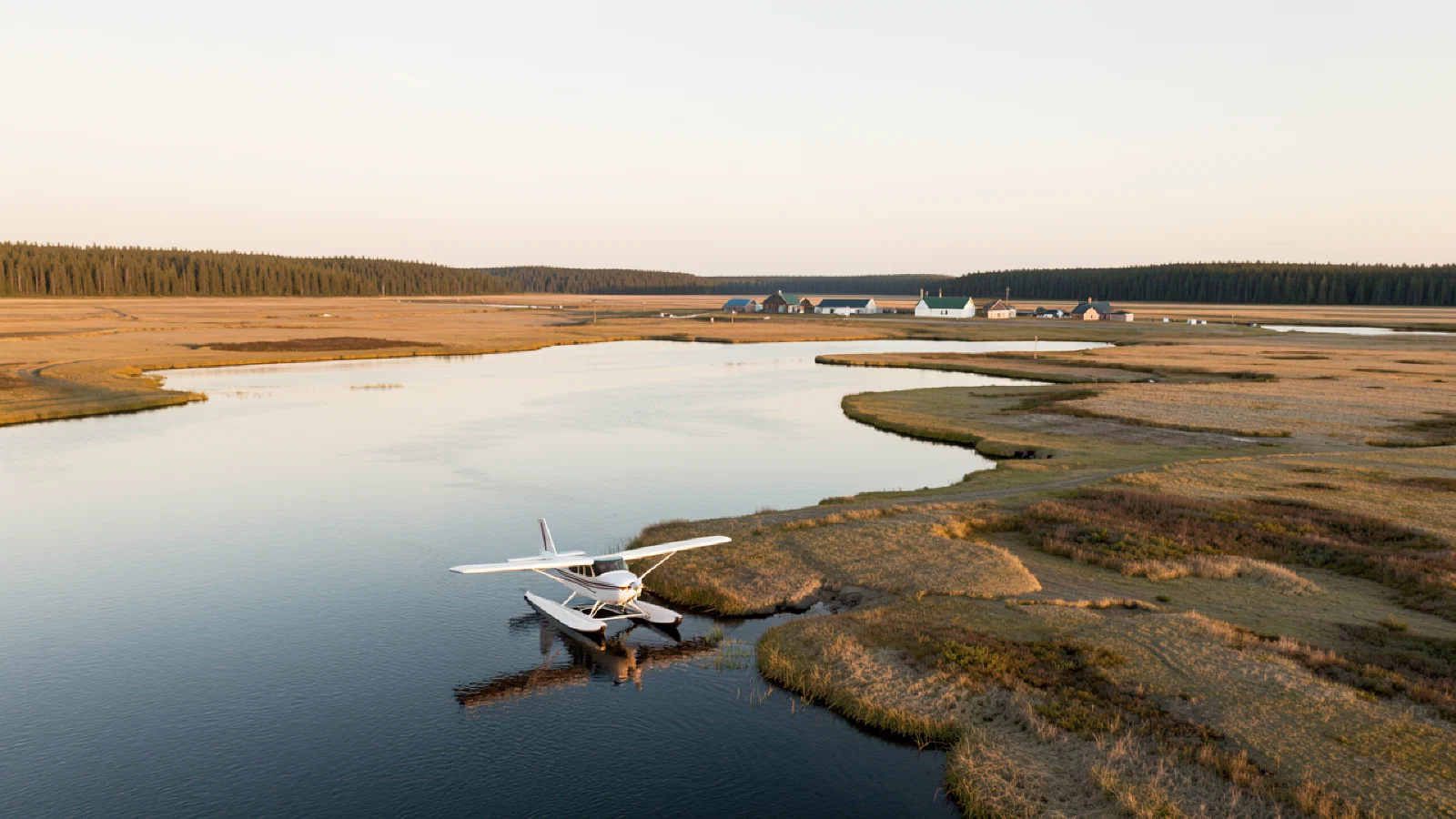
Bethel, Alaska, is 400 miles from the nearest road. There is no highway connecting it to Anchorage. No railroad. No bridge. Residents reach Bethel by airplane or, during brief summer months, by barge up the Kuskokwim River. The community hospital serves a region the size of Oregon with a population of 25,000 scattered across 56 villages accessible only by small aircraft or snowmobile.
This is not an outlier. This is rural Alaska’s norm. The question facing RHTP implementation is whether healthcare transformation designed for rural America can address conditions that violate every assumption underlying continental rural healthcare policy.
The core tension is Place-Based Investment vs. People-Based Support. Should federal healthcare dollars invest in infrastructure for communities that may not be viable for permanent settlement at any investment level? Or should resources support access for people wherever they are, potentially enabling continued residence in places that infrastructure investment cannot sustainably serve?
A secondary tension pervades: Sovereignty vs. Integration. Alaska Native populations constitute a majority of rural Alaska’s residents. They possess treaty rights to healthcare through the Indian Health Service system. State-administered RHTP interacts uncomfortably with federal trust responsibility, creating governance questions that continental states do not face at comparable scale.
This analysis matters because Alaska represents the limiting case for rural healthcare policy. If RHTP cannot address Alaska’s challenges, the program’s fundamental assumptions require reexamination. If approaches succeed in Alaska, they may inform responses to extreme isolation elsewhere.
Regional Definition#
Alaska Rural encompasses the state outside the Anchorage metropolitan area and the Railbelt corridor, approximately 570,000 square miles containing roughly 230,000 residents. This vast area subdivides into distinct regions, each presenting unique healthcare access challenges.
Geographic Subregions#
The Interior includes Fairbanks North Star Borough and surrounding communities accessible by the limited road network, plus remote communities reachable only by air. Temperatures range from 90 degrees F summers to -60 degrees F winters, creating seasonal access variations that affect everything from emergency transport to medication stability.
Western Alaska encompasses the Yukon-Kuskokwim Delta, Norton Sound, and Bristol Bay regions. This area contains the highest concentration of Alaska Native villages, with communities averaging 200-500 residents accessible only by small aircraft or boat. The YK Delta region alone spans 75,000 square miles with no roads.
The Southwest includes Kodiak Island, the Alaska Peninsula, and the Aleutian Chain extending 1,200 miles toward Russia. Volcanic activity, extreme weather, and maritime isolation define healthcare access. Dutch Harbor, a major fishing port, is 800 miles from Anchorage.
Northern Alaska includes the North Slope Borough, Northwest Arctic Borough, and communities along the Arctic coast. Barrow (Utqiagvik) lies 330 miles above the Arctic Circle. Permafrost, polar night, and extreme cold create infrastructure challenges unknown elsewhere in the United States.
Southeast Alaska includes the Panhandle communities from Ketchikan to Juneau, accessible only by air or the Alaska Marine Highway ferry system. Dense temperate rainforest and steep terrain prevent road construction between communities.
Alaska Rural Demographics
| Region | Population | Alaska Native % | Nearest Hospital | Medical Access |
|---|---|---|---|---|
| YK Delta | 25,200 | 84% | Bethel (regional) | Air only |
| Northwest Arctic | 7,900 | 77% | Kotzebue | Air only |
| North Slope | 10,400 | 54% | Barrow | Air only |
| Bristol Bay | 6,800 | 68% | Dillingham | Air only |
| Interior | 97,000 | 17% | Fairbanks | Variable |
| Southwest | 23,500 | 44% | Limited | Air/ferry |
| Southeast | 48,200 | 16% | Variable | Air/ferry |
What State Level Analysis Misses#
Alaska’s statewide statistics obscure the most extreme conditions. The state reports one of the highest per-capita healthcare spending rates in the nation, but this reflects Anchorage’s relatively well-served population and the extraordinary costs of delivering care to remote communities. Mean statistics conceal distribution.
When a medevac flight from a village to Anchorage costs $50,000 to $150,000, healthcare spending per capita rises without improving healthcare access. The money goes to aviation fuel and flight crews, not to providers serving village populations. High spending masks inadequate access.
Village-level analysis reveals what state statistics hide. In communities like Shishmaref, Kivalina, or Newtok, residents may wait weeks for a health aide visit. Dental care means flying to a regional hub. Specialty care means flying to Anchorage and staying in a city where everything costs more than village life and where cultural dislocation compounds medical stress.
Historical Context#
Colonial Healthcare Legacy#
Alaska’s healthcare history begins with failure of federal responsibility. The Territory of Alaska had minimal healthcare infrastructure before statehood in 1959. Alaska Native populations experienced tuberculosis rates ten times the national average, infant mortality rates among the highest documented anywhere. The federal government’s trust responsibility went largely unmet.
The Alaska Native Claims Settlement Act of 1971 restructured the relationship between Alaska Native peoples and the federal government, creating regional corporations and village corporations but not directly addressing healthcare. The Indian Self-Determination Act of 1975 eventually enabled tribal organizations to assume operation of healthcare facilities, creating the tribal health organization system that now provides most rural Alaska healthcare.
This history matters because it created the dual system that RHTP must navigate: state-administered general healthcare programs and tribally-operated healthcare serving Alaska Native populations. The systems overlap geographically but operate under different governance, different funding streams, and different legal authorities.
Resource Extraction and Boom-Bust Cycles#
Alaska’s economy has cycled through extraction booms that built infrastructure and busts that left it to deteriorate. Gold rush, fishing, timber, oil: each extraction wave created temporary prosperity and transportation routes serving extraction needs, not community needs.
The Trans-Alaska Pipeline built in the 1970s created the Dalton Highway and enormous state revenue that funded public services for decades. As oil production declines, the state faces fiscal crisis that constrains healthcare investment precisely when demographic change increases healthcare demand.
Rural communities that expanded during resource booms now face contraction without economic foundation for continued residence. The question of whether to invest in healthcare infrastructure for shrinking communities has roots in extraction-economy decisions made generations ago.
Climate Change and Community Viability#
Alaska faces climate change impacts more severe than anywhere else in the United States. Permafrost thaw destabilizes building foundations. Coastal erosion threatens community existence. Changing sea ice patterns disrupt subsistence hunting that supplements food security in communities where groceries arrive by air at extraordinary cost.
Several communities face relocation decisions driven by climate change. Newtok has been planning relocation to Mertarvik for decades. Shishmaref has voted to relocate but lacks funding to move. Kivalina faces similar threats. Healthcare infrastructure investment in communities that may not exist in their current locations within RHTP’s timeline raises profound questions about place-based versus people-based approaches.
Vignette: The Flight for Life
Sarah Alexie was 23 weeks pregnant when the pain started. In Hooper Bay, a Yup’ik village of 1,400 on the Bering Sea coast, the community health aide assessed her condition and called the Bethel hospital for consultation. The on-call physician authorized emergency medevac.
The weather did not cooperate. Ceiling at 200 feet. Visibility less than a mile. No fixed-wing aircraft could fly. The helicopter service was already committed to another emergency in Chevak. Sarah waited, laboring, while weather reports cycled through unchanged every hour.
Seventeen hours after the health aide’s first call, a window opened. A Guardian Flight medevac departed Bethel, landed on Hooper Bay’s gravel runway, loaded Sarah, and flew the 130 miles back to Bethel. Flight time: 45 minutes. Total elapsed time from onset to hospital arrival: 22 hours.
The baby survived. Sarah survived. The bill: $78,000 for transport alone, before any hospital charges. The Alaska Native Tribal Health Consortium covered costs through IHS funding, but the experience illustrates what “healthcare access” means in rural Alaska.
“In the village, we know that going to the hospital means the weather has to cooperate,” Sarah says. “You can be dying and if the weather is bad, you wait. Everyone knows someone who didn’t make it because of weather.”
The Core Tensions#
Place-Based Investment vs. People-Based Support#
Should RHTP invest in healthcare infrastructure for communities of 200 people accessible only by air? The investment required to provide even basic care exceeds what population size can justify by any standard metric. But the alternative, helping people leave places their families have lived for millennia, conflicts with cultural preservation and self-determination.
The Place-Based View holds that Alaska Native communities have inherent right to remain on ancestral lands regardless of cost-benefit calculations developed for different circumstances. Infrastructure investment should enable continued residence, not evaluate whether residence is economically rational. People lived in these places for thousands of years before Western contact. They should not have to leave because Western systems cannot figure out how to serve them.
The People-Based View holds that healthcare resources are finite and must be allocated where they can produce health improvement. Flying dialysis supplies to a village of 300 people costs more per patient than building a dialysis center in a regional hub where the same patients could receive better care. Concentrating healthcare resources in regional hubs and supporting transportation to those hubs may serve populations better than scattering inadequate resources across impossible geography.
The Evidence Assessment: Neither view is simply correct. Place-based investment at current RHTP funding levels cannot meaningfully address healthcare access in Alaska’s most remote communities. The cost structure makes per-capita transformation impossible. But people-based approaches that assume mobility ignore cultural connections, subsistence economies, and the practical difficulty of relocating populations who do not wish to leave.
The synthesis may require acknowledging different approaches for different circumstances. Regional hubs like Bethel, Kotzebue, and Nome can receive infrastructure investment that serves surrounding villages. Village-level investment focuses on community health aide capacity, telemedicine, and emergency transport rather than facility-based care that cannot be sustained.
Sovereignty vs. Integration#
Alaska Native tribal health organizations operate most rural Alaska healthcare under Indian Self-Determination Act authorities. The system works because tribal organizations understand their communities, employ community members, and operate within cultural frameworks that mainstream healthcare cannot replicate. But RHTP flows through state administration, creating tension between tribal self-determination and state control of federal dollars.
The Sovereignty View holds that Alaska Native healthcare is a federal trust responsibility that should not be mediated through state government. Alaska’s history includes state policies hostile to Native peoples’ interests. Federal dollars for Alaska Native healthcare should flow through tribal health organizations, not state agencies.
The Integration View holds that Alaska’s healthcare system requires coordination across tribal and non-tribal populations, particularly in regional hubs that serve mixed populations. State administration can coordinate resources across populations that tribal-specific administration cannot. Integration serves patients whose care crosses system boundaries.
The Evidence Assessment: Alaska provides the clearest evidence for tribal health organization effectiveness. The ANTHC and regional tribal health organizations have consistently outperformed state-administered rural health programs on access, cultural appropriateness, and outcomes. RHTP resources that flow through state administration and then to tribal organizations add administrative cost without adding value. Direct federal-tribal funding would better serve Alaska Native populations.
For non-Native rural Alaskans, primarily in the Interior and Southeast, state administration remains the default. The challenge is creating coordinated approaches for mixed communities without compromising tribal self-determination or imposing integration that serves neither population well.
Current Conditions#
Healthcare Infrastructure#
Alaska Rural Healthcare Facilities
| Facility Type | Count | Distribution | Service Level |
|---|---|---|---|
| Regional Hospitals | 6 | Hub communities | Acute care, surgery |
| Village Health Clinics | 170+ | Remote villages | Primary, emergency |
| Community Health Aide Programs | 180+ | Villages | First response |
| FQHCs | 28 sites | Varied | Primary care |
| Nursing Homes | 12 | Regional hubs | Limited capacity |
The Community Health Aide Program/Practitioner (CHA/P) model represents Alaska’s distinctive contribution to rural healthcare. Trained local residents provide first-response care in villages too small to support higher-level providers. Health aides consult by phone or video with physicians at regional hospitals, providing care under physician supervision while remaining in their communities.
This model works because it adapts to Alaska’s reality rather than imposing continental assumptions. But health aides cannot provide all services. Anything beyond their scope requires travel to regional hubs or Anchorage, with all the cost and logistical barriers that entails.
Health Outcomes#
Alaska Rural Health Metrics
| Measure | Rural Alaska | Alaska State | National Rural | Gap |
|---|---|---|---|---|
| Life Expectancy | 71.4 years | 76.8 years | 76.2 years | -5.4 vs state |
| Infant Mortality | 11.2/1,000 | 6.1/1,000 | 6.4/1,000 | +5.1 vs state |
| Suicide Rate | 34.2/100,000 | 24.6/100,000 | 17.8/100,000 | +16.4 vs national |
| Diabetes Prevalence | 13.6% | 8.4% | 12.6% | +5.2 vs state |
| Unintentional Injury Death | 142/100,000 | 72/100,000 | 58/100,000 | +84 vs national |
The suicide rate in rural Alaska exceeds national rates by nearly double, reflecting accumulated trauma, seasonal affective disorder at extreme latitudes, isolation, and cultural disruption that healthcare alone cannot address. Behavioral health needs vastly exceed behavioral health capacity.
Unintentional injury deaths in rural Alaska run nearly two and a half times the national rural rate, reflecting hazardous conditions of village life, subsistence activities, and alcohol-involved accidents in communities with limited emergency response capacity.
The Cost Equation#
Everything in rural Alaska costs more. Fuel costs $8-10 per gallon in remote villages compared to $3-4 in Anchorage. Food costs two to three times urban prices when it must arrive by air. Construction costs run 200-300 percent of urban costs due to transportation and short construction seasons.
Healthcare delivery mirrors these cost structures. Operating a village health clinic costs more per patient than operating an urban clinic, not because of inefficiency but because of unavoidable geography. RHTP funding formulas based on population produce less transformation in Alaska because transformation costs exceed per-capita assumptions built into formulas.
Vignette: The Regional Hub Strategy
Dr. James Moses runs the emergency department at the Yukon-Kuskokwim Health Corporation hospital in Bethel. His catchment area includes 56 villages spread across 75,000 square miles. On any given day, the 50-bed hospital manages conditions ranging from routine appendectomies to trauma cases that would challenge urban Level I centers.
“We are the regional healthcare system,” he explains. “There’s no tertiary hospital closer than Anchorage, 400 air miles away. If we can’t handle it, the patient flies.”
The hospital has invested heavily in telehealth capacity connecting village health aides to specialists who can guide procedures beyond normal health aide scope. A health aide in Chevak can hold a smartphone over a patient while a cardiologist in Anchorage reads the EKG and provides real-time guidance.
“Telehealth saves lives here in ways that Anchorage doesn’t understand,” Dr. Moses says. “When weather closes in for three days and a health aide has a patient with chest pain, telehealth might be the difference between managing the patient safely until we can fly them out and losing them.”
RHTP’s emphasis on telehealth expansion aligns with YKHC’s strategy. But the telehealth systems YKHC has built over 30 years cost tens of millions of dollars. RHTP’s per-capita allocation for Alaska, though the highest in the nation, cannot replicate this investment across all regional hub systems.
“They talk about ‘scaling’ telehealth solutions,” Dr. Moses observes. “What works in Bethel required decades and specific circumstances. It’s not a product you can purchase and deploy.”
RHTP in This Region#
State RHTP Context#
Alaska received $52.1 million in FY2026 RHTP funding, ranking 41st nationally in absolute dollars but first in per-capita allocation at approximately $1,050 per rural resident. This reflects the formula’s rurality weighting, which rewards geographic isolation and sparse population.
Alaska’s RHTP Strategy emphasizes:
- Community Health Aide capacity expansion and training
- Telehealth infrastructure connecting villages to regional hubs
- Emergency medical services improvement including medevac coordination
- Behavioral health integration and suicide prevention
- Workforce recruitment for regional hub facilities
The strategy reflects Alaska’s distinctive conditions better than most state RHTP applications. The emphasis on community health aides acknowledges what works. The telehealth priority acknowledges geographic reality. The behavioral health focus acknowledges outcome disparities that demand attention.
Tribal Health Organization Role#
Alaska’s RHTP implementation must navigate the tribal health organization system that operates most rural Alaska healthcare. The Alaska Native Tribal Health Consortium coordinates statewide tribal health programs. Regional tribal health organizations, including YKHC, ANTHC, Southcentral Foundation, and others, operate regional hospitals and village health clinics.
State RHTP administration creates coordination complexity that adds cost without adding value. Federal dollars flow to the state, which contracts with tribal organizations that already receive federal funding through IHS. The arrangement reflects continental assumptions about state administration that do not fit Alaska’s governance reality.
What RHTP Provides vs. What Alaska Needs#
RHTP provides resources for incremental improvements: additional health aide positions, enhanced telehealth equipment, modest workforce recruitment incentives. These help.
Alaska needs fundamental reconsideration of rural healthcare policy assumptions. The cost structure of healthcare delivery to remote communities exceeds what per-capita formulas can address. Climate change threatens community viability faster than healthcare infrastructure investment can respond. Behavioral health crises require community-level interventions that healthcare programs alone cannot provide.
RHTP’s frame, “healthcare transformation,” assumes transformation is possible through healthcare intervention. In Alaska’s most remote communities, the limiting factors are not healthcare-specific. They are economic viability, climate security, cultural continuity, and basic infrastructure that healthcare investment cannot address.
Alternative Perspective Assessment#
The Triage Necessity Argument#
Some analysts argue that Alaska’s most remote communities cannot be served sustainably at any investment level and that honest policy would acknowledge this rather than continuing investments that create dependency without producing self-sufficiency.
Strongest Version: A village of 200 people 400 miles from any road network cannot sustain healthcare infrastructure regardless of investment. Providing healthcare in such settings requires permanent subsidy at costs that exceed the value produced. Ethical policy would support community members who wish to relocate to places where sustainable healthcare systems can exist, rather than perpetuating settlements that require permanent external support.
Assessment: The argument has economic validity but profound ethical and cultural problems. It treats indigenous communities’ continued existence on ancestral lands as optional, subject to cost-benefit analysis developed by and for different populations. It ignores treaty obligations and federal trust responsibility. It assumes that people should move to where systems work rather than that systems should adapt to where people live.
The counter-evidence comes from tribal health organizations themselves. YKHC, ANTHC, and other tribal systems have demonstrated sustainable models that work within cultural frameworks, employ community members, and produce outcomes that state-administered programs cannot match. The problem is not that serving remote communities is impossible. The problem is that approaches developed for different circumstances cannot simply be transplanted.
Transformation Assessment#
What Transformation Requires#
Effective transformation in Alaska requires:
- Acknowledgment of Alaska’s distinctiveness rather than treating Alaska as extreme rural
- Tribal health organization leadership rather than state administration of tribal healthcare
- Climate adaptation integration recognizing that infrastructure investment must account for community viability timelines
- Sustained investment beyond RHTP’s five-year horizon at levels exceeding per-capita formulas
- Community self-determination allowing communities to define what transformation means for their circumstances
What Transformation Can Achieve#
With appropriate approaches:
- Community health aide programs can expand capacity
- Telehealth can improve access to specialty consultation
- Regional hub hospitals can strengthen services
- Behavioral health integration can begin addressing crisis-level needs
- Workforce pipelines can begin developing, though results take decades
What Transformation Cannot Achieve#
Healthcare transformation cannot:
- Make geography different than it is
- Address climate change threatening community viability
- Create economic opportunity in places geographic isolation precludes
- Solve behavioral health crises rooted in historical trauma and cultural disruption
- Override cost structures that make per-capita formulas inapplicable
Honest Assessment#
Alaska tests whether RHTP can address conditions that violate program assumptions. The evidence suggests partial success at best. RHTP resources can enhance existing systems, particularly the tribal health organization infrastructure that works because it developed from Alaska reality rather than being imported from elsewhere.
But RHTP cannot solve the fundamental problem: healthcare delivery to remote Alaska communities costs more per capita than formulas assume, and costs will increase as climate change accelerates community viability decisions that healthcare investment cannot influence.
The honest assessment is that Alaska needs different policy architecture, not just more RHTP dollars. Direct federal-tribal funding for Alaska Native healthcare. Climate adaptation integration with healthcare planning. Long-term investment horizons that match generational transformation timescales. These lie beyond RHTP’s scope.
Alaska’s rural communities will persist regardless of federal policy. Alaska Native peoples survived for millennia before Western contact and will survive whatever RHTP provides or fails to provide. The question is whether federal policy helps or simply applies continental assumptions to Alaska’s distinctive reality and calls the inevitable failure progress.
How this article connects to others in Blue Gray Matters.
Sources cited in this article.
- Alaska Native Tribal Health Consortium. "Community Health Aide Program: Training and Certification." *ANTHC*, 2024, www.anthc.org/community-health-aide-program/.
- Alaska Native Tribal Health Consortium. "Village-Based Healthcare Delivery: The CHAP Model." *ANTHC*, 2023.
- Driscoll, David L., et al. "Assessing the Health Burden of Colonialism in Alaska Native Communities." *American Journal of Public Health*, vol. 103, no. 12, 2013, pp. 2122-2129.
- Golnick, Chris, et al. "Innovative Primary Care Delivery in Rural Alaska: A Review of Patient Encounters Seen by Community Health Aides." *International Journal of Circumpolar Health*, vol. 71, 2012, 18543.
- Indian Health Service. "Community Health Aide Program Expansion: National Implementation Guidance." *IHS*, 2024, www.ihs.gov/chap.
- Johnston, Janet M., et al. "Alaska's Community Health Aide Program and the Challenges of Health Workforce Development." *Journal of Rural Health*, vol. 35, no. 4, 2019, pp. 528-536.
- Kruse, Gordon, et al. "Alaska's Health Aide Program: A Tradition of Tribal Self-Determination in Primary Care Delivery." *International Journal of Circumpolar Health*, vol. 63, Suppl. 2, 2004, pp. 127-132.
- National CHAP Board. "Federal Register Notice: Establishment of National Community Health Aide Program Board." *Federal Register*, vol. 89, 2024.
- Rural Health Information Hub. "Alaska Rural Health Resources." *Rural Health Information Hub*, 2025, www.ruralhealthinfo.org/states/alaska.
- Southcentral Foundation. "Nuka System of Care." *SCF*, 2024, www.southcentralfoundation.com/nuka-system-of-care/.
- State of Alaska Department of Health. "Alaska Health Workforce Analysis 2024." *Alaska DHSS*, 2024.
- U.S. Government Accountability Office. "Indian Health Service: Agency Faces Ongoing Challenges Filling Provider Vacancies." GAO-18-580, Aug. 2018.