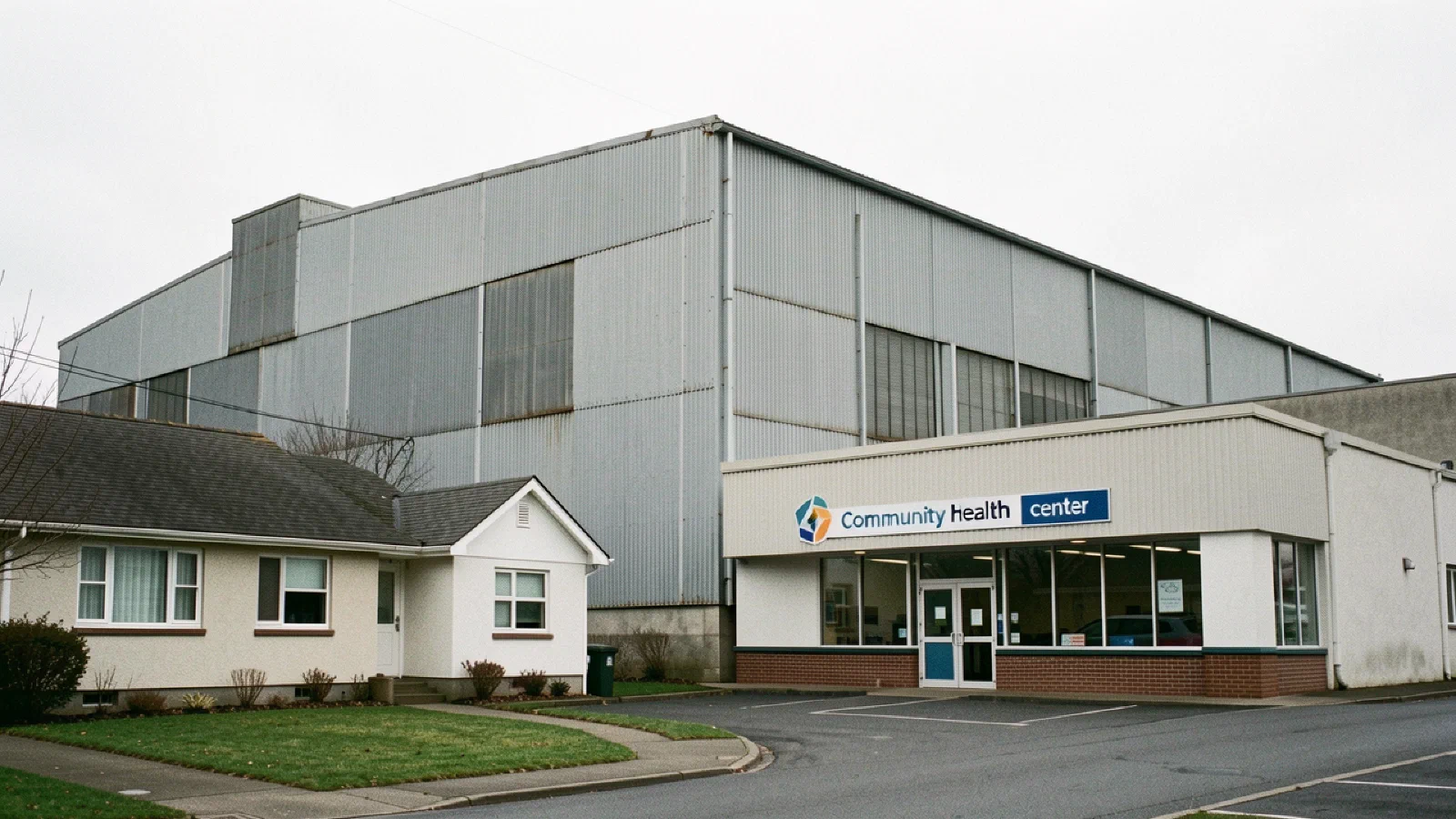
Post-Industrial Communities
Resilience Cannot Resurrect What Policy Destroyed
Post-industrial communities are places where economic identity died with the industry that created it. The steel town whose mill closed in 1985. The textile community whose factory moved offshore in 1998. The coal region whose mines shut down between 2012 and 2020. The timber town whose sawmill was the last major employer until it closed. These communities share a common trajectory: an industry arrived, communities formed around it, the industry departed, and what remains is a population facing health crises rooted in economic collapse that occurred years or decades ago.
This article examines the tension between community resilience and structural barriers. Post-industrial communities demonstrate remarkable persistence. People stay despite rational economic arguments for leaving. Mutual aid networks function where formal services have withdrawn. Cultural identity and community bonds sustain people through circumstances that aggregate statistics classify as despair. That resilience deserves recognition.
But recognizing resilience risks becoming an excuse for system failure. Communities should not have to be resilient against abandonment. The structural barriers facing post-industrial communities are not natural disasters requiring adaptation. They are the consequences of decisions made by corporations, markets, and governments. Industries left because leaving was profitable. Governments failed to manage transitions because transition was politically difficult. Celebrating resilience without addressing structural causes treats symptoms while ignoring the disease.
The analytical value of this article lies in assessing whether healthcare transformation can meaningfully improve health in communities where health crises reflect economic collapse that healthcare cannot reverse. RHTP operates on a five-year timeline. Post-industrial decline spans decades. The mismatch between intervention horizon and problem timeline shapes what transformation can realistically accomplish.
Population Profile#
Definition and Identification#
No standard federal definition identifies “post-industrial communities.” Unlike persistent poverty counties (USDA designation) or Appalachian counties (ARC designation), post-industrial status lacks official measurement criteria. This definitional absence matters: what cannot be measured often cannot be targeted.
Several proxy indicators identify post-industrial regions:
| Indicator | Threshold | Data Source |
|---|---|---|
| Manufacturing employment decline | >50% since 1990 | BLS, Census |
| Mining employment decline | >75% since 2000 | BLS, Census |
| Population decline | >10% since 2000 | Census |
| SSDI enrollment | >8% of working-age population | SSA |
| Persistent poverty | 20%+ across 30 years | USDA ERS |
Geographic concentration follows the industrial geography of the twentieth century. The Rust Belt stretching from Pennsylvania through Ohio, Indiana, and Michigan lost manufacturing. Central Appalachia lost coal. The timber regions of the Pacific Northwest and Southeast lost wood products. Textile communities across the Carolinas and New England lost garment manufacturing.
The population living in post-industrial communities is difficult to estimate precisely given definitional ambiguity. Approximately 10 to 15 million Americans live in rural counties where the dominant industry that built the community no longer operates at meaningful scale. An additional 15 to 20 million live in small metropolitan areas experiencing similar dynamics.
Historical Context: From Company Town to Ghost Town#
Post-industrial communities exist because industries once needed workers in specific places. Before mechanization, coal required miners. Before automation, steel required steelworkers. Before offshoring, textiles required sewers. Industries built not just facilities but communities: company housing, company stores, schools for workers’ children, churches, and the entire social infrastructure of town life.
The dependency was complete. When the mine employed 2,000 workers and the town had 8,000 residents, the mine was not just the major employer but the reason for the town’s existence. The mine owner’s decisions determined community fate. Workers had limited options: work for the company, leave, or attempt alternatives that rarely succeeded.
Deindustrialization reversed this process across decades:
| Era | Industry | Mechanism | Impact |
|---|---|---|---|
| 1970s-1990s | Steel | Foreign competition, automation | Rust Belt collapse |
| 1980s-2000s | Textiles | Offshoring, trade agreements | Southeast mill closures |
| 1990s-2010s | Manufacturing | Globalization, NAFTA | Midwest factory closures |
| 2000s-2020s | Coal | Natural gas competition, climate policy | Appalachian mine closures |
| 1980s-present | Timber | Environmental regulation, automation | Pacific Northwest decline |
The departure pattern was consistent: corporate decisions driven by profit calculation, implemented without community input, leaving workers and communities to manage consequences. Industries externalized their transition costs onto communities that had no voice in the decisions and no resources to absorb the impact.
Demographic Characteristics#
Post-industrial communities experience selective out-migration. Young adults with education, ambition, and mobility leave for opportunities elsewhere. Those who remain are older, less mobile, more likely to have health conditions that impede relocation, and more likely to have family obligations that anchor them in place.
| Characteristic | Post-Industrial | National Rural | National |
|---|---|---|---|
| Median Age | 47 years | 42 years | 38 years |
| Population Change (2010-2020) | -8.2% | -0.3% | +7.4% |
| College Degree (25+) | 14% | 21% | 33% |
| Disability Rate | 21% | 15% | 12% |
| Labor Force Participation | 52% | 57% | 63% |
| SSDI Enrollment | 9.8% | 6.2% | 4.3% |
The disability concentration requires explanation beyond fraud narratives that stigmatize these communities. Post-industrial populations actually have more disabling conditions. Occupational exposure to coal dust produces black lung. Decades in steel mills produce respiratory disease and hearing loss. Industrial accidents produced injuries that workers still live with. Environmental contamination produces conditions that emerge years after exposure. The high disability rates reflect occupational health consequences that workers earned through labor, not gaming the system.
Health Status and Access#
The Post-Industrial Health Burden#
Post-industrial communities experience health outcomes among the worst nationally, driven by a combination of occupational disease legacy, “deaths of despair,” and healthcare infrastructure collapse.
Population Experience Analysis:
| Measure | Post-Industrial | National Rural | National | Gap | Source |
|---|---|---|---|---|---|
| Life Expectancy | 73.4 years | 76.2 years | 78.6 years | -5.2 years | CDC |
| Drug Overdose Deaths (per 100K) | 52.1 | 28.4 | 22.0 | +30.1 | CDC |
| Suicide Rate (per 100K) | 22.3 | 18.5 | 13.5 | +8.8 | CDC |
| Alcohol-Related Mortality | 18.4 | 12.8 | 10.2 | +8.2 | CDC |
| Disability Rate | 21.4% | 15.3% | 12.6% | +8.8% | Census |
| COPD Prevalence | 11.2% | 8.1% | 6.4% | +4.8% | CDC |
| Heart Disease Mortality (per 100K) | 238 | 198 | 165 | +73 | CDC |
| Depression Prevalence | 24.1% | 18.6% | 15.8% | +8.3% | BRFSS |
Deaths of despair concentrate in post-industrial regions with devastating intensity. The research of Anne Case and Angus Deaton documented rising mortality among working-age adults without college degrees, driven by suicide, drug overdose, and alcohol-related liver disease. This phenomenon affects all demographics but concentrated most severely in communities where economic hope disappeared. The Industrial Midwest and Appalachia show the highest burden, with some post-industrial counties experiencing drug overdose rates exceeding 65 per 100,000 population.
Occupational Disease Legacy
Former industrial workers carry health consequences of their employment:
| Condition | Affected Workers | Latency | Treatment Availability |
|---|---|---|---|
| Black Lung (Coal Workers) | ~75,000 living | 10-30 years | Limited, no cure |
| Silicosis | Unknown (underdiagnosed) | 10-20 years | Limited, no cure |
| Mesothelioma (Asbestos) | ~3,000 new cases/year | 20-50 years | Poor prognosis |
| Hearing Loss | Millions | Progressive | Manageable with devices |
| Musculoskeletal Injury | Millions | Immediate | Variable |
These conditions require specialized care that post-industrial communities often lack. Workers who developed black lung from decades in coal mines now live in communities where the nearest pulmonologist is hours away.
Healthcare Infrastructure Collapse#
Healthcare followed economic decline. When populations shrank and incomes fell, healthcare became economically unsustainable. Hospitals closed. Physicians left. Pharmacies shuttered. The healthcare infrastructure that served working communities could not survive communities no longer working.
The collapse sequence is predictable: Young families leave, reducing pediatric volume. Working-age adults leave, reducing emergency and surgical volume. Medicare-dependent elderly populations remain, but Medicare reimbursement cannot sustain hospitals designed for larger populations. Hospitals cut services, then close. Physicians leave for economically viable communities. Communities that once had full-service hospitals now have nothing.
Since 2010, rural hospital closures have concentrated in post-industrial regions: eastern Kentucky, southwestern Virginia, eastern Ohio, and the southern Black Belt where post-industrial dynamics overlap with historical discrimination.
The Core Tension: Resilience Versus Structural Barriers#
The Resilience Recognition Perspective#
Post-industrial communities demonstrate genuine resilience that outside observers often miss. Families that have lived in communities for generations maintain those connections despite economic arguments for leaving. Churches, volunteer organizations, and informal networks provide social support that formal services cannot replicate. Cultural identity provides meaning that economic metrics cannot capture.
The resilience argument: Communities possess assets that transformation should leverage rather than ignore. Mutual aid networks function where government programs have withdrawn. Trust exists among neighbors who have known each other for decades. Place attachment provides stability that transient populations lack. Building on these assets can produce outcomes that externally designed programs cannot achieve.
This perspective has merit. Programs imposed without community input consistently fail in post-industrial contexts. Outsider assumptions about what communities need rarely match community experience. The deficit framing that portrays post-industrial communities as pathological ignores strengths that resilience frameworks recognize.
The Structural Barrier Reality#
However, recognizing resilience risks excusing system failure. Post-industrial communities face structural barriers that resilience alone cannot overcome:
Economic base destruction: The industry that supported the community no longer exists. No amount of community organizing can resurrect a coal mine closed because natural gas became cheaper. No mutual aid network can replace a factory that moved to Vietnam. The economic foundation is gone.
Tax base collapse: Local governments depend on property taxes and economic activity. When populations shrink and property values fall, tax revenues collapse. Schools deteriorate. Roads degrade. Public services disappear. Communities cannot maintain infrastructure without revenue.
Healthcare market failure: Healthcare requires scale, specialization, and payment that post-industrial communities cannot provide. A community of 5,000 people cannot support a hospital regardless of their resilience. The economics do not work.
Human capital depletion: Young adults with education and ambition leave. The remaining population ages. The workers who could rebuild the community are in Pittsburgh, Columbus, or Charlotte. Those who remain often have health conditions or family obligations that prevent departure but also limit economic contribution.
The structural barriers assessment: Resilience emphasis can become a way of shifting responsibility from systems that abandoned communities to communities that were abandoned. Telling coal communities to be resilient while providing no alternative employment or healthcare infrastructure treats symptoms while perpetuating causes. Resilience cannot reopen a closed hospital, recruit a physician, or restore an economic base that policy choices destroyed.
RHTP Relevance#
How States Address Post-Industrial Populations#
RHTP applications rarely identify “post-industrial communities” as a distinct target population. Instead, states address post-industrial regions through broader geographic targeting or specific condition focus (particularly behavioral health and substance use disorder).
State Examples:
| State | Post-Industrial Focus | RHTP Approach | Assessment |
|---|---|---|---|
| West Virginia | Entire state post-coal | Statewide transformation, SUD focus | Addresses symptoms, not economic cause |
| Ohio | Southeast Appalachian | Regional targeting, telehealth expansion | Moderate accommodation for regional context |
| Pennsylvania | Rust Belt counties | No distinct targeting identified | Lost in statewide approach |
| Kentucky | Eastern coal counties | Heavy SUD investment, workforce | Significant targeting but limited economic integration |
| Michigan | Former manufacturing | No distinct targeting identified | Lost in statewide approach |
| Indiana | Former manufacturing | No distinct targeting identified | Lost in statewide approach |
The pattern is revealing: States with coal country (West Virginia, Kentucky, Ohio) show more attention to post-industrial dynamics because coal decline is recent and politically salient. States with older manufacturing decline (Pennsylvania, Michigan, Indiana) show less distinct attention because the transition occurred decades ago and affected populations have dispersed or adapted.
Gap Assessment#
What RHTP Provides:
- Behavioral health services addressing deaths of despair symptoms
- Substance use disorder treatment expansion
- Telehealth to partially compensate for provider absence
- Community health worker deployment in some states
- Hospital stabilization for facilities at closure risk
What RHTP Does Not Provide:
- Economic development or employment alternatives
- Targeted recognition of post-industrial status as population category
- Occupational disease specialty services
- Long-term commitment matching problem timeline
- Integration with non-health sector revitalization
[VIGNETTE: Linda worked at the textile mill in Kannapolis, North Carolina for 23 years until it closed in 2003. She was 47 then, too old to start over, too young to retire. Her husband worked construction, which dried up when the population left. They stayed because her mother needed care and their house was paid off but worth nothing if they tried to sell. The mill’s closure was followed by the hospital’s closure in 2008. Now she drives 45 minutes to see a doctor. Her husband died in 2019 from a heart attack; the ambulance took 28 minutes to arrive. She has diabetes and depression but manages both imperfectly because managing chronic disease without nearby healthcare requires resources she lacks. The new RHTP-funded community health worker is helpful but cannot prescribe the medications she needs. Linda’s community demonstrates resilience: neighbors help each other, the church provides meals, people survive. But resilience cannot recruit the cardiologist who might have saved her husband or restore the hospital that closed because too many people like Linda no longer had insurance from jobs that no longer existed.]
Alternative Perspective: The Economic Integration Imperative#
The Perspective: Healthcare transformation in post-industrial communities is futile without economic transformation. Health outcomes reflect living conditions, and living conditions reflect economic opportunity. Investing in healthcare while ignoring economic collapse treats symptoms while perpetuating causes. True transformation requires integration of health investment with economic development that provides sustainable employment and community viability.
Assessment: This perspective has substantial support. Social determinants research demonstrates that income, employment, and economic security explain more health variation than healthcare access. The correlation between economic distress and deaths of despair suggests that economic hopelessness drives mortality directly. Healthcare investment without economic recovery may improve care access without improving health outcomes.
However, the economic integration perspective faces practical limitations. RHTP is a healthcare program, not an economic development program. Expecting healthcare funding to drive economic transformation overestimates healthcare’s reach. Economic development requires industrial policy, infrastructure investment, and employment creation that RHTP cannot provide and that political systems have declined to deliver for decades.
The realistic assessment: Healthcare transformation alone cannot revitalize post-industrial communities. But healthcare transformation may be what is politically possible when economic transformation is not. Providing healthcare access to populations experiencing economic collapse is valuable even if it cannot address the economic collapse itself. The question is whether healthcare investment should wait for economic transformation that may never come, or proceed imperfectly while acknowledging limitations.
State and Regional Variation#
Regional Context Shapes Experience:
| Region | Primary Industry | Decline Timeline | Current Status | RHTP Context |
|---|---|---|---|---|
| Central Appalachia | Coal | 2012-present | Acute crisis | KY, WV, VA targeting |
| Rust Belt | Steel, manufacturing | 1970s-1990s | Chronic decline | Limited distinct targeting |
| Piedmont Carolinas | Textiles | 1990s-2000s | Stabilized at lower level | NC moderate targeting |
| Pacific Northwest | Timber | 1980s-1990s | Mixed recovery | OR, WA moderate targeting |
| Upper Midwest | Manufacturing | 1980s-2000s | Metro recovery, rural decline | Limited distinct targeting |
The timeline matters. Coal communities in active decline (2012-present) receive more attention because the crisis is visible and politically relevant. Manufacturing communities that declined decades ago have faded from policy attention even though populations still live with consequences.
[VIGNETTE: Same economic collapse, different contexts. In 2015, eastern Kentucky experienced what Gary, Indiana experienced in 1985. The mechanism differed (coal versus steel), but the outcome was similar: major employer closes, population declines, services withdraw, those who remain face health crises without healthcare infrastructure. Gary had 30 years to adapt; eastern Kentucky is still in acute crisis. Neither community has recovered. The lesson: post-industrial decline is a chronic condition, not an acute event. Communities do not recover without intervention, and intervention rarely comes at sufficient scale.]
Intersectionality Considerations#
Post-industrial status intersects with other population categories:
| Intersection | Compound Effect | Estimated Population |
|---|---|---|
| Post-Industrial + Elderly | Medicare gaps, no transportation, provider absence | ~3 million |
| Post-Industrial + SUD | Treatment deserts, economic despair driving use | ~2 million |
| Post-Industrial + Disabled | High disability rates, limited services | ~2.5 million |
| Post-Industrial + Veterans | VA distance, combat trauma plus economic trauma | ~500,000 |
| Post-Industrial + Appalachian | Regional overlap, compounded stigma | ~4 million |
The intersection of post-industrial status and substance use disorder is particularly devastating. Economic collapse creates conditions for despair. Pharmaceutical marketing targeted these communities for opioid sales. Treatment resources are minimal. The same communities devastated by deindustrialization became the epicenter of the opioid epidemic. Neither crisis caused the other, but both reflect the same underlying abandonment.
What Transformation Requires#
Necessary Conditions:
Recognition of post-industrial status as distinct population category requiring specific accommodation rather than generic rural approaches
Economic context integration connecting health intervention with whatever economic development resources exist
Occupational disease services addressing the health legacy of industrial employment that workers earned through labor
Behavioral health capacity matching the scale of deaths of despair
Long-term commitment recognizing that problems developed over decades cannot be solved in five years
What Transformation Cannot Provide#
RHTP cannot restore the economic base. Healthcare jobs are valuable but cannot replace the employment scale that industry provided. A community that once employed 2,000 miners will not employ 2,000 healthcare workers.
RHTP cannot reverse demographic decline. The populations who left are not returning. Transformation serves those who remain, who are older and sicker than those who departed.
RHTP cannot overcome the timeline mismatch. Post-industrial decline spans decades. RHTP operates for five years. Meaningful transformation requires sustained commitment that program timelines do not guarantee.
RHTP can provide healthcare access to populations abandoned by economic systems, even if it cannot address the abandonment itself. Whether that is sufficient depends on expectations. Reducing suffering is valuable even without solving the underlying causes of suffering.
Conclusion#
Post-industrial communities face a cruel irony: industries built communities, then abandoned them, leaving populations with health crises rooted in economic collapse that no healthcare program can reverse. The workers who powered American industry now live in communities stripped of the infrastructure their labor once supported.
Community resilience is real and should inform intervention design. Programs that ignore community assets fail. Programs that engage community strengths can succeed within realistic expectations. But resilience emphasis becomes pernicious when it excuses structural failures. Communities should not have to be resilient against abandonment.
RHTP enters this context with resources that can help and constraints that limit impact. Healthcare transformation cannot restore economic bases, reverse population decline, or overcome the timeline mismatch between problem development and program duration. What RHTP can provide is healthcare access for populations experiencing economic collapse, behavioral health services addressing deaths of despair, and community health worker deployment that builds on existing community connections.
The honest assessment: Post-industrial communities need economic transformation that political systems have declined to provide. In the absence of that transformation, healthcare investment provides valuable if insufficient support. The populations living in post-industrial communities deserve better than their circumstances. Whether they receive it depends on choices extending far beyond RHTP’s scope.
How this article connects to others in Blue Gray Matters.
Sources cited in this article.
- Case, Anne, and Angus Deaton. "Deaths of Despair and the Future of Capitalism." Princeton University Press, 2020.
- Centers for Disease Control and Prevention. "Drug Overdose Mortality by State." CDC, 2025.
- Chen, Lanhee J., et al. "Post-Industrial Communities and the Health Care Safety Net." Health Affairs, vol. 43, no. 2, 2024.
- County Health Rankings. "Rankings Data and Documentation." University of Wisconsin Population Health Institute, 2025.
- Economic Innovation Group. "Distressed Communities Index." EIG, 2025.
- Meit, Michael, et al. "The 2024 Update of the Rural-Urban Chartbook." Rural Health Reform Policy Research Center, 2024.
- Monnat, Shannon M. "Deaths of Despair and Support for Trump in the 2016 Presidential Election." Pennsylvania State University Department of Agricultural Economics, 2016.
- National Institute for Occupational Safety and Health. "Coal Workers' Health Surveillance Program." NIOSH, 2025.
- Pain in the Nation. "The Epidemics of Alcohol, Drug, and Suicide Deaths." Trust for America's Health, 2024.
- Ruhm, Christopher J. "Deaths of Despair or Drug Problems?" NBER Working Paper 24188, 2018.
- Social Security Administration. "SSDI Statistics." SSA, 2025.
- Stein, Eric M., et al. "The Epidemic of Despair Among White Americans." American Journal of Public Health, vol. 107, no. 10, 2017.
- Woolf, Steven H., and Heidi Schoomaker. "Life Expectancy and Mortality Rates in the United States, 1959-2017." JAMA, vol. 322, no. 20, 2019.