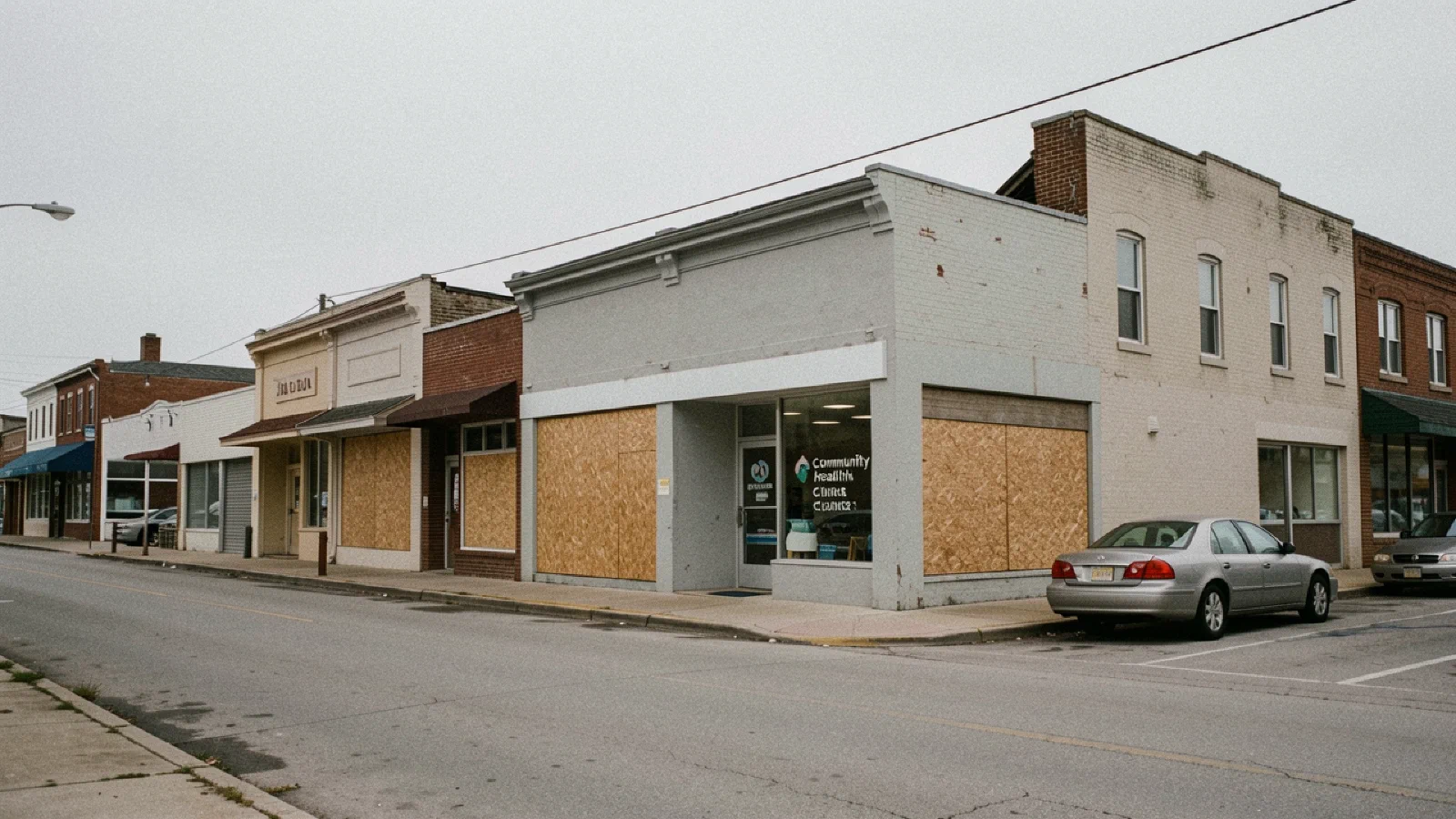
Persistent Poverty Communities
When Poverty Is Place, Not Circumstance
Persistent poverty counties are places where 20 percent or more of residents have lived in poverty across four consecutive measurement periods spanning 30 years. The USDA Economic Research Service currently identifies approximately 353 such counties in the United States. Eighty-five percent of them are rural. They concentrate in identifiable regions: the Mississippi Delta stretching through Arkansas, Louisiana, and Mississippi; the Black Belt of Alabama and Georgia; Appalachian Kentucky and West Virginia; the Texas-Mexico border; and tribal areas across the Southwest and Great Plains.
This article examines a fundamental tension that shapes all discussion of healthcare transformation in these communities: current generation versus intergenerational change. The RHTP operates on a five-year timeline ending in 2030. Persistent poverty counties have experienced structural disadvantage for generations. Can a healthcare intervention with a fixed endpoint address health problems rooted in economic conditions transmitted across 30, 50, or even 100 years?
The analytical value of this article lies not in cataloging the health burdens of persistent poverty, which are well documented, but in assessing whether healthcare transformation can make meaningful difference in communities where health outcomes reflect living conditions that healthcare cannot change. If income, housing, food security, and employment explain more health variation than healthcare access, what should transformation accomplish? What honest assessment should guide expectations?
Within persistent poverty communities lies significant diversity. The Mississippi Delta differs from Appalachian coal country. Border colonias differ from Pine Ridge Reservation. Some persistent poverty counties retain strong social networks and community institutions. Others have experienced erosion of the social fabric that compounds material deprivation. This article acknowledges that diversity while examining common patterns that federal classification captures.
Population Profile#
Definition and Identification#
The USDA Economic Research Service defines persistent poverty counties as those with poverty rates of 20 percent or higher in the 1990 and 2000 decennial censuses and in the 2007-11 and 2017-21 five-year American Community Survey estimates. The threshold captures counties where poverty is not cyclical or temporary but structural. The 2025 County Typology Codes update identifies 353 counties meeting this definition.
The federal definition serves specific purposes: targeting resources, measuring policy impact, and identifying areas requiring sustained attention. It does not capture all dimensions of poverty. Census tract analysis reveals persistent poverty tracts within non-persistent-poverty counties, identifying concentrated disadvantage that county-level data masks. Approximately 8,300 census tracts meet persistent poverty criteria, and 75 percent of them are located outside persistent poverty counties.
Geographic Distribution#
Persistent poverty concentrates regionally. Nearly 84 percent of persistent poverty counties are in the South, comprising more than 20 percent of all counties in the region. The remaining counties cluster in tribal areas of the Great Plains and Southwest, border regions of Texas, and isolated pockets elsewhere.
| Region | Persistent Poverty Counties | Share of Regional Counties |
|---|---|---|
| Mississippi Delta | 72 | 68% |
| Appalachia (central) | 54 | 31% |
| Black Belt | 41 | 52% |
| Texas Border | 24 | 43% |
| Great Plains (tribal) | 28 | 12% |
| Other | 134 | <5% |
The geographic concentration matters for RHTP implementation. States with many persistent poverty counties include Mississippi (49), Kentucky (38), Louisiana (21), Georgia (26), and Texas (43). These states receive RHTP funding, but whether funding formulas adequately weight persistent poverty status varies.
Demographic Characteristics#
Persistent poverty counties are demographically distinct from rural America generally. They have higher proportions of Black residents (Delta, Black Belt), higher proportions of Hispanic residents (border region), and higher proportions of American Indian/Alaska Native residents (Great Plains, Southwest). The persistent poverty classification cuts across racial and ethnic categories, but its regional concentration means specific populations bear disproportionate burden.
Educational attainment in persistent poverty counties trails national averages significantly. Approximately 57 percent of working-age adults lack any post-secondary education, compared to 42 percent nationally. Low educational attainment constrains employment options, perpetuates low wages, and limits health literacy.
Employment patterns in persistent poverty counties reflect limited opportunity. Less than 63 percent of prime working-age adults (25-54) are employed in many of these counties, compared to 79 percent nationally. The jobs that exist tend toward low-wage service, agriculture, or government employment. Manufacturing has largely departed. Resource extraction (coal, timber) has declined.
Historical Context#
Persistent poverty is not accidental. It reflects historical patterns of wealth extraction, structural discrimination, and policy choices that created conditions transmitted across generations. The Delta’s poverty traces to plantation agriculture that extracted wealth while impoverishing workers. Appalachia’s poverty traces to extractive industries that took coal and timber while leaving environmental degradation and occupational disease. Border region poverty reflects historical exclusion and limited infrastructure investment.
Understanding this history matters for assessing what healthcare transformation can accomplish. Health outcomes in persistent poverty communities reflect not individual choices or even current conditions but accumulated disadvantage over decades or centuries. Expecting healthcare investment to overcome this accumulated disadvantage overestimates what healthcare can do.
Health Status and Access#
Health Outcomes#
Health outcomes in persistent poverty counties are among the worst in the nation. The disparities are stark and consistent across measures.
| Measure | Persistent Poverty Counties | General Rural | Gap | Data Source |
|---|---|---|---|---|
| Life expectancy | 72-75 years | 77 years | 2-5 years | IHME County Data |
| All-cause mortality (per 100,000) | 1,100-1,400 | 830 | +270-570 | CDC WONDER |
| Infant mortality (per 1,000) | 9-12 | 6 | +3-6 | NVSS |
| Diabetes prevalence | 14-18% | 11% | +3-7% | BRFSS |
| Heart disease mortality | 250-320/100K | 170 | +80-150 | CDC WONDER |
| Obesity prevalence | 38-45% | 34% | +4-11% | BRFSS |
| Child poverty rate | 35-70% | 22% | +13-48% | ACS |
| Adults reporting fair/poor health | 28-35% | 18% | +10-17% | BRFSS |
| Mental health distress | 19-24% | 14% | +5-10% | BRFSS |
The worst counties show even more severe outcomes. Claiborne County, Mississippi has a child poverty rate of 72 percent. East Carroll Parish, Louisiana, approaches 66 percent. Some South Dakota counties with majority American Indian populations exceed 60 percent. These are not statistical anomalies but consistent patterns across persistent poverty regions.
Access Barriers#
Healthcare access in persistent poverty counties faces multiple compounding barriers.
Provider shortage is severe. Persistent poverty counties average 40 primary care physicians per 100,000 residents, compared to 90 in metropolitan areas. Specialist presence is essentially nonexistent. Many persistent poverty counties have no psychiatrist, no cardiologist, no oncologist. The workforce crisis compounds as existing providers age without replacement.
Hospital presence is precarious. Of the 28 hospitals that closed in Mississippi between 2010 and 2025, most were in persistent poverty counties. Rural hospital closure risk analysis identifies 49 percent of Mississippi’s remaining rural hospitals as at risk of closure. Similar patterns appear across the Delta and Black Belt.
Insurance coverage gaps persist. Persistent poverty counties are disproportionately located in states that have not expanded Medicaid. Mississippi, Texas, Georgia, and other states with high persistent poverty concentrations left millions in the coverage gap where residents earn too much for traditional Medicaid but too little for marketplace subsidies.
Transportation barriers are acute. Many persistent poverty counties lack public transportation entirely. Personal vehicle ownership rates are lower than national averages. The distance to healthcare combined with transportation barriers creates access problems that insurance coverage alone cannot solve.
Utilization Patterns#
Healthcare utilization in persistent poverty counties reflects barriers, not preference. Emergency department use is higher, reflecting delayed care and lack of primary care alternatives. Preventive care utilization is lower, reflecting barriers to access and competing demands from economic survival. Chronic disease management is worse, reflecting fragmented care and inability to follow treatment regimens that assume stable housing, reliable transportation, and food security.
The Core Tension: Current Generation vs. Intergenerational Change#
The Current Generation Focus#
RHTP operates through 2030. From this perspective, transformation should address current healthcare needs with available resources. Building clinics, deploying telehealth, training community health workers, and expanding access can improve health outcomes for people living in persistent poverty counties today. Perfect is the enemy of good. Waiting for structural change that may never come means abandoning current residents.
This view has merit. People in persistent poverty counties need healthcare now. Children born this year will benefit from maternal care improvements. Elders aging in place need geriatric services. Diabetes patients need management programs. Current investments yield current benefits. The RHTP timeline demands current-focused implementation.
The Intergenerational Necessity#
Poverty transmitted across 30+ years cannot be addressed by five-year programs. Children growing up in persistent poverty counties inherit disadvantage regardless of healthcare access. Educational opportunity remains limited. Employment options remain constrained. Housing remains substandard. Food security remains uncertain. Healthcare addresses downstream consequences while upstream causes persist.
From this perspective, healthcare transformation without economic transformation produces temporary improvement rather than lasting change. When RHTP funding ends in 2030, what sustains the clinics, the workforce, the programs? Persistent poverty counties lack the tax base, the population growth, and the economic activity to support healthcare infrastructure without external subsidy. The pattern repeats: federal investment, modest improvement, funding withdrawal, return to baseline.
What Evidence Suggests#
Social determinants research consistently demonstrates that income, education, and living conditions explain more health variation than healthcare access. The relationship is causal, not merely correlational. Improving income improves health. Improving education improves health. Improving housing improves health. Healthcare can mitigate consequences of poverty but cannot overcome poverty’s causes.
This does not mean healthcare transformation is useless. It means transformation must be honest about what it can achieve. Healthcare in persistent poverty counties can reduce preventable deaths, manage chronic conditions, support maternal and child health, and address mental health needs. It cannot eliminate the health gap between persistent poverty counties and prosperous communities because that gap reflects conditions healthcare does not control.
RHTP Relevance#
How RHTP Addresses Persistent Poverty Communities#
RHTP funding flows to states, which allocate to regions and programs. Persistent poverty counties do not automatically receive enhanced funding. Whether transformation reaches these communities depends on state priorities, allocation formulas, and implementation capacity.
| State | Persistent Poverty Counties | RHTP Approach | Assessment |
|---|---|---|---|
| Mississippi | 49 | Regional networks, CHW deployment | Mixed: high need, limited per-capita funding |
| Kentucky | 38 | Appalachian focus, workforce emphasis | Moderate: Medicaid expansion helps |
| Georgia | 26 | Statewide distribution, partial Medicaid | Limited: non-expansion undermines access |
| Texas | 43 | Regional variation, scale challenges | Weak: massive scale penalty, non-expansion |
| Louisiana | 21 | Medicaid expansion, Delta focus | Better: expansion provides coverage base |
| Alabama | 17 | State-controlled distribution | Uncertain: opacity limits assessment |
Gap Assessment#
What RHTP provides:
- Infrastructure investment in underserved areas
- Workforce development and loan repayment
- Telehealth expansion and digital infrastructure
- Community health worker deployment
- Care coordination and chronic disease management
What RHTP fails to provide:
- Medicaid expansion requirement (states can remain non-expansion)
- Persistent poverty weighting in allocation formula
- Economic development integration
- Housing, food security, or transportation solutions
- Sustainability mechanisms beyond 2030
Adequacy assessment: The universal RHTP approach treats persistent poverty counties as a subset of rural America rather than a distinct category requiring distinct intervention. The formula does not adequately weight the severity of persistent poverty. States with many persistent poverty counties receive per-capita funding that does not match need intensity.
Vignette: The Carter Family of Bolivar County
Four generations in the Mississippi Delta
James Carter’s great-grandfather worked the cotton fields as a sharecropper in the 1930s, his family never escaping debt to the landowner. His grandfather moved to the catfish processing plant when agriculture mechanized, earning minimum wage until the plant closed in 1998. His father worked construction when work was available, developed hypertension at 35, had a stroke at 48, and died at 52 without ever seeing a cardiologist. James, now 34, works gig delivery when his car runs, has diabetes diagnosed at 29, and has not seen a doctor in two years because the nearest one accepting Medicaid is 45 miles away and his car barely makes it.
His son, born last year, arrived premature at 34 weeks after his girlfriend’s preeclampsia went undetected because she missed prenatal appointments. The nearest OB had a three-month wait. She drove herself to the hospital in labor because the ambulance takes 40 minutes from the north end of the county.
A new RHTP-funded health center will open in Cleveland, 18 miles away, next year. It will offer primary care, chronic disease management, and prenatal services. James plans to establish care there. But the center will not give him a better job, will not repair his car, will not fix the mold in his rental housing, and will not put more food in the kitchen when his diabetes needs dietary management. The center represents real progress. It also represents the limits of healthcare transformation in places where health outcomes reflect conditions healthcare cannot change.
What would transform the Carters’ health trajectory? Not healthcare alone. A job paying living wage. Housing without mold exposure. Reliable transportation. Food access beyond dollar stores. These are not healthcare responsibilities, but without them, healthcare treats symptoms while causes persist.
Alternative Perspective: The Medical Model Limitation#
The Perspective#
Healthcare transformation operates within the medical model: identify health problems, provide healthcare services, improve health outcomes. The medical model assumes that healthcare intervention is the appropriate response to health problems. For persistent poverty communities, this assumption requires examination.
The Strongest Version#
Social determinants research demonstrates conclusively that health is produced primarily outside healthcare settings. Income predicts health better than healthcare access. Education predicts health better than healthcare access. Neighborhood conditions predict health better than healthcare access. Healthcare addresses perhaps 10-20 percent of health variation; the remainder reflects social, economic, and environmental factors.
Expecting healthcare transformation to overcome persistent poverty’s health effects is like expecting emergency rooms to solve car crashes while ignoring road design, vehicle safety, and drunk driving policy. Emergency rooms treat crash victims. They do not prevent crashes. Healthcare treats poverty’s health consequences. It does not prevent poverty.
From this perspective, persistent poverty county health outcomes will not substantially improve until persistent poverty ends. Healthcare transformation is necessary but insufficient. Investing heavily in healthcare while neglecting economic development, educational opportunity, housing quality, and food access produces limited returns because healthcare addresses the wrong level of causation.
Assessment#
This perspective has substantial support from evidence. The communities with the best health outcomes are not those with the most healthcare but those with the most economic opportunity, educational attainment, and social stability. Persistent poverty counties could double their physician supply and would still have health outcomes reflecting economic conditions.
However, the perspective can be taken too far. Healthcare does matter for some outcomes. Maternal mortality responds to obstetric care access. Diabetes complications respond to management programs. Vaccine-preventable diseases respond to vaccination. Acute care needs respond to emergency services. Healthcare transformation cannot solve persistent poverty, but it can reduce preventable suffering within persistent poverty.
The honest conclusion: healthcare transformation is necessary but will not be sufficient. Persistent poverty county health outcomes will improve modestly with RHTP investment. They will not approach national averages until persistent poverty itself is addressed. Transformation advocates should be honest about this limitation rather than promising health equity that healthcare alone cannot deliver.
State and Regional Variation#
Why Persistent Poverty Experience Varies#
| Factor | Effect on Health Outcomes | Examples |
|---|---|---|
| Medicaid expansion | Coverage determines access to care | Louisiana expanded (better), Mississippi did not (worse) |
| State investment | State supplements federal funding | Kentucky invests more than Alabama |
| Regional institutions | Some regions have anchor institutions | Delta has Delta Health Alliance; other areas lack equivalent |
| Historical discrimination | Racism compounds poverty | Black Belt outcomes worse than Appalachian at similar income |
| Community cohesion | Social networks buffer deprivation | Some communities maintain support systems; others eroded |
| Economic trajectory | Declining versus stable matters | Coal counties declining; agricultural counties more stable |
Regional Variation Examples#
Mississippi Delta: The highest concentration of persistent poverty counties in the nation. Majority Black population. No Medicaid expansion. Worst maternal and infant mortality. Fewest providers per capita. RHTP funding approximately $129 per rural resident annually cannot offset accumulated disinvestment.
Appalachian Kentucky: High persistent poverty concentration. Majority white population. Medicaid expansion since 2014. Opioid crisis epicenter. Better coverage but still severe outcomes because expansion addresses insurance, not social determinants.
Texas Border: High persistent poverty in colonias lacking basic infrastructure. Majority Hispanic population. No Medicaid expansion. Distance to care plus documentation fear limits access. RHTP funding diluted by Texas scale penalty ($65 per rural resident).
Vignette: Two Counties, Two Contexts
McCreary County, Kentucky and Holmes County, Mississippi
Both counties meet persistent poverty criteria. Both have poverty rates exceeding 25 percent. Both face provider shortages and hospital closure risk. But their contexts differ in ways that shape health outcomes.
McCreary County benefits from Kentucky’s 2014 Medicaid expansion. Eighty percent of eligible residents gained coverage. The county’s hospital remains open, stabilized by Medicaid revenue. A new RHTP-funded community health worker program connects residents to care. Life expectancy has modestly improved since 2015. The opioid crisis remains severe, but medication-assisted treatment is now available locally.
Holmes County has no Medicaid expansion. An estimated 18 percent of adults are uninsured in the coverage gap. The nearest hospital is 30 miles away after the county hospital converted to emergency-only. No community health worker program exists because the state did not prioritize CHW deployment. Life expectancy has declined since 2015. Maternal mortality rates exceed 40 per 100,000, triple the national average.
Same federal classification. Same poverty rates. Different state policy choices. Different outcomes.
Intersectionality Considerations#
Compound Disadvantage#
People in persistent poverty counties often belong to multiple disadvantaged categories simultaneously.
| Intersecting Population | Compound Effect | Estimated Size |
|---|---|---|
| Elderly in persistent poverty | Fixed income + poverty infrastructure | ~1.2 million |
| Tribal members in persistent poverty | IHS underfunding + poverty context | ~400,000 |
| Black residents in Delta/Black Belt | Racism + poverty + non-expansion | ~2.1 million |
| Children in persistent poverty | Developmental impacts + limited opportunity | ~1.8 million |
| Disabled in persistent poverty | Access barriers + income limitations | ~800,000 |
Single-population analysis misses how these intersections compound disadvantage. An elderly Black woman in a non-expansion Delta persistent poverty county experiences multiple barriers simultaneously: Medicare gaps, no Medicaid expansion, racism in healthcare, distance to care, transportation barriers, and caregiver shortage. Her health trajectory reflects all these factors interacting, not any single one.
Implications for Transformation#
What Transformation Must Provide#
Within persistent poverty context:
- Primary care access with sliding scale or Medicaid acceptance
- Chronic disease management adapted to resource constraints
- Maternal and child health services reaching underserved communities
- Mental health and substance use treatment
- Community health worker deployment for navigation and social support
- Telehealth infrastructure where broadband permits
Structural recognition:
- SDOH screening and referral (knowing resources are limited)
- Food insecurity intervention where possible
- Transportation assistance programs
- Housing condition linkages to health
What Transformation Cannot Provide#
- Economic development: Healthcare cannot create jobs, raise wages, or attract industry
- Educational opportunity: Healthcare cannot improve schools or expand college access
- Housing improvement: Healthcare cannot repair homes, address lead paint, or fix mold
- Intergenerational mobility: Healthcare cannot break poverty cycles transmitted across generations
- Tax base restoration: Healthcare cannot fund local services when population and economy decline
Honest Expectations#
RHTP investment in persistent poverty counties will produce modest health improvements for current residents. It will not eliminate health disparities rooted in economic conditions. When funding ends in 2030, sustainability depends on factors healthcare cannot control: will Medicaid expansion occur? Will economic conditions improve? Will population stabilize?
States should target persistent poverty counties explicitly rather than distributing funding uniformly. But states should also communicate realistic expectations. Healthcare transformation addresses healthcare access. It does not transform persistent poverty.
Assessment and Recommendations#
For RHTP Implementation#
Target explicitly: States should identify persistent poverty counties and ensure proportional or enhanced resource allocation. Universal distribution disadvantages highest-need communities.
Deploy community health workers: CHW models work particularly well in persistent poverty contexts where trust in formal healthcare is limited and navigation complexity is high.
Integrate SDOH: Screen for social needs and connect to available resources, while being honest that resources are limited.
Plan for sustainability: Identify what can continue after 2030 and what cannot. Build toward sustainable models rather than temporary programs.
For Federal Policy#
Weight formulas for persistent poverty: Current RHTP allocation does not adequately weight persistent poverty status. Formula revision could direct more resources to highest-need counties.
Link to economic development: Connect RHTP to USDA rural development, ARC Appalachian investment, and DRA Delta programs. Healthcare transformation alone is insufficient.
Require Medicaid expansion: Coverage is foundational. Non-expansion states cannot achieve transformation when millions lack insurance.
For Communities#
Engage transformation planning: Persistent poverty communities have knowledge of local conditions that outside planners lack. Community voice should shape implementation.
Maintain realistic expectations: Healthcare improvement matters but will not solve problems rooted in economic conditions. Advocacy should extend beyond healthcare to economic development, education, and housing.
Build on existing strengths: Many persistent poverty communities retain social networks, faith institutions, and mutual aid traditions. Transformation should strengthen rather than replace these assets.
Determinant Destruction: The 3A Policy Environment in Persistent Poverty Counties#
RHTP operates within a federal policy environment that is simultaneously cutting the social determinants that drive health outcomes in persistent poverty counties. The OBBBA and FY2026 appropriations decisions concentrate reductions in the same communities healthcare transformation is attempting to reach. The convergence is not coincidental. Persistent poverty counties have higher shares of Medicaid enrollees, SNAP recipients, LIHEAP beneficiaries, and federal housing assistance recipients than any other rural category.
SNAP Cuts in Hunger-Concentrated Geography#
Persistent poverty counties have food insecurity rates that in some Delta and Black Belt communities exceed 25 percent. The OBBBA SNAP changes, which shift 25 percent of SNAP costs to states (a provision never previously applied at this scale) and impose work requirements on adults 55-64 that did not previously apply to this age group, concentrate reductions in states with the highest persistent poverty concentrations. Mississippi, Georgia, Alabama, and Texas have both the highest persistent poverty county counts and state budgets least positioned to absorb mandatory SNAP cost-sharing.
Food insecurity is not a healthcare access problem. It is a nutrition problem that manifests as healthcare need. RHTP investments in diabetes management, maternal health, and chronic disease care operate downstream of nutrition conditions that are worsening during the same window. CHWs deployed with RHTP funds will increasingly be navigating patients through food assistance programs that have contracted.
LIHEAP Elimination and Health Consequences#
The administration’s proposal to eliminate LIHEAP entirely removes the primary federal energy assistance program for low-income households. Persistent poverty counties in the South experience extreme heat, and in Appalachia extreme cold, that create direct health consequences for households unable to afford utility costs. Hyperthermia and hypothermia are preventable conditions. Their prevention requires reliable utility access that LIHEAP has historically supported. RHTP has no mechanism to address energy assistance gaps. The health consequences of LIHEAP elimination will present to rural emergency departments that RHTP funds are attempting to divert visits away from.
Medicaid Work Requirements: Procedural Exposure#
The January 1, 2027 work requirements (80 hours monthly for expansion adults) apply to non-elderly adults in the 19-64 age range. In persistent poverty counties, adults in this range who are Medicaid-eligible include the working-age population that family caregiving networks depend on. Procedural disenrollment occurs when people who qualify for exemptions fail to complete documentation. Rural persistent poverty communities have lower digital literacy, less reliable internet access, and fewer administrative support resources to navigate documentation requirements. CBO projects 7.5 million coverage losses by 2034; persistent poverty counties will experience losses disproportionate to their share of the national Medicaid population.
Non-Expansion States and the Coverage Gap#
Of the states with the highest persistent poverty concentrations, several remain Medicaid non-expansion states. Mississippi, Texas, Georgia (partial expansion for specific populations), and Alabama have not expanded Medicaid to all adults below 138 percent FPL. RHTP healthcare transformation cannot achieve outcomes in a coverage vacuum. Community health workers performing wellness checks with RHTP funds cannot connect patients to primary care if patients lack coverage to receive it. Telehealth infrastructure built with RHTP funds produces different outcomes for patients with Medicaid than for uninsured patients who lack coverage for the services telehealth delivers.
The OBBBA’s FMAP phase-down compounds this problem for expansion states with persistent poverty concentrations. Louisiana, Kentucky, and West Virginia expanded Medicaid and have meaningful persistent poverty county populations. Their expansion programs face federal matching rate reductions that may force benefit restrictions during the same RHTP implementation window.
What RHTP Can and Cannot Do#
The execution plan for 3A uses the phrase “determinant destruction” to describe the simultaneous reduction of social determinants in communities healthcare transformation is attempting to reach. This framing is analytically accurate. RHTP cannot offset SNAP cuts. The statutory prohibition on using RHTP funds to backfill other federal program reductions is explicit. States cannot redirect transformation funds toward food assistance when SNAP is reduced.
What states can do is acknowledge in their RHTP implementation plans that the social determinants operating context is deteriorating and design interventions accordingly. CHW models that connect patients to remaining food assistance, utility programs, and housing support are more relevant under the 3A policy environment than models that assume a stable social safety net. Persistent poverty counties require RHTP interventions designed for communities experiencing simultaneous cuts, not communities with stable social infrastructure.
Cross-Reference to 3A: Article 3A (RHTP Inside HR1) provides the complete policy basis for the SNAP, LIHEAP, Medicaid, and FMAP provisions summarized here. States implementing RHTP in persistent poverty counties should treat 3A as the environmental context within which every intervention operates.
Conclusion#
Persistent poverty counties represent the hardest test of rural health transformation. Health outcomes in these communities reflect not healthcare access but accumulated disadvantage across generations. The RHTP can improve healthcare access, deploy community health workers, expand telehealth, and strengthen infrastructure. It cannot eliminate health disparities rooted in economic conditions healthcare does not control.
The evidence supports a necessary but insufficient assessment. Healthcare transformation is necessary because people in persistent poverty counties deserve healthcare access. It is insufficient because healthcare addresses perhaps 20 percent of what determines health while poverty conditions determine the rest.
Honest acknowledgment of these limits is not defeatism. It is the foundation for appropriate expectations and sustainable investment. Healthcare transformation in persistent poverty counties should aim for meaningful improvement in access, chronic disease management, maternal health, and preventable mortality. It should not promise health equity that requires economic transformation beyond healthcare scope.
The 353 persistent poverty counties and their 5+ million residents deserve federal attention, state investment, and transformation resources. They also deserve honesty about what transformation can and cannot achieve. Healthcare matters. It is not enough.
How this article connects to others in Blue Gray Matters.
Sources cited in this article.
- Braveman, Paula, et al. "Socioeconomic Disparities in Health in the United States: What the Patterns Tell Us." *American Journal of Public Health*, vol. 100, no. S1, 2010, pp. S186-S196.
- Case, Anne, and Angus Deaton. *Deaths of Despair and the Future of Capitalism*. Princeton University Press, 2020.
- Centers for Disease Control and Prevention. "About Rural Health." CDC, 2023, www.cdc.gov/ruralhealth/about.html.
- Farrigan, Tracey, et al. "Rural America at a Glance: 2024 Edition." USDA Economic Research Service, EIB-282, Nov. 2024.
- Health Affairs. "Rural Counties With Majority Black Or Indigenous Populations Suffer The Highest Rates Of Premature Death." *Health Affairs*, vol. 39, no. 8, 2020, pp. 1377-1384.
- Institute for Health Metrics and Evaluation. "US County Profiles." University of Washington, 2024, www.healthdata.org/us-health/county-profiles.
- Khullar, Dhruv, and Dave A. Chokshi. "Health, Income, and Poverty: Where We Are and What Could Help." *Health Affairs Health Policy Brief*, 2018.
- Office of Disease Prevention and Health Promotion. "Poverty." *Healthy People 2030*, healthypeople.gov/objectives-and-data/social-determinants-health/literature-summaries/poverty.
- Rural Health Information Hub. "Rural Health Disparities." RHIhub, 2024, www.ruralhealthinfo.org/topics/rural-health-disparities.
- USDA Economic Research Service. "County Typology Codes: 2025 Edition." USDA ERS, 2025, www.ers.usda.gov/data-products/county-typology-codes.
- USDA Economic Research Service. "Poverty Area Measures." USDA ERS, 2025, www.ers.usda.gov/data-products/poverty-area-measures.
- USDA Economic Research Service. "Rural Poverty and Well-Being." USDA ERS, 2024, www.ers.usda.gov/topics/rural-economy-population/rural-poverty-well-being.
- University of Wisconsin Population Health Institute. "County Health Rankings." Robert Wood Johnson Foundation, 2024, www.countyhealthrankings.org.
- Woolf, Steven H., and Paula Braveman. "Where Health Disparities Begin: The Role of Social and Economic Determinants." *Health Affairs*, vol. 30, no. 10, 2011, pp. 1852-1859.