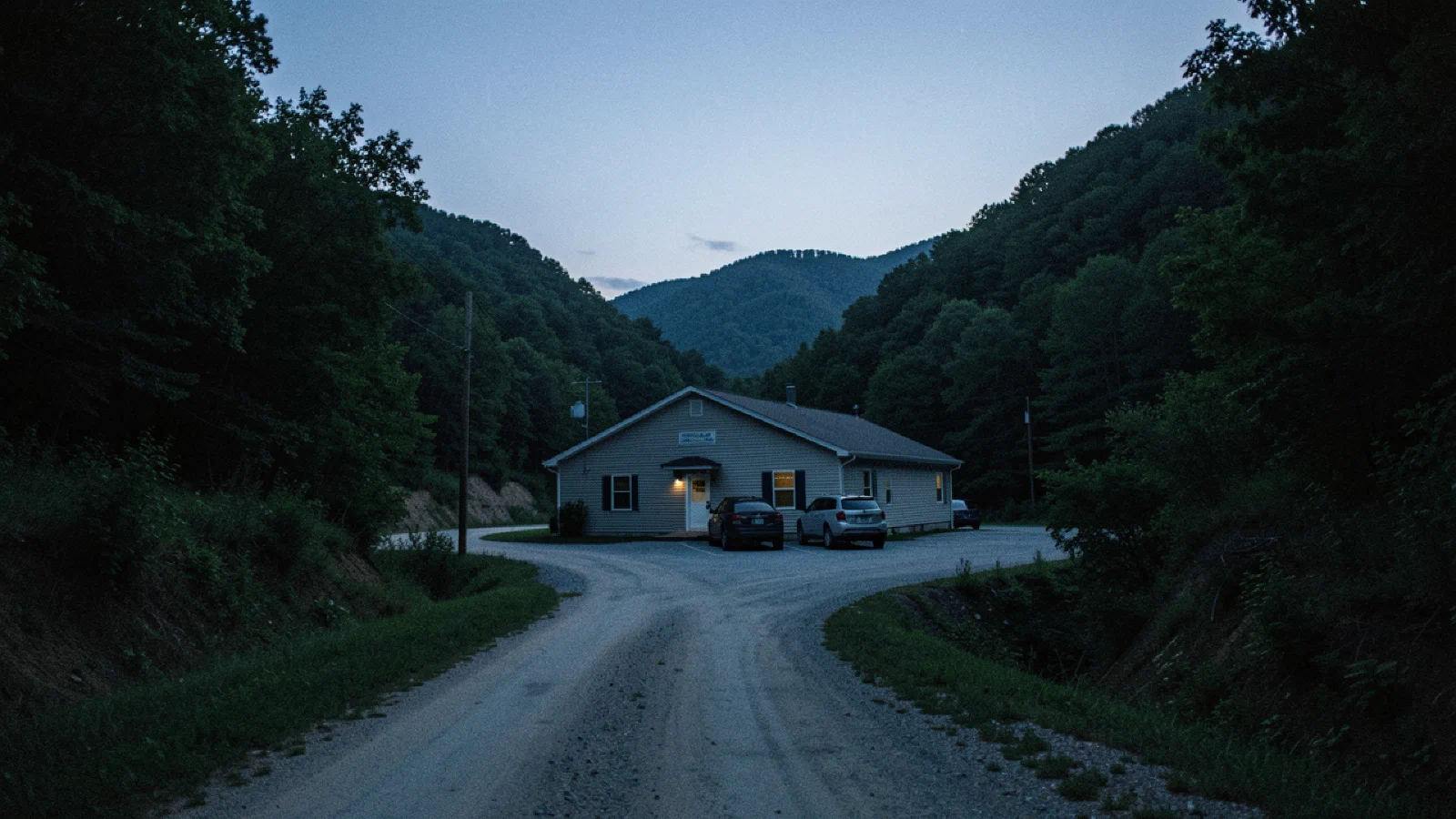
Appalachian Communities
Community Resilience Cannot Overcome Structural Barriers
Appalachia spans 423 counties across 13 states, from southern New York through northern Mississippi, encompassing approximately 26 million people. The region defies easy characterization: it includes prosperous tourism economies in Virginia’s Blue Ridge alongside devastated coal communities in eastern Kentucky, academic centers in Athens, Ohio alongside frontier isolation in West Virginia’s southern coalfields. What unifies Appalachia is not uniformity but a shared experience of external characterization and a common set of structural challenges that vary in intensity but follow recognizable patterns.
The core tension this article examines is between community resilience and structural barriers. Appalachian communities demonstrate remarkable resilience: mutual aid networks, cultural preservation, community institutions that survive economic collapse, and family bonds that sustain people through crisis. But recognizing resilience risks excusing system failures. Communities should not have to be resilient against abandonment. Strength in adversity does not mean adversity is acceptable.
This tension shapes how interventions are designed and evaluated. Programs that celebrate community assets without addressing structural barriers leave communities managing symptoms of problems they did not create and cannot solve. Programs that emphasize deficits without recognizing community strengths import solutions that fail because they ignore local capacity. RHTP enters this tension navigating between asset-based and deficit-based frames, with the actual question being whether federal investment can address structural causes of Appalachian health challenges.
The evidence suggests that structural barriers explain Appalachian health disparities more than any cultural or behavioral factor. When economic opportunity exists, Appalachian communities thrive. When extractive industries depart without replacement, communities decline regardless of their resilience. The question for RHTP is whether healthcare investment without economic development can meaningfully transform health outcomes in a region where economic collapse drives health crisis.
Population Profile#
Definition and Geographic Distribution#
The Appalachian Regional Commission (ARC) provides the official definition, designating 423 counties across 13 states as Appalachian. The region stretches 1,000 miles from southern New York to northern Mississippi, following the Appalachian mountain chain and its economic and cultural influence.
ARC designates counties by economic status:
| Classification | Counties | Definition |
|---|---|---|
| Distressed | 82 | Bottom 10% nationally on economic indicators |
| At-Risk | 108 | Risk of becoming distressed |
| Transitional | 213 | Transitioning between weak and healthy economies |
| Competitive | 16 | Approaching national averages |
| Attainment | 4 | Exceeding national averages |
Distressed and at-risk counties concentrate in Central Appalachia: eastern Kentucky (54 Appalachian counties, most distressed), West Virginia (entire state is Appalachian), southwest Virginia, and portions of Tennessee, Ohio, and North Carolina. These 190 counties represent the Appalachian health crisis that RHTP addresses.
State Distribution:
| State | Appalachian Counties | Population | Economic Status |
|---|---|---|---|
| West Virginia | 55 (entire state) | 1.8 million | 14 distressed |
| Kentucky | 54 | 1.1 million | 37 distressed |
| Virginia | 25 | 0.4 million | 4 distressed |
| Ohio | 32 | 1.5 million | 5 distressed |
| Pennsylvania | 52 | 3.1 million | 0 distressed |
| Tennessee | 52 | 2.4 million | 10 distressed |
| North Carolina | 29 | 1.6 million | 1 distressed |
| New York | 14 | 1.0 million | 0 distressed |
| Georgia | 37 | 0.8 million | 0 distressed |
| Alabama | 37 | 3.5 million | 1 distressed |
| South Carolina | 6 | 1.0 million | 0 distressed |
| Mississippi | 24 | 0.7 million | 10 distressed |
| Maryland | 3 | 0.2 million | 0 distressed |
Historical Context: Extraction and Abandonment#
Appalachian history follows a pattern: external interests extract resources while externalizing costs to local communities. Timber companies logged old-growth forests in the late 1800s and early 1900s, leaving erosion, flooding, and depleted ecosystems. Coal companies extracted coal wealth for a century, leaving occupational disease, environmental devastation, and communities economically dependent on an industry designed to leave.
The coal economy shaped Central Appalachia’s development. Company towns provided housing, stores, and services tied to mine employment. When mines closed, everything closed. Workers experienced not just job loss but community collapse. The company owned the town; when the company left, the town had nothing.
Extraction Patterns:
| Era | Resource | Impact |
|---|---|---|
| 1870-1920 | Timber | Deforestation, flooding, soil loss |
| 1900-1970 | Coal (Underground) | Black lung, mining injuries, company town dependency |
| 1970-2010 | Coal (Surface) | Mountaintop removal, watershed destruction |
| 1970-Present | Deindustrialization | Factory closures, population decline |
The War on Poverty in the 1960s designated Appalachia for special federal attention, creating the Appalachian Regional Commission and investing billions in infrastructure. The investments produced roads, water systems, and community facilities. They did not produce economic diversification or sustainable development. When federal attention waned, the underlying vulnerabilities remained.
Demographic Characteristics#
Appalachian demographics reflect selective out-migration. Young adults with education and ambition leave for economic opportunity. Those who remain are older, less mobile, and increasingly dependent on disability income and retirement benefits. The population ages while the working-age cohort shrinks.
Demographic Indicators:
| Measure | Central Appalachia | Greater Appalachia | National |
|---|---|---|---|
| Population Change (2010-2020) | -4.8% | -0.2% | +7.4% |
| Median Age | 44 years | 41 years | 38 years |
| Poverty Rate | 21.4% | 15.2% | 11.4% |
| Disability Rate | 22.8% | 17.1% | 12.6% |
| Labor Force Participation | 48.2% | 57.1% | 63.4% |
| SSDI Enrollment | 11.2% | 7.4% | 4.3% |
The disability concentration requires explanation. Some observers attribute high disability rates to fraud or cultural acceptance of disability as income source. The evidence suggests a different explanation: Appalachians actually have more disabling conditions. Decades of occupational injury, environmental exposure, and limited healthcare access produce populations with genuine functional limitations. The disability rate reflects health status, not gaming the system.
Health Status and Access#
Health Outcomes: Among the Nation’s Worst#
Central Appalachian health outcomes rank among the worst nationally, with West Virginia and eastern Kentucky consistently ranking last on multiple indicators.
Health Outcome Comparisons:
| Measure | Central Appalachia | National | Gap | Source |
|---|---|---|---|---|
| Life Expectancy | 72.8 years | 78.6 years | -5.8 years | CDC |
| Opioid Overdose Deaths (per 100K) | 48.2 | 22.0 | +26.2 | CDC |
| Heart Disease Mortality (per 100K) | 245 | 165 | +80 | CDC |
| COPD Mortality (per 100K) | 72 | 39 | +33 | CDC |
| Diabetes Prevalence | 14.8% | 9.4% | +5.4% | BRFSS |
| Adult Smoking Rate | 26.4% | 12.5% | +13.9% | BRFSS |
| Obesity Rate | 38.2% | 30.4% | +7.8% | BRFSS |
| Premature Death Years Lost (per 100K) | 11,200 | 6,600 | +4,600 | CHR |
The opioid crisis hit Appalachia harder than anywhere else. West Virginia leads the nation in overdose death rates. Kentucky, Ohio, and Tennessee rank among the top ten. The crisis began with prescription opioid marketing targeting Appalachian pain clinics, progressed to heroin when prescriptions tightened, and escalated to fentanyl as street drug supply shifted. Thousands of Appalachians died. Hundreds of thousands became addicted. Communities lost generations.
Access Barriers#
Healthcare infrastructure in Appalachia has contracted as population declined and hospitals closed. The terrain creates additional barriers: winding mountain roads, unreliable weather, and distances that look short on maps but require hours of travel.
Access Indicators:
| Measure | Central Appalachia | National Rural | Gap |
|---|---|---|---|
| Primary Care Physicians per 100K | 38 | 68 | -30 |
| Mental Health Providers per 100K | 62 | 128 | -66 |
| Dentists per 100K | 28 | 42 | -14 |
| Counties Without Hospital | 41% | 28% | +13% |
| Average Drive to Hospital | 34 minutes | 17 minutes | +17 min |
| Broadband Access | 68% | 83% | -15% |
Hospital closures have accelerated. Kentucky lost multiple rural hospitals since 2020. West Virginia hospitals operate on margins that cannot sustain any disruption. Ohio’s Appalachian hospitals face similar pressures. The pattern is familiar: Medicare and Medicaid pay below cost, uncompensated care rises, commercial insurance patients leave for urban facilities, and closure becomes inevitable.
The Core Tension#
Community Resilience vs. Structural Barriers#
The community resilience view emphasizes Appalachian strengths: extended family networks that provide care, church communities that mobilize mutual aid, cultural traditions that sustain identity, and neighbor-helping-neighbor patterns that function when formal systems fail. This view argues that interventions should build on community assets rather than import external solutions.
Proponents note that Appalachian communities have survived extraction, depression, and decline that would have destroyed less resilient populations. Family bonds remain strong. Religious faith provides meaning. Cultural practices preserve identity. These assets represent infrastructure for transformation that external programs often ignore.
The structural barriers view argues that no amount of community resilience can overcome infrastructure absence, coverage gaps, economic collapse, and decades of disinvestment. Resilience is admirable but cannot substitute for hospitals, cannot recruit physicians, cannot treat addiction, cannot reverse black lung. Celebrating resilience without addressing structures risks blaming communities for failing to overcome barriers they did not create.
Evidence Assessment:
Both perspectives capture partial truths. Community resilience is real and valuable. Interventions that ignore community assets fail. External programs that dismiss local knowledge cannot succeed.
But structural barriers are also real. Resilience operates within constraints that determine outcomes. Communities with identical resilience but different structural conditions experience different outcomes. Kentucky communities with functioning hospitals have better outcomes than Kentucky communities without hospitals, regardless of community resilience levels. The variation in outcomes tracks structural factors, not resilience factors.
The evidence suggests that resilience is necessary but insufficient. Transformation requires both: building on community assets while addressing structural barriers that community assets alone cannot overcome. Programs that celebrate resilience without providing resources merely romanticize suffering. Programs that provide resources without engaging community assets waste money on interventions that fail.
What This Tension Means for RHTP#
RHTP implementation must navigate this tension practically. Asset-based approaches engage communities as partners but risk underinvesting if they assume community capacity can substitute for structural investment. Deficit-based approaches provide resources but risk imposing external solutions that communities reject or cannot sustain.
The evidence supports both/and rather than either/or: engage community assets as implementation infrastructure while investing in structural gaps that community assets cannot fill. Community health workers drawn from local populations, deployed through existing community institutions, addressing barriers that community relationships alone cannot overcome. This is harder than either pure asset or pure deficit approaches. It is also more likely to work.
When the Mine and Hospital Close Together#
Letcher County, Kentucky, population 22,000, experienced the one-two punch that defines Central Appalachian crisis. In 2015, the last major coal employer in the county shut down, eliminating 400 direct jobs and the wages that supported the local economy. In 2018, the regional hospital closed, eliminating the only inpatient facility in the county and 200 healthcare jobs.
Harold Caudill, 58, worked in the mines for thirty years before the closure. He has black lung disease, diabetes, and early-stage heart failure. His wife Joyce, 55, worked at the hospital as a medical records clerk. They lost their jobs within three years of each other.
Harold’s healthcare now requires driving 45 minutes to Hazard for routine appointments, longer for specialist care in Lexington. His black lung compensation provides income but does not cover the gas costs for medical travel. Joyce’s unemployment benefits expired. She works part-time at the Dollar General. Their grown children left for jobs in Ohio and Indiana years ago.
The Caudills represent resilience. They own their home outright, paid off before the closures. Harold gardens and hunts, stretching food dollars. Joyce coordinates informal care networks through their church, checking on elderly neighbors who also lost hospital access. They manage conditions that would overwhelm people without their skills and networks.
But resilience has limits. Harold’s black lung is progressive. His heart failure will worsen. The nearest pulmonologist is two hours away. The nearest cardiologist with heart failure expertise is in Lexington, three hours away. Harold delays appointments because the drive exhausts him. His conditions deteriorate between visits.
Their church organizes medication drives, collecting unused prescriptions to share among members who cannot afford refills. This is illegal, dangerous, and necessary. The formal healthcare system does not reach them. Informal systems fill gaps that formal systems leave.
Is Harold’s declining health a failure of his choices? He followed medical advice when he could access medical care. He modified his diet, quit smoking when diagnosed, takes his medications when he can afford them. His choices operate within constraints: no local hospital, distant specialists, medication costs exceeding income, transportation eating resources needed for treatment.
Or is Harold’s declining health a failure of systems? Systems that extracted coal wealth for a century while externalizing health costs to workers. Systems that closed hospitals when populations declined, guaranteeing further decline. Systems that train specialists who concentrate in cities rather than communities with disease burden. Systems that celebrate Appalachian resilience while abandoning Appalachian people.
RHTP Relevance#
How Appalachian States Approach RHTP#
Five states contain the most distressed Appalachian counties: Kentucky, West Virginia, Ohio, Tennessee, and Virginia. Their RHTP approaches vary based on state capacity, political context, and Medicaid status.
State Approaches:
| State | RHTP Award | Per Capita | Medicaid Status | Appalachian Focus |
|---|---|---|---|---|
| West Virginia | $199.0M | $574 | Expansion | Statewide Appalachian |
| Kentucky | $212.9M | $114 | Expansion | Eastern Kentucky explicit |
| Ohio | $203.0M | $100 | Expansion | Southeast Ohio regional |
| Tennessee | $210.7M | $88 | Non-Expansion | Appalachian East mentioned |
| Virginia | $193.5M | $294 | Expansion | Southwest Virginia targeted |
West Virginia is entirely Appalachian, so all RHTP investments are Appalachian investments. The state’s application emphasizes Health to Prosperity, framing health improvement as prerequisite for economic revival. West Virginia receives the highest per-capita RHTP funding nationally ($574 per rural resident) due to its small rural population and formula factors.
Kentucky explicitly targets eastern Kentucky in its application, acknowledging the region’s crisis and allocating resources for workforce development, telehealth expansion, and community health worker deployment. Kentucky’s 2024 achievement of decreased overdose deaths (30.2% reduction) suggests some interventions are working, though outcomes remain among the nation’s worst.
Ohio focuses Appalachian attention on southeast Ohio, leveraging academic partnerships through Ohio University and regional health systems. Ohio’s Medicaid expansion improved coverage, but Appalachian Ohio still faces workforce shortages and infrastructure gaps.
Tennessee has not expanded Medicaid, creating coverage gaps that undermine any infrastructure investment. Eastern Tennessee’s Appalachian counties receive mention in Tennessee’s application but compete with Delta West and agricultural Middle Tennessee for limited resources.
Virginia expanded Medicaid in 2019, improving coverage in southwest Virginia’s Appalachian counties. The state targets the region through workforce incentives and telehealth investment.
Gap Assessment#
What RHTP Provides:
- Telehealth infrastructure addressing geographic barriers
- Workforce recruitment with loan repayment incentives
- Community health worker program funding
- Substance use treatment expansion
- Regional coordination resources
What RHTP Fails to Provide:
- Economic development creating jobs beyond healthcare
- Medicaid expansion in Tennessee
- Long-term operating support for struggling facilities
- Replacement for coal economy tax base
- Resolution of occupational disease legacy
What Universal Approach Misses:
- Appalachian terrain creates barriers beyond typical rural
- Coal industry health legacy requires specialized response
- Multi-state regional challenges require coordination RHTP’s state-by-state approach cannot provide
- Cultural context affects intervention design and acceptance
Alternative Perspective Assessment#
The Cultural Explanation View#
Some observers attribute Appalachian health outcomes to cultural factors: fatalism, resistance to outside help, dietary traditions emphasizing fried foods and sugary drinks, tobacco use as cultural practice, and skepticism of medical authority. This view suggests interventions should focus on changing cultural attitudes and behaviors.
Assessment: This view contains some truth wrapped in considerable condescension. Some health behaviors are more common in Appalachia. But behaviors occur in context. High smoking rates correlate with stress and limited alternatives, not cultural deficiency. “Fatalism” often reflects rational assessment of limited options. Resistance to outside help reflects experience of outside help that failed or exploited.
The cultural explanation also cannot account for variation. Appalachians who access healthcare and economic opportunity achieve outcomes comparable to other populations. If culture determined outcomes, outcomes would follow people regardless of circumstances. Instead, outcomes follow circumstances. When circumstances change, outcomes change. Culture does not prevent transformation; barriers prevent transformation.
The Regional Romanticism Critique#
Some argue that celebrating Appalachian resilience and community strength romanticizes poverty and excuses system failures. This view holds that emphasis on assets distracts from demands for structural change and allows external actors to feel good about communities they continue to neglect.
Assessment: This critique has merit. “They have such strong communities” can function as “they don’t need our help.” Resilience rhetoric can excuse abandonment. But the critique goes too far if it dismisses community assets as irrelevant. Effective intervention requires engaging actual communities, which requires recognizing their strengths. The goal is not choosing between asset and deficit frames but holding both: communities have genuine strengths that interventions should leverage, and communities face genuine barriers that interventions should address.
State and Regional Variation#
Why Appalachian Experience Varies#
Appalachian health experience varies dramatically by location, economic status, and state policy.
Variation Factors:
| Factor | Better Outcomes | Worse Outcomes |
|---|---|---|
| Medicaid Status | KY, WV, OH, VA (expansion) | TN (non-expansion) |
| Economic Diversification | Northern Appalachia | Central Appalachia |
| Academic Presence | Athens OH, Morgantown WV | Isolated coalfield counties |
| Transportation | Interstate corridor | Mountain interior |
| Population Density | Larger towns | Frontier counties |
Northern Appalachia (Pennsylvania, New York, parts of Ohio) has diversified economies, better transportation, and proximity to larger population centers. Health outcomes in these areas approach or exceed national averages despite Appalachian designation.
Central Appalachia (eastern Kentucky, West Virginia, southwest Virginia, East Tennessee) concentrates distress. Coal dependency created vulnerability; coal decline created crisis. The region lacks economic alternatives, population is declining, and healthcare infrastructure is collapsing.
Southern Appalachia (portions of Alabama, Georgia, Mississippi, Tennessee, North Carolina, South Carolina) varies by subregion. Tourism economies in mountain areas create prosperity. Remote areas without tourism assets face challenges similar to Central Appalachia.
Intersectionality Considerations#
Appalachian populations intersect with other categories creating distinct experiences.
Intersecting Populations:
| Intersection | Compound Effect | Estimated Population |
|---|---|---|
| Appalachian + Elderly | Medicare gaps, transportation barriers, isolation | ~3.2 million |
| Appalachian + Veterans | VA distance, combat trauma plus economic trauma | ~500,000 |
| Appalachian + SUD | Treatment deserts, stigma, economic despair | ~1.5 million |
| Appalachian + Disabled | High disability rates, limited services | ~2.1 million |
| Appalachian + Children | ACEs elevated, school health limited | ~2.8 million |
The intersection of Appalachian geography and substance use disorder creates the opioid crisis epicenter. Communities experiencing economic collapse, loss of identity, and hopelessness are vulnerable to addiction. Treatment resources are minimal. Stigma is high. The combination produces mortality rates that exceed any other region.
What Transformation Requires#
Necessary Conditions#
Economic development integration. Healthcare investment without economic development cannot transform communities losing population and tax base. RHTP should coordinate with ARC economic development efforts, though current program design does not require such coordination.
Multi-state regional approaches. Appalachian Kentucky, West Virginia, and southwest Virginia share problems that state boundaries fragment. Regional coordination could enable shared workforce pipelines, specialty access networks, and infrastructure investment. RHTP’s state-by-state structure makes regional approaches difficult.
Occupational disease recognition. Black lung, silicosis, and other occupational diseases require specialized response. RHTP general provisions do not specifically address the coal industry health legacy that affects hundreds of thousands of Appalachians.
Community engagement. Interventions imposed from outside fail. Interventions designed with community input, implemented through community institutions, and accountable to community members succeed. RHTP should require meaningful community engagement, not token advisory boards.
What Transformation Cannot Provide#
RHTP cannot replace the coal economy. Healthcare jobs are valuable but cannot substitute for the employment base that coal provided. Without economic diversification, communities continue to decline regardless of healthcare investment.
RHTP cannot reverse fifty years of out-migration. The workers and families who left are not returning. Transformation serves the population that remains, which is older, sicker, and smaller than the population that transformation might have served decades ago.
RHTP cannot overcome the timeline mismatch. Appalachian challenges developed over decades. RHTP operates for five years. Meaningful transformation requires sustained commitment beyond any single program’s timeline.
Conclusion#
Appalachian communities demonstrate genuine resilience that any intervention should respect and leverage. Family networks, church communities, mutual aid traditions, and cultural identity provide infrastructure for transformation that external programs ignore at their peril.
But resilience cannot overcome structural barriers that communities did not create and cannot individually solve. Hospital closures, workforce shortages, coverage gaps, and economic collapse require structural response. Communities should not have to be resilient against abandonment. Celebrating resilience while perpetuating abandonment is not honoring community strength; it is excusing system failure.
RHTP enters this tension with resources that could help but constraints that limit impact. Five years of federal investment cannot reverse five decades of decline. State-by-state implementation cannot address regional challenges that cross state boundaries. Healthcare investment cannot substitute for economic development that creates sustainable communities.
The test of RHTP in Appalachia is whether it can build on community assets while addressing structural gaps. Programs that engage community health workers drawn from local populations, deploy telehealth connecting isolated communities to specialists, and support facilities that communities need but markets alone cannot sustain. This is possible. It requires intentional design that neither romanticizes community resilience nor ignores it.
Appalachian communities have survived worse than this. They will survive whether RHTP succeeds or fails. The question is whether survival requires continued suffering that transformation could prevent. The answer depends on choices that states, communities, and federal programs make together.
How this article connects to others in Blue Gray Matters.
Sources cited in this article.
- Appalachian Regional Commission. "Appalachia's Economy: Economic Status and Distressed Areas." ARC, 2025, arc.gov/appalachias-economy.
- Case, Anne, and Angus Deaton. "Deaths of Despair and the Future of Capitalism." Princeton University Press, 2020.
- Centers for Disease Control and Prevention. "Drug Overdose Mortality by State." CDC, 2025, cdc.gov/nchs/pressroom/sosmap/drug_poisoning_mortality.
- Catte, Elizabeth. "What You Are Getting Wrong About Appalachia." Belt Publishing, 2018.
- County Health Rankings. "Kentucky County Health Rankings." University of Wisconsin Population Health Institute, 2025, countyhealthrankings.org/kentucky.
- Eller, Ronald D. "Uneven Ground: Appalachia Since 1945." University Press of Kentucky, 2008.
- Gasteyer, Stephen, et al. "Community Health in the Coal Fields of Appalachia." Journal of Rural Health, vol. 38, no. 2, 2022, pp. 334-348.
- Halfon, Neal, and Miles Hochstein. "Life Course Health Development: An Integrated Framework for Developing Health, Policy, and Research." Milbank Quarterly, vol. 80, no. 3, 2002, pp. 433-479.
- Kentucky Cabinet for Health and Family Services. "Kentucky Rural Health Transformation Program Project Narrative." CHFS, Nov. 2025.
- Meit, Michael, et al. "The 2014 Update of the Rural-Urban Chartbook." Rural Health Reform Policy Research Center, 2014.
- National Institute for Occupational Safety and Health. "Coal Workers' Health Surveillance Program." NIOSH, 2025, cdc.gov/niosh/topics/cwhsp.
- Oreskes, Naomi, and Erik M. Conway. "Merchants of Doubt." Bloomsbury Press, 2010.
- Stensland, Jeffrey, et al. "Rural Hospital Closures: The Impact on Rural Communities." Office of Inspector General, DHHS, 2024.
- West Virginia Department of Health and Human Resources. "West Virginia Rural Health Transformation Program Project Narrative." WVDHHR, Nov. 2025.
- Zhang, Donglan, et al. "United States Life Expectancy by County." JAMA Internal Medicine, vol. 182, no. 6, 2022, pp. 685-694.