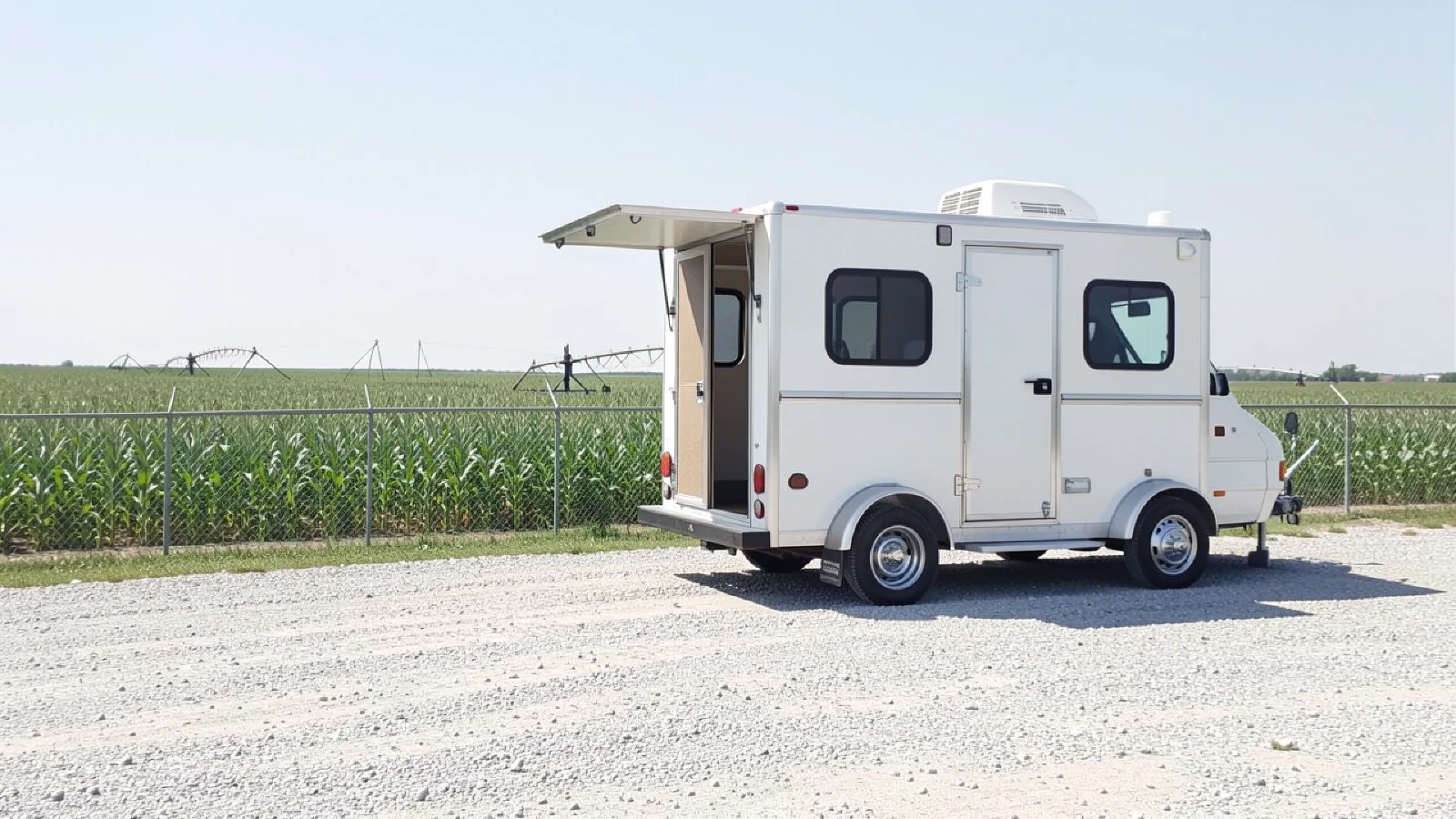
Agricultural and Seasonal Workers
When Essential Workers Receive Nonessential Health Care
America’s food supply depends on workers who remain invisible in health policy. Approximately 2.4 million farmworkers plant, cultivate, and harvest the nation’s crops. They work in conditions that produce injuries, chronic disease, and mental health challenges at rates exceeding the general population. They experience occupational exposures to pesticides, extreme heat, and physical strain that accumulate across working lifetimes. Yet federal health transformation programs routinely overlook them.
The core tension this article examines is population visibility versus population need. Farmworkers represent one of the highest-need populations in rural America: high chronic disease burden, minimal health insurance, dangerous occupational exposures, and limited access to care. They also represent one of the least visible populations: many cannot vote, many fear immigration enforcement, agricultural employers resist worker protections, and political systems do not reward investing in people without political power.
This tension shapes everything about farmworker health. Need is extreme. Visibility is minimal. The political calculation is clear: farmworker health investment generates no electoral return. RHTP’s promise to transform rural health for “all rural residents” tests whether transformation can reach populations that politics renders invisible.
What analytical value does this article add beyond population description? It examines whether RHTP’s universal design can serve a mobile population with documentation-sensitive barriers, assesses which state approaches include or exclude farmworkers from transformation, and identifies what genuine inclusion would require versus what political reality permits.
Population Profile#
Definition and Identification#
The agricultural workforce defies easy categorization. The National Agricultural Workers Survey (NAWS) defines hired farmworkers as individuals employed in crop production for wages. This excludes farm operators and unpaid family workers but includes the diverse workforce that makes commercial agriculture possible.
Population Categories:
| Category | Definition | Estimated Size |
|---|---|---|
| Migrant Workers | Travel 75+ miles to obtain farm employment | ~500,000 |
| Seasonal Workers | Work in agriculture only seasonally | ~1.5 million |
| Settled Workers | Year-round agricultural employment | ~400,000 |
| H-2A Visa Workers | Temporary agricultural workers | ~378,000 (2023) |
These categories overlap and shift. A worker may be settled in one location but work seasonally, or migrate between regions following harvests. The fluidity makes population enumeration difficult and healthcare continuity nearly impossible.
Demographic Characteristics#
According to NAWS data, the farmworker population is predominantly Hispanic (83%), overwhelmingly male (69%), and relatively young (median age 41). Foreign-born workers constitute approximately 65% of the workforce, with Mexico as the primary country of origin. Educational attainment is low: median years of schooling is 9, and 26% report completing fewer than 6 years of education.
Demographic Profile:
| Characteristic | Farmworkers | General Rural | Source |
|---|---|---|---|
| Hispanic/Latino | 83% | 8% | NAWS |
| Foreign-Born | 65% | 5% | NAWS |
| Male | 69% | 50% | NAWS |
| Median Age | 41 years | 39 years | NAWS |
| Median Education | 9 years | 12+ years | NAWS |
| Median Income | $20,000-$25,000 | $52,000 | NAWS |
| Uninsured | 59% | 12% | NAWS |
| Poverty Rate | 30% | 15% | NAWS |
Income places farmworkers among the poorest workers in America. Median personal income is approximately $20,000 to $25,000 annually for those working 200+ days. Family income remains below poverty thresholds for substantial portions of the population. Work is physically demanding, frequently dangerous, and often performed in conditions that compromise health.
Immigration Status Complexity#
Immigration status creates healthcare access barriers that legal residents do not face. Estimates suggest approximately 50% of farmworkers lack work authorization, though precise figures are impossible to obtain. Those with temporary work visas (H-2A) have limited access to public benefits. Those with documentation may still experience language barriers, mobility challenges, and fear based on family members’ status.
The mixed-status family is common: citizen children with undocumented parents, documented spouses with undocumented partners, extended family networks spanning legal categories. Healthcare decisions cannot be separated from immigration enforcement fears. A parent delaying care may be protecting family stability rather than exhibiting health-neglecting behavior.
Geographic Distribution#
Farmworkers concentrate in agricultural regions but follow crops across the nation. California employs approximately 420,000 farmworkers, the largest state concentration. Other major agricultural states include Florida, Texas, Washington, Oregon, and North Carolina. But migrant streams connect these regions: workers may winter in Texas border communities, work spring and summer harvests from Florida to Michigan, and return south as growing seasons end.
Primary Agricultural Employment States:
| State | Estimated Farmworkers | Primary Crops |
|---|---|---|
| California | 420,000 | Fruits, vegetables, nuts |
| Florida | 150,000 | Citrus, vegetables, nursery |
| Texas | 140,000 | Cotton, vegetables, cattle |
| Washington | 85,000 | Apples, cherries, hops |
| North Carolina | 80,000 | Tobacco, sweet potatoes |
| Oregon | 65,000 | Berries, tree fruits |
| Michigan | 50,000 | Cherries, apples, blueberries |
| Georgia | 45,000 | Pecans, blueberries, vegetables |
This distribution means farmworker health cannot be addressed by any single state. Mobility defines the population, and healthcare systems designed for sedentary populations cannot serve people whose work requires movement.
Health Status and Occupational Exposure#
The Occupational Hazard Burden#
Farmwork ranks among the three most dangerous occupations in America. In 2022, agriculture, forestry, fishing, and hunting had a fatal injury rate of 18.6 deaths per 100,000 full-time workers, compared to 3.7 deaths per 100,000 for all U.S. workers. Between 2021 and 2022, 21,020 agricultural production injuries required days away from work, with known underreporting given workforce characteristics.
Occupational Health Exposures:
| Exposure | Health Consequences | Prevalence |
|---|---|---|
| Pesticides | Cancer, neurological damage, reproductive harm | 50%+ exposed |
| Extreme Heat | Heat stroke, kidney disease, death | Universal in summer |
| Repetitive Motion | Musculoskeletal disorders, chronic pain | ~70% report |
| Heavy Lifting | Back injuries, joint damage | ~60% report |
| Chemical Dust | Respiratory illness, lung disease | Common |
| Sun Exposure | Skin cancer, eye damage | Universal |
| Machinery | Traumatic injury, amputation, death | Equipment users |
Pesticide exposure causes both acute illness and chronic neurological effects. Studies document elevated rates of cancer, Parkinson’s disease, and cognitive impairment among workers with long-term pesticide exposure. Research in North Carolina found occupational pesticide exposure linked to increased prevalence of rheumatoid arthritis, regardless of age, smoking history, and educational level.
Heat illness kills farmworkers at rates far exceeding other occupations. Environmental heat claimed 423 workers’ lives between 1992 and 2006 nationally; in North Carolina alone, heat stroke killed seven farmworkers within a five-year period. Climate change intensifies this risk as extreme heat events become more frequent and prolonged.
Musculoskeletal injuries accumulate over working lifetimes. Repetitive stooping, lifting, and awkward positioning produce chronic pain that workers often cannot address due to access barriers and fear of losing employment. Studies report nearly 30% of agricultural injuries requiring time away from work result from falls, with musculoskeletal disorders comprising a major category.
Chronic Disease Burden#
Beyond occupational injuries, farmworkers experience chronic disease rates that exceed comparison populations.
Chronic Disease Prevalence:
| Condition | Farmworkers | General Rural | Gap | Source |
|---|---|---|---|---|
| Diabetes | 18% | 11% | +7% | NAWS/BRFSS |
| Hypertension | 25%+ | 32% | varies | NAWS/BRFSS |
| Obesity | 38% | 35% | +3% | NAWS/BRFSS |
| Depression Symptoms | 20%+ | 14% | +6% | Research studies |
| Musculoskeletal Pain | 70%+ | 30% | +40% | Research studies |
| Eye Disorders | 25%+ | 15% | +10% | Research studies |
| Dental Disease | 50%+ untreated | 15% | +35% | NAWS |
Diabetes prevalence appears particularly elevated among farmworker populations, especially in Southwest border regions. Research analyzing NAWS data found elevated diabetes probability among Latino farmworkers in the Southwest, consistent with broader patterns of diabetes disparities in border communities.
Mental health challenges compound physical health burdens. Isolation, family separation, fear of authorities, economic stress, and hazardous working conditions contribute to depression, anxiety, and substance use. Workers often lack culturally and linguistically appropriate mental health services even when physically accessible.
The Healthy Worker Effect#
Interpreting farmworker health data requires acknowledging the healthy worker effect: agricultural work is so physically demanding that only healthy individuals can continue. Workers with poor health tend to drop out of the workforce, meaning employed farmworkers represent a selection of relatively healthier individuals. The apparent health of the current workforce masks the toll agriculture takes on those who can no longer work.
This effect means observed chronic disease rates likely underestimate lifetime burden. Workers who develop serious conditions exit the workforce and disappear from surveillance systems. The population counted as “farmworkers” at any given time represents survivors of a selection process that eliminates those most damaged by the occupation.
Healthcare Access Barriers#
Coverage Gaps#
Fewer than 20% of farmworkers have employer-provided health insurance. Agricultural employers rarely offer health benefits, and the seasonal nature of employment makes continuous coverage impossible even when offered. Workers compensation coverage excludes the majority of farmworkers in most states; only agricultural employers hiring H-2A workers or meeting employee thresholds face coverage requirements.
Insurance Status:
| Coverage Type | Farmworkers | General Rural | Source |
|---|---|---|---|
| Employer Insurance | 15-20% | 55% | NAWS |
| Medicaid | 12% | 18% | NAWS |
| Exchange Plans | 5% | 8% | NAWS |
| Uninsured | 59% | 12% | NAWS |
Medicaid eligibility is limited for undocumented workers and varies by state for documented immigrants. Emergency Medicaid covers acute care regardless of status, but primary care, chronic disease management, and preventive services remain inaccessible for millions of farmworkers. Even Medicaid-eligible workers face mobility barriers: enrolling in one state, working in another, coverage not following across state lines.
Structural Barriers#
Coverage alone does not ensure access. Farmworkers face structural barriers that prevent healthcare utilization even when nominally covered or able to pay.
Key Access Barriers:
| Barrier | Impact | Prevalence |
|---|---|---|
| Language | Cannot communicate with providers | 60%+ limited English |
| Transportation | Cannot reach facilities | Near-universal in rural areas |
| Work Hours | Cannot attend during clinic hours | Near-universal |
| Immigration Fear | Avoid healthcare to avoid detection | 50%+ undocumented |
| Employer Dependence | Fear retaliation for seeking care | Near-universal |
| Mobility | Cannot establish care continuity | 30%+ migrate |
| Health Literacy | Cannot navigate complex systems | Variable |
| Cultural Factors | Traditional medicine preferences, distrust | Variable |
Immigration fear represents perhaps the most significant barrier. Workers who fear that seeking healthcare will expose them to immigration enforcement delay or forgo care entirely. This fear extends beyond undocumented workers to mixed-status families where one member’s visibility could affect the entire family. Public charge concerns, even when not legally applicable, suppress healthcare utilization.
Healthcare Programs and Infrastructure#
Migrant Health Centers#
The federal Migrant Health Program, authorized by the 1962 Migrant Health Act and now administered under Section 330(g) of the Public Health Service Act, provides the primary healthcare infrastructure serving farmworkers. In 2024, 177 federally funded migrant health center grantees operated across the United States, serving approximately 1 million farmworkers and family members in 2023. This represents roughly one-third of the estimated farmworker population.
Migrant Health Centers operate as Federally Qualified Health Centers (FQHCs) with specific mandates to serve agricultural workers. They provide culturally and linguistically appropriate primary care, preventive services, dental care, behavioral health, and pharmacy services. Many operate both fixed and mobile sites, following harvest patterns to reach workers where they live and work. Sliding-fee scales ensure services remain affordable regardless of insurance status.
The FQHC designation provides financial sustainability that standalone farmworker organizations cannot achieve. Health centers receive federal operating grants and enhanced Medicaid reimbursement rates, enabling services that market economics would not support. However, coverage remains incomplete: two-thirds of farmworkers lack access to these specialized services.
Program Limitations#
Even the dedicated Migrant Health Center program cannot address fundamental barriers:
What Migrant Health Centers Provide:
- Primary care regardless of insurance or documentation status
- Culturally and linguistically appropriate services
- Sliding-fee scales enabling affordability
- Mobile outreach to agricultural work sites
- Care coordination within their networks
What Migrant Health Centers Cannot Provide:
- Coverage that follows workers across state lines
- Specialty care beyond primary care scope
- Mental health services at scale (workforce limitations)
- Protection from immigration enforcement
- Employer behavior change
- Housing and working condition improvement
The Migrant Clinicians Network operates Health Network, a system tracking patient records across participating health centers nationally. This infrastructure enables some continuity for mobile populations, but participation is voluntary and incomplete.
The Core Tension: Visibility Versus Need#
The Political Invisibility Reality#
Farmworkers have minimal political power. Many cannot vote due to citizenship status. Many fear visibility. Agricultural employers resist worker protections that increase costs. Political systems do not reward investments in populations that cannot provide electoral return.
Assessment: Farmworker health receives minimal policy attention because farmworkers have minimal political power. The political calculation is clear: investment in farmworker health generates no votes, no campaign contributions, no political return. Changing this requires advocacy that farmworkers themselves often cannot safely lead.
This invisibility explains why RHTP applications rarely mention farmworkers explicitly. Why workforce initiatives describe “community health workers” without referencing promotoras. Why rural health transformation proceeds as if the agricultural workforce does not exist.
Visibility in State RHTP Applications#
State RHTP applications vary dramatically in their acknowledgment of farmworker populations.
State Approaches to Farmworker Inclusion:
| State | Farmworker Acknowledgment | Specific Provisions | Assessment |
|---|---|---|---|
| California | Explicit | Central Valley targeting | Most inclusive |
| Washington | Mentioned | Agricultural worker references | Moderate |
| Oregon | Mentioned | Migrant health coordination | Moderate |
| Florida | Minimal | General rural focus | Inadequate |
| Texas | Minimal | General rural focus | Inadequate |
| North Carolina | Limited | Some agricultural references | Partial |
| Michigan | Limited | Migrant health center mention | Partial |
| Georgia | Absent | No farmworker provisions | None |
California’s approach stands out. The state’s RHTP application explicitly references Central Valley agricultural communities as priority populations, directing resources to areas with high farmworker concentration. This approach provides political cover for inclusion while targeting resources to need.
Most states, however, use language describing “rural residents” without specifying farmworkers. This generic framing may serve all populations in theory but fails to address barriers specific to mobile, documentation-sensitive populations in practice.
Vignette: The Ramirez Family Follows the Harvest#
Maria and Carlos Ramirez follow crops from the Rio Grande Valley to Michigan each year. Their three children travel with them. Carlos has diabetes diagnosed two years ago at a community health event. Maria is six months pregnant with their fourth child.
In Texas, Carlos received diabetes medication from a Migrant Health Center using a sliding-fee scale. He paid $15 per visit. His A1C was 8.2%, elevated but manageable with medication and diet. Maria began prenatal care at the same clinic, her pregnancy progressing normally.
In April, the family moves to Florida for citrus work. The Texas clinic cannot refill prescriptions across state lines. The nearest Migrant Health Center in Florida has a two-month wait for new patients. Carlos rations his remaining medication. Maria finds a community clinic for prenatal care, but her records do not transfer. She repeats labs already performed in Texas. The new provider does not know her history of gestational diabetes in previous pregnancies.
By June, the family reaches Michigan for cherry harvest. Carlos has been without diabetes medication for three weeks. His blood sugar runs persistently above 300 mg/dL. He experiences blurred vision but cannot miss work. Maria is now eight months pregnant. She has had no prenatal care since Florida because establishing care takes weeks she does not have before moving again.
The family’s oldest daughter, age 14, needs a school physical to enroll in Michigan schools. The physical reveals elevated blood pressure and possible vision problems. Follow-up is recommended. They will be in Michigan eight weeks, insufficient time to complete referrals and specialty evaluations.
When Carlos finally sees a provider in Michigan, his A1C has climbed to 11.4%. The provider discusses kidney function concerns and emphasizes the need for consistent medication and monitoring. Carlos knows this. He also knows the family will leave Michigan in six weeks, move to Washington for apples, and the cycle will repeat.
Maria delivers in Michigan, her pregnancy uncomplicated despite fragmented care. The baby appears healthy, but no one has coordinated newborn follow-up across the family’s anticipated locations. Will the baby receive recommended vaccinations on schedule? Will Maria receive postpartum care? Will the family establish a pediatric medical home?
The answer is unlikely. Each location requires new provider relationships, new eligibility determination, new records that do not follow. Diabetes management fails as continuity breaks. Childhood preventive care fragments. Pregnancy outcomes depend on luck as much as healthcare.
What would continuity look like? Portable health records that follow workers. Medicaid that transfers across state lines. Migrant Health Centers in every agricultural region. Providers who understand occupational health. Systems designed for mobility rather than penalizing it.
Alternative Perspectives#
The Economic Dependence View#
Some argue that farmworker health is properly an employer responsibility. Agricultural operations benefit from farmworker labor; employers should provide health coverage like other industries. Government programs subsidize agricultural employers by providing health services that employers should fund.
Assessment: This view correctly identifies that employer-provided health coverage is standard in most American industries and that agricultural exceptionalism reflects political power rather than economic necessity. However, the agricultural labor market includes millions of workers across thousands of employers, many operating at thin margins, with seasonal employment patterns incompatible with traditional employer-sponsored insurance. Changing employer behavior requires labor law reform that political systems have not delivered and agricultural lobbies actively oppose. Waiting for employer responsibility means waiting indefinitely while workers suffer.
The Immigration Reform View#
Others argue that farmworker health problems fundamentally reflect immigration policy failure. Until comprehensive immigration reform provides pathways to legal status, healthcare solutions remain incomplete. Health programs cannot solve problems rooted in immigration law.
Assessment: Immigration status shapes farmworker healthcare access profoundly. Reform enabling legal status would improve access to coverage, reduce fear-based care avoidance, and enable healthcare participation currently impossible. But immigration reform has stalled in Congress for decades. Making farmworker health contingent on immigration reform means accepting indefinite suffering while awaiting political changes that may never come. Healthcare systems must address farmworker needs within existing legal constraints while advocating for policy reform.
The Universal Coverage View#
A third perspective holds that universal healthcare coverage would eliminate farmworker healthcare access problems along with those of all uninsured populations. Rather than farmworker-specific programs, the solution is systemic: coverage for all regardless of employment, documentation, or mobility.
Assessment: Universal coverage would indeed address many farmworker barriers, particularly those related to insurance status and employment-based coverage gaps. But universal coverage does not address language barriers, transportation barriers, work hour conflicts, immigration fear, or the occupational health knowledge gap among providers. Farmworker-specific programs would remain necessary even under universal coverage to address barriers beyond insurance alone.
RHTP Adequacy Assessment#
What RHTP Could Provide#
RHTP’s flexible funding structure could support farmworker health transformation if states chose to prioritize this population:
Potential RHTP Applications:
- Migrant Health Center supplementation
- Mobile health unit expansion
- Promotora program development
- Telehealth for mobile populations
- Occupational health integration
- Care coordination across state lines
The Migrant Health Center network represents existing infrastructure that RHTP could leverage. These centers already manage federal grants, meet compliance requirements, and maintain clinical systems. Adding RHTP funds requires no new organizational capacity, only program expansion. States with substantial agricultural workforces and established Migrant Health Center networks could significantly expand farmworker health access.
What RHTP Does Not Address#
Fundamental barriers to farmworker healthcare lie beyond RHTP’s scope:
What RHTP Cannot Provide:
- Immigration status resolution
- Political power for powerless population
- Employer behavior change
- Interstate Medicaid portability
- Housing and working condition improvement
- Protection from immigration enforcement
RHTP assumes populations that can access transformed systems. Farmworkers face barriers that prevent access regardless of system quality. A transformed rural healthcare system that farmworkers cannot reach is no transformation at all for this population.
Honest Assessment#
Most RHTP implementation will not include explicit farmworker provisions. Political calculations, administrative convenience, and population invisibility combine to produce programs serving “rural residents” without naming who those residents are. Farmworkers will receive some benefit from general rural health improvements but will not be transformation’s primary beneficiaries.
For RHTP to achieve its transformation mandate for all rural residents, intentional design is required:
- Explicit inclusion of farmworker provisions in state plans and subaward opportunities
- Designated funding streams that do not require competing against general rural health priorities
- Compliance accommodations recognizing mobile populations, mixed-status families, and documentation barriers
- Measurement systems capturing farmworker outcomes without requiring individual identification
- Political protection for state agencies willing to serve controversial populations
Without intentional design, RHTP will transform rural health for residents who are politically visible while leaving invisible populations behind.
Intersectionality Considerations#
Farmworkers intersect with other population categories creating compound disadvantage.
Intersecting Populations:
| Intersection | Compound Effect | Estimated Population |
|---|---|---|
| Farmworkers + Children | Pesticide exposure, developmental risk, interrupted schooling | ~800,000 |
| Farmworkers + Pregnant Women | Prenatal care fragmentation, occupational exposure risk | ~100,000 annually |
| Farmworkers + Elderly | Accumulated occupational damage, limited Social Security | ~200,000 |
| Farmworkers + SUD | Isolation, pain management, limited treatment access | ~250,000 |
| Farmworkers + Complex Conditions | Specialty access impossible, management fragmented | Variable |
The intersection of farmworker status and childhood creates particular concern. Children in farmworker families experience elevated pesticide exposure, interrupted education, housing instability, and healthcare fragmentation. Research documents higher pesticide levels in farmworker children compared to general population children. These early exposures may produce health consequences that extend across lifetimes.
Recommendations#
For State Agencies Implementing RHTP#
- Include farmworker populations explicitly in needs assessments
- Designate Migrant Health Centers as subawardees where they exist
- Create application processes accessible to farmworker-serving organizations
- Protect population data from immigration enforcement
- Measure transformation success by whether all rural residents benefit
For Healthcare Providers#
- Recognize farmworkers as part of service populations
- Train staff in occupational health relevant to agriculture
- Address language access throughout systems
- Partner with Migrant Health Centers for coordination
- Support care coordination across geographic locations
For CMS and Federal Partners#
- Monitor whether RHTP reaches farmworker populations
- Provide guidance on serving populations regardless of immigration status
- Fund technical assistance specifically for farmworker health transformation
- Evaluate transformation success by equity metrics including invisible populations
Conclusion#
Agricultural and seasonal workers represent perhaps the clearest test of whether “rural health transformation for all rural residents” means what it says. This population has among the highest health needs in rural America: occupational exposures producing injury and chronic disease, minimal insurance coverage, barriers preventing access even when coverage exists, and conditions that would be unacceptable for any other American workforce.
The population also has among the lowest political visibility. Workers who cannot vote, who fear authorities, whose employers resist protections, whose labor is essential but whose presence is controversial. Political systems do not reward investment in people who cannot provide political return.
RHTP’s universal approach fails this population unless states choose intentional inclusion. Universal language describing “rural residents” does not reach populations with distinct barriers. Documentation-sensitive design, mobile health infrastructure, and occupational health integration require deliberate policy choices that most states have not made.
The residents who harvest America’s food deserve healthcare transformation. They also deserve acknowledgment that their current conditions reflect not their choices but political decisions about whose health matters. Some populations are visible; resources flow. Others are invisible; needs remain unmet. Farmworkers feed the nation while the nation’s health systems fail to see them.
How this article connects to others in Blue Gray Matters.
Sources cited in this article.
- Arcury, Thomas A., et al. "Work Safety Climate, Musculoskeletal Discomfort, Working While Injured, and Depression Among Migrant Farmworkers in North Carolina." *American Journal of Public Health*, vol. 102, no. S2, 2012, pp. S272-S278.
- Bureau of Labor Statistics. "Census of Fatal Occupational Injuries Summary, 2022." U.S. Department of Labor, Dec. 2023.
- Bureau of Labor Statistics. "Survey of Occupational Injuries and Illnesses, 2021-2022." U.S. Department of Labor, 2024.
- Centers for Disease Control and Prevention. "Agriculture Worker Safety and Health." National Institute for Occupational Safety and Health, July 2024, cdc.gov/niosh/agriculture.
- Farmworker Justice. "2024 Key Resources for Agricultural Worker Health." Farmworker Justice, 2024, farmworkerjustice.org.
- Fung, Wenson, et al. "Findings from the Quality of and Access to Health Care Supplement of the National Agricultural Workers Survey (NAWS) 2019-2020." U.S. Department of Labor, May 2024.
- Health Resources and Services Administration. "Health Center Program Compliance Manual." HRSA, 2024, bphc.hrsa.gov.
- Housing Assistance Council. "Rural Research Brief: Creating A Better Understanding of Farmworker Communities and Their Housing Conditions." HAC, Apr. 2024.
- Liebman, Amy K., et al. "The Climate Migrant: Health Risks Before, During, and After Migration." *Journal of the National Hispanic Medical Association*, vol. 2, no. 1, 2024, pp. 36-43.
- Migrant Clinicians Network. "Health Network." Migrant Clinicians Network, 2024, migrantclinician.org.
- National Center for Farmworker Health. "Farmworker Health Factsheet." NCFH, 2024, ncfh.org.
- NC Farmworker Health Program. "Farmworker Health Facts." NC Department of Health and Human Services, 2023.
- Rural Health Information Hub. "Migrant and Seasonal Farmworker Health Overview." RHIhub, 2024, ruralhealthinfo.org/topics/migrant-health.
- Soto, Sheila, et al. "Health Conditions Among Farmworkers in the Southwest: An Analysis of the National Agricultural Workers Survey." *Frontiers in Public Health*, vol. 10, 2022.
- U.S. Department of Agriculture. "2022 Census of Agriculture." USDA National Agricultural Statistics Service, 2024.
- U.S. Department of Labor. "National Agricultural Workers Survey." Employment and Training Administration, 2024, dol.gov/agencies/eta/national-agricultural-workers-survey.
- UC Merced Community and Labor Center. "Farmworker Health in California 2022." UC Merced, 2022.