Social Service Nonprofits
The Professionalization Question
Forty-seven million Americans contacted 211 for help in 2024. Housing, utility assistance, and food emerged as the top needs. Behind each referral stands a community organization expected to provide services: food banks distributing groceries, community action agencies coordinating poverty reduction, area agencies on aging delivering meals to homebound seniors. These organizations constitute the social service infrastructure that health transformation assumes exists.
The Rural Health Transformation Program depends on these organizations without examining their capacity. State applications promise to connect patients with “community-based organizations addressing social determinants.” RHTP-funded community information exchange platforms will generate referrals to food banks, housing counselors, transportation providers. The referral documentation creates accountability metrics. Whether the destination organization can actually serve the referred patient receives less attention.
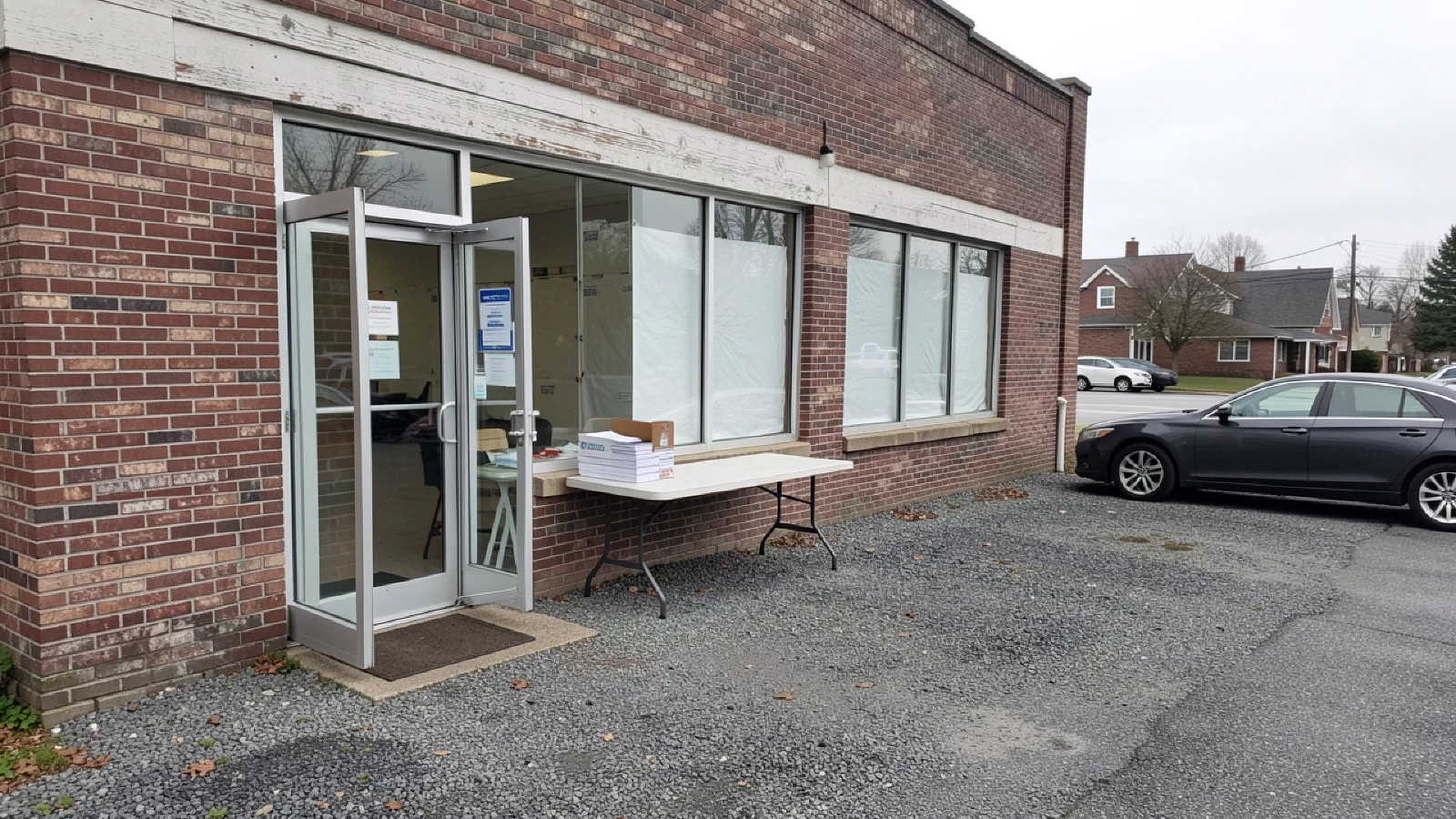
Rural social service nonprofits operate across a capacity spectrum. At one end: professionalized organizations with paid executive directors, grant-writing staff, formal management systems, and compliance infrastructure capable of meeting federal program requirements. At the other: volunteer-run operations with no paid staff, donated space, informal record-keeping, and no capacity for the documentation that federal partnerships require. Most rural social service nonprofits fall somewhere between, with one or two paid staff managing volunteer labor, struggling to balance service delivery against administrative requirements that consume resources they do not have.
The professionalization question cuts to the heart of what RHTP can accomplish through community organization partnerships. Federal programs assume institutional partners meeting professional standards: financial audits, nondiscrimination policies, reporting systems, governance structures. The organizations that actually exist in many rural communities cannot meet these standards without transformation that threatens their survival. The choice is not between professional and unprofessional partners but between partners who meet requirements and communities that receive no services.
The Social Service Nonprofit Landscape#
Scale and Structure#
The nonprofit sector includes 1.5 million organizations recognized by the IRS, the majority being charitable nonprofits providing direct services. Contrary to stereotypes of large institutions, 59% have annual budgets under $50,000. Only 3% exceed $5 million annually. These small organizations are community-embedded, locally governed, and focused on specific needs they identified in their own neighborhoods.
Rural social service nonprofits skew smaller than urban counterparts. The same population dynamics that produce small churches and declining civic organizations produce small social service agencies. The Community Services Block Grant funds over 1,100 Community Action Agencies operating in 99% of U.S. counties, but rural CAAs serve larger geographic territories with smaller budgets than urban counterparts. The same formula that penalizes rural states in RHTP distribution applies to the federal antipoverty programs that fund these organizations.
Form 990 data reveals patterns invisible in aggregate statistics. Volunteer counts appear on Page 1, Line 6, but organizations estimate rather than track actual volunteer hours. Financial statements show revenue without distinguishing stable funding from one-time grants. The “invisible majority” of very small nonprofits often file only the 990-N e-postcard, providing minimal information about operations. Understanding organizational capacity requires going beyond tax forms to operational assessment.
Core Service Categories#
Food assistance represents the most visible social service sector. The Feeding America network includes over 200 food banks serving 46 million people through 60,000 food pantries, soup kitchens, and meal programs. Rural coverage requires twice as many food providers per person as urban areas due to geographic dispersion. Mobile food pantries bring services to isolated communities, but logistical challenges multiply costs. Every 9 out of 10 counties with the highest food insecurity rates are rural.
Community Action Agencies trace their lineage to the War on Poverty. These organizations receive Community Services Block Grant funding to address locally identified causes of poverty. Federal law mandates tripartite boards: one-third elected officials, one-third low-income community representatives, one-third private sector leaders. This governance structure ensures community voice but can complicate decision-making when board members have conflicting priorities. CSBG provides flexibility that enables CAAs to address whatever needs their communities identify, but funding levels remain modest relative to need.
Area Agencies on Aging coordinate services for older adults under the Older Americans Act. The 622 AAAs nationwide serve as local entry points for senior services: home-delivered meals, transportation, caregiver support, legal assistance, Medicare counseling. Rural AAAs cover larger geographic areas with sparser populations, increasing per-person service costs. The 2023 National AAA Survey documented workforce challenges affecting 84% of rural AAAs: weak applicant pools, staff burnout, uncompetitive wages, persistent shortages. Sixty-four percent reported delaying service starts due to staffing gaps.
Housing and homeless services operate with varying capacity across rural America. Rural homelessness looks different from urban homelessness, with more people living in vehicles, doubling up with family, or occupying substandard structures rather than sleeping on streets or in shelters. Housing counseling agencies, emergency assistance programs, and homeless continuums of care exist primarily in urban areas, leaving rural communities with scattered resources of varying quality.
The Capacity Spectrum#
Understanding rural social service capacity requires distinguishing organizational types that share nonprofit status but differ fundamentally in what they can accomplish.
Professionalized organizations employ executive directors, program staff, finance managers, and development personnel. They maintain audited financial statements, policy manuals, and governance systems meeting federal requirements. They can apply for federal grants, manage subcontracts, track outcomes, and produce required reports. The price of professionalization includes overhead costs that consume 20-30% of revenue and organizational complexity that distances leadership from direct service. These organizations can partner with RHTP programs but exist primarily in larger rural communities or serve multi-county regions.
Semi-professionalized organizations employ one to three staff members, typically an executive director wearing multiple hats and perhaps a program coordinator. The executive director writes grants, manages programs, supervises volunteers, maintains records, and handles compliance, often working 60-hour weeks for salaries below market rate. These organizations can sometimes meet federal requirements if given technical assistance and capacity-building support, but compliance consumes resources that would otherwise provide services.
Volunteer-led organizations have no paid staff. A volunteer president or director coordinates activities, perhaps receiving a small stipend. Operations depend entirely on volunteer labor, typically drawing from the same aging population that provides most rural volunteers. Record-keeping is minimal. Financial management involves a treasurer tracking deposits and expenses in a personal spreadsheet. These organizations cannot meet federal program requirements without transformation that would require resources they do not have.
The capacity spectrum does not map neatly onto organizational value. Some volunteer-run organizations deliver services more effectively than professionalized counterparts, precisely because they avoid overhead and maintain direct community connection. The volunteer fire company serving a rural county may respond more reliably than the professional department serving the neighboring city. But federal programs cannot partner with organizations that cannot document their activities, maintain financial controls, or certify compliance with program requirements.
The Professionalization Pressure#
Federal Program Requirements#
Federal grants and contracts impose requirements that many rural organizations cannot meet. These requirements exist for legitimate reasons: ensuring accountability for public funds, preventing discrimination, documenting outcomes. But their cumulative effect creates barriers that exclude the organizations most embedded in the communities programs aim to serve.
Financial management requirements include maintaining audited financial statements for organizations receiving over $750,000 in federal funds. Even below that threshold, federal grants require financial systems capable of tracking expenditures by grant, documenting allowable costs, and producing required reports. Small organizations using QuickBooks or spreadsheets may lack systems capable of compliance.
Governance requirements include maintaining boards meeting federal specifications, adopting conflict of interest policies, and documenting governance processes. Organizations with informal governance, where the same people who run programs also serve on boards, may not meet separation requirements.
Reporting requirements impose documentation burdens that consume staff time. Grant reports require tracking outputs, outcomes, and expenditures in formats defined by funders. Each funder requires different formats, creating multiplicative burden for organizations piecing together revenue from multiple small grants. An executive director spending 30% of time on reporting has 30% less time for mission delivery.
Nondiscrimination requirements require written policies, staff training, and documentation systems that small organizations may lack. The requirement itself is appropriate; the documentation burden falls hardest on organizations too small to have dedicated compliance staff.
The Technical Assistance Promise#
Capacity-building investments aim to help small organizations meet professional standards. Federal programs, foundations, and state agencies fund technical assistance providers to work with community organizations on governance, financial management, and program development. The theory holds that investment in organizational infrastructure enables organizations to access funding and deliver services more effectively.
The reality is more complicated. Technical assistance reaches organizations with existing capacity to engage. The semi-professionalized organization whose executive director can attend training sessions and implement recommendations benefits from technical assistance. The volunteer-led organization whose leadership works full-time elsewhere cannot participate in capacity-building programs designed around professional schedules.
Technical assistance often prepares organizations for grants they then do not receive. The organization invests time building systems to meet requirements, submits applications, and loses to more experienced competitors. The capacity building was real but produces no return. Repeated experience teaches organizations that federal grants go to the same organizations that have always received federal grants.
The most effective capacity building connects small organizations with intermediary partners who provide infrastructure rather than training. A small food pantry that cannot manage federal grants can receive supplies through a regional food bank that handles compliance. A volunteer-led senior services program can operate under the fiscal sponsorship of a community foundation with professional financial management. These arrangements work when intermediaries exist and prioritize small organization support.
Burnout and Turnover#
Nonprofit burnout has reached crisis levels. The Society for Human Resource Management reports 30% of nonprofit employees experience burnout, with another 20% at risk. Voluntary turnover runs at 19% annually, higher than most private-sector industries. The sector loses experienced staff constantly, creating discontinuity in services and organizational knowledge.
Rural nonprofits face compounded challenges. Compensation falls below urban nonprofit salaries, which themselves fall below for-profit equivalents. Housing costs in some rural areas have risen while wages stagnated. Staff members cannot afford to live in the communities they serve. The mission-driven workforce that accepts below-market compensation reaches limits.
Executive director burnout deserves specific attention. Daring to Lead research documented that half a million nonprofit executives may exit positions over 15 years due to burnout, inadequate compensation, and governance challenges. Rural executive directors face these pressures with less support, fewer professional development opportunities, and greater isolation than urban counterparts.
The Building Movement Project found declining leadership aspirations among nonprofit staff, particularly staff of color. Difficult working conditions drive talented people away from advancement. Those who aspire to leadership often do so to improve conditions rather than from enthusiasm about the role itself. The pipeline for rural nonprofit leadership narrows as current leaders burn out faster than replacements emerge.
The Rural Social Service Reality#
Geographic Dispersion Costs#
Serving the same number of people across larger territory multiplies costs. A food bank in Houston can serve 100,000 people from a central warehouse with reasonable efficiency. A food bank serving 100,000 people across 30 rural Texas counties requires mobile distribution, longer routes, more vehicles, and more volunteer drivers. The cost per meal delivered rises with geographic dispersion even if the cost of the food itself remains constant.
Transportation costs pervade rural social services. Meals on Wheels routes cover more miles for fewer recipients. Mobile health units travel farther between stops. Case managers spend more time driving between client homes. These costs appear in budgets as fuel, vehicle maintenance, and staff time, but they actually represent the geometric penalty of serving dispersed populations.
Fixed costs create additional challenges. A community action agency serving a multi-county territory needs multiple office locations to maintain community presence. Each location requires rent, utilities, and on-site staff. The same organization serving an equivalent population in a single urban county could operate from one location at lower cost.
Volunteer Dependency#
Rural social services depend on volunteers to an extent that urban services do not. Food pantries, senior centers, transportation programs, and emergency assistance all rely substantially on unpaid labor. This dependency reflects both necessity and tradition, but volunteer capacity is declining as rural populations age and young people depart.
Volunteer demographics skew toward older adults with flexible schedules. Retirees staff food pantry shifts, drive for Meals on Wheels, and coordinate community events. As these volunteers age out of active service, replacement volunteers do not appear. Working-age adults commuting to distant jobs lack time for weekday volunteering. Young adults leave for urban employment. The volunteer pipeline narrows.
Volunteer reliability varies. Professional staff show up consistently because employment requires it. Volunteers help when they can, which may not be when help is needed. Organizations depending heavily on volunteers experience chronic uncertainty about operational capacity. The food pantry may have plenty of food but insufficient volunteers to distribute it.
Volunteer management itself requires capacity. Recruiting volunteers, scheduling shifts, training on procedures, recognizing contributions, and handling problems all take time. Organizations too small for paid volunteer coordinators assign these tasks to overloaded executive directors or to volunteers coordinating other volunteers. The management overhead of volunteer labor often goes unrecognized.
Infrastructure Fragility#
Rural social service infrastructure lacks redundancy. When the one food bank serving three counties closes, no alternative exists. When the area agency on aging cannot fill its director position, services deteriorate without backup. Single points of failure characterize rural systems in ways that urban systems, with multiple overlapping providers, do not face.
Organizational failure cascades through interconnected services. The community action agency provides fiscal sponsorship for smaller programs, emergency funds for families in crisis, and coordination among service providers. If that organization closes, all the programs depending on its infrastructure face disruption. The loss is greater than one organization’s services.
Relationships hold fragile systems together. The nonprofit director who knows which church will help with utility bills, which employer will consider applicants with criminal records, and which landlord will work with tenants facing eviction connects people to resources through personal networks. When that director leaves, the knowledge leaves too. Documentation cannot substitute for embedded understanding of local systems.
The Organizational Capacity Assessment#
What Capacity Means#
Organizational capacity encompasses the resources, systems, and capabilities an organization uses to accomplish its mission. The concept includes:
Human capacity: Staff expertise, volunteer availability, board engagement, leadership depth. Does the organization have people capable of doing what needs doing?
Financial capacity: Revenue stability, cash reserves, financial management systems, fundraising infrastructure. Can the organization sustain operations through variable funding and unexpected costs?
Infrastructure capacity: Physical facilities, technology systems, vehicles, equipment. Does the organization have tools necessary for its work?
Programmatic capacity: Service design expertise, quality management, outcome measurement, continuous improvement. Can the organization deliver services effectively and demonstrate results?
Relational capacity: Community connections, partner networks, referral relationships, stakeholder trust. Does the organization maintain relationships enabling effective operation?
Adaptive capacity: Ability to respond to changing conditions, learn from experience, modify approaches, take appropriate risks. Can the organization evolve as circumstances require?
Rural social service organizations typically possess stronger relational and adaptive capacity than infrastructure or programmatic capacity. They know their communities intimately and respond flexibly to local needs. They may lack the financial reserves, technology systems, and formal program structures that federal partnerships require.
The Vignette: When Capacity Misleads#
Central Counties Community Action Agency had submitted a strong RHTP application. The executive director of 12 years had built the organization from a two-staff operation to a six-person team managing four programs and $1.2 million in annual revenue. The application promised community health worker deployment, social needs screening, and care coordination for 1,500 rural households annually.
The RHTP award came through in October. By December, the executive director had accepted a state government position offering substantially better compensation and benefits. She had not anticipated the award when making her decision. The deputy director, promoted internally, had never managed federal grants. The grant writer who had assembled the RHTP application left the following March.
By month eight of implementation, CHW hiring was six months behind schedule. The organization had missed its first quarterly report deadline. The state RHTP office was initiating corrective action procedures.
The grant writer’s departure had revealed a truth that the original application obscured: the organization’s capacity existed in one person, and that person was gone.
When Social Service Nonprofits Can Support Transformation#
Organizational stability is prerequisite. Organizations in crisis cannot absorb new partnerships. Executive transitions, financial distress, and governance conflicts all indicate organizations unsuitable for transformation investment. Look for multi-year operating history, stable leadership, and consistent service delivery.
Professional infrastructure must exist or be rapidly developable. Organizations cannot meet federal requirements without systems for financial management, governance, and documentation. Those lacking systems need either intensive capacity building before partnership or intermediary support throughout.
Scale must match expectations. The single-staff organization cannot coordinate county-wide referral networks. Match organizational capacity to role expectations. Small organizations can participate meaningfully in limited ways without bearing burdens exceeding their capacity.
Community connection validates mission alignment. Organizations embedded in communities they serve bring knowledge and relationships that professional credentials cannot provide. Assess community trust and engagement alongside administrative capacity.
Leadership can absorb complexity. Transformation initiatives add complexity to already complex organizations. Leaders must have capacity for new learning, new systems, and new relationships. Organizations whose leaders are already overwhelmed cannot absorb additional burden.
When Social Service Nonprofits Cannot Support Transformation#
Volunteer-only operations cannot meet federal requirements. No capacity building makes volunteer-led organizations compliance-ready without paid staff to implement what capacity building teaches. These organizations serve communities valuably but cannot participate in federal programs.
Declining organizations cannot commit to multi-year initiatives. Organizations losing population, revenue, and volunteer base cannot credibly promise service delivery through program periods. Partnership with declining organizations transfers risk to beneficiaries.
Single-person capacity creates unacceptable fragility. When everything depends on one person, that person’s departure ends everything. Partnership should require demonstrated succession capacity or at minimum honest acknowledgment of fragility.
Mission drift threatens organizational identity. Some organizations should not pursue federal partnerships that require becoming something different. A volunteer food pantry that serves its community well should not professionalize into a grant-managing bureaucracy that serves its community worse.
Community opposition undermines legitimacy. Organizations that community members distrust cannot serve as transformation partners regardless of administrative capacity. Partnership should require demonstrated community confidence.
Recommendations#
For Social Service Organizations#
Assess capacity honestly. Not every organization should pursue federal partnership. The small, volunteer-led organization providing valued community services may serve its mission better by remaining small. Pursuing funding that requires transformation into something different destroys what made the organization valuable.
Seek appropriate partnerships. Organizations lacking compliance infrastructure can participate in larger initiatives through intermediary relationships. Fiscal sponsorship, coalition membership, and referral partnerships enable contribution without requiring organizational transformation.
Protect core mission. Grant funding that diverts resources from mission delivery harms communities even if it increases organizational revenue. Evaluate opportunities by mission impact, not just revenue potential.
Address succession before crisis. The executive director who is indispensable creates an organization that cannot survive her departure. Build bench strength, document institutional knowledge, and develop next-generation leadership before the current leader burns out.
For State Agencies#
Conduct capacity assessment before partnership. Not all community organizations can participate in transformation initiatives. Assessment prevents failed partnerships and directs resources to organizations capable of productive participation.
Provide infrastructure support, not just training. Organizations need unrestricted operating support, multi-year commitments, and reduced compliance burden more than workshops and toolkits. Fund what organizations actually need.
Create tiered partnership structures. Direct contracts for organizations meeting federal requirements. Intermediary-facilitated participation for organizations needing infrastructure support. Referral relationships for organizations that cannot participate formally but provide community services.
Accept that some communities lack partners. No capacity building creates community organizations from nothing. Where social service infrastructure does not exist, either invest in infrastructure creation or acknowledge that certain transformation approaches cannot work.
Reduce burden where possible. Every reporting requirement consumes resources that would otherwise serve beneficiaries. Require only what genuinely matters. Harmonize requirements across programs to reduce duplicative compliance.
For Healthcare Partners#
Understand referral destination capacity. Community information exchange platforms route referrals to organizations. Those organizations have limited capacity. Referral volume exceeding service capacity generates documentation without generating services.
Build rather than deplete community organizations. Healthcare partnerships that extract community organization labor without providing resources weaken the organizations healthcare transformation depends upon. Partnership should strengthen, not consume, community capacity.
Engage community organizations as partners, not contractors. The relationship between healthcare systems and community organizations should reflect mutual benefit, not just payment for services. Community organizations possess knowledge and relationships that healthcare systems need. Respect produces better partnership than condescension.
Invest in social service capacity alongside navigation. Building referral infrastructure without building service capacity creates systems that document unmet needs without meeting them. Investment in community organization capacity produces the destinations that navigation requires.
Conclusion#
The social service nonprofit sector provides essential infrastructure for health transformation, but that infrastructure varies dramatically in capacity. The professionalized organization capable of federal partnership and the volunteer-led operation serving its community effectively represent different phenomena sharing only nonprofit tax status.
RHTP depends on community organization partners it has not assessed. State applications reference social service infrastructure without documenting what infrastructure exists, what capacity organizations possess, and what investment would be required for meaningful partnership. The assumption that community organizations will participate ignores the barriers federal programs impose.
Honest assessment produces uncomfortable conclusions. Some communities lack social service infrastructure. Some organizations cannot meet federal requirements. Some valued community services operate in ways that federal partnership would destroy. Transformation strategy must accommodate these realities rather than assuming them away.
The professionalization question does not have a single answer. Some organizations should professionalize to access resources and serve communities at scale. Some should remain small, volunteer-led, and community-embedded. Some should partner through intermediaries rather than attempting direct federal engagement. The appropriate answer depends on organizational context, community needs, and honest assessment of capacity.
What remains clear: assuming community organization capacity without assessing it produces failed partnerships and wasted resources. The vignette of Central Counties Community Action will repeat across rural America as RHTP implementation reveals the gap between what states promised and what communities can deliver. The organizations positioned to fill that gap have limits that transformation planning must respect.
How this article connects to others in Blue Gray Matters.
Sources cited in this article.
- National Council of Nonprofits. "About the Nonprofit Sector 2025."
- Feeding America. "Rural Hunger Research" and "Map the Meal Gap."
- Community Action Partnership. "Introduction to Community Action and the Community Services Block Grant."
- USAging. "National Area Agency on Aging Survey Chartbook."
- Rural Health Information Hub. "Community Supports for Rural Aging in Place."
- Candid. "The Invisible Majority: What We Know About Very Small Nonprofits."
- Urban Institute. "Addressing Burnout Is Critical to the Social Sector's Success."
- Society for Human Resource Management. Nonprofit employee burnout statistics.
- Building Movement Project. "Race to Lead" research on nonprofit leadership aspirations.
- NASHP. "Toolkit: State Strategies to Support Older Adults Aging in Place in Rural Areas."
- Congress.gov. "Community Services Block Grants: Background and Funding."
- United Way. "211 Impact Survey" and national referral data.