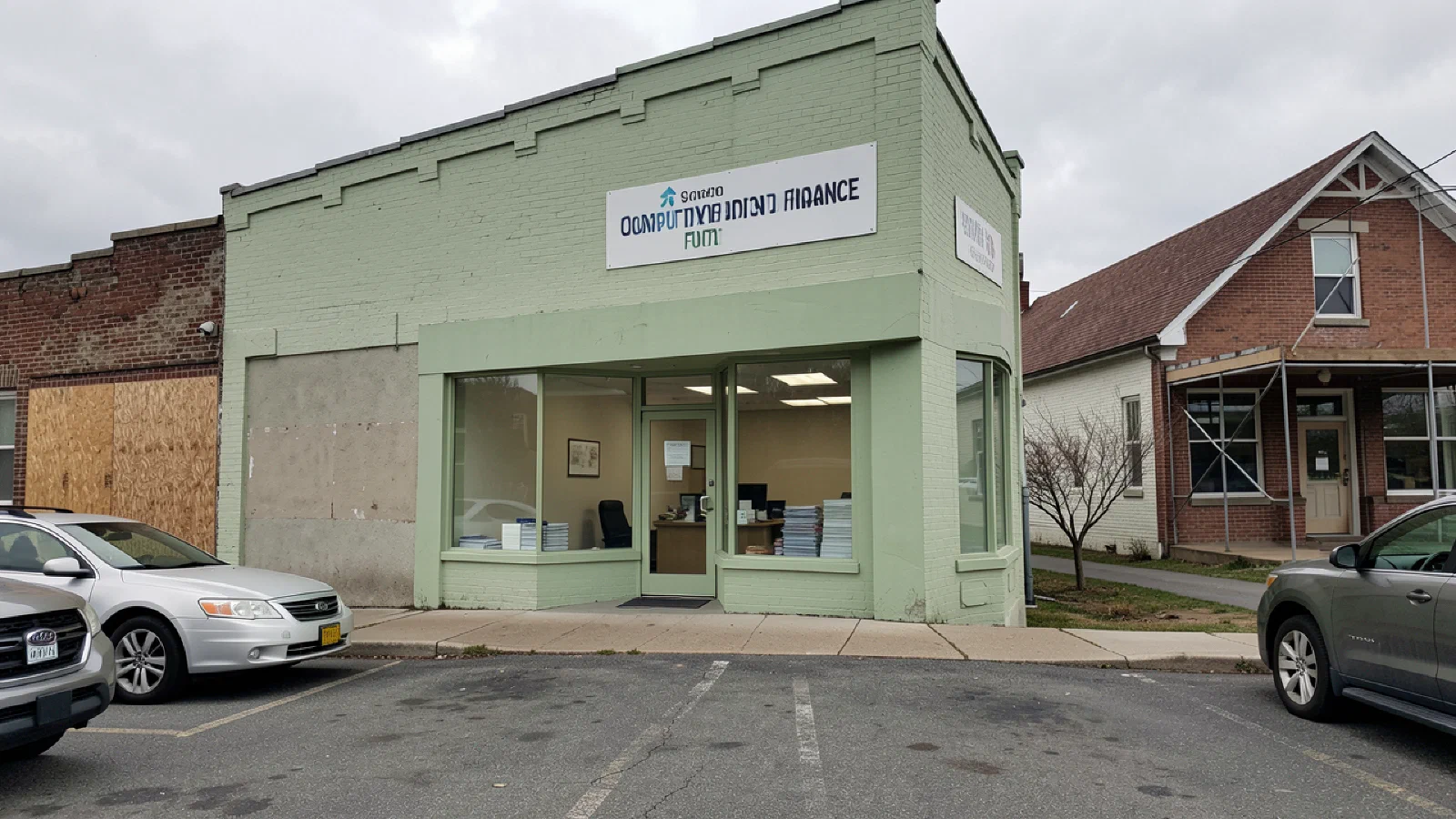
Community Development Organizations
Building Beyond Healthcare While Depending on Healthcare Funding
Community development organizations occupy a peculiar position in rural health transformation. They exist to address the determinants of health without being healthcare organizations. CDFIs finance small businesses and affordable housing. Housing organizations rehabilitate substandard homes. Economic development entities recruit employers and support entrepreneurs. These activities shape health outcomes without delivering healthcare services. RHTP’s emphasis on social determinants of health creates partnership opportunities that did not exist before. It also creates risks that transformation funding may distort organizations built for different purposes.
The core tension is mission sustainability versus grant dependency. Community development organizations typically operate on thin margins with diversified funding from federal programs, foundations, and earned revenue. RHTP partnership offers substantial resources but concentrates funding in healthcare, potentially reshaping organizational priorities around a funding source that ends in 2030. Organizations face a difficult calculation: accept transformation resources and risk becoming dependent on healthcare funding, or decline participation and forfeit the opportunity to strengthen community infrastructure during a rare moment of investment.
This article examines whether community development organizations can support rural health transformation, what conditions enable effective partnership, and what happens when healthcare funding ends. The evidence suggests that mission-aligned partnerships work; mission-distorting partnerships fail. Organizations that integrate RHTP activities into existing community development work build lasting capacity. Organizations that reshape themselves around healthcare funding face collapse when funding disappears.
Information Limits
Analysis relies on organizational data, CDFI performance reports, and housing program evaluations. What these data cannot capture is the internal deliberation that shapes partnership decisions or the long-term effects of funding concentration. The 2030 funding cliff has not arrived. Whether RHTP-built capacity survives remains speculation informed by prior grant-dependency patterns.
The Community Development Landscape#
CDFIs in Rural America#
As of February 2025, 1,427 certified Community Development Financial Institutions operate nationwide, including 68 Native CDFIs serving tribal communities. These include 561 loan funds, 496 credit unions, 196 banks or thrifts, 160 depository institution holding companies, and 14 venture capital funds operating in rural, urban, and suburban areas across all 50 states and the District of Columbia.
Rural CDFIs constitute a smaller share of the total than their urban counterparts, reflecting both population distribution and the challenges of operating mission-driven finance in thin markets. Rural areas present particular difficulties: smaller loan sizes mean higher per-loan costs, geographic dispersion increases servicing expenses, and limited population bases constrain lending volume.
| Characteristic | Rural CDFIs | All CDFIs |
|---|---|---|
| Estimated number | ~200-250 | 1,427 |
| Primary loan types | Small business, housing, facilities | Varied |
| Median loan size | $25,000-$75,000 | $50,000-$150,000 |
| Net charge-off rate | ~1.0-1.5% | ~1.0% |
| Primary funding sources | CDFI Fund, banks, foundations | Varied |
The CDFI Fund within the Treasury Department provides financial and technical assistance awards to certified CDFIs. In fiscal year 2024, CDFI Fund program award recipients financed more than 109,000 businesses and provided capital for community facilities, affordable housing, and economic development. The Healthy Food Financing Initiative has made 84 awards totaling $155.1 million to CDFIs in 18 states since 2015, addressing food access in underserved areas.
Rural CDFIs already address social determinants of health, though they may not frame their work in healthcare terminology. Small business lending creates employment with wages and benefits. Housing finance improves living conditions that affect respiratory health, mental health, and family stability. Community facility loans support clinics, schools, and childcare centers. The connection to health exists; RHTP makes it explicit and funded.
Housing Organizations#
Rural housing organizations include Community Housing Development Organizations (CHDOs), nonprofit housing developers, community land trusts, and organizations that provide housing repair and rehabilitation services. These entities address housing affordability, quality, and stability through development, lending, and direct service provision.
As of 2024, more than 300 community land trusts operate across 48 states, the District of Columbia, and Puerto Rico. CLTs separate ownership of land from ownership of structures, maintaining permanent affordability while enabling wealth building for homeowners. Research indicates CLT homeowners experience lower foreclosure rates, greater housing stability, and reduced financial hardship compared to market-rate homeowners.
The connection between housing and health is well documented. Stable, affordable housing reduces chronic stress that contributes to hypertension, cardiovascular disease, and mental health conditions. Quality housing eliminates exposure to lead paint, mold, and other environmental hazards that cause respiratory illness and developmental delays. Housing stability enables consistent employment, medication adherence, and healthcare access.
Rural housing organizations face particular challenges. Thin real estate markets limit development opportunities. Scattered housing stock increases rehabilitation costs. Aging housing infrastructure requires substantial investment. The workforce for housing repair and construction is limited in rural areas. Organizations operating in these conditions typically have small staffs, modest budgets, and limited capacity for expansion.
Economic Development Entities#
Economic development organizations in rural areas include regional planning commissions, economic development districts, chambers of commerce, and revolving loan funds. These entities work to attract employers, support entrepreneurs, develop workforce skills, and improve infrastructure that enables economic activity.
The connection to health operates through employment and income. Job loss correlates with increased mortality, depression, and substance use. Economic instability in communities affects collective health through reduced tax bases, service cuts, and population decline. Economic development that creates stable employment with health insurance directly improves population health outcomes.
Rural economic development organizations vary dramatically in capacity. Some regions have sophisticated entities with professional staff, substantial revolving loan funds, and established relationships with state and federal programs. Others have minimal infrastructure: volunteer boards, part-time staff, and limited resources. This variation in capacity shapes the potential for RHTP partnership.
The Core Tension: Mission Sustainability vs. Grant Dependency#
The Sustainability Imperative View#
Organizations should not build capacity they cannot sustain. Grant-funded programs often collapse when grants end. RHTP provides five years of funding with no guarantee of renewal. Organizations that reshape themselves around healthcare funding risk losing not only the healthcare programs but also the organizational stability they had before RHTP.
This view emphasizes several concerns:
Mission drift undermines organizational identity. A CDFI exists to provide capital access in underserved markets. A housing organization exists to improve housing conditions. When healthcare funding becomes dominant, organizations may redirect attention from core mission to healthcare-aligned activities that qualify for funding. Staff hired for healthcare programs may lack expertise in core functions. Board attention may shift to healthcare partnerships. The organization becomes something different than what it was built to be.
Funding concentration creates fragility. Diversified funding protects organizations from the loss of any single source. Organizations with multiple federal programs, foundation grants, and earned revenue can survive changes in any one stream. Concentrating funding in RHTP creates dependence on a single source that will end. Prudent management maintains diversification rather than accepting concentration.
The 2030 cliff is real. RHTP funding ends. Organizations that have grown to depend on RHTP resources will face sudden revenue loss. Positions created with RHTP funds will be eliminated. Programs built with RHTP support will end. The capacity that appeared during the funding period will disappear after it.
The Opportunity Reality View#
Refusing transformation funding because it might end abandons communities now. Rural communities face immediate needs that RHTP can address. Waiting for perfect sustainability guarantees means waiting forever. Some capacity built during funded periods will persist through organizational learning, relationship building, and demonstrated value that attracts replacement funding.
This view offers several counterarguments:
Healthcare and community development are naturally aligned. Housing affects health. Employment affects health. Food access affects health. RHTP does not require mission distortion; it funds activities community development organizations already do or should do. Partnership that aligns with existing mission strengthens rather than distorts organizational purpose.
Capacity building has lasting value. Staff trained in health-housing connections retain that knowledge after funding ends. Relationships built with healthcare partners persist beyond specific programs. Data systems developed for RHTP reporting serve other purposes. Physical infrastructure remains. Not all capacity disappears with funding.
Alternatives to RHTP partnership are worse. Organizations that decline RHTP funding do not thereby become sustainable. They remain underfunded, under-capacity, and limited in impact. The choice is not between RHTP dependency and robust independence; it is between RHTP-supported activity and continued scarcity. Taking the funding and building what capacity can be built is rational.
What Evidence Would Resolve the Tension#
The tension cannot be fully resolved because it depends on what happens after 2030, which cannot be known. However, evidence from prior grant-funded programs suggests several patterns: organizations that maintain mission alignment throughout funded periods are more likely to find replacement funding; organizations that build internal expertise rather than adding-only program staff retain value after funding ends; and organizations that diversify funding sources during RHTP are less vulnerable to the 2030 cliff than those that concentrate on RHTP.
Geographic and Organizational Variation#
Organizations in different market contexts face different partnership dynamics:
Appalachian CDFI (Central Appalachia): Operates in persistent poverty region with 22% poverty rate and high uninsured rate. Strong demand for mission-driven lending exists; housing and healthcare infrastructure gaps create capital deployment opportunities. RHTP healthcare funding complements existing lending in ways that strengthen core mission.
High Plains Housing Organization (Upper Great Plains): Operates in low-poverty region with stable agriculture and limited health infrastructure. Housing rehabilitation work directly addresses respiratory conditions from deteriorating structures. RHTP partnership would fund work the organization already does, strengthening without distorting mission.
Plains CDFI (Great Plains): Operates in agricultural region with 10% poverty rate, adequate banking presence, and stable economy. Demand for mission-driven lending is limited. CDFI struggles to deploy capital in market with alternatives. Healthcare partnership offers direction but also represents significant portion of activity. When funding ends, CDFI may lack other purpose sufficient to sustain operations.
What the contrast reveals: Community development capacity and RHTP partnership viability depend on underlying market conditions. Regions with strong demand for community development services can integrate healthcare funding without distortion. Regions with limited demand may see healthcare funding reshape organizational purpose in unsustainable ways.
Implications for Transformation#
When Community Development Organizations Can Support Transformation#
Mission alignment exists. RHTP activities should connect naturally to organizational purpose. Housing organizations addressing housing quality, CDFIs financing healthcare-related projects, economic development entities supporting healthcare employment all represent alignment. Activities that require organizational contortion to justify are warning signs.
Capacity exists for partnership. Organizations need staff time, management attention, and administrative systems to manage RHTP activities. Those without adequate capacity will struggle regardless of mission alignment.
Funding concentration remains manageable. RHTP funding should not exceed 20-25% of organizational revenue. Higher concentration creates dependency that threatens organizational stability.
Sustainability planning begins immediately. Organizations that develop sustainability strategies from partnership inception have better outcomes than those that defer thinking until funding end approaches.
When Community Development Organizations Cannot Support Transformation#
Partnership would reshape mission. When RHTP activities do not align with organizational purpose, partnership requires becoming a different organization. This transformation may not survive funding end.
Capacity does not exist. Organizations without adequate staffing, systems, and leadership cannot manage RHTP partnership effectively. Attempting partnership that exceeds capacity produces poor outcomes for community and organization.
Market conditions do not support activity. Community development organizations in regions without underlying demand for their services cannot sustain RHTP-funded activities when funding ends. Partnership may be appropriate during funding period while acknowledging temporary nature.
Sustainability path does not exist. Some activities have no plausible sustainability beyond RHTP. Organizations should understand this before accepting funding and make decisions accordingly.
Assessment and Recommendations#
For Community Development Organizations#
Assess alignment honestly. Does RHTP partnership connect to organizational mission, or would it require reshaping organizational purpose? Alignment enables sustainable partnership; misalignment predicts problems.
Maintain funding diversification. Accept RHTP funding but cap its share of revenue at levels that do not create dependency. Continue pursuing other funding sources throughout RHTP period.
Build sustainability planning into partnership design. From partnership inception, identify how activities will continue after RHTP. If sustainability path does not exist, acknowledge the temporary nature and plan accordingly.
Protect organizational identity. Partnership should enhance community development capacity, not subordinate it to healthcare priorities. Maintain board composition, staff expertise, and organizational culture aligned with community development mission.
For State Agencies#
Assess community development infrastructure before designing partnerships. States with strong CDFIs and housing organizations can pursue community development partnerships. States without this infrastructure should not assume it can be quickly created.
Structure funding to prevent concentration. Cap RHTP funding to any single organization at levels that prevent dependency. Spread funding across multiple organizations where possible.
Invest in translation. Healthcare systems and community development organizations operate differently. Effective partnership requires investment in relationship building and mutual understanding that does not happen automatically.
Plan for 2030 from the beginning. RHTP funding will end. States should begin identifying sustainability pathways for successful community development partnerships well before funding end.
For Healthcare Partners#
Value community development expertise. CDFIs and housing organizations understand community development in ways healthcare systems do not. Partnership should draw on this expertise rather than treating community development organizations as contractors implementing healthcare-designed programs.
Accept that community development serves community development purposes. Housing organizations exist to improve housing, not to improve health metrics. Health benefits flow from improved housing, but housing organizations should not be evaluated primarily on health outcomes.
Build relationships, not just contracts. Sustainable partnership depends on relationships that survive specific funding periods. Healthcare systems that invest in relationship building create possibilities for ongoing collaboration.
Conclusion#
Community development organizations can support rural health transformation where conditions enable effective partnership. Those conditions include mission alignment, adequate organizational capacity, manageable funding concentration, and realistic sustainability planning. Where conditions exist, partnership strengthens both community development and health transformation.
Where conditions do not exist, partnership produces dependency, mission distortion, and eventual failure. Organizations that reshape themselves around healthcare funding face collapse when funding ends. The 2030 cliff is real for organizations that ignore sustainability.
The evidence favors strategic partnership over categorical acceptance or rejection. Organizations that approach RHTP funding as opportunity requiring careful management build lasting capacity. Organizations that approach it as salvation or reject it entirely both miss the opportunity that careful partnership provides.
RHTP cannot create community development infrastructure that does not exist. It can strengthen infrastructure that does exist. The distinction matters for transformation strategy. States with strong community development organizations should leverage them. States without should pursue other approaches to SDOH intervention rather than pretending partnership capacity exists where it does not.
How this article connects to others in Blue Gray Matters.
Sources cited in this article.
- CDFI Fund. "FY 2024 Annual Report." U.S. Department of the Treasury, 2025.
- CDFI Coalition. "General CDFI Fact Sheet." CDFI Coalition, March 2025. cdfi.org/wp-content/uploads/2025/03/General-CDFI-Fact-Sheet-March-2025.pdf
- CNote. "Social Determinants of Health and Community Finance." CNote, April 2025. mycnote.com/blog/social-determinants-of-health-community-finance
- Congressional Research Service. "Community Development Financial Institutions (CDFIs): Overview and Selected Issues." CRS Report R47217, 2024.
- County Health Rankings and Roadmaps. "Community Land Trusts." University of Wisconsin Population Health Institute, 2024.
- Davis, John Emmeus, and Kristin King-Ries. "Preserving Affordable Homeownership: Municipal Partnerships with Community Land Trusts." Lincoln Institute of Land Policy, 2024.
- National Organization of State Offices of Rural Health. "Rural Health Capital Resources Council Project." NOSORH, 2024. nosorh.org/rural-health-capital-resources-council-project
- Opportunity Finance Network. "CDFIs Make Dreams Come True by Creating Opportunity in Rural Spaces." Rural Health Information Hub, Rural Monitor, 2023.
- Rose, Justin, et al. "Mechanisms to Improve Health Through Community Land Trusts." Journal of Urban Health, vol. 100, 2023, pp. 185-196.
- Rural Health Information Hub. "Economic Development." SDOH Toolkit, 2024. ruralhealthinfo.org/toolkits/sdoh/2/economic-stability/economic-development
- Urban Institute. "Do Community Land Trusts Improve Resident Outcomes?" Housing Matters, February 2024.