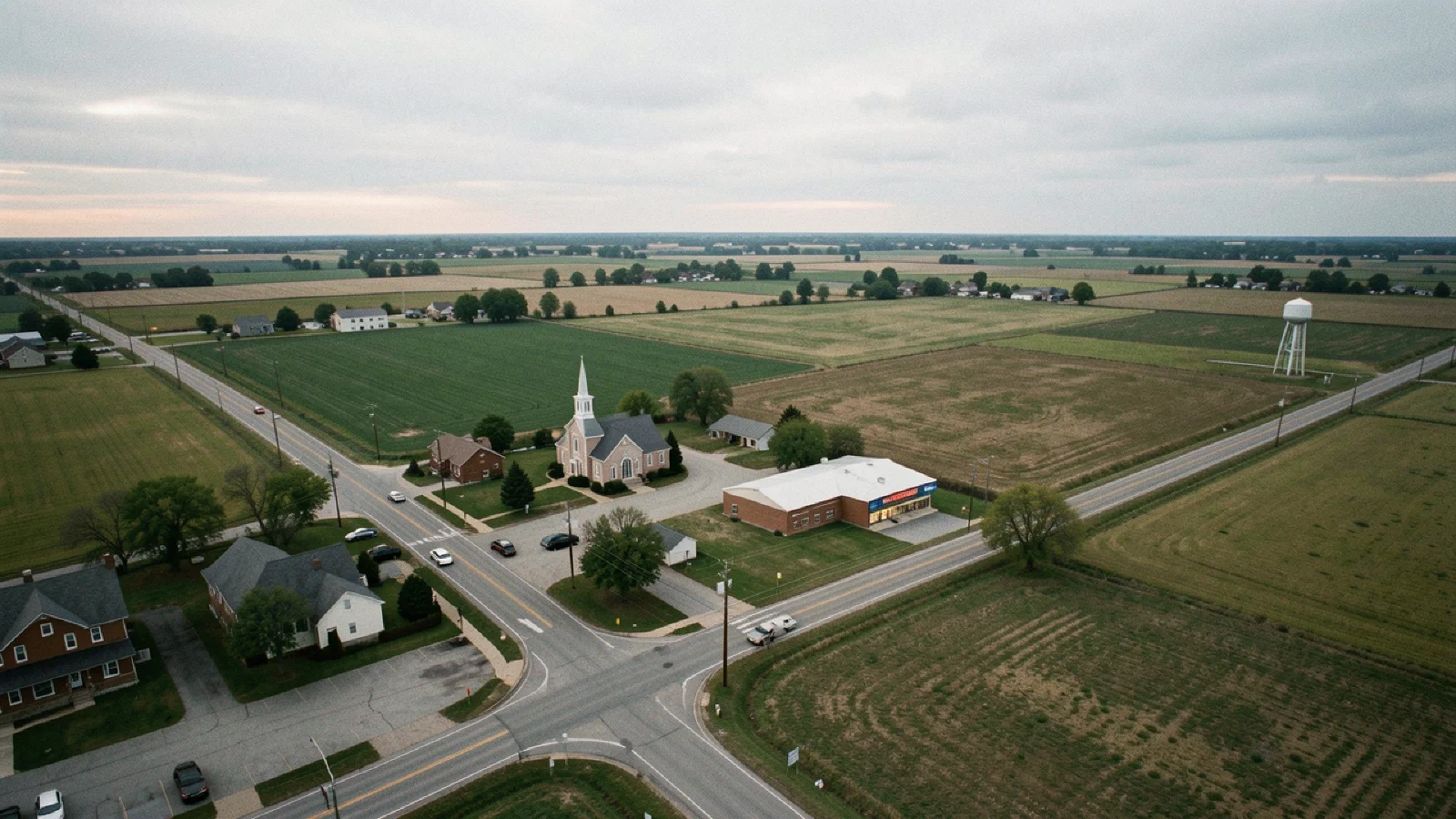
Can Community Infrastructure Carry Transformation Weight?
The Gap Between Community Rhetoric and Community Reality
RHTP applications promise community engagement. State plans describe partnerships with community-based organizations. Transformation rhetoric assumes community infrastructure exists, has capacity, and can partner with healthcare systems to achieve program goals. Series 8 tested these assumptions against organizational reality. The findings are uncomfortable for transformation advocates.
Community organizations do exist in rural America. Churches gather congregations. Food pantries distribute groceries. Civic clubs hold monthly meetings. CHWs knock on doors. These organizations possess something healthcare systems desperately need: authentic community relationships built over years of presence, service, and trust. A promotora who helps her neighbor manage diabetes carries credibility that a diabetes educator with superior clinical knowledge cannot match. A church that has run a food pantry for twenty years knows who needs help in ways that social service intake forms never capture.
The problem is that community connection and institutional capacity rarely coexist. The organizations most embedded in their communities are typically the least capable of meeting federal program requirements. The typical rural church has 40 to 60 attenders and a $50,000 to $75,000 annual budget. It cannot hire a program coordinator, implement reporting systems, or absorb the administrative burden of formal healthcare partnerships. The typical rural social service nonprofit operates with volunteer leadership, no paid staff, and no capacity for the documentation that federal compliance requires. The attributes that make organizations valuable for authentic community voice often coexist with attributes that make them incapable of federal program partnership.
This synthesis integrates findings from ten articles examining distinct community organization types, plus a technical document providing capacity assessment methodology. The evidence points to a conditional answer: community organizations can support transformation sometimes, in some places, with significant support, and only for appropriate functions. The unconditional assumption that community infrastructure exists and has capacity fails in too many contexts to guide implementation.
The Capacity Question#
What Series 8 Found#
Each article examined a different organization type through the lens of core tensions defining their transformation participation. The cross-article synthesis reveals patterns that transcend individual organization types.
| Organization Type | Core Tension | Capacity Assessment | Conditions for Partnership |
|---|---|---|---|
| Faith-Based (8A) | Authenticity vs. Requirements | 115K-125K rural congregations; 83% report social service involvement; typical budget $50-75K | Institutional partners provide infrastructure; roles match capacity; professionalization respects community context |
| Social Service Nonprofits (8B) | Volunteer vs. Professional | 1.5M organizations nationally; 59% under $50K budget; capacity varies from professional to struggling | Capacity building precedes partnership; roles match actual capacity; technical assistance bridges gaps |
| Civic Organizations (8C) | Small Scale vs. Program Scale | Documented decline: Iowa fraternal membership down 67% (1994-2024); 87% of fire departments volunteer | Connection and convening roles only; avoid fiscal sponsorship or program management |
| CHWs/Promotoras (8D) | Community Voice vs. Clinical Absorption | 50%+ states have Medicaid CHW coverage; community identity enables effectiveness | Community-based employment; training adds without replacing community knowledge; clinical integration without absorption |
| Community Development (8E) | Mission Sustainability vs. Grant Dependency | 1,427 CDFIs nationally; 68 Native CDFIs; variable rural presence | Mission alignment exists; funding builds lasting capacity; sustainability planning from inception |
| Advocacy/Mutual Aid (8F) | Independence vs. Integration | Essential for accountability; capture destroys value | Structural independence protections; right to criticize partners; diversified relationships |
| Alternative Ownership (8G) | Promise vs. Proven Capacity | ACA CO-OPs: 20 of 23 failed; HealthPartners required 60+ years | Existing successful models only; realistic timelines; adequate capitalization and management |
| Tribal Organizations (8H) | Sovereignty vs. Federal Requirements | 574 federally recognized tribes; 92% have self-determination contracts; Nuka System demonstrates excellence | Government-to-government relationships; self-determination frameworks; tribal priorities shape participation |
| Immigrant/Farmworker (8I) | Serving the Invisible | 2.4M farmworkers; ~50% undocumented; 177 Migrant Health Centers serve ~1M | State policy permits serving populations; explicit inclusion provisions; protection from political targeting |
| Schools/Youth (8J) | Future Investment vs. Current Crisis | 3,900 SBHCs nationally; 35% rural; 9,000 rural school districts | Sustainable SBHC sponsors; current service delivery emphasis; accelerated workforce pathways |
The Uncomfortable Finding#
The synthesis across ten organization types reveals a pattern RHTP implementation must confront: most rural community organizations possess strong community connection but weak professional capacity. This is not organizational failure; it is structural reality. Volunteer-led organizations exist at volunteer scale. Faith-based organizations operate on faith community resources. Civic clubs function through civic volunteerism. These are features, not bugs, of authentic community organization.
The uncomfortable implication is that RHTP’s community partnership assumptions are systematically wrong. The program expects community organizations to absorb subawards, implement reporting requirements, document outcomes, and sustain professional compliance infrastructure. Organizations capable of this represent the minority, not the majority, of rural community infrastructure. States that promise community-engaged transformation often cannot deliver because the community organizations they assume exist either do not exist or lack the capacity the promises require.
What Evidence Shows#
Organizations That CAN Partner Effectively#
Not all community organization capacity is absent. Series 8 identifies organization types and specific conditions that enable effective transformation partnership:
Migrant Health Centers serve 1 million farmworkers through 177 FQHC grantees with established infrastructure, billing systems, and federal compliance experience. They can absorb RHTP partnership because they already operate as federally-funded healthcare delivery organizations.
Area Agencies on Aging coordinate services for older adults under Older Americans Act mandates. The 622 AAAs nationally have professional staff, established service networks, and federal program experience that positions them for transformation roles, though 84% report workforce challenges affecting capacity.
Community Action Agencies trace lineage to the War on Poverty with tripartite governance and experience managing federal funds. The 1,100+ CAAs operating in 99% of U.S. counties represent established infrastructure with community development and social service capacity, though they too face workforce constraints.
Tribal self-governance compacts demonstrate that tribal nations operating their own health programs can achieve results IHS direct provision cannot match. The Nuka System of Care in Alaska, governed by Alaska Native Tribal Health Consortium, shows what tribal self-determination can accomplish. Among the 526 tribes with self-determination contracts administering over 60% of the IHS budget, models of excellence exist that RHTP should support rather than constrain.
Established CHW programs with state certification and Medicaid reimbursement have developed infrastructure enabling sustainable operation. States like Texas (160-hour certification since 2001), California, and Oklahoma have built CHW programs that can partner with healthcare systems while maintaining community identity through careful program design.
Professionalized social service nonprofits with paid executive directors, staff, audited financials, and federal grant experience exist in some communities and can serve as effective partners. This represents perhaps 15% of rural social service nonprofits, the exception rather than the rule, but where they exist, they provide partnership capacity.
Organizations That CANNOT Partner Effectively#
The larger category is organizations that cannot meet transformation partnership requirements despite community value:
Small volunteer-led organizations constitute the majority of rural community infrastructure. Church pantries, Lions clubs, volunteer fire departments, and informal mutual aid networks provide genuine community benefit through volunteer commitment. They cannot absorb federal subawards, implement compliance systems, or sustain professional documentation. Expecting professional capacity from volunteer organizations guarantees failure.
Organizations in leadership transition or financial crisis lack stability for partnership regardless of prior capacity. Pastoral transitions at churches, executive director departures at nonprofits, and funding crises at CDFIs all create vulnerability that RHTP partnership would exacerbate rather than address.
Organizations where professionalization destroys value cannot be professionalized without losing what makes them effective. Promotoras embedded in community networks derive credibility from being neighbors first. Formalizing them into clinical employees may destroy the trust relationships that enabled their effectiveness. Mutual aid networks operate through horizontal peer relationships that professional staffing disrupts.
Alternative ownership models without decades of development cannot be created within RHTP timelines. The ACA CO-OP experience demonstrated this painfully: $2.4 billion in federal investment produced 23 cooperatives, 20 of which failed within three years. HealthPartners succeeded but required 60+ years of development. Enthusiasm for cooperative healthcare is not substitute for the capital, management expertise, and time that success requires.
Urban Indian Organizations operate at the margins of tribal health infrastructure. The 70% of American Indians and Alaska Natives living in urban areas are served by UIOs receiving approximately 1% of IHS budget. These organizations provide essential services but face chronic underfunding that RHTP partnership cannot address. 25% of UIOs report they would need layoffs if funding were interrupted for just 90 days.
Geographic Variation in Capacity#
Community organization capacity is not randomly distributed. Series 8 reveals systematic geographic patterns that RHTP implementation must acknowledge:
Strong infrastructure concentrates in historically stable regions. The Upper Midwest, New England, and other areas with long-standing civic traditions maintain community organization networks that persist through generational transmission. These communities have Rotary clubs, active churches, community foundations, and civic capacity that enables partnership. Minnesota, Wisconsin, and Iowa retain civic organization membership rates that other regions lost decades ago. Vermont and Maine maintain community health infrastructure through networks of small organizations that function collectively.
Depleted infrastructure characterizes stressed regions. The Mississippi Delta, Appalachian coalfields, Great Plains agricultural counties, and other areas experiencing decades of outmigration and economic decline have lost community organizational capacity alongside population and economic base. RHTP cannot partner with organizations that demographic and economic change have eliminated. In these regions, the volunteer base has aged out, churches have closed, civic clubs have dissolved, and the organizational infrastructure that once supported community life no longer exists. Transformation planning that assumes community organizations will partner with healthcare systems confronts absence rather than capacity.
Philanthropic investment shapes capacity. Rural communities receive approximately 3% of philanthropic dollars despite comprising 15-20% of the population. Where foundations have invested in community development infrastructure, capacity exists. Where philanthropic investment has bypassed rural areas, capacity gaps persist that RHTP cannot address within program timelines.
The Evidence on Authenticity#
Why Community Connection Matters#
Healthcare systems spend decades building community trust and often fail. Community organizations accumulate trust through presence, consistency, and shared experience that cannot be purchased or manufactured quickly. Series 8 documents repeatedly that transformation outcomes depend on whether community organizations maintain the authenticity that creates trust.
CHW programs demonstrate this dynamic most clearly. Promotora effectiveness comes from community membership, not clinical training. When healthcare systems absorb CHWs into clinical culture, outcomes decline even as professional qualifications improve. The mechanism is trust erosion: CHWs perceived as clinic representatives rather than community members lose access to the relationships that made their outreach effective.
Faith-based organizations demonstrate the same dynamic through the lens of social service formalization. The church that provides emergency food through informal donation reaches people that a formal food pantry with eligibility requirements and documentation does not. The informality is not a limitation to overcome; it is the mechanism of effectiveness.
Advocacy organizations demonstrate independence as authenticity: organizations that cannot criticize their partners lose credibility with the populations they claim to represent. Captured advocacy organizations may fill advisory committee chairs while providing no genuine accountability.
The policy implication is uncomfortable: the most effective community organizations may be the least capable of formal RHTP partnership. And making them capable of partnership may destroy what makes them effective.
The Professionalization Paradox#
Every Series 8 article encounters some version of the professionalization paradox: the investments required for formal RHTP partnership may undermine the community authenticity that makes organizations valuable. The paradox has no universal resolution. Different organization types, community contexts, and partnership designs produce different outcomes.
What Series 8 establishes is that the paradox is real and must be confronted rather than assumed away. State RHTP applications that promise community organization partnership without acknowledging this tension have not grappled seriously with what partnership requires.
The Assessment-First Imperative#
The most consistent finding across Series 8 is that assessment must precede partnership. Not every community organization can partner effectively with RHTP. Not every community has organizations capable of partnership. Not every partnership role should be filled by community organizations.
The Technical Document (08.TD1) provides methodology for capacity assessment across the five dimensions that determine partnership readiness: organizational stability, financial health, professional capacity, community connection, and healthcare readiness. The framework enables states to match partnership strategies to actual capacity rather than assumed capacity.
States that conduct capacity assessment before designing community partnerships will find that some communities have more capacity than assumptions suggested and others have less. Both findings are useful. High-capacity communities can take on more ambitious partnership roles. Low-capacity communities need alternative approaches that states without assessment data will not have designed.
The alternative to assessment is assumption, and Series 8 documents what assumption produces: failed partnerships, wasted resources, and communities promised transformation that organizational reality could not deliver.
Implications for Implementation#
For Community Organizations#
Assess capacity honestly before accepting partnership. The desire to serve does not create the capacity to serve. Overcommitment harms both organizations and communities. The organization that accepts a subaward it cannot manage fails its community twice: once when it accepts, and again when it fails to deliver.
Seek roles that match actual capacity. Providing meeting space, community connection, and informal support are legitimate contributions. Not every partnership requires program implementation. Organizations provide value through community voice even without implementation capacity. Advisory committee participation, community outreach, and relationship facilitation all contribute to transformation without requiring federal compliance infrastructure.
Build capacity over time if transformation participation is desired. Capacity building takes years. Organizations wanting larger transformation roles should invest in systems, staff, and infrastructure now for future opportunities.
Protect organizational identity within partnerships. Partnerships should strengthen, not replace, organizational mission. Churches that become social service agencies may lose what made them effective. CHWs absorbed into clinical culture may lose the community identity that enabled their impact. Organizations that preserve their core character while adding partnership capacity serve communities better than those that transform beyond recognition.
Negotiate sustainability from the start. Organizations accepting RHTP roles should plan for 2030 from inception. What happens when funding ends? Will the program continue? Will staff be retained? Will community expectations be met? Organizations that defer sustainability thinking until funding end approaches rarely achieve it.
For State Agencies#
Conduct capacity assessment before assuming community partnership. Map organizational infrastructure at county level. Identify which communities have capacity, which have emerging capacity, and which lack organizational infrastructure entirely. Design implementation strategies based on assessment, not assumption. The 08.TD1 framework provides methodology; the discipline of using it matters more than the specific tool.
Differentiate strategies based on actual capacity. In communities with strong infrastructure, community-engaged transformation makes sense. In communities lacking capacity, use alternative approaches rather than pretending capacity exists. Three tiers of strategy may be appropriate: direct community partnership where high-capacity organizations exist; intermediary-supported partnership where moderate-capacity organizations can develop with support; and healthcare-led implementation with community input where organizational capacity is absent.
Fund capacity building where potential exists. Some communities have organizations that could develop greater capacity with investment. Multi-year grants with technical assistance can strengthen infrastructure, but expect results beyond RHTP timelines. Capacity building is a ten-year investment, not a five-year program.
Use intermediary organizations where local capacity is absent. Regional nonprofits, healthcare systems, or state agencies can implement transformation in communities lacking local capacity. This is not failure; it is realistic response to actual conditions. Intermediaries should be selected for their ability to maintain community relationships even without community organizational partners.
Accept that some communities lack partnerable infrastructure. Not every rural area has churches with capacity, functioning civic organizations, or community development infrastructure. RHTP cannot create what decades of demographic and economic change have eliminated. Program design should acknowledge these communities and provide for them rather than pretending they fit community partnership models.
For Healthcare Partners#
Value community organizations for authentic voice, not program capacity. Organizations may authentically represent community perspectives while lacking capacity for program implementation. A church that knows its community’s struggles provides intelligence even if it cannot manage a subaward.
Avoid overwhelming small organizations with partnership demands. Be specific about what partnership entails and realistic about organizational capacity. “Can you help us understand community needs?” is a different request than “Can you manage this program component?”
Build community capacity rather than extracting community legitimacy. Some partnerships use community organization names for legitimacy while providing nothing in return. Genuine partnership builds organizational capacity rather than depleting it.
Accept that CHWs are not clinical extenders. Healthcare systems that absorb CHWs into clinical roles lose the community identity that made CHWs valuable. Protect what makes CHWs effective.
Support community organization sustainability. Healthcare partners with ongoing revenue streams can help community organizations survive RHTP funding end. Contracts that continue beyond 2030, capacity building investments, and infrastructure support all contribute to organizational sustainability that RHTP alone cannot achieve.
For CMS#
Allow states flexibility to adapt to varying community capacity. One-size-fits-all community engagement requirements ignore dramatic variation in organizational infrastructure. States need flexibility to match approaches to actual capacity.
Do not require community partnership where capacity does not exist. Mandating community organization participation in communities lacking infrastructure produces compliance paperwork, not transformation.
Fund capacity building as transformation prerequisite. Community organization capacity does not appear because programs need it. Investment in organizational development must precede expectations for partnership.
Measure community engagement quality, not just quantity. Counting subawards to community organizations tells nothing about whether partnership is genuine or effective. One genuine community partnership with demonstrated impact is worth more than ten paper partnerships with absent capacity.
Conclusion#
Community infrastructure in rural America is real, valuable, and insufficient for the transformation roles RHTP assigns to it. The churches, civic organizations, CHW programs, advocacy groups, and community development organizations that Series 8 examined all contribute genuine value. That value is specific, contextual, and often incompatible with federal program partnership requirements.
The gap between community rhetoric and community reality is not a problem that better intentions can solve. It reflects structural conditions: the organizations most embedded in rural communities are typically the smallest, least professionalized, and most fragile. Making them capable of federal partnership often requires changing what they are. And what they are is frequently the source of their value.
Series 8’s central finding is that honest assessment serves communities better than optimistic assumption. States that assess actual capacity can design strategies matching organizational reality. States that assume capacity will promise transformation they cannot deliver and fail communities that expected it.
RHTP cannot build community infrastructure that decades of demographic and economic change have depleted. It can strengthen infrastructure that exists. It can support organizations with capacity while honestly acknowledging where capacity is absent. What it cannot do is pretend that community partnership is universally available when the evidence demonstrates it is not.
How this article connects to others in Blue Gray Matters.
Sources cited in this article.
- National Congregations Study. Wave III and IV data on congregation size, budget, and social service involvement.
- National Council of Nonprofits. "About the Nonprofit Sector 2025." Organizational capacity data.
- Peters, David. "Research Finds Big Drop in Service Club Membership in Iowa Towns." Radio Iowa, 2024.
- National Volunteer Fire Council. "Volunteer Fire Service Fact Sheet." March 2024.
- CDFI Fund. "CDFI Certification." February 2025. Organization count and distribution.
- National Academy for State Health Policy. "State Community Health Worker Certification and Medicaid Reimbursement." January 2026.
- School-Based Health Alliance. "National School-Based Health Care Census." 2022.
- Indian Health Service. Self-determination and self-governance statistics.
- Corlette, Sabrina et al. "Why Are Many CO-OPs Failing?" Commonwealth Fund, December 2015.
- HealthPartners. Organizational history and development timeline.
- USAging. "National Area Agency on Aging Survey Chartbook."
- Community Action Partnership. "Introduction to Community Action."
- Migrant Clinicians Network. Farmworker health infrastructure data.
- Urban Indian Health Institute. UIO funding and capacity data.
- Aspen Institute Community Strategies Group. "Funding Rural Futures: Call to Action." June 2024.