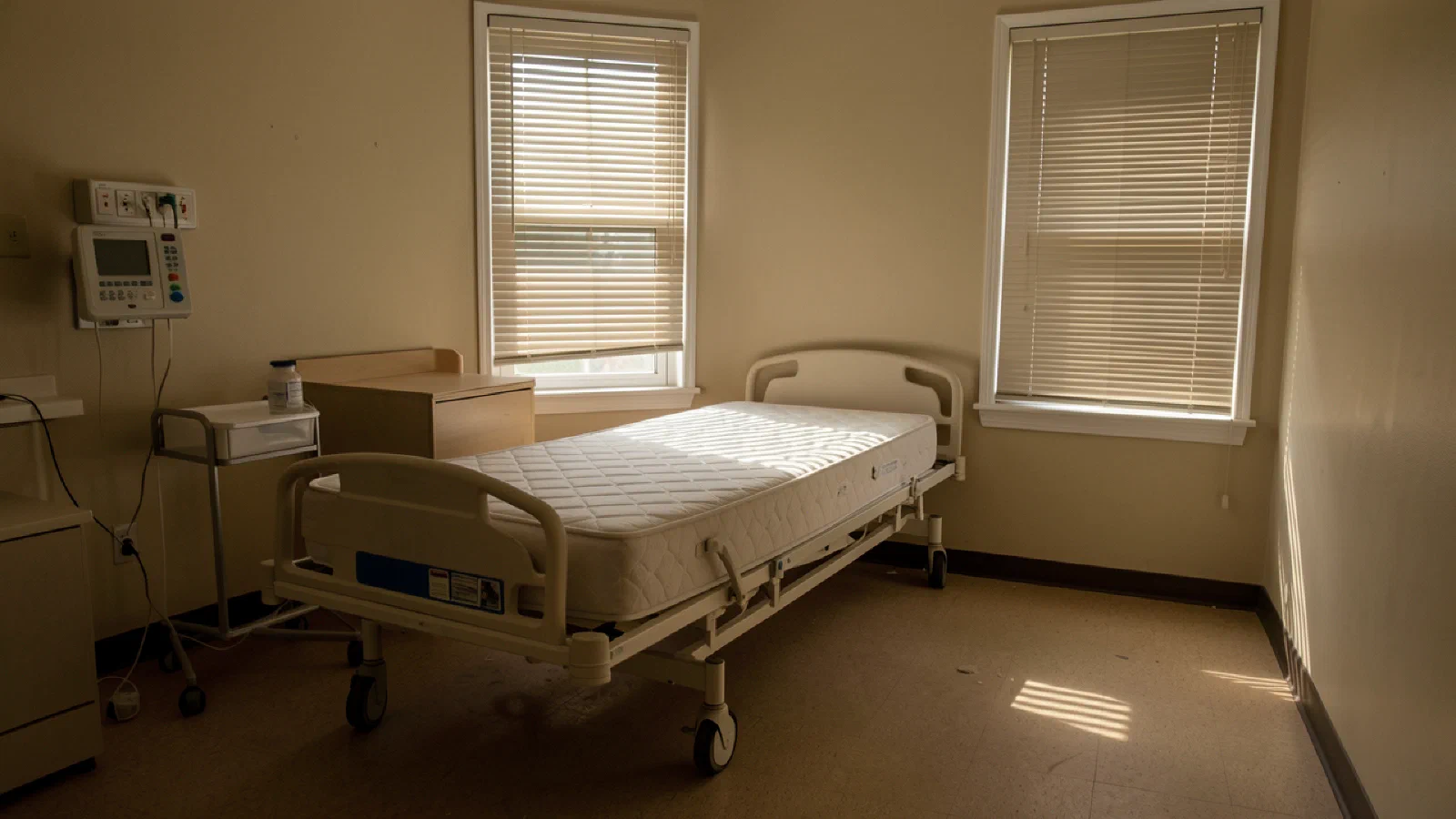
What If We Stopped Trying to Save the Model?
James Whitfield has been administrator of Pine County Memorial Hospital for nineteen years. The 22-bed Critical Access Hospital serves a three-county area in the Missouri Ozarks. He has survived four financial crises, recruited eleven physicians (seven of whom left within three years), implemented three electronic health record systems, and participated in every federal quality improvement program offered since 2008. He knows the hospital’s finances to the penny, its staff by first name, and its community by reputation earned over two decades of showing up.
He also knows the hospital will close within five years.
Not because he failed. Because the model failed. The facility-based, physician-dependent, volume-driven delivery system that American healthcare policy has spent sixty years trying to sustain in rural settings cannot sustain itself in Pine County. The population is declining. The physician pipeline has dried up. Medicare Advantage plans are negotiating reimbursement below the cost-based rates that kept the doors open. The transformation grant his state received will fund a care coordinator and a telehealth cart. Neither addresses the structural reality that the thing he has spent nineteen years sustaining was never designed to work here.
James is not a failure. He is a competent professional operating a model that fails competent professionals in settings it was not built for.
The Series 7 Synthesis concluded that rural providers can transform where conditions permit transformation. This companion asks a different question: what if the conditions that permit transformation within the current model will never exist for most rural communities, and the honest response is not better optimization but architectural abandonment?
Part I: What Eight Provider Types Reveal#
The Common Thread#
Series 7 examined eight provider categories. The details vary. The structural finding does not.
Critical Access Hospitals operate on median margins of 1%, with 46% reporting negative margins. The CAH designation protects them from normal market dynamics because normal market dynamics would kill them. The protection enabled survival but not transformation. Facilities that cannot meet payroll reliably cannot redesign care delivery.
Rural Health Clinics are disappearing through consolidation. A 43% decline in independent rural physicians between 2019 and 2024 does not indicate a system under stress. It indicates a model in collapse. Transformation programming for a provider category experiencing structural extinction misallocates resources toward preserving what cannot be preserved.
FQHCs represent the highest transformation capacity among rural providers, yet operate on 1.7% margins nationally, with rural FQHCs performing worse than urban counterparts. The strongest rural provider category starts from a position of financial fragility.
Independent physicians have declined to 24% of the rural physician workforce. Three-quarters of rural physicians now work for hospitals, health systems, or corporate entities. Independence, the feature that made rural practice adaptive and responsive, is functionally extinct.
EMS agencies depend on volunteer labor for 50% of their budgets. The mathematics of rural emergency response produce structural deficits that no transformation strategy overcomes without payment reform that does not exist and is not proposed.
Long-term care facilities report that 66% are concerned about forced closure due to workforce shortages. The people who would provide care cannot be recruited at wages the facilities can afford to pay.
Behavioral health providers remain isolated from healthcare systems despite decades of integration rhetoric. Payment systems enforce the separation that policy rhetoric condemns.
Dental and vision providers face business model failures severe enough that 71% of dental health professional shortage areas are rural. No pathway exists to eliminate these shortages within any plausible timeframe.
What the Pattern Reveals#
Read together, the eight articles do not describe eight different problems. They describe one problem expressed through eight institutional forms: the American healthcare delivery model, designed for urban population density and suburban economic conditions, transplanted to settings where it cannot sustain itself.
Every provider type encounters the same structural constraints. Volume insufficient to support overhead. Rural communities lack the patient base to generate revenue that covers facility costs, staffing ratios, and regulatory compliance. The math does not work at 25 beds any better than it works at 15. It does not work at 5,700 RHC sites when those sites serve populations too small to generate sustainable revenue.
Workforce requiring credentials that rural settings cannot produce or retain. Every provider category depends on professionals with extensive training obtained in urban academic settings. These professionals accumulate educational debt, develop practice expectations, and build personal lives in environments that rural communities cannot replicate. The recruitment problem is not marketing. It is the fundamental mismatch between what credentialed professionals need and what rural communities offer.
Payment systems designed for scale economies that rural settings lack. Fee-for-service requires volume. Value-based models require data infrastructure, quality reporting, and risk management capacity. Both assume organizational sophistication proportional to financial complexity. Rural providers operating with two administrative staff cannot execute payment arrangements designed for organizations with finance departments.
Regulatory requirements exceeding operational capacity. Each provider type described regulatory burden consuming resources that could serve patients. CAHs maintaining compliance documentation. RHCs meeting productivity standards. FQHCs satisfying governance requirements. EMS agencies documenting training hours. The compliance apparatus assumes institutional capacity that rural providers do not possess.
Capital requirements exceeding available investment. Facility maintenance, technology deployment, equipment replacement, and workforce development all require capital that operating margins cannot generate and credit markets will not provide at terms rural facilities can service.
The response to each of these constraints has been the same for decades: optimize the model to function despite the constraints. Increase recruitment incentives. Provide technical assistance. Offer transformation grants. Create special payment designations. Build networks to achieve scale. Deploy telehealth to extend reach.
Series 7 documents the results. After sixty years of rural health policy optimization, nearly half of rural hospitals operate at negative margins. Rural physician supply is declining absolutely, not just relatively. EMS agencies are closing. Long-term care facilities cannot staff. Behavioral health integration remains rhetoric. Dental deserts are expanding.
Optimization has been tried. Comprehensively, repeatedly, and with significant federal investment. The model still fails. At what point does continued optimization represent denial rather than strategy?
Part II: The Model’s Assumptions#
Understanding why abandonment is necessary requires naming the assumptions embedded in the model that Series 7 evidence contradicts.
Assumption 1: Healthcare Requires Facilities#
American healthcare organizes around buildings. Hospitals anchor communities. Clinics serve neighborhoods. Emergency departments receive the acutely ill. Long-term care facilities house the chronically dependent. The facility is the unit of healthcare delivery.
Rural reality contradicts this assumption. Margaret Harlan in Breathitt County, Kentucky manages three generations of health needs with one vehicle, no broadband, and no primary care provider within 30 miles. Her healthcare system is not a facility. It is a network of personal relationships, institutional knowledge, and relentless logistics that she maintains through individual effort.
What if healthcare delivery started from Margaret’s reality rather than from the assumption that she should travel to a building? What if the building came to her, or more precisely, what if healthcare was designed around how people actually live rather than requiring people to organize their lives around how healthcare is structured?
Community-based models that bring care to where people are rather than requiring people to travel to where care is organized would eliminate the volume problem, the facility maintenance problem, and much of the transportation problem simultaneously. Mobile health teams, home-based primary care, community health worker networks operating from existing community spaces rather than purpose-built clinical facilities, AI-enabled diagnostic support available through basic connectivity: these approaches do not optimize the facility model. They replace it.
Assumption 2: Primary Care Requires Physicians#
The physician dependency at the center of rural healthcare creates the bottleneck that everything else works around. Recruitment programs, loan repayment, visa waivers, scope of practice expansion, telehealth supervision: all are mechanisms to manage the physician supply problem without questioning whether physician dependency is necessary.
The evidence from Series 7 makes the case for questioning it. The 141,160 physician shortage projected by 2038 will not be resolved. Training pipelines cannot produce volume at the scale needed. Rural settings cannot compete with urban and suburban practice opportunities. The physician workforce that the current model requires does not exist and will not exist.
Advanced practice providers, community health workers, AI diagnostic support, and team-based models supervised by physicians at distance could deliver primary care without requiring physician presence in every community. This is not a novel concept. It is how the military delivers care in austere environments. It is how community health programs operate across the developing world. It is how the Indian Health Service functions in many tribal settings. The model works. The resistance is regulatory and cultural, not clinical.
Nurse practitioners and physician assistants can provide 80% to 90% of primary care services independently in states that permit full practice authority. Community health workers can deliver chronic disease management, health education, and care coordination with training measured in months rather than years. AI diagnostic tools are achieving specialist-level accuracy in dermatology, radiology, and pathology, the very specialties most absent from rural settings.
The question is not whether alternative workforce models can deliver acceptable primary care. The evidence says they can. The question is whether policy will allow it before the physician model collapses entirely.
Assumption 3: Financial Viability Requires Volume#
The business model underlying every provider type in Series 7 depends on patient volume generating revenue sufficient to cover costs. This model works in population-dense settings where a facility can serve enough patients. It fails in settings where population does not generate volume.
Every protective mechanism in rural health policy addresses this failure without solving it. Cost-based reimbursement for CAHs subsidizes low volume. Enhanced payment rates for RHCs compensate for productivity limitations. Prospective payment for FQHCs smooths revenue fluctuation. All assume the revenue model is correct and needs adjustment. None question whether volume-dependent revenue is appropriate for low-volume settings.
What if rural healthcare was funded like rural roads? No one expects a county road in eastern Montana to generate toll revenue sufficient to cover its maintenance. The road exists because connectivity has public value independent of traffic volume. Healthcare access has the same public good characteristics in rural settings. Communities need healthcare regardless of whether the patient base generates commercial viability.
Public utility models, community ownership with tax-base funding, capitated community health budgets independent of service volume, sovereign wealth fund investments producing returns that fund operations: these financing mechanisms share the assumption that rural healthcare is infrastructure, not commerce, and should be funded accordingly.
Assumption 4: Providers Must Be Institutions#
Series 7 examines eight institutional forms: hospitals, clinics, health centers, physician practices, ambulance agencies, nursing facilities, behavioral health organizations, dental offices. Each is a legally constituted entity with governance, staffing, compliance obligations, and financial reporting requirements. Each consumes significant resources maintaining institutional existence independent of patient care.
What if the institutional overhead is the problem? Small rural organizations spending 30% to 40% of revenue on administrative compliance, billing, credentialing, quality reporting, and governance maintenance are organizations where the institution consumes resources intended for patients.
Community health teams operating under umbrella governance from regional entities, individual providers operating under simplified regulatory frameworks, technology platforms replacing institutional infrastructure for care coordination and documentation: these approaches reduce institutional overhead while maintaining care delivery. The institution exists to serve patients. When institutional maintenance competes with patient service, the institution has become the problem rather than the solution.
Assumption 5: The System Should Be Saved#
This is the deepest assumption and the one hardest to name. Policy treats rural healthcare system preservation as an inherent good. Save the hospital. Prevent the closure. Preserve the clinic. Maintain the service.
But what if the system, as currently constituted, is not worth saving? Not because the people within it lack dedication, but because the architecture produces outcomes that do not justify the investment required to sustain it?
James Whitfield’s hospital treats roughly 350 patients annually as inpatients. The facility operates 24 hours a day, 365 days a year. It maintains emergency department staffing, nursing coverage, laboratory services, pharmacy, dietary, housekeeping, and administrative functions for a patient census that averages fewer than one inpatient per day. The per-patient cost of maintaining this infrastructure is extraordinary. The outcomes it produces, given limited specialist access, aging equipment, and isolated providers, are measurably worse than outcomes available at regional centers.
The honest question is whether the community would be better served by different architecture. Not no care, but different care. Not abandonment, but redesign. A community health team providing primary care, chronic disease management, and emergency stabilization, connected by technology to specialist resources, operating from existing community infrastructure rather than a purpose-built hospital, funded through community health budgets rather than fee-for-service billing.
This is what “stopping trying to save the model” means. Not giving up on rural health. Giving up on a particular architecture for delivering rural health that sixty years of evidence shows does not work in these settings.
Part III: What Abandonment Actually Means#
What It Does Not Mean#
Abandonment of the model is not abandonment of communities. The argument here is not that rural Americans should go without healthcare. It is that the current model of healthcare delivery fails them reliably and expensively, and that continuing to invest in its preservation may produce worse outcomes than investing in alternatives.
Abandonment is not overnight. No responsible transition eliminates existing infrastructure before alternatives function. The argument for model abandonment implies a transition period during which existing providers continue operating while alternative architecture develops. The timeline matters. Premature closure without replacement causes harm. But indefinite preservation of failing models also causes harm: the harm of inadequate care delivered at excessive cost while alternative investment is deferred.
Abandonment is not universal. Some CAHs will survive and thrive. Some FQHCs have transformation capacity that the current model can accommodate. The argument applies to the significant proportion of rural providers for whom optimization has reached its ceiling and continued investment in the current model produces diminishing returns. The provider-by-provider assessment that Series 7 recommends helps identify which facilities merit continued investment and which merit transition planning.
What It Does Mean#
Honest assessment of which facilities have transformation capacity and which do not. Series 7 provides the analytical framework. Facilities with financial stability above 2% margins, leadership commitment, external support relationships, and favorable policy environments can transform within the current model. Facilities below these thresholds face structural impossibility that additional resources will not overcome.
Transition planning as a legitimate policy option. REH conversion, managed service reduction, regional consolidation, and orderly transition to alternative delivery models should be standard elements of state RHTP planning, not emergency responses to unexpected failure. States that plan for facility transitions protect communities better than states that fund unsustainable operations until collapse.
Investment redirection toward alternative architecture. Resources currently sustaining providers that cannot transform could instead build the community health teams, mobile health units, AI-enabled diagnostic platforms, and community-owned health infrastructure that Series 14 envisions. Every dollar spent keeping an unsustainable hospital open is a dollar not spent building something that might actually work.
Community engagement in redesign rather than rescue. Communities deserve honest information about their healthcare infrastructure’s viability. They also deserve voice in designing what comes next. The transition from institutional preservation to community health architecture requires community ownership of the process and the outcomes.
Part IV: The Provider’s Dilemma#
James Whitfield faces a dilemma that this companion cannot resolve. He knows the hospital will close. He also knows that closing it before alternatives exist means his community has nothing. The transition period between model abandonment and alternative architecture is the period of greatest risk.
This is why model abandonment requires simultaneous alternative construction. The argument for stopping is inseparable from the argument for building. States cannot responsibly close rural hospitals without establishing what replaces them. But states also cannot indefinitely sustain rural hospitals while waiting for alternatives to prove themselves. The two timelines must overlap.
Practically, this means RHTP funding should support both trajectories simultaneously. Transformation investment for providers with transformation capacity. Transition investment for providers without it. Alternative architecture development for communities where the current model has reached its ceiling. The single-track assumption that all providers should transform denies the evidence that Series 7 documented.
James would benefit more from a state plan that acknowledged his hospital’s trajectory and invested in community health infrastructure for its service area than from a transformation grant funding a care coordinator and telehealth cart for a facility that will not exist in five years. The care coordinator and telehealth cart optimize a model that is ending. Community health infrastructure builds what comes next.
He knows this. He cannot say it publicly because saying it accelerates the timeline. The administrator who acknowledges likely closure triggers the physician departures, staff resignations, and community panic that guarantee closure. Honest assessment is individually rational but institutionally dangerous. This is why the honest assessment must come from policy, not from individual administrators bearing the weight of unspeakable knowledge.
Part V: The Courage to Stop#
Healthcare policy rewards persistence. Keeping doors open is the metric. Preventing closure is the goal. Administrators who sustain failing facilities are celebrated. The celebration is understandable. Communities lose something real when facilities close.
But the celebration of persistence obscures the cost of persistence. Resources spent sustaining unsustainable operations. Communities receiving inadequate care from failing institutions. Alternative investments deferred because current operations consume available funding. The opportunity cost of preservation is invisible because it manifests as alternatives never built rather than facilities closed.
The courage required is not the courage to close hospitals. It is the courage to build something better while being honest that the current model has failed. This is harder than optimization because it requires admitting that decades of rural health policy, well-intentioned and often competently executed, produced a system that does not work for the communities it was designed to serve.
Series 7 provides the evidence for this admission. Eight provider types facing structural constraints that optimization cannot overcome. Financial models that fail in low-density settings. Workforce dependencies that cannot be satisfied. Payment systems that assume conditions that do not exist. Regulatory requirements that exceed operational capacity.
The evidence does not say rural healthcare is impossible. It says rural healthcare organized around urban delivery models is impossible. The distinction matters. What follows from it is not despair but redesign. Not abandonment of communities but abandonment of architecture that serves them poorly.
James Whitfield spent nineteen years trying to make an urban model work in a rural setting. He did it well. The model still failed. The question is not whether he should have tried harder. The question is whether the next nineteen years of rural health investment should continue optimizing a model that competent professionals cannot make work, or whether that investment should build something designed for the settings where it must function.
The providers know the answer. Most cannot say it. This companion says it for them.
How this article connects to others in Blue Gray Matters.
Sources cited in this article.
- American Hospital Association. "Rural Hospital Closures Threaten Access: Solutions to Preserve Care in Local Communities." AHA, September 2022.
- Chartis Center for Rural Health. "2025 State of the State: Rural Hospital Closures and Care-Access Crisis." February 2025.
- Centers for Disease Control and Prevention. "Emergency Medical Services: A Look at Disparities in Funding and Outcomes." CDC, 2024.
- Flex Monitoring Team. "CAH Financial Indicators Report: Summary of Indicator Medians by State." University of Minnesota, University of North Carolina at Chapel Hill, and University of Southern Maine, 2024.
- Health Resources and Services Administration. "Designated Health Professional Shortage Areas Statistics." HRSA Data Warehouse, January 2026.
- Health Resources and Services Administration. "National Center for Health Workforce Analysis: Workforce Projections." HRSA, 2025.
- National Rural Health Association. "Rural Physician Burnout and Staffing Shortage Impact." NRHA, June 2025.
- Physicians Advocacy Institute and Avalere. "Rural Physician Employment and Acquisition Trends: 2019-2024." April 2025.
- Rural Health Information Hub. Topic overviews for Critical Access Hospitals, Rural Health Clinics, FQHCs, EMS, Long-Term Care, Behavioral Health, and Oral Health.
- Rosenblatt, Roger A., and L. Gary Hart. "Physicians and Rural America." Western Journal of Medicine, vol. 173, no. 5, 2000, pp. 348-351.
- Topchik, Martin, et al. "Geographic Distribution of NPs and Access to Healthcare in Rural Areas." Chartis Center for Rural Health, 2021.