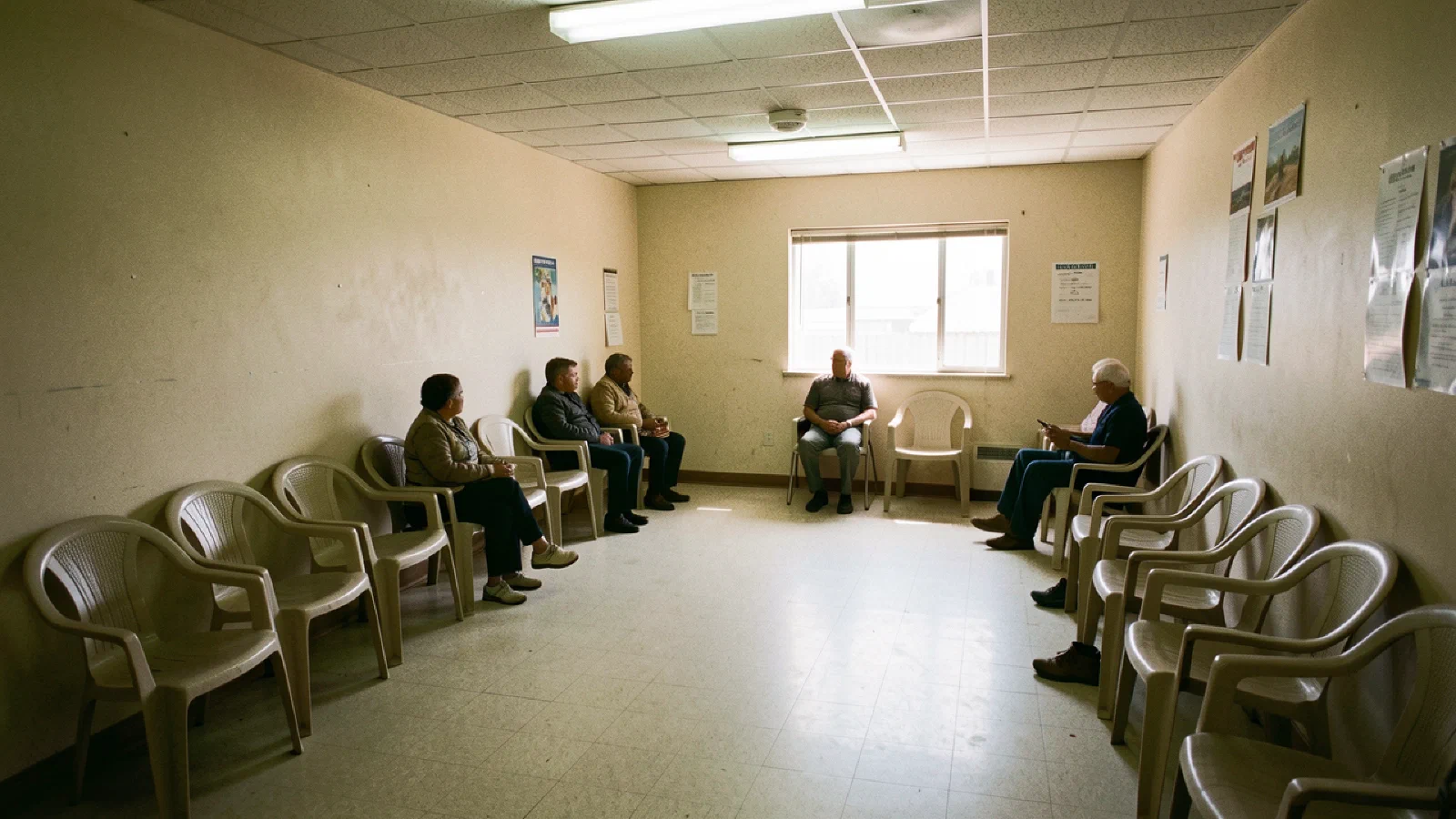
Federally Qualified Health Centers
Federally Qualified Health Centers occupy a distinctive position in rural healthcare. They exist specifically to serve populations that other providers cannot or will not reach. Their community governance requirements, sliding fee mandates, and comprehensive service obligations distinguish them from providers organized around different principles. Where hospitals can narrow service lines and physician practices can select patients, FQHCs must remain open to all.
This mission creates genuine value for rural communities. FQHCs now serve one in five rural Americans, filling gaps where hospitals have closed, physicians have departed, and insurance coverage remains inadequate. In many communities, the health center represents the only consistent source of primary care, behavioral health, and dental services available regardless of ability to pay.
But mission does not generate revenue. FQHCs face the same financial pressures as other rural providers while operating under constraints that limit their response options. They cannot close unprofitable service lines without violating program requirements. They cannot restrict patient panels without abandoning their purpose. They cannot optimize payer mix without betraying the populations they exist to serve.
This article examines the mission-margin tension that defines FQHC transformation capacity. The question is not whether FQHCs should transform, but whether the business model that makes them valuable also makes transformation structurally difficult.
The FQHC Landscape#
Approximately 1,400 Federally Qualified Health Centers operate across the United States through more than 17,000 service delivery sites. These organizations served 32 million patients in 2024, including substantial proportions of the uninsured and Medicaid populations. One in five rural residents received care from HRSA-funded health centers.
The growth trajectory has been substantial. Health center patient volume has nearly doubled since 2010, driven by Affordable Care Act investments, Medicaid expansion in participating states, and increased demand for safety-net services. The health center workforce now exceeds 326,000 full-time employees, making health centers one of the largest primary care employers in the nation.
Rural FQHCs represent a specific segment of this network. More than 300 health center grantees operate rural sites, often serving as the primary healthcare access point in communities where hospitals have closed or never existed. Rural health centers face distinct challenges: longer travel distances for patients, smaller workforce pools for recruitment, and populations with more chronic disease burden requiring more intensive management.
Financial profiles reveal the mission-margin tension. According to Capital Link’s 2025 analysis of FQHC financial performance, health centers ended 2023 with an operating margin of just 1.7 percent nationally. The National Association of Community Health Centers projects a 2 percent loss for 2024 as pandemic relief funds exhaust and Medicaid redeterminations reduce covered patient volumes.
Rural FQHCs typically experience worse financial performance than urban counterparts. Their payer mix skews more heavily toward Medicaid and uninsured patients, with less commercial insurance to cross-subsidize uncompensated care. Smaller patient volumes spread fixed costs across fewer encounters. Workforce premiums required to recruit providers to rural areas increase operating expenses.
| Financial Indicator | Rural FQHCs | Urban FQHCs | National Average |
|---|---|---|---|
| Operating Margin | 0.8% | 2.1% | 1.7% |
| Medicaid Payer Mix | 52% | 41% | 44% |
| Uninsured Patients | 24% | 19% | 21% |
| Days Cash on Hand | 48 | 62 | 57 |
| Personnel Cost Ratio | 71% | 66% | 68% |
Source: Capital Link National Health Center Financial Analysis, 2025.
The workforce picture compounds financial challenges. Health centers report chronic shortages of physicians, advanced practice providers, and behavioral health specialists. The 2024 Commonwealth Fund survey found that 42 percent of rural FQHCs reported physician shortages, with even higher rates for psychiatrists and psychiatric nurse practitioners. Recruitment to rural areas requires salary premiums, loan repayment commitments, and quality of life investments that strain budgets already operating near margin.
Community Governance: Feature or Bug?#
The defining structural characteristic of FQHCs is consumer governance. At least 51 percent of governing board members must be active patients of the health center, with board composition reflecting the demographics of the served population. This requirement, rooted in the civil rights movement origins of community health centers, ensures that communities control the organizations serving them.
Consumer governance produces genuine community accountability. Board members who receive care at the health center understand patient experience in ways external experts cannot. They represent community priorities directly rather than through institutional filters. The patient-majority mandate keeps health centers responsive to community needs in ways that would not occur if professionals or funders controlled governance.
But governance structure also creates operational challenges. Research examining the relationship between board composition and financial performance found that boards with higher proportions of representative consumers (patients resembling typical FQHC users in socioeconomic status) were associated with weaker financial performance. The very representation that ensures community voice may limit governance expertise required for complex organizational management.
Consumer board members often lack business, financial, or healthcare administration backgrounds. They may struggle to provide effective oversight of executive decisions, challenge budget assumptions, or evaluate strategic options. Professional development programs help, but the expertise gap between community members and health center executives creates asymmetric information that can undermine board effectiveness.
The governance requirement also complicates health system integration. Health systems accustomed to acquiring or affiliating with providers cannot exercise traditional control over FQHCs. The patient-majority board mandate prevents external entities from dominating governance regardless of financial investment. This protection serves mission but limits partnership options that might strengthen organizational sustainability.
Provider Experience Analysis#
The following table presents financial and operational data for rural FQHCs across different regions and circumstances:
| Organization | State | Sites | Patients | Operating Margin | Payer Mix (Medicaid/Uninsured) | RHTP Participation | Transformation Status |
|---|---|---|---|---|---|---|---|
| Delta Health Center | MS | 3 | 28,000 | -1.2% | 61%/28% | Yes, subawardee | Limited by financial distress |
| Southern West Virginia Health System | WV | 21 | 47,000 | 1.4% | 58%/19% | Yes, direct participant | Active, grant-supported |
| HCC Network | MO | 6 | 8,000 | 0.3% | 54%/22% | Yes, through PCA | Marketing-focused innovation |
| Shawnee Health Care | IL | 12 | 26,000 | 2.1% | 48%/21% | Yes, workforce focus | Moderate transformation capacity |
| Mountain Comprehensive Health | KY | 8 | 19,000 | -0.8% | 63%/17% | Yes, subawardee | Stabilization priority |
| CompleteCare Health Network | NJ | 11 | 32,000 | 1.9% | 52%/16% | Yes, direct participant | Active behavioral health integration |
| Salud Family Health | CO | 13 | 85,000 | 3.2% | 46%/18% | Yes, quality initiatives | High transformation capacity |
| High Plains Community Health | TX | 7 | 22,000 | 0.6% | 57%/25% | Yes, through PCA | Limited workforce constraints |
Analysis by transformation dimension:
Financial capacity ranges widely. Salud Family Health in Colorado demonstrates that scale, favorable state Medicaid rates, and diversified funding can support transformation investment. Delta Health Center in Mississippi illustrates how unfavorable payer mix and state policy environment can eliminate financial capacity regardless of organizational commitment.
Operational capacity correlates with organizational size but not perfectly. Southern West Virginia Health System maintains 21 sites across challenging Appalachian terrain through sophisticated operational systems. Smaller organizations like HCC Network in Missouri demonstrate that focused operational strategies can achieve efficiency gains despite limited scale.
Strategic position reflects both internal factors and external environment. Health centers in Medicaid expansion states have fundamentally different strategic positions than health centers in non-expansion states. RHTP participation provides resources but also creates requirements that may not align with organizational priorities.
Community relationships remain strong for most FQHCs regardless of financial position. The community governance structure ensures ongoing community connection. Even financially distressed FQHCs typically maintain strong community trust, which represents an asset other providers cannot easily replicate.
Case Study: The Budget Vote#
Delta Health Center in Mound Bayou, Mississippi, represents both the promise and peril of mission-driven rural healthcare. Established in 1967 as the nation’s first rural FQHC, Delta Health Center has served the Mississippi Delta’s predominantly African American population for nearly 60 years. The organization emerged from the civil rights movement, founded by physicians committed to addressing health disparities through community-controlled care.
The March 2024 board meeting faced a decision that crystallized the mission-margin tension. Three options sat before the 11-member board, 7 of whom were patients reflecting Bolivar County’s demographics.
Option one: add a dental clinic in Sunflower County. Unmet dental need was severe. The nearest dental provider accepting Medicaid patients required 45-minute drives for many residents. Dental disease contributed to diabetes complications, cardiovascular risk, and quality of life burdens that the health center saw daily. Community members had requested dental expansion repeatedly. The mission case was clear.
The financial case was not. Dental services generate positive margins in some markets, but Sunflower County’s payer mix projected losses for at least three years before volumes might reach sustainability. Start-up costs would require $280,000 in capital that would deplete reserves already below prudent levels. If projections proved optimistic, the health center might face difficult choices about other services.
Option two: shore up reserves. After a difficult 2023 that included unexpected facility repairs and recruitment costs for a departed physician, cash reserves had dropped to 42 days. Industry benchmarks recommend 60 to 90 days. The CFO’s analysis showed that without reserve rebuilding, a single additional unexpected expense could trigger covenant violations on the health center’s building loan. Financial stability protects all services, including existing dental care at the main Mound Bayou site.
Option three: do both partially. Add two dental chairs instead of four, extend the timeline for full implementation, and rebuild reserves more slowly. This compromise satisfied neither priority fully but avoided the starkest tradeoffs.
The board discussion revealed the governance tension. Community board members spoke of neighbors with tooth pain, children with cavities affecting school performance, adults whose diabetes management failed partly because they could not chew healthy food. These were not abstract policy discussions but stories of people they knew personally. The mission imperative felt urgent and concrete.
Board members with financial backgrounds noted the CFO’s projections, the thin margins, the consequences if another bad year arrived before reserves recovered. They understood that bankruptcy would serve no one. Responsible stewardship required ensuring the organization survived to continue serving the community.
CEO John Fairman (name changed) presented all three options evenhandedly, as his role required. He privately favored option two but knew that the board might reasonably choose otherwise. The decision was theirs to make.
The vote was 6 to 5 for option three, the compromise. Two dental chairs would begin operations in Sunflower County within 18 months, with expansion to four chairs contingent on financial performance. Reserve rebuilding would proceed at half the initially recommended pace.
Whether this represented wisdom or irresolution depends on perspective. The health center would take more risk than financial prudence recommended while providing less community benefit than mission urgency demanded. Both views were defensible. Neither was clearly correct.
The Medicaid Dependency Problem#
The payer mix that defines FQHC mission also creates structural vulnerability. Nationally, Medicaid represents 44 percent of FQHC revenue. In rural areas, this proportion often exceeds 55 percent. When Medicaid policy changes, FQHC finances change accordingly.
Medicaid payment adequacy varies dramatically by state. California’s Medi-Cal pays FQHC rates that, combined with supplemental payments, enable sustainable operations for most health centers. Mississippi’s Medicaid rates leave health centers dependent on Section 330 grant funding to cover losses on every Medicaid encounter. State policy choices that FQHCs cannot influence determine organizational viability.
The Medicaid redetermination process that began in 2023 has reduced FQHC covered patient volumes. Patients who lost Medicaid coverage did not stop needing care; they shifted from covered to sliding-fee-scale visits that health centers must absorb. The revenue loss was immediate while the service obligation continued.
Looking forward, proposed federal Medicaid restructuring creates existential uncertainty. If federal matching rates decrease or per capita caps limit state Medicaid spending, states facing budget pressure will reduce provider rates. FQHCs, with their high Medicaid dependency, would absorb disproportionate impact. The mission that requires serving Medicaid populations creates exposure that mission cannot resolve.
Grant funding provides partial insulation but faces its own uncertainties. Community Health Center Fund authorization expires periodically, requiring reauthorization that is never guaranteed. ARPA provided one-time supplemental funding that created temporary capacity increases now winding down. The 2030 cliff for RHTP funding adds another layer of time-limited resource availability.
Alternative Perspective: The Mission Enables Margin View#
The strongest counterargument to framing mission as margin obstacle holds that mission positioning actually creates financial advantages that other providers cannot access. This view deserves serious consideration.
FQHCs receive Section 330 grant funding specifically because of their mission commitment. Grant revenue, typically 10 to 15 percent of total revenue, offsets losses that would sink organizations without this support. Without mission, there would be no grant.
Enhanced Medicaid and Medicare reimbursement rates provide additional revenue. The FQHC Prospective Payment System pays rates calculated to cover the cost of comprehensive care delivery, including enabling services that other providers would not offer. These rates exceed standard primary care reimbursement in most states. Without mission-driven service requirements, there would be no enhanced payment.
340B drug pricing allows FQHCs to purchase medications at substantial discounts, generating revenue when medications are reimbursed at standard rates. This program explicitly targets safety-net providers based on their service mission. Without mission qualification, there would be no 340B revenue.
Federal Tort Claims Act coverage provides malpractice protection without premium costs, saving hundreds of thousands annually for larger health centers. NHSC loan repayment eligibility helps recruit providers who might not otherwise consider rural positions. These benefits flow from mission status.
Summing these mission-linked revenue sources, the argument holds that FQHCs would be financially worse off without their mission commitments, not better. The sliding fee scale obligation costs money, but the grant funding that accompanies mission status more than compensates. The service requirements constrain optimization, but the reimbursement enhancements exceed what optimization would yield.
This argument has merit but does not resolve the tension. The mission benefits create a floor that prevents collapse, not a ceiling that enables transformation. Grant funding and enhanced rates keep FQHCs operating, but operating margins remain thin. Stability is not the same as capacity. Organizations that survive month to month lack resources to invest in transformation.
When FQHCs Can Transform#
Certain conditions enable FQHC transformation despite mission-margin tension:
Favorable state policy environment. States with expanded Medicaid, adequate FQHC payment rates, and supplemental support programs create conditions where mission does not require financial sacrifice. California, Colorado, and Minnesota health centers demonstrate that state policy can align financial incentives with mission commitments.
Scale sufficient to absorb fixed costs. Health centers with larger patient panels spread administrative, facility, and leadership costs across more encounters. Scale enables investment in quality improvement, care coordination, and infrastructure that smaller organizations cannot support. Salud Family Health’s 85,000 patients enable transformation capacity that 8,000-patient organizations cannot match.
Board sophistication balancing mission and margin. Boards that include members with financial expertise alongside community representation can navigate tradeoffs more effectively. Professional development investments that build board capacity pay dividends in governance quality.
Leadership capable of managing complexity. CEO’s who understand both community health values and organizational sustainability can identify opportunities that serve both. Technical sophistication in grant management, Medicaid billing optimization, and 340B revenue maximization extracts resources that mission-only leadership might miss.
External support reducing organizational burden. RHTP subawards, PCA technical assistance, and partnership arrangements that provide resources without requiring FQHCs to develop all capabilities internally enable transformation within organizations that lack internal capacity.
When FQHCs Cannot Transform#
Other conditions make FQHC transformation structurally difficult regardless of organizational commitment:
Non-expansion state Medicaid gap. In states that did not expand Medicaid, substantial populations lack any coverage. FQHCs serve these patients through sliding fee scales without revenue beyond grant support. The mission requirement to serve all regardless of ability to pay creates structural losses that no operational improvement can resolve.
Inadequate state payment rates. States that reimburse FQHCs below the cost of care create circumstances where every Medicaid patient encounter generates losses. Volume increases worsen financial position rather than improving it. Health centers in these states survive on grants, not operations.
Board dysfunction or mission drift. Boards that prioritize mission without understanding financial constraints can drive organizations toward unsustainability. Alternatively, boards captured by staff or professional interests can drift from community accountability. Either dysfunction undermines transformation capacity.
Leadership transition or capacity gap. Rural FQHC CEO positions are difficult to fill. Organizations experiencing leadership turnover or operating under leaders without transformation experience cannot execute complex initiatives regardless of available resources.
Scale too small for efficiency. Health centers serving fewer than 10,000 patients face structural diseconomies that no optimization can overcome. Administrative requirements, quality reporting, and governance obligations consume proportionally more resources at smaller scale.
Case Study: The NHSC Dependency#
Mountain Comprehensive Health Corporation serves eight sites across southeastern Kentucky’s coal country. Two decades of coal industry decline have devastated the regional economy, leaving populations with high chronic disease burden, limited employment, and significant behavioral health needs. The health center exists because no other provider would.
The medical staff includes 12 physicians and 14 advanced practice providers serving 19,000 patients. Of these 26 providers, 17 currently participate in National Health Service Corps loan repayment programs. Two-thirds of the clinical workforce depends on federal loan repayment for financial viability.
NHSC provides essential workforce access for rural FQHCs. The loan repayment commitment, up to $50,000 annually for providers in highest-need areas, enables recruitment of physicians and nurse practitioners who would not otherwise consider rural Appalachian practice. Without NHSC, Mountain Comprehensive could not maintain current staffing levels.
But NHSC creates dependency that complicates transformation. Providers serve minimum commitment periods, typically three to four years, then often depart for positions with higher compensation, better quality of life, or locations closer to family. The health center experiences 25 percent annual provider turnover, with replacements requiring six to twelve months to recruit and onboard.
Transformation initiatives require continuity. Care model redesign, behavioral health integration, and chronic disease management improvement take years to implement and optimize. When the providers who championed an initiative depart before implementation completes, momentum stalls. New providers arrive with different priorities and approaches.
The 2024 strategic planning process identified care model transformation as essential for organizational sustainability. Leadership wanted to implement team-based care with panel management, care coordination, and risk stratification. The model required significant provider behavior change and workflow redesign.
Implementation began with the four providers approaching the end of NHSC commitments, hoping their experience would demonstrate value and inform rollout to other sites. By July 2024, two of the four had announced departures. The remaining two continued implementation, but the loss of champions raised questions about sustainability.
Recruiting replacement providers took nine months. The new physicians arrived without transformation context, trained in settings where team-based care was not the norm. Onboarding them to both basic site operations and transformation requirements simultaneously overwhelmed available management capacity.
The transformation initiative continues, but progress has been slower than projected. NHSC enables staffing but creates turnover that disrupts continuity. The same program that makes rural FQHC practice possible also makes sustained transformation difficult.
RHTP and FQHC Transformation#
RHTP presents both opportunity and challenge for rural FQHCs. The program provides resources that health centers need, but the resources come with requirements that may not align with organizational realities.
Opportunity dimensions:
RHTP funding can support transformation investments that operating margins cannot sustain. Health centers receiving RHTP subawards can hire care coordinators, implement health IT improvements, and develop workforce pipelines without requiring immediate return on investment.
RHTP participation connects FQHCs to state transformation initiatives and networks. Health centers that might otherwise operate in isolation gain access to technical assistance, peer learning, and partnership opportunities.
The five-year funding horizon provides planning stability that annual grant cycles do not. Health centers can undertake multi-year initiatives with reasonable confidence that resources will continue.
Challenge dimensions:
RHTP requirements may not align with FQHC priorities. State agencies designing transformation programs may emphasize hospital stabilization, regional integration, or other priorities that do not reflect what FQHCs need most urgently.
Administrative burden of RHTP participation adds to compliance requirements that already strain small organizations. Reporting, documentation, and coordination consume management capacity that might otherwise focus on direct service delivery.
The 2030 funding cliff creates uncertainty about post-RHTP sustainability. Transformation initiatives that depend on RHTP resources may not survive when those resources end.
Recommendations#
For FQHCs:
Explicit board conversation about mission-margin tradeoffs should occur annually, not only when crises force decisions. Understanding the tension proactively enables better decision-making under pressure.
Financial reserve targets should account for mission obligations. Standard industry benchmarks may understate reserve needs for organizations that cannot restrict services or patients when financial stress occurs.
Diversification of revenue sources reduces Medicaid dependency vulnerability. 340B optimization, value-based contracts where available, and philanthropic development provide partial insulation from policy changes.
For states:
Supplemental payment programs that improve FQHC financial position enable mission-driven transformation that states claim to want. States cannot simultaneously expect FQHCs to transform and maintain policies that prevent them from generating transformation resources.
RHTP design should recognize that FQHCs face different constraints than hospitals. Technical assistance, performance expectations, and reporting requirements should reflect safety-net organizational realities.
PCA capacity investments multiply state transformation resources. Strong PCAs provide FQHC support at lower cost than direct state provision.
For federal policy:
Medicaid payment adequacy floors would address the state variation that currently determines FQHC viability based on geography rather than performance. Mission-driven organizations should not face structural losses for serving the populations they exist to reach.
NHSC program stability enables workforce planning that current uncertainty prevents. Multi-year authorization and predictable funding would improve rural recruitment outcomes.
Section 330 grant methodology updates should reflect actual costs of comprehensive care delivery. Grant levels calculated on outdated assumptions leave health centers subsidizing federal programs from other revenue sources.
Policy Environment Update: 2026#
Revised February 2026. The following section integrates policy developments finalized after this article’s original publication.
Payment Updates#
FQHC base rate increased to $207.72. The CY 2026 Physician Fee Schedule increased the FQHC Prospective Payment System base rate to $207.72 per visit. This is a meaningful improvement for rural FQHCs operating near or below the cost of care on Medicaid encounters.
New patient enhancement payment. CY 2026 established a new patient enhancement payment for FQHC encounters with patients who have not been seen at the health center in the prior three years. This creates dedicated revenue for the outreach and first-visit investment that FQHCs make to bring new patients into care, a cost that was previously absorbed into general operating margin.
Separate care management payment at PFS rates. CY 2026 established a separate payment for care management services at PFS billing rates rather than folding these services into the FQHC per-visit PPS rate. This is significant: care coordination and chronic disease management are central to what RHTP expects FQHCs to do. Previously, investing staff time in care management increased costs without increasing visit-based revenue. A dedicated payment stream changes the financial calculus for care coordination investment, though volumes must be sufficient to cover dedicated care manager positions.
Workforce Funding#
THCGME increased to $225M FY2026 with $25M annual increases through FY2029. The Teaching Health Center Graduate Medical Education program, which trains physicians and dentists in community health center settings, received a significant CAA 2026 funding increase. By FY2029, annual THCGME funding reaches $325M. For rural FQHCs that host THCGME programs or are positioned to develop them, this creates a concrete workforce pipeline investment. The 7-14 year horizon for trained physicians to complete residency and establish rural practice remains a constraint, but THCGME is one of the few workforce investments with a clear evidence base for rural retention.
Grant Funding Uncertainty#
Community Health Center mandatory funding extended one year only. CAA 2026 extended CHC mandatory funding through FY2026. This is a one-year extension, not a long-term authorization. FQHCs building multi-year transformation strategies that depend on Section 330 grant funding should not assume this funding is secure. The extender economy that creates annual uncertainty for hospital payment programs applies equally to FQHC grant funding. Congress has historically renewed this funding, but the pattern of one-year extensions creates planning constraints that RHTP’s five-year horizon cannot eliminate.
CMMI Models and FQHC Transformation#
LEAD model participation pathway. The Long-term Enhanced ACO Design model, launching January 2027, is explicitly designed for small, independent, and rural practices. FQHCs that have previously struggled to meet MSSP or ACO REACH entry requirements may qualify for LEAD. State RHTP offices should assess FQHC LEAD eligibility and provide application support. ACO participation provides financial sustainability pathways that extend beyond RHTP’s 2030 endpoint.
ACCESS relevance for FQHC chronic care. The ACCESS model’s behavioral health track (depression and anxiety, with PHQ-9 and GAD-7 outcomes) creates potential revenue for integrated behavioral health that FQHCs are well-positioned to provide. The FFS-only limitation is a significant constraint in communities with high Medicaid penetration, since ACCESS covers only traditional Medicare beneficiaries. But for rural FQHCs with substantial Medicare FFS panels, ACCESS represents a payment pathway that rewards the integrated care model their missions already pursue.
Care management payment alignment with ACCESS. CMS’s new separate care management payment at PFS rates and the ACCESS model are moving in the same conceptual direction: paying distinctly for care coordination rather than bundling it into visit revenue. FQHCs building care management infrastructure with RHTP funding are building toward a payment future where these investments generate dedicated revenue.
Coverage Environment#
Medicaid exposure concentrated. OBBBA per capita caps (FY2027), work requirements effective January 2027, and $35 cost sharing for expansion adults at 100-138% FPL (October 2028) will reduce FQHC covered Medicaid volume in states that cannot absorb cost shifts. FQHCs whose payer mix already skews heavily Medicaid face the greatest exposure. The new patient enhancement payment and care management revenue provide some offset, but not at the scale of potential Medicaid enrollment losses.
SNAP and LIHEAP cuts worsen patient health status. SNAP work requirements at age 55-64 and benefit reductions will worsen food insecurity in rural persistent-poverty counties where rural FQHCs are concentrated. Patients who lose food assistance arrive sicker. FQHCs that have invested in food pantries, SNAP enrollment assistance, or nutrition programs as social needs integration are providing services whose demand will increase precisely as funding for those activities faces pressure.
How this article connects to others in Blue Gray Matters.
Sources cited in this article.
- Bureau of Primary Health Care. "Health Center Program Compliance Manual." Health Resources and Services Administration, 2023.
- Capital Link. "National Health Center Financial and Operational Performance Analysis: 2020-2023." HRSA Technical Assistance, June 2025.
- The Commonwealth Fund. "Community Health Centers' Progress and Challenges in Meeting Patients' Essential Primary Care Needs." Issue Brief, August 2024.
- Geiger Gibson Program. "Community Health Center Chronicles: Delta Health Center." Milken Institute School of Public Health, George Washington University, 2024.
- Health Resources and Services Administration. "2024 Health Center Program Data." HRSA Data Portal, 2024.
- Medicaid and CHIP Payment and Access Commission. "Medicaid Payment Policy for Federally Qualified Health Centers." Issue Brief, 2017.
- National Association of Community Health Centers. "Community Health Centers: Providers, Partners and Employers of Choice, 2024 Chartbook." NACHC, 2024.
- National Rural Health Association. "Marketing as a Lifeline for Rural Facilities Facing Cuts." Rural Health Voices, January 2026.
- Wright, Brad. "Who Governs Federally Qualified Health Centers?" Journal of Health Politics, Policy and Law, vol. 38, no. 1, 2013, pp. 27-55.
- Wright, Brad, et al. "Consumer Governance May Harm Health Center Financial Performance." Health Services Research, vol. 48, no. 4, 2013, pp. 1403-1421.
- Wright, Brad, et al. "Factors Associated with Federally Qualified Health Center Financial Performance." INQUIRY: The Journal of Health Care Organization, Provision, and Financing, vol. 59, 2022.
- Centers for Medicare and Medicaid Services. "CY 2026 Physician Fee Schedule Final Rule." CMS.gov, November 2025.
- Consolidated Appropriations Act, 2026. Pub. L. 119-4, signed February 3, 2026. Teaching Health Center GME and Community Health Center Fund provisions.