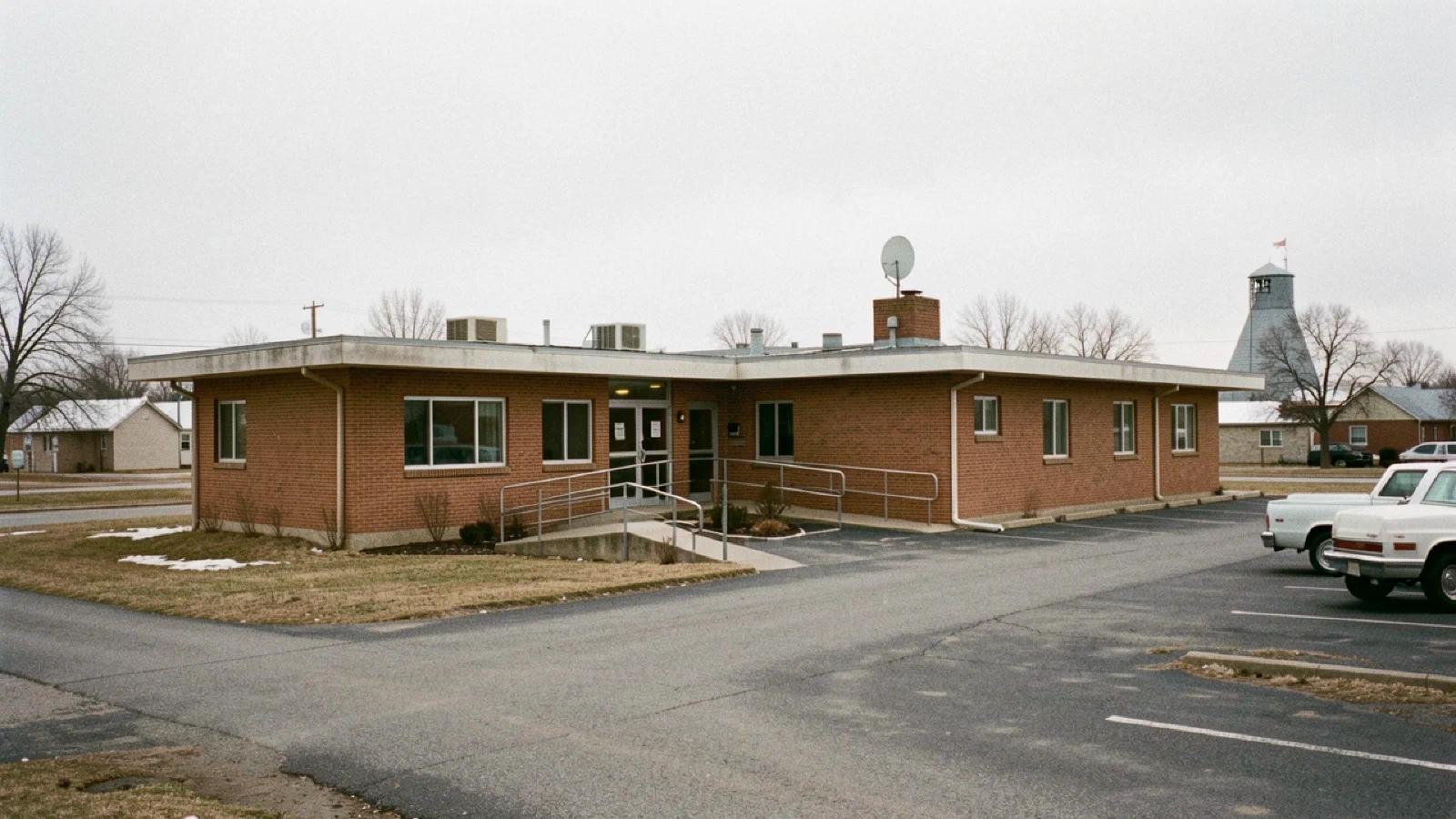
Critical Access Hospitals
Critical Access Hospitals occupy a peculiar position in American healthcare. They exist because policymakers acknowledged that normal market dynamics would kill them. The CAH designation, created in 1997 after more than 400 rural hospital closures, explicitly protects small facilities from the financial pressures that destroy low-volume providers. Cost-based reimbursement removes the volume imperative that dominates hospital finance elsewhere. Geographic isolation requirements ensure CAHs serve communities with no alternatives.
This protection enabled survival. It did not enable transformation.
The survival versus transformation tension defines CAH experience more starkly than for any other provider type. RHTP expects hospitals to redesign care delivery, integrate services, adopt value-based models, and invest in population health infrastructure. CAHs, meanwhile, operate on median margins of approximately 1%, maintain cash reserves measured in weeks rather than months, and employ leadership teams consumed by the daily work of keeping doors open. Asking these facilities to simultaneously survive and transform is asking them to do two things that compete for the same limited resources.
This article examines whether CAHs can transform while surviving, what conditions enable or prevent transformation, and what RHTP’s expectations reveal about the gap between policy design and provider reality. The evidence suggests that transformation capacity is not uniformly distributed. Some CAHs can transform. Many cannot. Policy that treats them identically produces predictable failure.
Information Limits
Analysis of CAH transformation capacity relies on financial indicators, closure data, and program participation records. What these data cannot capture is the lived experience of administrators making impossible tradeoffs. The vignettes in this article attempt to illustrate these decisions, but cannot fully convey the weight of choices that determine whether communities retain healthcare access.
The CAH Landscape#
National Profile#
As of January 2026, approximately 1,365 facilities hold Critical Access Hospital designation across 45 states. Five eastern states (Connecticut, Delaware, Maryland, New Jersey, Rhode Island) and the District of Columbia have no CAHs. Eight states have 50 or more: Illinois, Iowa, Kansas, Minnesota, Montana, Nebraska, Texas, and Wisconsin.
CAHs constitute roughly 30% of all hospitals nationally and approximately 60% of all rural hospitals. They represent the primary acute care access point for communities whose populations cannot support larger facilities.
| Characteristic | Current Status |
|---|---|
| Total CAHs | ~1,365 |
| States with CAHs | 45 |
| Share of all rural hospitals | ~60% |
| Share of all hospitals | ~30% |
| Median bed count | 17 (range: 1-25) |
| Median annual discharges | ~350 |
Geographic distribution follows population patterns. The Upper Midwest (Minnesota, Wisconsin, Iowa) and Great Plains (Kansas, Nebraska, North Dakota, South Dakota) contain concentrated CAH networks serving agricultural communities. Montana alone has 49 CAHs, the highest density relative to population nationally. Texas has the largest absolute number (approximately 80), though many concentrate in the Panhandle and West Texas regions.
Eligibility Requirements#
CAH designation requires meeting specific structural criteria:
Location: Either more than 35 miles from the nearest hospital (15 miles in mountainous terrain or areas with only secondary roads), or designated as a “necessary provider” prior to January 1, 2006.
Size: Maximum 25 acute care inpatient beds (excluding up to 10 psychiatric beds and 10 rehabilitation beds maintained in distinct part units).
Length of Stay: Annual average acute care stay of 96 hours or less.
Emergency Services: 24/7 emergency care availability.
State Plan: Located in a state with a Medicare Rural Hospital Flexibility Program.
The necessary provider loophole, closed in 2006, allowed states to designate CAHs that did not meet distance requirements. This explains why some CAHs operate closer to other hospitals than current rules would permit. Approximately 25% of CAHs qualified under necessary provider provisions rather than distance criteria.
The CAH Bargain#
The CAH designation represents an explicit policy bargain: protection in exchange for limitation. Facilities accept size constraints, service restrictions, and geographic isolation requirements. In return, they receive cost-based reimbursement that insulates them from the volume pressures destroying other small hospitals.
Medicare pays CAHs 101% of reasonable costs for inpatient and outpatient services provided to Medicare beneficiaries. This cost-based payment differs fundamentally from prospective payment, where hospitals receive fixed amounts based on diagnosis regardless of actual costs. For low-volume facilities where fixed costs dominate, cost-based payment prevents the per-patient losses that accumulate into closure.
The bargain assumes several conditions that have eroded:
Traditional Medicare dominance. When CAH designation began, fee-for-service Medicare constituted nearly all Medicare enrollment. Cost-based reimbursement protected CAHs because most Medicare patients were in traditional Medicare. Medicare Advantage enrollment has since surged to over 50% of Medicare beneficiaries nationally. MA plans are not required to pay cost-based rates. They negotiate rates like any commercial payer, often paying 10-15% below what traditional Medicare would pay at the same facility.
Medicaid adequacy. Cost-based Medicare reimbursement protects against Medicare losses but does nothing for Medicaid. State Medicaid programs typically reimburse 60-80% of actual costs. CAHs in states without Medicaid expansion face high uncompensated care burdens; CAHs in expansion states face Medicaid rates that generate losses on each patient served.
Commercial payer presence. Rural areas typically have limited commercial payer volume. The working-age population that holds commercial insurance is precisely the population leaving rural communities. CAHs cannot offset Medicare and Medicaid losses with commercial payer profits because commercial patients are increasingly scarce.
Stable federal policy. The 101% reimbursement rate has been reduced by sequestration since 2013, effectively cutting cost-based payment to approximately 99% of reasonable costs. The 2% sequestration cut may seem minor, but for facilities operating on 1-2% margins, it represents the difference between breaking even and losing money.
Financial Reality#
Current Performance#
Flex Monitoring Team analysis of 2022 Medicare Cost Report data (the most recent complete year available) reveals CAH financial conditions:
| Indicator | National Median | 25th Percentile | 75th Percentile |
|---|---|---|---|
| Operating Margin | 1.0% | -3.5% | 5.8% |
| Total Margin | 2.3% | -1.2% | 7.1% |
| Days Cash on Hand | 52 | 21 | 108 |
| Days in Accounts Receivable | 42 | 32 | 55 |
| Current Ratio | 2.1 | 1.3 | 3.5 |
The Chartis Center for Rural Health’s February 2025 analysis found 46% of rural hospitals operating with negative margins, with CAHs performing slightly better than non-CAH rural facilities due to cost-based Medicare protection. However, 432 rural hospitals were classified as “vulnerable to closure,” including significant numbers of CAHs.
State variation is extreme. Kansas CAHs report median operating margins around negative 3%. Montana CAHs average negative margins despite the state’s pioneering role in CAH development. Midwest CAHs in Iowa, Minnesota, and Nebraska perform relatively better, with some facilities achieving 3-5% operating margins.
What the Numbers Mean#
A 1% operating margin provides no cushion. One poor month, one payer dispute, one unexpected equipment failure can eliminate annual margin. Facilities operating at 1% cannot invest in new programs, replace aging infrastructure, or hire additional staff. They can only maintain current operations and hope nothing goes wrong.
52 days cash on hand sounds adequate until context is added. Industry benchmarks suggest 60-90 days as minimum healthy reserves. Twenty-one days (the 25th percentile) represents three weeks of operating expenses. A single delayed Medicare payment, common during system transitions or audits, can push facilities into cash crisis.
Negative operating margin CAHs survive through non-operating revenue. Tax subsidies, local government appropriations, foundation support, and investment income keep facilities open despite patient service losses. This survival mechanism masks underlying operational unsustainability. When non-operating support wavers, facilities that appeared stable suddenly face closure.
The Medicare Advantage Erosion#
Medicare Advantage penetration represents the single greatest emerging threat to CAH financial stability. Traditional Medicare’s cost-based reimbursement protected CAHs from volume-based losses. Medicare Advantage eliminates this protection.
The American Hospital Association’s February 2025 report documented the impact:
CAHs receive only 95% of traditional Medicare rates from MA plans on a cost basis. This 5% haircut compounds sequestration’s 2% reduction, meaning CAHs effectively receive 93% of what their services actually cost for MA patients.
MA penetration in rural areas has increased 48% since 2019. Communities that were 70% traditional Medicare five years ago may now be 50% or below. Each percentage point shift from traditional Medicare to MA costs CAHs money.
MA administrative burdens exceed traditional Medicare. Prior authorization requirements, claim denials, and discharge delays cost staff time. Rural hospitals lack the administrative infrastructure to manage MA complexity efficiently. One AHA survey found 86% of rural clinicians report negative impacts from MA administrative requirements.
MedPAC analysis confirmed the structural problem: as MA penetration increases in a community, CAH financial performance deteriorates proportionally. The cost-based protection that justified CAH existence is being eroded by enrollment shifts CAHs cannot control.
The Survival Versus Transformation Tension#
Framing the Tension#
The Transformation Imperative View: Rural healthcare is failing. Hospital closures accelerate. Service lines disappear. Communities lose access. More of the same produces more failure. CAHs must transform care delivery to survive long-term. Telehealth, population health management, care coordination, value-based contracts, and service line optimization can create sustainable models. RHTP exists precisely because current approaches do not work. Facilities that cannot transform should make way for models that can serve communities effectively.
The Survival Reality View: Asking financially distressed facilities to transform is asking drowning people to take swimming lessons. Transformation requires management attention, capital investment, organizational capacity, and risk tolerance. CAHs operating on 1% margins with 21 days cash have none of these. Their leaders spend each day ensuring doors stay open, payroll is met, and essential services continue. Demanding transformation from fragile providers accelerates failure. Stabilize first; transform second.
The Evidence Question: Can facilities transform while financially distressed? Does transformation require financial stability as precondition? What level of distress precludes transformation capacity?
What Transformation Requires#
RHTP-supported transformation activities include:
Technology Investment: Telehealth platforms, remote patient monitoring systems, electronic health record optimization, health information exchange connectivity. Implementation costs range from $50,000 to $500,000 depending on scope.
Workforce Development: Care coordinator positions, community health workers, population health specialists. Annual costs for a single care coordinator: $60,000-$80,000 including benefits.
Care Model Redesign: Chronic care management programs, transitional care protocols, care management infrastructure. Requires dedicated staff time and new workflows.
Value-Based Care Participation: ACO membership, quality reporting infrastructure, population health analytics capacity. Requires administrative investment and contract negotiation capacity.
Each requirement assumes resources CAHs may not have. A $200,000 telehealth investment represents multiple years of accumulated margin for a facility operating at 1%. Hiring a care coordinator means finding $70,000 annually that current revenue does not cover. Joining an ACO requires administrative capacity many CAHs lack.
Case Study: The Investment Decision#
Wheatland Memorial Healthcare in Harlowton, Montana faces a decision that defines the survival-transformation tension.
The 25-bed Critical Access Hospital serves Wheatland County, population 2,200, in central Montana. The nearest alternative hospital is 60 miles away in Lewistown. Wheatland Memorial is the only local provider of emergency services, acute care, swing bed services, and primary care.
In August 2024, ground was broken on a new 36,000-square-foot facility to replace aging infrastructure. USDA Rural Development provided $16.7 million in Community Facilities Direct Loans, $3.7 million in guaranteed loans through Farmers State Bank, and $1 million from an Emergency Rural Health Care Grant for equipment.
The transformation investment is substantial: modern infrastructure enabling new service lines, technology integration, and improved care delivery. The facility will include an integrated rural health clinic, updated emergency department, and enhanced diagnostic capabilities.
The survival calculation is sobering: Wheatland Memorial must generate sufficient revenue to service $20 million in debt while maintaining operations during construction. Wheatland County’s population continues aging and declining. Medicare and Medicaid constitute the vast majority of payer mix. The new facility bets that improved infrastructure will attract providers, retain community members, and generate sustainable revenue.
This represents transformation with external support. USDA financing, American Rescue Plan funding, and state coordination made the project possible. Without these supports, the investment would be impossible for a facility of Wheatland Memorial’s size and revenue base.
The question this vignette raises: How many CAHs can replicate this path? External financing requires creditworthiness, project development capacity, and state/federal program navigation expertise. Facilities already in distress may lack the capacity to pursue the support that would enable transformation.
Provider Experience Analysis#
Facility Financial Profiles#
The following facilities illustrate the range of CAH financial and transformation positions:
| Facility | State | Ownership | Operating Margin | Payer Mix (Medicare/Medicaid/Other) | System Affiliation | Transformation Status |
|---|---|---|---|---|---|---|
| Barrett Hospital & HealthCare | MT | Nonprofit | 4.2% | 55/18/27 | Independent | Top 20 CAH; telehealth, ACO participant |
| Central Montana Medical Center | MT | Nonprofit | 2.1% | 58/15/27 | Independent | Top 20 CAH; expanded services |
| Kiowa District Healthcare | KS | District | 3.8% | 62/12/26 | Independent | Top 20 CAH; quality leader |
| Lane County Hospital | KS | District | -1.5% | 65/14/21 | Independent | Top 20 CAH despite negative margin |
| Cobleskill Regional Hospital | NY | Nonprofit | 1.8% | 52/24/24 | Bassett Health | Top 100 CAH; system support enables transformation |
| Wyoming County Community Health | NY | Nonprofit | 0.5% | 48/28/24 | Independent | Recent CAH conversion; seeking stabilization |
| Yoakum Community Hospital | TX | Nonprofit | 2.4% | 68/12/20 | CHC-managed | CAH conversion improved margin; 340B participation |
| Electra Memorial Hospital | TX | District | 1.2% | 70/8/22 | Independent | Quality recognition; limited transformation resources |
Patterns emerge from this sample:
Top-performing CAHs cluster in specific states. Montana (4 of Top 20 in 2025), Kansas (3), Nebraska (3), and South Dakota (2) produce disproportionate numbers of high-performers. These states share characteristics: strong state Flex Programs, cost-based Medicaid for CAHs, established rural health networks, and community commitment to local healthcare.
System affiliation provides resources. Cobleskill Regional’s affiliation with Bassett Healthcare Network provides administrative support, capital access, and transformation resources that independent facilities lack. System affiliation does not guarantee success but provides advantages independent CAHs must create through other means.
Negative margins do not preclude quality. Lane County Hospital achieved Top 20 recognition while operating at negative margin. Quality improvement does not require large investments; leadership commitment and staff engagement matter more than capital. However, sustaining quality without financial sustainability remains uncertain.
Texas CAHs face structural disadvantages. High Medicare payer mix (65-70%) and non-expansion Medicaid status create challenging revenue profiles. Top Texas performers achieve recognition through operational excellence rather than favorable payment environment.
Transformation Capacity Assessment#
Analysis across these facilities reveals factors that correlate with transformation capacity:
Financial Position: Facilities with operating margins above 3% and more than 90 days cash demonstrate transformation investment. Those below 0% margin or under 30 days cash focus exclusively on survival. The 0-3% margin range represents the contested territory where transformation is possible but not certain.
Leadership Stability: Transformation requires sustained effort over 3-5 years. CEO turnover, common in distressed facilities, resets progress. Facilities with stable leadership teams of 5+ years show higher transformation completion rates.
External Support Access: Facilities successfully navigating USDA, HRSA, or state financing programs demonstrate capacity to leverage external resources. This capacity itself indicates organizational strength that predicts transformation success.
State Environment: Montana and Minnesota CAHs outperform Kansas and Texas CAHs on transformation metrics despite similar baseline characteristics. Medicaid payment policy, state supplemental programs, and Flex Program capacity differ substantially.
Community Commitment: Facilities in communities with active hospital boards, local tax support, or foundation engagement show resilience that enables transformation risk-taking. Isolated facilities without community backing cannot take transformation risks.
The Market Discipline View#
The Argument#
A competing perspective argues that facilities unable to adapt should close. Resources spent sustaining failed providers could fund alternatives. Market discipline improves system efficiency. Protecting unviable facilities harms communities by preventing better models from emerging.
The strongest version of this argument: Many CAHs are poorly managed, inefficient, and provide mediocre care. Their closure would free resources for telehealth expansion, mobile services, regional networks, and transportation solutions that serve communities more effectively. Sentimental attachment to brick-and-mortar facilities prevents healthcare delivery innovation. Rural communities need healthcare access, not necessarily hospitals.
Assessment#
This view correctly identifies that some CAHs serve few patients and could be replaced. Facilities with average daily census below 3 patients, emergency departments seeing fewer than 5 patients daily, and service areas with declining populations may not represent the best use of healthcare resources.
However, the view incorrectly assumes alternatives will emerge. Rural healthcare markets fail. Private capital does not flow to low-volume, low-margin service areas. When CAHs close, communities typically lose access entirely. The 182 rural hospital closures since 2010 have not been replaced by superior alternatives. They have been replaced by nothing.
The closure-creates-alternatives hypothesis is not supported by evidence. Communities that lost hospitals have not gained equivalent telehealth capacity, mobile services, or regional network access. They have gained care deserts.
The market discipline view applies where markets function. Rural healthcare markets do not function as markets. Geographic monopoly, information asymmetry, inelastic demand, and externalities prevent market discipline from producing efficient outcomes. Applying market logic to non-market contexts produces harm rather than efficiency.
State Variation in Transformation Capacity#
Why State Environment Matters#
Identical CAHs in different states face different transformation prospects. State Medicaid policy, supplemental payment programs, Flex Program capacity, and regulatory environment create divergent conditions.
| Factor | High-Capacity States | Low-Capacity States |
|---|---|---|
| Medicaid Payment | Cost-based (MT, MN, ND) | 60-70% of cost (TX, KS, GA) |
| Expansion Status | Expanded (MN, MT, WA) | Non-expansion (TX, MS, TN) |
| Flex Program | Strong TA capacity | Limited state resources |
| Supplemental Programs | State appropriations, tax districts | No state supplements |
| Rural Health Networks | Established collaboratives | Fragmented, competitive |
Comparative Analysis: Two States, Two Outcomes#
Consider hypothetical but representative CAHs with identical characteristics: 20 beds, 400 annual discharges, 60% Medicare/25% Medicaid/15% other payer mix, independent nonprofit ownership, serving communities of 5,000 population.
Facility A operates in Minnesota. Medicaid pays approximately 90% of cost through state supplemental payments. The state Flex Program provides intensive technical assistance including quality improvement coaching, financial benchmarking, and transformation planning support. Regional health information exchange connects the facility to referral networks. An established rural health cooperative provides shared services that reduce administrative costs. Operating margin: 3.5%.
Facility B operates in Texas. Medicaid pays approximately 65% of cost without state supplemental support. The state Flex Program has limited capacity to provide individualized technical assistance given the large number of Texas CAHs. No statewide health information exchange connects rural facilities. The facility operates independently without collaborative support. Operating margin: negative 1.5%.
Both facilities serve similar communities with similar needs. One can invest in transformation; one struggles to survive. The difference is not leadership quality or community commitment. The difference is state policy environment.
RHTP funding flows to both states. Texas actually receives more total RHTP funding given its larger rural population. But the state environment determines how effectively that funding translates into provider-level transformation capacity.
When CAHs Can Transform#
Evidence supports identifying conditions that enable CAH transformation:
Financial Threshold: Operating margin consistently above 3%, days cash on hand exceeding 90, and debt service coverage above 2.0 provide the cushion necessary for transformation investment. Facilities meeting these thresholds can take measured transformation risks.
Leadership Commitment: CEO and board explicitly prioritize transformation, demonstrated through strategic plans, resource allocation, and sustained attention over multiple years. Transformation cannot be delegated to a single staff member while leadership focuses elsewhere.
External Support: State Flex Program engagement, regional network membership, health system affiliation, or foundation support provides resources and expertise that individual facilities cannot develop internally. Transformation is not a solo endeavor.
Community Engagement: Active hospital board with community representation, local tax support or foundation backing, and demonstrated community utilization provide political and financial support for transformation risks. Communities must want their hospital to survive.
State Environment: Cost-based Medicaid, state supplemental programs, strong Flex Program, and established rural health infrastructure create conditions where transformation investment can generate returns. Facilities in hostile state environments face barriers that individual excellence cannot overcome.
When CAHs Cannot Transform#
Equally important is identifying conditions that preclude transformation:
Financial Distress: Operating margins consistently negative, days cash below 30, and multiple years of losses indicate facilities in survival mode. These facilities should receive stabilization support, not transformation expectations. Demanding transformation from distressed facilities accelerates failure.
Leadership Crisis: CEO turnover, board dysfunction, or clinical leadership vacancies prevent sustained transformation effort. Stabilize leadership before expecting transformation.
Isolation: No health system affiliation, no regional network participation, no state Flex Program engagement, and no foundation relationship leaves facilities without transformation resources. Building these relationships takes time; expecting isolated facilities to transform immediately is unrealistic.
Hostile State Environment: Non-expansion Medicaid, low Medicaid reimbursement rates, weak Flex Program, and no supplemental programs create conditions where even well-led facilities cannot achieve financial sustainability. These facilities need state policy change, not transformation technical assistance.
Community Decline: Service areas with accelerating population loss, aging demographics, and no economic development prospects face demand curves that no amount of transformation can overcome. Alternative service models (REH conversion, emergency-only, telehealth hub) may be more appropriate than traditional CAH transformation.
RHTP Implications#
What RHTP Cannot Do#
RHTP cannot substitute for Medicare. Transformation grants are one-time investments; Medicare provides ongoing operational revenue. CAHs that transform successfully still depend on adequate Medicare reimbursement. If cost-based payment erodes further through MA penetration or policy change, transformation investments become stranded assets in closing facilities.
RHTP cannot fix state Medicaid policy. Facilities in states with inadequate Medicaid payment lose money on every Medicaid patient regardless of transformation. RHTP can support advocacy for state policy change but cannot directly improve Medicaid rates.
RHTP cannot create transformation capacity where none exists. Technical assistance and grant funding help facilities with baseline capacity. They cannot substitute for leadership, financial stability, or community support that must exist before transformation is possible.
What RHTP Could Do#
Differentiate support by facility capacity. Rather than uniform transformation expectations, RHTP could assess facility transformation capacity and match interventions accordingly. Facilities with capacity receive transformation support. Facilities in distress receive stabilization support. Facilities in terminal decline receive transition support for alternative service models.
Fund stabilization alongside transformation. Current RHTP priorities emphasize transformation activities. Adding stabilization investments (operating support, debt refinancing, emergency reserves) would address the survival precondition that transformation requires.
Support state-level system change. RHTP could incentivize states to improve Medicaid payment, strengthen Flex Programs, and create rural health networks. Facility-level transformation cannot overcome state-level barriers.
Enable alternative service models. Rural Emergency Hospital conversion, emergency-only facilities, and telehealth hubs represent alternatives when traditional CAH models are unsustainable. RHTP could support communities navigating transitions rather than exclusively supporting traditional transformation.
Policy Environment Update: 2026#
Revised February 2026. The following section integrates policy developments finalized after this article’s original publication.
What Changed and What It Means for CAHs#
CAH cost-based Medicare reimbursement remains structurally intact. CY 2026 PFS and OPPS rule changes, including site-neutral expansions and facility-based indirect PE reductions generating -7% to -10% RVU reductions at off-campus HOPDs, do not directly apply to CAHs. Cost-based reimbursement insulates CAHs from prospective payment adjustments that are reshaping other rural hospital types.
But insulation is not immunity. The context has transformed even if the mechanics have not.
Coverage losses generate sicker patients at higher cost. The OBBBA per capita caps (effective FY2027), work requirements (effective January 2027), and FMAP phase-down (from 90% to 70% by FY2030+) will reduce Medicaid enrollment in states that cannot absorb federal cost shifts. Patients who lose Medicaid do not stop having health problems. They defer care, present later, and arrive at CAH emergency departments sicker. Cost-based reimbursement pays 101% of actual costs. Sicker patients generate higher actual costs. The protection holds but the baseline it protects against rises.
SNAP cuts compound the effect. Elimination of SNAP broad-based categorical eligibility and benefit reductions concentrated in rural persistent-poverty counties will worsen food insecurity. LIHEAP elimination affects rural elderly disproportionately. These cuts generate preventable illness that CAH emergency departments will absorb.
MA penetration continues eroding cost-based advantage. The CY 2027 MA Advance Notice (January 26, 2026) proposes essentially flat payment growth for MA plans (0.09% basic update), but MA enrollment continues growing regardless of plan payment. In counties where MA penetration exceeds 50%, the majority of Medicare patients arrive without cost-based rate protection. CAHs operating in high-MA counties face a growing mismatch between their designated payment structure and their actual payer mix. CMS has not proposed addressing this structural erosion.
MDH and low-volume hospital extensions are one year only. The Consolidated Appropriations Act 2026 extended the Medicare Dependent Hospital program and low-volume hospital adjustment only through December 31, 2026. These programs support non-CAH rural hospitals that often refer to, partner with, and share service areas with CAHs. Their one-year extension creates legislative uncertainty for regional hospital networks that CAHs depend on for specialty backup, patient transfers, and shared workforce arrangements. States building five-year RHTP plans around these payment protections are building on annual legislative risk.
REH designation enters MA rate calculations. Rural Emergency Hospitals, the alternative model for facilities that cannot sustain inpatient services, are now included in MA growth rate calculations. This is a modest structural acknowledgment that does not resolve REH financial viability questions but indicates continuing CMS attention to post-acute rural hospital alternatives.
CMMI Models and CAH Transformation#
Two new CMMI models launched in late 2025 create potential pathways for CAH-affiliated providers:
ACCESS (Advancing Chronic Care with Effective, Scalable Solutions) pays outcome-aligned amounts for technology-enabled chronic disease management in Medicare FFS. The $15 rural add-on for beneficiaries in rural designated areas is modest. More significant: ACCESS requires FHIR API connectivity, remote monitoring devices, and HIE connectivity. CAHs that have invested RHTP funds in health information technology infrastructure may be positioned to support affiliated providers’ ACCESS participation. The model is FFS-only. In CAH service areas with 50%+ MA penetration, ACCESS reaches less than half the Medicare population even in best-case scenarios.
LEAD (Long-term Enhanced ACO Design) launches January 2027 with lower entry barriers than predecessor models and explicit design for small, rural, and independent practices. CAH-affiliated physician practices and RHCs that previously could not participate in accountable care may qualify. CAH leadership should assess whether affiliated providers meet LEAD criteria and begin application preparation in advance of launch.
Critical observation: No federal mechanism connects RHTP infrastructure investments to CMMI model participation. CAHs that build remote monitoring capacity with RHTP funds and then help affiliated providers apply for ACCESS are doing integration the federal government designed but did not coordinate. State RHTP directors should treat CMMI model windows as potential sustainability pathways for RHTP-funded infrastructure, while accounting for CMMI cancellation risk. Making Care Primary, a 10-year model with nearly 700 participating practices, was cancelled after months of operation in March 2025. ACCESS’s 10-year timeline through 2036 is aspirational, not contractual.
Updated Recommendations#
For CAH leadership: Track CMMI application windows alongside RHTP planning. Assess whether RHTP technology investments create infrastructure that ACCESS or LEAD could sustain beyond the five-year funding window. Prepare for MA rate negotiations that increasingly define revenue, not just traditional Medicare cost reporting.
For state agencies: One-year MDH and low-volume hospital extensions require immediate attention. States whose RHTP strategies depend on partner hospital stability should not assume those programs will be renewed. Map CAH regional partner dependencies and assess what happens if non-CAH rural hospitals face payment cliffs in January 2027.
For CMS: The cost-based protection CAH designation provides is being functionally eroded by MA enrollment growth. The program can maintain 101% cost-based mechanics while becoming irrelevant to the majority of Medicare patients in high-penetration markets. CMS should assess whether CAH financial viability goals are achievable as MA continues to grow.
Assessment and Recommendations#
For CAH Leadership#
Conduct honest transformation capacity assessment. Evaluate financial position, leadership stability, external support relationships, and community engagement against criteria outlined above. Facilities meeting transformation thresholds should pursue transformation aggressively. Facilities falling short should prioritize stabilization before transformation.
Seek appropriate support. Distressed facilities should pursue stabilization support: operating assistance, debt restructuring, merger or affiliation discussions. Stable facilities should pursue transformation support: technical assistance, grant funding, network membership. Matching support type to facility condition produces better outcomes.
Consider alternatives when transformation is impossible. REH conversion preserves emergency access and outpatient services for communities that cannot sustain traditional CAH operations. Affiliation with health systems provides resources independent facilities cannot access. Planned transitions serve communities better than unplanned closures.
For State Agencies#
Assess CAH transformation capacity systematically. Not all CAHs within a state have equal transformation potential. Categorize facilities by financial condition, leadership stability, and community context. Target transformation resources to facilities that can transform; provide different support to those that cannot.
Accept stabilization as legitimate RHTP activity. Facilities in distress need stabilization before transformation. State RHTP strategies should include stabilization pathways for facilities that cannot immediately pursue transformation activities.
Advocate for Medicaid payment adequacy. State Medicaid rates determine CAH financial viability more than any RHTP intervention. States with cost-based Medicaid for CAHs produce better outcomes than states with inadequate rates. RHTP success depends on Medicaid adequacy.
For CMS#
Accept that transformation capacity is limited. RHTP design implicitly assumes all CAHs can transform given sufficient support. This assumption is wrong. CMS should expect differentiated outcomes: some CAHs will transform, some will stabilize, some will transition to alternative models, and some will close despite intervention.
Fund stabilization alongside transformation. Current allowable RHTP activities emphasize transformation. Expanding allowable activities to include stabilization investments would address the survival precondition that transformation requires.
Monitor Medicare Advantage impact on CAHs. MA penetration is eroding the cost-based protection that justified CAH existence. CMS should assess whether the CAH program can achieve its access preservation goals as MA enrollment continues growing. If cost-based protection becomes minority payer status, the CAH model may require fundamental redesign.
Conclusion#
Critical Access Hospitals embody the survival versus transformation tension more starkly than any other rural provider type. They exist because normal market dynamics would destroy them. They persist because cost-based reimbursement insulates them from volume pressures. They struggle because that protection is eroding while transformation demands grow.
The evidence supports differentiated expectations. CAHs with financial stability, leadership commitment, external support, community engagement, and favorable state environment can transform. Those lacking these conditions cannot. Treating all CAHs as equivalent transformation candidates produces predictable failure.
RHTP transformation expectations exceed CAH transformation capacity for a substantial portion of the 1,365 facilities. This gap is not a failure of CAH leadership or RHTP design in isolation. It reflects the fundamental tension between survival and transformation that policy has not resolved.
Honest assessment reveals that some CAHs will transform successfully, becoming sustainable anchors for rural healthcare delivery. Others will stabilize without transforming, maintaining current services without significant innovation. Still others will transition to alternative models like REH designation. And some will close despite all intervention, their communities left to find care elsewhere.
Policy that pretends all CAHs can transform helps no one. Policy that acknowledges transformation capacity variation and matches intervention to reality serves communities better than aspirational uniformity.
How this article connects to others in Blue Gray Matters.
Sources cited in this article.
- Chartis Center for Rural Health. "2025 State of the State: Rural Hospital Closures and Care-Access Crisis." Chartis, Feb. 2025, www.chartis.com/insights/2025-rural-health-state-state.
- Centers for Medicare and Medicaid Services. "Critical Access Hospitals." CMS.gov, accessed Jan. 2026, www.cms.gov/medicare/health-safety-standards/certification-compliance/critical-access-hospitals.
- Flex Monitoring Team. "CAH Financial Indicators Report: Summary of Indicator Medians by State." University of Minnesota, University of North Carolina at Chapel Hill, and University of Southern Maine, 2024.
- Flex Monitoring Team. "Characteristics of Critical Access Hospitals with High Financial and Quality Metric Performance." Flex Monitoring Team, Nov. 2025, www.flexmonitoring.org.
- American Hospital Association. "The Growing Impact of Medicare Advantage on Rural Hospitals Across America." AHA, Feb. 2025, www.aha.org/guidesreports/growing-impact-medicare-advantage-rural-hospitals-across-america.
- Medicare Payment Advisory Commission. "Exploring the Effect of Medicare Advantage on Rural Hospitals." MedPAC, Apr. 2025, www.medpac.gov.
- National Rural Health Association. "NRHA Top 20 Critical Access Hospitals 2025." NRHA, www.ruralhealth.us/about-us/rural-health-awards/top-20-critical-access-hospitals.
- Office of Inspector General, U.S. Department of Health and Human Services. "Medicare Could Save Billions With Comparable Access for Enrollees if Critical Access Hospital Payments for Swing-Bed Services Were Similar to Those of the Fee-for-Service Prospective Payment System." OIG, Jan. 2025, oig.hhs.gov.
- Rural Health Information Hub. "Critical Access Hospitals (CAHs) Overview." RHIhub, accessed Jan. 2026, www.ruralhealthinfo.org/topics/critical-access-hospitals.
- Sheps Center for Health Services Research. "Rural Hospital Closures." University of North Carolina at Chapel Hill, accessed Jan. 2026, www.shepscenter.unc.edu/programs-projects/rural-health/rural-hospital-closures.
- USDA Rural Development. "Groundbreaking Construction Starts on New Critical Access Hospital in Harlowton, Mont." USDA, Aug. 2024, www.rd.usda.gov.
- Kaiser Family Foundation. "10 Things to Know About Rural Hospitals." KFF, Sept. 2025, www.kff.org/health-costs/10-things-to-know-about-rural-hospitals.