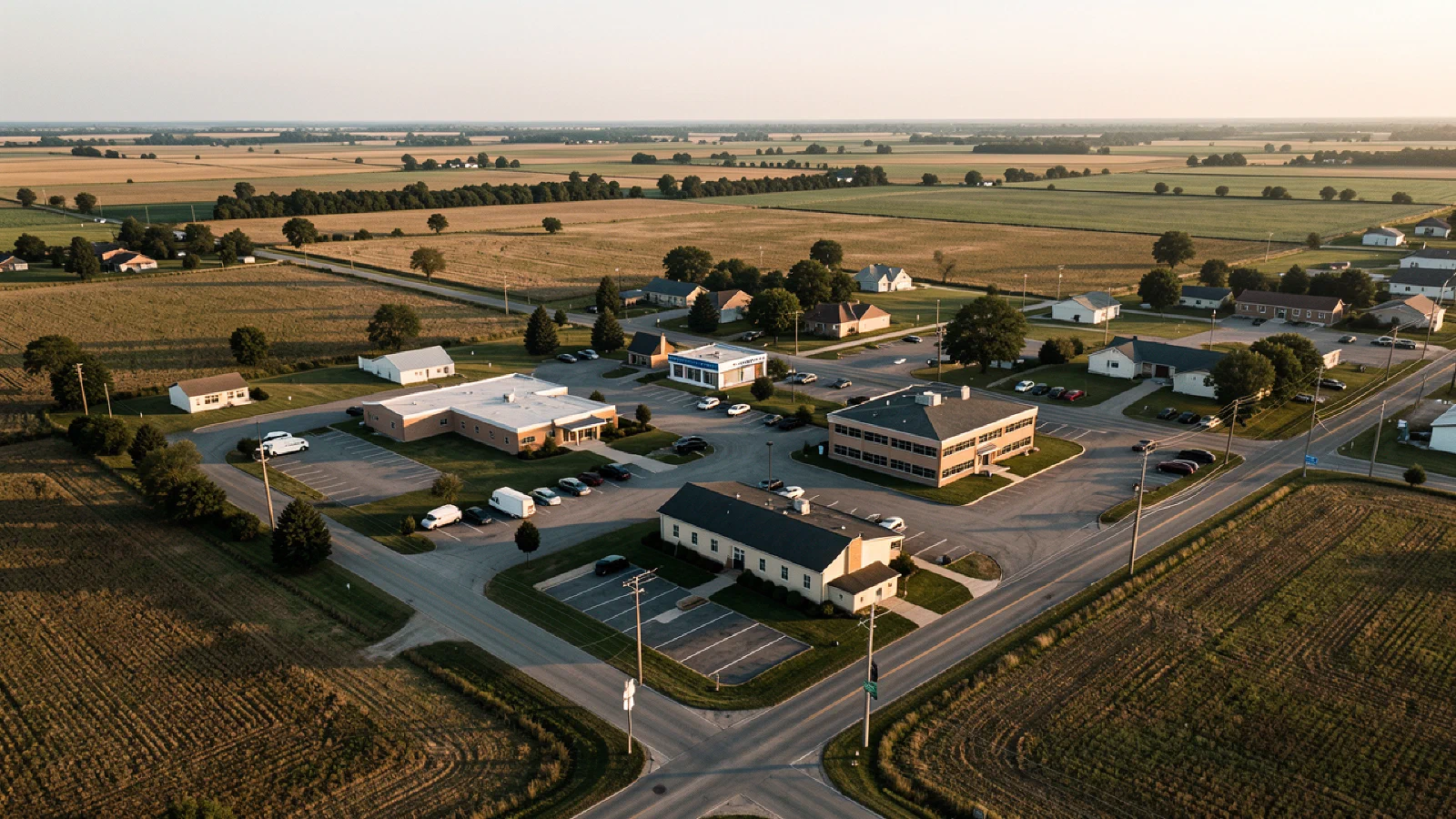
Can Rural Providers Transform?
Rural health transformation assumes providers can transform. Series 7 examined whether that assumption holds across eight provider categories: Critical Access Hospitals struggling between survival and transformation, Rural Health Clinics weighing autonomy against integration, FQHCs navigating mission and margin, independent physicians facing accountability gaps, EMS agencies choosing between local control and sustainability, long-term care facilities caught in workforce spirals, behavioral health providers isolated from the healthcare systems that need them, and dental and vision providers confronting business models that cannot sustain rural practice.
The answer to whether rural providers can transform is conditional. Some providers can transform under specific conditions. Many cannot, regardless of funding, technical assistance, or policy encouragement. The transformation capacity that RHTP implicitly assumes does not exist uniformly across rural America’s healthcare infrastructure.
This synthesis integrates findings across Series 7 to assess what evidence reveals about provider transformation capacity, what conditions enable or prevent transformation, and what honest assessment means for RHTP implementation. The goal is not pessimism but accuracy: distinguishing between transformation efforts likely to succeed and those destined to fail helps states target limited resources where they can produce meaningful change.
Information Limits
Synthesis necessarily abstracts from individual provider circumstances. Every CAH, FQHC, independent physician, and EMS agency operates within unique contexts that quantitative analysis cannot fully capture. The patterns identified here represent tendencies, not determinisms. Some providers will defy categorization. The value of synthesis lies in revealing structural patterns, not predicting individual outcomes.
The Transformation Capacity Question#
What Transformation Requires#
RHTP transformation goals demand that rural providers:
Redesign care delivery from episodic treatment to coordinated population health management. This requires workflow changes, new staffing models, and technology investments.
Integrate services across settings, breaking down silos between hospitals, primary care, behavioral health, social services, and public health. Integration requires governance structures, data sharing, and trust relationships.
Adopt value-based models that reward outcomes rather than volume. This requires financial sophistication, risk management capacity, and performance measurement infrastructure.
Invest in infrastructure including electronic health records, telehealth platforms, care coordination systems, and workforce development. Investment requires capital reserves or access to financing.
Sustain operations through 2030 and beyond when RHTP funding ends. Transformation initiatives must achieve self-sustaining operations within five years or face collapse.
What Providers Actually Have#
Series 7 documented what rural providers actually bring to transformation:
Critical Access Hospitals operate on median margins around 1%, with 46% of rural hospitals reporting negative margins. Days cash on hand median 52 days, meaning most CAHs have less than two months of operating reserves. Leadership teams focus on keeping doors open, not redesigning care delivery.
Rural Health Clinics include 5,700+ facilities, but independent practices lack administrative capacity for transformation participation. A 43% decline in independent rural physicians between 2019 and 2024 indicates the model is collapsing regardless of transformation programming.
FQHCs ended 2023 with operating margins of 1.7% nationally, with rural FQHCs performing worse than urban counterparts. Community governance requirements, while valuable for accountability, can limit strategic sophistication when board members lack business backgrounds.
Independent physicians are disappearing. Only 24% of rural physicians remain independent; 76% are now employed by hospitals, health systems, or corporate entities. Transformation expectations for a disappearing provider category seem misplaced.
EMS agencies operate with 50% of budgets dependent on volunteer labor. The mathematics of rural EMS produce structural deficits no transformation strategy can overcome without fundamental payment reform that does not exist.
Long-term care facilities face workforce shortages so severe that 66% report concern about forced closure. Transformation requires workforce that facilities cannot recruit at wages they cannot afford to pay.
Behavioral health providers remain isolated from healthcare systems despite decades of integration rhetoric. Payment systems separate behavioral from physical health, and that separation enforces isolation regardless of transformation goals.
Dental and vision providers face business model failures so severe that 71% of dental health professional shortage areas are rural. No credible pathway exists to eliminate these shortages within the RHTP timeframe.
Cross-Article Synthesis#
Transformation Capacity by Provider Type#
The following matrix integrates findings across Series 7 articles, assessing transformation capacity and identifying conditions required for transformation success.
| Provider Type | Core Tension | Transformation Capacity | Conditions Required |
|---|---|---|---|
| Critical Access Hospitals | Survival vs. transformation | Low to moderate | Financial stability (>2% margin); leadership commitment; external support; community engagement; supportive state policy |
| Rural Health Clinics | Autonomy vs. integration | Moderate where practiced | Integration models preserving meaningful autonomy; network participation without subordination; succession planning |
| FQHCs | Mission vs. margin | Moderate to high | Financial stability; board sophistication; PCA support; state Medicaid adequacy |
| Independent Physicians | Provider interest vs. patient need | Very low | Succession planning begun 10+ years before retirement; network participation; RHC certification |
| EMS | Local control vs. sustainability | Low | Regional governance; state funding mechanisms; hospital integration; community paramedicine reimbursement |
| Long-Term Care | Workforce vs. quality | Very low | Adequate Medicaid rates; workforce availability; regional affiliation |
| Behavioral Health | Integration vs. isolation | Moderate where enabled | CCBHC certification; state payment reform; same-day billing allowance; workforce |
| Dental and Vision | Access desert vs. business model failure | Very low | Dental therapy authorization; FQHC dental expansion; Medicare coverage reform |
Evidence Patterns#
Across provider types, several patterns emerged consistently:
Financial stability is the precondition for transformation. Providers operating on negative or marginal margins cannot invest in transformation. They cannot hire care coordinators, implement technology, or participate in multi-year initiatives while struggling to meet payroll. This pattern held across CAHs, FQHCs, long-term care, and EMS. Asking financially distressed providers to transform is asking drowning people to learn swimming techniques.
Leadership quality differentiates providers in similar circumstances. Series 7 documented providers facing identical policy environments, similar demographic pressures, and comparable financial constraints that achieved different outcomes. The variable was leadership: administrators who built coalitions, pursued creative solutions, and invested in organizational development produced better results than those who did not. Leadership matters, but leadership cannot overcome structural impossibility.
External support enables transformation for some but not all. Networks, state agencies, intermediaries, and technical assistance providers help some facilities achieve transformation they could not accomplish alone. But external support has limits. Support cannot substitute for financial viability, workforce availability, or community conditions that make healthcare unsustainable.
Some provider types face genuine impossibility without policy change. Long-term care, EMS, and dental and vision providers face structural barriers that transformation funding cannot address. The payment models, workforce economics, and coverage gaps affecting these sectors require policy reform beyond RHTP scope. Transformation programming for these sectors amounts to asking providers to transform within systems designed to prevent their sustainability.
Ownership and governance affect but do not determine transformation capacity. Nonprofit ownership, system affiliation, and community governance each shape transformation tendencies without determining outcomes. Well-led for-profit facilities sometimes outperform poorly-led nonprofits. Independent facilities sometimes transform while system affiliates stagnate. Ownership matters as context, not as destiny.
The Transformation Vignettes#
Vignette 1: Similar Hospitals, Different Trajectories#
Wheatland Memorial Healthcare in Harlowton, Montana, and Calhoun-Liberty Hospital in Blountstown, Florida, both operate as Critical Access Hospitals serving agricultural communities of roughly 1,000 residents. Both face aging populations, physician recruitment challenges, and Medicare-dominant payer mixes. Both received RHTP-related attention as transformation candidates.
Their trajectories diverged.
Wheatland built a new 10-bed facility in 2024, funded through $15.9 million in USDA Community Facilities and Montana Coal Board grants. The hospital integrated telehealth, recruited a family medicine physician team, and established partnerships with larger facilities for specialty referrals. Board leadership engaged community stakeholders in facility planning. Montana’s cost-based Medicaid reimbursement for CAHs meant Medicaid patients generated positive rather than negative margins. Wheatland is transforming.
Calhoun-Liberty operates in Florida, a Medicaid non-expansion state where CAH Medicaid rates cover approximately 60% of costs. The hospital’s geographic isolation in the Florida Panhandle creates recruitment challenges without the community appeal of Montana’s mountain ranges. Board turnover disrupted strategic planning. Operating margins remained negative through 2024. The hospital prioritizes survival over transformation, unable to invest in care redesign while struggling to maintain basic services. Calhoun-Liberty is surviving, barely.
The difference is not effort or desire. Both leadership teams work hard. Both communities value their hospitals. The difference is operating environment. Montana’s policy landscape supports CAH sustainability. Florida’s does not. Transformation is possible in one; survival consumes all capacity in the other.
Vignette 2: The Integration Choice#
Dr. Patricia Kowalski practiced independently in Garrison, Nebraska, for 38 years. She knew three generations of families. She made house calls. She adjusted her schedule for farmers who could not leave operations during the week. She valued the autonomy that enabled this flexibility.
At 68, she faced an impossible choice. No physician would relocate permanently to Garrison to purchase her practice. The nearest health system declined to extend services because patient volumes could not support employed physician compensation. Her options were: close the practice when she retired, or affiliate with an integrated network 45 miles away that would maintain a satellite clinic in Garrison but require protocol compliance, electronic health record adoption, and supervision relationships she had never experienced.
She chose affiliation. The network provided succession: a younger family medicine physician rotating through Garrison three days weekly, supported by telehealth and nurse practitioner coverage on other days. The clinic remained open. Patients retained local access, though with different providers than they had known for decades.
Dr. Kowalski describes the outcome as “better than closure, worse than what we had.” She transformed, but transformation required sacrificing the autonomy that made independent practice valuable. The new model serves patients. It does not replicate the longitudinal relationships that defined her career.
Dr. James Martinez in a similar Nebraska community made a different choice. He refused affiliation, practiced independently until age 72, and closed his practice when health concerns forced retirement. His community now has no local healthcare. Patients drive 50 minutes for primary care.
Both choices are rational. Neither is clearly better. The autonomy-integration tension does not resolve; it requires choosing which values to sacrifice.
What Evidence Supports#
Series 7 documented evidence supporting several conclusions:
Financial stability is the precondition for transformation. No Series 7 article identified providers transforming successfully while operating under financial distress. The relationship between stability and transformation capacity held across provider types. This finding argues for stabilization investment alongside, or even before, transformation programming.
Leadership quality varies within structural constraints. Providers facing similar circumstances achieved different outcomes. Leadership explains some of this variation. This finding suggests that leadership development, board training, and governance support have transformation value even when they cannot overcome structural barriers.
External support enables transformation for providers with baseline capacity. Networks, technical assistance, and intermediary organizations help providers transform when those providers have the financial and organizational foundation to use support effectively. Support for providers lacking that foundation produces limited results.
Some provider types face genuine impossibility without policy change. Long-term care, EMS, and dental and vision transformation cannot succeed without payment reform, coverage expansion, and workforce investment that RHTP cannot provide. Transformation programming for these sectors is ineffective unless accompanied by policy change outside RHTP scope.
Payment environment determines transformation possibility more than transformation programming determines transformation success. Providers in states with adequate Medicaid rates, cost-based CAH reimbursement, and supportive policy environments can transform. Providers in states with inadequate rates, non-expansion coverage gaps, and hostile policy environments cannot transform regardless of RHTP funding. This finding suggests that state policy reform is prerequisite for RHTP success, not parallel to it.
Integration typically requires autonomy sacrifice. The autonomy that makes independent providers valuable often conflicts with the coordination transformation requires. Providers can preserve some autonomy through careful network design, but complete autonomy preservation is incompatible with meaningful integration. This finding argues for honest framing of integration tradeoffs rather than pretending integration can occur without autonomy cost.
What Evidence Questions#
Series 7 also revealed questions evidence cannot definitively answer:
Whether transformation during distress is ever achievable. Some literature suggests that crisis creates transformation opportunity. Series 7 found more evidence that distress prevents transformation by consuming all available capacity. The question of whether transformation and survival can coexist remains open.
Whether integration inevitably sacrifices valued autonomy. Some network models claim to preserve meaningful autonomy while achieving integration benefits. Series 7 found that such claims deserve skepticism: integration typically requires standardization, protocol compliance, and governance participation that constrain individual provider discretion. Whether integration models can be designed that genuinely preserve autonomy remains uncertain.
Whether payment reform would change provider behavior. Current payment systems reward volume over value, procedures over prevention, and service delivery over health outcomes. Would value-based payment reform change rural provider behavior? Evidence from demonstrations is mixed. Rural providers face structural constraints that payment reform alone may not address.
Whether alternative delivery models can scale. Community paramedicine, mobile health units, telehealth-first models, and other alternatives show promise in pilots. Whether these models can scale across diverse rural contexts remains unclear. Pilots succeed partly because they attract motivated participants; scale requires working with average providers in average circumstances.
Alternative Perspective Assessment#
Series 7 engaged multiple perspectives on rural provider transformation. The following table assesses evidence support for each perspective and identifies implications for RHTP implementation.
| Perspective | Evidence Assessment | Implication |
|---|---|---|
| Provider Impossibility: Rural providers cannot transform because structural barriers make transformation impossible | Substantially valid for some provider types and conditions. EMS, long-term care, and dental and vision face genuine impossibility without policy reform. Distressed CAHs and closing physician practices cannot transform. | Differentiate expectations by capacity. Accept that some providers cannot transform regardless of support. |
| Market Discipline: Rural providers should transform or fail; market forces will sort winners from losers | Invalid for most rural healthcare. Geographic monopoly, information asymmetry, and coverage gaps mean markets cannot discipline rural healthcare effectively. Communities that “lose” healthcare access face unacceptable consequences. | Market ideology is inappropriate for rural health analysis. Public investment is required where markets cannot function. |
| Provider as Victim: Rural providers are victims of policy failures beyond their control | Partially valid. Medicare payment decline, Medicaid inadequacy, workforce maldistribution, and coverage gaps create genuine constraints. But leadership varies within constraints. Some providers overcome barriers others do not. | Policy failure is context; leadership is variable. Address policy constraints while holding providers accountable for what they can control. |
| Provider as Obstacle: Rural providers resist transformation out of self-interest or inertia | Partially valid. Autonomy resistance, change aversion, and self-interested behavior exist among rural providers. But resistance is often rational given incentives and constraints. Providers resist transformation that threatens sustainability. | Distinguish rational resistance from mere inertia. Address legitimate concerns rather than dismissing all resistance as obstruction. |
| Ownership Matters: For-profit, nonprofit, and public ownership produce systematically different transformation outcomes | Moderately valid. Ownership shapes incentives and governance. But ownership does not determine outcomes. Well-led facilities of any ownership type can outperform poorly-led facilities of other types. | Use ownership as analytical lens, not determinant. Assess actual performance regardless of organizational form. |
| Scale Determines Capacity: Larger providers can transform; smaller providers cannot | Moderately valid. Scale provides administrative capacity, financial reserves, and risk tolerance that small providers lack. But scale also creates bureaucracy, remoteness from community, and loss of flexibility. Some small providers outperform large systems. | Consider scale as factor without treating it as destiny. Support small provider collaboration to achieve scale benefits without merger. |
Implications for RHTP#
What States Should Do#
Assess transformation capacity before investing transformation resources. Not all providers within a state have equal transformation potential. States should categorize providers by financial condition, leadership stability, workforce situation, and community context. Target transformation resources to providers that can transform; provide different support to those that cannot.
Accept stabilization as legitimate RHTP activity. Providers in distress need stabilization before transformation. State RHTP strategies should include stabilization pathways for providers that cannot immediately pursue transformation activities. This may mean operating support, debt restructuring assistance, or transition facilitation rather than transformation programming.
Advocate for state policy reform alongside RHTP implementation. RHTP cannot succeed in states with inadequate Medicaid rates, non-expansion coverage gaps, and hostile policy environments. States serious about transformation should pursue Medicaid rate adequacy, scope of practice reform, and coverage expansion as complements to RHTP, not alternatives.
Design network models that preserve meaningful autonomy. Integration requirements that eliminate what makes independent providers valuable defeat transformation purpose. Networks should enhance independent practice rather than replace it. Governance structures should give participating providers meaningful voice, not subordinate them to hub facilities.
Invest in leadership development. Leadership quality explains variation in provider outcomes within similar circumstances. Board training, administrator development, and governance support have transformation value even when they cannot overcome structural barriers. These investments are relatively inexpensive and potentially high-impact.
What CMS Should Accept#
Transformation capacity is limited. RHTP design implicitly assumes all rural providers can transform given sufficient support. This assumption is wrong. CMS should expect differentiated outcomes: some providers will transform successfully, some will stabilize without transforming, some will transition to alternative models, and some will close despite intervention.
Some provider types cannot transform within RHTP timeframe. EMS, long-term care, and dental and vision face structural barriers that five-year programming cannot address. CMS should assess whether transformation expectations for these sectors are realistic or whether different approaches are needed.
Payment policy determines transformation possibility more than transformation programming determines transformation success. RHTP operates on top of payment systems that create provider financial environments. Transformation cannot overcome payment inadequacy. CMS should consider how Medicare payment policy affects rural provider viability, particularly Medicare Advantage growth eroding CAH cost-based protection.
Stabilization investment may produce better outcomes than transformation investment for distressed providers. Current RHTP allowable activities emphasize transformation. Expanding allowable activities to include stabilization investments would address the survival precondition that transformation requires.
What Providers Should Accept#
Honest self-assessment of transformation capacity. Not all providers can transform. Administrators should evaluate their facility’s financial position, leadership stability, external support relationships, and community engagement against realistic criteria. Facilities meeting transformation thresholds should pursue transformation aggressively. Facilities falling short should prioritize stabilization.
Autonomy preservation has costs. Integration provides resources, stability, and transformation capacity that independence cannot match. Providers valuing autonomy should understand what they sacrifice for it and make conscious choices rather than discovering constraints after commitment.
Succession planning is urgent. Practices without succession plans face existential timelines that transformation cannot extend. Beginning succession planning early improves community outcomes regardless of transformation programming.
Some facilities should transition rather than persist. REH conversion, service line reduction, merger, or orderly closure may serve communities better than struggling to maintain unsustainable operations. Transformation is not the only legitimate outcome; planned transitions preserve some access where unplanned closures eliminate it.
Conclusion#
Can rural providers transform? The answer is yes, conditionally.
Providers with financial stability, leadership commitment, external support, and favorable policy environments can transform. The transformation will be difficult, require sacrifice, and produce uncertain long-term outcomes, but it can occur.
Providers lacking these conditions cannot transform regardless of RHTP funding, technical assistance, or policy encouragement. Asking them to transform while they struggle to survive wastes resources and sets expectations that produce predictable disappointment.
The transformation capacity distribution is uneven. FQHCs with strong PCAs and adequate state Medicaid rates can transform. CAHs in non-expansion states with Medicare Advantage erosion of cost-based protection cannot. Behavioral health providers in CCBHC states can integrate into primary care. Behavioral health providers in states maintaining payment separation remain isolated. EMS agencies with regional governance and state funding can professionalize. EMS agencies dependent on volunteers and fee-for-service billing cannot.
This unevenness is not primarily a function of provider effort. Leadership matters, but leadership cannot overcome structural impossibility. The same administrator would produce different outcomes depending on state policy environment, payer mix, and community conditions. Treating transformation as a matter of provider will ignores the structural determinants that Series 7 documented.
Honest assessment serves communities better than aspirational uniformity. Pretending all providers can transform if they try harder helps no one. It directs resources to providers that cannot use them effectively. It sets expectations that produce failure. It distracts from the policy reforms that would actually enable transformation.
The most important policy insight from Series 7 is that transformation requires changing the systems providers operate within, not demanding different behavior from providers operating within unchanged systems. States that reform Medicaid rates, expand coverage, enable regional governance, and build supportive infrastructure will see transformation. States that maintain payment inadequacy, coverage gaps, and fragmented governance will see continued struggle regardless of RHTP programming.
RHTP represents the largest federal investment in rural health transformation in history. Whether that investment produces meaningful transformation depends on conditions largely outside RHTP’s control: state policy choices, Medicare payment evolution, workforce pipeline development, and community sustainability. RHTP provides resources. Whether those resources enable transformation depends on what else changes in the environments where providers operate.
Rural providers can transform where conditions permit transformation. The question is whether policy will create those conditions or continue expecting transformation from providers who can only survive.
How this article connects to others in Blue Gray Matters.
Sources cited in this article.
- American Hospital Association. "Rural Hospital Closures Threaten Access: Solutions to Preserve Care in Local Communities." AHA, September 2022.
- Chartis Center for Rural Health. "2025 State of the State: Rural Hospital Closures and Care-Access Crisis." February 2025.
- Flex Monitoring Team. "CAH Financial Indicators Report: Summary of Indicator Medians by State." University of Minnesota, University of North Carolina at Chapel Hill, and University of Southern Maine, 2024.
- Health Resources and Services Administration. "Designated Health Professional Shortage Areas Statistics." HRSA Data Warehouse, January 2026.
- KFF. "Medicaid-to-Medicare Fee Index." State Health Facts, August 2025.
- National Rural Health Association. Policy analyses cited in Series 7 articles.
- Physicians Advocacy Institute and Avalere. "Rural Physician Employment and Acquisition Trends: 2019-2024." April 2025.
- Rural Health Information Hub. Topic overviews for Critical Access Hospitals, Rural Health Clinics, FQHCs, EMS, Long-Term Care, Behavioral Health, and Oral Health.