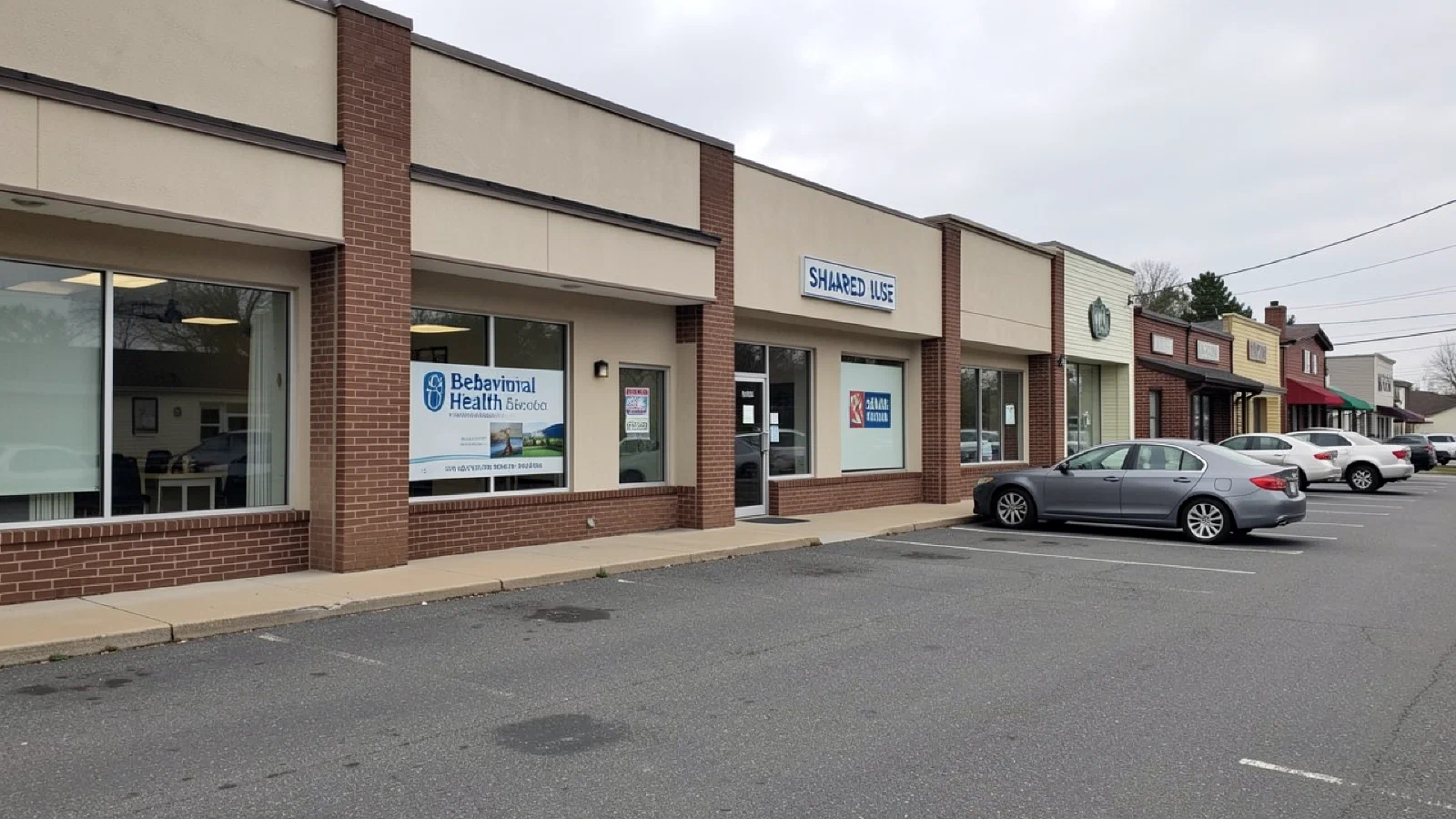
Behavioral Health Providers
Rural America faces a behavioral health crisis that policy consistently fails to solve. 160 million Americans live in designated mental health professional shortage areas, and 61.85% of these shortage areas are rural. More than 60% of rural counties lack a single practicing psychiatrist. The provider-to-population ratio in nonmetropolitan areas reaches 5,000:1 in some regions, compared to recommended ratios below 1,000:1. Suicide rates in rural communities exceed urban rates by 50%.
The policy response emphasizes integration: bring behavioral health into primary care, co-locate services, create coordinated treatment. The evidence supports this approach. Integrated care improves outcomes, reduces emergency department utilization, and increases treatment engagement. Patients with depression receiving integrated care are 2.5 times more likely to engage in mental health treatment than those relying on referral systems.
Yet integration remains more rhetoric than reality. Payment systems separate behavioral health from physical health. Workforce pipelines train providers differently. Physical infrastructure keeps services apart. Reimbursement policies penalize the very coordination integration requires. After decades of integration advocacy, behavioral health remains largely isolated from mainstream healthcare delivery, especially in rural communities where separation proves most damaging.
This article examines whether rural behavioral health providers can achieve the integration policy demands, what payment and structural barriers prevent integration, and why the CCBHC model offers both promise and limitation for transformation.
Information Limits
Analysis of rural behavioral health relies on HRSA workforce data, SAMHSA treatment surveys, and CMS claims that capture service patterns but cannot convey the experience of families seeking care that does not exist, the stigma that prevents help-seeking in small communities, or the desperation of rural primary care providers managing psychiatric crises without backup. The tension between what data measures and what communities experience defines the limits of this assessment.
The Behavioral Health Provider Landscape#
Provider Types and Definitions#
Rural behavioral health encompasses multiple provider types operating under different regulatory and payment structures:
Community Mental Health Centers (CMHCs) emerged from the Community Mental Health Act of 1963 as publicly funded facilities providing outpatient mental health services. Approximately 2,800 CMHCs operate nationally, though their distribution leaves significant rural gaps. CMHCs serve as the backbone of public behavioral health infrastructure but vary dramatically in capacity, scope, and financial stability.
Certified Community Behavioral Health Clinics (CCBHCs) represent the primary federal model for behavioral health transformation. First established through the 2014 Protecting Access to Medicare Act, CCBHCs must provide nine core services including 24-hour crisis response, outpatient mental health and substance use treatment, screening and assessment, and care coordination. Over 500 CCBHCs now operate nationally. The Consolidated Appropriations Act of 2024 made CCBHC an optional Medicaid state plan benefit, enabling permanent financing beyond time-limited demonstrations.
Federally Qualified Health Centers with Behavioral Health provide integrated services combining primary care with mental health and substance use treatment. According to 2024 HRSA data, 98.53% of health centers utilize telemedicine, with 93.95% using it for mental health services. FQHCs experienced an 83% increase in behavioral health visits between 2010 and 2016, outpacing growth in medical visits. Yet behavioral health represents only 7% of all FQHC visits despite serving populations with elevated needs.
Private Practice Behavioral Health Providers including psychiatrists, psychologists, licensed clinical social workers, and licensed professional counselors concentrate overwhelmingly in metropolitan areas. More than half of U.S. counties, predominantly rural, lack a practicing psychiatrist. Private practice economics require patient volume that rural population density cannot support.
Substance Use Disorder Treatment Facilities operate separately from mental health services in most states despite high co-occurrence rates. Rural SUD treatment availability declined as opioid deaths increased, creating treatment deserts precisely where crisis intensified.
Rural Behavioral Health Profile#
Rural behavioral health providers differ systematically from urban counterparts in ways that shape integration capacity.
| Characteristic | Rural Providers | Urban Providers | Implication |
|---|---|---|---|
| Provider Density | 1 per 5,000+ population | 1 per 1,000 population | Severe access constraints |
| Service Range | Limited, often mental health only | Comprehensive | Fragmented care |
| Payer Mix | Higher Medicaid share | More commercial | Revenue constraints |
| Workforce Turnover | Higher | Lower | Continuity challenges |
| Telehealth Adoption | High necessity, low infrastructure | Good infrastructure | Broadband dependency |
| Integration Status | Primarily standalone | More co-located | Coordination barriers |
Geographic distribution creates behavioral health deserts across rural America. Research from the WWAMI Rural Health Research Center found that 40% of small or isolated rural communities require more than 30 minutes travel to reach the nearest mental health facility. In these same areas, 14.7% of households lack computers and 28% lack smartphones, limiting telehealth solutions that policy assumes will fill access gaps.
Workforce challenges exceed general healthcare shortages. Rural behavioral health turnover exceeds urban rates. A 2023 survey found 93% of behavioral health professionals reported burnout concerns. The projection of 250,000 additional providers needed by 2025 to meet unmet need has not materialized. Instead, workforce constraints have intensified, with psychiatric residency slots remaining flat while demand accelerates.
The demographic pressure is relentless. According to the 2024 National Survey on Drug Use and Health, 7.2 million nonmetropolitan adults reported any mental illness, representing 22.9% of the rural adult population. Rural suicide rates exceed urban rates across all age groups, with veterans in rural areas at particular risk due to limited VA behavioral health capacity.
Facility Experience Analysis#
| Organization | State | Type | Operating Status | Payer Mix | Integration Model | Transformation Capacity |
|---|---|---|---|---|---|---|
| Clark Community Mental Health Center | Missouri | CCBHC | Stable | 70% Medicaid | FQHC Partnership | High |
| ACCESS Family Care | Missouri | FQHC w/BH | Growing | 65% Medicaid | Integrated | High |
| Human Development Center | Minnesota | CMHC | Struggling | 75% Medicaid | Standalone | Moderate |
| Northwest Human Services | Oregon | CCBHC | Expanding | 60% Medicaid | Demonstration | High |
| Southeast Kansas Mental Health Center | Kansas | CMHC | Stable | 70% Medicaid | Standalone | Moderate |
| Howard Center | Vermont | CCBHC | Demonstration | 65% Medicaid | State-certified | High |
| Axis Health System | Colorado | CCBHC Grant | Expanding | 55% Medicaid | Planning Grant | Developing |
| Southeastern Behavioral Healthcare | North Carolina | CMHC | Variable | 80% Medicaid | Managed Care | Low |
The Clark Community Mental Health Center and ACCESS Family Care partnership in southwest Missouri illustrates integration potential. Clark operates as a CCBHC in three rural counties, providing crisis services, outpatient treatment, and care coordination. ACCESS is an FQHC serving seven counties with medical, dental, and behavioral health services. Their partnership addresses opioid use disorder through shared protocols, co-location, and collaborative staffing. A patient can receive buprenorphine at ACCESS with counseling from Clark staff, or access crisis services through Clark with primary care follow-up at ACCESS.
This model works because both organizations committed leadership resources to integration, developed shared policies, and secured grant funding to bridge payment gaps. The Missouri Department of Mental Health funded behavioral health integration grants; the Missouri Primary Care Association supported SUD treatment expansion. Without these external resources, payment systems alone would not support the coordination both organizations provide.
The Core Tension: Integration Into vs. Isolation From Healthcare#
The fundamental tension in rural behavioral health pits integration into mainstream healthcare against continued isolation from it. Decades of policy rhetoric favors integration. Operational reality maintains separation.
The Integration View#
Proponents argue that behavioral health must become part of primary care rather than remaining a separate specialty system. The arguments include:
Integration improves outcomes. Research consistently demonstrates that integrated care produces better results than referral-based models. Patients receiving collaborative care for depression show greater symptom improvement, higher treatment engagement, and better chronic disease management than those relying on specialty referrals. A JAMA Psychiatry study found integrated care patients 2.5 times more likely to engage in treatment.
Primary care is the de facto mental health system. Most behavioral health care is already delivered in primary care settings, just poorly. Primary care providers prescribe most antidepressants and anxiolytics. They manage behavioral health crises when specialists are unavailable. Integration simply formalizes and improves care that primary care is already providing inadequately.
Separation perpetuates stigma. Requiring patients to seek mental health care at separate facilities, on separate days, through separate systems reinforces the message that mental illness is shameful and different from physical illness. Co-location and integrated treatment normalize behavioral health as routine healthcare.
Integration reduces total cost. Emergency department utilization for behavioral health crises drops 15-30% under integrated models. Hospital readmissions decline. Total cost of care decreases even as behavioral health spending increases, because appropriate outpatient treatment prevents expensive crisis care.
The Isolation View#
Proponents of maintaining behavioral health specialty systems argue that integration rhetoric obscures practical barriers and conceptual problems:
Payment systems enforce separation. Mental health and physical health are billed differently, documented differently, and authorized differently. Integration rhetoric cannot overcome payment reality. FQHCs attempting integrated care face separate billing requirements for behavioral health visits even when provided in the same building on the same day. “Integration” becomes administrative fiction: same building, completely separate systems.
Workforce is trained separately. Psychiatrists, psychologists, and clinical social workers receive training disconnected from primary care. Primary care providers receive minimal behavioral health training. Neither workforce is prepared for true integration. Placing a therapist in a primary care clinic does not create integrated care; it creates co-location.
Behavioral health needs exceed primary care capacity. Serious mental illness, severe substance use disorders, and complex trauma require specialist expertise that primary care cannot provide. Integration appropriate for mild-to-moderate depression is inappropriate for schizophrenia or severe opioid use disorder. Overstating what primary care can handle abandons patients with serious conditions.
Privacy concerns differ. Patients may want behavioral health records kept separate from general medical records. Integration that shares all information may deter help-seeking for sensitive conditions. The 42 CFR Part 2 regulations protecting substance use disorder records exist for good reason; integration that erodes these protections harms patients.
Assessing the Evidence#
Both perspectives contain validity, but the evidence favors integration with important caveats.
Integration works for the conditions primary care can manage. Depression, anxiety, and mild-to-moderate substance use respond well to collaborative care models. The evidence base for these conditions is robust. Extending integration rhetoric to serious mental illness requires more caution; the evidence is thinner, and specialty expertise remains necessary.
Payment barriers are real but addressable. The CCBHC model demonstrates that cost-based prospective payment can support integration. States with CCBHC demonstrations report expanded services and improved access. The 2024 legislation making CCBHC a permanent Medicaid option suggests payment barriers can be overcome through policy change, not just rhetoric.
Workforce preparation is genuinely inadequate. Neither primary care nor behavioral health training adequately prepares providers for integrated practice. This is a systems failure, not an argument against integration. Training reform should accompany service integration.
The honest assessment: Integration offers the best path to improved access and outcomes for most behavioral health conditions, but payment systems must support it, workforce must be prepared for it, and specialty capacity must remain available for serious conditions that exceed primary care capability.
Case Study: The Integration That Isn’t#
Dr. Sarah Chen runs the only primary care practice in Harlan County, Kentucky, population 26,000. Her practice includes three physicians, two nurse practitioners, and, since 2023, a licensed clinical social worker named Marcus Williams. On paper, her practice offers integrated behavioral health.
Marcus sees patients in an office down the hall from Dr. Chen. He conducts therapy, provides crisis intervention, and coordinates care for patients with depression and anxiety. The practice screened 1,200 patients for depression last year using the PHQ-9; 340 screened positive; 180 accepted referral to Marcus.
But “integration” requires separate everything. Marcus bills Medicaid under different codes than medical visits. His documentation system does not communicate with the practice EHR. When a patient sees Dr. Chen for diabetes management and mentions suicidal thoughts, Dr. Chen must make a separate appointment with Marcus rather than warm-handing off immediately. The practice cannot bill for both medical and behavioral health visits on the same day under Kentucky Medicaid rules without complex workarounds.
Marcus cannot prescribe medication. When patients need psychiatric medication, they face a 12-week wait for the nearest psychiatrist in Lexington, 90 minutes away. Dr. Chen prescribes most psychiatric medications herself, without psychiatric consultation, because no consultation is available. She learned psychopharmacology through continuing education, not training. She worries she is missing diagnoses she was never trained to identify.
“They call it integrated care,” Marcus says. “But I’m just a therapist in a medical building. The systems are completely separate. Integration would mean Dr. Chen and I could see a patient together, bill for our time together, and share records seamlessly. Instead, we work around the rules constantly.”
The practice functions better than having no behavioral health at all. Patients access therapy without driving to Lexington. Depression screening catches conditions that would otherwise go untreated. But calling this “integration” overstates what payment systems allow.
When Dr. Chen asked her practice consultant about true integration, the response was discouraging: “You’d lose money. Collaborative care billing works in theory, but the documentation requirements are so intense that you’d spend more time on paperwork than patient care. Most practices that try it give up within a year.”
Harlan County’s “integrated” practice represents what rural behavioral health actually looks like: co-location without coordination, screening without treatment capacity, and primary care providers managing psychiatric conditions they were never trained to treat.
The CCBHC Promise and Limitation#
What CCBHCs Offer#
Certified Community Behavioral Health Clinics represent the most significant federal investment in behavioral health infrastructure in decades. The model offers several advantages:
Cost-based prospective payment. Unlike fee-for-service billing that penalizes comprehensive care, CCBHCs receive prospective payment rates developed from actual costs. This payment model supports the staffing levels and service range that fee-for-service cannot sustain. States report that CCBHC payment rates exceed traditional Medicaid rates by 30-50%, enabling expanded services.
Required service scope. CCBHCs must provide nine core services including 24-hour crisis response, outpatient mental health and substance use treatment, primary care screening, and care coordination. This requirement prevents cherry-picking easier conditions while neglecting crisis care or substance use treatment.
Quality accountability. CCBHCs report standardized quality measures enabling performance comparison and improvement tracking. Beginning in 2025, all CCBHCs must collect and report on required quality measures, creating accountability that traditional community mental health lacks.
Enhanced federal match. Demonstration states receive enhanced federal matching funds for CCBHC services, improving state fiscal capacity to support behavioral health infrastructure.
Expansion Trajectory#
CCBHC expansion accelerated following the 2022 Bipartisan Safer Communities Act and 2024 Consolidated Appropriations Act:
Original demonstration states (2016): Minnesota, Missouri, Nevada, New Jersey, New York, Oklahoma, Oregon, Pennsylvania
CARES Act additions (2020): Kentucky, Michigan
2024 expansion cohort: Indiana, Iowa, Rhode Island, Vermont, and six additional states selected for demonstration participation beginning July 2024-2025
States with CCBHC planning grants: Colorado, Illinois, and numerous others preparing applications for future demonstration cohorts
The 2024 legislation making CCBHC a permanent Medicaid state plan option enables states to implement the model without demonstration participation. States can now certify CCBHCs and receive enhanced federal matching without time-limited demonstration authority.
Rural Limitations#
Despite these advantages, CCBHC expansion faces structural barriers in rural areas:
Population thresholds challenge sustainability. CCBHC cost-based rates work when sufficient volume exists to spread fixed costs. Rural communities with populations under 10,000 may lack the patient base to sustain CCBHC operations even with favorable payment. The model assumes organizational scale that many rural areas cannot support.
Workforce requirements exceed rural availability. CCBHCs must provide 24-hour crisis response, which requires staffing levels rural labor markets cannot supply. A community with no psychiatrist cannot become a CCBHC simply by receiving certification; the workforce to meet requirements does not exist.
Crisis service expectations assume density. Mobile crisis teams responding within one hour work in metropolitan areas with concentrated populations. In frontier communities where the nearest mental health professional may be two hours away, the same-day response standard may be impossible to meet.
SAMHSA grants are competitive and time-limited. Many rural CCBHCs operate on SAMHSA expansion grants that expire, creating sustainability uncertainty. The transition from grant funding to sustainable Medicaid payment requires state action that not all states will take.
State implementation varies dramatically. States have discretion in CCBHC certification criteria, payment rate methodology, and service requirements beyond federal minimums. Some states implement robustly; others minimally. Rural providers in states with weak implementation face barriers even when federal policy supports expansion.
Case Study: What CCBHC Made Possible#
Lewis County, Missouri has 9,800 residents scattered across 500 square miles. The nearest psychiatric inpatient unit is in Hannibal, 45 minutes away. The nearest outpatient substance use treatment was in Kirksville, an hour north. Mental health crises historically meant law enforcement transport to distant emergency departments, often resulting in jail rather than treatment.
Mark Davidson directs the Lewis County satellite of Clark Community Mental Health Center, which achieved CCBHC certification in 2017 as part of Missouri’s original demonstration. The certification transformed what his three-person office could offer.
Before CCBHC: The Lewis County office provided outpatient therapy during business hours. Patients in crisis after 5 PM called the sheriff. Substance use treatment required referral to Kirksville, where wait times exceeded six weeks. Psychiatric medication management required travel to Hannibal.
After CCBHC: The office now operates crisis response 24/7 through a regional call center with mobile crisis capability. A psychiatric nurse practitioner provides medication management via telehealth, with in-person visits monthly. Substance use treatment, including medication-assisted treatment for opioid use disorder, is available on-site. Same-day appointments are guaranteed for anyone in crisis.
“CCBHC payment made this possible,” Mark explains. “Fee-for-service couldn’t support the infrastructure. We needed staff coverage even when patient volume was low. We needed technology for telehealth. We needed training for crisis response. Prospective payment let us build the system first and fill it with patients second.”
The results in Lewis County: Emergency department behavioral health visits dropped 40%. Jail bookings for mental health-related incidents declined. Treatment engagement for substance use disorder increased from 12% of referred patients to 68%. Three local employers report reduced absenteeism as employees access treatment without losing work days to distant appointments.
But CCBHC sustainability depends on continued state commitment. Missouri’s demonstration authority extends through 2025. If the state does not transition to permanent CCBHC Medicaid coverage, Lewis County’s services could contract to pre-2017 levels. “We built something that works,” Mark says. “Now we’re waiting to see if policy lets us keep it.”
Alternative Perspective: The Structural Misalignment View#
The behavioral health system’s isolation from mainstream healthcare reflects structural misalignment, not provider failure. This perspective deserves serious engagement:
Payment creates the isolation policy decries. Behavioral health carve-outs exist because states and health plans believe specialized management improves cost control. Medicaid managed care organizations carve out behavioral health to separate contractors. Medicare historically restricted behavioral health coverage more than physical health. The payment structures that maintain separation were policy choices, not organic development. Providers respond to the incentives they face; expecting different behavior without changing incentives is naive.
Workforce training reflects historical decisions. The separation of psychiatric training from primary care training, of psychology from medicine, of social work from nursing reflects institutional decisions made decades ago. Individual providers cannot overcome training systems they did not design. Demanding integration from providers trained in separation asks them to acquire competencies their education did not provide.
Physical infrastructure was built for separation. Community mental health centers were deliberately located apart from hospitals and clinics to destigmatize mental health treatment. The physical separation policy encouraged now makes co-location difficult. Retrofitting separate buildings into integrated facilities requires capital that behavioral health providers lack.
Stigma is not a provider problem. Community reluctance to seek behavioral health care reflects cultural attitudes providers did not create and cannot unilaterally change. Integration advocates sometimes imply that co-location will eliminate stigma, but stigma persists even in integrated settings.
Assessment#
The structural misalignment view correctly identifies that isolation results from policy choices, not provider preferences. However, this perspective risks becoming excuse for inaction. Payment can change. Training can reform. Infrastructure can evolve. Structural barriers are real but not immutable.
The honest assessment: Behavioral health providers operate within constraints they did not create, but transformation requires changing those constraints rather than accepting them. CCBHC demonstrates that different payment produces different services. Collaborative care demonstrates that trained providers can integrate. The barriers are policy failures, not laws of nature.
Implications for RHTP#
RHTP addresses behavioral health primarily through workforce development and care coordination requirements, treating it as a component of health system transformation rather than a standalone priority. The implications merit attention:
Hospital and Primary Care Coordination#
Rural hospitals increasingly manage behavioral health crises in emergency departments without appropriate resources. RHTP-funded hospitals pursuing emergency department alternatives face behavioral health as a major driver of inappropriate ED utilization. Without community behavioral health capacity, hospital transformation goals cannot succeed.
The bottleneck is real. A rural hospital cannot reduce emergency department utilization if the only behavioral health access point in the county is the ED. Transformation strategies that ignore behavioral health capacity will fail.
Workforce Pipeline Competition#
RHTP workforce investments target healthcare broadly. Behavioral health competes for the same workers, often losing to better-paid hospital positions. Loan repayment programs that do not specifically include behavioral health providers may worsen behavioral health workforce relative to other sectors.
The competition is unequal. Psychiatry residency slots remain limited while primary care expands. Psychology internship sites are predominantly urban. Rural behavioral health programs lose the workforce competition that RHTP spending may intensify.
Telehealth Dependency#
RHTP strategies heavily emphasize telehealth expansion. Behavioral health is well-suited to telehealth delivery. But rural telehealth depends on broadband infrastructure that many communities lack. Policy assuming telehealth solves behavioral health access ignores the 28% of households in remote areas lacking smartphones and the 14.7% lacking any internet-connected device.
The infrastructure gap matters. Telehealth is not a solution for populations that cannot access it. RHTP strategies relying on telemental health to fill behavioral health gaps must address broadband and device access simultaneously.
When Behavioral Health Can Integrate#
Despite structural challenges, some rural behavioral health providers demonstrate integration capacity. The conditions enabling success merit attention:
CCBHC or similar integrated payment. Providers operating under cost-based prospective payment can staff for integration rather than billing for volume. Payment model determines what services can be offered; integration requires payment that supports it.
Leadership commitment to integration. The ACCESS-Clark partnership in Missouri worked because organizational leaders committed to shared governance, joint planning, and cultural alignment. Leadership that views integration as administrative burden rather than clinical improvement will not achieve it.
Sufficient workforce to staff integrated models. Integration requires behavioral health staff. Communities with no available behavioral health workforce cannot integrate regardless of payment or leadership. Workforce must exist before integration can occur.
Community acceptance reducing stigma barriers. Integration works better in communities where seeking behavioral health care is normalized. Communities with strong stigma may need public health intervention before clinical integration can succeed.
Primary care partners willing to share responsibility. Integration requires primary care providers who view behavioral health as their responsibility, not an unwanted addition. Primary care practices resistant to behavioral health will not refer appropriately or coordinate effectively.
When Behavioral Health Cannot Integrate#
Many rural behavioral health settings lack integration capacity. Honest assessment requires acknowledging these limitations:
Standalone CMHCs in states without CCBHC. Community mental health centers operating on traditional fee-for-service Medicaid in states without CCBHC authority face payment structures that penalize integration. Without payment reform, these organizations cannot afford the staffing integration requires.
Frontier communities without any behavioral health provider. Integration assumes providers exist to integrate. Communities with no behavioral health workforce face a more fundamental problem than care model design. Before integration, providers must arrive.
Managed care carve-out states. States that carve behavioral health out of managed care create payment structures that enforce separation. Providers in these states face contractual barriers to integration that individual organizations cannot overcome.
Communities with severe stigma. Where cultural attitudes prevent help-seeking for behavioral health conditions, integration with primary care may not increase access. Stigma work must precede or accompany service integration.
Health systems that view behavioral health as liability. Some health systems view behavioral health patients as financially and operationally problematic. These organizations will not invest in integration regardless of policy incentives.
Recommendations#
For Behavioral Health Providers#
Pursue CCBHC certification or partnership. CCBHC payment enables services fee-for-service cannot support. Providers should seek certification in demonstration states or advocate for state plan implementation where demonstration is unavailable. Smaller organizations should explore partnership models with certified CCBHCs.
Develop telehealth capacity with infrastructure awareness. Telehealth extends workforce reach but requires technology infrastructure. Providers should assess community broadband and device access before assuming telehealth solves access problems. Audio-only telehealth may serve populations that video cannot reach.
Build primary care partnerships actively. Integration requires relationships. Behavioral health providers should initiate partnership conversations with FQHCs, RHCs, and primary care practices rather than waiting for referrals. Shared protocols, co-location arrangements, and formal collaboration agreements create integration infrastructure.
For State Agencies#
Implement CCBHC as Medicaid state plan option. The 2024 legislation enables permanent CCBHC implementation without demonstration authority. States should develop CCBHC certification processes and prospective payment methodologies to create sustainable behavioral health infrastructure.
Address Medicaid rate adequacy. Behavioral health Medicaid rates typically fall below Medicare and commercial rates. States pursuing transformation should assess whether behavioral health rates support the workforce recruitment transformation requires.
Remove same-day billing barriers. Medicaid policies that prevent billing for medical and behavioral health visits on the same day create operational barriers to integration. States should eliminate these restrictions where they persist.
For CMS#
Expand CCBHC rural flexibility. Current CCBHC requirements assume population density that rural areas lack. CMS should develop rural-specific CCBHC criteria enabling smaller communities to achieve certification with appropriate modifications to crisis response timing and staffing ratios.
Clarify FQHC behavioral health integration billing. FQHCs face confusion about same-day billing, collaborative care documentation, and integration requirements. Clear guidance would reduce administrative barriers to integration.
Fund behavioral health workforce specifically. Current NHSC programs include behavioral health but do not prioritize it. Dedicated behavioral health workforce programs would address the specialty shortage that limits all transformation efforts.
Conclusion#
Rural behavioral health providers face a fundamental tension: policy demands integration while payment enforces separation. The gap between rhetoric and reality leaves rural communities without the behavioral health access transformation requires.
The evidence favors integration. Collaborative care improves outcomes. Co-location increases access. Coordinated treatment reduces crisis utilization. The policy direction is correct.
But integration cannot occur without payment that supports it, workforce trained for it, and infrastructure enabling it. CCBHC demonstrates what becomes possible when payment aligns with policy. Rural Missouri communities that could not access crisis services in 2016 now have 24-hour response. The difference is payment model, not provider willingness.
Transformation requires changing the systems providers operate within, not demanding different behavior from providers operating within unchanged systems. States that implement CCBHC, reform Medicaid rates, and remove billing barriers will see behavioral health integration. States that maintain payment structures enforcing separation will see continued isolation regardless of transformation rhetoric.
RHTP cannot succeed if behavioral health remains disconnected from primary care, if hospitals cannot discharge patients to community treatment, if workforce investments ignore behavioral health, and if telehealth strategies ignore broadband gaps. Behavioral health integration is not a separate goal; it is a necessary condition for rural health transformation.
The honest assessment: rural behavioral health can integrate where policy enables integration. It cannot integrate where policy prevents it. The barriers are structural but not immutable. Policy change produces service change. The question is whether policy will change.
How this article connects to others in Blue Gray Matters.
Sources cited in this article.
- Bipartisan Policy Center. "Achieving Behavioral Health Care Integration in Rural America." September 2025. https://bipartisanpolicy.org/report/behavioral-health-rural-integration/.
- Center for Health Care Strategies. "A Federally Qualified Health Center and Certified Community Behavioral Health Clinic Partnership in Rural Missouri." November 2024. https://www.chcs.org/resource/a-federally-qualified-health-center-and-certified-community-behavioral-health-clinic-partnership-in-rural-missouri/.
- Centers for Medicare and Medicaid Services. "Certified Community Behavioral Health Clinic (CCBHC) Demonstration." Medicaid.gov, accessed January 2026. https://www.medicaid.gov/medicaid/financial-management/certified-community-behavioral-health-clinic-ccbhc-demonstration.
- Commonwealth Fund. "Understanding the U.S. Behavioral Health Workforce Shortage." May 2023. https://www.commonwealthfund.org/publications/explainer/2023/may/understanding-us-behavioral-health-workforce-shortage.
- Glied, Sherry, and Aguilar, Gabriela. "The Behavioral Health Workforce Shortage." Brookings Institution, April 2023. https://www.brookings.edu/wp-content/uploads/2023/04/Glied-and-Aguilar-Workforce-Paper-1.pdf.
- Health Resources and Services Administration. "Behavioral Health Workforce Brief 2025." Bureau of Health Workforce, 2025. https://bhw.hrsa.gov/sites/default/files/bureau-health-workforce/data-research/Behavioral-Health-Workforce-Brief-2025.pdf.
- HRSA National Advisory Committee on Rural Health and Human Services. "Behavioral Health and Primary Care Integration in Rural Health Facilities." June 2022. https://www.hrsa.gov/sites/default/files/hrsa/advisory-committees/rural/bphc-policy-brief-june-2022.pdf.
- Maclean, Johanna Catherine, et al. "Medicaid Reimbursement Rates for Primary Care Services and Behavioral Health Outcomes." Health Economics, vol. 32, no. 4, 2023, pp. 873-909. https://onlinelibrary.wiley.com/doi/abs/10.1002/hec.4646.
- NASHP. "The State Perspective on Rural Behavioral Health Crisis Services." July 2025. https://nashp.org/the-state-perspective-on-rural-behavioral-health-crisis-services/.
- NASHP. "Trends in State Strategies to Improve the Behavioral Health Workforce." April 2025. https://nashp.org/trends-in-state-strategies-to-improve-the-behavioral-health-workforce/.
- Rural Health Information Hub. "Rural Mental Health Overview." Accessed January 2026. https://www.ruralhealthinfo.org/topics/mental-health.
- Sung, Ashley, et al. "Access and Quality of Mental Health Services in Rural Areas." NORC Rural Health Research Center, July 2025. https://www.ruralhealthresearch.org/mirror/17/1722/access-quality-mental-health-services.pdf.