Digital Infrastructure
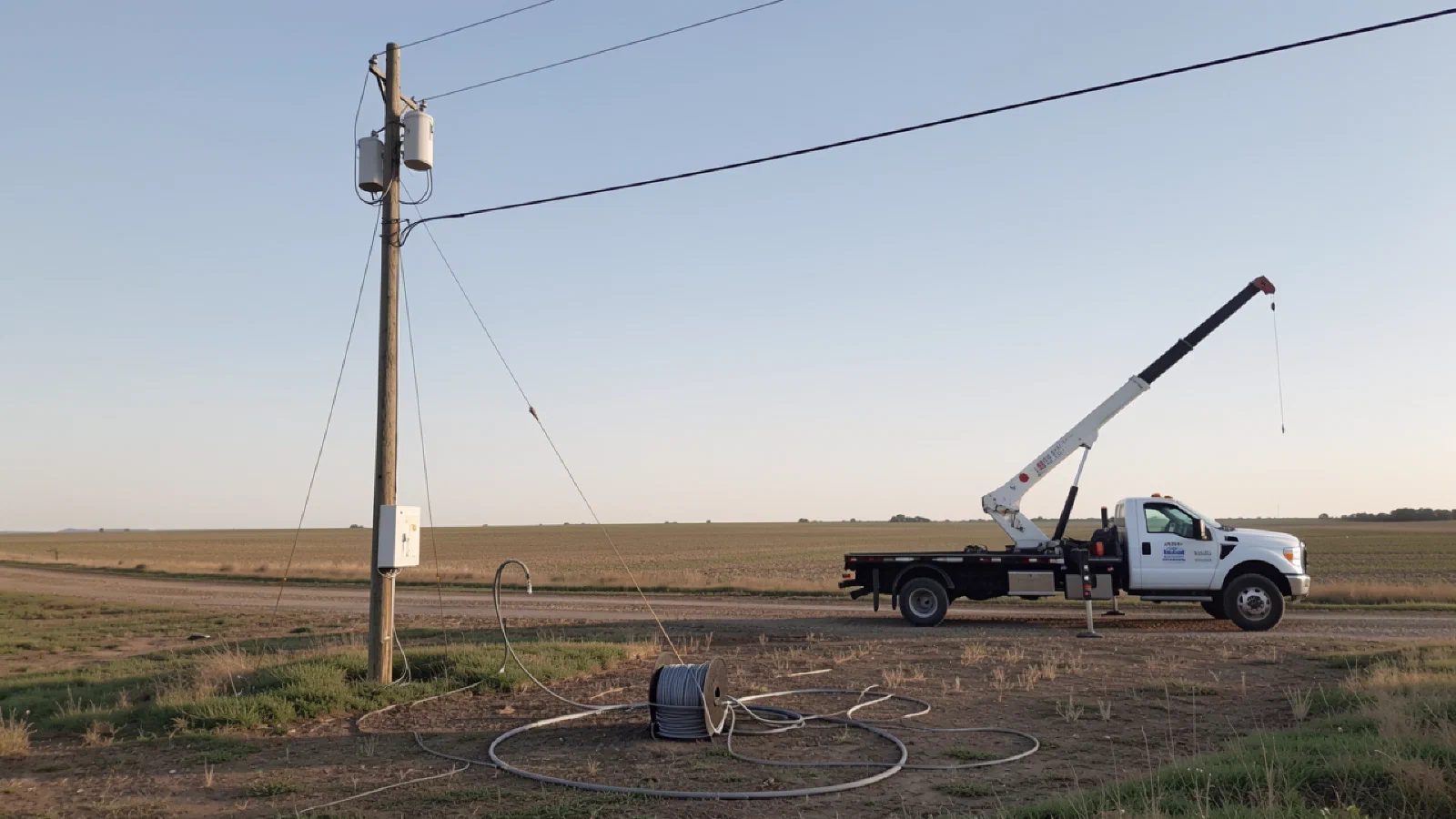
Every RHTP application invokes telehealth, remote patient monitoring, and electronic health records. Every application assumes connectivity will exist to support these technologies. The assumption is often wrong. Approximately 26 million Americans lack access to broadband meeting minimum federal standards, with rural areas accounting for disproportionate shares of the disconnected. Tribal lands fare worse still.
This creates the prerequisite problem: RHTP’s transformation strategies require digital infrastructure that RHTP cannot fund. Broadband construction falls outside program scope. Device provision at scale exceeds program budgets. Digital literacy training receives cursory attention in most applications. States are investing $50 billion in technology-dependent transformation while infrastructure gaps persist in the very communities transformation is meant to serve.
The question is practical: should states sequence digital infrastructure before health technology, pursue parallel investments hoping timing aligns, or accept that some populations will remain excluded from technology-dependent transformation? The answer varies by state context, but the problem itself is universal.
The Rural Context#
Rural America’s digital divide operates on multiple dimensions. Availability, adoption, and literacy represent distinct barriers that compound to exclude populations from technology-enabled healthcare. Addressing one without the others produces expensive equipment sitting unused.
Availability Gaps Persist#
The FCC’s June 2024 data indicate that approximately 94 percent of U.S. locations have access to broadband through at least one provider, using the 100/20 Mbps benchmark adopted in 2025. This aggregate figure masks concentrated rural and Tribal gaps. Independent audits suggest the FCC’s maps systematically overstate coverage, with BroadbandNow’s 2025 analysis finding 26 million Americans actually lack access, approximately 33 percent more than official estimates.
Rural areas bear the burden. According to the FCC’s 2024 marketplace report, approximately 28 percent of rural Americans lack fixed terrestrial broadband access, compared to roughly 5 percent in urban areas. Tribal lands face even steeper challenges: more than 23 percent lack access, with some reservations reporting connectivity rates below 50 percent.
The geography of unconnectedness overlaps substantially with health need. The Delta region, Appalachia, the rural South, and remote Western states appear consistently in both broadband desert maps and health shortage area designations. The communities most needing telehealth as substitute for absent providers often lack the connectivity to support it.
Availability Does Not Equal Adoption#
Where infrastructure exists, significant adoption gaps persist. The Benton Institute for Broadband and Society reports that 81 percent of rural households with annual incomes above $150,000 subscribe to wireline broadband, compared with 55 percent of those with annual incomes below $25,000. Income predicts adoption more strongly than availability.
Rural households pay more for service. Average monthly broadband costs run $72 in rural areas versus $62 in non-rural areas, according to Benton Institute analysis. Higher costs combined with lower incomes create affordability barriers that infrastructure investment alone cannot address.
The Affordable Connectivity Program’s expiration in June 2024 eliminated the primary federal mechanism for addressing affordability. At its peak, ACP served 23 million households nationwide, including 3.1 million in rural counties and 2.6 million in persistent poverty counties. Over two-thirds of participants had inconsistent or nonexistent connectivity before enrolling. With ACP’s lapse, estimates suggest 5 million households have cut internet service entirely, with many more downgrading to slower, cheaper plans insufficient for telehealth video.
No federal replacement program exists. State-level affordability programs remain fragmented and inadequate. The BEAD Program’s low-cost service option requirement may eventually help, but BEAD-funded networks will not become operational until 2027 at earliest, and affordability provisions remain contested.
Digital Literacy as Third Barrier#
Even with infrastructure and affordability addressed, digital literacy determines whether populations can actually use technology-enabled healthcare. Telehealth platforms require navigating video interfaces, patient portals demand password management and form completion, and remote monitoring devices require consistent patient engagement with connected equipment.
Age correlates strongly with digital skill gaps. Rural populations skew older than urban populations, amplifying the literacy challenge. Elderly patients managing multiple chronic conditions represent both the population most likely to benefit from remote monitoring and the population least likely to successfully use it.
The COVID-era telehealth expansion revealed these literacy barriers starkly. Providers reported that audio-only services reached populations that video visits excluded. Medicare data confirmed that beneficiaries who were older, had lower incomes, were Black or Hispanic, or lived in rural areas were less likely to have smartphones with wireless plans or computers with high-speed internet.
Digital literacy programs exist but remain small-scale and inconsistent. Most RHTP applications mention digital literacy briefly if at all. Few states allocate significant transformation dollars to helping patients actually use the technology being deployed.
Evidence Review#
Digital infrastructure investment evidence differs fundamentally from clinical intervention evidence. Infrastructure provides prerequisite conditions rather than direct health outcomes. The question is not whether broadband improves health, but whether broadband enables interventions that improve health.
| Intervention | Evidence Quality | Effect Size | Rural Evidence | Implementation Difficulty |
|---|---|---|---|---|
| Broadband infrastructure (fiber) | Moderate | Prerequisite | Yes | Very High |
| Fixed wireless | Limited | Variable | Yes | High |
| Low-earth orbit satellite | Emerging | Variable | Yes | Moderate |
| Digital literacy training | Limited | Moderate | Limited | Low |
| Device provision programs | Limited | Moderate | Limited | Low |
| Telehealth-specific bandwidth | Moderate | Prerequisite | Yes | Moderate |
| Community hub access | Limited | Small | Yes | Low |
Broadband as Economic Development#
The World Bank estimates that a 10 percent increase in broadband access can lead to a 1.2 percent increase in GDP per capita in developed countries. At the regional level, rural areas with broadband adoption rates over 80 percent receive 213 percent higher business growth, 44 percent higher GDP growth, and 18 percent higher per capita income growth.
These economic effects matter for health indirectly. Economic development supports population retention, which supports healthcare workforce recruitment, which supports facility viability. The cascade from connectivity to health operates through community sustainability rather than direct clinical pathways.
Digital Connectivity and Health Services Research#
Research examining telehealth’s broadband requirements finds that video visits require minimum speeds of 1.5 to 3 Mbps for acceptable quality, with higher speeds needed for diagnostic imaging transmission. Remote patient monitoring devices themselves require minimal bandwidth, but the aggregated data transmission and platform access associated with comprehensive chronic disease management programs benefit from reliable higher-speed connections.
The FCC’s Healthcare Connect Fund supports rural provider connectivity at 65 percent discount levels, covering recurring and non-recurring costs for broadband services, dark fiber leases, and network equipment. Program funding currently runs approximately $571 million annually. The program ensures facility connectivity but does not address patient-side access gaps.
Store-and-forward (asynchronous) telehealth models developed in Alaska demonstrate that some clinical applications function on lower bandwidth than real-time video. Dermatology images, retinal scans, and wound documentation can be captured and transmitted without simultaneous connectivity, offering workarounds for communities with unreliable service.
Digital Literacy Program Evidence#
Evidence for digital literacy training remains limited but generally positive. Programs that combine device provision with hands-on instruction show better outcomes than either alone. Library-based digital literacy programs reach older adults but face capacity constraints in rural communities with limited library infrastructure.
Healthcare-specific digital literacy training, teaching patients to use patient portals and telehealth platforms, demonstrates modest improvements in technology adoption. However, sustainability remains challenging: one-time training does not produce lasting competency as platforms change and health needs evolve.
Federal Infrastructure Investment Coordination#
RHTP technology investments exist within a broader federal infrastructure investment landscape. Multiple programs address different aspects of the digital divide, creating both opportunity and coordination challenges.
| Program | Agency | Funding | Purpose | RHTP Relevance |
|---|---|---|---|---|
| BEAD | NTIA | $42.45B | Broadband infrastructure | Infrastructure prerequisite |
| Digital Equity Act | NTIA | $2.75B | Adoption and digital inclusion | Digital literacy complement |
| ReConnect | USDA | $3.1B+ | Rural broadband | Infrastructure prerequisite |
| Rural Health Care Program | FCC | $571M/year | Healthcare provider connectivity | Facility connectivity |
| Affordable Connectivity Program | FCC | Expired | Affordability subsidies | Gap concern |
| RHTP | CMS | $50B | Healthcare transformation | Dependent on infrastructure |
BEAD Program Status#
The Broadband Equity, Access, and Deployment Program represents the largest federal broadband infrastructure investment in history. As of January 2026, 42 of 56 states and territories have had Final Proposals approved by NTIA. Construction on BEAD-funded projects is expected to begin in summer 2026, with network completion extending through 2028 or later.
Program restructuring in June 2025 significantly altered implementation. The Trump administration’s “Benefit of the Bargain” reforms shifted technology selection criteria, reducing fiber prioritization and enabling greater use of fixed wireless and satellite alternatives. States’ revised proposals came in approximately $21 billion under original budget projections, raising questions about whether scope reductions mean fewer locations served or less future-proof infrastructure.
For RHTP purposes, BEAD timing creates a critical sequencing problem. States are implementing telehealth and remote monitoring programs now, while BEAD-funded infrastructure will not become operational until 2027 or 2028. The two-to-three year gap means transformation investments may precede connectivity in some communities.
ReConnect and Rural-Specific Programs#
The USDA ReConnect Program provides loans and grants for rural broadband construction. Multiple funding rounds have deployed over $3 billion since program inception. ReConnect explicitly targets rural areas, complementing BEAD’s universal focus.
Coordination between BEAD and ReConnect has proven challenging. Different eligibility definitions, mapping methodologies, and application timelines create opportunities for both duplication and gaps. States with strong broadband office coordination manage this better than those with fragmented authority.
Healthcare Connect Fund#
The FCC’s Healthcare Connect Fund Program provides 65 percent discounts on broadband services for eligible rural healthcare providers. The program ensures that facilities themselves have connectivity even in communities with limited residential access. Eligible entities include rural health clinics, community health centers, critical access hospitals, and other public or nonprofit healthcare providers.
Program funding currently caps at approximately $571 million annually. Demand has periodically exceeded capacity, requiring funding prioritization. The Supreme Court’s pending review of Universal Service Fund constitutionality (Consumers’ Research v. FCC) creates uncertainty about program continuity.
The Affordable Connectivity Gap#
The ACP’s June 2024 expiration leaves no federal replacement for broadband affordability subsidies. Legislative efforts to restore funding have repeatedly failed. States exploring alternatives include California and Oregon (expanding Lifeline programs), New York (regulatory approaches), and others testing low-cost service mandates tied to state contracts.
The gap between ACP’s end and BEAD’s low-cost service requirements coming into effect creates a multi-year affordability crisis. Former ACP households face choices between paying full price, downgrading service, or disconnecting entirely. For households managing chronic conditions through remote monitoring or telehealth, disconnection means returning to pre-transformation care patterns.
State RHTP Application Assessment#
RHTP applications universally invoke technology. Telehealth expansion appears in every state’s plan. Remote patient monitoring features prominently. Health information exchange and interoperability improvements receive substantial attention. Few applications demonstrate realistic assessment of infrastructure prerequisites.
Technology Investment Prevalence#
Analysis of state RHTP applications reveals:
Telehealth expansion: 50 of 50 states include telehealth expansion initiatives. Most frame telehealth as solution to specialty access gaps, behavioral health shortages, and emergency consultation needs. Budget allocations range from modest pilot programs to comprehensive statewide deployments.
Remote patient monitoring: 47 states include RPM initiatives, typically focused on chronic disease management (heart failure, COPD, diabetes). Most assume patient connectivity without explicit broadband assessment.
Health information exchange: 44 states include HIE enhancements. These provider-to-provider systems face fewer patient-side connectivity requirements but still depend on reliable facility broadband.
Patient portals and digital engagement: 38 states include patient engagement technology. These applications face the full range of availability, adoption, and literacy barriers.
Connectivity Assumption Realism#
Most applications treat connectivity as existing condition rather than prerequisite requiring investment. Common patterns include:
States with established broadband programs often coordinate explicitly. Louisiana, Texas, and Mississippi reference BEAD timelines in their RHTP applications and sequence technology deployments accordingly. States with advanced state broadband offices demonstrate better integration.
States with significant unconnected populations often acknowledge the gap without resolving it. Appalachian states note connectivity challenges; applications express hope that federal infrastructure programs will address them. The gap between RHTP implementation timelines and BEAD completion receives insufficient attention.
Tribal health initiatives within state applications face the most acute prerequisite problems. Indian Health Service facilities and Tribal health programs often serve communities with the lowest connectivity rates. Few state applications adequately address Tribal infrastructure coordination.
Digital Literacy Attention#
Digital literacy receives cursory treatment in most applications. Common approaches include:
Brief mentions without budget allocation: Applications note digital literacy as important, then move on without dedicated funding or program design.
Assumption of existing programs: Some states reference library-based digital literacy programs or community college offerings without assessing their adequacy for health technology training.
Device provision without instruction: A few states allocate funds for tablets or smartphones without corresponding literacy training, assuming device access translates to device competency.
Explicit digital navigator programs: A minority of states, notably California, Oregon, and Washington, include funded digital navigator positions connecting communities with both technology and training. These programs show promise but remain exceptions.
Implementation Reality#
Digital infrastructure faces distinct implementation challenges from clinical transformation initiatives. Construction timelines, regulatory complexity, and coordination across multiple government levels create friction that policy documents understate.
RHTP Cannot Fund Broadband Infrastructure#
RHTP program rules prohibit direct broadband infrastructure construction. States cannot use transformation dollars to build fiber networks, install fixed wireless towers, or subsidize internet service. The funding mechanism assumes infrastructure exists or will exist through other programs.
This constraint reflects appropriate program scope: CMS runs healthcare programs, not telecommunications infrastructure programs. But it creates implementation tension when transformation strategies depend on infrastructure that falls outside program authority.
Workarounds exist but remain limited. States can fund connectivity equipment for healthcare facilities (routers, network termination equipment). Some interpret digital health platform investments broadly. Patient-facing connectivity remains firmly outside scope.
Technology Investment Stranding Risk#
RHTP technology investments face stranding risk if infrastructure fails to materialize. Equipment deployed to facilities lacks utility without patient connectivity. Training provided to providers produces no benefit if patients cannot access services. Care coordination platforms serve no purpose if participating entities cannot reliably connect.
The sequencing mismatch between RHTP and BEAD amplifies this risk. States implementing telehealth expansion in 2026 while BEAD networks complete in 2028 face two years of partial functionality. Rural communities may receive transformation investments before they can use them.
Ongoing Cost Sustainability#
Digital infrastructure requires ongoing operational funding that one-time grants cannot sustain. Broadband subscriptions continue monthly after installation. Devices require replacement as technology advances. Platforms require licensing fees and maintenance.
RHTP’s five-year timeframe provides limited sustainability runway. States implementing technology-dependent transformation must identify ongoing funding sources: Medicaid reimbursement for telehealth, value-based payment arrangements including technology costs, or dedicated state appropriations. Without sustainable funding models, transformation gains erode as grant periods end.
The 2030 Question#
By 2030, will digital infrastructure gaps prevent RHTP from achieving transformation objectives?
Optimistic Scenario#
BEAD funding successfully deploys broadband infrastructure to remaining unserved locations by 2028. States coordinate RHTP technology initiatives with infrastructure completion, sequencing deployment appropriately. Digital literacy programs prepare populations to use new connectivity. Affordability solutions emerge through BEAD low-cost options, state programs, or federal restoration of subsidy programs. Technology-enabled transformation reaches communities currently excluded.
Probability assessment: Low to moderate. BEAD timelines have slipped repeatedly. Scope reductions under restructuring mean some locations may remain unserved. Affordability gaps lack clear solutions. Digital literacy receives inadequate investment.
Pessimistic Scenario#
BEAD deployment delays extend into 2029 or later. Restructuring-driven cost reductions leave significant populations unserved or with inadequate technology (satellite rather than fiber). Affordability barriers persist without federal subsidy programs. Digital literacy gaps limit adoption even where infrastructure exists. Rural and Tribal communities remain excluded from technology-dependent transformation, receiving equipment and programs they cannot effectively use.
Probability assessment: Moderate. Current trajectories suggest infrastructure gaps will narrow but not close during RHTP implementation. Affordability solutions remain politically blocked. Digital literacy investment remains inadequate.
Realistic Scenario#
Mixed results across states and communities. States with strong coordination between RHTP, BEAD, and state broadband programs achieve meaningful technology-enabled transformation. States with fragmented authority and limited coordination experience partial failures. Within states, communities with existing infrastructure benefit while infrastructure-gap communities wait. Urban-rural and income-based digital divides persist within rural areas themselves.
Probability assessment: High. Current evidence suggests coordination quality varies substantially across states, producing uneven outcomes that track existing implementation capacity disparities.
Guidance for State Implementation#
States cannot solve infrastructure gaps through RHTP alone. They can, however, improve coordination and reduce technology stranding risk.
Coordinate Explicitly with BEAD#
State RHTP implementation should explicitly track BEAD deployment timelines. Technology initiatives targeting communities lacking current infrastructure should sequence deployment after BEAD network completion, not before. This requires active coordination between health agencies and state broadband offices.
States with approved BEAD Final Proposals know which locations will receive infrastructure and approximately when. RHTP implementation plans should incorporate this geographic and temporal information. Technology investments in high-infrastructure-gap areas should wait for infrastructure or focus on low-connectivity-requirement interventions.
Prioritize Healthcare Facility Connectivity#
The FCC Rural Health Care Program provides direct mechanism for ensuring facility connectivity. States should maximize program utilization, ensuring every rural health clinic, critical access hospital, FQHC, and community health center applies for Healthcare Connect Fund support.
Facility connectivity enables provider-to-provider consultation (e-consult, Project ECHO) even where patient connectivity gaps persist. Building specialist access through provider networks provides intermediate transformation value while patient-side infrastructure catches up.
Invest in Digital Literacy#
Digital literacy receives insufficient attention because infrastructure feels more urgent. States should resist this instinct. Infrastructure without literacy produces unused technology. Literacy investment costs less than infrastructure and operates within RHTP scope.
Effective approaches include:
Digital navigator programs embedding trained staff in healthcare facilities and community organizations to help patients access technology. California’s digital navigator initiative provides a model.
Community health worker integration training CHWs in digital literacy support as component of their broader community health role. CHWs already build trust and address barriers; adding technology support fits naturally.
Library and community anchor partnerships leveraging existing community institutions for digital literacy programming, with healthcare-specific training modules added.
Accept Partial Coverage#
Not all communities will achieve full technology-enabled transformation during RHTP’s timeframe. Honest assessment of infrastructure gaps should inform program design, directing technology investments where prerequisites exist and alternative approaches where they do not.
Communities lacking infrastructure can still benefit from transformation investments that do not require patient-side connectivity: facility upgrades, provider training, care coordination improvements, and workforce development. Technology-dependent initiatives should target high-connectivity communities while infrastructure programs address gaps.
How this article connects to others in Blue Gray Matters.
Sources cited in this article.
- ASCE. "US Broadband Infrastructure: 2025 Infrastructure Report Card." American Society of Civil Engineers, Nov. 2025, infrastructurereportcard.org/cat-item/broadband-infrastructure.
- Benton Institute for Broadband and Society. "The FCC Needs a Complete Picture of the Digital Divide." Benton Institute, Sept. 2025, benton.org/blog/fcc-needs-complete-picture-digital-divide.
- BroadbandNow. "Mind the Map: The Hidden Impact of Inaccurate Broadband Availability Claims." BroadbandNow Research, June 2025, broadbandnow.com/research/fcc-broadband-overreporting-by-state.
- Center on Rural Innovation. "Continuation of the Affordable Connectivity Program Can Avoid Cascading Economic Challenges for Low-Income Families." CORI, Oct. 2024, ruralinnovation.us/blog/affordable-connectivity-program-impact.
- Congressional Research Service. "The Broadband Equity, Access, and Deployment (BEAD) Program: Issues for the 119th Congress." CRS Report R48666, Aug. 2025, congress.gov/crs-product/R48666.
- Federal Communications Commission. "Affordable Connectivity Program." FCC, 2024, fcc.gov/acp.
- Federal Communications Commission. "Connecting Americans to Health Care." FCC, 2025, fcc.gov/connecting-americans-health-care.
- Federal Communications Commission. "FCC Report: 94 Percent of Locations Have Broadband Access." FCC Report, May 2025, broadbandbreakfast.com/fcc-report-94-percent-of-locations-have-broadband-access.
- Federal Communications Commission. "Rural Health Care Program." FCC Universal Service, 2025, fcc.gov/general/rural-health-care-program.
- National Telecommunications and Information Administration. "BEAD Progress Dashboard." NTIA, Jan. 2026, ntia.gov/funding-programs/internet-all/broadband-equity-access-and-deployment-bead-program/progress-dashboard.
- Pew Charitable Trusts. "States Reckon With Lapse of the Broadband Affordable Connectivity Program." Pew, Sept. 2024, pew.org/en/research-and-analysis/articles/2024/09/20/states-reckon-with-lapse-of-the-broadband-affordable-connectivity-program.
- Pew Charitable Trusts. "To Improve Broadband Deployment, Enhanced Data Collection Is Key." Pew, July 2025, wirelessestimator.com/articles/2025/deepening-the-digital-divide-pew-says-cities-will-gain-as-rural-towns-lose-in-broken-broadband-rollout.
- Schools, Health and Libraries Broadband Coalition. "SHLB Secures FCC Extension for Rural Health Care Program Deadline." SHLB, Mar. 2025, shlb.org/blogs/shlb-secures-fcc-extension-for-rural-health-care-program-deadline.
- U.S. Department of Health and Human Services, Office of the Assistant Secretary for Planning and Evaluation. "A Snapshot of Broadband Access in Rural Communities." ASPE Brief, Dec. 2022, acf.gov/sites/default/files/documents/opre/broadband_special_topic_brief_jan2023.pdf.