Community Health Workers
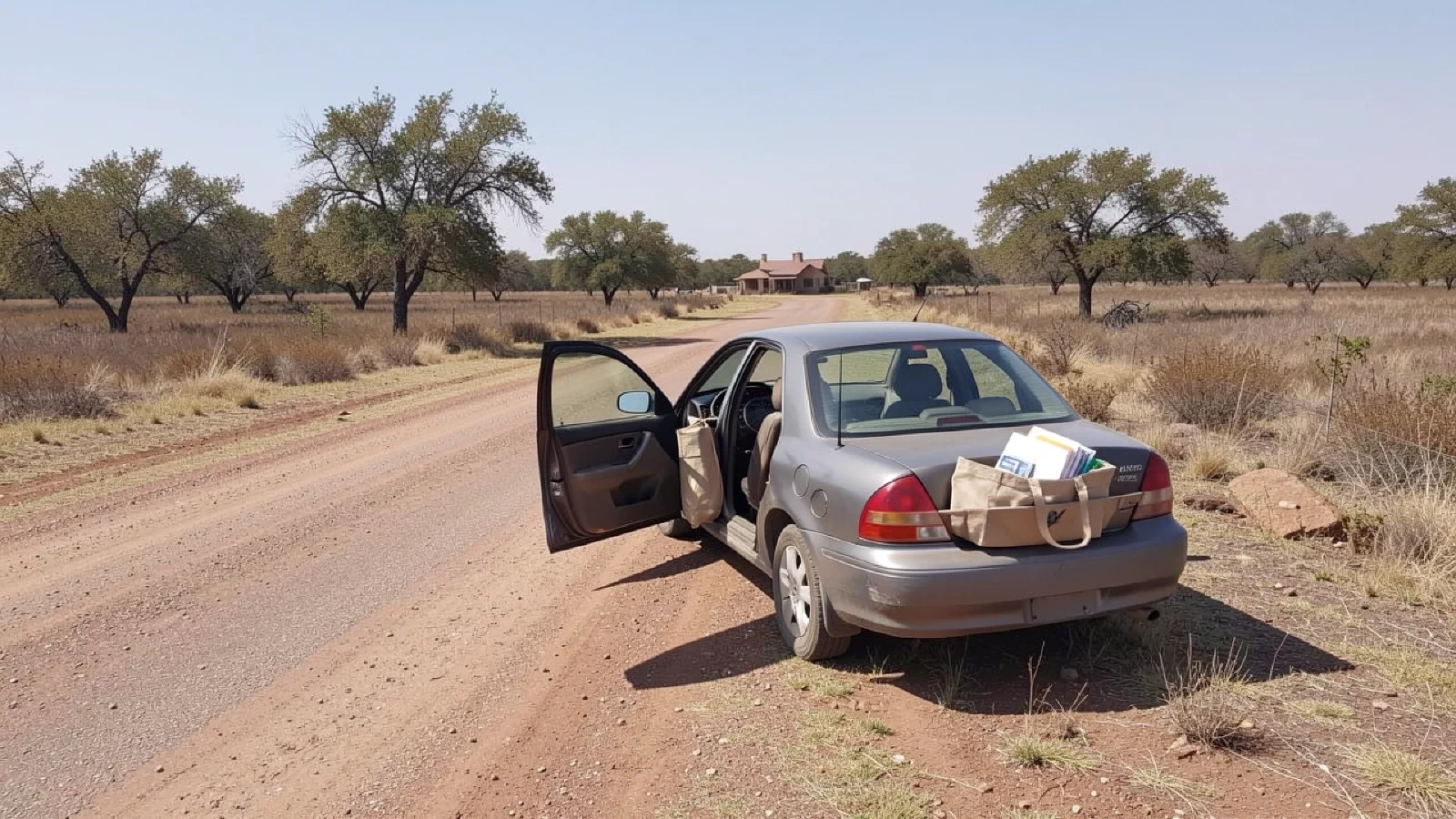
Rosa Medina starts her Tuesday in Presidio County, Texas, with a list of five patients spread across 47 miles of ranch roads. She is one of three community health workers covering a county larger than Rhode Island with a population of 6,100.
Her first visit is Maria Gonzalez, 67, diabetic, living alone since her husband died in 2019. Rosa administers the standard screening. Food insecurity: positive. Maria ran out of groceries four days ago and has been eating what she canned last summer. Transportation barriers: positive. Maria stopped driving after the cataracts got worse; her daughter lives in Midland, three hours away. Social isolation: positive. Maria has not spoken to another person in eleven days, until Rosa knocked.
Rosa documents everything. The electronic health record accepts the data without complaint. Three referrals generate automatically: food assistance, transportation services, social support.
Rosa closes her laptop. The nearest food bank operates in Alpine, 72 miles away, Tuesdays and Thursdays, 10 AM to 2 PM. Maria cannot drive. The county has no public transit. The food bank does not deliver. Rosa could drive Maria herself, but she has four more patients today across distances that will consume her remaining hours.
She promises to return Thursday. She will bring groceries from her own kitchen, purchased with her own money, as she has done for Maria and others for three years. This is not in her job description. It is not reimbursable. It is what the job actually requires when the navigation model assumes resources that do not exist.
The referrals remain open in the system, technically active, practically meaningless.
Community health workers represent the most rapidly deployable element in rural health transformation. While physician training requires a decade, nurse practitioner preparation takes six years, and even LPN certification demands 18 months, CHW training ranges from three months to one year. This timeline matters for RHTP implementation. States must demonstrate measurable progress within a two-year obligation window and complete transformation by 2030. The workforce interventions that can actually produce results within program constraints are limited, and CHWs sit near the top of that short list.
The enthusiasm surrounding CHW deployment often outpaces the evidence supporting it. Systematic reviews demonstrate moderate effects on chronic disease management, cancer screening uptake, and care transitions in urban settings with predominantly Medicaid populations. Rural evidence is thinner. The conditions enabling CHW success in urban safety-net systems, including dense populations, robust social service networks, and clinical supervision capacity, do not translate automatically to frontier counties where one CHW might cover 2,000 square miles with limited community resources to connect patients toward.
RHTP applications reflect this enthusiasm. Nearly every state includes CHW deployment in some form, whether as a distinct initiative with dedicated funding or embedded within broader workforce or care coordination programs. Texas targets 500 new CHWs across rural areas. California proposes 200+ certifications with regional deployment priorities. North Carolina plans to add 200 CHWs annually to its existing workforce. These numbers appear in applications. Whether they survive implementation, and whether the CHWs survive employment, depends on factors the applications rarely address: who employs them, who supervises them, who pays them beyond the grant period, and what happens when RHTP funding ends.
The core question for state planners is not whether CHWs can help. The evidence supports cautious optimism. The question is whether the infrastructure, employer capacity, supervision systems, and sustainable financing required for CHW effectiveness can be built within five years and maintained afterward. States treating CHW deployment as a simple workforce add-on will create temporary positions that disappear when funding ends. States building durable CHW infrastructure will face harder implementation challenges but potentially lasting impact.
The Rural Context#
CHW effectiveness research developed primarily in urban safety-net settings serving low-income, minority populations with high chronic disease burden. The Penn Center for Community Health Workers operates in Philadelphia. The IMPaCT model scaled across urban health systems. The randomized controlled trials demonstrating reduced hospitalizations and improved chronic disease control enrolled patients in metropolitan areas with access to social services, community resources, and clinical supervision infrastructure.
Rural America differs systematically from these study settings:
Geographic dispersion creates immediate challenges. A CHW in urban Philadelphia might serve patients within walking distance of each other, enabling home visits, group education sessions, and frequent check-ins. A CHW in West Texas might have patients scattered across 50 miles of ranch roads. Travel time dominates the workday. A recent study identified transportation as the largest overhead expense for rural CHW programs, a cost Medicaid does not reimburse. CHWs in frontier areas may spend more time driving than delivering services.
Resource scarcity limits what CHWs can connect patients toward. The CHW role centers on navigation: identifying social needs, connecting patients to resources, advocating for access. This works when resources exist. In urban settings, CHWs navigate patients toward food banks, housing assistance programs, transportation services, mental health providers, and social service agencies. Rural counties often lack these resources entirely. A CHW can screen for food insecurity, but if the nearest food bank operates 40 miles away with limited hours, the referral produces limited benefit. The navigation model assumes a destination.
Cultural concordance requirements differ across rural contexts. CHW evidence emphasizes the importance of cultural and linguistic matching between workers and communities served. CHWs who share life experience with patients build trust more effectively. In rural settings, community composition varies dramatically. The Texas border region served by promotores differs from Appalachian communities, tribal reservations, Pacific Northwest logging towns, and Great Plains farming communities. A single CHW training curriculum and deployment model cannot accommodate this variation.
Supervision infrastructure barely exists in many rural areas. Effective CHW programs require clinical oversight. CHWs work under supervision of licensed providers who review care plans, authorize referrals, and ensure appropriate scope of practice. In rural areas experiencing primary care shortages, physicians and nurse practitioners already operate at capacity. Adding CHW supervision to their responsibilities increases burden on already strained providers. Rural facilities rarely have the administrative capacity to manage CHW programs, track outcomes, provide continuing education, and ensure quality.
Employer capacity presents perhaps the greatest challenge. Someone must hire, pay, supervise, and retain CHWs. In urban settings, large health systems, FQHCs, managed care organizations, and health departments serve as CHW employers. Rural areas have fewer organizational options. Small critical access hospitals operate on thin margins. Rural FQHCs lack administrative bandwidth. County health departments may employ one or two staff total. The employer infrastructure that urban CHW programs assume simply does not exist in many rural counties.
The rural evidence gap compounds these challenges. A 2024 systematic review examining CHW effectiveness during the COVID-19 pandemic found 15 studies meeting inclusion criteria, predominantly from low and middle-income countries with high risk of bias across 14 of 15 studies. Rural CHW research in the United States remains sparse. The evidence supporting CHW deployment comes primarily from settings unlike the rural communities where RHTP expects states to deploy them. Extrapolating urban effectiveness to rural contexts requires assumptions about transferability that research has not validated.
Evidence Review#
Evidence Rating Table#
| Intervention | Evidence Quality | Effect Size | Rural Evidence | Implementation Difficulty |
|---|---|---|---|---|
| CHW for diabetes management | Strong | Moderate | Limited | Moderate |
| CHW for cardiovascular risk reduction | Strong | Moderate | Limited | Moderate |
| CHW for cancer screening (cervical, mammography) | Strong | Small to Moderate | Limited | Low |
| CHW for care transitions | Moderate | Small | Limited | Moderate |
| CHW for maternal health | Strong | Moderate | Limited | Moderate |
| CHW for asthma management | Moderate | Moderate | Limited | Moderate |
| CHW for behavioral health | Limited | Unknown | No | High |
| CHW for social needs navigation | Moderate | Moderate | Limited | Moderate |
| CHW as panel manager/care coordinator | Limited | Unknown | No | High |
Chronic Disease Management#
The strongest evidence for CHW effectiveness comes from chronic disease interventions, particularly diabetes and cardiovascular disease management. A 2016 systematic review in the American Journal of Public Health synthesized 36 randomized controlled trials examining community-based health worker interventions for chronic disease management among vulnerable populations. CHW interventions demonstrated effectiveness in promoting cardiovascular risk reduction, improving diabetes control, and increasing cancer screening rates.
The IMPaCT model, developed at the Penn Center for Community Health Workers, provides the most rigorous effectiveness evidence. Three randomized controlled trials demonstrated that CHW intervention reduced hospital readmissions, improved chronic disease control, and generated positive return on investment. A pooled analysis of these trials found significant reductions in hospitalization rates among disadvantaged patients with multiple chronic conditions.
Effect sizes, while statistically significant, remain moderate. The ROI analysis from IMPaCT found that every dollar invested returned $2.47 to a Medicaid payer within the fiscal year, primarily through avoided hospitalizations. This contrasts with inflated ROI claims from some CHW advocates citing returns of 3:1 to 15:1, estimates often based on pre-post study designs susceptible to regression to the mean.
Maternal and Child Health#
CHW interventions for maternal health show strong evidence of effectiveness. The Arizona Health Start program demonstrated that CHW home visiting reduced rates of low birth weight among minority women. Perinatal CHW and doula programs have expanded across multiple states with evidence supporting improved birth outcomes, increased prenatal care utilization, and reduced preterm birth rates.
Maternal health CHW programs benefit from defined intervention periods (pregnancy through postpartum) and measurable outcomes (birth weight, gestational age, prenatal visit completion). This structure enables clearer program evaluation than chronic disease interventions with open-ended engagement periods.
Cancer Screening#
CHW interventions increase cancer screening rates, particularly for cervical cancer screening and mammography among underserved populations. Evidence supports CHW effectiveness for these screening modalities, though effect sizes vary by study design and population. Colorectal cancer screening shows weaker evidence, and CHW interventions for breast self-examination and clinical breast examination do not demonstrate benefits compared to alternatives.
Behavioral Health#
Evidence for CHW effectiveness in behavioral health remains insufficient. A 2018 systematic review examining CHWs for mental health disparities found limited research with mixed results. Peer support specialists, a related workforce category, show some promise for substance use disorder recovery support, but the evidence base for CHWs addressing depression, anxiety, and serious mental illness in primary care settings is thin.
The shortage of behavioral health providers in rural areas creates pressure to deploy CHWs for mental health support. This pressure exceeds what evidence supports. States proposing CHW deployment for behavioral health should acknowledge the limited evidence and build evaluation into their programs.
Healthcare Utilization and Cost#
A 2017 systematic review in the Journal of General Internal Medicine examining CHW impact on healthcare utilization found that CHWs can increase appropriate healthcare utilization and reduce emergency department visits for some interventions. The evidence on cost-effectiveness remains mixed, with insufficient data to draw definitive conclusions across intervention types.
The 2025 evaluation of IMPaCT implementation across five geographically diverse health systems found that standardized CHW intervention reduced hospitalizations compared to usual care, demonstrating effectiveness outside the original Penn Health System context. This scaling evidence suggests that well-designed CHW programs can transfer across settings, though all participating systems were integrated delivery organizations with resources exceeding typical rural capacity.
Critical Evidence Gaps#
Rural-specific evidence remains the primary gap. Studies explicitly examining CHW effectiveness in rural U.S. settings are sparse. The evidence base comes from urban programs serving populations with different characteristics, social service availability, and healthcare access patterns than rural communities.
Long-term sustainability evidence is absent. Most CHW studies examine outcomes during grant-funded implementation periods. Whether effects persist after programs end, whether CHW positions survive funding transitions, and whether community health improvements are maintained remain unanswered questions.
Scope boundaries lack research guidance. What CHWs should and should not do remains inconsistent across programs. Some programs train CHWs as panel managers conducting outreach and care coordination. Others restrict CHWs to social needs navigation and health education. The evidence does not clarify which scope produces best outcomes for different populations and settings.
Employer and Sustainability Models#
The employer question determines CHW program sustainability more than any other factor. Grant funding can create CHW positions. Sustainable employment infrastructure keeps them filled. The table below summarizes employer models with their relative advantages and sustainability prospects:
Employer Model Comparison#
| Model | Advantages | Disadvantages | Sustainability |
|---|---|---|---|
| Hospital/Clinic Employed | Clinical integration, EHR access, team inclusion | First cut in budget crisis, mission drift toward discharge planning | Low |
| FQHC Employed | Mission alignment, Medicaid expertise, care team integration | Limited rural FQHC presence, capacity constraints | Moderate |
| CBO Employed | Community trust, scope focus, advocacy orientation | Funding instability, supervision gaps, clinical disconnection | Low to Moderate |
| Health Plan/MCO Employed | Sustainable funding, population health focus | Mission drift toward cost reduction, disconnection from clinical care | Moderate |
| Health Department Employed | Stability, public health alignment, community connection | Bureaucratic constraints, limited clinical integration, funding vulnerability | Moderate |
| Intermediary/Regional Entity | Scale economies, shared supervision, standardization | Administrative overhead, coordination complexity | Variable |
| Tribal Health Employed | Cultural alignment, federal IHS funding, community trust | Limited to tribal populations, geographic concentration | Moderate to High |
Hospital employment places CHWs closest to clinical care but creates vulnerability. Rural hospitals operating on thin margins often cut community health positions first during financial stress. CHWs employed by hospitals may experience mission drift toward discharge planning and readmission prevention rather than broader community health improvement. The positions integrate well initially but rarely survive facility financial distress.
Community-based organization employment maintains CHW connection to community but struggles with sustainability. CBOs depend on grants, contracts, and donations that fluctuate annually. CHW positions at CBOs often lack benefits, career pathways, and job security. Turnover rates at CBO-employed CHW programs run as high as 50% annually, destroying the relationship continuity that makes CHW intervention effective.
Managed care organization employment offers the most sustainable funding pathway. MCOs have ongoing revenue from capitation payments and can categorize CHW services as care management or quality improvement costs. However, MCO-employed CHWs may prioritize high-cost member management over community health improvement. The employer’s incentive is cost reduction rather than health equity.
Health department employment provides stability but limited clinical integration. Public health departments can sustain positions through general fund or categorical grant funding more reliably than CBOs. However, health department CHWs often lack connection to clinical care delivery, reducing their effectiveness for chronic disease management and care transitions.
Hybrid models combining multiple employer types can balance sustainability against clinical integration. Texas operates hybrid CHW employment with managed care organizations, FQHCs, local health departments, and CBOs all serving as CHW employers within the state’s Medicaid CHW benefit structure.
State Certification and Medicaid Reimbursement#
Certification Landscape#
As of 2025, most states operate some form of CHW recognition or certification program, though requirements vary dramatically:
| State | Certifying Body | Training Hours | Medicaid Reimbursable |
|---|---|---|---|
| Texas | DSHS | 160 hours | Yes (since 2015) |
| California | Regional variation | Varies | Yes (via CalAIM) |
| Oregon | OHA Traditional Health Workers | Standards-based | Yes |
| Minnesota | State certification | 75 hours | Yes |
| Washington | DOH certification | Core competency | Yes (2024 SPA) |
| North Carolina | NCCHWA | Core competency | Yes (via AMH) |
| Massachusetts | Certification program | Standards-based | Yes (2024) |
| Arizona | AHCCCS registration | Standards-based | Yes |
| Indiana | State certification | Standards-based | Yes (since 2018) |
| Kansas | State certification | Work/education pathways | Yes (since 2023) |
Texas established the first comprehensive state CHW certification program in 2001, requiring 160 hours of competency-based training across eight core competencies. By 2024, Texas had certified over 8,666 CHWs serving 189 counties, a 33% increase from 2023. The Texas model demonstrates that state investment in CHW workforce infrastructure can build substantial capacity over time.
Certification affects wages. A 2022 study in the American Journal of Public Health found that CHW wages increased by $2.42 per hour in states with certification programs compared to states without programs. States with the earliest certification adoption saw wage increases of $14.46 over the study period. However, certification has not eliminated wage disparities by race, ethnicity, or gender, and has not demonstrably reduced turnover.
Medicaid Reimbursement Expansion#
More than half of state Medicaid programs now provide some form of CHW coverage, up from roughly 29 states in 2022. States are implementing CHW coverage through multiple mechanisms:
State Plan Amendments (SPAs) add CHW services as covered Medicaid benefits. Recent SPAs approved in California, Maine, Michigan, Washington, and other states define covered services, supervision requirements, and reimbursement methodologies. SPAs provide the most direct path to sustainable CHW financing but require CMS approval and ongoing state commitment.
Section 1115 Demonstration Waivers allow states to test innovative approaches to CHW deployment. North Carolina’s Healthy Opportunities waiver authorizes Medicaid payment for social services including CHW-provided interventions. Waiver authority provides flexibility but includes time limits and evaluation requirements.
Managed Care Organization Contracts require or incentivize MCOs to cover CHW services using administrative dollars or medical loss ratio-eligible spending. Michigan requires MCOs to maintain a ratio of one CHW per 5,000 participants. Oregon incorporates CHW investment requirements into coordinated care organization contracts.
The 2024 Medicare Physician Fee Schedule introduced the first Medicare billing codes for CHW services through Community Health Integration (CHI) and Principal Illness Navigation (PIN) codes. Several states, including California, Minnesota, and Washington, have adopted these codes for Medicaid reimbursement, potentially standardizing CHW billing across payers.
Reimbursement rates vary significantly. South Dakota raised rates to $64.86 per hour following employer feedback that initial rates were too low. Rate adequacy determines whether providers can sustain CHW programs through Medicaid revenue or require ongoing grant subsidy.
Workforce Challenges#
Wages and Compensation#
The median annual wage for community health workers was $51,030 in May 2024 according to the Bureau of Labor Statistics, approximately $10,000 less than the median wage for all occupations. This wage level creates recruitment challenges and drives turnover.
Low wages particularly affect CHW retention. Evidence consistently identifies low pay as the leading predictor of premature resignation among frontline health workers. CHWs who share life experience with the communities they serve often come from similar socioeconomic backgrounds, making subsistence wages particularly burdensome.
Well-designed CHW programs demonstrate that higher wages improve retention. The Penn Center for Community Health Workers offers annual compensation between $53,000 and $66,000 including benefits for a 40-hour work week. Their annual turnover rate over the past decade has been 2.5%, compared with typical rates as high as 50% elsewhere. The difference: adequate compensation, benefits, career pathways, and organizational commitment to the workforce.
Turnover and Retention#
CHW turnover has been attributed to three factors: short-term funding for CHW programs, low wages, and lack of professional recognition. Grant-funded positions create inherent instability. When funding cycles end, positions disappear regardless of program effectiveness.
Lack of career pathways drives turnover among CHWs seeking professional advancement. Traditional career ladders reward formal education, but CHWs’ value derives from lived experience and community connection that educational credentials cannot replace. Programs that develop career advancement based on proficiency rather than degrees show better retention, but few employers have implemented such systems.
Supervision quality affects retention. CHWs report higher satisfaction when supervisors understand their role, provide clinical support without micromanagement, and advocate for CHW integration into care teams. Rural settings with limited supervision capacity may struggle to provide this support.
Pipeline and Training#
CHW training programs have expanded significantly:
Texas operates 50+ certified training programs through community colleges, Area Health Education Centers, FQHCs, and community-based organizations. The 160-hour curriculum covers eight core competencies and can be delivered in English or Spanish.
Federal investment has supported CHW workforce expansion. The COVID-19 Health Disparities grant provided $2.245 billion over two years to grantees hiring CHWs directly. The 2022 American Rescue Plan enabled HRSA to award $225.5 million for CHW training programs.
Training program quality varies. Studies find that more than half of CHW interventions in research literature lacked full descriptions of CHW training and fidelity monitoring. When CHWs receive rigorous training, patient outcomes for chronic disease management and cancer screening improve significantly. Training quality matters more than training duration.
RHTP Application Assessment#
CHW Initiative Prevalence#
Nearly all RHTP state applications include CHW deployment in some form. The variation lies in whether CHW programs receive distinct funding, explicit deployment targets, and protected budget allocations:
Priority State CHW Programs#
| State | CHW Initiative Type | FTE Target | Training Pipeline | Employer Model | Funding Status |
|---|---|---|---|---|---|
| Texas | Distinct initiative | 500 new CHWs | Existing certification | Hybrid (FQHC, LHD, CBO, MCO) | Funded |
| California | Regional deployment | 200+ certifications | Community college + FQHC | Hybrid | At Risk |
| Tennessee | Distinct initiative | 60-100 (via 20 orgs) | TNCHWA accreditation | Provider-employed | Funded |
| Kentucky | Distinct initiative | Not specified | Multiple partners | Provider-employed | Funded |
| North Carolina | Distinct initiative | +200 annually | NCCC System | Hybrid | Funded |
| Ohio | Embedded in workforce | 50-100 (est.) | Pathways training | Hub-based | At Risk |
| West Virginia | Embedded in care coordination | Not specified | WVSOM CHERP, Marshall | Provider-employed | Funded |
| Georgia | Not funded | None | Not funded | N/A | Cut |
| Mississippi | Not explicit | Unknown | Unknown | Unknown | Uncertain |
Texas proposes the most ambitious CHW deployment: 500 new CHWs plus 300 employed positions, building on the state’s two-decade investment in CHW certification infrastructure. The application funds CHW training pipeline development and employer grants for rural organizations hiring CHWs. Texas benefits from existing Medicaid CHW reimbursement pathways that provide sustainability beyond RHTP funding.
California targets regional CHW deployment with perinatal CHWs in Central Valley agricultural communities, chronic disease CHWs in Northern California tribal areas, and behavioral health CHWs for substance use navigation. The state allocates $8-12 million across five years but faces “at risk” status as social care components compete with clinical transformation priorities.
Tennessee operates a distinct CHW initiative with state CHW association accreditation requirements. Approximately 20 organizations would receive funding to deploy CHWs under provider supervision, targeting 60-100 positions.
Georgia explicitly cut CHW funding from its RHTP implementation, prioritizing clinical infrastructure over community health workforce. This decision reflects tradeoff pressures affecting states with limited allocations and competing priorities.
Red Flags and Promising Elements#
Promising elements:
- States with existing CHW certification and Medicaid reimbursement infrastructure (TX, NC, OR, WA) can build on established systems
- Applications that name specific employer organizations and supervision arrangements demonstrate implementation planning
- Integration with existing Medicaid payment reforms (CalAIM, value-based payment) suggests sustainability pathways
- Protected CHW budget lines separate from general workforce funding reduce vulnerability to reallocation
Red flags:
- Applications listing CHW deployment without employer or supervision details lack implementation infrastructure
- States without CHW certification proposing immediate deployment face workforce quality risks
- CHW initiatives embedded within “workforce development” without distinct funding face elimination risk
- Targets specified only in percentage terms (“increase CHW workforce by 25%”) without baseline numbers obscure actual commitment
Implementation Reality#
Supervision Infrastructure#
Clinical supervision capacity is the binding constraint for rural CHW deployment. CHWs must work under supervision of licensed providers who review care plans, authorize scope of activities, and ensure appropriate practice boundaries. Rural primary care providers already operate at capacity. Adding CHW supervision creates additional burden that may not be sustainable.
Options for supervision infrastructure:
- Hub-based supervision where regional facilities provide clinical oversight for CHWs serving surrounding communities
- Telehealth supervision with remote providers reviewing CHW documentation and care plans
- Shared supervision through intermediary organizations that provide clinical oversight across multiple CHW employers
- Community college nursing program partnerships providing student supervision experience while supporting CHW programs
The “Grow Local” vs. “Deploy External” Tension#
CHW programs face a fundamental choice between recruiting CHWs from outside communities versus training community members to serve their neighbors.
Grow local approaches recruit and train community members who already have trusted relationships and local knowledge. This preserves the “trusted member of the community” characteristic central to CHW effectiveness. However, growing local CHW workforce requires training infrastructure, takes time to develop, and may face challenges if community members lack educational prerequisites.
External deployment places trained CHWs from outside into communities needing services. This enables faster deployment but sacrifices the community connection that enables CHW effectiveness. External CHWs may lack cultural knowledge, face trust barriers, and struggle to maintain long-term community relationships.
Most effective programs prioritize local recruitment with external training support, recruiting community members identified through local networks and providing competency training through regional programs.
Scope Creep Pressure#
Understaffed rural clinics pressure CHWs to expand beyond appropriate scope. When physicians and nurses are overwhelmed, expanding CHW responsibilities beyond social needs navigation and health education becomes tempting. CHWs may be asked to perform clinical tasks, provide medical advice, or operate without appropriate supervision.
Scope creep undermines CHW effectiveness by pulling workers away from their community connection and trust-based role. It also creates liability risks when CHWs perform activities beyond their training and certification.
State certification programs that define CHW scope of practice help resist scope creep pressure. Supervision protocols that review CHW activities for appropriate boundaries provide additional protection.
The 2030 Question#
The fundamental sustainability question: Will CHW positions created through RHTP survive beyond 2030?
Scenarios for CHW Sustainability#
Optimistic scenario: States build CHW infrastructure that transitions to Medicaid financing before RHTP ends. Managed care contracts incorporate CHW requirements. Value-based payment models include population health management that CHWs support. The workforce expands during RHTP implementation and maintains or grows afterward.
This scenario requires:
- State Medicaid agencies committed to sustainable CHW financing
- MCO contracts requiring CHW investment
- Reimbursement rates adequate to cover CHW costs
- Employer infrastructure capable of managing CHW programs long-term
Pessimistic scenario: RHTP funding creates temporary CHW positions that disappear when grants end. Employers unable to sustain CHW salaries eliminate positions. The workforce expansion during 2026-2030 reverses after program conclusion. Communities lose CHW services and any health improvements achieved during the program period erode.
This scenario occurs if:
- Medicaid financing does not develop or rates prove inadequate
- Employers treat CHW positions as grant-funded temporary roles
- No sustainable employer infrastructure develops in rural areas
- Career pathways fail to materialize and CHWs leave the field
Mixed scenario: Some states achieve sustainability while others fail. States with existing CHW infrastructure, strong Medicaid commitment, and capable rural employers maintain workforce. States that used RHTP to create positions without building infrastructure lose those positions.
Sustainability Indicators to Monitor#
Leading indicators that predict post-RHTP survival:
- State Plan Amendment approval for CHW services
- MCO contract requirements for CHW investment
- CHW reimbursement rate adequacy (>$50/hour)
- Named employers with multi-year commitments
- Integration into value-based payment models
- Career pathway development with tiered certification
Lagging indicators that reveal sustainability failure:
- CHW turnover rates exceeding 30% annually
- Employer inability to fill budgeted positions
- Grant-dependency without Medicaid revenue
- Supervision capacity constraints limiting deployment
- CHW positions eliminated during budget pressures
Conclusion#
Community health workers offer genuine potential for rural health transformation, with evidence supporting moderate effectiveness for chronic disease management, cancer screening, maternal health, and care transitions. The 3-12 month training timeline makes CHWs the fastest deployable element of rural workforce development. RHTP investment in CHW programs is evidence-informed and appropriate.
The harder truth is that evidence of CHW effectiveness comes primarily from urban settings with infrastructure that rural areas lack. The navigation model assumes destinations exist. CHWs connect patients to resources, but rural counties often lack the food banks, transportation services, housing programs, and social service agencies that make navigation meaningful. Building CHW workforce without building community resources creates navigation to nowhere.
Effective rural CHW deployment requires:
Realistic scope expectations. CHWs are not physician substitutes or nurse extenders. They are community connectors who build trust, provide health education, navigate systems, and advocate for patients. States should deploy CHWs for roles matching evidence, primarily chronic disease support, social needs navigation, and maternal health, rather than behavioral health or primary care functions that evidence does not support.
Sustainable employer infrastructure. Someone must hire, pay, supervise, and retain CHWs beyond grant periods. States should identify employers before funding CHW training, ensure reimbursement pathways exist before employers hire, and build regional supervision capacity before deploying CHWs across wide geographic areas.
Investment in Medicaid financing pathways. Grant-funded positions disappear when grants end. State Plan Amendments, managed care contract requirements, and adequate reimbursement rates create sustainable financing. States that deploy CHWs without developing these pathways create temporary positions.
ACCESS co-management payment as an indirect CHW revenue pathway. The CMS ACCESS model pays referring primary care providers approximately $100 per year per aligned beneficiary as a co-management fee for coordinating with ACCESS specialist participants. This is a PCP payment, not a CHW payment. However, practices that deploy CHWs to perform the care coordination activities ACCESS requires, including scheduling, care plan documentation, follow-up outreach, and device monitoring support, can fund CHW positions through the co-management revenue ACCESS generates. The pathway is indirect and depends on practice-level decisions about how to use co-management revenue. It is not a direct CHW payment mechanism, and practices must weigh whether ACCESS participation is financially preferable to current FFS CCM/RPM billing before deploying CHWs against an ACCESS revenue model. See 3A and 4F for ACCESS payment details.
Career pathway development. Annual turnover rates of 50% destroy relationship continuity that makes CHW intervention effective. Adequate wages, benefits, professional development, and advancement opportunities reduce turnover. Programs achieving 2.5% turnover demonstrate that investment in CHW careers produces workforce stability.
Honest assessment of rural transferability. Urban evidence does not automatically apply to frontier settings. States should build evaluation into rural CHW programs, acknowledge uncertainty about rural effectiveness, and adjust deployment based on observed outcomes rather than assumed transferability.
The RHTP timeline creates pressure to deploy CHWs quickly. Quick deployment without infrastructure investment produces temporary positions serving communities temporarily. States that invest the additional time and resources to build durable CHW infrastructure may deploy fewer workers initially but maintain them longer. The choice between fast and lasting defines whether RHTP CHW investment produces transformation or temporary expansion that disappears after 2030.
How this article connects to others in Blue Gray Matters.
Sources cited in this article.
- Association of State and Territorial Health Officials. "Community Health Workers: Evidence of Their Effectiveness." ASTHO, 2023, astho.org/globalassets/pdf/community-health-workers-summary-evidence.pdf.
- Bureau of Labor Statistics. "Community Health Workers: Occupational Outlook Handbook." U.S. Department of Labor, May 2024, bls.gov/ooh/community-and-social-service/community-health-workers.htm.
- Center for Health Care Strategies. "Leveraging Community Health Workers to Address Rural Health Care Needs." CHCS, Oct. 2025, chcs.org/resource/leveraging-community-health-workers-to-address-rural-health-care-needs/.
- Ignoffo, Sara, et al. "A Review of Community Health Worker Integration in Health Departments." *Journal of Community Health*, vol. 49, no. 2, 2024, pp. 366-376.
- Jones, Tammy M., et al. "Hourly Wages and Turnover of Community Health Workers According to US State Certification Policy and Medicaid Reimbursement, 2010-2021." *American Journal of Public Health*, vol. 112, no. 10, 2022, pp. 1480-1488.
- Kangovi, Shreya, et al. "Evidence-Based Community Health Worker Program Addresses Unmet Social Needs and Generates Positive Return on Investment." *Health Affairs*, vol. 39, no. 2, 2020, pp. 207-213.
- Kaseje, Neema, et al. "The Effectiveness of Rural Community Health Workers in Improving Health Outcomes During the COVID-19 Pandemic: A Systematic Review." *Global Health Action*, vol. 17, no. 1, 2024, p. 2292385.
- Kim, Kyeongra, et al. "Effects of Community-Based Health Worker Interventions to Improve Chronic Disease Management and Care Among Vulnerable Populations: A Systematic Review." *American Journal of Public Health*, vol. 106, no. 4, 2016, pp. e3-e28.
- Milbank Memorial Fund. "Medicaid Reimbursement for Community Health Worker Services: Model State Plan Amendment and Other Guidance." Milbank, Nov. 2025, milbank.org/publications/medicaid-reimbursement-for-community-health-worker-services-model-state-plan-amendment-other-guidance-november-2025-update/.
- National Academy for State Health Policy. "State Community Health Worker Policies: 2024-2025 Trends." NASHP, Oct. 2025, nashp.org/state-community-health-worker-policies-2024-2025-policy-trends/.
- Penn Center for Community Health Workers. "Developing Sustainable Community Health Worker Career Paths." Milbank Memorial Fund, Aug. 2025, milbank.org/publications/developing-sustainable-community-health-worker-career-paths/.
- Perry, Henry B., and Lauren M. Crigler. "Community Health Worker Integration with and Effectiveness in Health Care and Public Health in the United States." *Annual Review of Public Health*, vol. 44, 2023, pp. 363-381.
- Texas Department of State Health Services. "Promotor(a) or Community Health Worker Training and Certification Program: 2023 Annual Report." DSHS, 2024, dshs.texas.gov/sites/default/files/chw/docs/2023%20CHW%20Annual%20Report_Final.pdf.
- Turner, Teressa, et al. "'Community Health Workers Bring Value and Deserve to Be Valued Too': Key Considerations in Improving CHW Career Advancement Opportunities." *Frontiers in Public Health*, vol. 11, 2023, p. 1036481.
- Viswanathan, Meera, et al. "Outcomes and Costs of Community Health Worker Interventions: A Systematic Review." *Medical Care*, vol. 48, no. 9, 2010, pp. 792-808.