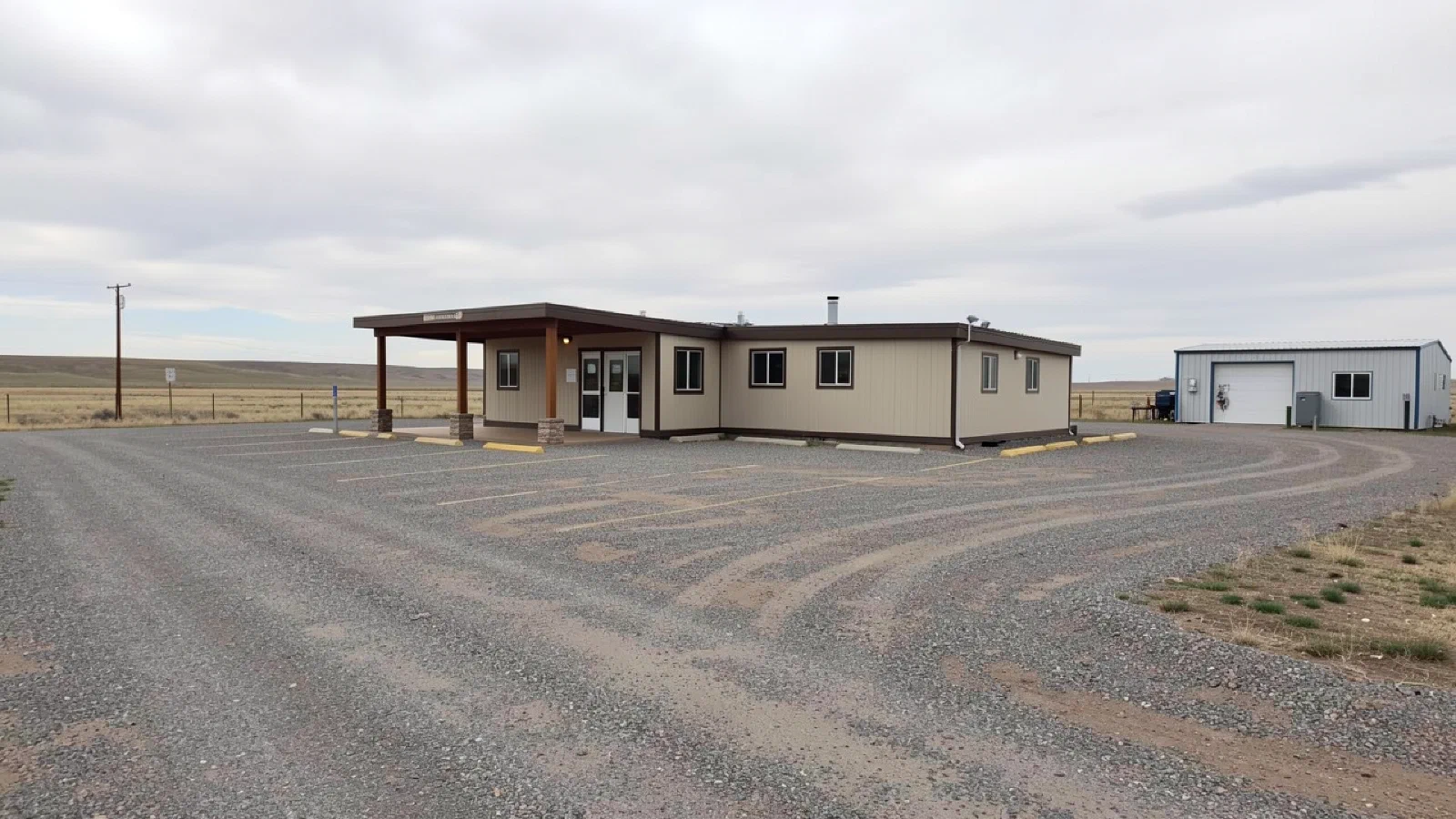
Indian Health Service and Tribal Health Systems
The Rural Health Transformation Program operates through states. Indian Health Service operates through a direct federal-to-tribal relationship that predates and exists independently of state health systems. When RHTP requires states to consult with tribal affairs offices, it acknowledges a fundamental reality: tribal health constitutes a parallel system with its own funding streams, delivery structures, governance mechanisms, and legal framework.
Understanding this parallel system matters because RHTP implementation will succeed or fail partly based on how states navigate the intersection of state-administered transformation funds with federally-obligated tribal health services. States that treat tribal consultation as checkbox compliance will miss opportunities. States that engage tribal health systems as genuine partners can leverage existing infrastructure, workforce models, and community relationships that took decades to build.
The federal trust responsibility for tribal health emerged from treaties, statutes, and Supreme Court precedent establishing the United States government’s obligation to provide healthcare services to American Indians and Alaska Natives. This obligation does not flow through states. It flows directly from the federal government to tribal nations through a government-to-government relationship that RHTP cannot supersede but must accommodate.
IHS Structure and Service Population#
The Indian Health Service provides healthcare to approximately 2.8 million American Indians and Alaska Natives who are members of 574 federally recognized tribes across 37 states. As the 18th largest health system in the United States, IHS operates through a tripartite structure known as the I/T/U system: IHS-operated facilities, Tribally-operated programs, and Urban Indian Organizations.
Direct IHS Facilities include hospitals, health centers, and health stations operated directly by the federal agency. These facilities employ federal staff, operate under federal procurement rules, and receive congressional appropriations directly.
Tribally-Operated Programs cover facilities and services that tribes have assumed through self-determination contracts (Title I) or self-governance compacts (Title V) under the Indian Self-Determination and Education Assistance Act. As of March 2024, 526 of 574 tribes (92%) had self-determination contracts, and 295 tribes (51%) had self-governance compacts. Tribes administer over 60% of the IHS budget through these mechanisms.
Urban Indian Organizations (UIOs) operate 41 organizations with over 85 facilities in 38 urban areas, serving patients from more than 500 tribes. UIOs emerged from the disastrous federal relocation policies of the 1950s-1970s that moved Native Americans to cities, then provided no healthcare infrastructure to serve them. Congress formally incorporated UIOs into the Indian health system through the Indian Health Care Improvement Act in 1976.
The geographic distribution of IHS services reflects historical reservation locations and subsequent migration patterns. IHS organizes through 12 Area offices covering distinct regions: Alaska, Albuquerque, Bemidji, Billings, California, Great Plains, Nashville, Navajo, Oklahoma City, Phoenix, Portland, and Tucson. Each Area has distinct population characteristics, facility types, and relationships with surrounding state health systems.
The Funding Reality#
IHS funding tells a story of chronic underinvestment relative to other federal health programs.
Per Capita Spending Comparisons#
The Government Accountability Office documented 2017 per capita spending across federal health programs:
| Program | Per Capita Spending |
|---|---|
| IHS | $4,078 |
| Medicaid | $8,109 |
| Federal Prisoners | $8,600 |
| Veterans Health Administration | $10,692 |
| Medicare | $13,185 |
The comparison to federal prisoner healthcare spending illuminates the disparity: the federal government spends more than twice as much on healthcare for incarcerated individuals as it does fulfilling its treaty obligations to tribal nations.
This gap persists despite IHS not functioning as a traditional insurance program. IHS and VHA are direct providers that must deliver services within available appropriations. Medicare and Medicaid are entitlement programs that automatically expand to meet eligible demand. When IHS serves more patients without corresponding budget increases, per capita spending decreases. There is no mechanism for automatic expansion.
FY2026 Budget Request#
The FY2026 budget proposes $8.1 billion for IHS, maintaining clinical service funding roughly flat with FY2025. Key components include $7.9 billion for IHS operations to fulfill trust responsibility, $159 million for Special Diabetes Program for Indians, $80 million for a new Native American Behavioral Health and Substance Use Disorder program, and $90.4 million (level funding) for Urban Indian Health.
The Urban Indian Health line item historically represents only 1% of the total IHS appropriation. UIOs cannot access other IHS funding streams like Hospitals and Health Clinics, Purchase/Referred Care, or Dental Services that IHS direct-service and tribal facilities receive.
Advance Appropriations Achievement#
The October 2025 federal government shutdown tested a hard-won tribal health advocacy victory: advance appropriations for IHS. Unlike previous shutdowns that immediately disrupted IHS clinical services, the FY2026 advance appropriations allowed IHS to continue operations while other federal agencies furloughed staff.
This achievement required years of tribal advocacy emphasizing that government shutdowns imposed disproportionate harm on tribal communities whose healthcare depended entirely on annual congressional appropriations. The shutdown exemption demonstrates that federal funding structures can be modified when the political will exists.
However, advance appropriations do not cover all IHS functions. Facilities construction, sanitation facilities construction, Contract Support Costs, 105(l) Lease Agreements, and Electronic Health Records remain funded through regular appropriations, creating ongoing vulnerability.
Self-Determination: The Policy Framework#
The Indian Self-Determination and Education Assistance Act of 1975 (ISDEAA, commonly called “P.L. 93-638”) represents one of the most significant federal Indian policy shifts of the 20th century. The Act enables tribes to assume operation of programs that IHS would otherwise provide directly.
Title I: Self-Determination Contracts#
Under Title I, tribes enter 638 contracts to administer specific programs, functions, services, or activities (PFSAs). The contracting tribe receives the funding IHS would have spent operating the program, plus Contract Support Costs to cover administrative overhead that tribes incur but IHS direct operations do not.
Title I contracts provide tribes operational control while maintaining detailed federal requirements for program administration, reporting, and accountability.
Title V: Self-Governance Compacts#
Title V self-governance compacts provide enhanced flexibility beyond Title I contracts. Rather than contracting for specific programs, compacting tribes receive funding agreements covering broader functions with reduced federal reporting requirements. Self-governance reflects a stronger government-to-government relationship between the federal government and tribal nations.
More than two-thirds of tribes now participate in Title V programs at IHS. In FY2025, six tribes and tribal organizations newly entered the IHS Tribal Self-Governance Program.
The Trade-offs#
Self-determination success varies significantly across tribes. Factors affecting outcomes include:
Tribal Capacity: Operating healthcare programs requires administrative infrastructure, financial management systems, human resources functions, and clinical leadership that some tribes possess and others must build.
Geographic Context: A tribe operating a single health station faces different challenges than one assuming a 100-bed hospital serving multiple communities.
Economic Base: Tribes with gaming revenue or natural resource income can supplement federal funding; tribes without such resources operate closer to the margin.
Critical Mass: Larger tribes may achieve economies of scale; smaller tribes may lack patient volume to support specialized services.
Some tribes have leveraged self-determination to create innovative programs tailored to community needs. A tribe in Washington State developed an integrated clinic combining primary care, dental, behavioral health, and opioid treatment. A tribe in Oregon established a wellness center with culturally-grounded services.
Other tribes express concern about “termination by appropriation”: the fear that if tribes assume all service delivery responsibility, the federal government retains only funding obligations it can more easily reduce or eliminate. Some tribes decline self-determination participation because they see no benefit in assuming responsibility for what they describe as a “sinking ship” of chronically underfunded programs.
Becerra v. San Carlos Apache Tribe: Landmark Contract Support Ruling#
On June 6, 2024, the Supreme Court decided Becerra v. San Carlos Apache Tribe in a 5-4 ruling with significant implications for tribal health funding.
The Question#
When tribes operate health programs under self-determination agreements, they collect program income from Medicare, Medicaid, and private insurers. These third-party revenues help fund services. But administering these revenue streams creates costs: billing staff, compliance systems, claims management.
The question: Must IHS reimburse tribes for Contract Support Costs incurred when collecting and spending third-party revenue, even though those revenues come from sources other than direct federal appropriations?
The Ruling#
Chief Justice Roberts, joined by Justices Sotomayor, Kagan, Gorsuch, and Jackson, held that ISDEAA requires IHS to pay these costs. The reasoning centered on the statute’s purpose: self-determination contracts require tribes to collect and spend third-party revenue. The costs of doing so are therefore “directly attributable” to the contract.
Roberts emphasized that denying reimbursement would create a “penalty for pursuing self-determination” contrary to congressional intent. Tribes would face systematic funding shortfalls relative to IHS-operated programs, discouraging the self-determination the Act was designed to promote.
The Dissent#
Justice Kavanaugh, joined by Justices Thomas, Alito, and Barrett, argued the majority’s interpretation would require $800 million to $2 billion annually in additional reimbursement. The dissent suggested this “appropriations” question should be resolved by Congress, not the courts, and warned the ruling could “divert funding from poorer tribes to richer tribes” since tribes with resources to operate their own programs would benefit most.
Implementation Implications#
IHS is implementing the decision through the Contract Support Costs Advisory Group, developing guidance for tribes to claim costs related to third-party revenue expenditure. The full fiscal impact remains uncertain, but the ruling strengthens the financial position of tribes operating self-determination programs.
For RHTP planning, the decision means tribal self-determination programs may become more financially viable, potentially increasing tribal interest in assuming new health functions that RHTP might support.
Community Health Aide Program: The Alaska Model Goes National#
Alaska’s Community Health Aide Program represents one of tribal health’s most significant workforce innovations. The program trains local community members to provide mid-level primary and emergency care in remote villages where physicians cannot practically serve.
The Alaska Model#
Developed in the 1960s in response to tuberculosis epidemics in remote Alaska Native villages, the Alaska CHAP now includes approximately 550 Community Health Aides/Practitioners (CHA/Ps) serving more than 170 rural villages. CHA/Ps operate within protocols defined by the Community Health Aide/Practitioner Manual, with supervision and referral relationships to physicians and advanced practice providers.
The model extends beyond primary care. Behavioral Health Aides (BHA/Ps) provide mental health and substance use services under licensed provider supervision. Dental Health Aide Therapists (DHATs) perform preventive and restorative dental procedures including extractions. Primary Dental Health Aides provide patient education, cleanings, and preventive treatments.
Lower 48 Expansion#
The Indian Health Care Improvement Act authorized national CHAP expansion, and IHS has been developing infrastructure for implementation outside Alaska. Key milestones include 2016 IHS tribal consultation on CHAP expansion, 2018 formation of CHAP Tribal Advisory Group, October 2024 grants to nine tribes across Billings, California, Oklahoma City, and Portland Areas, November 2024 IHS Director signing Circular 24-16 establishing national CHAP guidance, January 2025 National CHAP Board officially sunsetting the advisory group and moving to implementation phase, and February 2025 National CHAP Board convening its inaugural meeting.
Implementation Challenges#
CHAP expansion faces significant obstacles:
Funding: Congress has not appropriated specific funding for CHAP expansion. Tribes and tribal organizations must provide resources once programs are certified.
State Licensing: CHAP certification operates through federal authority, but states may have conflicting scope-of-practice requirements. Dental Health Aide Therapists, in particular, face state-by-state authorization battles.
Medicaid Reimbursement: Billing for CHAP services requires State Plan Amendments to include CHAP provider types as Medicaid-eligible.
Training Infrastructure: The Alaska model relies on decades of curriculum development and clinical training pathways that must be adapted or recreated for other regions.
RHTP Opportunity#
RHTP’s workforce development provisions could support CHAP expansion in ways federal IHS funding alone cannot. States with significant tribal populations could include CHAP training and certification support in their transformation plans, helping build community-based workforce capacity that addresses both tribal and rural health workforce shortages.
Urban Indian Health: The Forgotten Third#
The I/T/U system’s third component, Urban Indian Organizations, serves Native Americans who have left reservation communities but retain eligibility for federal health services. Approximately 70% of American Indians and Alaska Natives now live in urban areas, yet UIOs receive only 1% of the IHS budget.
Historical Context#
Federal relocation policies of the 1950s-1970s actively moved Native Americans from reservations to cities with promises of employment and economic opportunity. The government provided no healthcare infrastructure for relocated populations. UIOs emerged to fill this gap, receiving formal recognition in the 1976 Indian Health Care Improvement Act.
Current Landscape#
The 41 UIOs vary significantly in scope. Full ambulatory facilities provide comprehensive primary care. Limited ambulatory facilities offer specific services. Outreach and referral programs connect patients to other providers. Outpatient and residential programs focus on behavioral health.
UIOs are not eligible for self-determination contracts or compacts; they cannot assume IHS programs the way tribes can. They rely almost entirely on the Urban Indian Health line item, which has remained essentially flat while costs increase.
Funding Vulnerability#
The February 2025 federal funding disruption revealed UIO fragility. 25% of UIOs would definitely need to furlough or lay off staff if federal funding were interrupted. 45% indicated potential for staff reductions. Over half of UIOs would not sustain operations beyond six months without federal funding.
The Medicaid Lifeline#
Outside IHS funding, Medicaid is the largest revenue source for UIOs. In 2021, UIOs received over $137 million in Medicaid reimbursements. This dependence creates vulnerability as OBBBA Medicaid changes take effect. Even with AI/AN exemptions from work requirements, coverage losses will affect UIO patient populations and revenues.
UIOs have advocated for 100% Federal Medical Assistance Percentage (FMAP) for services provided at UIOs, equivalent to the treatment IHS and tribal facilities receive. Current law provides 100% FMAP only for services “received through” IHS or tribal facilities; UIOs operate under standard state FMAP rates.
Health Disparities: The Measurable Gap#
American Indians and Alaska Natives experience the lowest life expectancy of any racial or ethnic group in the United States.
Life Expectancy#
According to CDC data for 2023:
| Population | Life Expectancy at Birth |
|---|---|
| Asian Americans | 85.2 years |
| Hispanic/Latinos | 81.3 years |
| White | 78.4 years |
| All Races Average | 78.4 years |
| Black/African Americans | 74.0 years |
| AI/AN | 70.1 years |
The 8.3-year gap between AI/AN life expectancy and the national average represents decades of premature mortality. AI/AN life expectancy in 2023 roughly equals U.S. all-races life expectancy from the 1960s.
COVID-19 devastated AI/AN communities disproportionately. Life expectancy dropped from 72 years in 2019 to 68 years in 2021, a four-year decline in two years.
Cause-Specific Mortality#
AI/AN populations experience significantly higher mortality rates than national averages for chronic liver disease and cirrhosis, diabetes mellitus, unintentional injuries, assault/homicide, intentional self-harm/suicide, and chronic lower respiratory diseases.
Contributing Factors#
Multiple determinants drive these disparities:
Access: Only 44.8% of non-Hispanic AI/AN have private health insurance (vs. 67.2% total population). 16.2% are uninsured (vs. 8.2% total population).
Provider Availability: IHS facilities experience 25%+ vacancy rates, with some areas exceeding 30%. Remote locations, limited housing, and non-competitive salaries impede recruitment.
Infrastructure: Many IHS facilities were built 50+ years ago. The facilities construction priority list established in 1993 remains incomplete.
Geographic Isolation: Reservation remoteness creates barriers to specialty care, emergency response, and routine preventive services.
Historical Trauma: Federal policies including boarding schools, forced relocation, and termination era actions created multigenerational health impacts that current service delivery cannot address alone.
RHTP Tribal Provisions and State Responsibilities#
RHTP requires states to consult with tribal affairs offices during transformation plan development. This requirement acknowledges that state plans will affect tribal populations and must account for the parallel tribal health system.
Consultation Requirements#
States must engage with tribal nations early in planning processes, not as afterthought or checkbox compliance. Effective consultation involves government-to-government engagement recognizing tribal sovereignty, sufficient notice and time for tribal input before decisions are made, meaningful incorporation of tribal perspectives into final plans, and ongoing communication through implementation, not just planning.
Montana’s RHTP application illustrates substantive engagement: the state conducted formal tribal consultation, engaged all eight tribal nations and Urban Indian Organizations, and incorporated tribal input into transformation plan components.
Coordination Opportunities#
RHTP funding can complement rather than duplicate tribal health investments:
Care Coordination Agreements: Washington State’s RHTP plan emphasizes written care coordination agreements between tribal health programs and rural hospitals. Since no IHS hospitals exist in the Portland Area (Washington, Idaho, Oregon), tribal members rely on non-tribal rural hospitals for inpatient care. RHTP can strengthen these referral relationships.
Workforce Development: States can support Community Health Representative programs, doula training, care coordinator positions, and CHAP expansion that benefit both tribal and non-tribal rural populations.
Technology Infrastructure: Telehealth investments, broadband expansion, and electronic health record improvements can enhance both tribal and state-administered rural health capacity.
Behavioral Health Integration: Tribal communities face severe behavioral health workforce shortages. RHTP behavioral health investments in rural areas can increase capacity available to tribal members.
Coordination Challenges#
Structural differences create integration barriers:
Funding Streams: IHS funding flows federal-to-tribal. RHTP funding flows federal-to-state. Combining these streams for joint initiatives requires navigating different accountability requirements, reporting systems, and fiscal authorities.
Sovereignty: Tribes are not sub-state entities. States cannot direct tribal health programs. Coordination must respect government-to-government relationships.
Data Systems: IHS uses the Resource and Patient Management System (RPMS); many tribal programs have adopted different electronic health records. State health information exchanges may not connect to tribal systems.
Medicaid Complexity: AI/AN individuals may be eligible for both IHS/tribal services and Medicaid. Coordination of benefits, provider billing, and eligibility determination create administrative complexity.
Special Programs#
Special Diabetes Program for Indians (SDPI)#
Established in 1997, SDPI provides grants to IHS, tribal, and urban Indian health programs for diabetes prevention and treatment. The program operates through 301 IHS and tribal programs funded through formula-based distribution, 41 Urban Indian Organizations receiving competitive grants, and $159 million annual appropriation requiring periodic reauthorization.
SDPI has achieved measurable results: reductions in diabetes-related kidney failure, amputations, and cardiovascular complications within funded communities. The program demonstrates that targeted, sustained investment can improve tribal health outcomes, but also illustrates the precarity of programs requiring repeated congressional reauthorization.
Sanitation Facilities Construction#
The Bipartisan Infrastructure Law provided $3.5 billion for IHS sanitation facilities construction over FY2022-2026, with $700 million allocated in FY2025. This funding addresses water and wastewater infrastructure needs that directly affect community health.
Homes lacking safe water and adequate sanitation experience higher rates of infectious disease. The sanitation backlog represents decades of infrastructure neglect that no single appropriation can fully address.
Behavioral Health Programs#
The FY2026 budget proposes $80 million for a new Native American Behavioral Health and Substance Use Disorder program. This addresses disproportionate AI/AN rates of suicide (among the highest of any population group), alcohol-related mortality, opioid and methamphetamine use disorder, and mental health conditions complicated by historical trauma.
The program would use a hub-and-spoke model addressing local public health needs in partnership with tribes and UIOs.
The External View#
Advocacy Perspectives#
The National Indian Health Board (NIHB) represents tribal governments on health policy matters. NIHB has consistently advocated for mandatory appropriations for IHS to eliminate dependence on annual discretionary funding, full funding of the tribal budget formulation workgroup recommendations, permanent advance appropriations for all IHS functions, and Contract Support Costs full funding.
The National Council of Urban Indian Health (NCUIH) represents UIOs. NCUIH priorities include significant increases to the Urban Indian Health line item, 100% FMAP for UIO services, inclusion in tribal consultation and budget formulation processes, and AI/AN exemptions from Medicaid work requirements and other restrictive policies.
Trust Responsibility Framing#
Tribal health advocates consistently frame funding discussions around the federal trust responsibility, the legally-binding obligation arising from treaties, statutes, and court decisions. This framing distinguishes tribal health funding from discretionary social programs: the federal government made specific commitments in exchange for land cessions and tribal agreements.
The trust responsibility argument has achieved some policy victories (advance appropriations, Contract Support Costs full funding) while failing to achieve others (mandatory appropriations, funding levels matching need).
Politics and Policy#
Administration Approach#
Secretary Kennedy’s April 2025 MAHA tour included visits to tribal health facilities in Arizona and New Mexico, and consultation with tribal leaders in Washington D.C. The administration has emphasized trust responsibility language in budget documents and testimony.
However, flat funding for clinical services and level funding for Urban Indian Health fall short of tribal recommendations. The Tribal Budget Formulation Workgroup recommended $63 billion for IHS in FY2026, nearly eight times the proposed amount.
HHS Reorganization#
The March 2025 HHS restructuring creating the Administration for Healthy America affects IHS context even though IHS maintains organizational separation. HRSA programs that coordinate with tribal health (NHSC loan repayment at IHS sites, Health Center program grants to tribal FQHCs) now operate under different organizational leadership.
IHS itself has announced strategic realignment with tribal consultation scheduled for late 2025 and into 2026. The scope and implications of IHS internal reorganization remain under development.
OBBBA AI/AN Exemptions#
The One Big Beautiful Bill Act includes exemptions for American Indians and Alaska Natives from Medicaid community engagement (work) requirements and certain SNAP restrictions. These exemptions recognize the unique federal trust relationship and the impracticality of imposing requirements on populations with distinct legal status.
The exemptions matter for tribal health sustainability: Medicaid is the largest third-party payer for IHS, generating $1.3 billion of $1.8 billion in total third-party collections in FY2025. Coverage losses would directly reduce tribal health program revenues.
Implications for RHTP Implementation#
What States Should Understand#
Tribal health is not a state program. States do not administer IHS or tribal health programs. States cannot direct how tribes use federal health resources. RHTP planning that assumes states will “coordinate” tribal health misunderstands the relationship.
Tribal consultation is substantive obligation. The requirement to consult tribal affairs offices during RHTP planning reflects federal policy recognizing tribal sovereignty. States that treat consultation as compliance exercise will produce less effective transformation plans.
Tribal infrastructure exists. Decades of self-determination have built tribal administrative capacity, clinical programs, workforce development pathways, and community health infrastructure. RHTP can leverage this infrastructure rather than building parallel systems.
Urban Native populations matter. Many rural states have significant AI/AN populations living off-reservation in rural communities served by neither IHS nor UIOs. These populations will be affected by RHTP-supported providers even if not by tribal health programs directly.
Opportunities#
Care Coordination: RHTP can fund improved referral relationships between tribal health programs and rural hospitals, reducing fragmentation for AI/AN patients who receive care across systems.
Workforce: Community Health Aide Program expansion, Community Health Representative training, and culturally-responsive workforce development can serve both tribal and rural health needs.
Technology: Shared telehealth infrastructure, health information exchange improvements, and broadband expansion can benefit tribal and state-administered rural health programs.
Behavioral Health: The severe behavioral health workforce shortage affects tribal and rural populations similarly. RHTP behavioral health investments can increase capacity available across systems.
Constraints#
Parallel Accountability: IHS and tribal programs report to federal oversight structures. RHTP programs report to state and CMS oversight. Joint initiatives must satisfy both accountability frameworks.
Funding Fragmentation: Combining IHS, tribal, and RHTP funding for coordinated initiatives requires navigating different fiscal rules, match requirements, and reporting systems.
Sovereignty Boundaries: States cannot impose requirements on tribal health programs. Coordination must be voluntary and mutually beneficial.
Urban Gaps: UIOs operate outside RHTP’s rural focus. Urban AI/AN populations may not benefit from transformation investments despite experiencing similar health disparities.
Conclusion#
The Indian Health Service and tribal health systems represent a parallel infrastructure that RHTP must work alongside rather than incorporate. States that understand this relationship will develop more effective transformation plans. States that ignore it will miss opportunities and may create duplicative or conflicting systems.
Tribal health demonstrates both the potential and limitations of federal health investment. Self-determination has enabled innovative, culturally-responsive programs. Chronic underfunding has produced the worst health outcomes of any population in the nation. RHTP cannot solve tribal health challenges; the trust responsibility belongs to the federal government, not states. But RHTP can support improved coordination between systems serving overlapping populations.
The 8.3-year life expectancy gap between AI/AN populations and national averages represents failure. That failure has specific causes: inadequate funding, workforce shortages, infrastructure deficits, geographic isolation, and historical trauma that current service delivery cannot address. RHTP operates in this context. State transformation plans that acknowledge tribal health realities will produce better outcomes than those that treat tribal populations as afterthought.
When states consult tribal affairs offices, they encounter partners with decades of experience operating health programs in challenging environments, experience that could inform broader rural health transformation. The question is whether states will engage as partners or comply as obligation.
How this article connects to others in Blue Gray Matters.
Sources cited in this article.
- *Becerra v. San Carlos Apache Tribe*, 599 U.S. ___ (2024).
- Centers for Disease Control and Prevention. "Life Expectancy at Birth by Race and Hispanic Origin: United States, 2021-2023." *National Vital Statistics Reports*, 2024.
- Government Accountability Office. "Indian Health Service: Spending Levels and Characteristics of IHS and Three Other Federal Health Care Programs." GAO-19-74R, Dec. 2018.
- Indian Health Service. "Community Health Aide Program Expansion." Circular 24-16, Nov. 2024.
- Indian Health Service. *FY2026 Budget Justification*. IHS, 2025.
- Indian Health Service. "IHS Profile." IHS, accessed Jan. 2026.
- Indian Health Service. "Tribal Self-Governance." IHS, accessed Jan. 2026.
- Indian Health Service. "Urban Indian Health Program." IHS, accessed Jan. 2026.
- National Council of Urban Indian Health. "UIO Funding Vulnerability Survey Results." NCUIH, Feb. 2025.
- National Indian Health Board. "Tribal Budget Formulation Workgroup Recommendations for FY2026." NIHB, 2024.
- Supreme Court of the United States. *Becerra v. San Carlos Apache Tribe*. Opinion of the Court, 6 June 2024.
- Tribal Budget Formulation Workgroup. "National Tribal Budget Formulation Workgroup's Recommendations on the Indian Health Service Fiscal Year 2026 Budget." TBFW, 2024.
- U.S. Department of Health and Human Services. *FY2026 Budget in Brief*. HHS, 2025.