Social Fabric and Isolation
The previous articles traced the material conditions of rural life: geography, demographics, education, economics, healthcare, and food. This article turns to something less tangible but equally consequential: the social connections that sustain people or fail to sustain them, the community bonds that rural America is famous for and the isolation that silently erodes health across the rural landscape.
Rural communities carry a reputation for tight-knit social fabric. The neighbor who brings casseroles during illness, the church that rallies around grieving families, the volunteer fire department that represents the community’s willingness to save one another. This reputation is not false. Yet it coexists with an epidemic of loneliness, with suicide rates that exceed urban areas, with elderly residents who may go days without human contact, with young people marooned in communities where their age peers have departed.
The paradox requires explanation. How can communities celebrated for their social bonds simultaneously suffer from profound isolation? The answer lies in understanding what rural social structures actually provide, whom they serve, and how they have changed under pressures that have reshaped rural life over decades.
For health transformation, social connection is not peripheral. Research consistently demonstrates that social isolation predicts mortality as reliably as smoking or obesity. Lonely people get sicker and die younger. Communities with strong social capital produce better health outcomes than those without. Understanding rural social fabric, in both its strengths and its fraying, is prerequisite to any intervention that hopes to improve rural health.
Traditional Social Structures#
Rural social life historically organized around a handful of institutions that provided not merely services but identity, belonging, and meaning. These institutions persist, though often in diminished form, and understanding them illuminates both what rural communities have and what they are losing.
Churches and Faith Communities#
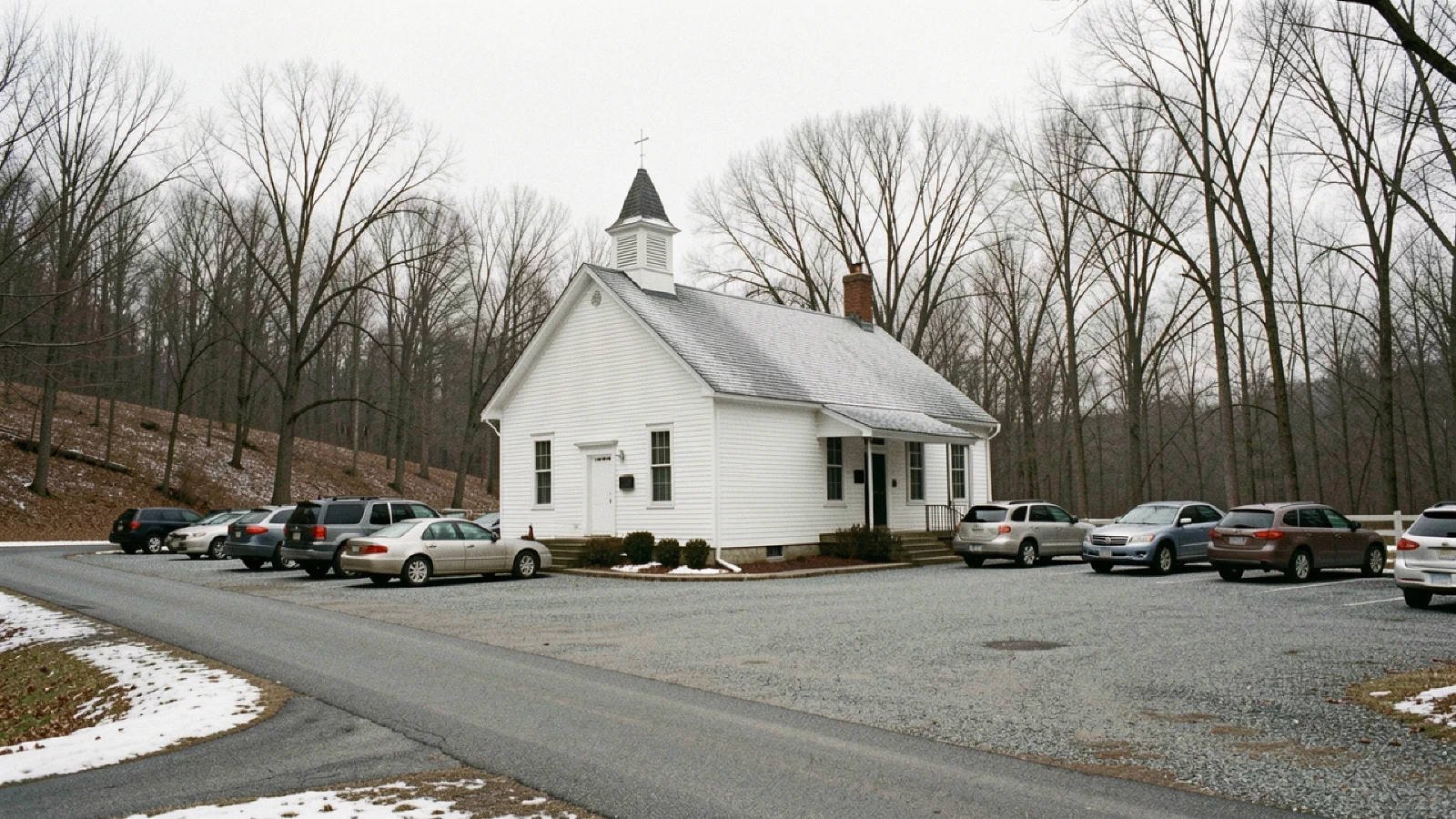
The church building often stands at the literal center of the rural community, its steeple visible from surrounding farms and its parking lot full on Sunday mornings. In many rural places, church membership remains higher than in urban areas, and the church continues to serve functions that extend far beyond worship.
The social functions are extensive. Churches host potlucks, wedding receptions, and funeral dinners. They organize youth groups that provide social contact for teenagers in places with few other options. They coordinate meals for families facing illness or loss. They offer the only consistent gathering space in communities where other venues have closed. The pastor may serve as the closest approximation to a mental health professional that many residents can access.
Yet church membership has declined even in rural America. Younger generations attend less frequently than their parents and grandparents. Denominations have merged congregations and closed buildings. Communities that once supported multiple churches now struggle to maintain one. The social functions that churches provided do not automatically transfer elsewhere when churches weaken.
The faith dimension shapes health beliefs and behaviors in complex ways. Religious participation correlates with better health outcomes through mechanisms that include social support, behavioral norms, and meaning-making. But religious frameworks can also encourage fatalism, delay care-seeking, and substitute prayer for medical treatment. The relationship between faith and health is genuinely complicated, and health interventions that ignore faith communities miss both opportunities and obstacles.
Civic Organizations#
A generation ago, rural communities sustained extensive networks of civic organizations: Granges that served agricultural communities, Rotary and Lions clubs that connected business owners, Veterans of Foreign Wars posts that honored service, 4-H clubs that developed youth, garden clubs and quilting circles and volunteer fire departments. These organizations provided social contact, mutual aid, and community identity.
The decline of civic organizations represents one of the most documented social changes in American life. Membership has fallen, chapters have closed, and the associational life that once structured communities has thinned considerably. Robert Putnam’s famous thesis about declining social capital finds particular expression in rural areas, where the organizations that remain often serve aging memberships without younger replacements.
The causes are multiple: television and later the internet competing for leisure time, longer work hours leaving less energy for volunteering, declining populations providing fewer potential members, cultural changes reducing the appeal of traditional organizations. The consequences include reduced social contact for those who once found community through these groups and reduced capacity for the mutual aid these organizations once provided.
Schools as Social Centers#
The rural school serves as community hub in ways that suburban and urban schools typically do not. Friday night football games draw crowds that include residents with no children in the school. School board elections generate controversy and engagement. When the school closes for consolidation, the community loses more than educational services.
High school sports occupy a particular position in rural social life. The basketball team or football team represents the community to the outside world. Games provide occasion for gathering that transcends generation. Former players maintain identities connected to teams they played for decades ago. The social function of school sports cannot be separated from the athletic function.
The consolidation trend discussed in the education article carries social costs that efficiency analyses rarely capture. When children ride buses an hour to distant schools, they cannot participate in after-school activities that build social connection. When the school building closes, the community loses a gathering place. When teams combine across communities, the identification of community with school weakens.
Main Street and Third Places#
Sociologists speak of “third places,” the locations that are neither home nor work where people gather informally: the coffee shop, the diner, the barber shop, the general store. Rural communities historically supported third places where residents encountered one another regularly, where news traveled by word of mouth, where social bonds maintained themselves through casual contact.
The decline of Main Street, documented in the economics article, carries social as well as economic implications. When the diner closes, the morning coffee group loses its gathering place. When the general store becomes a dollar store, the leisurely conversation that once accompanied shopping disappears. When the hardware store owner who knew everyone is replaced by a clerk who rotates through multiple locations, the personal connection evaporates.
The loss of third places is not evenly distributed. Some rural communities retain gathering places, often sustained by determined owners accepting thin margins. Others have lost nearly all venues for casual social contact. The variation matters: communities with remaining third places maintain social fabric that communities without them struggle to preserve.
Extended Family Networks#
Rural life traditionally embedded individuals within extended family networks that provided practical support, social connection, and identity. Grandparents lived nearby and provided childcare. Cousins grew up together. Family gatherings marked holidays and milestones. The family network distributed resources, information, and assistance in ways that compensated for thin formal services.
These networks persist more strongly in rural areas than in urban ones, but they have weakened substantially. The out-migration of young adults described in the demographics article thins family networks. Grandchildren grow up in distant cities. Cousins scatter across states. The family reunion that once drew dozens may now struggle to attract a quorum.
For those who remain, family networks continue to function. Grandparents raising grandchildren, as discussed earlier, represent family networks filling gaps left by parents unable to parent. Adult children providing care for aging parents represent family networks substituting for formal elder care. These functions persist but strain against the thinning that migration has produced.
The Loneliness Epidemic#
Against the backdrop of traditional social structures, whether persisting or declining, runs an epidemic of loneliness that public health authorities have begun to recognize as a crisis. The Surgeon General’s advisory on loneliness highlighted isolation as a threat to health comparable to smoking. Rural America experiences this epidemic with particular severity.
Measuring Isolation#
Loneliness is subjective: the gap between the social connection one desires and the social connection one experiences. Social isolation is more objective: the absence of social contact and relationships. Both matter for health, and both affect rural populations at elevated rates.
Survey data consistently show higher rates of loneliness and social isolation among rural residents than urban ones. The differences are not dramatic but are persistent across multiple measures and multiple studies. More striking are the specific populations within rural areas who experience extreme isolation.
Elderly Isolation#
The rural elderly face isolation risks that compound with age. Spouses die, leaving widows and widowers alone. Physical limitations prevent driving, the nearly universal requirement for rural social contact. Friends and family die or move away. The social world that once surrounded an active rural resident may shrink to nearly nothing.
The geography of rural life means that an isolated elder may be genuinely alone. Urban isolated elders at least have neighbors on the other side of walls, potential contacts in building hallways, activity on the street outside. Rural isolated elders may live on properties where no one visits for days or weeks, where a fall or medical emergency goes undiscovered, where the silence is complete.
Some elderly manage to maintain connection through church attendance, though this requires transportation. Some receive regular visits from family, though this requires family nearby. Some participate in senior centers or congregate meals, though these require programs that exist and transportation to reach them. For those without these connections, isolation can become nearly total.
Young Adult Isolation#
Less recognized but equally consequential is the isolation experienced by young adults who remain in rural communities while their age peers depart. A twenty-five-year-old in a rural county may find that everyone they went to high school with has left. The dating pool has evaporated. The social life that young adults expect simply does not exist.
This isolation differs in character from elderly isolation but shares health consequences. Young rural adults experience elevated rates of depression, anxiety, and substance use. The opioid crisis devastated young adult populations in rural areas where boredom, hopelessness, and social disconnection provided fertile ground for addiction.
The irony is that these young adults often stayed in rural communities precisely because of family and community connections. They valued what rural life offered enough to forgo urban opportunities. Yet remaining means experiencing the departure of peers, watching social options narrow, and facing isolation that departure might have prevented.
Working-Age Pressures#
Between youth and old age, rural adults face social pressures that constrain connection even when isolation is not total. Long work hours and long commutes consume time that might otherwise support social life. Multiple jobs leave no energy for civic participation. The struggle to survive economically takes precedence over maintaining relationships.
Working-age adults often serve as the primary connectors in rural families and communities. They check on elderly parents, transport children to activities, participate in civic organizations, and sustain the social infrastructure that others depend upon. When these adults are stretched too thin, the ripple effects touch everyone.
Health Consequences#
The health consequences of loneliness and social isolation are not speculative. Research documents increased mortality risk, elevated rates of cardiovascular disease, accelerated cognitive decline, worse mental health outcomes, and compromised immune function among those who are socially isolated. These associations persist after controlling for other risk factors.
The mechanisms are multiple. Isolated people may lack support for health-maintaining behaviors. They may have no one to notice symptoms or encourage care-seeking. Chronic loneliness triggers physiological stress responses with measurable health impacts. The pathways from isolation to poor health are both direct and indirect.
For rural health transformation, these findings suggest that social intervention is health intervention. Programs that reduce isolation may improve health outcomes as much as traditional medical interventions. The social dimension of health cannot be addressed as an afterthought.
Digital Connectivity#
The internet promised to overcome geographic isolation. Rural residents could connect with others regardless of distance, access information and entertainment unavailable locally, and participate in communities of interest that geography would otherwise preclude. The promise has been partially fulfilled and substantially disappointed.
The Broadband Gap#
The digital divide discussed in previous articles directly shapes social connection possibilities. Reliable broadband internet enables video calls, social media participation, online communities, and the full range of digital social interaction. Slow or unavailable internet excludes rural residents from these possibilities.
The gaps are substantial. Many rural areas still lack broadband meeting basic definitions. Even where broadband nominally exists, speeds and reliability often fall short of urban standards. The rural resident attempting to video call distant family may experience frustrating disconnections and poor quality that discourages the attempt.
Federal and state investments have begun to address broadband gaps, with significant funding directed toward rural connectivity. Whether these investments will close the gap remains to be seen. The infrastructure build-out takes time, and technology advances faster than rural deployment.
Social Media: Connection and Substitute#
For rural residents with internet access, social media provides connection that geography would otherwise prevent. Facebook groups allow former classmates scattered across the country to maintain contact. Instagram and TikTok provide windows into lives beyond the immediate community. Rural residents participate in online communities organized around interests, identities, or experiences.
Yet social media connection differs from in-person connection in ways that matter for health. The research is mixed but suggests that social media use does not provide the health benefits that in-person social contact does. For some users, social media may increase loneliness by highlighting the social lives others appear to have. The curated presentation of others’ lives can make one’s own isolated existence feel worse by comparison.
Social media also creates new vulnerabilities. Misinformation spreads through social networks, including health misinformation that affects beliefs and behaviors. Political polarization intensifies in online spaces. The connections that social media provides may come with costs that offset benefits.
Telehealth as Social Contact#
Telehealth, discussed in the healthcare access article, provides not only medical services but social contact for isolated rural patients. A video visit with a healthcare provider may represent one of the few human interactions an isolated elder experiences in a given week. The social dimension of telehealth deserves recognition alongside its clinical function.
This observation has implications for how telehealth is designed and delivered. Brief, efficient visits that maximize throughput may sacrifice the social benefit that longer, more conversational visits provide. The trade-off between efficiency and connection deserves explicit consideration.
Mental Health and Suicide#
The mental health landscape of rural America reflects and compounds the social fabric challenges described above. Depression, anxiety, and other mental health conditions affect rural populations at rates comparable to or exceeding urban populations, but with far less access to treatment.
The Provider Gap#
Mental health provider shortages in rural areas reach extremes discussed in the healthcare access article. More than 60 percent of rural Americans live in areas designated as mental health professional shortage areas. Entire counties may contain no psychiatrist, no psychologist, and no licensed clinical social worker.
The gap means that mental health care, when it happens at all, comes from primary care providers ill-equipped for the role, from emergency rooms during crises, or from informal sources including clergy who receive mental health training varying from none to substantial. The formal mental health system essentially does not reach much of rural America.
Stigma#
Even where services exist, stigma suppresses utilization. Mental health stigma appears to be stronger in rural areas than urban ones, though measurement is difficult. Rural cultural values emphasizing self-reliance and toughness discourage acknowledgment of mental distress. Small-town visibility means that seeking help cannot be anonymous. The fear of being seen entering a counselor’s office may prevent the visit from happening.
Stigma shapes not only help-seeking but also the willingness to discuss mental health struggles with family and friends. When communities do not talk about depression and anxiety, those suffering may believe they are alone in their struggles. The isolation becomes psychological as well as social.
Suicide#
Rural suicide rates exceed urban rates by significant margins, and the gap has widened over recent decades. The patterns vary by demographic group: middle-aged white men in rural areas have experienced particularly sharp increases, though no demographic is immune.
The elevated rural suicide rate reflects multiple factors. Access to lethal means, particularly firearms, is higher in rural areas. Access to crisis intervention and mental health services is lower. Social isolation removes potential sources of support and intervention. Economic distress, which previous articles documented, contributes to hopelessness. The same factors that produce other rural health disparities converge on suicide.
Farming communities face particular suicide risk. Financial stress from commodity price volatility, weather events, and debt accumulates over time. The identity invested in land that has belonged to families for generations creates devastating loss when that land must be sold. Farm suicides spike during agricultural crises in patterns documented across countries and decades.
Substance Use and Social Fabric#
The opioid crisis struck rural America with particular severity, devastating communities in Appalachia, the rural Midwest, and elsewhere. The crisis cannot be separated from social fabric: isolation contributed to vulnerability, and addiction further frayed the social connections that might support recovery.
The pathway often began with legitimate prescriptions for physical pain. Manual labor common in rural economies produces injuries. Healthcare encounters for those injuries produced prescriptions that became addictions. The progression from prescription opioids to heroin to fentanyl followed patterns shaped by availability and cost.
Recovery from addiction typically requires social support that isolated rural communities struggle to provide. Treatment options are distant and limited. Recovery communities are thin or nonexistent. The social network that might support sobriety may itself be permeated by active substance use. Rural people seeking recovery face obstacles that urban treatment models do not anticipate.
Methamphetamine has resurged in rural areas following the opioid wave, bringing different but related challenges. Alcohol, which never disappeared, continues to cause harm in communities where heavy drinking is normalized. The social fabric that might limit substance use has weakened, and the social support that might enable recovery is scarce.
Community Resilience#
Against the narrative of decline and isolation, examples of resilient rural communities demonstrate that social fabric can be maintained and even strengthened. Understanding what enables resilience offers guidance for communities and policies seeking to build rather than merely observe.
Social Capital#
Social scientists distinguish between bonding social capital, the connections within homogeneous groups, and bridging social capital, the connections across different groups. Rural communities traditionally excelled at bonding capital. Everyone knew everyone, families were connected through generations of shared history, and mutual aid flowed through these connections.
Bridging capital has been weaker. Rural communities can be insular, skeptical of newcomers, and resistant to diversity. As communities become more diverse through immigration and in-migration, the ability to build bridging capital becomes essential for social cohesion.
Communities that maintain social capital through intentional effort show what is possible. They create gathering opportunities. They welcome newcomers through explicit integration efforts. They build institutions that connect across lines of difference. The social fabric does not maintain itself automatically but can be sustained through deliberate attention.
Mutual Aid Traditions#
Rural communities have long traditions of mutual aid that predate and often substitute for formal services. Barn raisings, though now rare, represented communities coming together to build what individuals could not build alone. Contemporary equivalents include benefit dinners for families facing medical costs, community responses to disaster, and informal networks that provide childcare, transportation, and eldercare.
These mutual aid traditions persist in communities that maintain them and have eroded in communities that have not. The difference often relates to whether institutions, whether churches, civic organizations, or informal networks, exist to coordinate mutual aid. Where coordination capacity remains, mutual aid continues. Where it has been lost, atomization replaces community response.
Volunteerism#
Rural areas historically showed higher rates of volunteering than urban areas, reflecting both cultural values and practical necessity. Volunteer fire departments protect communities because paid departments would be unaffordable. Volunteer drivers transport elderly residents because public transit does not exist. Volunteers staff food pantries, coach youth sports, and fill countless other roles.
Volunteer capacity is strained in many rural communities. An aging population of volunteers is not being replaced. Working-age adults lack time to volunteer. The demands placed on volunteers have increased as formal services have withdrawn. Yet volunteerism persists, and communities with strong volunteer traditions demonstrate that social fabric can be actively maintained.
Key States in Social Fabric Challenges#
Several states exemplify the intersection of social isolation and rural health challenges:
West Virginia combines extreme social isolation with the nation’s worst health outcomes. Coal community decline destroyed not only jobs but the social structures that mining towns supported. Isolation, despair, and substance use create mutually reinforcing spirals.
Kentucky, particularly eastern Appalachian counties, faces similar dynamics. Multi-generational poverty, out-migration of young adults, and the opioid crisis have frayed social fabric that once provided mutual support.
Mississippi Delta communities experience isolation shaped by historical patterns of racial inequality. The social structures of the plantation South created networks that served some residents while excluding others. Contemporary isolation reflects these legacies.
Alaska presents unique isolation challenges. Geographic distances exceed those of any other state. Native communities face historical traumas that compound contemporary isolation. Suicide rates, particularly among Alaska Native populations, rank among the highest in the nation.
Montana and other Great Plains states face isolation stemming from population dispersion. A rancher may live miles from the nearest neighbor. The social contact that denser settlement provides simply does not exist in frontier areas.
Oklahoma combines general rural challenges with specific issues affecting Native American populations. Tribal communities have experienced historical disruption of social structures that continues to affect health and wellbeing.
The External View#
Urban and suburban observers hold romanticized notions of rural community that bear limited resemblance to contemporary reality. The misperceptions matter because they shape policy and limit understanding.
The “Everyone Knows Everyone” Myth#
The image of rural communities where everyone knows everyone, where neighbors look out for one another, and where social support is automatic persists despite evidence that isolation is endemic. This myth allows observers to assume rural people have social support that may not actually exist.
The reality is more complicated. Yes, longtime residents often do know one another. But knowing someone and providing support are different things. Relationships that appear close from outside may be thin in practice. And newcomers, younger generations, and those who do not fit community norms may find themselves excluded from networks that insiders take for granted.
Missing the Isolation Epidemic#
Because the myth of rural community is strong, the isolation epidemic hiding within rural communities often goes unrecognized. Policymakers assume that rural people have family and neighbors to rely upon. Healthcare providers assume that discharged patients have someone at home to help. The assumptions obscure the reality that many rural people have no one.
Assumptions About Family Support#
External observers often assume that rural residents have family support structures that urban residents lack. Extended families living nearby, grandparents available for childcare, family networks providing mutual aid. These assumptions may have been more accurate historically, but migration has thinned family networks substantially.
The assumption can have practical consequences. Social service programs may assume family resources that do not exist. Healthcare plans may assume family caregivers who are not available. The gap between assumption and reality leaves rural residents without support they are presumed to have.
Overlooking Diversity and Exclusion#
The romanticized image of rural community also tends to assume homogeneity and harmony. Real rural communities contain diversity along multiple dimensions and experience conflicts along those lines. Newcomers may face resistance. Those who are different, whether by race, sexuality, politics, or lifestyle, may experience exclusion from networks that serve others.
Understanding rural social fabric requires acknowledging both its strengths and its exclusions. Not everyone benefits equally from the bonds that exist. Health transformation must reach those who fall outside traditional networks as well as those within them.
Politics and Policy#
Social infrastructure has received less policy attention than physical infrastructure, but programs and policies do shape social fabric in rural communities. Understanding these connections reveals opportunities for intervention.
Broadband as Social Policy#
Broadband investment, discussed as economic and healthcare policy in previous articles, is also social policy. Internet access enables connection that isolated rural residents otherwise cannot achieve. The billions being invested in rural broadband may produce social returns alongside economic ones.
Yet broadband alone does not guarantee connection. Digital literacy affects whether people can use connectivity. Social media platforms have both connecting and isolating effects. The infrastructure is necessary but not sufficient.
Mental Health Investment#
Mental health service availability in rural areas requires deliberate policy to address. Market forces have not produced adequate mental health infrastructure. Policy interventions including loan repayment programs for rural providers, telehealth reimbursement, and integration of mental health into primary care can begin to address gaps.
The mental health parity laws that require insurance coverage of mental health services matter less in rural areas where services do not exist to be covered. Supply-side interventions that actually create services are essential.
Community Health Workers#
Community health worker programs represent policy approaches that leverage social connection for health improvement. Community health workers are trusted community members who bridge gaps between healthcare systems and populations. In rural areas, they can provide social contact alongside health support.
Evidence supports community health worker effectiveness, but funding remains inconsistent. Medicaid programs vary in whether and how they reimburse community health worker services. Sustainable funding would enable expansion of programs that address both isolation and health.
Faith Community Partnerships#
Policy can engage faith communities as partners in addressing isolation and health, or it can ignore their potential role. Programs that train clergy in mental health, that support parish nursing, that fund faith-based social services recognize what faith communities can offer. The separation of church and state need not prevent constructive partnership on social and health challenges.
Social Services and Rural Fit#
Social service programs designed for urban environments often fit rural contexts poorly. Case management assumes clients can attend appointments that may require long travel. Service integration assumes multiple services exist in geographic proximity. Group programs assume enough participants live close enough to gather.
Adapting social services for rural realities requires intentional program design. Mobile services, telehealth-based case management, and flexible scheduling can address some misfit. Policy that mandates urban approaches without rural adaptations wastes resources and fails people.
Aging Services#
Programs serving elderly populations have particular importance for addressing rural isolation. Meals on Wheels provides social contact alongside nutrition. Senior centers provide gathering places. Home health aides provide both care and human interaction. These programs are chronically underfunded relative to need, and rural areas often receive less than their share.
The Older Americans Act funds aging services through Area Agencies on Aging, but funding formulas and allocation decisions determine what reaches rural communities. Policy advocacy for adequate rural aging services addresses isolation directly.
Conclusion#
The social fabric of rural America presents paradox: communities celebrated for their bonds while isolation silently claims lives. Traditional social structures have weakened without proportionate development of alternatives. The loneliness epidemic hiding within rural communities produces health consequences as serious as any disease.
Understanding this landscape is prerequisite to transformation. Health interventions that ignore social context will fail people who need not only medical care but human connection. Building social infrastructure deserves attention alongside building physical infrastructure.
The next article in this series examines transportation, the physical dimension of access that determines whether rural residents can reach the services, opportunities, and connections their lives require. Social connection itself depends on mobility: the ability to get to church, to the senior center, to the friend’s house across the county. Transportation is not merely logistics but foundation for social life.
How this article connects to others in Blue Gray Matters.
Sources cited in this article.
- Cacioppo, John T., and Stephanie Cacioppo. "Social Relationships and Health: The Toxic Effects of Perceived Social Isolation." *Social and Personality Psychology Compass*, vol. 8, no. 2, 2014, pp. 58-72.
- Centers for Disease Control and Prevention. "Rural Health: Preventing Chronic Diseases and Promoting Health." *CDC Rural Health*, 2024. https://www.cdc.gov/rural-health/
- Holt-Lunstad, Julianne, et al. "Loneliness and Social Isolation as Risk Factors for Mortality: A Meta-Analytic Review." *Perspectives on Psychological Science*, vol. 10, no. 2, 2015, pp. 227-237.
- Keyes, Katherine M., et al. "Understanding the Rural-Urban Differences in Nonmedical Prescription Opioid Use and Abuse in the United States." *American Journal of Public Health*, vol. 104, no. 2, 2014, pp. e52-e59.
- Monnat, Shannon M., and Raeven F. Chandler. "Long-Term Physical Health Consequences of Adverse Childhood Experiences." *The Sociological Quarterly*, vol. 56, no. 4, 2015, pp. 723-752.
- Office of the Surgeon General. "Our Epidemic of Loneliness and Isolation: The U.S. Surgeon General's Advisory on the Healing Effects of Social Connection and Community." *U.S. Department of Health and Human Services*, 2023.
- Putnam, Robert D. *Bowling Alone: The Collapse and Revival of American Community*. Simon & Schuster, 2000.
- Rural Health Information Hub. "Rural Mental Health." 2024. https://www.ruralhealthinfo.org/topics/mental-health
- Substance Abuse and Mental Health Services Administration. "Behavioral Health in Rural Communities." *SAMHSA*, 2024.
- Ivey-Stephenson, Asha Z., et al. "Suicide Trends Among and Within Urbanization Levels by Sex, Race/Ethnicity, Age Group, and Mechanism of Death." *Morbidity and Mortality Weekly Report*, vol. 66, no. 18, 2017.