Food and Nutrition
Rural America grows the food that sustains the nation. Corn and soybeans blanket the Midwest. Cattle graze across the Great Plains. Vegetables emerge from California’s Central Valley, Florida’s fields, and countless small farms scattered across every state. This agricultural productivity represents one of America’s great achievements.
Yet the people who live among this abundance often cannot access it. The farmer who raises commodity crops may struggle to afford groceries. The rural county that ships grain worldwide may lack a single grocery store. The community surrounded by agricultural wealth may contain neighborhoods where fresh produce is unavailable.
This paradox of abundance alongside scarcity requires explanation. The previous articles examined rural geography, demographics, education, economics, and healthcare. This article examines food: how rural Americans obtain it, what they can afford, what nutrition they receive, and why the land of plenty produces pockets of want.
Food Access and Food Deserts#
The concept of food deserts has entered public discourse, though the term obscures as much as it reveals. The standard definition focuses on distance from a supermarket. In urban areas, a food desert is a low-income census tract where residents live more than one mile from a supermarket. In rural areas, the threshold is ten miles.
The Limits of Distance Measures#
The ten-mile rural threshold immediately reveals the inadequacy of the concept. Ten miles is not far by rural standards. People routinely drive further for work, church, school, or medical care. If ten miles constitutes a food desert, then much of rural America qualifies by definition.
More meaningful measures would consider what food is actually available within reasonable distance, whether residents have transportation to reach it, whether they can afford what they find when they arrive, and whether what is available meets nutritional needs. By these more comprehensive measures, rural food access problems are both more and less severe than simple distance suggests.
What Exists Within Reach#
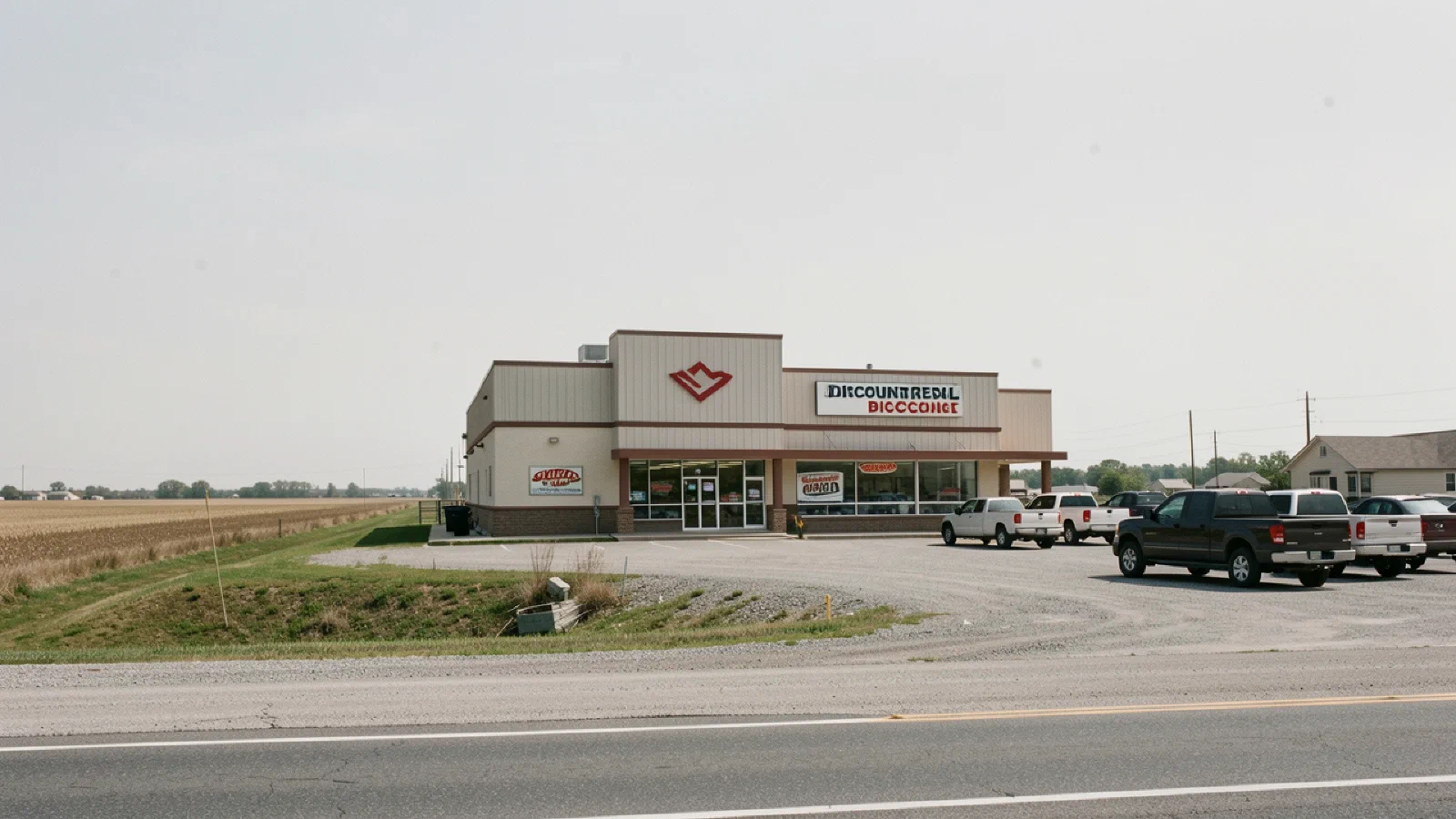
Rural residents often can access food within their communities, but the question is what kind of food. The grocery store may have closed, but the dollar store remains open. The supermarket may be thirty miles away, but the gas station convenience store is around the corner. The farmers’ market operates Saturday mornings in summer, but the fast food restaurant serves every day year-round.
This pattern describes food swamps rather than food deserts: environments where food is available but skews heavily toward processed, packaged, and prepared items rather than fresh produce, whole grains, and lean proteins. The dollar store shelves stock shelf-stable items that can sit for months. Fresh vegetables would spoil before selling in communities too small to generate sufficient turnover.
Transportation Assumptions#
Food access measures typically assume vehicle ownership. In urban food desert discussions, this assumption makes sense: many urban poor lack cars. In rural food access discussions, the assumption often holds, but imperfectly.
Rural households generally own vehicles at higher rates than urban households. The car is not optional where public transit does not exist and distances prevent walking or cycling. But vehicle ownership in rural areas can be precarious. An older vehicle may break down, leaving a family temporarily without transportation. Fuel costs consume significant portions of tight budgets. Multiple household members may need the single vehicle at the same time.
For elderly rural residents, the transportation assumption may not hold at all. Those who have stopped driving due to age, health, or cost depend on others for transportation to grocery stores. If no one is available to drive, food access becomes genuinely problematic regardless of how many supermarkets exist within some radius.
The Dollar Store Phenomenon#
Perhaps no retail trend has reshaped rural food access more than the proliferation of dollar stores. Dollar General, Family Dollar, and Dollar Tree have opened thousands of locations in small towns and rural communities. In many places, they represent the only retail option remaining.
The Economics of Dollar Stores#
Dollar stores succeed in markets that grocery stores cannot. Their business model requires less volume, less floor space, less refrigeration, and less spoilage risk. A community of 1,500 people may not support a full grocery store but can sustain a dollar store. The dollar store arrives after the grocery store closes, filling a void with a different product mix.
The product mix matters. Dollar stores emphasize shelf-stable items: canned goods, pasta, rice, snacks, sodas, and household supplies. Fresh produce, if available at all, amounts to a token selection. Refrigerated items are limited. The variety that a grocery store offers, the ability to actually cook diverse meals from available ingredients, is absent.
Community Impact#
The arrival of a dollar store in a rural community creates ambivalence. Residents appreciate the convenience. They no longer must drive as far for basic supplies. Prices are low. The store provides local employment, even if the jobs are part-time at minimum wage.
Yet the dollar store also completes the displacement of local grocery stores. Its competitive position makes it harder for any remaining grocery store to survive. The fresh food that groceries once provided becomes unavailable. The community’s food environment shifts permanently toward processed options.
Some communities have resisted dollar store expansion, recognizing these tradeoffs. Zoning battles over dollar store locations have become common in rural America. These conflicts reflect genuine disagreement about what kind of food environment communities want and what options they actually have.
Grocery Store Economics#
Rural grocery stores face brutal economics that explain why so many have closed. Understanding these economics clarifies why market-based solutions struggle to ensure rural food access.
The Volume Problem#
Grocery stores operate on thin margins, typically 1 to 3 percent of sales. Survival requires volume: enough customers buying enough products to generate sufficient revenue that a small percentage yields adequate profit. Urban and suburban grocery stores achieve this volume through population density. A store serving 50,000 people within a few miles can generate the volume necessary for survival.
Rural communities of a few thousand people cannot generate equivalent volume. The math does not work. A store serving 3,000 people, even if capturing every dollar those people spend on food, will generate far less revenue than an urban store. The fixed costs of operation do not scale down proportionally with population: building, utilities, equipment, and staffing remain substantial regardless of customer count.
The Fresh Food Challenge#
Fresh produce and perishables create particular challenges. These items spoil. Unsold inventory becomes loss. Managing spoilage requires matching inventory to demand with precision that small stores struggle to achieve.
The result is conservative stocking. Rural grocers, if they remain in operation, order less fresh produce to minimize spoilage loss. What they order tends toward items with longer shelf life: apples rather than berries, potatoes rather than leafy greens. The selection shrinks. Customers seeking particular items may not find them. The experience reinforces driving to larger stores further away, which further undermines the local store’s viability.
Ownership and Succession#
Many rural grocery stores are independently owned. The owner typically works in the store, knows customers personally, and operates more as community institution than profit-maximizing business. These stores survive on owner dedication and community loyalty even when pure financial calculation would counsel closure.
But owners age. The question of succession increasingly determines which rural grocery stores survive. Children who grew up in the business often choose different careers. Finding buyers for marginal businesses in small communities is difficult. When the owner retires, the store frequently closes.
This succession crisis accelerates a closure trend already driven by competitive pressure. Communities that have retained grocery stores through owner dedication face imminent loss as that generation ages out.
The Agricultural Paradox Explained#
How can communities surrounded by farms lack food access? The paradox resolves when one understands what American agriculture actually produces.
Commodity Crops Versus Food Crops#
The vast majority of American agricultural acreage produces commodity crops: corn, soybeans, wheat, cotton. These crops enter supply chains that process them into animal feed, biofuels, industrial ingredients, and food components. They do not appear on grocery shelves as recognizable food.
A farmer in Iowa may grow thousands of acres of corn. That corn will become corn syrup, ethanol, or cattle feed. It will not appear as food in the farmer’s county. The agricultural wealth surrounding the community flows into global commodity markets while local food needs go unmet.
This disconnect reflects agricultural policy, market structure, and the nature of commodity agriculture. Farming at scale requires specialization. Equipment for corn production cannot easily shift to vegetable production. Marketing channels for commodity crops do not connect to local food distribution. The farmer maximizes return by continuing to grow what the system is designed to process.
Farm Families and Food Insecurity#
Farm families themselves experience food insecurity at rates that seem paradoxical. Those who produce food cannot always afford to eat well. The irony reflects the economics of farming.
Farm income is volatile, dependent on weather, commodity prices, and input costs that fluctuate unpredictably. A bad year can wipe out savings from several good years. Cash flow timing may leave families flush after harvest but struggling to pay grocery bills in spring. The farm may be asset-rich, with land worth millions, while the family is cash-poor, unable to access that wealth for daily needs.
Furthermore, farm families in commodity agriculture do not eat what they grow. A corn farmer buys groceries at the store like everyone else. The farm’s production has no direct connection to the family’s food supply. The farmer ships grain to distant markets and shops at the grocery store like neighbors who have nothing to do with agriculture.
Local Food Remains Local Exception#
Local food movements have attempted to rebuild connections between local farms and local consumption. Farmers’ markets, community-supported agriculture, and farm-to-table restaurants create channels for local food to reach local consumers.
These channels remain small relative to overall food supply. Farmers’ markets operate seasonally, often in locations and at times that limit access for working families. Community-supported agriculture requires upfront payment that low-income families cannot manage. Farm-to-table restaurants serve customers who can afford premium prices.
The local food movement has not transformed rural food access. It provides options for some consumers, supports some small farms, and creates models that might scale differently. But the bulk of rural food supply continues to flow through conventional channels that privilege processed, packaged, and imported products over local fresh food.
Food Insecurity#
Beyond access to stores lies the question of whether people can afford the food those stores sell. Food insecurity, the condition of uncertain or limited access to adequate food due to lack of money or resources, affects rural America at rates comparable to or exceeding urban America.
The Numbers#
Approximately 11 percent of rural households experience food insecurity at some point during the year. The rate varies significantly by region and by household type. Single-parent families, households with children, and elderly individuals living alone experience higher rates. Southern rural areas report higher rates than other regions.
These numbers likely understate the problem. Food insecurity carries stigma, particularly in rural communities that value self-reliance. Survey responses may not capture the full extent of families stretching inadequate resources, skipping meals, or going without to ensure children eat.
Summer Hunger#
School meals provide reliable nutrition for millions of children during the academic year. Breakfast and lunch programs ensure that children eat at least twice daily regardless of household food security. For some children, school meals constitute the majority of their nutrition.
Summer eliminates this safety net. When school closes, children who depended on school meals must find food elsewhere. Summer feeding programs exist but reach only a fraction of eligible children. In rural areas, distance to feeding sites, lack of transportation, and program limitations leave many children without adequate summer nutrition.
The pattern is visible in health data: children’s weight gain during summer months, increased emergency room visits for nutrition-related issues, and family stress concentrated in the months when school meals are unavailable.
Senior Food Insecurity#
Elderly rural residents face distinct food security challenges. Fixed incomes limit purchasing power. Health conditions may restrict diets to items more expensive than alternatives. Physical limitations may prevent cooking, gardening, or shopping independently.
Senior nutrition programs, including Meals on Wheels and congregate meal sites, attempt to address these needs. Rural delivery costs exceed urban costs due to distances between recipients. Congregate meal sites require transportation that elderly participants may lack. Program funding limits how many seniors can be served and how often.
The result is significant unmet need among elderly rural residents. Seniors choose between food and medication, between eating adequately and paying utility bills. The choices produce health consequences that become medical problems, transforming nutrition issues into healthcare costs.
Working Poor#
Food insecurity concentrates among the working poor: families with employed members who nonetheless cannot afford adequate food. The phenomenon reflects wage levels, benefit gaps, and the cost of food relative to other essential expenses.
A family with full-time workers earning low wages may earn too much to qualify for food assistance but too little to afford nutritious food consistently. Housing costs, transportation costs, and healthcare costs leave insufficient budget for food. The working family may experience worse food insecurity than a family receiving public assistance that includes SNAP benefits.
This pattern is pronounced in rural areas where wages are lower, benefits less common, and costs (particularly transportation) consume larger budget shares. The working poor remain largely invisible in food insecurity discussions that focus on unemployment or poverty program recipients.
Diet and Nutrition Patterns#
What rural Americans eat reflects what they can access, afford, and prefer. The resulting diet patterns contribute to health outcomes that distinguish rural from urban populations.
Regional Food Traditions#
American regional food traditions developed before modern food systems erased geographic distinctiveness. Southern cuisine, with its emphasis on fried foods, pork, and sweetened beverages, emerged from particular agricultural patterns and cultural histories. Midwestern meat-and-potatoes traditions reflected what farms produced and what winters required. These patterns persist even as their original rationales fade.
Regional food traditions contain both strengths and challenges from a nutritional perspective. Traditional foodways often include preservation knowledge, cooking skills, and social eating patterns that support nutrition. They also may include heavy reliance on fat, salt, and sugar that modern nutritional guidance discourages.
Health interventions that ignore or disparage regional food traditions face resistance. Telling a Southern family to abandon fried chicken and sweet tea dismisses cultural identity along with dietary pattern. More effective approaches work within food traditions, suggesting modifications rather than replacements, and recognizing that food carries meaning beyond nutrition.
Diet-Related Disease#
Rural populations experience higher rates of obesity, diabetes, and cardiovascular disease than urban populations. Multiple factors contribute, including healthcare access, physical activity patterns, and stress. Diet plays a significant role.
The dietary factors are straightforward if difficult to address. Rural diets include more sugar-sweetened beverages, more processed foods, fewer fruits and vegetables, and larger portion sizes than dietary guidelines recommend. The patterns emerge from access constraints, cost considerations, and cultural preferences interacting to produce nutritional outcomes.
Addressing diet-related disease in rural America requires addressing the food environment that produces problematic diets. Individual behavior change, the focus of most nutrition interventions, can only accomplish so much when the available food supply skews toward unhealthy options.
Food as Culture#
Food in rural communities serves functions beyond nutrition. Meals mark occasions, build relationships, express love, and maintain traditions. The church potluck, the family reunion, the harvest meal, and the holiday feast all embed food in social context that nutrition analysis cannot capture.
Health transformation that addresses only the nutritional content of food misses this social dimension. Interventions that succeed will work with food’s cultural meanings rather than against them, finding ways to improve nutrition while preserving the social functions that food serves.
Food Assistance Programs#
Federal nutrition programs provide crucial support for food security in rural America. Their reach, limitations, and politics shape who eats adequately and who does not.
SNAP in Rural Areas#
The Supplemental Nutrition Assistance Program (SNAP, formerly food stamps) provides monthly benefits to low-income households for food purchase. In rural areas, SNAP participation rates are lower than urban rates despite equivalent or higher eligibility rates.
Several factors explain the participation gap. Stigma associated with public assistance is stronger in rural communities. Application processes may require travel to distant offices. Awareness of eligibility criteria may be lower. Administrative barriers, including documentation requirements and recertification procedures, disproportionately affect populations with less bureaucratic experience.
For those who do participate, SNAP benefits frequently prove insufficient for the full month. Benefits calculate based on assumptions about food costs and preparation that may not match rural realities. By month’s end, many SNAP recipients face the same food insecurity that benefits are meant to prevent.
WIC#
The Special Supplemental Nutrition Program for Women, Infants, and Children (WIC) provides food and nutrition support to pregnant women, new mothers, and young children. WIC serves rural families but faces access challenges.
WIC requires periodic clinic visits for eligibility determination and benefit receipt. Rural families may struggle to attend required appointments due to distance, transportation, and work schedules. The approved food packages may not match what local stores stock, forcing participants to travel to stores that carry WIC items.
Despite these challenges, WIC participation among eligible rural residents is relatively high, reflecting the program’s focus on particularly vulnerable populations and the clear benefits of nutritional support during pregnancy and early childhood.
School Nutrition#
School breakfast and lunch programs reach rural children effectively during the academic year. Participation rates in rural schools often exceed urban rates, reflecting both higher eligibility rates and schools’ centrality in rural communities.
The programs’ effectiveness makes their summer absence more consequential. As discussed, summer feeding programs cannot replicate the reach of school-year programs. The gap in coverage corresponds to the gap in childhood nutrition.
Senior Programs#
Senior nutrition programs, including home-delivered meals and congregate dining, face funding limitations that prevent serving all eligible individuals. Waiting lists for home-delivered meals are common. Congregate meal sites may be distant from many rural seniors.
The programs that exist provide genuine benefit to participants. They address not only nutrition but also social isolation that compounds food insecurity among elderly rural residents. The neighbor who delivers a meal provides human contact along with food.
Local Food Systems and Solutions#
Communities across rural America have experimented with alternative approaches to food access. These experiments offer models that might inform broader transformation even if they have not yet solved the underlying problems.
Farmers’ Markets and Direct Sales#
Farmers’ markets create direct connections between producers and consumers. In rural areas, they may allow local farmers to sell produce that would otherwise leave the community for distant markets. They provide shopping options beyond whatever grocery or dollar stores remain.
The limitations are significant. Farmers’ markets operate seasonally. They require producers willing to sell retail rather than wholesale. They require consumers with time to shop during market hours and resources to pay market prices. SNAP acceptance at farmers’ markets has expanded access but cannot overcome all barriers.
Community Gardens#
Community gardens allow residents to grow their own food on shared land. In rural areas with available space, gardens can supplement purchased food with fresh produce at minimal cost.
The model works for some participants but not for all. Gardening requires time, knowledge, physical capability, and consistent attention. Those who garden successfully produce food for themselves and sometimes neighbors. Those who cannot garden receive no benefit.
Food Hubs and Aggregation#
Food hubs aggregate products from multiple small farms for distribution to retailers, restaurants, and institutions. By combining volume, they create efficiencies that individual small farms cannot achieve. Rural food hubs have enabled local food to reach schools, hospitals, and grocery stores that could not deal with individual small producers.
The food hub model remains small relative to conventional food supply chains. Scaling requires investment, coordination, and market development that many rural regions lack capacity to achieve. The model shows promise without yet demonstrating transformative impact.
Cooperative Grocery Stores#
Some rural communities have responded to grocery store closures by creating cooperatively owned stores. Community members invest in the store, which then operates to serve community food needs rather than maximize shareholder returns.
Cooperative groceries require substantial community organizing, initial capital, and ongoing operational capacity. They succeed in some communities and fail in others. Where they work, they provide food access while building community capacity and keeping resources local.
Key States in Rural Food Challenges#
Several states exemplify distinct dimensions of rural food and nutrition challenges:
Mississippi combines agricultural production with some of the nation’s highest food insecurity rates. The Delta region, producing rice, cotton, and catfish, contains counties where food insecurity affects a quarter of residents. The state exemplifies the paradox of agricultural wealth and nutritional poverty.
Arkansas shares Delta characteristics in its eastern portion while facing distinct challenges in the Ozark region. The state has experienced significant rural grocery store closures while dollar store density has increased.
Kentucky faces food access challenges that compound health challenges discussed in previous articles. Eastern Kentucky’s Appalachian counties combine food insecurity with the health outcomes that inadequate nutrition produces.
New Mexico presents unique circumstances with significant Native American populations, extreme geographic isolation in some areas, and cultural food traditions distinct from surrounding regions.
South Dakota illustrates Great Plains food access challenges, with reservation communities facing some of the nation’s most severe food insecurity while surrounded by agricultural production.
Alabama represents the broader Southern pattern of high food insecurity, limited food access in rural areas, and diet-related health outcomes among the nation’s worst.
The External View#
Urban observers of rural food systems tend toward two misconceptions.
The first imagines rural food access as a solved problem because rural areas are where food comes from. This view cannot comprehend that communities surrounded by farms might lack grocery stores, that farmers might be food insecure, that agricultural abundance does not translate into local nutrition.
The second views rural food patterns as purely cultural, imagining that rural people eat poorly by choice rather than constraint. This view blames individuals for diet-related disease without examining the food environment that shapes available choices. It proposes education and behavior change without addressing access and affordability.
A more accurate view would recognize rural food systems as shaped by market structures, policy choices, and historical patterns that produce current outcomes. The food environment determines what people can eat. Changing health outcomes requires changing environments, not merely changing minds.
Politics and Policy#
Food policy intersects with agricultural policy, welfare policy, healthcare policy, and economic development policy. The politics are correspondingly complex.
Farm Bill and Food Policy#
The farm bill, reauthorized periodically, contains both agricultural and nutrition titles. SNAP funding flows through the farm bill, creating political linkages between agricultural interests and nutrition programs. Rural legislators support nutrition programs partly because they support agricultural demand, while urban legislators support agricultural programs partly to maintain nutrition funding.
This coalition produces strange bedfellows and strange politics. Conservative rural legislators vote for SNAP while questioning other welfare programs. Liberal urban legislators vote for agricultural subsidies while questioning other business supports. The farm bill coalition holds together because each side needs the other’s programs.
Work Requirements and Food Assistance#
Proposals to impose work requirements on SNAP recipients generate recurring political conflict. Proponents argue that able-bodied adults should work for benefits. Opponents argue that requirements create bureaucratic barriers that exclude eligible people, including many who work but cannot document their employment.
The rural dimension complicates this debate. Rural labor markets offer fewer jobs than urban markets. Rural jobs more often involve irregular, seasonal, or informal work that documentation requirements cannot easily capture. Work requirements designed for urban labor markets may fit rural circumstances poorly.
Agricultural Policy and Nutrition#
The disconnect between agricultural production and nutritional needs reflects policy choices that could be different. Agricultural subsidies have historically supported commodity crop production rather than fruit and vegetable production. The resulting agricultural landscape produces what policy incentivizes: corn and soybeans rather than the fruits and vegetables that dietary guidelines recommend.
Proposals to redirect agricultural policy toward nutritional outcomes face political opposition from established commodity interests. The politics of agricultural policy favor continuation of existing patterns over transformation toward different goals.
Food and Health Transformation#
For rural health transformation, food and nutrition represent both challenge and opportunity. The challenge is that food environments constrain healthy eating regardless of individual intentions. The opportunity is that food environments can be changed, and changing them would improve health outcomes directly and substantially.
Transformation will require addressing multiple dimensions simultaneously. Access must improve through grocery availability, transportation, or alternative distribution models. Affordability must improve through food assistance programs, local food production, or economic development. Cultural approaches must work with rather than against regional food traditions. The comprehensive nature of the challenge demands comprehensive responses.
The next article in this series examines social fabric and isolation, exploring how rural communities maintain connection or experience disconnection in ways that affect health. Food, like healthcare, exists within social context. Understanding that context is necessary for transformation to succeed.
How this article connects to others in Blue Gray Matters.
Sources cited in this article.
- Coleman-Jensen, Alisha, et al. "Household Food Security in the United States in 2023." *USDA Economic Research Service*, Economic Research Report No. 325, September 2024.
- Feeding America. "Map the Meal Gap: Food Insecurity in Rural America." 2024. https://www.feedingamerica.org/research/map-the-meal-gap
- Hilmers, Angela, et al. "Neighborhood Disparities in Access to Healthy Foods and Their Effects on Environmental Justice." *American Journal of Public Health*, vol. 102, no. 9, 2012, pp. 1644-1654.
- Jilcott Pitts, Stephanie B., et al. "Examining the Association Between Serum Carotenoids and Self-Reported Fruit and Vegetable Intake Among Rural Adults." *Journal of the Academy of Nutrition and Dietetics*, vol. 113, no. 10, 2013, pp. 1360-1366.
- Larson, Nicole I., et al. "Food Insecurity and Options for Addressing It in Rural Communities." *American Journal of Preventive Medicine*, vol. 44, no. 3, 2013, pp. S209-S217.
- Liese, Angela D., et al. "Food Store Types, Availability, and Cost of Foods in a Rural Environment." *Journal of the American Dietetic Association*, vol. 107, no. 11, 2007, pp. 1916-1923.
- Shannon, Jerry. "Dollar Stores, Retailer Redlining, and the Metropolitan Geographies of Precarious Consumption." *Annals of the American Association of Geographers*, vol. 111, no. 4, 2021, pp. 1200-1218.
- USDA Economic Research Service. "Food Access Research Atlas." 2024. https://www.ers.usda.gov/data-products/food-access-research-atlas/
- USDA Economic Research Service. "Rural Hunger and Food Insecurity." 2024. https://www.ers.usda.gov/topics/food-nutrition-assistance/food-security-in-the-u-s/
- USDA Food and Nutrition Service. "Supplemental Nutrition Assistance Program (SNAP)." 2024. https://www.fns.usda.gov/snap/supplemental-nutrition-assistance-program
- Ver Ploeg, Michele, et al. "Access to Affordable and Nutritious Food: Measuring and Understanding Food Deserts and Their Consequences." *USDA Economic Research Service*, Report to Congress, 2009.