Education and Literacy
Education shapes life trajectories. It determines economic opportunity, influences health behaviors, and cultivates the capacities people need to navigate complex systems, including healthcare systems. In rural America, education operates under constraints that fundamentally differ from urban and suburban contexts, producing outcomes that reflect both remarkable resilience and persistent disadvantage.
This article examines the educational landscape of rural America: the schools that serve rural children, the teachers who staff them, the challenges of access to higher education, and the multiple dimensions of literacy that shape health outcomes. Throughout, we encounter a recurring paradox. Rural schools often provide something precious (small classes, community connection, a sense of belonging) while simultaneously struggling to offer the resources, advanced coursework, and diverse opportunities available in larger districts. Rural education is neither simply deficient nor simply superior; it is different, shaped by contexts that demand approaches tailored to rural realities.
The connection between education and health is well established in research literature. Educational attainment predicts life expectancy more reliably than almost any other demographic variable. Health literacy, the ability to understand and act on health information, depends on foundational skills developed through formal education. Digital literacy, increasingly essential for accessing telehealth and health information, requires both education and infrastructure that rural communities often lack.
For rural health transformation, education is not a peripheral concern but a central one. Communities cannot improve health outcomes without addressing the educational foundations that make health literacy possible. They cannot attract healthcare workers without educational institutions that train them. They cannot retain young people without educational pathways that make rural life viable. Understanding rural education is prerequisite to transforming rural health.
Educational Attainment: The Numbers and Their Meaning#
The educational attainment gap between rural and urban America is real but often overstated. High school completion rates in rural areas have risen dramatically over recent decades and now approach metropolitan levels. The gap that persists is primarily at the college level, and understanding why requires looking beyond simple assumptions about rural capacity or aspiration.
Approximately 21 percent of rural adults hold a bachelor’s degree or higher, compared to roughly 35 percent in metropolitan areas. This gap has remained relatively stable even as overall educational attainment has risen. But the aggregate numbers obscure important variation. Some rural areas (particularly those with colleges or universities, those adjacent to metropolitan centers, or those experiencing amenity-driven in-migration) have education levels matching or exceeding national averages. Others, especially in persistent poverty regions, lag significantly behind.
The “some college, no degree” phenomenon deserves particular attention. A significant share of rural adults have started college but not completed a degree, often leaving with debt but without the credential that would justify it. This pattern reflects multiple barriers: financial constraints that force students to work excessive hours or leave school entirely, family obligations that interrupt educational trajectories, and the geographic challenge of attending institutions far from home while maintaining rural connections.
Generational change in educational attainment has been significant. Rural residents over 65 have substantially lower educational levels than younger cohorts, reflecting an era when high school completion was less common and college attendance was rare for rural youth. Younger rural adults are far more educated than their grandparents, a transformation that sometimes creates generational tension within families and communities.
What do these attainment patterns mean for health? Research consistently shows that education predicts health outcomes across virtually every measure: chronic disease prevalence, health behaviors, life expectancy, and quality of life. The mechanisms are multiple; education affects income, occupation, health knowledge, and the cognitive and social resources people bring to health challenges. Rural educational attainment patterns contribute directly to rural health disparities.
K-12 Education: Community Anchors Under Pressure#
The rural school occupies a unique position in community life. It is not merely an institution for educating children but a gathering place, an employer, a source of community identity, and often the primary venue for social connection. When rural schools thrive, communities thrive. When they struggle or close, communities lose something that cannot easily be replaced.
The Century of Consolidation#
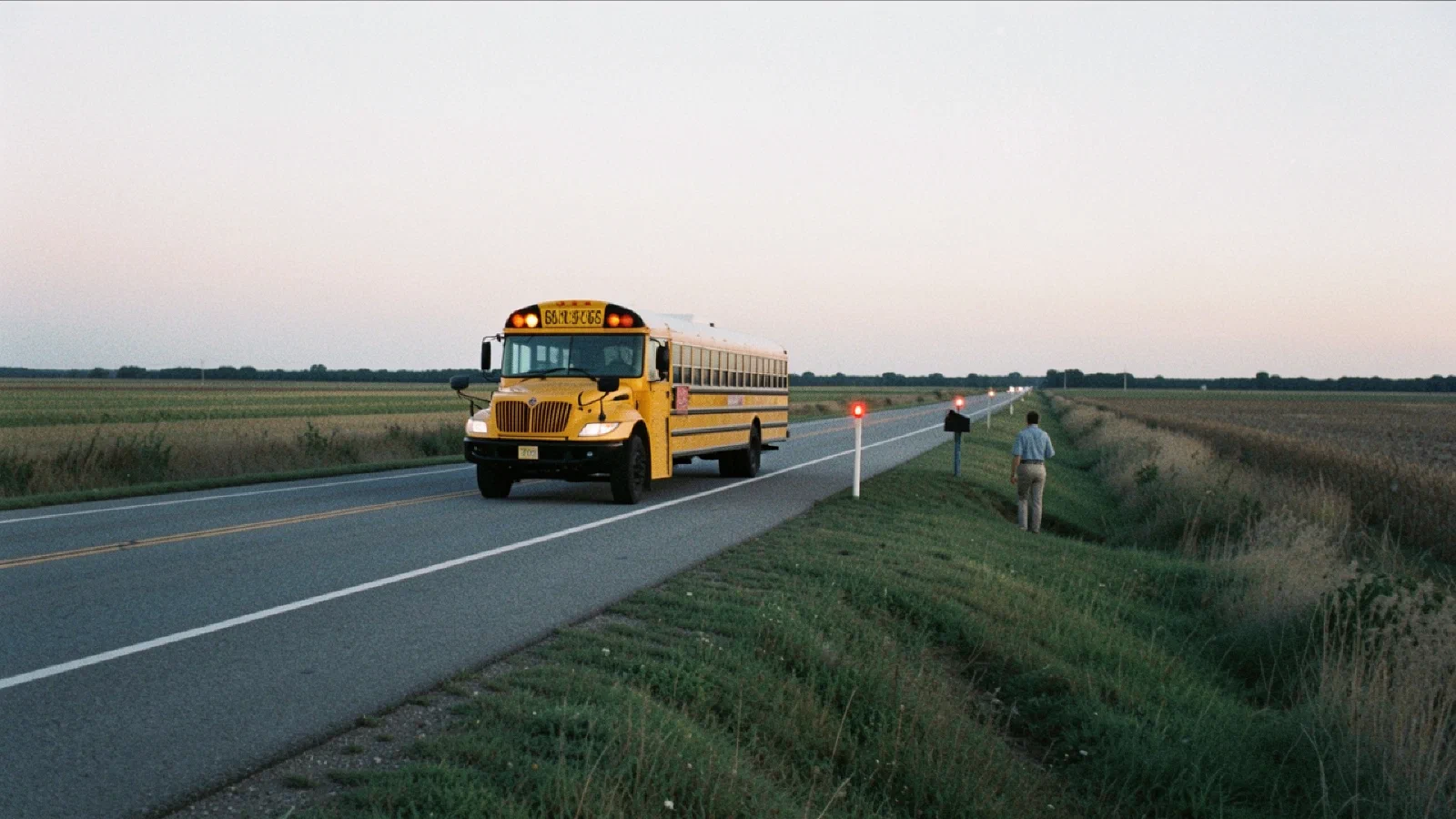
A century ago, the American landscape was dotted with small rural schools: one-room schoolhouses serving tiny communities, each within walking distance of the children it served. Today, most of those schools are gone, consolidated into larger districts in pursuit of efficiency, economies of scale, and expanded educational offerings. The consolidation movement transformed rural education, bringing both gains and losses that continue to shape rural communities.
The efficiency argument for consolidation has genuine merit. Larger schools can offer more courses, employ more specialized teachers, and spread administrative costs across more students. A small school struggling to offer basic science courses can, through consolidation, give students access to chemistry and physics taught by qualified instructors. These are real benefits that have improved educational opportunities for many rural students.
Yet consolidation has costs that efficiency metrics do not capture. When the school closes, the community loses more than a building. It loses a gathering place, an employer, a source of pride. Students who once walked to school now ride buses for hours each day, time that cannot be spent on homework, extracurricular activities, or family. Parents who once knew their children’s teachers as neighbors now navigate distant bureaucracies. The school that was once the community’s heart becomes a memory, and something essential drains away.
The consolidation debate illustrates a tension that runs throughout rural policy: the conflict between efficiency and community, between measurable outcomes and intangible values. There is no objectively correct answer to how this tension should be resolved. Different communities have made different choices, and both approaches (preserving small schools and consolidating into larger ones) can succeed or fail depending on implementation and context.
Teacher Recruitment and Retention#
Rural schools face persistent challenges in attracting and retaining qualified teachers. The salary gap is real; rural teachers typically earn less than their urban and suburban counterparts, even after adjusting for cost of living. But salary alone does not explain the recruitment challenge. Rural teaching positions often mean professional isolation, limited opportunities for advancement, and the challenge of finding housing, childcare, and community in an unfamiliar place.
The teacher who takes a rural position often becomes teacher, coach, club sponsor, and community member simultaneously. This breadth can be rewarding; rural teachers frequently describe deeper connections with students and families than would be possible in larger schools. But it can also be exhausting, particularly for new teachers still developing their craft while managing multiple responsibilities.
“Grow your own” programs have emerged as one response to teacher shortages. These initiatives identify promising students from rural communities, support their path through education programs, and create pathways back to their home communities. The theory is sound: teachers who grew up rural understand rural students and are more likely to stay. Evidence suggests these programs can work, though they require sustained investment and cannot produce results quickly.
Curriculum and Resources#
Rural schools often struggle to offer the breadth of courses available in larger districts. Advanced Placement courses, foreign languages beyond Spanish, specialized electives: these may be unavailable or available only through distance learning arrangements that are not equivalent to in-person instruction. Students with particular talents or interests may find no opportunity to develop them locally.
Funding disparities compound these challenges. School funding formulas vary by state, but many rely heavily on local property taxes, disadvantaging communities with limited tax bases. Rural schools often operate with older facilities, outdated technology, and fewer support staff than wealthier districts. The COVID-19 pandemic exposed these disparities starkly, as some rural schools lacked the infrastructure for remote learning that urban districts could quickly deploy.
Yet the resource constraints tell only part of the story. Rural schools also possess advantages that resource metrics cannot capture: smaller class sizes that allow individualized attention, teachers who know students as whole people rather than names on rosters, communities where education is valued and supported. Some rural schools produce remarkable outcomes despite limited resources, while some well-funded schools fail their students. Resources matter, but they do not determine destiny.
The Small School Advantage#
Research on school size presents a more nuanced picture than consolidation advocates often acknowledge. Small schools tend to have higher graduation rates, greater student participation in extracurricular activities, stronger student-teacher relationships, and greater parental involvement. Students in small schools are less likely to fall through the cracks, more likely to be known and supported, more likely to feel they belong.
These advantages are not automatic; poorly run small schools fail students just as poorly run large schools do. But the structure of small schools creates conditions that make success more likely for many students, particularly those who might struggle in larger, more anonymous environments. The student who would be invisible in a school of 2,000 cannot be invisible in a school of 200.
For health outcomes, the small school environment may matter in ways that transcend academic metrics. Students who feel connected to school are less likely to engage in risky behaviors, more likely to seek help when struggling, more likely to develop the social and emotional competencies that support health across the lifespan. The belonging that small schools can foster is itself a health intervention.
Higher Education: Distance, Cost, and the Decision to Leave#
For rural students who complete high school and aspire to higher education, the path forward often means leaving home. The nearest four-year university may be hours away. Even community colleges, which serve as accessible on-ramps to higher education for many urban students, are distant or nonexistent in many rural areas. The decision to pursue higher education becomes inseparable from the decision to leave one’s community.
This geographic constraint shapes rural higher education in profound ways. Students must weigh educational opportunity against family connection, professional aspiration against community belonging. Some choose to leave and never return. Others forgo educational opportunities that would require them to go. Still others attempt to bridge the gap: commuting long distances, attending part-time, or pursuing online education that allows them to remain rooted while learning.
Community colleges play a critical role where they exist. They offer affordable, accessible pathways to credentials and degrees, often tailored to local workforce needs. Students can begin higher education without leaving home, develop academic skills, and then decide whether to transfer to a four-year institution. But many rural areas lack community colleges, and where they exist, they may offer limited programs.
Online education has expanded options dramatically, but it is not a complete solution. Broadband access remains limited in many rural areas, making reliable online coursework impossible. The self-direction required for online learning is challenging for students whose prior education has not prepared them for it. And online education cannot replicate the socialization, mentorship, and network-building that residential college experiences provide. Online learning extends opportunity, but it does not equalize it.
Cost barriers compound geographic ones. Rural families are, on average, less wealthy than urban families, making college costs more burdensome. Financial aid systems favor traditional enrollment patterns that rural students may not follow. The decision calculus for a rural student considering college includes not only tuition but housing away from home, transportation costs, and the income foregone by not working full-time.
The Education-Migration Link#
Here is a bitter irony of rural education: the more successfully schools prepare students for higher education and professional careers, the more likely those students are to leave. The community that invests in its youth through quality education often sees that investment walk out the door, settling in metropolitan areas where opportunities match their preparation.
This pattern (sometimes called “brain drain,” though we have noted problems with that framing) creates a genuine dilemma for rural communities. Should they prepare students for success, knowing that success likely means departure? Should they tailor education to local opportunities, potentially limiting students’ options? There are no easy answers, and communities have navigated this tension in various ways.
Some communities have embraced the departure as a form of success. Their students go on to accomplish great things elsewhere, and that accomplishment reflects well on their origins. Other communities have tried to break the cycle through economic development that creates opportunities for educated workers, through “grow your own” programs in healthcare and education, through amenity investments that make rural life attractive to those with options.
The healthcare sector illustrates this dynamic clearly. Rural communities desperately need physicians, nurses, and other health professionals. But the educational pathway to these careers typically leads away from rural areas, to universities, medical schools, and residency programs concentrated in metropolitan centers. By the time students complete their training, they have spent years away, formed relationships elsewhere, and may never return. Programs that recruit rural students into health professions and create pathways back to rural practice represent one of the most promising strategies for addressing rural healthcare workforce shortages.
Literacy: Multiple Dimensions, Multiple Challenges#
Literacy in its multiple forms (functional, health, digital, and financial) shapes people’s capacity to navigate modern life. These literacies are not innate abilities but learned skills, developed through education, experience, and practice. Rural America faces challenges in each dimension, with direct consequences for health outcomes.
Functional Literacy#
The ability to read, write, and perform basic mathematical operations remains foundational. While most Americans possess functional literacy, significant numbers struggle with texts and calculations that professional-class observers take for granted. These struggles are not evenly distributed; they correlate with educational attainment, which correlates with rurality.
Functional literacy limitations create cascading challenges. The person who struggles to read medication instructions may take them incorrectly. The person who cannot complete forms may forgo benefits they are entitled to. The person who cannot navigate written bureaucratic requirements may appear noncompliant when they are actually incapable. Healthcare systems designed by highly literate professionals often fail to account for patients whose literacy differs from their own.
Health Literacy#
Health literacy, the ability to obtain, understand, and act on health information, goes beyond basic reading and writing. It involves understanding medical terminology, interpreting numerical information about risk and probability, navigating complex healthcare systems, and evaluating the credibility of health information from various sources. Research suggests that limited health literacy is more common than generally recognized, affecting roughly one-third of American adults to some degree.
The consequences of limited health literacy are severe. People with lower health literacy have worse health outcomes across virtually every measure studied. They are less likely to engage in preventive care, more likely to use emergency services inappropriately, less able to manage chronic conditions effectively, and more likely to misunderstand medication instructions. Health literacy is not merely correlated with health outcomes; it is a causal factor.
Rural populations face compounded health literacy challenges. Lower average educational attainment provides a weaker foundation. Limited access to healthcare means fewer opportunities to develop familiarity with medical systems. Geographic isolation may reduce exposure to health information and health-promoting social norms. Health literacy interventions designed for urban populations may not translate effectively to rural contexts.
Digital Literacy#
The digital transformation of healthcare has made digital literacy increasingly essential. Patient portals, telehealth platforms, online appointment scheduling, electronic prescription systems: all assume users who can navigate digital interfaces confidently. For those who cannot, the digital healthcare system becomes inaccessible.
Rural America faces a double digital literacy challenge: limited access to broadband infrastructure and limited experience with digital technologies among some populations. The elderly, who use healthcare most intensively, are often least comfortable with digital systems. The COVID-19 pandemic’s rapid telehealth expansion revealed these gaps starkly, as some rural patients simply could not access care that had moved online.
Digital literacy is not merely about technical skills but about trust and comfort. People who are unfamiliar with digital systems may distrust them, fear making mistakes, or simply prefer human interaction. These are not unreasonable responses; they reflect legitimate concerns about privacy, security, and the impersonal nature of digital communication. Digital health initiatives must address not only skills but also the attitudes and preferences that shape technology adoption.
Financial Literacy#
Healthcare in America is inseparable from finance. Understanding insurance coverage, evaluating costs, managing medical debt, planning for long-term care expenses: these require financial literacy that many Americans lack. When people cannot understand their insurance benefits, they may forgo covered care or incur unexpected costs. When they cannot navigate payment systems, they may face collections and credit damage.
Rural populations face particular financial literacy challenges in healthcare. Insurance options may be limited, requiring navigation of complex exchanges. Provider networks may be narrow, creating surprise billing risks. The nearest in-network provider may be far away, adding transportation costs to medical expenses. Financial literacy in healthcare is not abstract; it directly affects whether and how people access care.
Early Childhood: The Foundation Before School#
Educational foundations are laid long before children enter kindergarten. The early childhood years, from birth through age five, shape cognitive development, social-emotional skills, and school readiness in ways that influence trajectories throughout life. Rural America faces particular challenges in early childhood education, with consequences that cascade through subsequent years.
Childcare deserts (areas with inadequate supply of licensed childcare) are predominantly rural. Parents seeking quality early childhood education may find nothing available within reasonable distance. The options that exist may be unaffordable, inconvenient, or of questionable quality. Many rural families rely on informal arrangements (grandparents, neighbors, family members) that provide care but may not offer the structured learning experiences that prepare children for school.
Pre-K programs have expanded significantly in recent years, with documented benefits for school readiness and long-term outcomes. Yet Pre-K availability remains uneven, and rural areas often lag behind. Head Start, the federal program serving low-income families, reaches rural communities but cannot serve all eligible children. The gap between research evidence on early childhood education’s importance and actual access to quality programs is particularly wide in rural areas.
The early childhood gap has health implications beyond education. Children who enter school unprepared often struggle throughout their educational careers, limiting eventual attainment. They may develop behavioral and emotional challenges that affect health. The stress on families navigating inadequate childcare affects parental health and wellbeing. Early childhood is not merely preparation for education; it is a critical period for health development.
Vocational and Workforce Training#
Not all valuable education leads to four-year degrees. Career and technical education (what was once called vocational training) prepares students for skilled occupations that rural economies need: welders, electricians, mechanics, healthcare technicians, agricultural specialists. These pathways deserve more respect than they typically receive in educational discourse dominated by college-for-all assumptions.
Rural areas have particular need for workforce training aligned with local economies. A community dependent on agriculture needs people trained in modern agricultural technology. A community with a hospital needs certified nursing assistants, phlebotomists, and medical records technicians. When workforce training aligns with local opportunity, it can provide pathways to family-sustaining employment without requiring departure from the community.
Career and technical education has evolved significantly from its historical incarnations. Modern programs often integrate academic and technical content, prepare students for both employment and further education, and partner with employers to ensure relevance. Yet stigma persists: the sense that vocational education is for students who “can’t” pursue academic tracks rather than for students making strategic choices about their futures.
For health workforce development, vocational and technical pathways offer particular promise. Many healthcare occupations (medical assistants, dental hygienists, pharmacy technicians, emergency medical technicians) require training beyond high school but not four-year degrees. These occupations provide entry points into healthcare careers that can lead to further advancement. Programs that train rural residents for these roles and create pathways to employment in their home communities address both workforce shortages and economic opportunity.
The External View#
How does the broader culture perceive rural education? The external view tends toward extremes: either dismissing rural schools as backward and inadequate or romanticizing them as preservers of some authentic educational tradition. Neither perception serves rural communities well.
The Assumption of Deficiency#
Urban and suburban observers often assume that rural education is simply worse: less rigorous, less resourced, less effective. This assumption has some empirical grounding; rural schools do face genuine challenges. But the assumption also misses what rural schools do well: the relationships, the belonging, the community integration that larger schools struggle to replicate.
The deficiency narrative also carries condescension that rural communities perceive and resent. When outside experts arrive to “fix” rural education with solutions designed for urban contexts, they often fail, not because rural communities resist improvement but because the proposed improvements do not fit rural realities. The assumption that rural people do not value education or do not know what their children need reflects prejudice more than evidence.
Overlooking Rural Innovation#
Rural schools have pioneered innovations that larger systems have later adopted. Multi-grade classrooms, project-based learning, community integration, personalized instruction: all have roots in rural education’s necessary adaptations to small scale and limited resources. Yet these innovations rarely receive recognition; the narrative of rural deficiency overshadows stories of rural creativity.
The perception that valuable knowledge comes only through formal credentials also devalues rural practical knowledge. The farmer who understands soil, weather, and crop biology possesses knowledge that no classroom can fully replicate. The mechanic who can diagnose and repair complex machinery demonstrates sophisticated problem-solving. The elder who carries community history holds knowledge that formal education cannot provide. Rural education exists within broader knowledge systems that deserve recognition.
Cultural Imperialism in Education#
Education is never culturally neutral. Curricula reflect assumptions about what knowledge matters, whose perspectives deserve inclusion, and what futures students should prepare for. When curricula are developed in metropolitan centers and imposed on rural schools, they may marginalize rural experiences, perspectives, and aspirations.
The student who reads only literature set in cities, who studies only history that treats rural areas as backward, who prepares only for careers that require departure: that student receives implicit messages about the value of rural life. Education can either affirm rural identity or undermine it. Too often, it does the latter without intention or awareness.
Politics & Policy#
Educational policy shapes rural communities’ futures. Funding formulas, accountability systems, teacher certification requirements, curriculum standards: all affect what rural schools can offer and how they are perceived. The policy landscape is complex, varying significantly across states and reflecting ongoing political contestation about education’s purposes and methods.
Funding Formulas and Rural Disadvantage#
School funding mechanisms vary by state but often disadvantage rural districts. Reliance on local property taxes means that communities with limited tax bases generate less revenue per student. State equalization formulas attempt to address these disparities, with varying success. Federal programs like Title I direct resources to high-poverty schools, but the funding levels have never matched the rhetoric of equalization.
Small schools face particular funding challenges. Fixed costs (administration, facilities, basic course offerings) must be spread across fewer students, driving up per-pupil costs. Funding formulas based on average costs disadvantage small schools that cannot achieve economies of scale. The result is pressure toward consolidation even when communities prefer to maintain local schools.
Accountability and Testing#
Federal accountability requirements, from No Child Left Behind through the Every Student Succeeds Act, impose testing and reporting requirements on all schools. These requirements can burden small rural schools disproportionately, consuming administrative capacity that larger schools can more easily absorb. The metrics by which schools are judged may not capture what rural schools do well.
Testing-focused accountability also raises questions about what education should accomplish. When schools narrow curriculum to raise test scores, they may reduce time for arts, physical education, and community-connected learning that rural schools have traditionally provided. The standardization impulse underlying accountability systems sits uneasily with rural education’s necessary adaptations to local context.
Broadband as Education Policy#
Broadband access has become essential educational infrastructure. Distance learning, digital curricula, online research, college application processes: all require reliable internet access that many rural areas lack. The COVID-19 pandemic made this digital divide visible to policymakers who had previously ignored it, prompting new investments in rural broadband.
Broadband policy is education policy, workforce policy, healthcare policy, and economic development policy simultaneously. Rural advocates have long made this argument; pandemic disruption finally gave it political traction. Whether the resulting investments will close the digital divide remains to be seen, but the recognition that connectivity is essential infrastructure represents genuine progress.
Higher Education Policy and Rural Return#
Student loan policy affects rural communities in complex ways. Debt burdens may prevent graduates from accepting lower-paying positions in rural areas. Loan forgiveness programs for public service and rural practice can incentivize return, but programs are often complex, underfunded, and poorly publicized. The structure of financial aid favors traditional enrollment patterns that rural students may not follow.
Land-grant universities were established with explicit missions to serve rural communities through research, extension, and education. Whether these institutions still fulfill that mission is debated. Some have maintained strong rural connections; others have drifted toward metropolitan orientations and research priorities that serve rural communities less directly. Recommitting land-grant institutions to their foundational purposes could significantly strengthen rural education and workforce development.
Conclusion: Education as Foundation#
Education in rural America operates under constraints and possibilities that differ fundamentally from urban and suburban contexts. Rural schools face challenges (funding limitations, teacher shortages, limited course offerings, geographic isolation) that cannot be wished away. Yet they also possess strengths (community connection, small scale, personal relationships) that larger schools struggle to replicate.
The connection between education and health runs deep. Educational attainment predicts health outcomes across the lifespan. Health literacy, developed through education and experience, shapes how people navigate healthcare systems and health information. Digital literacy, increasingly essential for healthcare access, requires both skills and infrastructure that rural communities may lack.
For health transformation, education is not peripheral but foundational. Communities cannot improve health outcomes without addressing the literacies that enable health. They cannot build healthcare workforces without educational pipelines that recruit and prepare local residents. They cannot retain young families without childcare and schools that make rural life viable.
The rural education paradox (that successful education often leads students away) has no easy resolution. But communities can work to create conditions where staying or returning becomes a viable choice for more graduates. They can build educational pathways aligned with local opportunity. They can recognize and value the knowledge that exists outside formal credentials. They can resist the external narrative that treats rural education as simply deficient.
The next article in this series turns to economics and employment, examining the economic foundations of rural life and how economic conditions shape health and healthcare.
How this article connects to others in Blue Gray Matters.
Sources cited in this article.
- Aud, Susan, et al. "The Condition of Education in Rural Schools." *National Center for Education Statistics*, U.S. Department of Education, 2023.
- Byun, Soo-yong, et al. "Rural-Nonrural Disparities in Postsecondary Educational Attainment Revisited." *American Educational Research Journal*, vol. 49, no. 3, 2012, pp. 412-437.
- Cutler, David M., and Adriana Lleras-Muney. "Understanding Differences in Health Behaviors by Education." *Journal of Health Economics*, vol. 29, no. 1, 2010, pp. 1-28.
- Johnson, Jerry, and Marty Strange. "Why Rural Matters 2023-2024: Centering Equity and Opportunity in Rural Education Policy." *Rural School and Community Trust*, 2024.
- Kusmin, Lorin. "Rural America at a Glance: Education." *USDA Economic Research Service*, Economic Information Bulletin, 2023.
- National Center for Education Statistics. "Status of Education in Rural America." *NCES 2023-006*, U.S. Department of Education, 2023.
- Provasnik, Stephen, et al. "Status of Education in Rural America." *National Center for Education Statistics*, NCES 2007-040, U.S. Department of Education, 2007.
- Ratcliffe, Caroline, et al. "Child Poverty in Rural America." *Carsey Institute*, University of New Hampshire, Policy Brief No. 25, 2022.
- Showalter, Daniel, et al. "Why Rural Matters: The Time Is Now." *Rural School and Community Trust*, 2019.
- U.S. Department of Agriculture. "Rural Education at a Glance." *USDA Economic Research Service*, Economic Information Bulletin No. 171, 2024.
- Winters, John V. "Human Capital and Population Growth in Nonmetropolitan U.S. Counties." *Journal of Regional Science*, vol. 51, no. 3, 2011, pp. 533-556.