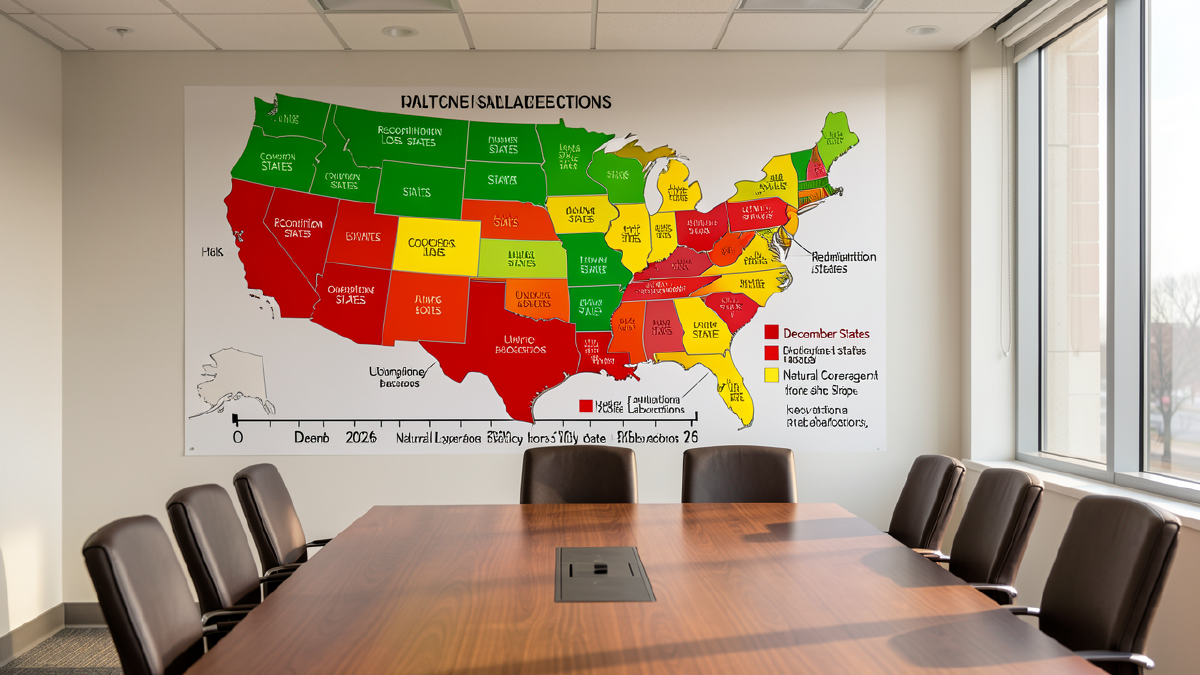
Work requirements appear to demand a binary policy choice: implement them or oppose them. Five articles examining compliance systems versus recognition systems demonstrate that this binary misses the consequential question. The policy choice has been made. Congress mandated work requirements through OB3. The system design choice remains open. States can build systems that recognize existing compliance or systems that punish the failure to prove it. The difference between these approaches produces coverage loss rates varying from 5 percent to 25 percent under identical policy requirements.
The recognition versus compliance framework is not philosophical positioning or wishful thinking about kindness in government programs. It is technical architecture grounded in data systems, verification channels, temporal flexibility, and exception handling processes. The paradigm shift from compliance to recognition represents one of the few levers available to states that want to implement federal mandates while minimizing harm to working people. Recognition infrastructure costs more upfront but less overall, faces political resistance despite superior outcomes, and requires specific technical investments that must be made before implementation rather than remediated afterward.
Arkansas’s 2018 implementation establishes the paradigm difference. The state built a compliance system starting from the assumption that beneficiaries are non-compliant until they prove otherwise. The burden of proof fell entirely on individuals. The system waited for people to provide documentation rather than looking for evidence they were working. Documentation became the gatekeeper rather than confirmation. The results validated the wrong theory. Coverage losses hit 25 percent. Post-implementation research by Sommers and colleagues revealed that 95 to 97 percent of those losing coverage were either working or qualified for exemptions. The system succeeded in detecting non-compliance with extraordinary efficiency. It failed catastrophically in determining whether the detected non-compliance was real. For every genuinely non-compliant person correctly identified, eight compliant people were incorrectly terminated.
This 8:1 false negative ratio would be considered system failure in any other verification domain. Medical testing that told eight healthy patients they were sick for every actually sick patient identified would be withdrawn from use. Fraud detection that flagged eight legitimate transactions for every fraudulent one would be redesigned. But work requirement compliance systems producing 8:1 false negative ratios are defended as promoting program integrity. The Arkansas lesson is not that work requirements are inherently harmful but that systems designed around the compliance paradigm generate coverage losses among working populations regardless of whether the underlying policy is philosophically sound.
Recognition translates paradigm into engineering specifications through data infrastructure, verification channel design, temporal accommodation, and exception handling systems. Data matching represents the most powerful recognition tool available. Every state maintains unemployment insurance wage records documenting quarterly earnings. Every state operates new hire databases. Most states share data across benefit programs including SNAP, TANF, and workforce development. The principle underlying data matching is straightforward: verify first, then ask. Ohio’s test batch running 712,000 expansion adults through unemployment insurance records identified 480,000 with wages confirming employment, 85,000 receiving disability benefits, and 40,000 meeting requirements through other programs. Before any individual submitted documentation, Ohio verified roughly 85 percent of its expansion population.
Georgia’s Pathways to Coverage program took the opposite approach, requiring monthly online reporting through a web portal. Enrollment fell catastrophically short, with only 5,573 members enrolled by September 2024 against an eligible population exceeding 300,000. The state spent more than twice as much on administrative costs as on healthcare in the program’s first year. The comparison between Ohio’s recognition approach and Georgia’s initial compliance approach tests the paradigm question empirically. Recognition identifies compliance automatically. Compliance waits for proof and terminates when proof does not arrive.
Multi-channel verification accommodates populations that data matching misses. Gig economy workers, cash economy participants, people with multiple informal jobs, seasonal workers, and workers in small businesses without sophisticated payroll systems cannot be verified through automated data matching. Recognition systems provide phone, mail, text, and in-person reporting options. The redundancy is intentional. If five channels exist and a worker can navigate any one of them, compliance gets recognized. Compliance systems typically provide one channel and terminate anyone who cannot use it.
Exemption recognition differs from work verification because the conditions that make work impossible make documenting inability to work equally impossible. Marcus with schizophrenia qualifies for exemption during episodes but cannot request it precisely because of the condition. The documentation paradox runs through virtually every exemption-qualifying condition. Recognition systems resolve this structural problem by using claims data to identify likely exempt populations proactively, provider attestation with reasonable documentation requirements, MCO care coordination teams that facilitate applications for known complex members, or individual applications with navigation support. Recognition systems use all of these pathways and route people through whichever pathway best fits their circumstances. Compliance systems typically establish a single pathway and exclude anyone who cannot navigate it.
The full-cost accounting reveals recognition costs less despite higher upfront investment. The visible cost comparison favors compliance systems. A compliance approach with online portal, automated termination, and basic phone support costs $14 million over three years. Recognition infrastructure with data matching, multi-channel verification, navigation workforce, and provider attestation integration costs $32 million. The $18 million difference is real money that shows up in state appropriations. The invisible cost comparison reverses the equation. The compliance state terminated 78,000 people, 65,000 of whom were working or exempt. Re-enrollment processing for 45,000 returning members cost $23 million. Fair hearings for 12,000 contested terminations cost $8 million. Emergency Medicaid for coverage gaps cost $15 million. Hospital uncompensated care absorbed $42 million. MCO risk adjustment degradation reached $95 million. Total downstream cost: $183 million.
The recognition state spent $32 million on infrastructure, terminated 9,000 genuinely non-compliant people, processed 3,000 re-enrollments at $1.6 million, handled 1,500 appeals at $1 million, experienced $4 million in hospital uncompensated care, and saw $12 million in MCO risk adjustment degradation. Total cost: $51 million. The cheaper compliance system cost $197 million. The expensive recognition system cost $51 million. But it requires full-cost accounting across multiple budget categories, organizations, and time periods to see it. State appropriations processes are specifically designed to prevent this type of cross-category, multi-year analysis.
Political systems systematically favor compliance approaches despite catastrophic economics. The framing advantage is substantial: fraud prevention sells better than accurate classification. The visibility asymmetry is decisive: false negatives, working people wrongly terminated, are invisible in political landscapes while false positives, people gaming the system, are politically explosive. A single fraud case generates more attention than ten thousand wrongful terminations. The political incentive structure favors compliance theater regardless of evidence. The economic analysis suggests that advocates for vulnerable populations should reframe recognition not as compassion but as fiscal responsibility.
Recognition infrastructure cannot be built retroactively. States making system design choices during the months before December 2026 implementation determine what will exist when requirements take effect. Phase 1 foundation investments covering months one through four focus on data matching agreements and MCO navigation partnerships. Unemployment insurance data sharing requires formal agreements between Medicaid and workforce agencies, secure transfer protocols, and identifier matching algorithms taking four months minimum. Phase 2 capacity expansion covering months five through eight adds verification channels, exemption automation, and provider portals. Phase 3 optimization covering months nine through twelve and beyond focuses on real-time dashboards, feedback loops, and predictive analytics. The phased approach reveals a critical timing asymmetry: compliance systems can be built quickly because they require minimal stakeholder coordination and simple technology, while recognition systems require four to eight months of infrastructure development that cannot be compressed.
Work requirements are not self-executing policies that simply need correct philosophical positioning. They are implementation challenges where system design determines outcomes independent of policy intentions. The same 80-hour monthly requirement can produce 5 percent coverage loss or 25 percent coverage loss depending on whether states build recognition or compliance architecture. Conservatives supporting work requirements as dignity-promoting should prefer recognition systems because compliance systems terminate working people, undermining the policy purpose. Progressives opposing work requirements as harmful should prefer recognition systems if requirements will exist regardless, because recognition minimizes harm to vulnerable populations.
Work requirements taking effect December 2026 create a natural experiment testing the recognition versus compliance framework across 50 state implementations. States that invested in data matching infrastructure, multi-channel verification, temporal flexibility, and navigation capacity during 2026 will produce different outcomes than states that defaulted to online portals, monthly reporting, and automated terminations. The evidence generated through 2027 and 2028 will be dispositive. If recognition states show coverage losses concentrated among genuinely non-compliant populations with low appeal volumes and stable special population enrollment while compliance states show coverage losses among working and exempt populations with high appeals and disproportionate vulnerable population impact, the recognition framework will be validated empirically.